TDM Neo Review: Clever Headphones That Become a Bluetooth Speaker
The TDM Neo’s twist-to-speaker design works well, but tight fit and disappointing audio make its $249 price hard to justify.
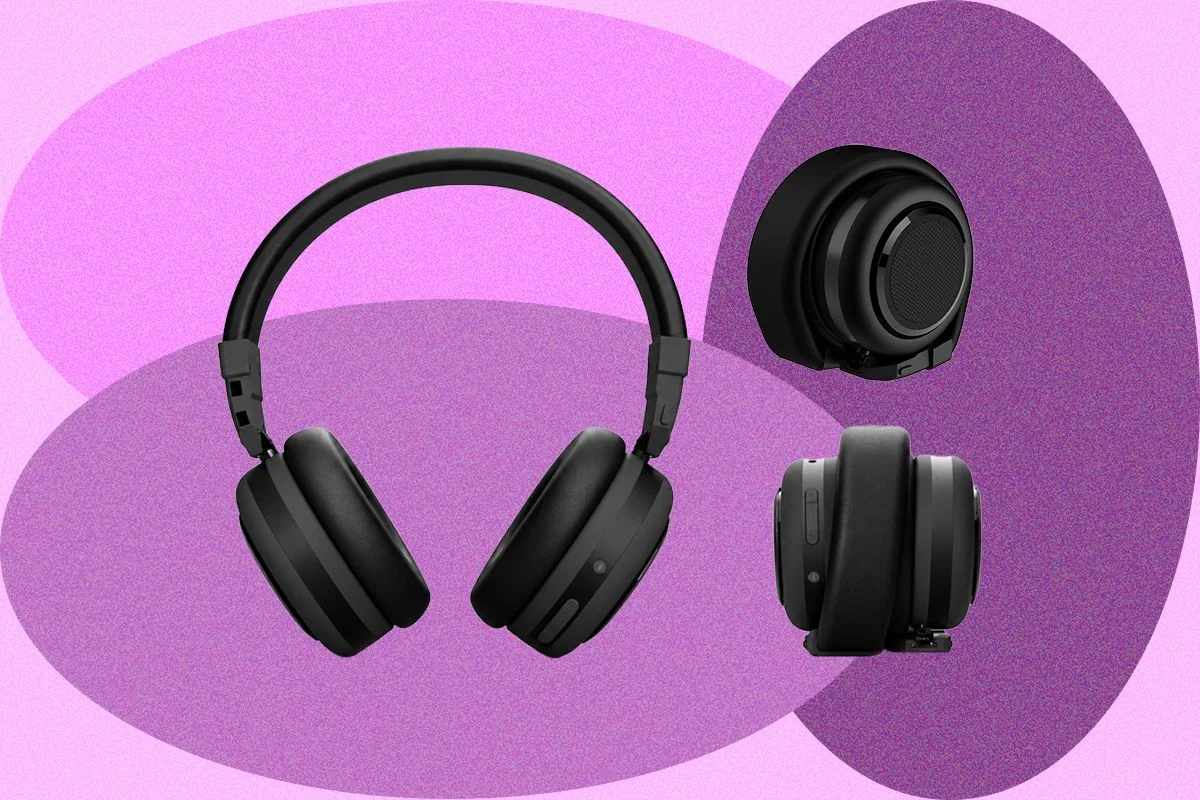
The TDM Neo solves a practical packing problem with an unusually well-executed design: rotate its ear cups together and a pair of on-ear headphones becomes a Bluetooth speaker. The switch is satisfying, the battery life is long, and carrying one device instead of two has clear appeal. But at $249, the Neo’s sound and comfort don’t match what you can get from separate products for a similar price.
A convincing transformation
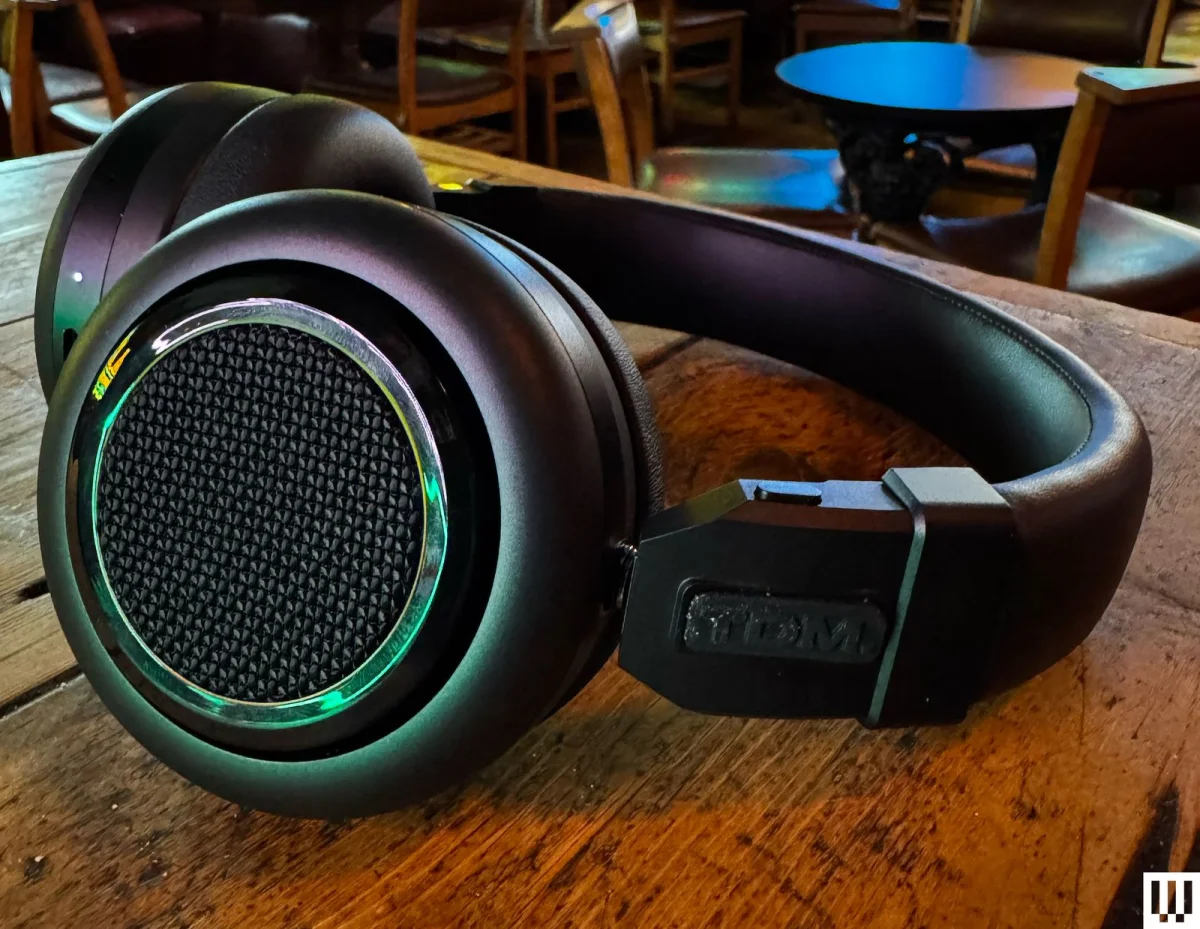
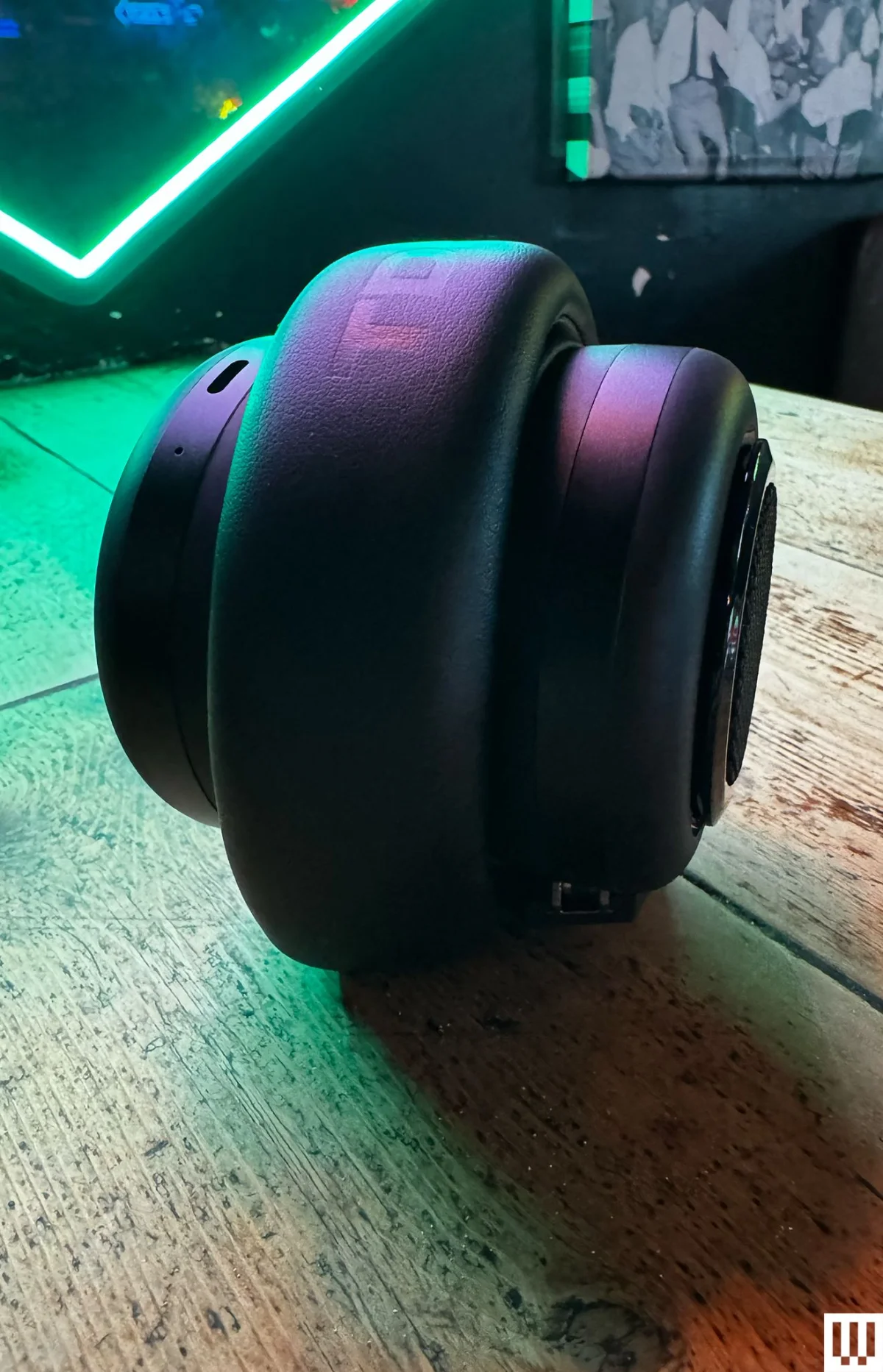
Each ear cup rotates around the flexible, cushioned headband. Bring the cups together and magnets hold them in speaker position; the headphone drivers switch off as outward-facing speakers take over. Twist the cups apart to return to headphone playback.
The mechanism feels secure and works reliably. The speaker mode’s asymmetrical headband wraps around the joined ear cups, while the two rubber TDM logos meet to form a base. The unit never came apart accidentally during the review, and changing modes was smooth. That engineering makes the Neo fun to demonstrate, but it also serves a useful purpose: the folded device is compact and ready to share music without packing a second audio product.
Inside are four 40-mm drivers: two for headphone listening and two for speaker playback. Each outward-facing speaker is rated at 5 watts, for 10 watts total. That figure alone can’t predict sound quality or volume, especially with digital signal processing in the mix. The JBL Go 5, for instance, is rated at 4.5 watts.
TDM quotes more than 200 hours of battery life in headphone mode and 16 hours as a speaker. A five-minute charge is said to add eight hours of playback. Those figures make the Neo practical for trips where access to charging might be limited, though switching between modes doesn’t change the quality of either listening experience.
Controls and app
Physical controls are straightforward: rubber power and volume buttons sit together, with a separate Bluetooth button. The volume control’s direction feels reversed in speaker mode, an easy detail to misread at first. The power button and 3.5-mm AUX input face upward, as does the USB-C charging cable when connected, which leaves the top looking untidy.
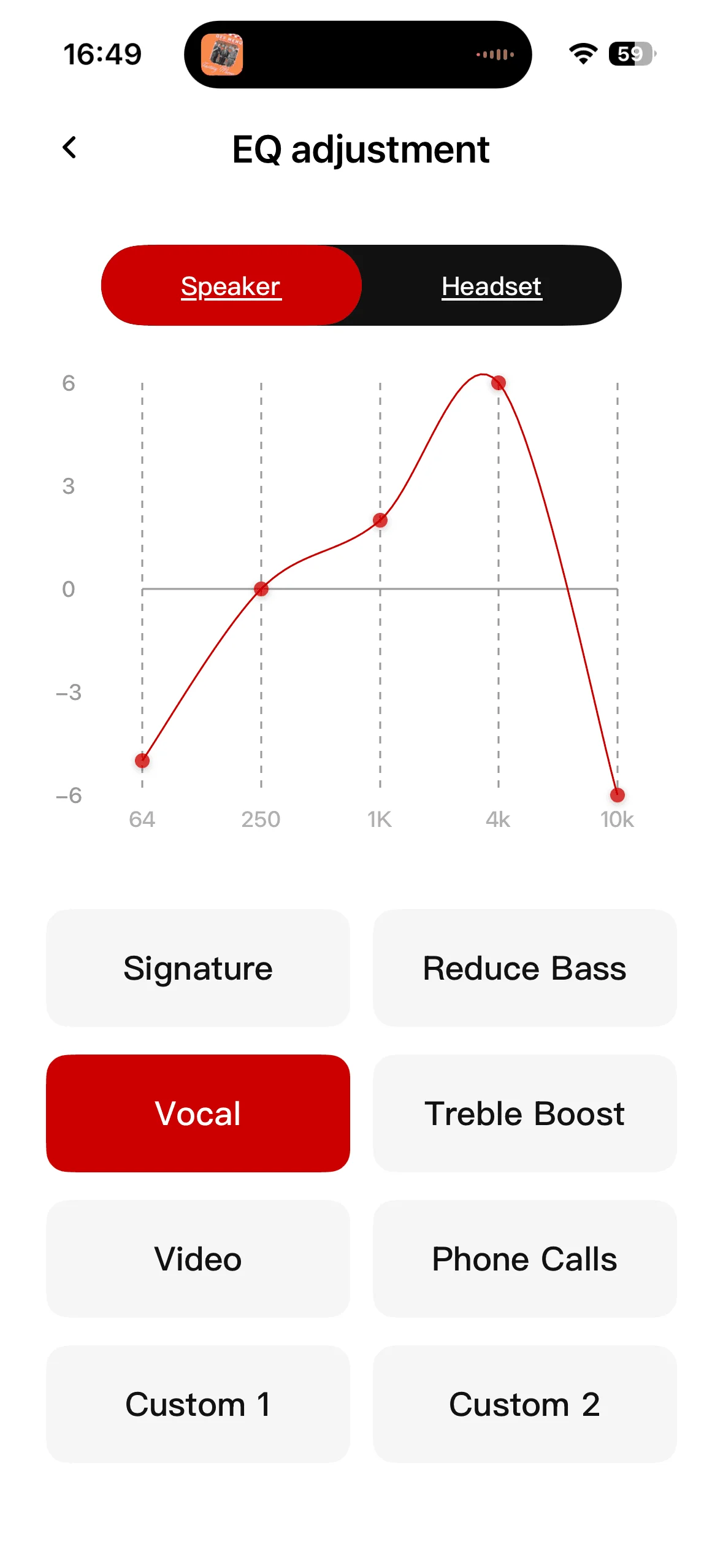
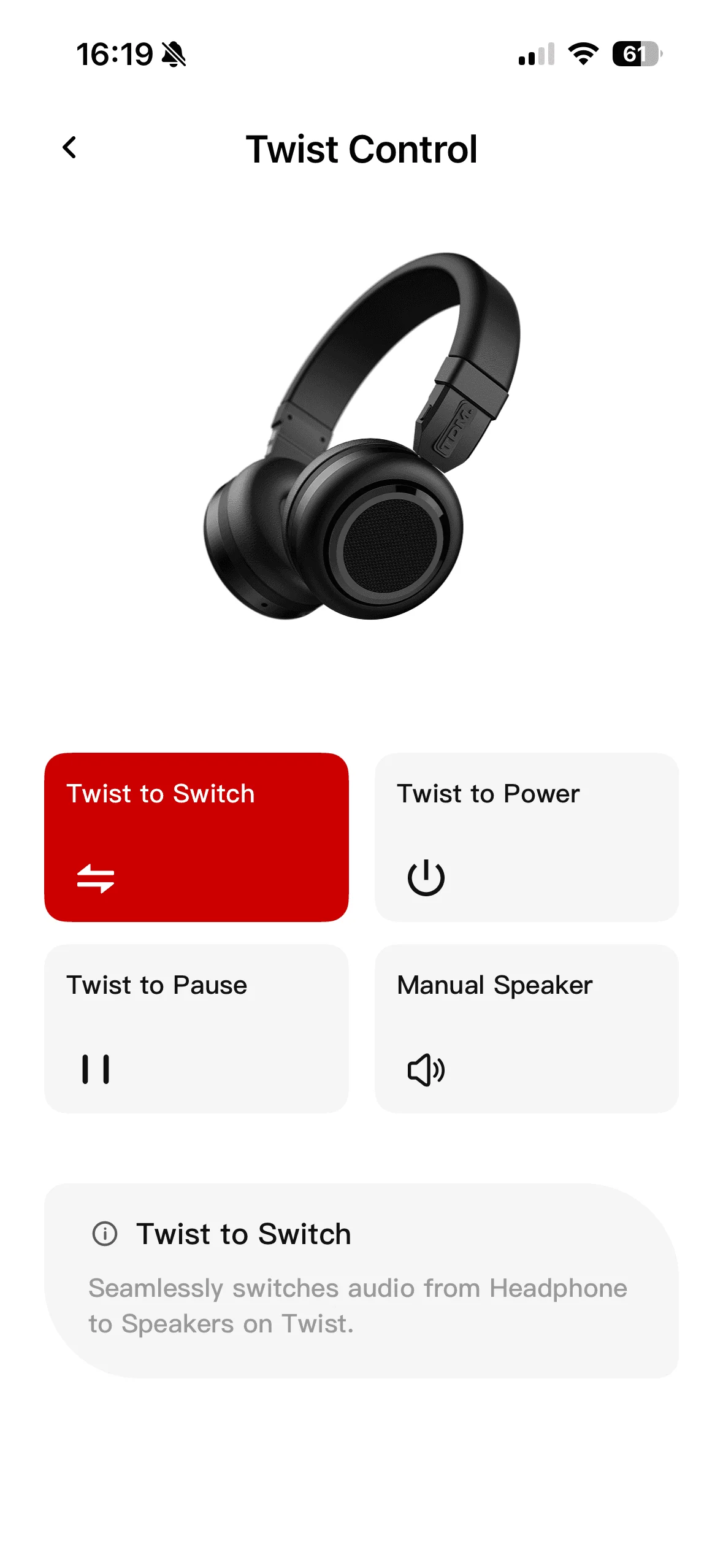
The companion app lets users choose what twisting the headphones does: switch between headphone and speaker playback, pause music, or turn the device off. It can also lock the Neo in speaker mode, including while worn around the neck, and offers basic EQ settings for both modes plus device tracking. These options add flexibility, though the core appeal remains the physical transformation.
Headphone performance has limits
The Neo uses an on-ear design and has no active noise cancellation. Its firm pads and close fit provide some passive isolation, but they also make the headphones uncomfortable over time. The reviewer found the fit tight on a larger head, with earpads that lacked enough softness. At 11.9 ounces, the Neo is heavy for on-ear headphones: it weighs 3 ounces more than the Sony WH-1000XM6, 1.9 ounces more than the Soundcore Space One Pro, and 4.25 ounces more than the Beats Solo 4.
Sound is detailed and pleasant, with clear bass and distinct vocals. The problem is the presentation: music feels confined, with little sense of openness and instruments crowded together. The result isn’t unpleasant, but it falls short of similarly priced alternatives. For travel, that’s a meaningful compromise: the speaker will be waiting at the destination, but the fit and lack of noise cancellation can make the journey less comfortable.
A speaker for casual listening
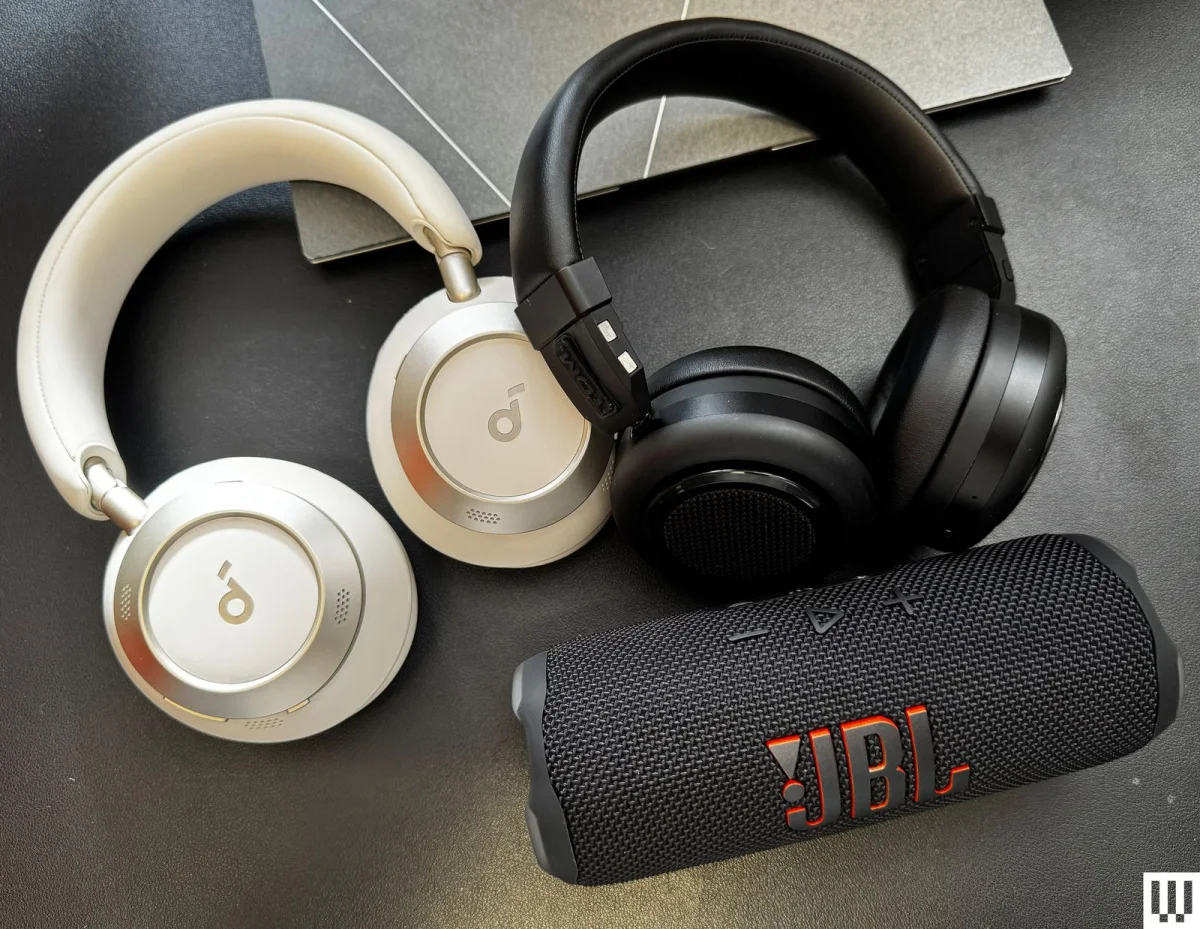
In speaker mode, the Neo is loud enough for casual use, but its sound comes across as thin. It kept pace with the smaller JBL Go 5, despite having twice the rated output and twice the drivers. Against the $120 JBL Flip 7, the reviewer found the difference substantial.
The speaker’s convenience is real. It’s handy to have one nearby whenever the headphones are in your bag, and sharing a song takes only a twist. But compact Bluetooth speakers already deliver strong sound, so the Neo’s weaker performance is difficult to overlook at this price.
One device, two compromises?
The comparison with separate products puts the Neo’s price in perspective. The Soundcore Space One Pro costs $200 and offers active noise cancellation, a comfortable adjustable fit, and strong sound; it’s often discounted to $130 or $140. Pair it with the $150 JBL Flip 7, which also frequently sells for less, and the combined price comes close to the Neo’s $249 cost. That setup means carrying two devices, but it buys more capable headphones and a better speaker.
The Neo’s strongest case is for someone who prizes a single device and likes the immediacy of turning headphones into a speaker. Its mechanism is well engineered, the battery estimates are impressive, and the concept brings a practical twist to a product category often defined by incremental updates. Still, those strengths don’t erase the tight fit or underwhelming sound in either mode. The Neo is most compelling as a piece of design; at $249, its everyday value depends on how much you’ll use the transformation.