Apple iPhone Duo Review: Polished Foldable Hardware Meets App and Weight Tradeoffs
Apple’s $1,999 foldable pairs a subtle crease and strong battery life with heavy hardware and software that still needs app support.

Apple’s first foldable gets the hardware fundamentals right, but the size of its inner display is useful only when apps know what to do with it. The iPhone Duo’s hinge moves smoothly, its crease is hard to see, and its wider shape feels more natural than earlier book-style foldables. Yet during a week of testing, some apps still sat awkwardly in the middle of the 7.6-inch screen, surrounded by black bars. The device earns a 7/10: promising for people who want a larger iPhone display, with meaningful software and weight compromises.
The Duo costs $1,999 at Apple. That puts it in line with competing foldables, though it remains an expensive phone. Developers need to target the iOS 27.1 software development kit to fully support its screens. In the day before the review was written, Instagram, Threads, Slack and Google’s app updated with layouts that place navigation on a side rail and make better use of the expanded display. Until more apps follow, buyers may encounter cramped phone-sized interfaces on a much larger panel.
A foldable that feels finished
Apple arrives seven years after Samsung’s first Galaxy Fold, and the Duo feels more mature than those early foldables. The inner screen’s matte nanotexture finish makes the fold crease difficult to spot while cutting glare and reflections. The hinge opens smoothly and holds at different angles, and the phone is rated IP68 for dust and water resistance. Sand remains a practical concern around any folding hinge, so a beach is a poor place to take it.
The design is wider and shorter than the narrow book-like shape common in earlier models. Its 5.4-inch outer display is large enough for ordinary phone use, while opening the device reveals a roomy screen for compatible apps and two-app layouts. That “passport” form feels more comfortable in use. The reviewer’s experience also suggests that Apple has made the hinge and display feel carefully finished from the start.
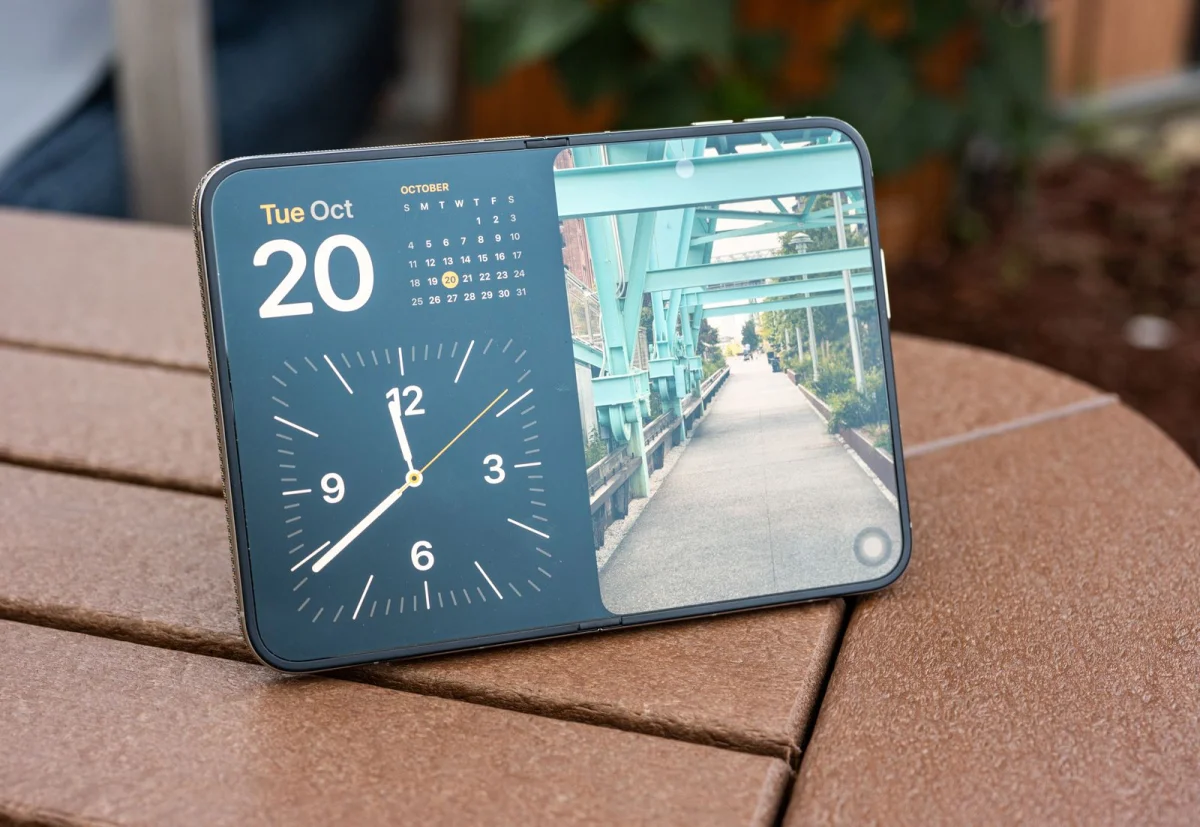
The iPhone Duo’s Standby mode turns on when the phone is propped up via a kickstand.
Photograph: Julian ChokkattuThere are tradeoffs in the physical design. At 254 grams, the Duo is heavier than an iPhone 18 Pro Max and well above the 201-gram Galaxy Z Fold8. That difference becomes noticeable during long stretches of scrolling. The closed phone also has angled corners on one side and curved ones on the other, a less consistent look than Samsung’s latest fold. Touch ID takes adjustment for anyone used to Face ID, particularly when holding the phone in the left hand and reaching across to authenticate with the right. An Apple Watch can unlock it automatically.
MagSafe works with mounts and tripods, though the Duo’s weight can make it sag when open. Apple’s wallet accessory also extends beyond the lower edge when attached. A third-party wallet may fit better, and the reviewer expects a wide range of accessories to appear. For propping the phone up, the Folio With Kickstand case proved useful enough that the reviewer wished the stand were built into the device.
Multitasking needs room to mature
When apps have been adapted, the larger display pays off. Multi-pane views show more information at once, and two compatible apps can share the screen with space for each to remain readable. This can make the Duo a more productive device than a standard phone, especially for people who often switch between apps. But Apple’s rules constrain how that space can be used.
Split-screen apps are locked to an even 50-50 division; users can’t give one side more room. A third floating app isn’t allowed alongside a split pair, except for video in picture-in-picture. In portrait orientation, Apple permits a split only with a video app, so two apps can’t be stacked vertically as they can on Android foldables. Those limits make the system predictable, but they also reduce the flexibility the big screen invites.
Input support has similar gaps. The reviewer used a compact folding keyboard with a trackpad, but the trackpad worked only after AssistiveTouch was enabled in accessibility settings. Native cursor support, already available on iPads, would make the Duo more useful for people who want to work with a keyboard and pointer. Apple’s entry into the category may also encourage more developers to adapt apps for foldable screens, with potential benefits for Android users too. For now, the reviewer found it frustrating that Slack offered a two-pane layout on the Duo while its Android app lacked the same desktop-like view.
Cameras and battery hold up
The rear camera system has two lenses and lacks the dedicated zoom camera found on Apple’s Pro phones. That omission is noticeable, though photos from the Duo and iPhone 18 Pro were not dramatically different in the reviewer’s comparisons. The selfie cameras, one on the outer display and one beneath the inner display, both produced good results during a Zoom call, according to the reviewer’s editor—even though Zoom had not been optimized for the Duo.
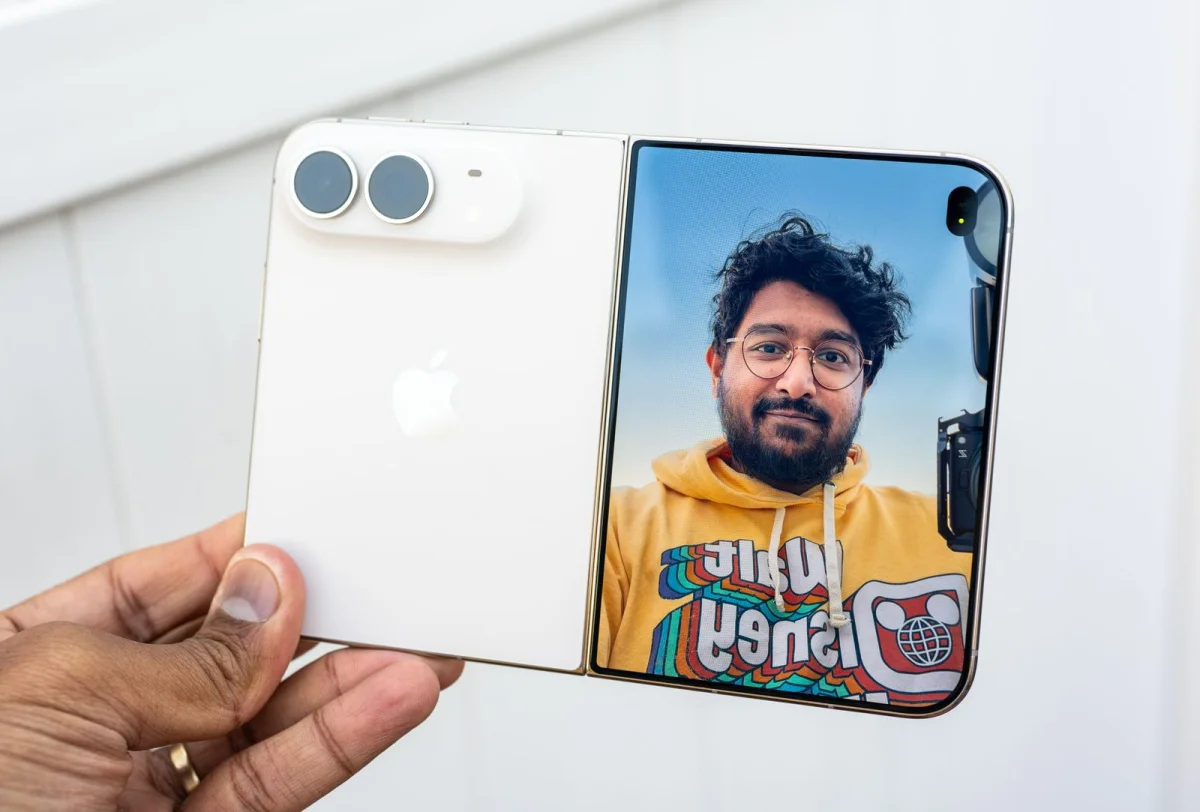
Duo Preview lets the photo subject see themselves in the frame.
Photograph: Julian ChokkattuDuo Preview uses the outer display to show a subject what the camera sees, which can help them adjust before a photo. It also lets the photographer use the rear 48-megapixel cameras for a selfie while viewing a live preview and camera controls on the outer screen. Smart Take is designed for hands-free group photos: set the phone down partly folded, press the shutter and get into position while the camera takes a series of images when it detects a pose. The reviewer found it convenient but less reliable than Google’s Magic Capture, deleting several awkward results.
Kids Cue plays Snoopy animations on the outer screen to hold a child’s attention. The reviewer couldn’t assess how well it works with children, but pointed to similar features on Google and Samsung foldables. Battery life was a clear strength: with average use, the Duo ended days at about 40 percent. During a workday with more than six hours of screen-on time, it still had 45 percent remaining around 6 p.m.
Display strengths, and reasons to wait
The nanotexture screen is the standout feature. Its surface reduces reflections and makes the crease less distracting, while its slightly paper-like feel could suit Apple Pencil use if support arrives through a software update later in the year. The tradeoff appears when watching video: black levels and contrast aren’t as strong as on the iPhone 18 Pro, though colors stay vibrant. Peak outdoor brightness reaches 3,000 nits. The reviewer had no brightness trouble but found off-axis viewing less effective in direct sunlight.
Heat is an open question. The right half sometimes warmed quickly at seemingly random moments. Half an hour of Battlefleet Duo or Pokémon Go caused little change, while 15 minutes of Ungodly made the phone warmer. The reviewer didn’t identify a consistent trigger, so this is an issue to monitor rather than a clear limit on performance.
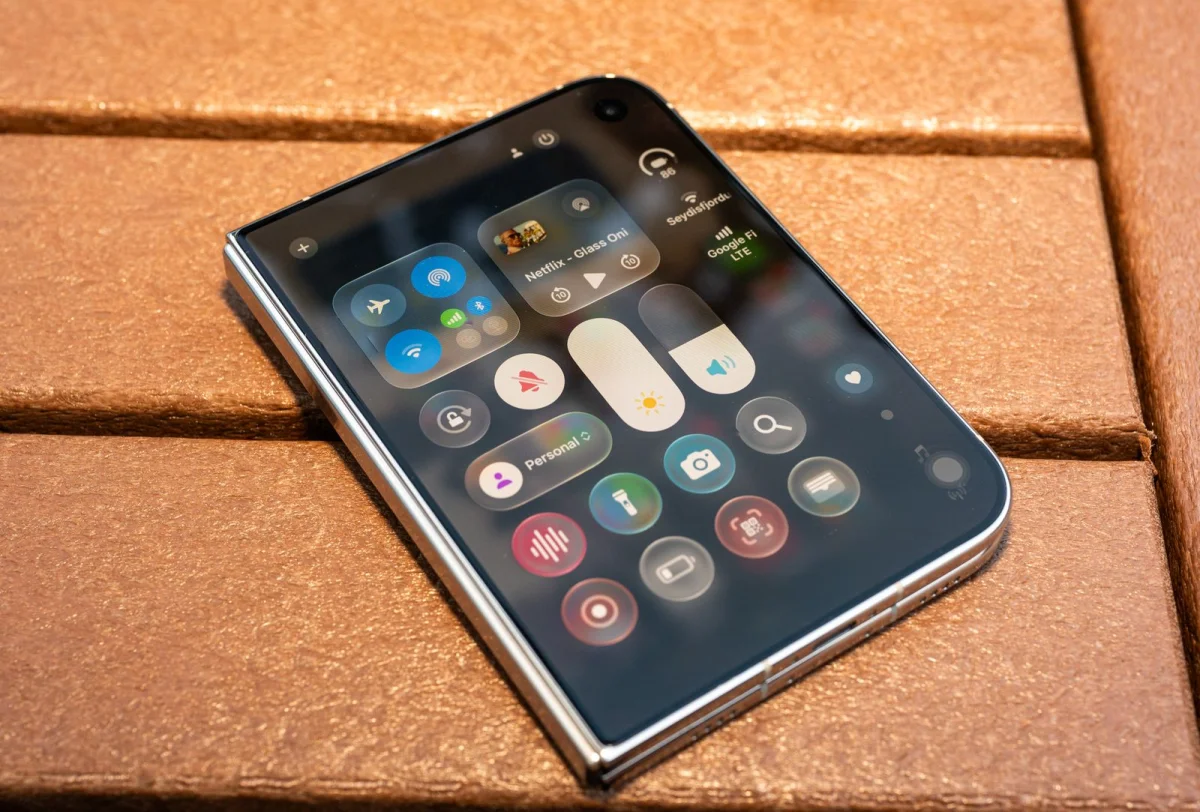
You’ll likely spend most of your time on the outer screen of the Duo.
Photograph: Julian ChokkattuApple plans to add Reachability later this year, giving users a way to bring parts of the large screen within easier reach. That update, more app layouts and a lighter future model could make the Duo a better buy after some time on the market. The reviewer suggests waiting a few months for developers to catch up, particularly since the phone is backordered until January, and sees the next generation as a possible answer to the weight problem.
Foldables still ask buyers to accept more moving parts, possible durability and repairability tradeoffs, and a premium price for a larger screen. The Duo makes a convincing case for the format when its apps are ready: its shape, hinge, display finish and battery life work well together. The strongest reasons to hold off are the 254-gram weight, rigid multitasking, incomplete app support and lack of a dedicated zoom camera. For people already drawn to foldables, Apple’s first model looks like a capable entry; for everyone else, the next round of app updates will help show whether the larger screen earns its cost.


