Tenet Healthcare’s AI Push Targets Clinical Notes and Revenue Cycle Work
Tenet is deploying ambient documentation tools and building AI into revenue workflows, but company-specific performance results remain undisclosed.
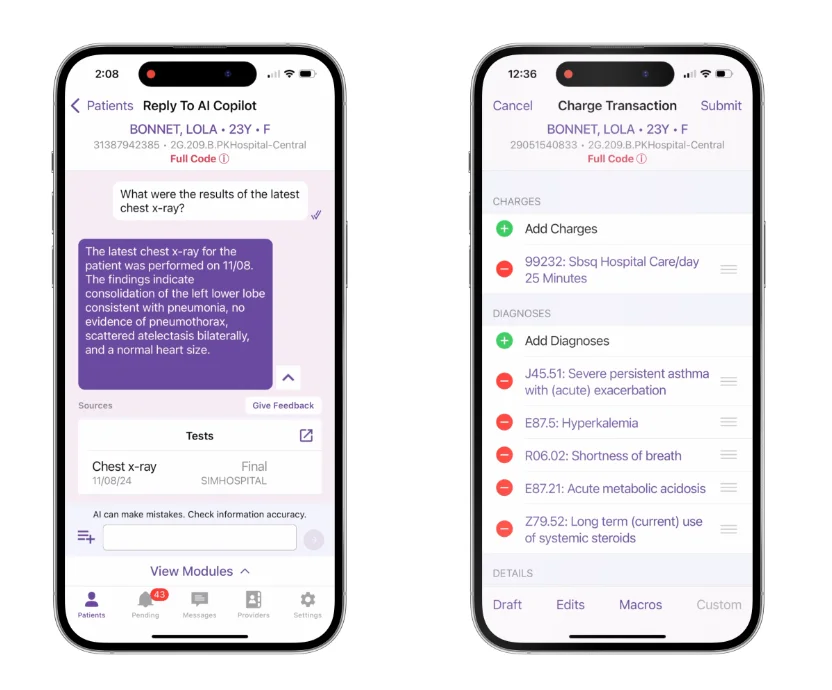
Tenet Healthcare is applying AI to two labor-intensive parts of its business: clinical documentation and revenue cycle management. The work spans ambient note-taking for physicians and an AI platform being developed with Google Cloud through Conifer Health Solutions. The operational case is clear; the published evidence of results at Tenet is still limited.
The scale gives these projects practical weight. Headquartered in Dallas, Tenet operates 65 acute care hospitals and more than 450 other healthcare facilities, including ambulatory surgery centers. As of late 2025, it reported about $20.8 billion in trailing twelve-month revenue and employed roughly 98,000 people. Its ambulatory care business, particularly United Surgical Partners International, contributes a disproportionate share of EBITDA relative to revenue, making efficient outpatient operations relevant to the company’s financial performance.
Ambient documentation for physician visits
Tenet partnered with Commure to deploy Commure Scribe across Tenet Physician Resources, its employed physician network. The product listens to conversations between clinicians and patients, then turns them into editable clinical notes. That workflow is intended to reduce the typing and dictation physicians otherwise do before or after appointments.
Before the deployment, Commure and Tenet spent a year tailoring the system to local clinical workflows. Engineers worked with providers at multiple sites to understand how visits were documented, adapt note formats, determine when notes should be closed, and capture details that vary by location. That preparation matters: a note-taking system has to fit the work clinicians already do if it is to save time rather than add another review step.
Commure says Scribe supports more than 60 languages, accents, and dialects. It uses natural language processing and fine-tuned large language models to produce structured medical notes, suggest CPT and ICD-10 codes, and send finalized documentation to major electronic health record systems with a single click. Clinicians can review the generated content and coding suggestions before they become part of the record.
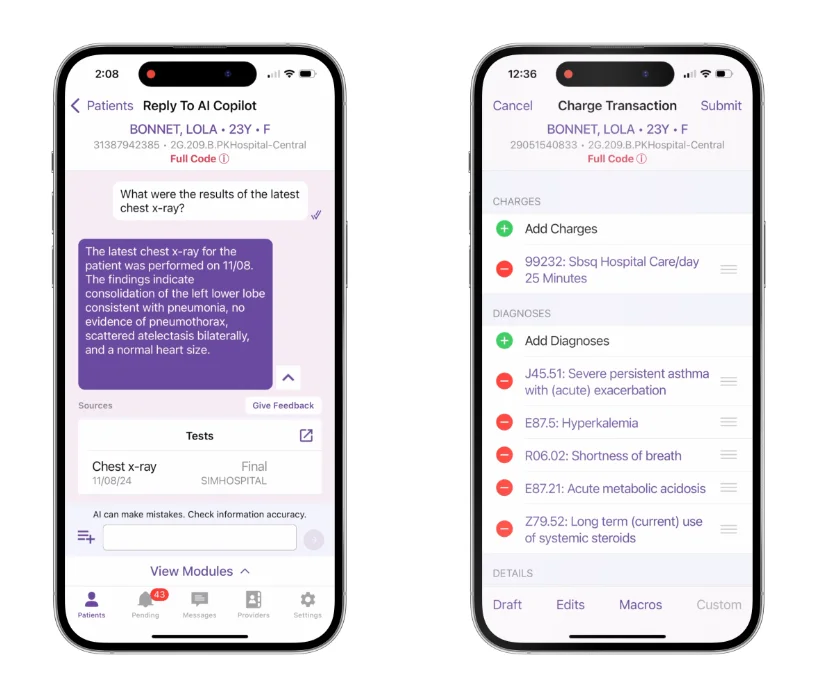
Screenshots show patient conversations converted into editable clinical documentation and suggested codes for review. Source: Commure.
The potential value is fewer minutes spent charting and more time available for patient interaction. But the figures Commure has shared are results across healthcare organizations using its ambient AI, not measurements from Tenet’s deployment. Commure reports an average 81% reduction in documentation time, an average of 43 seconds to close a clinical note, and a reduction in claim denials of more than 25%. Those figures offer a reference point for the product, but they don’t establish what Tenet’s physicians have achieved.
That distinction is central to assessing the rollout. Tenet has not released implementation-specific figures for time saved, note quality, physician adoption, or effects on patient visits. Ambient systems also rely on clinicians to check whether a generated note reflects the conversation and whether coding suggestions are appropriate. The year-long customization period signals that the work involved adapting the tool to local practice; the public information does not describe how Tenet measures accuracy or handles corrections.
AI for billing and collections
The second effort focuses on the financial work that connects care to reimbursement. In late 2025, Conifer Health Solutions, Tenet’s revenue cycle subsidiary, announced a collaboration with Google Cloud to integrate AI into Conifer’s proprietary revenue cycle platform. The stated goals are to improve financial performance, speed up collections, and make the patient financial experience better.
Revenue cycle operations involve many linked tasks, from checking coverage and documenting services to coding and processing claims. Errors or missing information can lead to denials, delayed payment, and extra work to correct and resubmit claims. AI tools could help staff identify gaps earlier or automate routine steps, but Conifer and Google Cloud have not disclosed quantified results for the new platform at Tenet or Conifer. There are no published figures yet for denial reductions, days sales outstanding, or cash flow gains.
Conifer has reported results from a separate case study of revenue cycle services for a multispecialty practice: average monthly collections rose 77%, accounts receivable days fell 25%, and coding turnaround time dropped 80%. These numbers describe that practice and those services; the source does not attribute them to the new Google Cloud collaboration or to Tenet’s own results.
Conifer COO Deepali Narula said that early deployments had produced positive results and described the investment as an effort to extend the company’s services. Her comments indicate that the work builds on Conifer’s existing revenue cycle expertise, while the public account leaves the deployment’s scope and measured performance unspecified.
What to watch in the results
Tenet’s two AI efforts address different sources of administrative work. Ambient documentation aims to reduce the time clinicians spend producing notes. Revenue cycle automation targets the processing and correction tasks that influence payment. Both depend on fitting into existing workflows, and both need performance measures that separate product-wide claims from results achieved in Tenet’s own operations.
For the clinical tool, useful evidence would include note accuracy, physician review time, adoption across the network, and any change in time spent with patients. For the revenue platform, the most telling measures would be denial rates, collections, coding speed, and accounts receivable days, with a clear comparison period and definition of the work covered.
Tenet has disclosed the partners, intended workflows, and some broader reference figures, but not company-specific outcomes. The next meaningful signal will be whether the deployments produce measurable improvements at Tenet while keeping documentation review and billing corrections manageable.


