HCA Healthcare’s AI Strategy Targets Clinical Documentation and Perinatal Monitoring
HCA’s AI work focuses on drafting clinical notes and bringing maternal data together. Publicly reported results for both efforts remain limited.
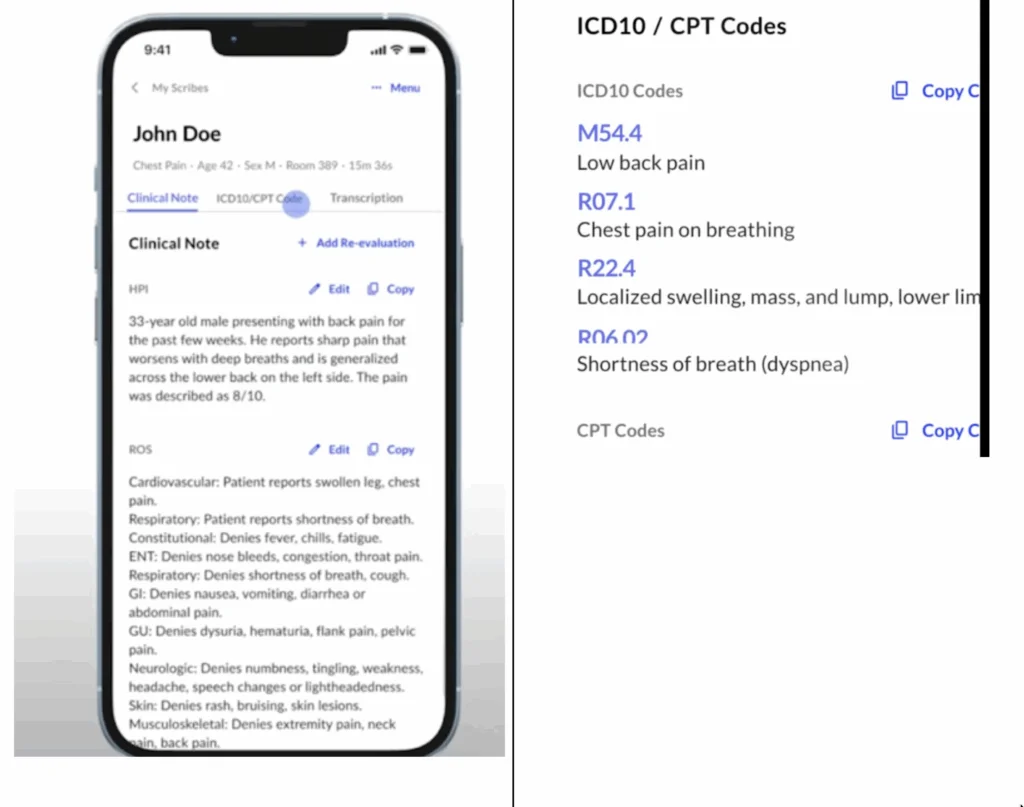
HCA Healthcare is applying AI to two practical problems in hospital care: the time clinicians spend documenting visits and the difficulty of monitoring maternal and fetal information across separate systems. The approaches differ—one drafts clinical records and handoff notes, while the other organizes perinatal data for bedside review—but both aim to give care teams more time and clearer information. So far, the public evidence describes pilots, product capabilities and intended benefits, with little measured impact specific to HCA.
The scale is substantial. HCA operates 188 hospitals and about 2,400 care sites, with more than 50,000 beds and over 30,000 employees, according to the source. Its revenue was $70.603 billion in 2024, up from $64.968 billion in 2023, and adjusted EBITDA was $13.882 billion. Those figures show the size of the organization considering these systems; they don’t establish that AI has improved its financial performance.
Drafting notes and nurse handoffs
Clinical documentation is a clear target for automation because it competes directly with patient-facing time. A 2022 JAMA Internal Medicine study found that 58.2% of office-based physicians felt they spent an inappropriate amount of time on documentation, which reduced time with patients. Documentation burden has also been associated with clinician burnout.
HCA began exploring generative AI with Google Cloud in early 2023. About 75 emergency department physicians at four HCA hospitals piloted tools intended to capture key medical information from patient conversations. The collaboration included Augmedix, whose ambient documentation technology was connected to Google Cloud’s medically tuned Med-PaLM 2 model. The system ran within Google Cloud’s HIPAA-compliant infrastructure, according to HCA’s account of the collaboration.
A related workflow addresses shift handoffs. Nurses have traditionally had to relay or assemble details such as medications, lab results, vital signs, patient concerns and responses to treatment. HCA described a tool that draws on EHR data and custom prompts to draft handoff reports. At beta locations including UCF Lake Nona Hospital, nurses review and approve the generated drafts. That human review is central: the system prepares a summary, while staff remain responsible for checking it before use.
Commure’s Ambient platform, which followed its acquisition of Augmedix, is another part of HCA’s broader work on clinical documentation. The companies described a deployment spanning HCA’s network of hospitals and care sites. Commure says its platform can capture clinician-patient conversations in more than 60 languages, accents and dialects, then use natural language processing and fine-tuned language models to draft structured notes. It can also suggest CPT and ICD-10 codes, modifiers and quality measures. Staff can edit the output and upload it to an EHR through web or mobile tools, with two-way integration available.
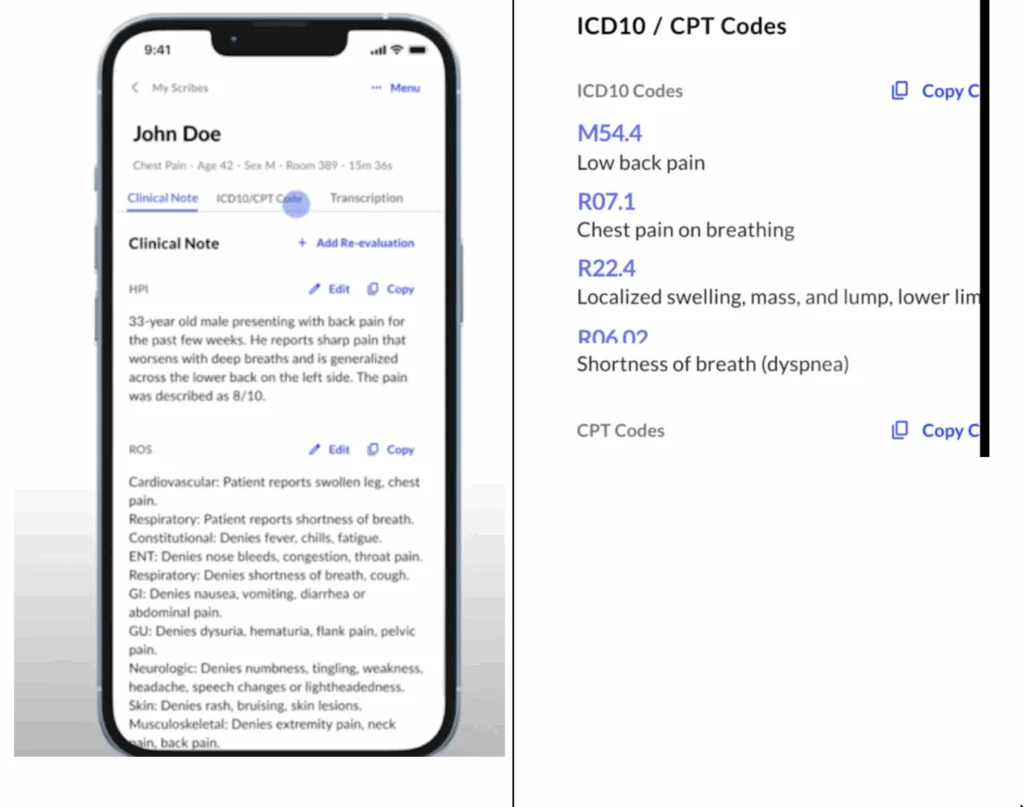
Screenshots from Commure’s Ambient solution show captured nurse-patient conversations converted into documentation. Source: Commure.
These capabilities describe what the products are designed to do, not verified results at HCA. No public figures quantify time saved, cost reductions or return on investment from the 2023 Google Cloud pilot. HCA reported collecting pilot measurements and described physician satisfaction positively, but the source identifies no published numerical results. The company’s revenue and net income later grew, but HCA has not attributed that performance to AI.
Connecting maternal and fetal data
The second use case focuses on perinatal care, where clinicians may need to consult multiple systems to piece together a patient’s status. A 2025 JAMA Network Open study reported that the U.S. maternal mortality rate rose 27% from 2018 to 2022, reaching 32.6 deaths per 100,000 live births. The study cited here does not explain the causes of that increase. It does, however, provide context for hospitals’ interest in earlier risk identification and better access to patient information.
HCA and GE HealthCare co-developed CareIntellect for Perinatal, a cloud-based platform announced in October 2025. Its stated purpose is to bring maternal and fetal information together for review during care. GE describes a chronological dashboard with real-time monitoring, event annotations, historical data access and remote oversight. The goal is to reduce the effort involved in searching separate systems and help teams notice changes while caring for patients.
GE’s product materials say the platform uses AI and predictive analytics to support clinical decisions. Its examples include identifying potential risks such as preterm labor or hypertension. Those are product aims, not reported outcomes from HCA’s deployment. GE’s launch video depicts a dashboard simulation; it does not provide evidence that the platform has improved outcomes in routine use. At the time described in the source, HCA had not published clinical or operational results from the deployment.
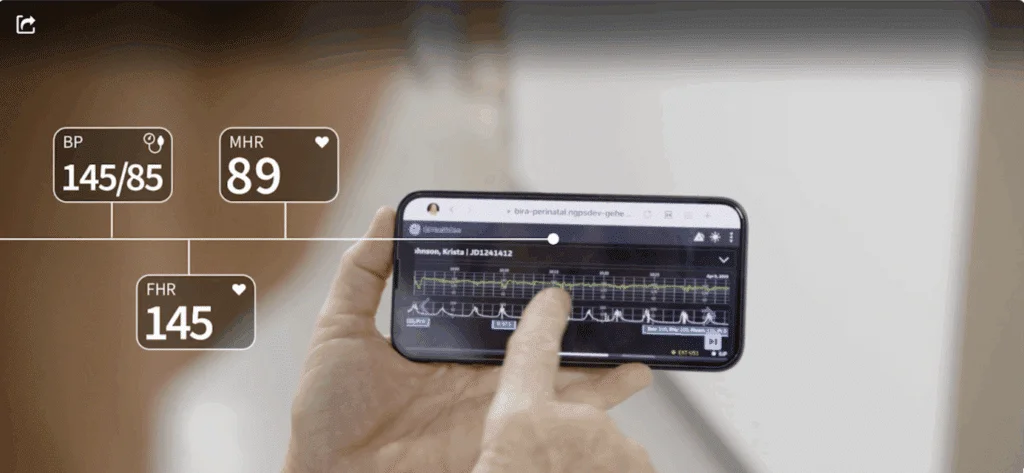
A video simulation shows patient information on the CareIntellect dashboard. Source: GE HealthCare.
Research offers a broader rationale for applying machine learning to perinatal information, while leaving the performance of this specific product an open question. A review published in Women’s Health describes research using multimodal clinical data to predict preterm birth, birthweight, preeclampsia, mortality, hypertensive disorders and postpartum depression. A scoping overview in Nursing Reports says pilot studies of AI-enabled remote monitoring with wearable sensors have linked these approaches to reductions of 7–11% in maternal mortality and preeclampsia. That finding concerns the studies reviewed, not a measured effect at HCA.
HCA’s two efforts point to a consistent operational strategy: reduce manual assembly of clinical information and put useful summaries closer to care teams. Documentation tools must produce drafts clinicians can verify; perinatal dashboards must present timely data without obscuring its context. The evidence to watch is whether HCA reports measured changes in workload, documentation quality, risk detection or patient outcomes as these systems move beyond pilots and launch stages.


