HPE Plans Lunar HPC Benchmarks and AI Tests With Spaceborne Computer-4
A fanless HPE computer is set to test HPC benchmarks and AI workloads on the Moon, though its performance targets and power budget remain undisclosed.
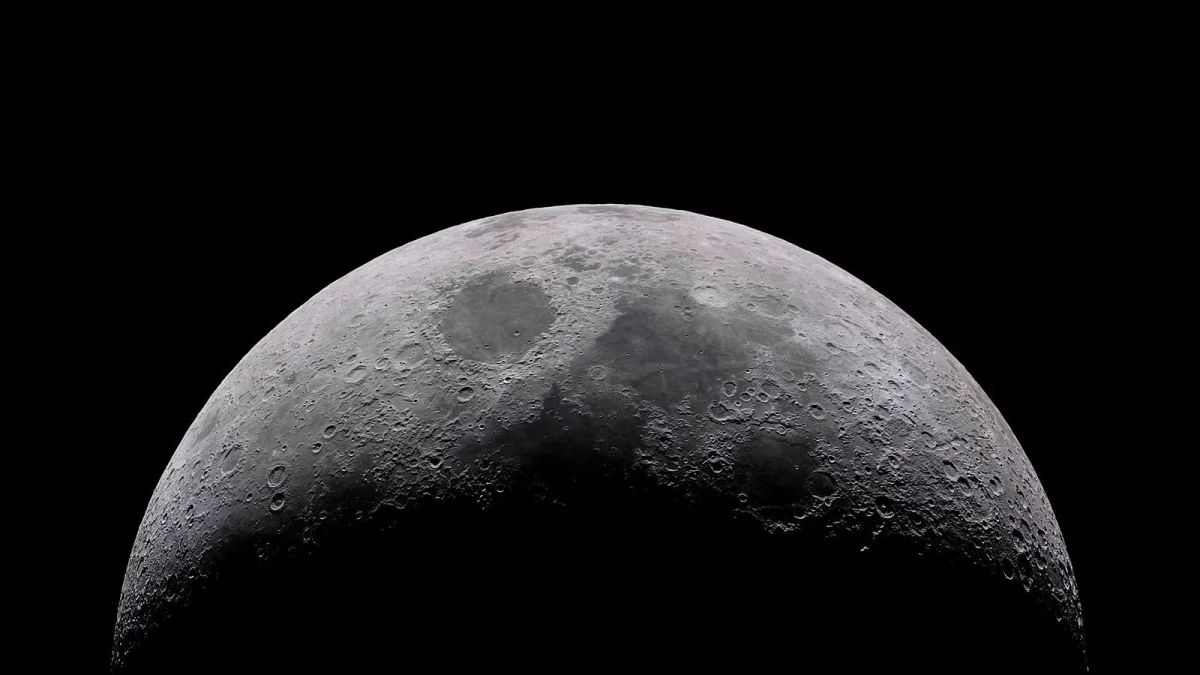
HPE’s planned lunar computer mission will test a practical question for future exploration: how much useful computing can happen beside the instruments collecting the data? Spaceborne Computer-4 is designed to run high-performance computing benchmarks and AI workloads on the Moon, where a slow, narrow communications link makes local analysis valuable. Its results could offer a rare measure of how a compact system performs in that setting, although HPE has not yet shared key specifications such as performance targets or power consumption.
The computer is scheduled to travel to the lunar south pole aboard Astrolab’s FLIP rover. The launch is planned for the fourth quarter of 2026 on a SpaceX Falcon Heavy, with a Voyager Technologies Griffin-1 lander, as reported by SpacePolicyOnline. The mission is part of NASA’s Commercial Lunar Payload Services initiative for a Moon Base program mission. The lander is expected to take several days to reach the Moon.
Benchmarks and AI workloads
HPE says the system will run the first high-performance computing benchmarks on the lunar surface. The named test is High Performance Conjugate Gradients (HPCG), a benchmark that complements High Performance LINPACK (HPL). HPCG can help characterize performance on a different class of computational work than HPL, so reporting both may provide a broader view of the system than a single headline score. The source does not give a target score or specify what results HPE plans to publish.
AI testing will cover retrieval-augmented generation with large language models, vision inference, LiDAR processing, and an AI services container for deploying applications. HPE says the language models are intended to interpret information, analyze visual data, and assist autonomous monitoring. LiDAR processing will support mapping, navigation, terrain analysis, and infrastructure development. These tasks make the test relevant to field operations: they examine whether a rover can process sensor data and documents near where it gathers them, rather than relying on Earth for every step.
NASA plans to run its Federated Learning for Unbounded and Intelligent Decentralization (FLUID) neural network, trained using data from Earth, the Moon, and the International Space Station. The test will coordinate three distinct models. NASA will also evaluate a tuned language model for semantic processing of onboard documents. Deloitte plans to test Silent Shield, which it describes as a system for detecting cyber intrusions with near-real-time predictive analytics. The article does not report model sizes, accuracy targets, or how these systems will be scored.
Local processing matters because the connection to Earth has limited bandwidth and takes time, HPE senior director Norm Follett explained. If a system can interpret imagery, map terrain, or find relevant information onboard, it may help a crew or rover act without waiting for a complete data transfer. That benefit depends on the hardware completing useful work within tight constraints on power, heat, and operating time. The mission’s benchmark results and workload reports should help show what this particular design can manage.
A compact system built for lunar conditions
HPE describes Computer-4 as lightweight, self-contained, and fanless. Its compute blade is about 10 inches long and 4 inches wide, roughly the footprint of a typical graphics card. Follett said on HPE’s Technology Now podcast last year that the blade consists of two component cards. The system includes 1TB of Kioxia storage, a low-power CPU, and a small GPU.
The thermal design sends heat into a plate on the rover. That arrangement avoids relying on a conventional fan and reflects the system’s intended environment: HPE says it was built for space rather than adapted from an off-the-shelf unit like equipment used on the International Space Station. The physical size is striking, but it doesn’t reveal how quickly the system can run the planned workloads. HPE has not named the chips or disclosed power budgets, and the available description gives no detailed performance profile. Those omissions limit comparisons with terrestrial systems until measured results appear.
HPE has assembled software to connect the lunar computer with Earth-side systems and deliver results securely. That link is part of the test’s operational picture: benchmark scores alone won’t show how well a system supports work when data must move between the rover and remote teams. The source offers no detail on the communications architecture or transfer rates, so those practical limits remain open.
Earlier Spaceborne systems offer a reference point
The first HPE Spaceborne Computer launched to the ISS in August 2017 aboard SpaceX’s CRS-12 mission. HPE says that rack-mounted, water-cooled system ran HPL and HPCG and exceeded one teraflop. Computer-4 is a much smaller design than that 124-pound machine. Spaceborne Computer-2, also used on the ISS, combines HPE Edgeline and ProLiant systems with Kioxia solid-state drives.
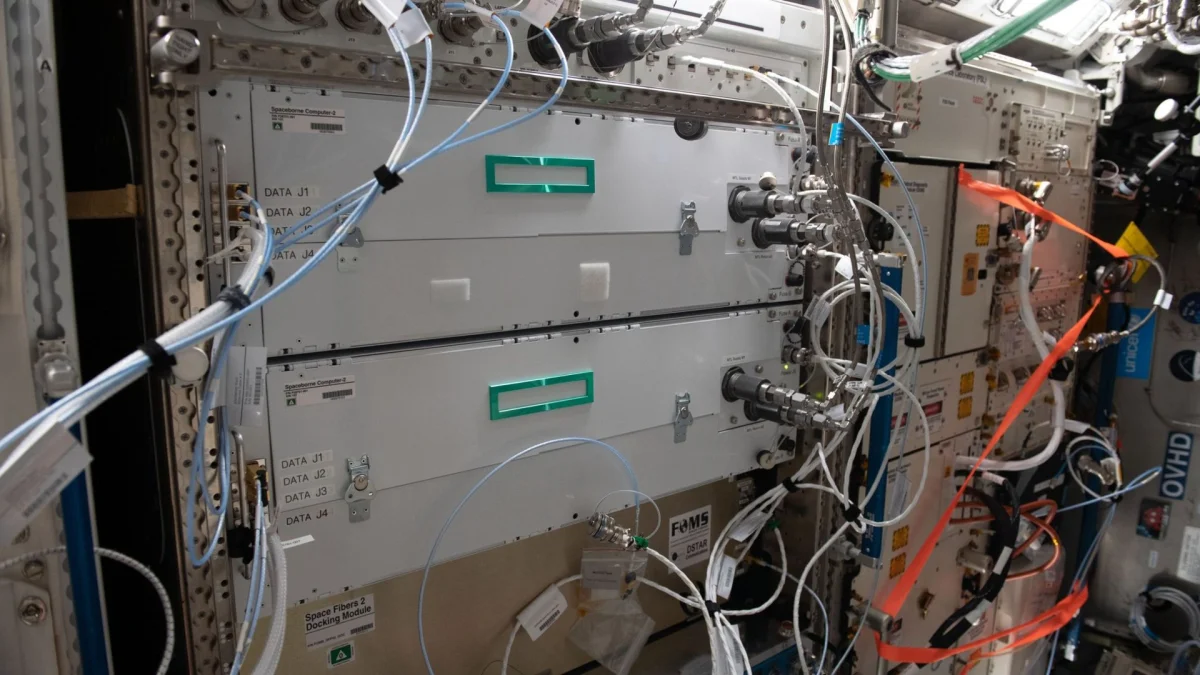
The planned lunar deployment differs in scale and environment from those earlier systems, so their results are context rather than a direct performance comparison. HPE says no other company or organization has run these benchmarks on the Moon. The claim depends on the mission reaching the surface and completing the tests before another effort does.
Time on the surface will be limited. FLIP is designed to operate for about 14 Earth days, one lunar day, before attempting to survive the night in hibernation, Follett said. That leaves a compact window for benchmarking and experiments, with several workloads competing for available operating time. The most useful outcome will be a clear account of what ran, how the system performed, and what constraints shaped the results. Until HPE publishes those details, Computer-4 is a technically specific test plan rather than evidence of how much lunar computing it can deliver.


