Iran’s Strait of Hormuz Cable Threat Puts Undersea Internet Links in Focus
Iran has described cables crossing the Strait of Hormuz as potential targets, highlighting the exposure of international data links.
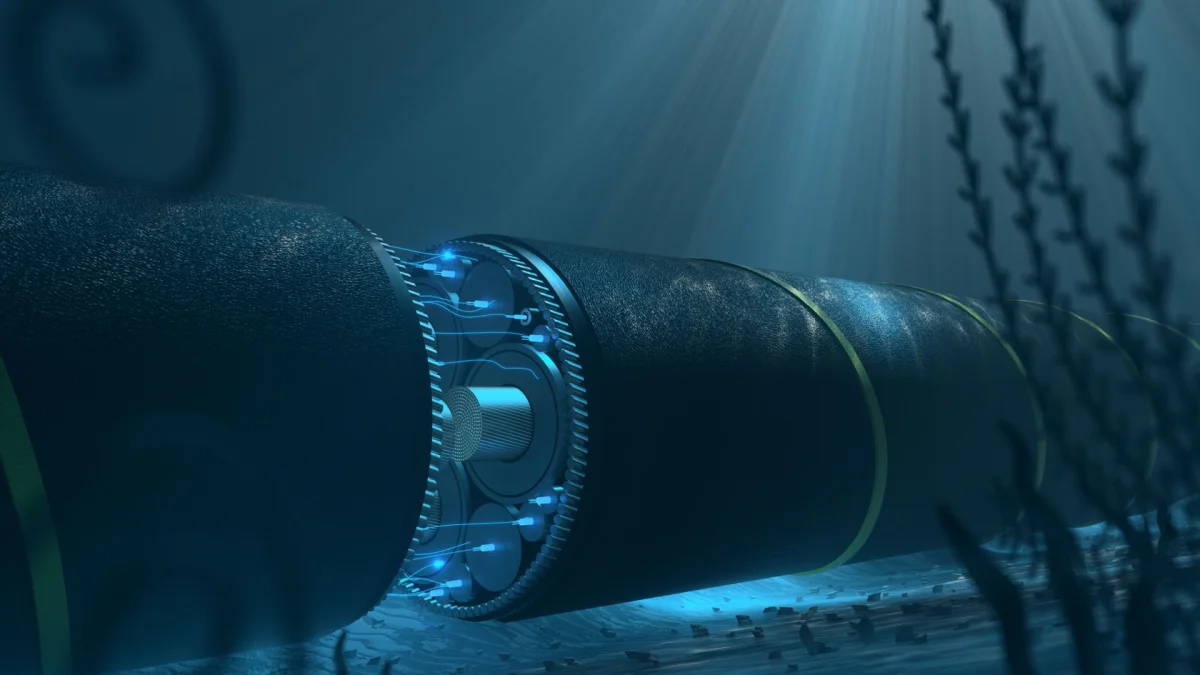
Iran’s description of undersea fiber-optic cables in the Strait of Hormuz as “legitimate new targets” puts a mostly out-of-sight part of global connectivity into view. The cables carry internet and commercial data across a narrow maritime corridor. Damage to them could disrupt communications that depend on those routes, although the source does not estimate the scale or duration of any disruption.
General Hossein Mohebbi, a spokesman for Iran’s Islamic Revolutionary Guard Corps (IRGC), referred to the infrastructure at an event this week, according to The Telegraph. “Seven large cables pass beneath the Strait of Hormuz, and all internet and commercial data pass through them,” Mohebbi said, describing them as “legitimate new targets” in future assaults. The statement does not identify all seven cables or establish that every internet or commercial data connection relies on them.
A second IRGC figure, political deputy Yadollah Javani, reportedly connected the threat to possible damage to Iranian infrastructure. As reported by Iran International, Javani suggested Iran could respond by attacking the cables if its own infrastructure were attacked. That conditional framing matters: the comments describe a possible response, rather than confirming that an operation is underway.
A route with international reach
Mohebbi also referred to a possible “third phase” that would bring a “new geography,” with “new targets and new weapons.” The article identifies one cable that may fit the description as Asia-Africa-Europe-1, or AAE-1. The system stretches 15,050 miles from Asia to Europe and passes through Oman, the United Arab Emirates and Qatar. Both the UAE and Qatar have direct maritime borders with Iran, giving the route a regional footprint that extends beyond the strait itself.
For network operators, the relevant issue is how much traffic can be rerouted if a cable is damaged, and how quickly. Undersea links are physical infrastructure: fiber-optic strands carry data along routes on the seabed, and a break can require specialist repair work. The article supplies no details about spare capacity, alternative routes, repair timelines or the traffic carried by AAE-1. Those unknowns make it difficult to infer the practical effect of a cut from the threat alone.
Still, a route’s importance can’t be judged only by its length or by the number of cables in a region. The impact of an outage depends on how networks are connected, what capacity remains elsewhere and whether operators can shift traffic. A threat directed at a cable corridor therefore raises questions for telecom providers and large users of international networks, even before any physical damage occurs.
Why the threat is technically plausible
Professor Alesso Patalano, a war and strategy professor at King’s College London, told The Telegraph that damaging a cable is “not only is it possible, but it’s been a rather clear possibility for a long time.” He said divers could “go down to the seabed... and cut them or destroy them.” His comments address physical feasibility; they do not establish the likelihood of an attempt or identify the resources such an operation would require.
That distinction is useful for assessing the remarks. A cable may be vulnerable in principle, while locating, reaching and damaging a particular segment presents its own practical demands. The source provides no information about the depth or precise position of the cables mentioned, so it does not support a more specific assessment of how easy an attack would be. Patalano pointed to the 2022 attack on the Nord Stream 2 gas pipeline near Denmark as an example of undersea infrastructure being damaged. It is an analogy for the possibility of seabed operations, not evidence that cable damage would have the same cause or consequences.
An unnamed Iranian spokesman told The Telegraph that Tehran had considered cutting the cables several times since the conflict began but had held back. The spokesman said that doing so would mean “declaring war on the whole world and building new enemies,” while describing cable damage as “an option if Trump escalates.” The account offers a stated reason for restraint, but it does not independently verify the reported deliberations or explain what conditions would trigger a change.
A wider concern for cable operators
Interest in undersea infrastructure is not unique to Iran. The source points to a Russian ship that was chased from British waters by a Royal Navy attack helicopter earlier this year after spending 14 hours less than a mile from five undersea cables connecting the UK with Spain, Portugal, Canada and the U.S. The linked report provides a separate example of a vessel near important infrastructure; it does not establish that the ship damaged or intended to damage those cables.
For companies that depend on cross-border data links, the immediate takeaway is to distinguish a public threat from a confirmed service disruption. The source reports statements about potential targets and earlier deliberations, but no cable has been reported cut in the Strait of Hormuz. Network resilience depends on route diversity, available capacity and the ability to restore damaged links—details the source does not provide.
The next meaningful signal would be evidence of a change in cable operations or service, alongside more precise information about which routes are at risk. Until then, the remarks show how undersea connectivity can become part of regional pressure: its strategic importance is clear, while the scale of any practical impact remains uncertain.


