AMD and Intel Bring PyTorch CPU Optimizations Together in oneDNN
AMD is moving ZenDNN into oneDNN, aiming to give PyTorch a shared route to CPU optimizations across Intel and AMD systems.
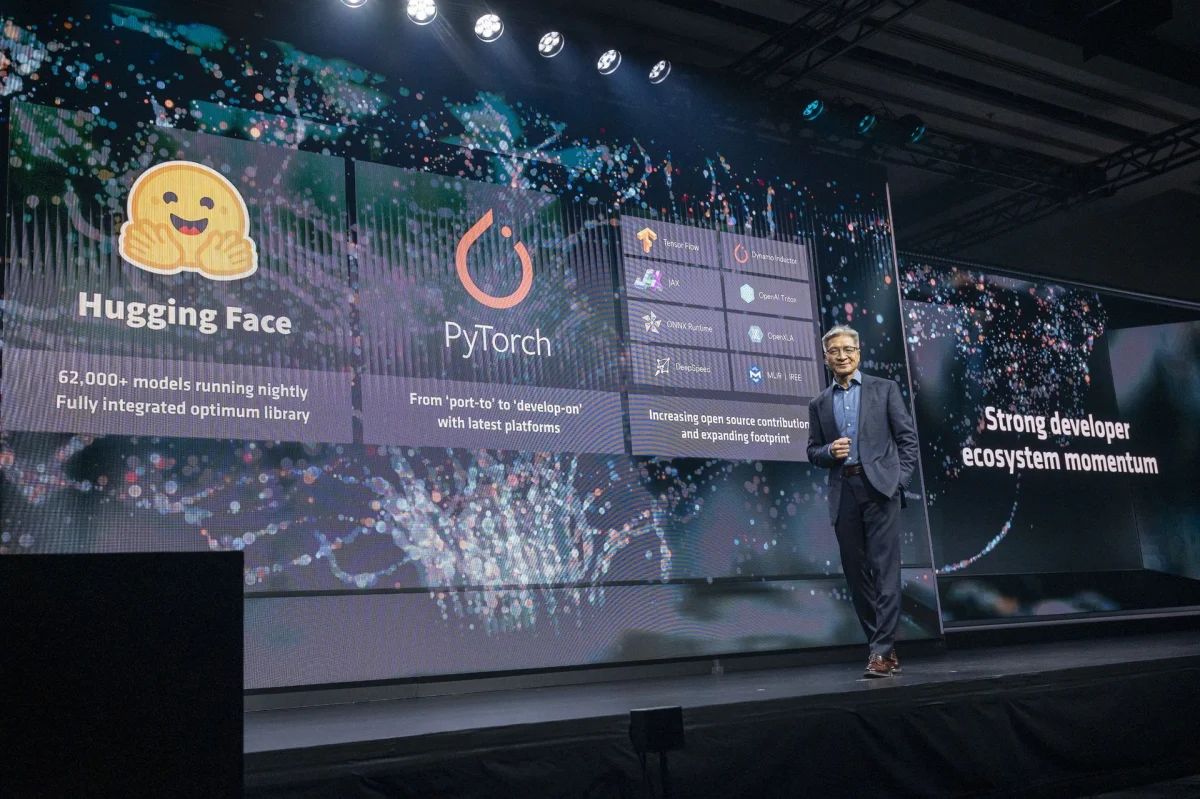
AMD is moving its PyTorch CPU optimizations into oneDNN, a shared library that already supports Intel processors. For developers, the change could reduce the need to choose between separate vendor-specific paths when running CPU inference on x86 systems. The practical value will depend on how broadly the combined optimizations work across processors and workloads.
AMD’s ZenDNN has existed as a downstream version of oneDNN. Its integration brings that work into the open-source library, which is published by the UXL Foundation and was originally developed by Intel. AMD says the move followed a recommendation from the x86 Ecosystem Advisory Group, a joint initiative established in 2024 that primarily involves Intel and AMD.
ZenDNN has been AMD’s separate route for optimizing deep learning workloads on its processors. With those optimizations moving into oneDNN, developers can look to a common backend for support across Intel and AMD hardware. That may simplify software maintenance and deployment: teams can work with one library and let it select suitable optimizations for the processor in use, rather than maintaining separate vendor-specific integrations.
That shared path doesn’t guarantee identical performance across chips. The library’s job is to select and run optimized operations for the hardware it detects; actual results will still depend on the processor, data type, model and workload. The source provides no new benchmark figures for AMD’s contribution, so the effect of integration on AMD systems remains to be measured.
Runtime dispatch is central to the approach
oneDNN detects available hardware features at runtime and uses them to generate optimized kernels for the platform. It also supplies lower-precision data types and optimized instructions for common machine learning operations, including matrix multiplication and convolution. Those operations are building blocks for many neural network workloads, making them important targets for CPU optimization.
Runtime detection matters in a mixed hardware environment because developers don’t necessarily know which processor will execute a model when they package their application. A backend that selects optimizations at runtime can provide a more consistent software interface while adapting execution to the machine. That reduces the burden of managing separate code paths, though developers still need to check their own workloads for performance and compatibility.
PyTorch added oneDNN as a backend in late 2023. At that time, reported results showed a 1.24x improvement with Float32 data and a 2.21x improvement with BFloat16. Those figures describe the earlier PyTorch integration; they aren’t measurements of the newly integrated AMD optimizations. The distinction matters: the reported gains show that oneDNN can improve performance in particular conditions, but they don’t predict how much AMD systems will benefit.
For teams evaluating the change, the useful comparisons will be workload-specific. Inference latency, throughput, memory use and the effect of data type choices can vary with the model and processor. The announcement establishes a shared direction for the software, but it doesn’t provide new measurements for those factors on AMD hardware.
A broader x86 collaboration
The move also fits a pattern of Intel and AMD working through the x86 Ecosystem Advisory Group. The companies have previously collaborated through the group on ACE extensions for x86. Their involvement in oneDNN brings that cooperation into a software layer that connects machine learning frameworks with processor-specific operations.
AMD also said it is joining the UXL Foundation as a steering member. The organization says steering members can influence its direction, and membership costs $20,000 per year. Intel was among the foundation’s founding members, alongside Arm, Qualcomm and Google Cloud. The change gives AMD a formal role in the organization responsible for publishing oneDNN while its own optimizations enter the library.
Although this effort is focused on x86 CPUs, oneDNN also supports Arm and RISC-V architectures. That makes the library relevant beyond the Intel and AMD systems at the center of this update. Still, the announcement describes AMD’s contribution to oneDNN and its PyTorch use on x86; it doesn’t establish how the added optimizations will affect other processor architectures.
For developers, the next thing to watch is the implementation in actual releases and the performance data that follows. A unified backend could make CPU inference easier to support across hardware vendors, especially for teams that want a consistent PyTorch integration. Its value will ultimately come down to coverage and measured results across the models and processors teams deploy.
- The data center cooling state of play
- The custom AI ASIC state of play
- America’s AI chip rules keep changing — and the rest of the world is paying the price
- GTC 2026: Ian Buck press Q&A transcript — VP of Hyperscale and HPC speaks out on shelving CPX and shipping LPU decode this year
- Demand for data center CPUs has surged, and AI agents are responsible


