Atari VCS Store Closes in 2027 as Atari Plans Offline Software Migration
Atari will close the VCS store on February 1, 2027, then offer an OS update and Homebrew app to keep software usable and new games coming.
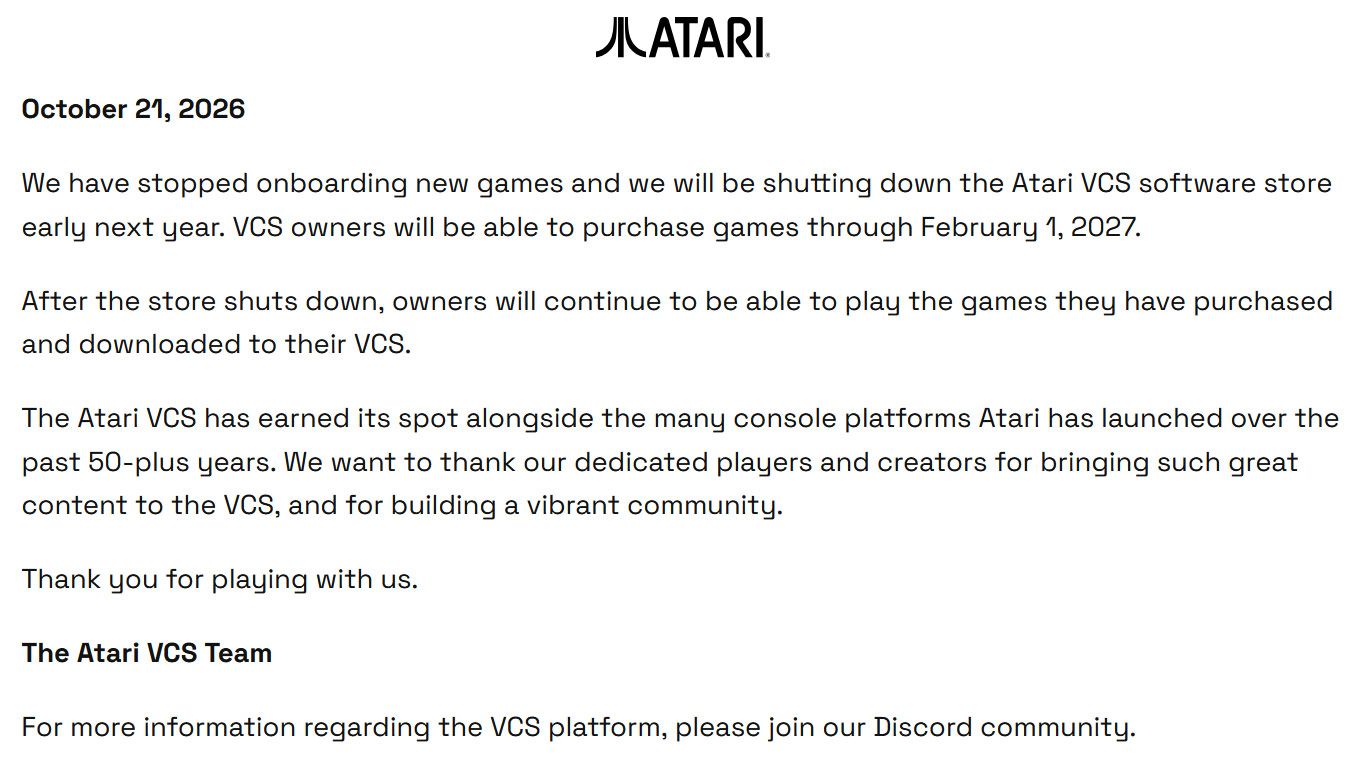
The Atari VCS’s online store will close on February 1, 2027, ending the console’s reliance on Atari’s software services. Atari says it plans to provide an operating system update that moves authentication and software functions onto each user’s machine. The shift could extend the life of existing hardware, though the company says platform support will end once the transition is complete.
Owners can continue adding software from the store through January 31, 2027. Atari also plans to distribute an Atari Homebrew app during the transition, giving players a way to add games and developers a way to build and share apps for the VCS. The timing and steps for the OS migration will matter: until users can complete it, their access to platform features may still depend on Atari’s infrastructure.
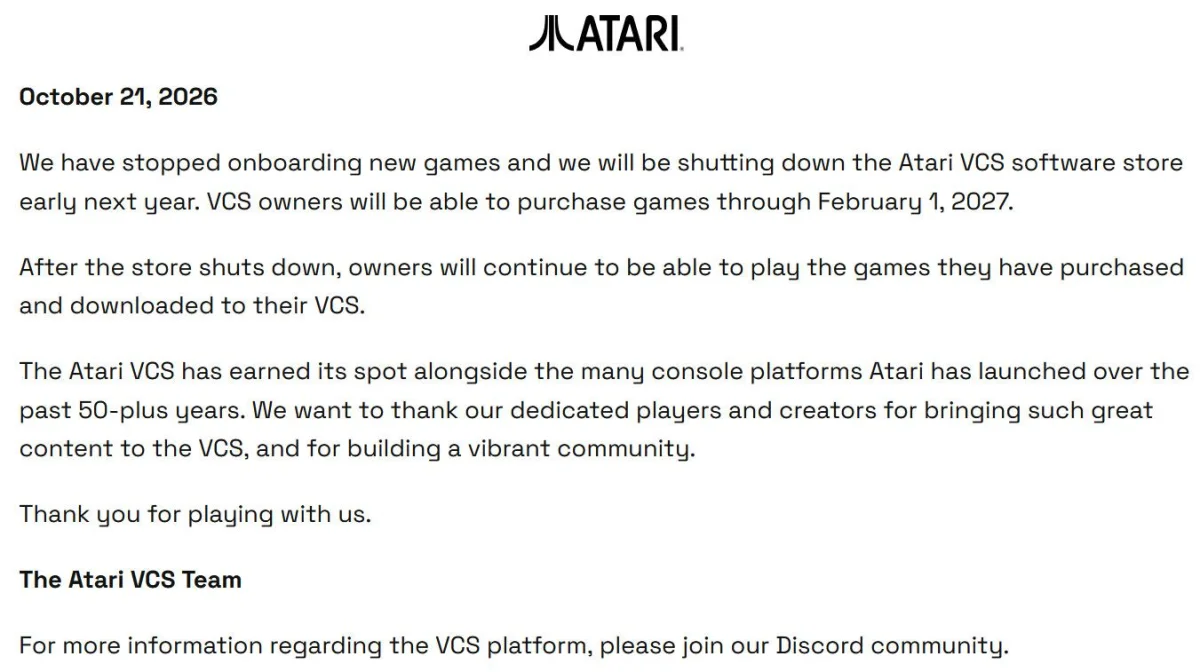
Atari’s VCS page carries the October 21-dated notice, while a moderator’s longer statement in the Atari Club Discord gives the key dates. The moderator said the planned update would remove dependencies on Atari infrastructure for “authentication and software.” Atari has not provided further details in the source material about the update’s release date, installation process, or which store functions will migrate to local use.
Homebrew could keep the VCS useful after the store closes
The Homebrew app is the most direct way Atari says it will preserve an active software path for the console. Users will be able to add games, while developers can continue creating apps and sharing them with the VCS community. That offers a route for community-made software to outlast the commercial storefront, but it doesn’t by itself establish how easy it will be to publish, install, or maintain those projects.
Owners who depend on the console should watch for Atari’s migration instructions and details about Homebrew distribution. A move to local authentication and software could reduce dependence on remote services, but its practical value will hinge on what the update covers and whether users can complete the transition without losing access to software they already have. The Discord community may be a useful source of walkthroughs as those details emerge.
A hybrid console with PC hardware
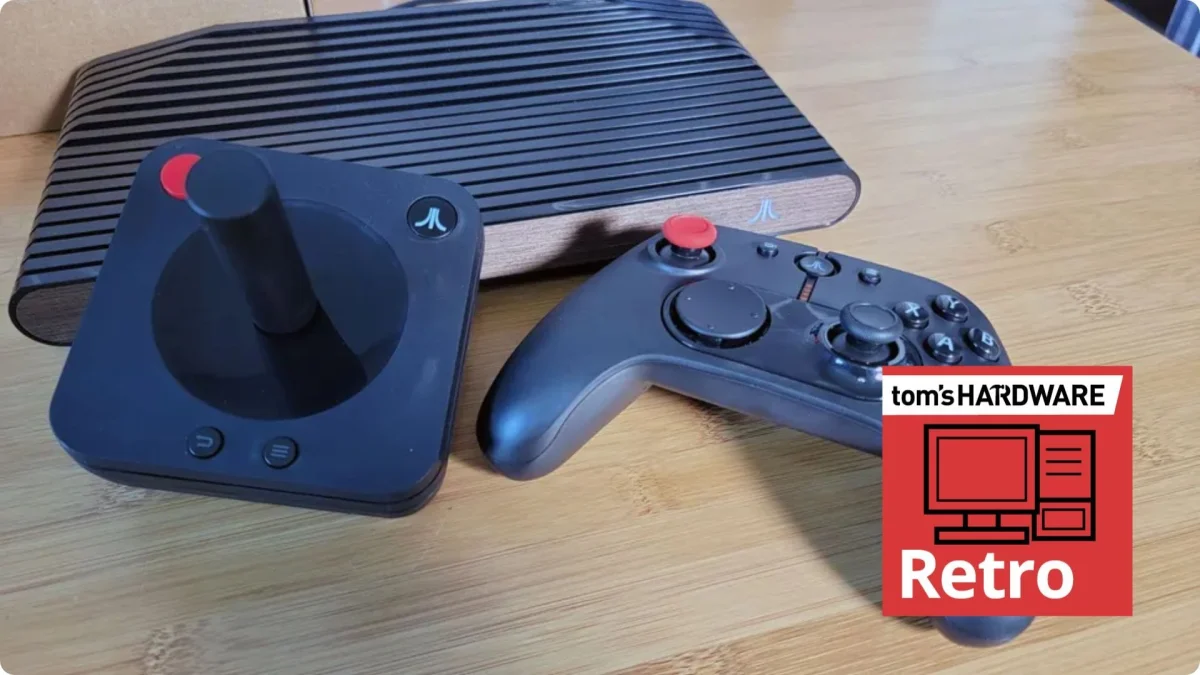
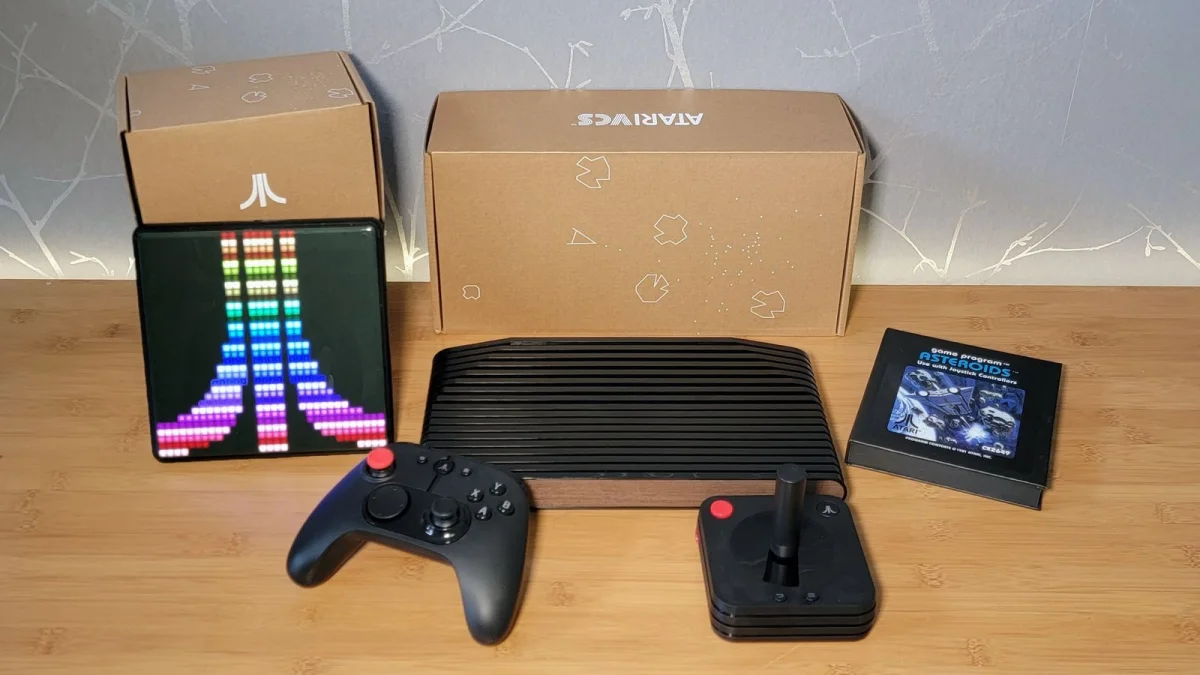
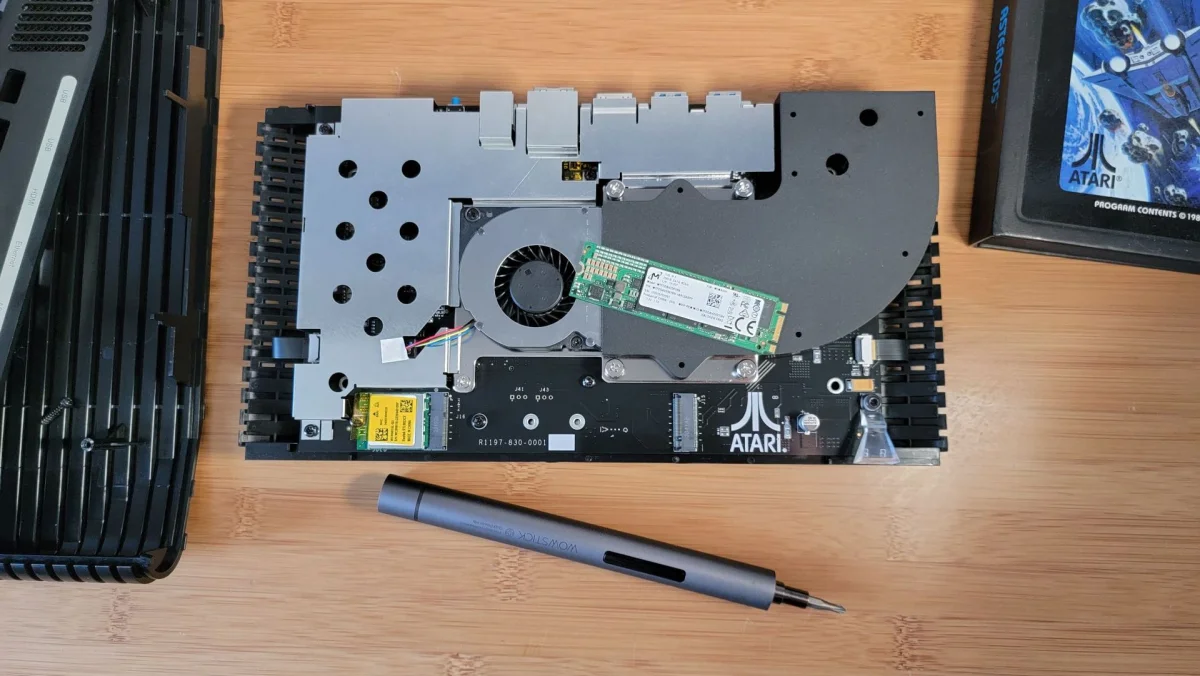
Released in mid-2021 after years of delays, the modern VCS paired retro styling with hardware closer to a compact computer. Its case echoed the 1977 Atari 2600, originally called the Atari Video Computer System, but its internals used an AMD Ryzen Embedded R1606 APU. That chip has a two-core, four-thread CPU and Vega 3 integrated graphics. The system shipped with 8GB of DDR4 memory and 32GB of eMMC storage, both of which could be upgraded.
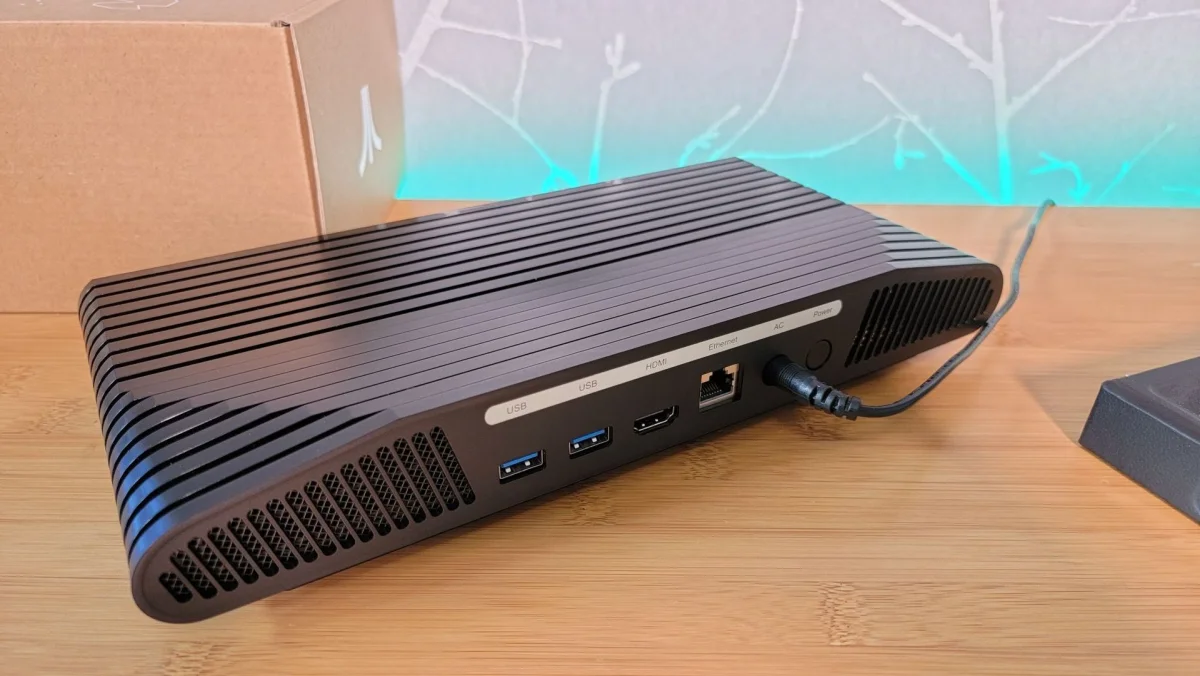
Memory upgrades use a SODIMM, and the machine has an M.2 slot for a SATA SSD. Other connections include Wi-Fi on 2.4GHz and 5GHz bands, Bluetooth 4.0, HDMI 2.0, Gigabit Ethernet, and four USB 3.1 ports, split between the front and rear. This specification gave owners room to treat the VCS as more than a closed console: the hardware could run Linux, Windows, or Chrome OS.
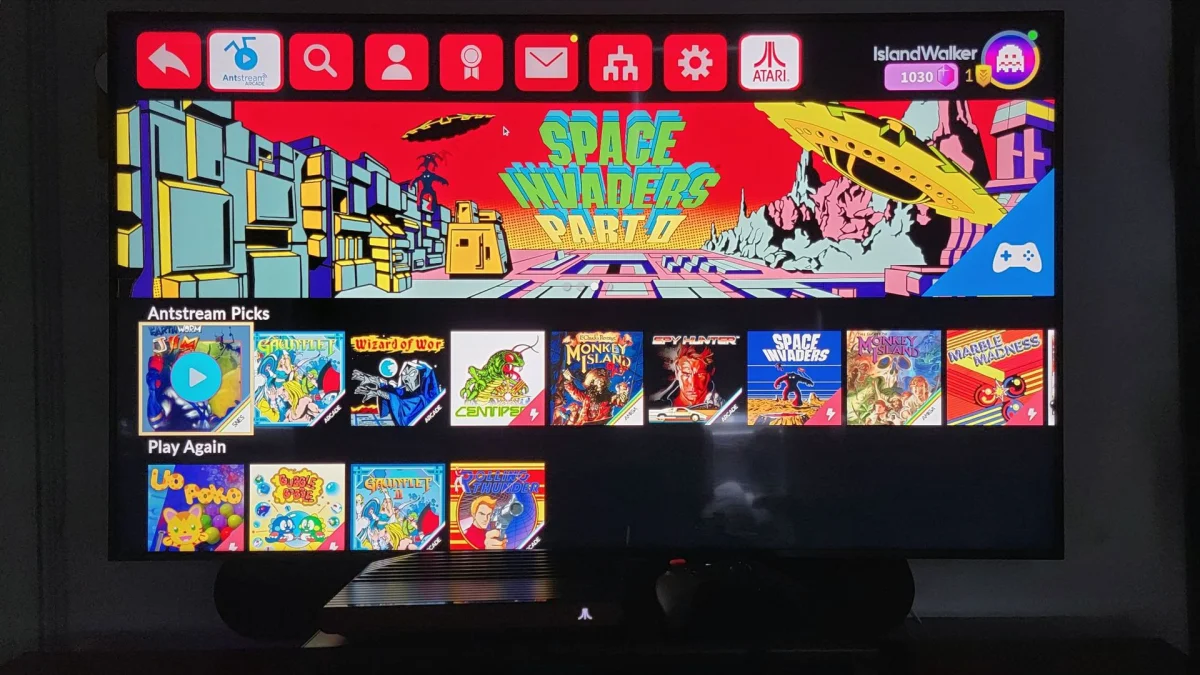
Atari shipped it with a custom Debian-based Linux operating system. That software presented a tailored interface, a collection of 100 classic games, a store for retro titles, and access to streaming apps such as Netflix, Disney+, and HBO Max. The planned local migration is significant because the VCS already had a PC mode; the question now is how much of the Atari-specific experience can remain usable when the company’s services are gone.
The original trade-offs still shape its appeal
When Tom’s Hardware reviewed the VCS in July 2021, the system cost $399. The review found its PC mode clunky and its responsiveness disappointing, and streaming apps were less convenient without a keyboard and mouse. The fan was also conspicuously loud. For buyers mainly seeking a retro gaming setup, the review suggested that a budget mini PC or Raspberry Pi could be a better starting point.
Those limitations remain relevant to the VCS’s future. Its upgradeable memory and storage, PC mode, and coming Homebrew support give owners options, but the hardware’s continued usefulness depends on the software transition as much as on its specifications. Atari has set a final date for store access and says it will end platform support after migration. The next useful measure will be whether the promised update makes the console’s remaining functions practical to use offline.