Character.AI Turns 20+ Public-Domain Classics Into Interactive Stories
Character.AI Books lets users enter classic stories as characters, follow the original plot or remix it, with access limits for free users.

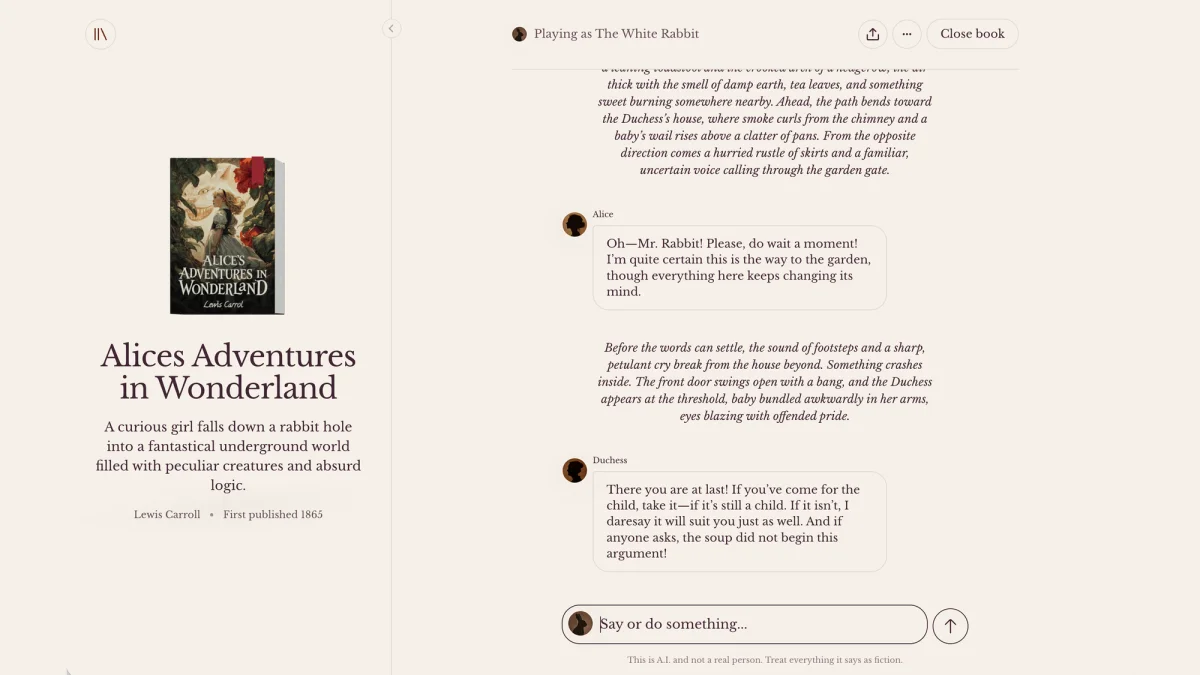
Character.AI Books gives readers a way to take part in familiar literary worlds: choose a role, converse with characters and influence how a story proceeds. Its initial library spans more than 20 public-domain works, including Alice in Wonderland, Pride and Prejudice, Dracula, Frankenstein, Romeo and Juliet and The Great Gatsby.
The product is available on mobile and web through c.ai Labs, Character.AI’s area for experimental entertainment features. The company describes each title as playable, with two story modes that set different expectations: one tracks the source book’s central plot, while the other allows freer roleplay. That distinction matters. One offers an interactive route through a known narrative; the other treats the book’s setting and cast as material for improvisation.
Access depends on subscription level. Free users receive a limited number of turns, while c.ai+ subscribers get a substantially larger allowance, which the company says is enough to explore the full library. Character.AI hasn’t specified the turn counts in the supplied product description, so prospective users can’t tell exactly how much exploration the free tier supports before they try it.
A familiar starting point for interactive fiction
Open-ended roleplay can leave users with the work of inventing a setting, cast and conflict. Books supplies those elements in advance. A reader can enter a story with established characters and stakes, then respond from within that world. For someone who already knows a title, that creates a new way to revisit it; for a newcomer, it offers an accessible first encounter with its characters and premise.
That format also raises a practical question about what “following” a book means. Character.AI says Book arc mode keeps the original narrative, its core characters and stakes in view, while letting the user participate. The description doesn’t explain how closely a session follows the text, how much the plot can change in this mode, or how the system handles moments where a user’s choices pull against the source. Readers looking for a faithful retelling will need to judge that in use.
Go off script mode sets a different goal. It invites users to interact with the fictional world however they choose, making it better suited to alternate scenarios than to a guided pass through the original plot. The two modes give the same title room to serve as both a reading companion and a roleplay setting, though the company’s description doesn’t provide details about how conversations are generated or how consistently characters retain their written traits.

Public-domain works, with a growing catalog
The launch collection draws from Project Gutenberg and includes works whose original texts are in the public domain. That gives the feature a substantial range of recognizable settings without requiring users to supply their own source material. Character.AI calls the catalog a starting point and says users can request more titles and authors. It hasn’t provided a schedule or selection process for additions.
The source texts provide a common reference point, but the interactive experience is not the same as reading them. A conversation may foreground a character or scene that a reader would otherwise encounter as part of a larger work; roleplay can also take the story away from its original sequence. For literary discovery, that may make a book’s premise more approachable. It won’t by itself show whether users go on to read the source, a goal the company presents as part of the feature’s appeal.
Choose a character or bring a persona
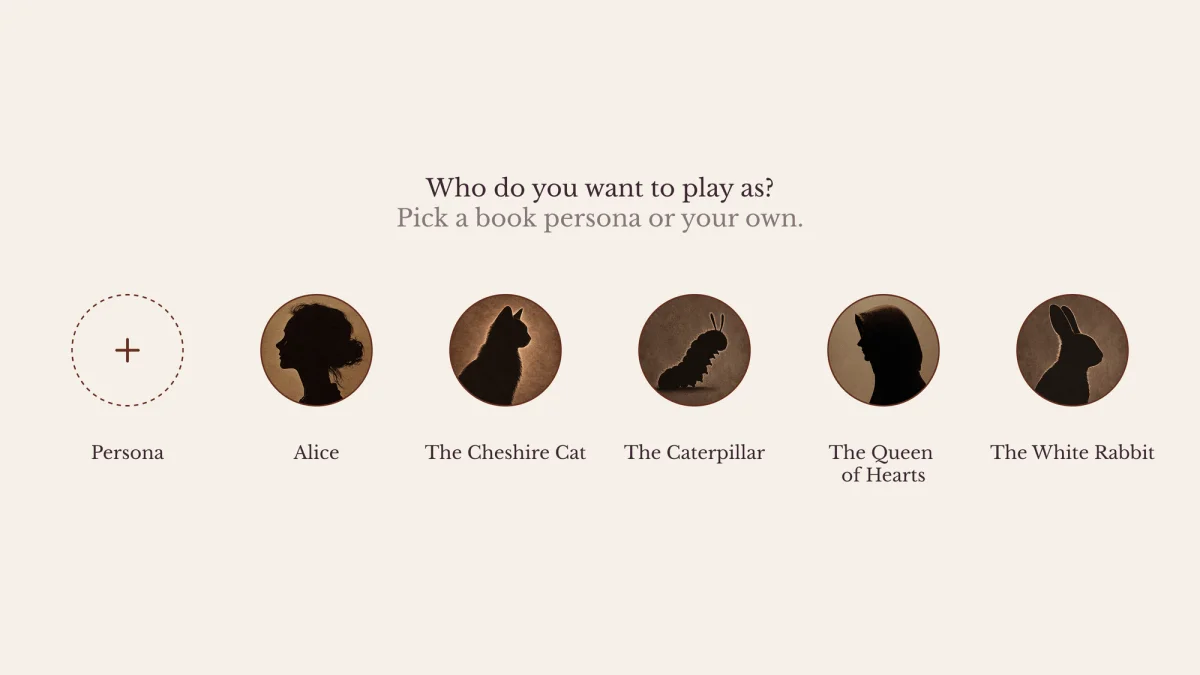
Users can take the role of a character from the book or introduce their own c.ai Persona into the narrative. This makes the feature flexible about who the user becomes: they can revisit a familiar character’s story from the inside or arrive as someone new. The product description doesn’t specify whether every character is available in every title, or how much control users have over a persona once a story begins.
Character.AI also says a guided mode called TapTale is coming soon. It will offer prewritten prompts that users can tap to move a story along, with freeform typing available alongside them. That approach could help users who want more direction than an open text box provides, while preserving room to make their own choices. The company hasn’t given a release date for TapTale.

Alternate universes extend the source material
Books also supports alternate-universe remixes, which let users recast a title’s premise. Character.AI’s examples include making Alice in Wonderland a romantic comedy, moving it to outer space or turning it into a musical road opera. These variations shift the product from interactive adaptation toward collaborative fan storytelling: the original supplies recognizable characters or a starting idea, while the remix changes the conditions around them.
Users can browse and play community-created remixes, as well as share their own. That gives each title the potential to support many experiences beyond its source text. The quality and consistency of those experiences will depend on the individual remix, and the product description doesn’t explain how community submissions are reviewed or surfaced.
The clearest way to assess c.ai Books is to try a title in both modes. The feature combines a fixed literary reference point with open-ended conversation, and its value will turn on whether those conversations make the source more engaging without obscuring what made the original story distinctive. c.ai Books is available through c.ai Labs.


