NVIDIA Expands Open Model Portfolio for Enterprise AI, Robotics and Quantum Computing
NVIDIA adds models for enterprise data, robotics, protein design and quantum systems, with tools and deployment options spanning research and production.
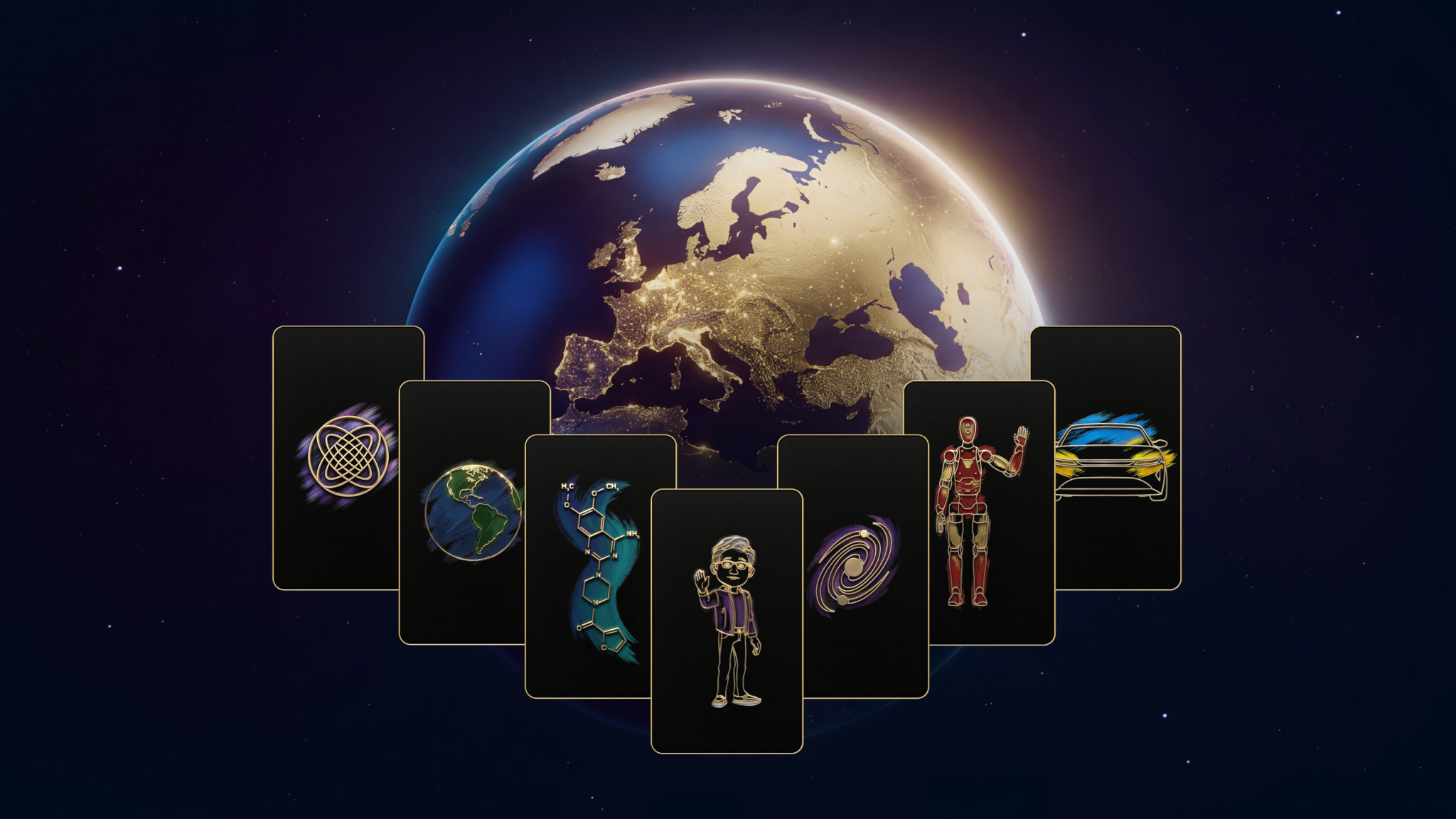
NVIDIA’s latest open model releases span several workloads that usually require different data, tools and deployment choices: language and retrieval, structured business data, physical-world simulation, protein design and quantum computing. The shared pitch is customization: organizations can adapt models with their own data and run them on infrastructure they control. The practical value will depend on each model’s performance, compute needs and fit with a team’s existing systems.
The portfolio includes Nemotron 3.5 Super VL and Nemotron 3.5 Bolt, Nemotron Retriever models for embedding, reranking and document parsing, Kumo models for structured data, Cosmos 3.5 world models, Alpamayo 2 Edge for autonomous vehicles, BioNeMo RFD4-Proteina for protein design, and Ising models for quantum computing. NVIDIA also points to a wide network of post-training and deployment partners, reflecting a strategy that pairs open model weights with services for adapting and running them.
Nemotron targets agents and custom language models
Nemotron combines open language models, datasets and training recipes for developers building agents. Its models process text and images and are intended to coordinate workflows, reason through complex tasks and handle specialized work at lower cost. NVIDIA says the portfolio draws on research and expertise from the Nemotron Coalition, which includes European partners Black Forest Labs, H-Company and Mistral.
Companies are using Nemotron as a starting point for applications based on their own knowledge. The list named by NVIDIA includes Dassault Systèmes, Domyn, Dream, Palantir’s customers, Salesforce, SAP, Shopify, Synopsys and WPP, along with services firms Accenture and EY. Their work includes custom models and domain-specific agents. A broader group of post-training partners—including AI21, Baseten, CoreWeave, Fireworks, Google Cloud, Nebius, Scale AI and others—is helping adapt Nemotron for particular workloads.
That ecosystem matters because a general model often needs further training and evaluation before it can handle a company’s specialized tasks. The announcement doesn’t provide comparative benchmark results or detailed cost figures for Nemotron, so those claims will need to be assessed against workload-specific evaluations.
Kumo brings prediction to structured data
Kumo is designed for agents and applications that need to make predictions from relational and tabular business data. NVIDIA describes uses including forecasting outcomes, identifying fraud risk and recommending actions. The models and libraries are part of its Agent Knowledge Foundation, and are intended to reduce the time and effort involved in building separate machine-learning pipelines for each task.
Developers can start with pretrained Kumo models, then fine-tune them on proprietary data when a task needs better performance. Kumo Structured covers relational and tabular prediction, forecasting and anomaly detection; Kumo Engine is an open library stack for building and deploying structured-data foundation models.
Cognite, Coinbase, Databricks, DoorDash, Revolut and Tubi are among the first organizations working with Kumo. Snowflake customers are also using the models in advertising, energy, financial services and retail. Those examples suggest the intended range, while leaving open how well a shared foundation model performs across distinct data schemas and business objectives.
Cosmos focuses on simulation and training data
Cosmos is NVIDIA’s family of world models for developers working on robots, autonomous vehicles and vision agents that interact with physical environments. New post-training and optimization tools aim to improve these models with less compute. Simulation checkpoints let developers evaluate behavior in interactive driving and robotic manipulation scenarios before testing in the real world.
NVIDIA is also introducing Cosmos Data Factory, a set of blueprints and agent skills for curating, labeling, generating and evaluating training data. Its target examples include driving scenarios, product defects, image augmentation and event generation. Teams can run complete workflows or use individual capabilities, with agents coordinating steps in the process.
Porsche with Voxel51, ANYbotics with Encord, Zalando, CEVA Logistics with Sereact, and Siemens are using Data Factory to build varied training datasets and improve model precision. The central question for teams will be whether generated or curated simulation data improves performance on the specific situations their systems encounter.
Specialized models extend into vehicles and biology
Alpamayo 2 Edge is a compact reasoning model for real-time scene understanding and motion planning in autonomous vehicles. Built on Cosmos and optimized for NVIDIA DRIVE AGX Thor, it is intended to bring advanced driving capabilities to vehicles with lower computing requirements. NVIDIA says it will be available for download on GitHub and Hugging Face later this month.
In biology, RFD4-Proteina is an open protein-design model developed by NVIDIA and the Baker Lab at the University of Washington’s Institute for Protein Design. It generates protein sequences and 3D structures, with intended applications including binding to difficult targets, assembling into complex structures and binding to small molecules.
NVIDIA reports leading performance across more than 10 protein-design tasks. In a benchmark involving 200-amino-acid proteins, it says RFD4-Proteina generates designs about 13 times faster than RFdiffusion3. Researchers can use agents to generate and assess candidates against design goals and molecular constraints before selecting designs for laboratory testing. The reported speed comparison is specific to that benchmark; it doesn’t by itself establish experimental success rates.
Ising addresses quantum calibration and error correction
The Ising model family is intended to support quantum-computing development, from real-time hardware calibration to error correction, across different qubit types and hardware requirements. IQM Quantum Computers is using Ising to calibrate its processors. NVIDIA says specialized open calibration models can outperform large general-purpose models, though the announcement gives no benchmark figures for that comparison.
SEEQC is combining Ising with NVIDIA NVQLink and its Digital Link for the low-latency demands of real-time quantum error correction. AWS is integrating the models into AWS Parallel Computing Service, giving researchers a way to work with Ising before deployment. Quantum error decoding is typically run on classical hardware near the processor because of latency requirements; access through AWS PCS gives researchers another setting for development.
Where developers can access the models
Nemotron 3.5 Super VL is available through Hugging Face, ModelScope, OpenRouter and build.nvidia.com as an NVIDIA NIM microservice, as well as through NVIDIA cloud, post-training and inference partners. Nemotron 3.5 Bolt E4B 4GB is listed as expected on Friday, Oct. 23. Nemotron Retriever models are available through Hugging Face, partner platforms and build.nvidia.com.
Kumo models are on Hugging Face, with a production inference package on build.nvidia.com. Cosmos is available through Hugging Face, GitHub and selected inference partners. RFD4-Proteina can be accessed through build.nvidia.com, GitHub, Hugging Face and selected inference partners; Ising is available through GitHub, Hugging Face and build.nvidia.com.
The releases give teams several ways to begin—from downloadable weights and libraries to hosted inference and partner support. For adoption decisions, the next useful evidence will be workload-specific evaluations, deployment costs and results from testing against real data and operating constraints.


