Three Restarting Nuclear Reactors Could Add 2.25 GW for Data Centers
Palisades, Crane and Duane Arnold are targeted to return by 2029, adding 2.25 GW as data center demand strains grid connections.
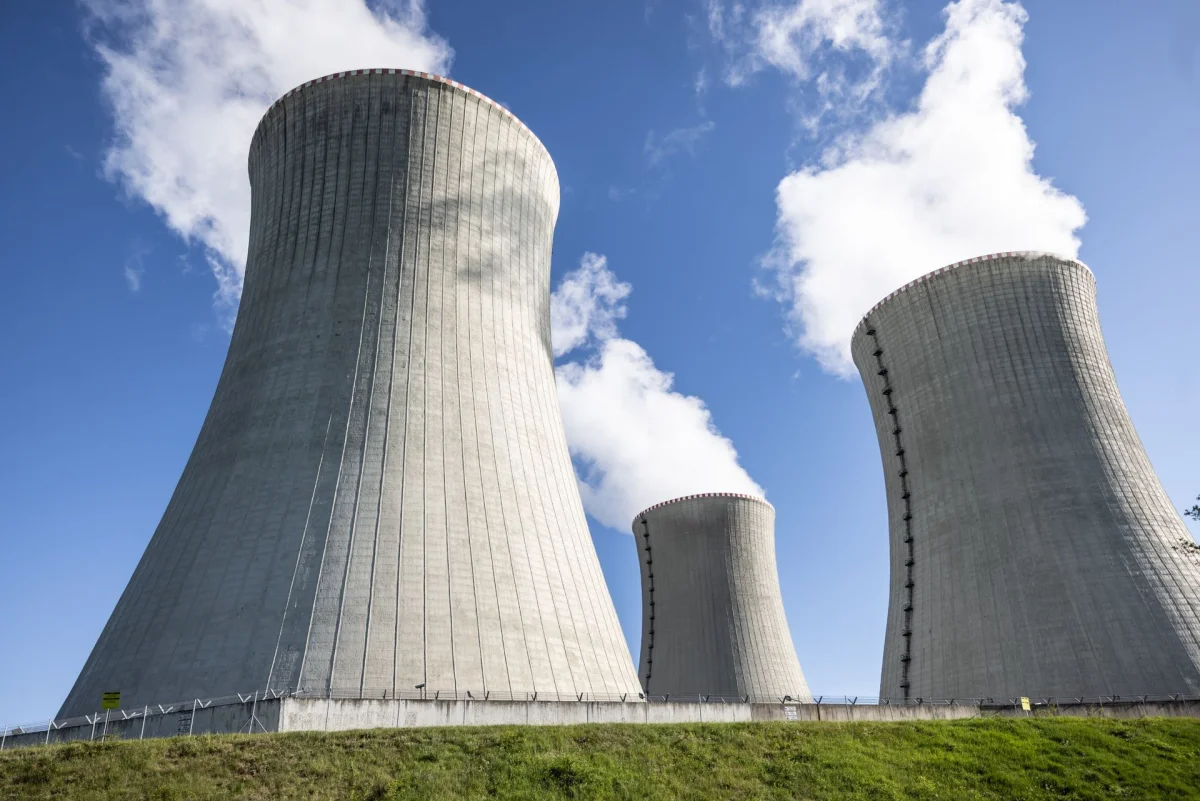
Three retired nuclear reactors are being prepared to return to service, with a combined projected output of 2.25 GW. The projects at Palisades in Michigan, Crane Clean Energy Center in Pennsylvania and Duane Arnold in Iowa point to a practical response to data center developers’ power needs: bringing existing sites back online can add large amounts of generation without waiting for entirely new plants to be built.
The timelines and customer arrangements differ. Palisades is furthest along and is expected to produce 800 MW around March 2027. Crane is projected to deliver 835 MW in 2027, with Microsoft set to buy its output under a 20-year contract. Duane Arnold, a collaboration between NextEra Energy and Google, is expected to provide 615 MW starting in 2029. Those dates and capacities are project forecasts, not delivered power; each restart still has work ahead.
The scale matters because grid connections have become a major obstacle to data center construction. Operators facing long waits for access may be willing to pay for dedicated generation that arrives sooner. Restarting a plant can draw on an existing site and generating equipment, but it still requires extensive refurbishment, fuel, staffing and safety work. The three projects show how rising demand can change the economics of assets that were previously judged too expensive to operate.
Three projects, three schedules
Palisades presents the unusual case. Decommissioning had already begun when its restart effort got underway, making it the first reactor to be brought back after dismantling work started. The plant was loading fuel in August 2026 and is expected to reach 800 MW around March 2027. That makes it the nearest of the three to returning, although its projected output remains contingent on completing the remaining steps.
Crane Clean Energy Center is restoring Unit 1 at the Three Mile Island site. Constellation Energy began the project in 2024 and said it would spend $1.6 billion on the reactor. It later obtained a $1 billion loan for the work. Microsoft is expected to be the primary customer, backed by a 20-year supply contract, and the unit is projected to add 835 MW sometime in 2027.
The history of the site makes the distinction between its two units essential. Unit 2 suffered a partial meltdown in 1979; the current effort concerns Unit 1, which did not show significant problems until it was taken out of service in 2019. Unit 1 has undergone a safety inspection, but it must receive clearance before fuel loading can begin. The project’s schedule therefore depends on that remaining step as well as its refurbishment work.
At Duane Arnold, NextEra Energy and Google are working together on a return targeted for 2029. The facility’s projected output is 615 MW. NextEra chief executive John Ketchum said the arrangement means residential customers in Iowa won’t pay the project’s costs. The later schedule puts Duane Arnold behind the other two plants, and its planned contribution should be read as a future addition rather than near-term supply.
Demand forecasts are wide-ranging
Each restart is modest in relation to the local data center demand forecasts cited in the source. Michigan’s projected data center needs around 2030 range from 1.2 to 2.3 GW. Pennsylvania’s estimate spans 0.8 to 3.4 GW, while Iowa’s runs from 1.55 to 2.8 GW. The combined 2.25 GW from the three reactors is substantial, but the figures don’t show that it will cover each state’s demand: the plants serve different grids, and their individual outputs are smaller than some local forecasts.
Those estimates also carry considerable uncertainty. They include proposed data center capacity that may never be built, and projects that do proceed can be delayed by economic conditions or hardware availability. Local resistance can also affect whether large developments move ahead. As a result, planned demand should not be treated as a firm load that will appear on schedule.
The reactors were shut down at different times after their owners judged operating costs too high, including labor and maintenance. The calculation now looks different: power buyers have a strong reason to secure generation near their projects, and they may accept higher costs when that supply can arrive years sooner than a new connection or plant. Yet a restart doesn’t erase the maintenance burden or guarantee that projected output will arrive on time.
For data center planners, the useful measure will be how much capacity reaches the grid, when it does, and which customers have contracted to use it. The 2.25 GW headline describes three separate projects with distinct schedules and dependencies. Their progress will show whether restarting existing reactors can provide a repeatable source of power for expanding computing demand.
For context on the infrastructure behind that demand, see the data center cooling state of play, custom AI accelerators, changes in AI chip requirements, a GTC 2026 discussion on hyperscale and high-performance computing, and rising demand for data center CPUs.