Greenpeace Protest Interrupts Jensen Huang’s Nvidia GTC Keynote in Berlin
Protesters challenged Nvidia over reports of Jetson chips in Russian weapons and its environmental impact; Huang said he would speak with them later.
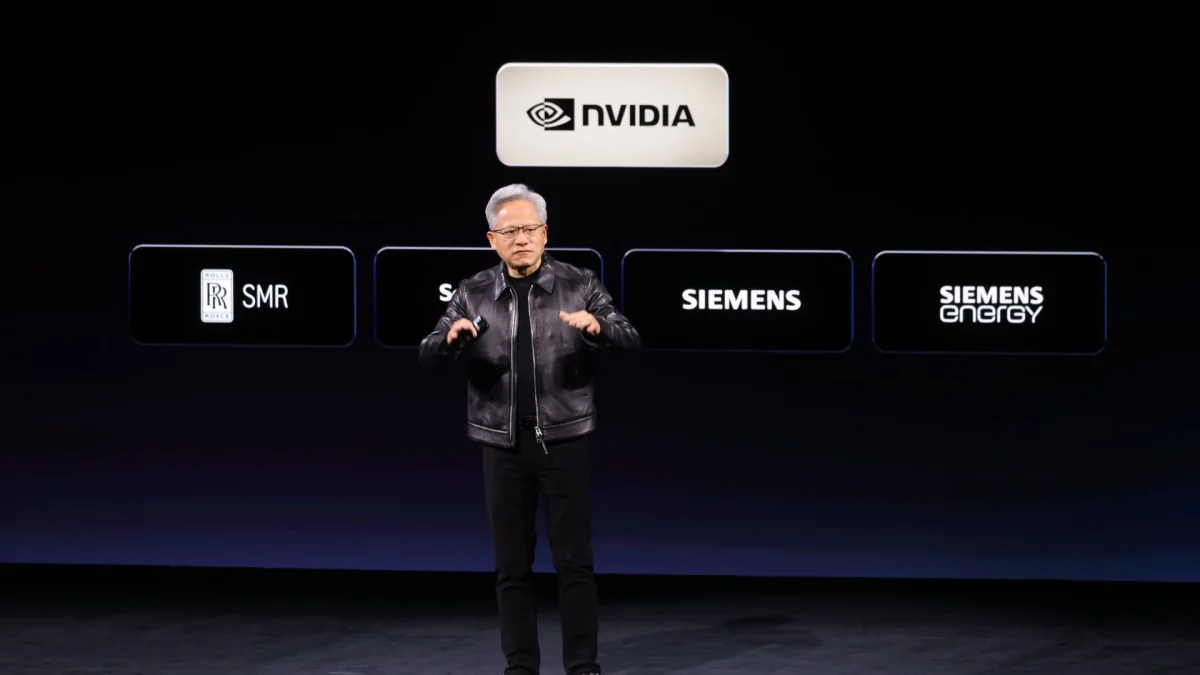
The interruption at Nvidia’s Berlin GTC keynote put two questions about the company’s chips in front of CEO Jensen Huang: how they can end up in Russian weapons, and what Nvidia is doing about environmental harm. The protest lasted only briefly, but it landed amid reports that Nvidia Jetson modules were recovered from Russian weapons and a company explanation that it can’t track every chip after resale. The moment brought a supply chain problem into the center of a product showcase: a company can describe what a component was designed for, yet have little visibility into where it goes after a sale.
What happened during the keynote
Minutes into Huang’s customary address on Wednesday morning, a person in the auditorium called on him to respond to claims that Nvidia chips had been found in Russian drones. The protester also raised environmental destruction. Attendee footage showed demonstrators standing on chairs behind a banner reading “Nvidia, clean up your dirty business!” with a Greenpeace logo. The two accusations point to different kinds of accountability: one concerns the later use of hardware, while the other concerns environmental effects that weren’t specified in the footage.
The disruption wasn’t fully captured by Nvidia’s livestream. In footage that circulated on X, Huang can be heard saying, “It’s okay, go easy,” as security staff escorted the demonstrators out. “I’ll talk to you later,” he said as they left. Huang then quipped, “All important issues, but let me get through my keynote,” and continued his presentation. The exchange was brief, and the available footage doesn’t show a substantive response to either charge. It does show how quickly a polished product event can be interrupted by questions about what happens beyond the stage.
The chip traceability problem
The protester’s question appears to refer to reports about Nvidia Jetson chips found in Russian cruise missiles and AI drones. One report said Russia’s S-71 “Monochrome” weapon had autonomous targeting capability powered by a consumer-grade Jetson Orin chip. A separate report in August said forensic teams identified Jetson Orin modules in a Russian AI drone linked to the deaths of three civilians in Ukraine. That report described the case as the first documented civilian deaths caused by a Russian drone using fully autonomous targeting. These accounts describe reported hardware findings and capabilities; they don’t, on their own, establish how the modules were obtained or how much the chips contributed to the weapons’ operation.
Nvidia has said Jetson Orin modules are consumer products sold to students, developers and startups for beneficial applications. The company told Tom’s Hardware that the chips aren’t available in Russia and aren’t designed for military use. It also acknowledged a limit: once a module has been sold, Nvidia can’t track its resale as pre-owned hardware. That distinction is central to the company’s position. A restriction on direct availability can describe the intended sales channel, but it doesn’t answer what happens when hardware is resold or passed between owners.
That gap matters because a chip’s intended market and its eventual destination can diverge. A company may set restrictions on direct sales and still have limited visibility after products change hands. In this case, the reported presence of Jetson hardware raises questions about how components move through resale channels and what manufacturers can realistically learn about their downstream use. The source material doesn’t establish how the specific modules reached the weapons described in the reports. That uncertainty should temper claims about the route, while leaving the traceability question intact.
For hardware makers, this is a familiar tension in a different form: products designed for broad civilian use can be attractive wherever compact computing is useful. Tracking every device after resale is difficult, especially when ownership changes outside the original seller’s systems. But “difficult to track” is a description of the problem, not an account of what a company can do to reduce it. (And this is the part most people overlook.) Public explanations are more useful when they distinguish known limits from steps a manufacturer can take within those limits.
What the incident leaves unanswered
Huang’s brief response acknowledged the subjects raised without addressing them during the keynote. The company’s earlier comments explain its position on product design and sales, but they don’t describe a way to trace used modules or prevent them from reaching unauthorized buyers after resale. The reports also don’t establish how much of the weapons’ targeting capability depended on the Jetson hardware. Those are separate questions: one concerns the path a component took, and the other concerns its technical role once installed.
The environmental charge raised by the protesters wasn’t elaborated on in the available footage or Nvidia’s response described here. That leaves its specific basis unclear. The interruption nevertheless tied environmental concerns to questions about the social consequences of widely distributed computing hardware, two issues that require separate, concrete answers from the company. Without details about the environmental claim, it would be premature to treat the protest as evidence for a particular impact; it’s still a prompt for Nvidia to explain what concern the demonstrators were asking it to address.
Why the questions matter beyond Berlin
Huang was in Berlin for Nvidia’s three-day GTC event, running October 20–22, with the keynote, fireside chats and sessions for developers and business leaders. The immediate takeaway for the industry is practical: consumer availability and stated product purpose don’t provide visibility into every later use. If you’re working in this space, the distinction between a product’s intended market and its real-world circulation is one to keep in view when assessing claims about safeguards. The numbers here are underwhelming in a different sense: the public account gives little detail about the scale of the problem or the company’s response beyond its stated inability to follow resale.
This is more significant than it looks. A brief interruption can expose a gap between a company’s product-level explanation and the broader questions people want answered about distribution and impact. Nvidia’s comments set out what the modules are designed for and what the company says it can’t track; they leave the practical response to resale and the environmental allegation open. What this means for you is that the most useful follow-up will be specific: what the company knows about downstream circulation, what limits it faces, and how it assesses concerns raised about environmental harm. The keynote moved on. The questions didn’t.


