AMD’s Ryzen Overclocking Driver Brings New CPU Controls to Linux
AMD’s Linux kernel patches expose Ryzen tuning controls through sysfs, giving developers a foundation for monitoring and CPU management tools.
AMD’s proposed AOD (AMD Overclocking Driver) patches could give Linux software a supported path to several Ryzen platform controls. The work exposes settings and monitoring data through the kernel’s sysfs interface, opening the way for desktop utilities to build CPU management features on top. The patches are under review, so this is a foundation in progress rather than a finished Linux tuning tool.
That distinction matters. Linux users have often had to rely on firmware settings or machine-specific methods to adjust hardware. A kernel interface gives software a more consistent place to access supported controls, while leaving the user-facing experience to the tools built around it. AMD’s approach resembles its work on open-source graphics support: provide the low-level pieces, then let developers create the applications and interfaces.
Controls exposed by the patches
The initial driver work covers platform-level SMT toggling, memory clock visibility and power controls. SMT, or Simultaneous Multithreading, can be enabled or disabled through the driver. The mechanism uses CPU hotplugging, offering a way to change the setting while the system is running instead of relying on the kernel’s nosmt boot parameter.
That capability gives administrators and enthusiasts another way to manage processor behavior. It does not, by itself, show whether a workload will run faster with SMT enabled or disabled; that depends on the software and system configuration. The practical value is access to the control through a kernel interface, which could make it easier for utilities to expose and automate.
The driver also makes memory clock information available for monitoring. Visibility can help users understand how a system is operating while they test settings or investigate performance. The patches begin adding power tunables as well, though the source does not specify the full set of controls or describe how they behave across different Ryzen platforms.
These features do not amount to a complete replacement for firmware setup. The patches describe a route for software to reach selected platform adjustments, but the article offers no detailed compatibility list, supported processor generations, or instructions for using the controls. Those details will matter as the code develops and tools begin to adopt it.
Linux still needs the user-facing tools
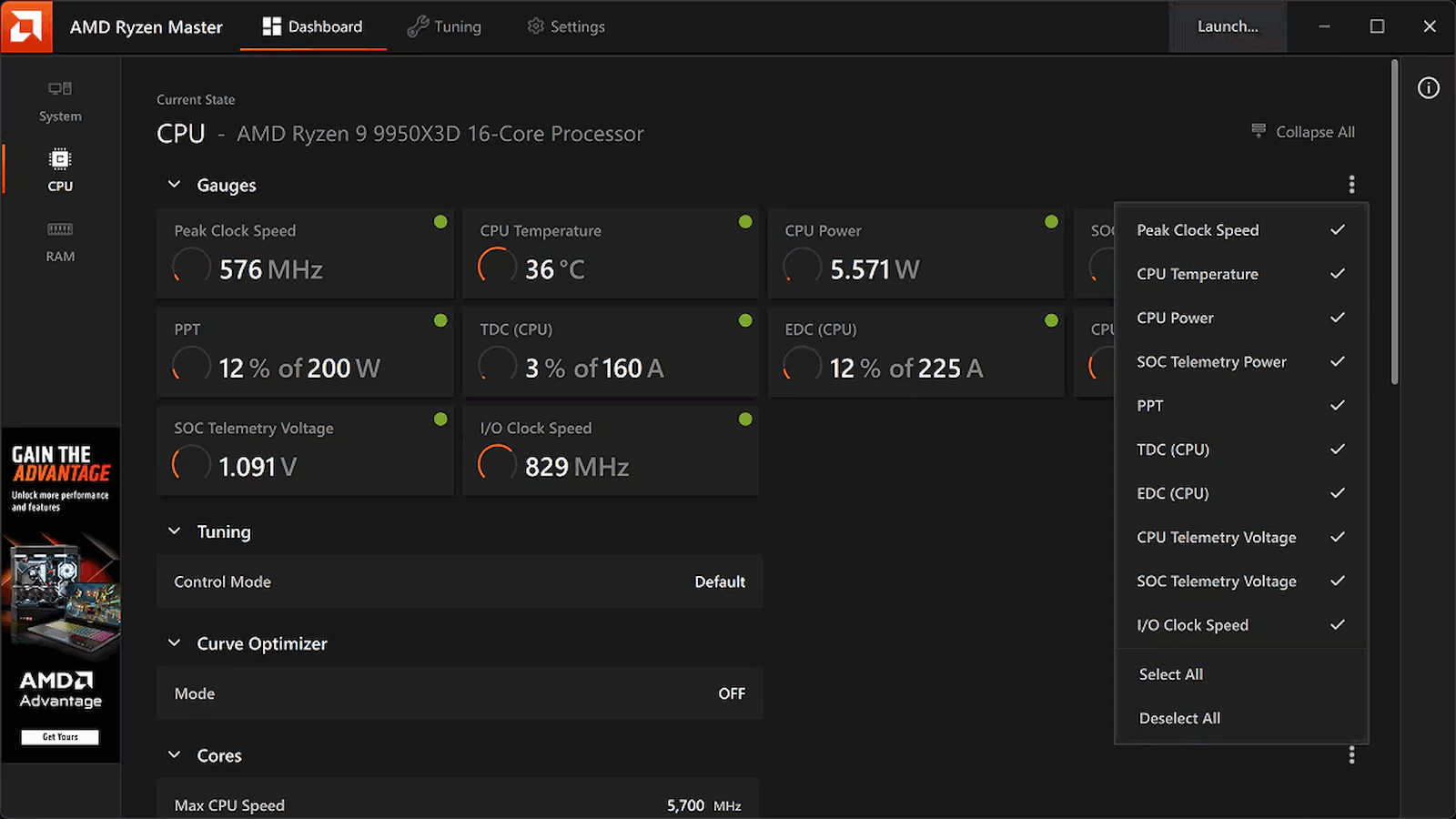
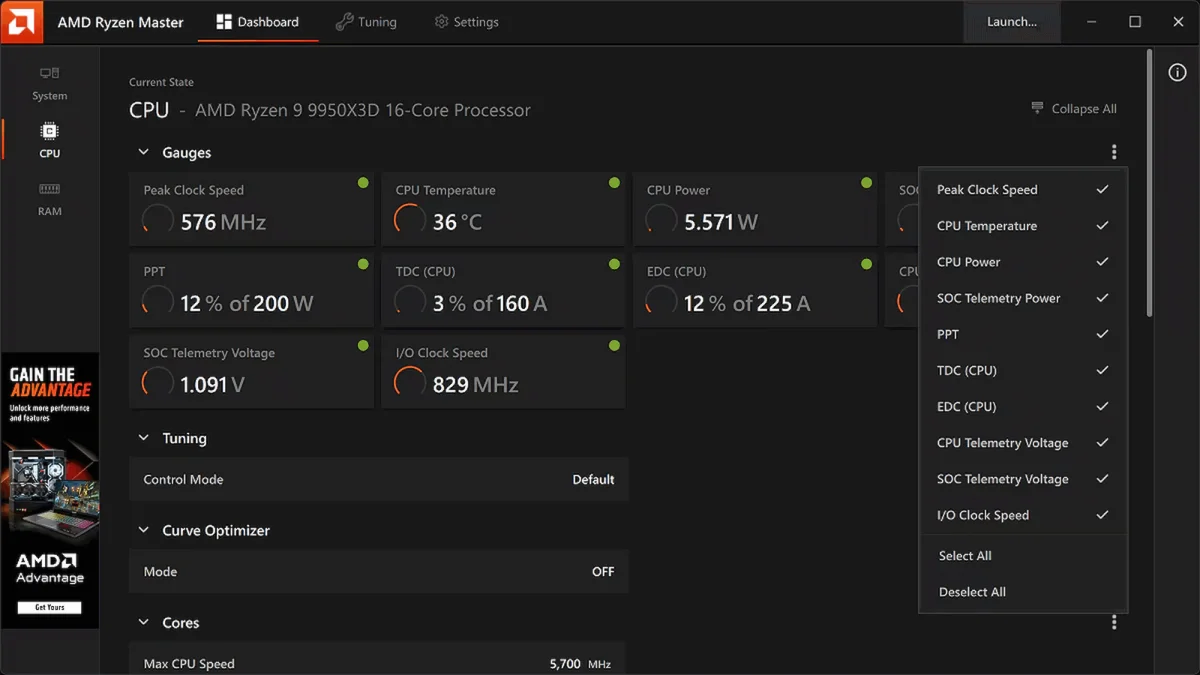
There is no Ryzen Master equivalent for Linux in this announcement. The driver supplies kernel plumbing; a separate application would need to present controls, explain their effects and help users monitor the system. Utilities such as CoreCtrl could potentially add support, but the source reports no completed integration or release schedule.
That leaves a practical gap between having a kernel interface and having an accessible tuning workflow. Developers will need to determine how to map the sysfs controls into clear settings, handle differences among systems and communicate which changes are available. A useful interface will also need to make monitoring straightforward, since users need feedback when they adjust processor behavior.
Sysfs provides a familiar interface for Linux software, which may lower the barrier for community tools to connect to the driver. It could support existing monitoring and tuning applications or new desktop controls. But the availability of a standard interface does not guarantee that every tool will support every setting, or that all Ryzen systems will expose the same options.
Review is the next milestone
The patches are still moving through review on kernel mailing lists. Their path toward inclusion in a mainstream kernel therefore remains ahead, and the current proposal should not be treated as a feature already available in standard Linux installations. Review and later development will determine which parts land and how the interface evolves.
For people who tune Ryzen systems, the important change is the prospect of accessing some processor controls through an AMD-backed kernel driver instead of depending entirely on firmware menus or individual workarounds. The first capabilities are limited, and the source provides no benchmark results showing that the driver improves performance. Its near-term contribution is access and infrastructure.
The next signs of progress to watch are the outcome of kernel review, documentation of supported controls and hardware, and the arrival of user-space tools that make those controls practical. If those pieces come together, Linux users will gain a more direct way to inspect and manage Ryzen platforms. For now, the patches mark a promising start, with the software experience still to be built.