Terafab Equipment Shipments Accelerate as Musk Targets 2028 Chip Production
Musk says suppliers are speeding equipment deliveries for Terafab, which targets chip production in 2028. The schedule remains highly aspirational.
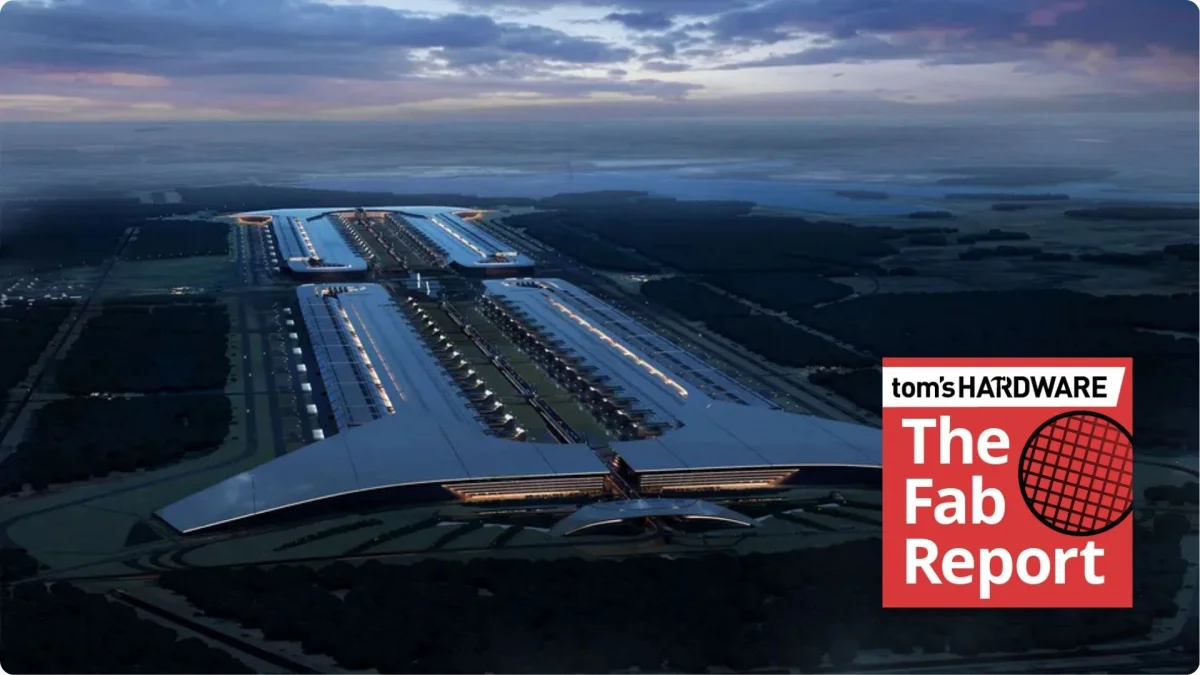
Terafab’s schedule now depends in part on semiconductor equipment makers moving deliveries forward. Elon Musk said ASML and other suppliers are accelerating shipments for the planned Texas chipmaking project, which aims to begin volume production in late 2028. He also cautioned that the timeline is highly aspirational and has “big error bars.”
The project’s first step is smaller: SpaceX plans to produce an experimental test chip at its research fabrication facility in Austin around the second quarter of 2027. That milestone would precede volume production at the main facility in Gibbons Creek, Texas, which Musk is targeting for the third or fourth quarter of 2028. The two dates describe distinct stages, and neither establishes that the factory will reach its intended scale on schedule.
Musk made the comments during a live broadcast of SpaceX’s Q3 2026 earnings call on X on October 20. He thanked ASML and other suppliers for accelerating deliveries, but did not identify which shipments had changed timing or give revised delivery dates. It’s also unclear whether the acceleration concerns ASML’s first extreme ultraviolet (EUV) system for Terafab, previously reported by unofficial sources as due in mid-2027.
A factory built around supply chain coordination
Terafab is planned as a vertically integrated semiconductor facility, bringing logic fabrication, memory production and advanced packaging under one roof. Its stated ambition is to produce enough chips each year to support one terawatt of AI computing power. That figure describes the project’s target output, not current production capacity.
The planned manufacturing approach combines conventional EUV lithography systems with Intel’s 14A process technology. Intel joined the venture in April 2026 to help develop and adapt silicon fabrication technology. ASML is a central supplier because it is the sole commercial provider of EUV lithography systems for leading-edge, high-volume chip production; the article describes each system as costing $400 million.
Other named equipment suppliers include Applied Materials, Lam Research and KLA Corporation in the United States, and Tokyo Electron in Japan. Their equipment covers front-end processing, measurement and process control. Tesla and SpaceX are also discussing equipment with about 10 South Korean companies. These include Hanmi Semiconductor, which makes advanced packaging equipment, and HPSP, a maker of high-pressure hydrogen annealing equipment, alongside suppliers of specialized piping and process valves.
That breadth reflects the demands of building a fab from scratch: a lithography scanner is only one part of a production line. Tools for preparing wafers, forming device structures, inspecting results and packaging chips must arrive and work together. Faster delivery can help a project’s schedule, but the source provides no details about installation, qualification or when the full set of equipment will be ready to run.
Production goals and compute plans
Terafab is intended to supply chips for xAI computing clusters, Tesla’s self-driving vehicles, Optimus robots and SpaceX’s planned orbital AI data center, with potential supply for the wider AI industry as well. The project is framed as a way to reduce reliance on outside foundries such as TSMC and address expected shortages of advanced AI processors. That goal depends on the factory reaching useful yield and production volume, milestones the announcement does not quantify.
Musk also described aggressive plans for AI computing capacity. He expects his AI companies to have 2.5 to 3 gigawatts (GW) active by the end of 2026, and said he is highly confident they can add another 10 GW in 2027. He would be surprised, he said, if total capacity were below 13 GW by the end of that year.
To support that expansion, SpaceX and xAI are procuring Nvidia’s next-generation architecture. Musk said they plan to bring a 440,000-GPU Nvidia Vera Rubin training cluster online by the end of the second quarter of 2027. Those figures describe planned computing infrastructure; the broadcast account does not specify its power use, deployment stages or how much capacity will be operational at each point.
The scale is striking beside other projects cited in the source. Project Stargate, after restructuring, was planned for 10 GW, with full capacity expected in the 2030s. Meta’s 5 GW Hyperion project was described as having a similar timeline. These comparisons highlight the pace Musk is targeting, but the projects differ in scope and schedules, so their capacity figures alone don’t establish how quickly each will deliver useful compute.
Ambition still needs evidence from the factory floor
Musk has claimed that Terafab’s chip output, once fully scaled, could have commercial value comparable to the gross domestic product of a top-20 economy. The source gives Switzerland’s GDP at around $1.14 trillion as a reference point. That comparison is a projection tied to full-scale output, not a reported valuation of the facility or a measure of chips it can produce today.
The project’s one-terawatt annual ambition also dwarfs the current base described in the article. Gartner estimates global AI-optimized data center capacity at roughly 44 GW in late 2026, meaning Terafab’s planned annual computing output would be about 23 times that figure if the units are compared as stated. EpochAI estimates that global AI computing capacity has grown by roughly 3.3 to 3.4 times per year since 2022. Those estimates provide context for demand, but they don’t show that Terafab can supply its target or that buyers will need that volume.
Experts have questioned whether the one-terawatt target is achievable. The open questions are practical: whether suppliers can meet accelerated schedules, whether the factory can integrate its equipment and process technology, and how quickly it can move from test chips to repeatable, high-volume production. For now, supplier acceleration is evidence of schedule pressure and coordination. The next concrete signals will be equipment delivery, the Austin test-chip milestone and progress toward qualifying the Gibbons Creek production line.
Terafab facility plans · SpaceX broadcast
- Analyzing TSMC's fab expansion roadmap — multi-fab N2 ramp, CoWoS, SoIC, and uncorking bottlenecks
- Leading-edge foundry roadmaps for TSMC, Intel, and Samsung
- ASML's roadmap for chipmaking lithography tools examined
- Chinese chipmaking tool roadmaps examined
Related coverage: Project Stargate restructuring, Meta’s Hyperion plans, Nvidia Vera Rubin architecture, Terafab’s projected footprint, Intel’s role in Terafab, reported EUV delivery timing, and questions about Terafab’s target.


