AMD Ryzen 5 5500F Review: PCIe 4.0 and Strong Budget Gaming Performance
The Ryzen 5 5500F adds PCIe 4.0 and faster boost clocks, bringing it close to Intel’s Core i3-14100F in gaming and ahead in multithreaded work.

What the “F” misses
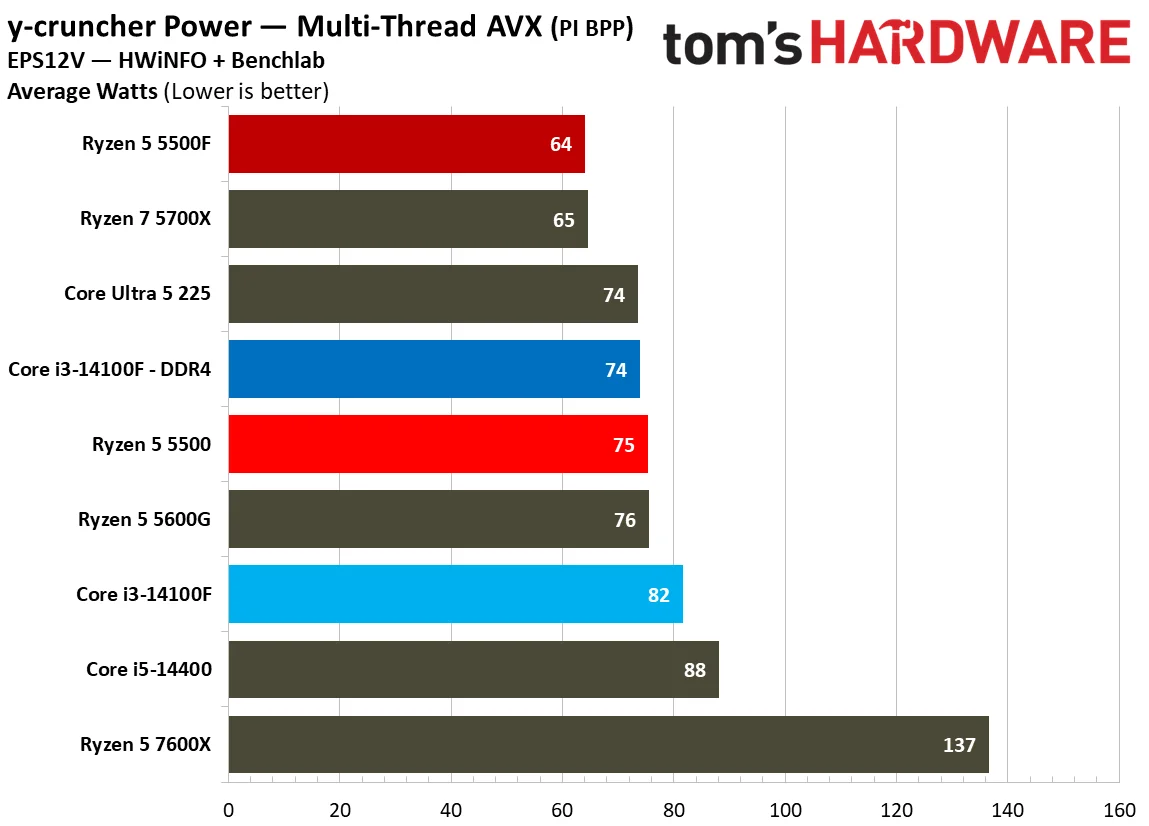
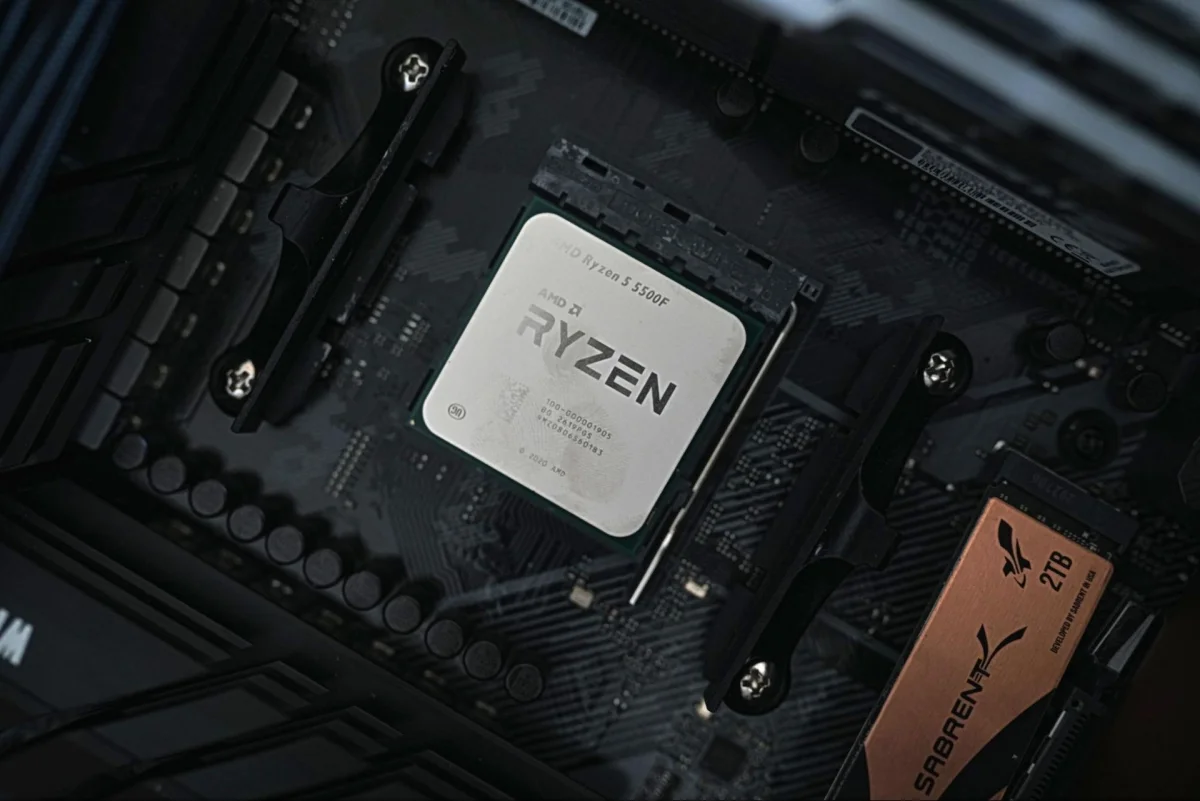
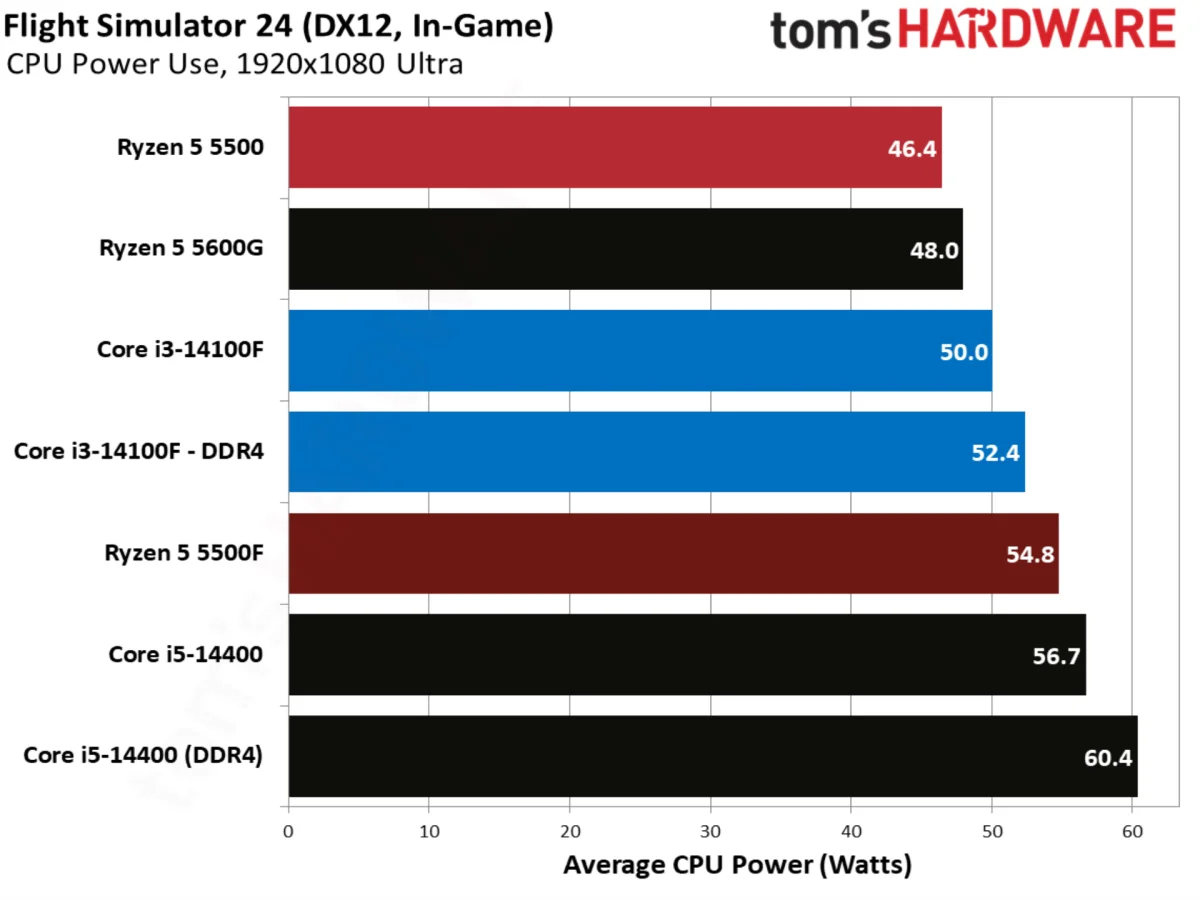
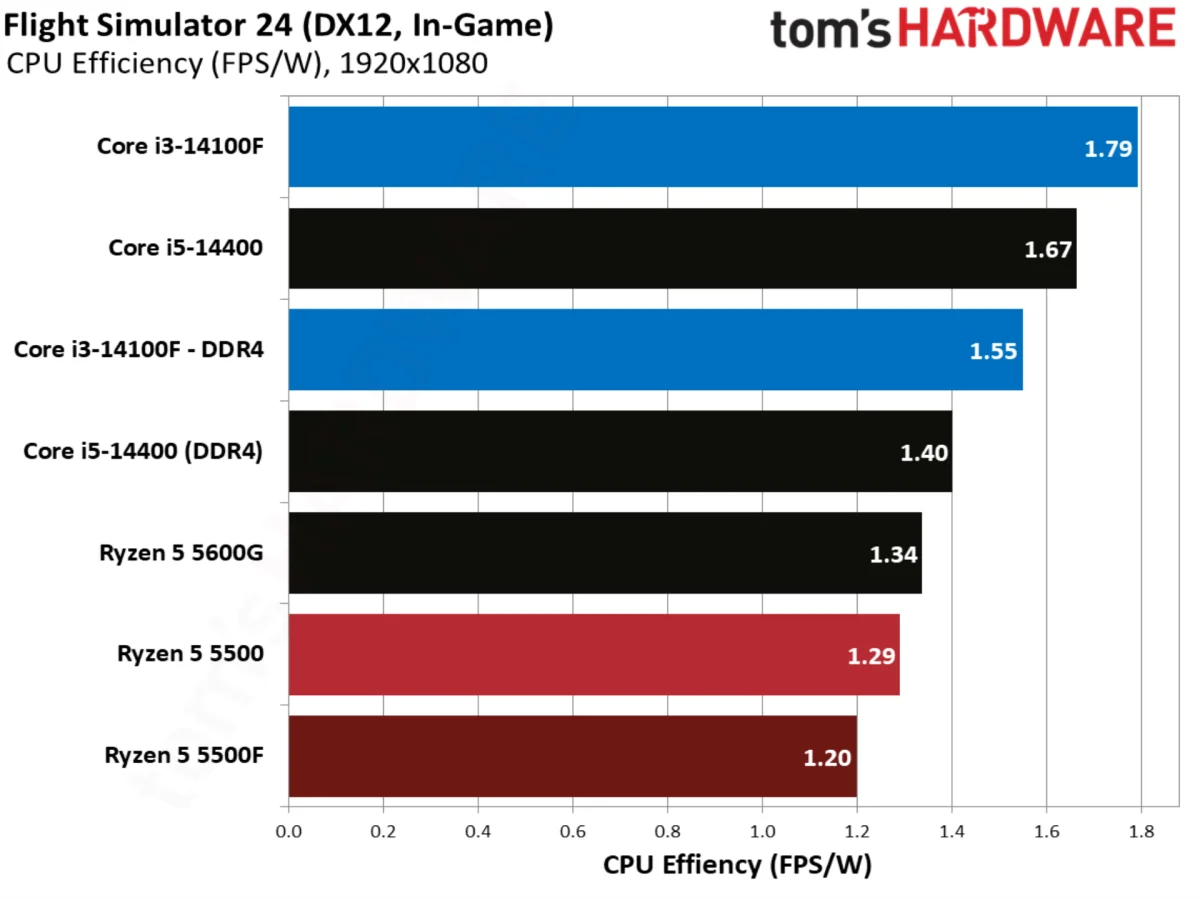
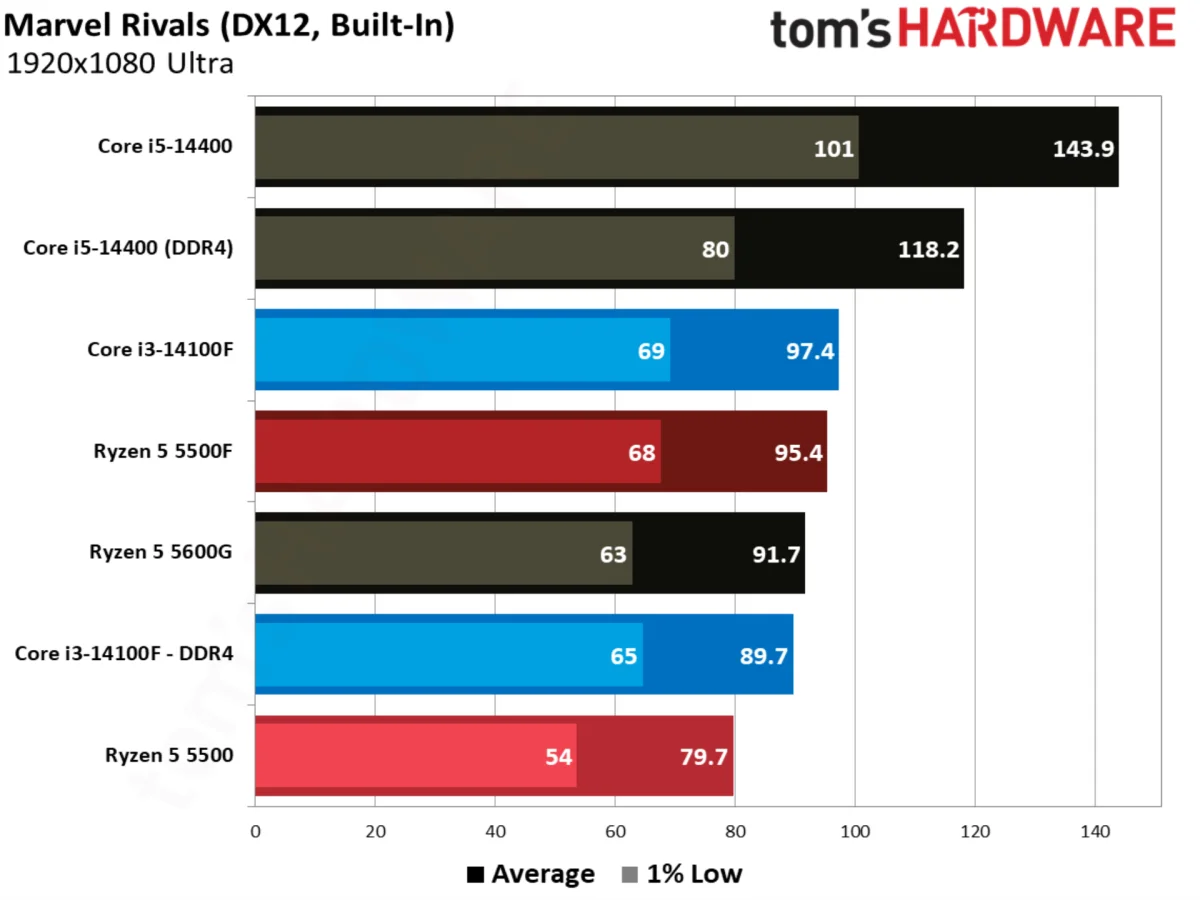
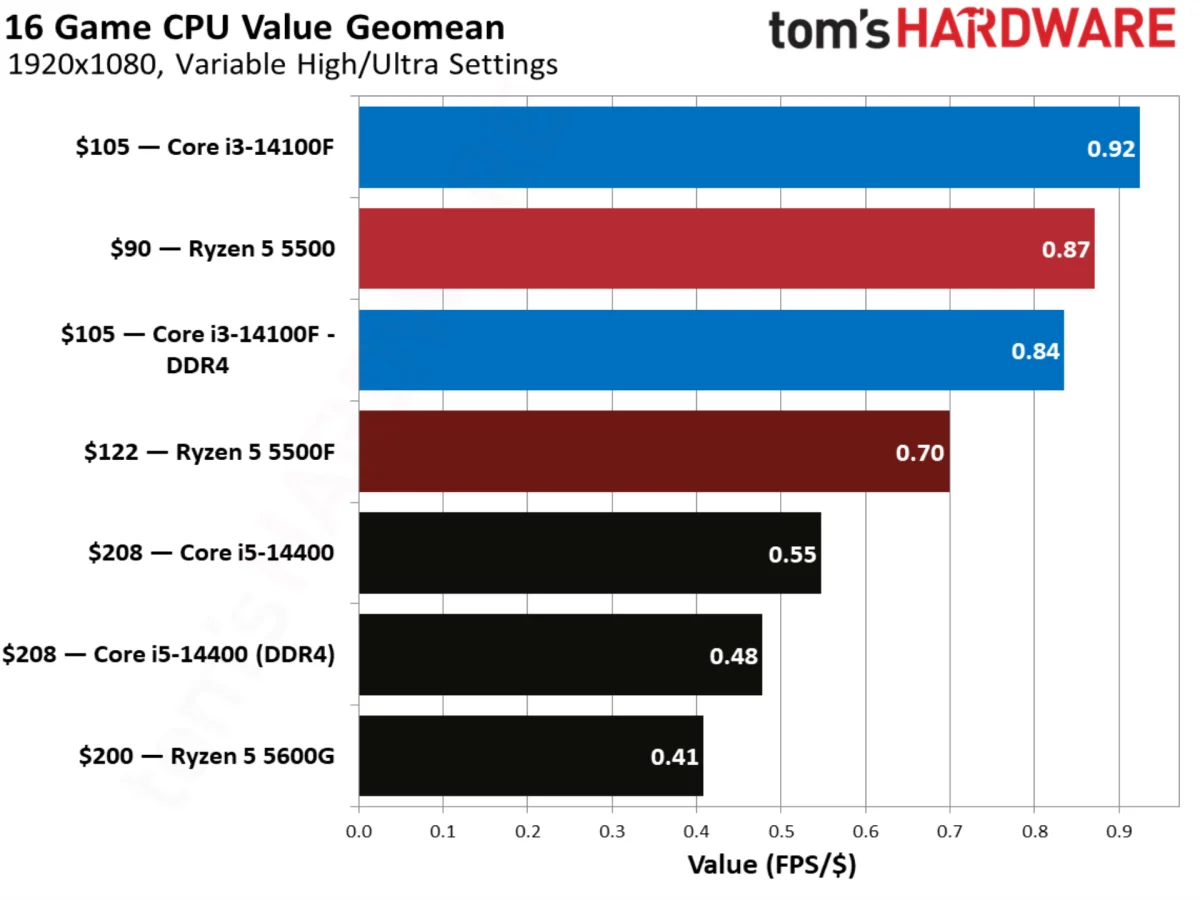
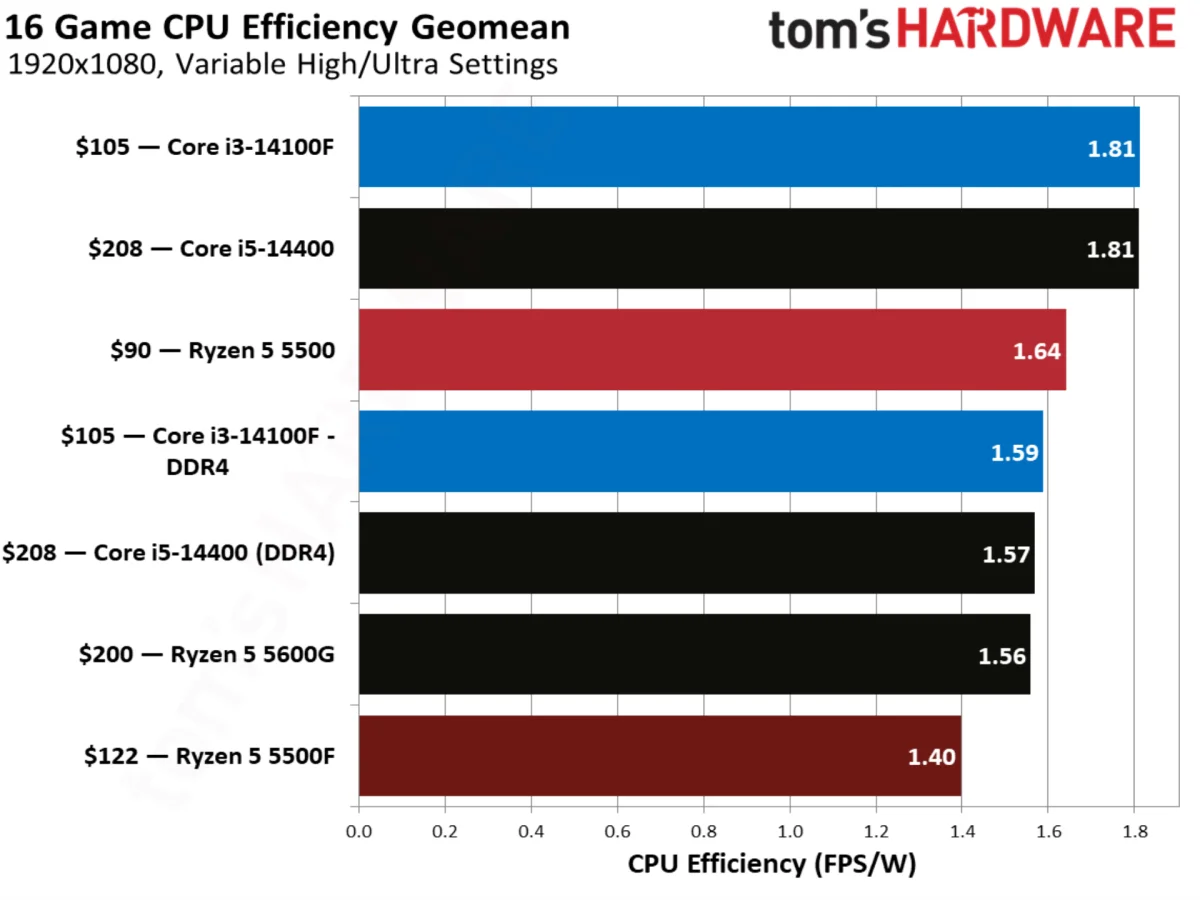
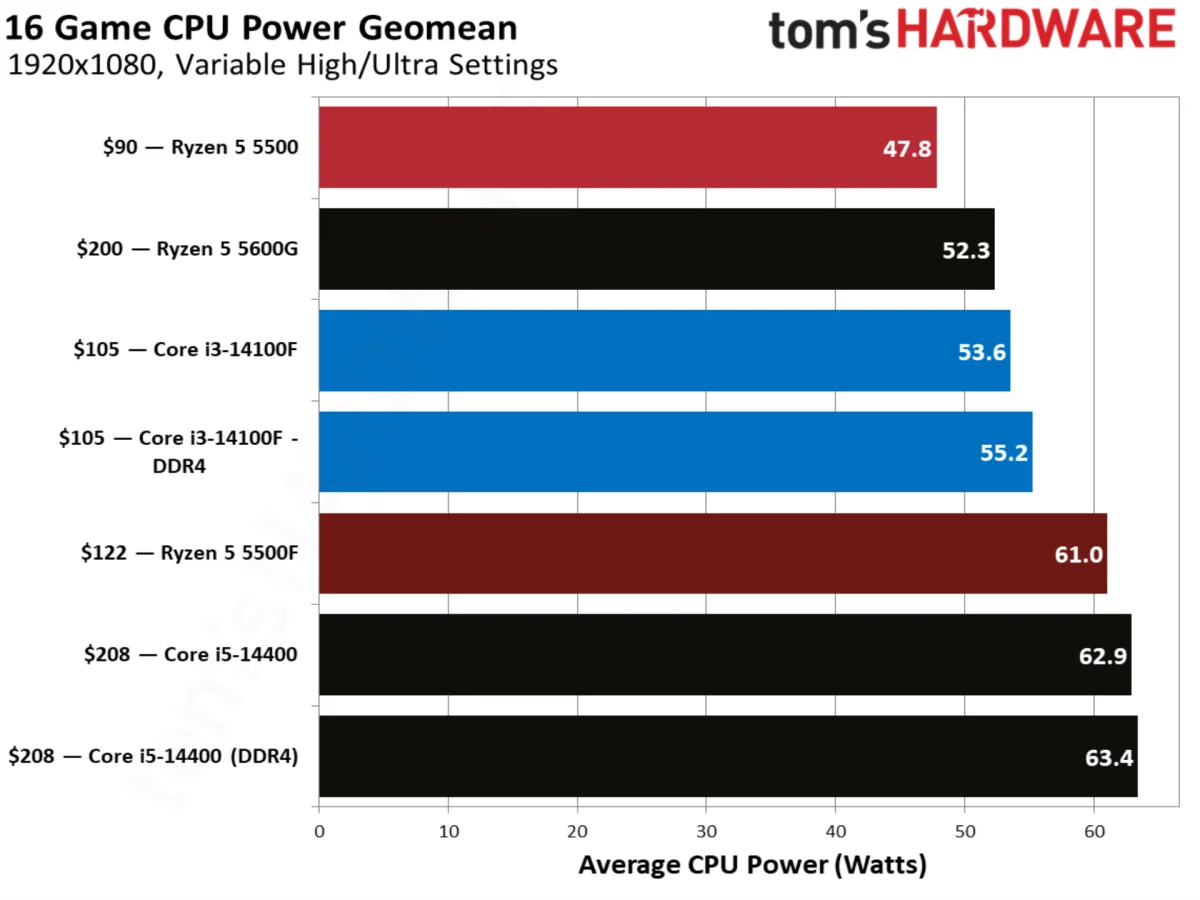
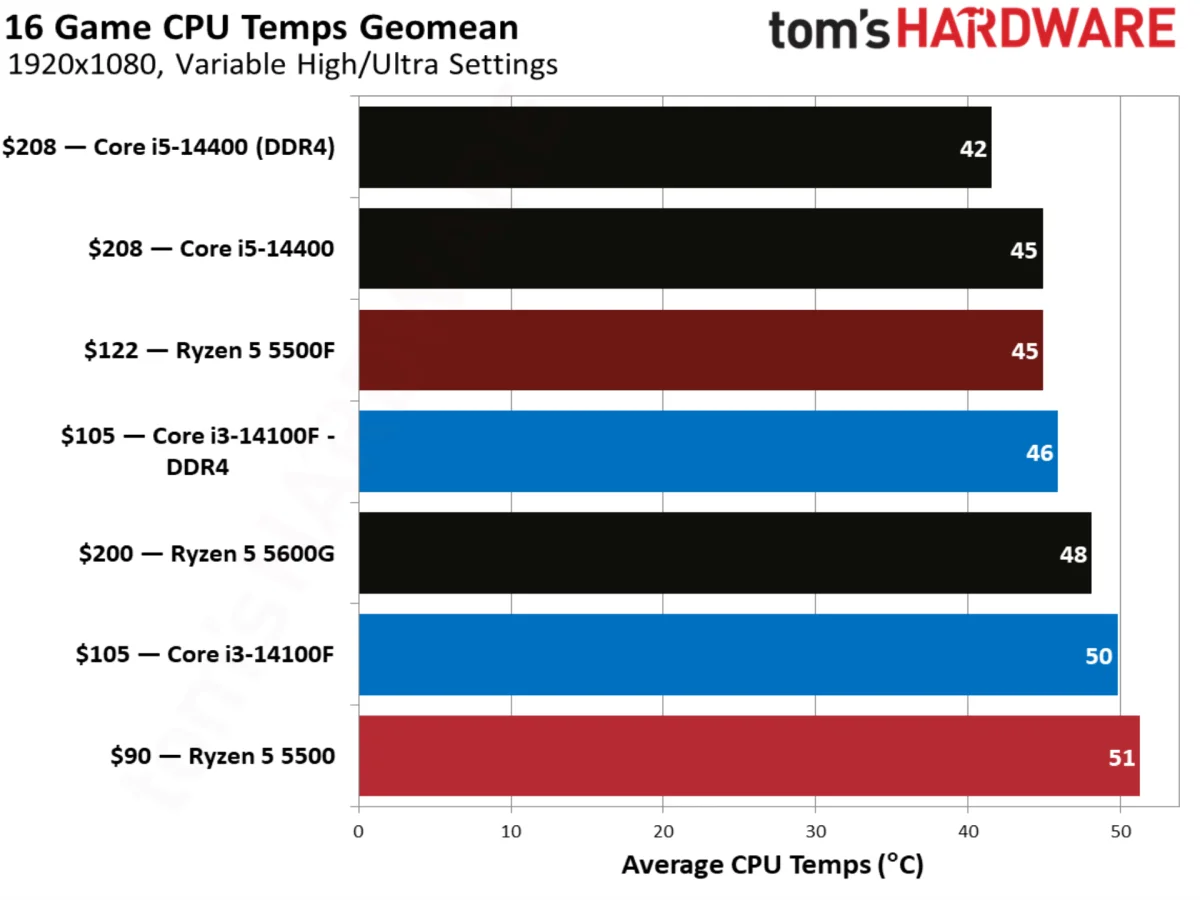
The suffix suggests a familiar tradeoff: AMD and Intel use “F” to identify processors without integrated graphics. The 5500F does lack an iGPU, but so does the older Ryzen 5 5500. The meaningful change is inside the chip. The 5500F moves from the Cezanne family to Vermeer, raising its maximum boost from 4.2 to 4.4 GHz and bringing PCIe 4.0 support. That’s a significant fix to one of the original 5500’s limitations. Cezanne chips use monolithic dies and are restricted to PCIe 3.0; the 5500F’s Vermeer lineage gives it PCIe 4.0, useful for graphics cards and storage. But it’s a hybrid of sorts: while other Vermeer processors have at least 32 MB of L3 cache, the 5500F retains just 16 MB, the amount associated with Cezanne. Its total cache is 19 MB including L2. The older 5500 is the more confusing product. It’s a Cezanne chip with the same 16 MB of L3 and PCIe 3.0 limit, and it’s the only Cezanne desktop processor in this line that isn’t an APU such as the Ryzen 5 5600G or a laptop chip. The 5500F, by contrast, is a revised desktop CPU with a different family origin and better platform support. | CPU (MSRP) | Street price | Architecture | Cores/threads | Base/boost clock | Cache (L2 + L3) | TDP / maximum power | |---|---:|---|---:|---:|---:|---:| | Ryzen 5 5600X ($300) | [~$160](https://www.amazon.com/dp/B08166SLDF) | Zen 3 (Vermeer) | 6 / 12 | 3.7 / 4.6 GHz | 35 MB | 65W / 88W | | Ryzen 5 5600G ($260) | [~$190](https://www.amazon.com/AMD-Ryzen-5600GT-12-Thread-Processor/dp/B0CQ4DTJYX/) | Zen 3 (Cezanne) | 6 / 12 | 3.9 / 4.4 GHz | 19 MB | 65W / 88W | | **Ryzen 5 5500F ($100)** | [**~$120**](https://www.amazon.com/AMD-Ryzen-5500F-Desktop-Processor/dp/B0HGMTDZM7/) | **Zen 3 (Vermeer)** | **6 / 12** | **3.0 / 4.4 GHz** | **19 MB** | **65W / 88W** | | Ryzen 5 5500 ($159) | [~$90](https://www.amazon.com/AMD-5500-12-Thread-Unlocked-Processor/dp/B09VCJ171S/) | Zen 3 (Cezanne) | 6 / 12 | 3.6 / 4.2 GHz | 19 MB | 65W / 88W | The 5500F keeps the 65W TDP and 88W platform power limit, and AMD includes a Wraith Stealth cooler that can handle the chip under load. Both Cezanne and Vermeer share Zen 3’s L1 and L2 cache setup; the unusual part here is the 5500F’s smaller L3 cache for a Vermeer CPU. The main question for a budget build is whether the 5500F’s improvements are worth its current street price. The Core i3-14100F, a four-core chip around $100, averaged 11% better 1080p gaming performance than the original 5500. The 5500F narrows that gap to about 3%, while improving on the 5500 by 10% on average and taking the lead in multithreaded work. That’s a much tighter contest, though Intel still has a small gaming edge. For buyers choosing between platforms, memory costs complicate the comparison. A Ryzen 5 7600X can often be found on sale, but the cost of DDR5 can erase the apparent savings. The tested Core i5-14400 and Core i3-14100 were measured with both DDR4 and DDR5; DDR5 improved average 1080p gaming performance by about 15%, based on a [recent Raptor Lake Refresh comparison](https://www.tomshardware.com/pc-components/ddr5/re-examining-the-ddr4-gaming-gap-with-intels-lga-1700-cpus-in-mid-2026-performance-drops-of-14-percent-on-average-and-up-to-25-percent-in-some-games). Given DDR5 prices, the more direct comparison for many budget buyers remains between DDR4 systems. Testing used an RTX 5090 FE at 1080p with a mix of High and Ultra settings. That’s an unusually powerful card to pair with inexpensive CPUs, but using the same GPU across processor tests makes comparisons across the broader lineup possible. In a [$100 CPU shootout](https://www.tomshardware.com/pc-components/cpus/100-budget-cpu-shootout-ddr4), testing the 5500 and 14100F with both an RTX 5090 and RTX 4060 showed similar relative scaling; the 4060 lowered baseline performance, while the CPUs remained the limiting factor. [AMD Ryzen 5 5500F](/articles/168/qBIbhX5h0xbldXrWK3Dvhr3T5km0iKE5.webp) Across 16 games at 1080p, the 5500F averaged 8.6% faster than the 5500 and landed 2.8% behind the Core i3-14100F. Its 1% lows improved by 11.7% over the older Ryzen, which points to smoother performance as well as a higher average frame rate. The four-core Intel chip’s core count can hold it back in some games, even though it still wins the overall average. At this price, the market has few alternatives. The Ryzen 5 5500 is around $90, while the 5500F has been closer to $120. You could spend $98 on a new [FX-8300](https://www.amazon.com/dp/B00TR8YL4W), but that’s a poor modern gaming choice. The next meaningful performance tier starts around $150, where DDR4 options include the Core i5-14400F and Ryzen 5 5600, while DDR5 opens the door to the Ryzen 5 7600X. AMD’s Ryzen 5 5500X3D brings 3D V-Cache down to Zen 3, but costs about twice as much as the 5500F or Core i3-14100F. A low-cost CPU can still make sense as the start of a system you plan to upgrade. Choosing the 5500F or 14100F could save roughly $200 compared with a Ryzen 7 5800X3D or Core i7-14700K gaming build, leaving more money for a graphics card. Intel’s platform also offers a route to DDR5 later with a new motherboard. For now, the 5500F’s value depends on the price you can actually find. At its $100 suggested price, it makes a strong case; near $120, the older 5500’s roughly $90 price can deliver better value despite its weaker performance. The 5500F is the stronger chip, but the price gap and Intel’s small gaming lead make its position in the $100 bracket less convincing. [Tom's Hardware CPU benchmark hierarchy](https://www.tomshardware.com/reviews/cpu-hierarchy,4312.html) · [AMD vs. Intel](https://www.tomshardware.com/features/amd-vs-intel-cpus) · [Intel Core Ultra 7 270K Plus review](https://www.tomshardware.com/pc-components/cpus/intel-core-ultra-7-270k-plus-review) · [AMD Ryzen 7 9850X3D review](https://www.tomshardware.com/pc-components/cpus/amd-ryzen-7-9850x3d-review)Individual game results
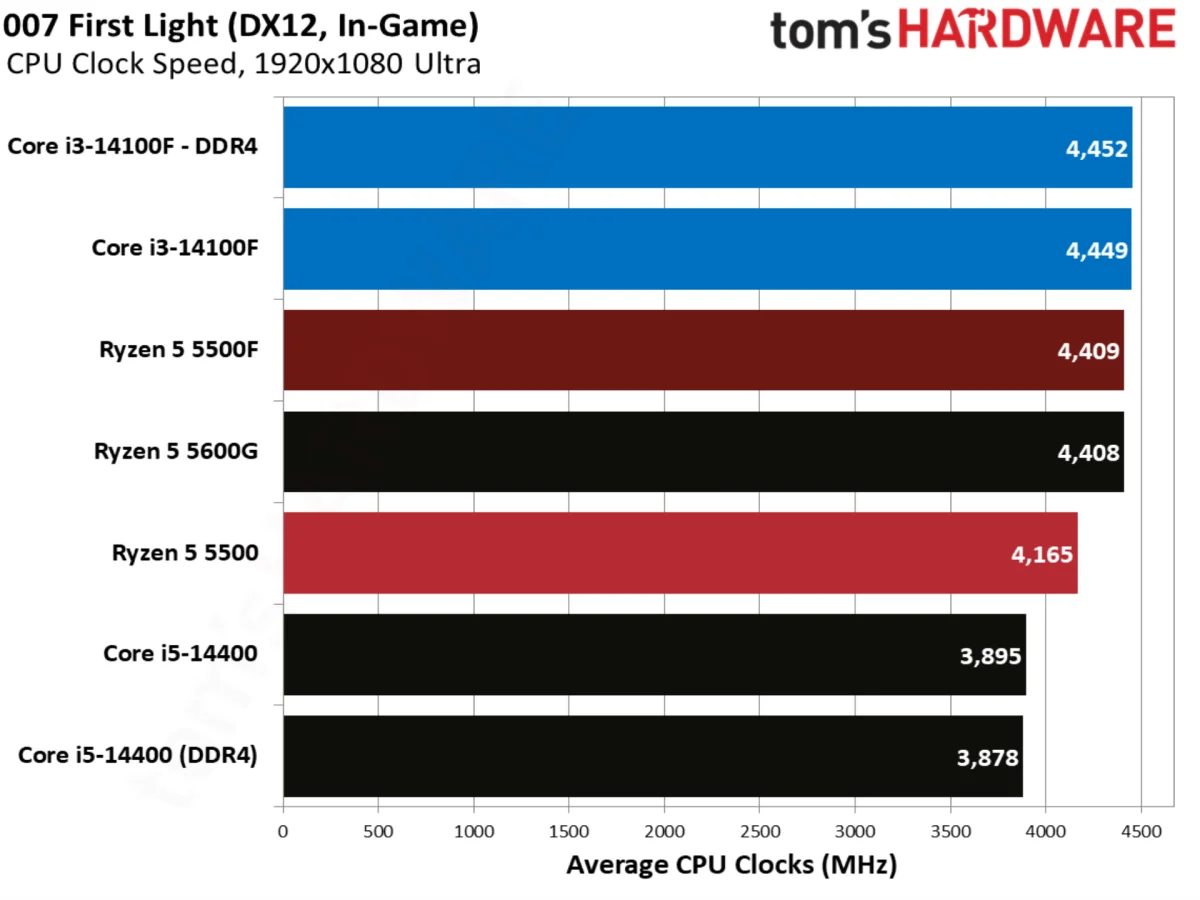
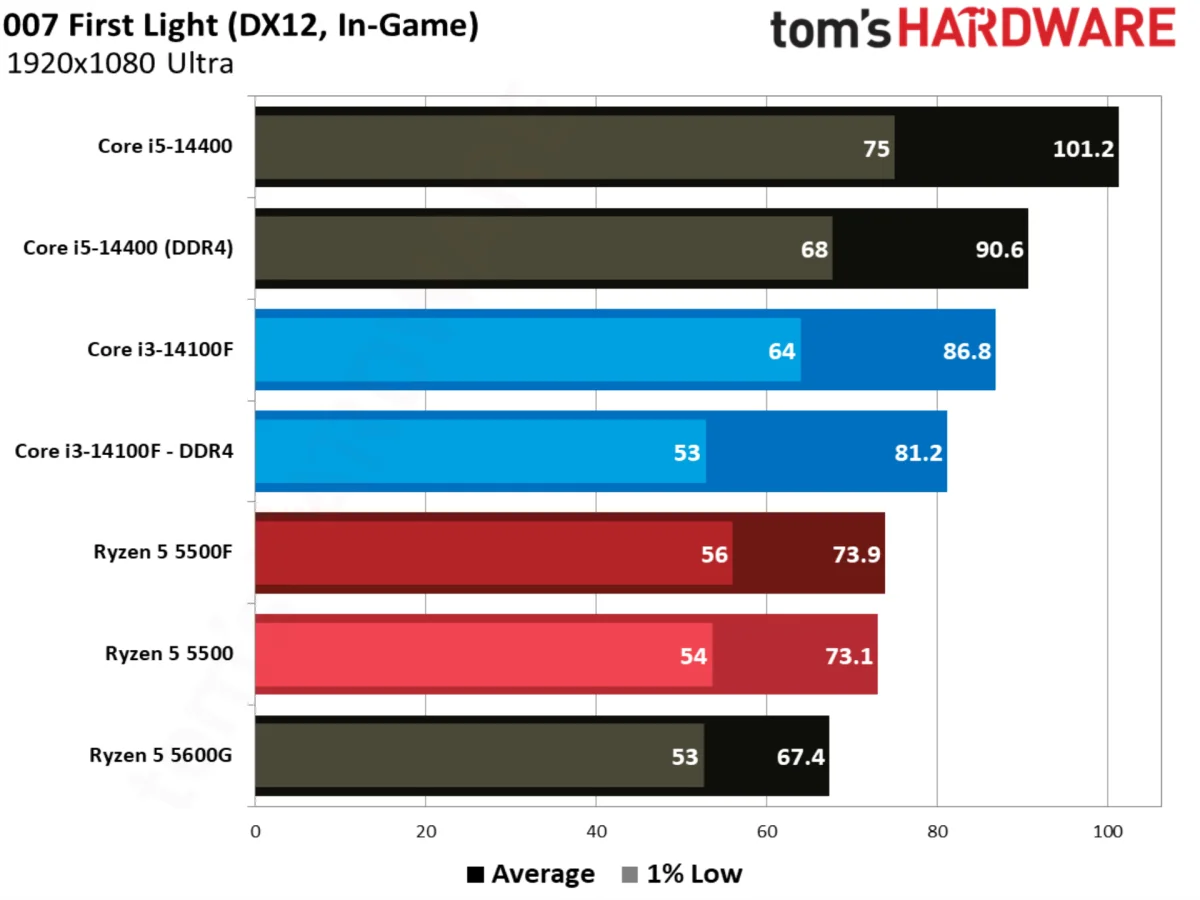
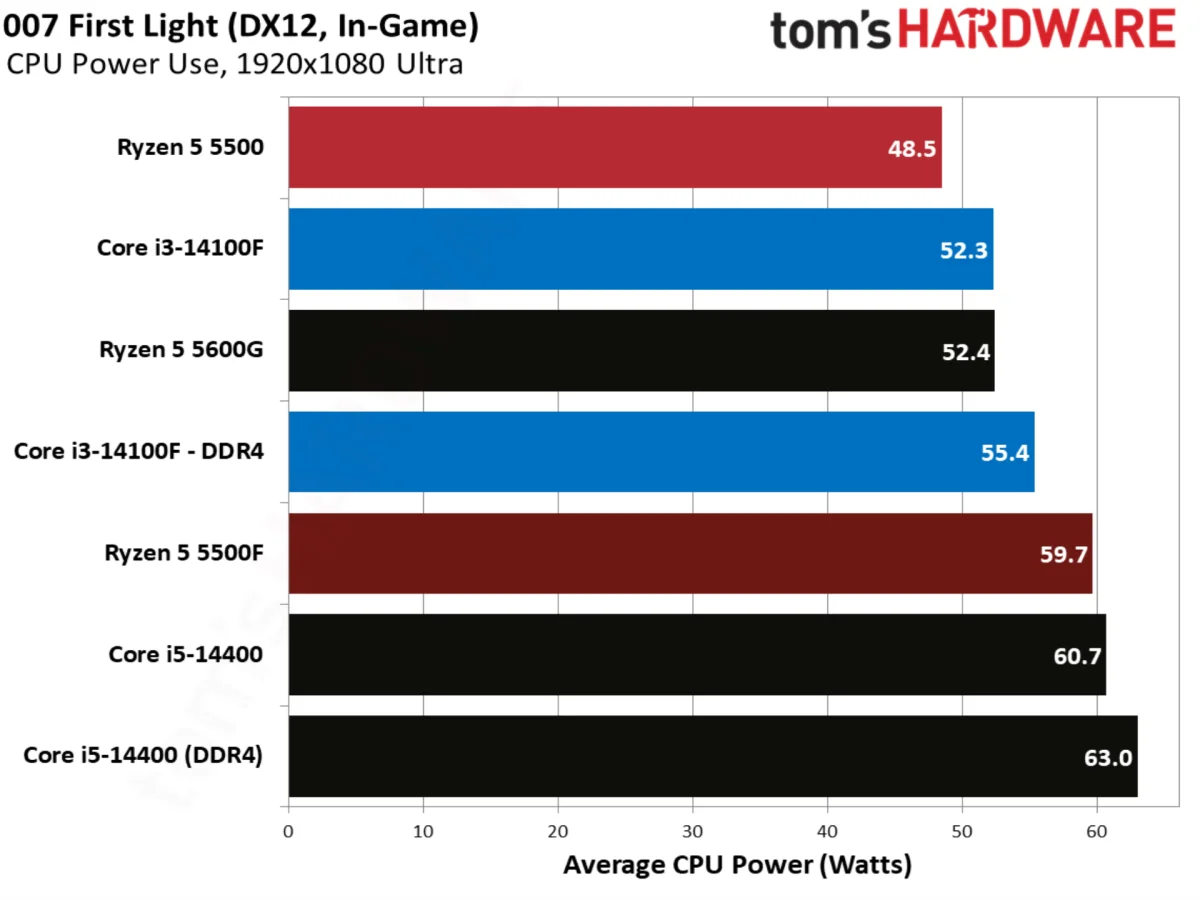
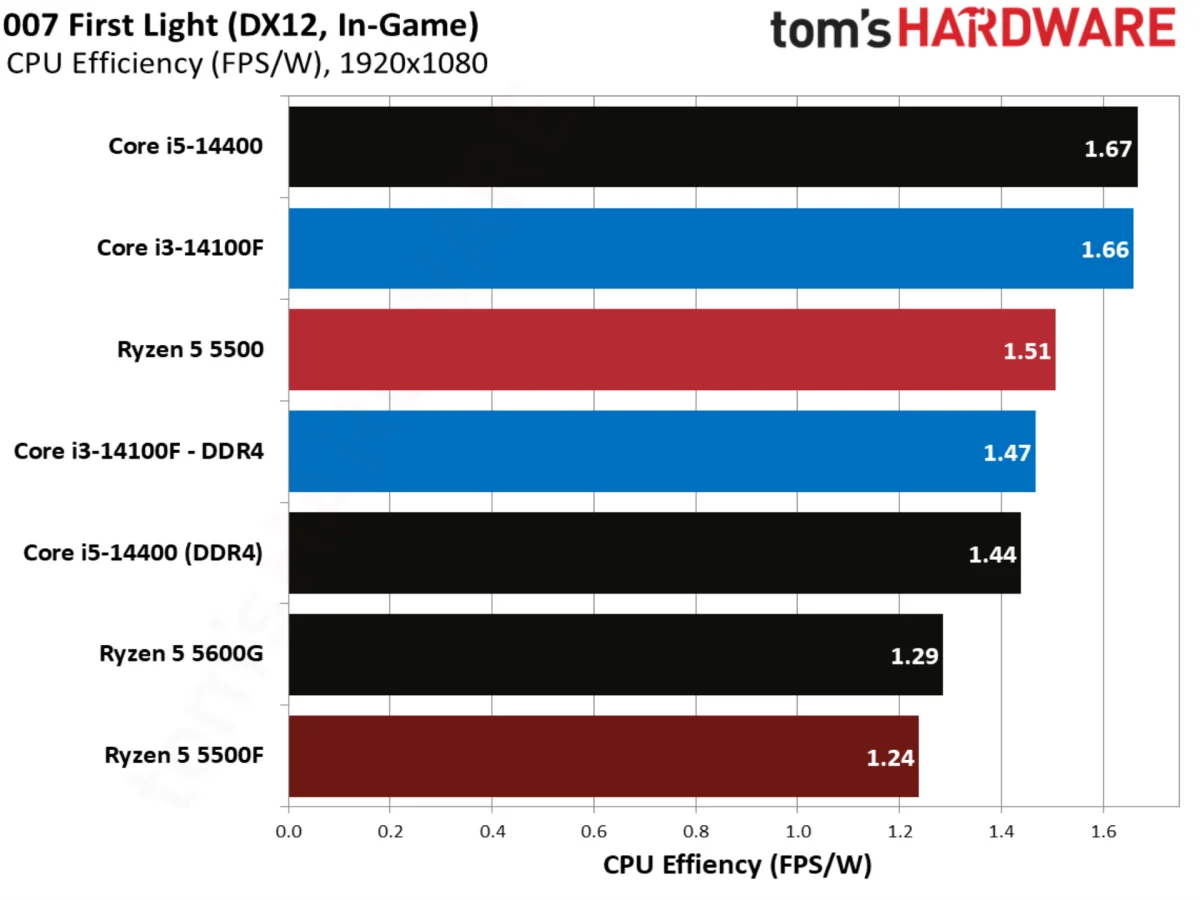
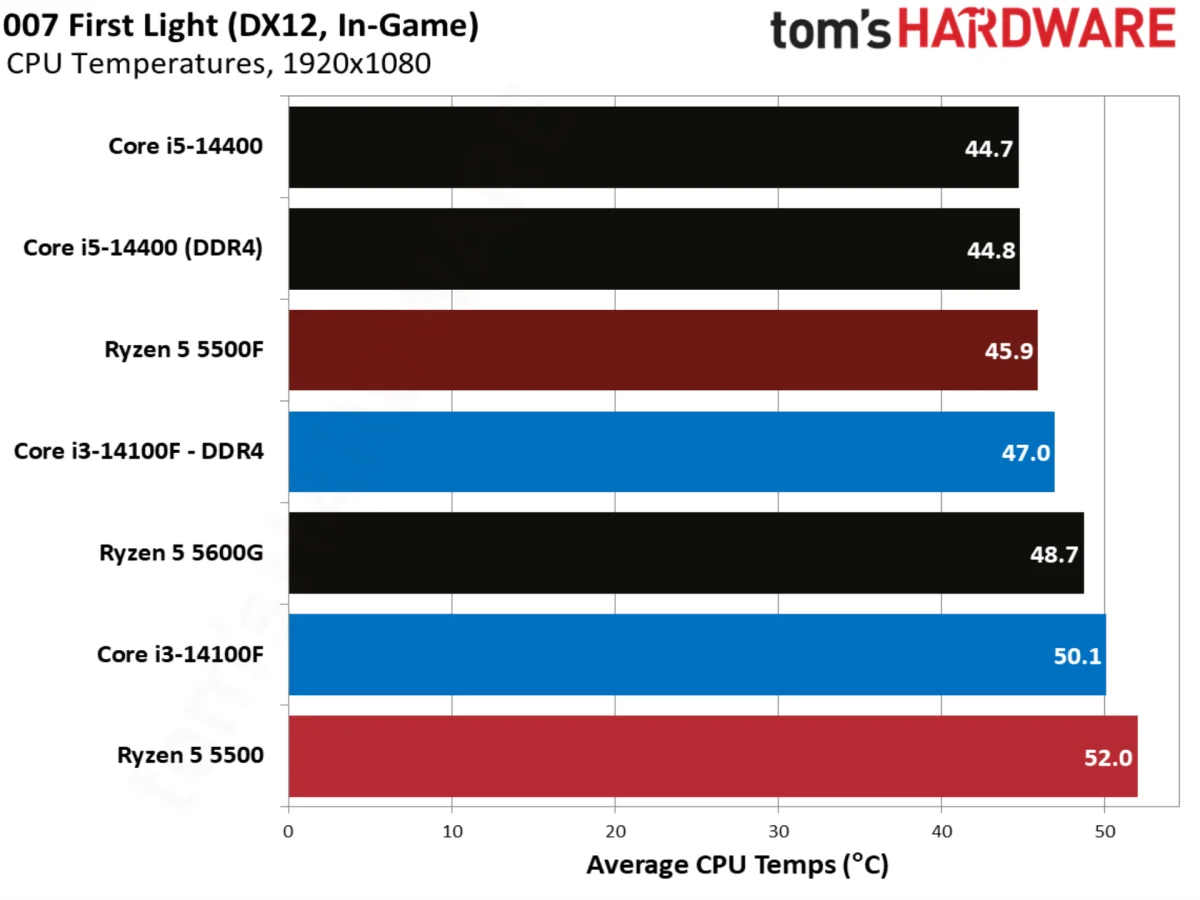
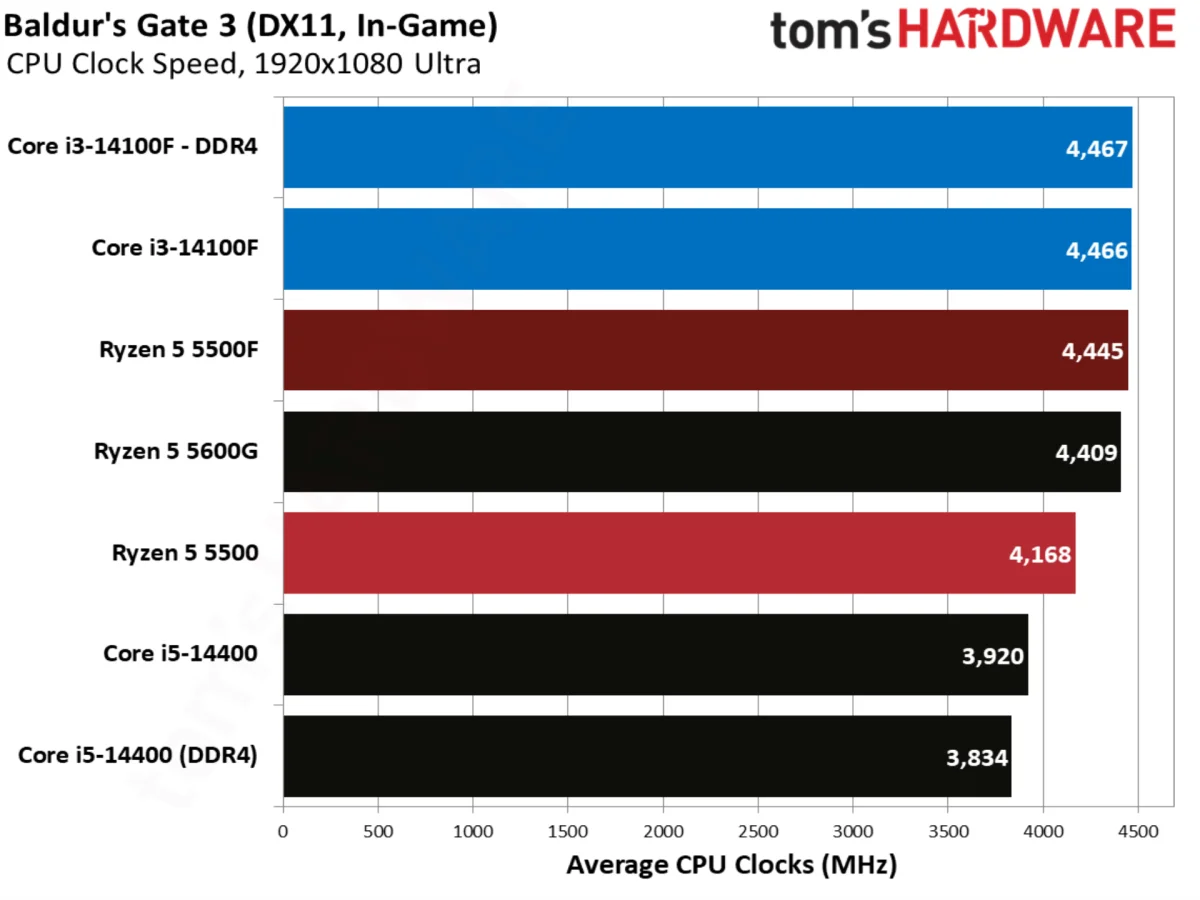
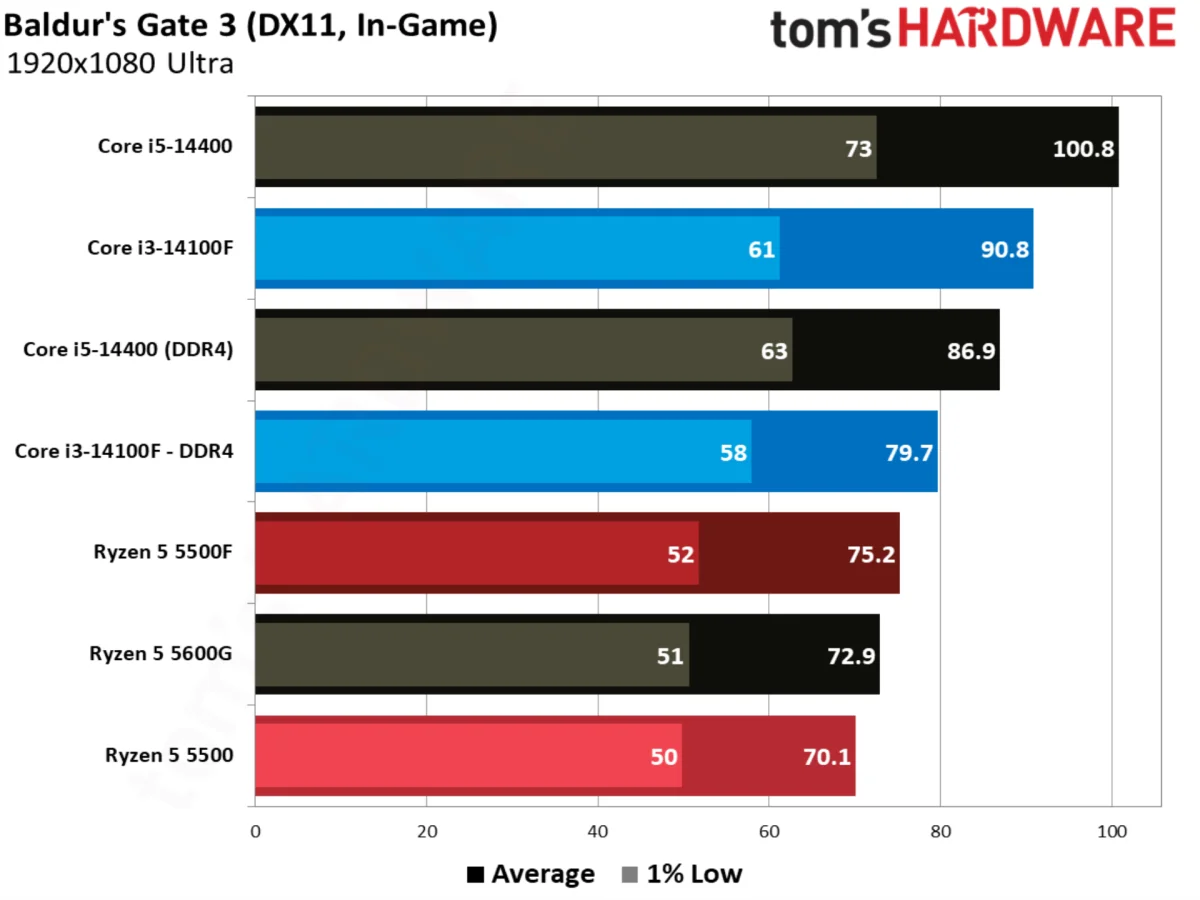
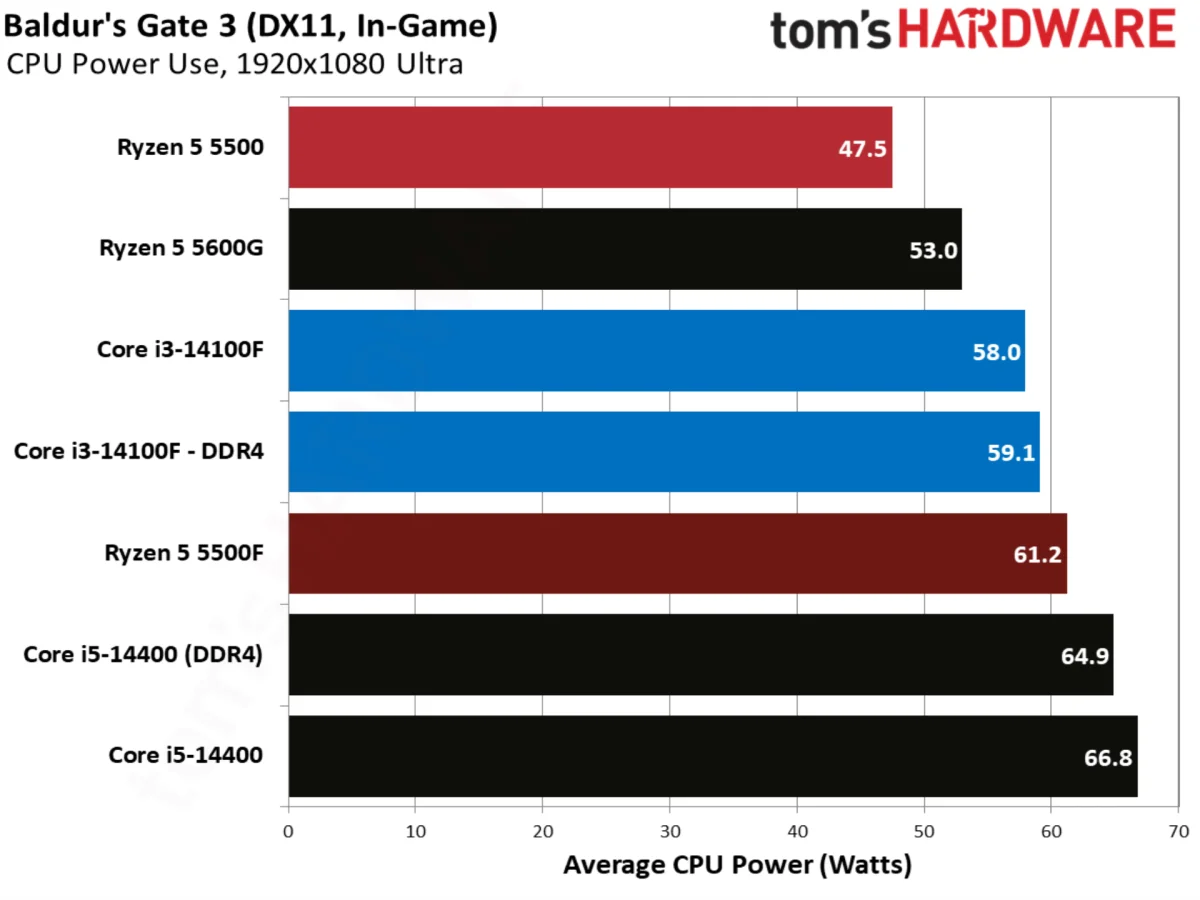
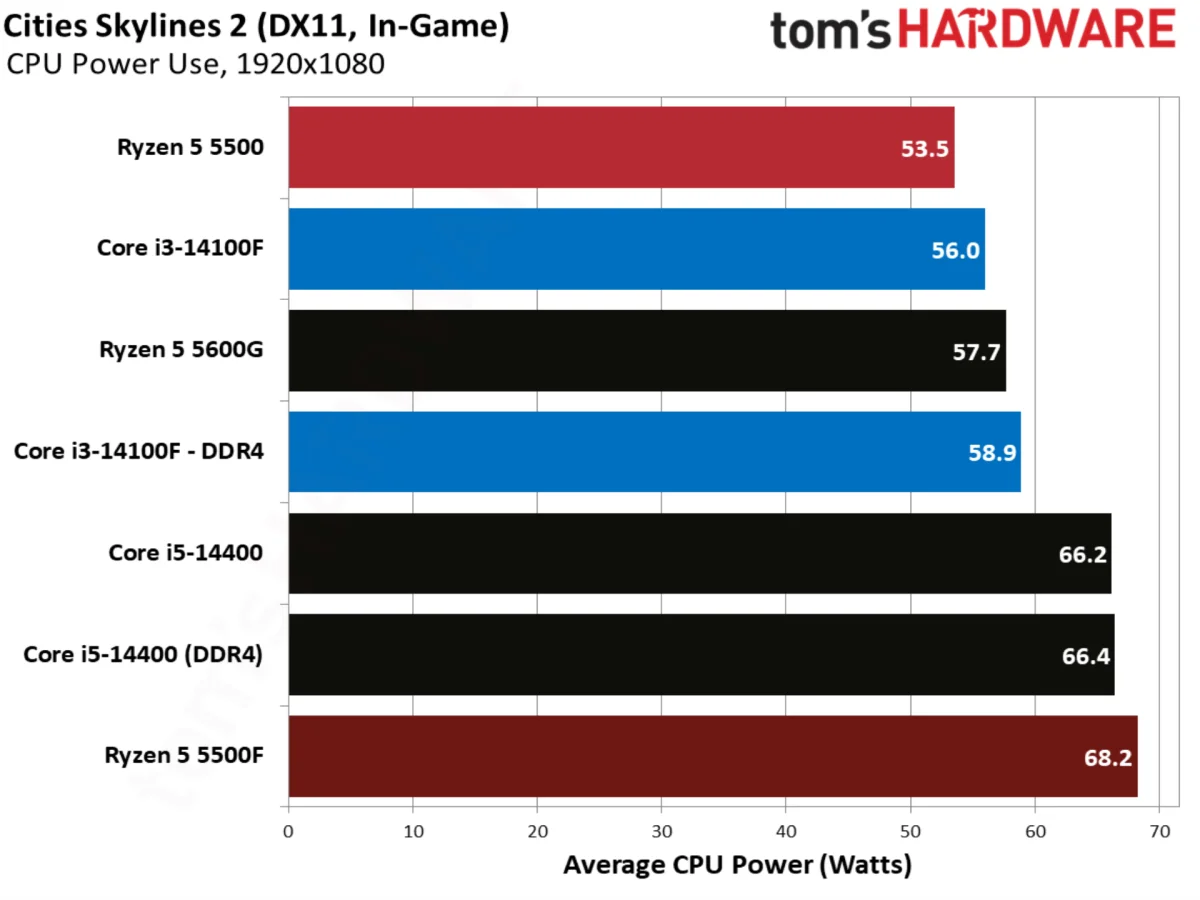
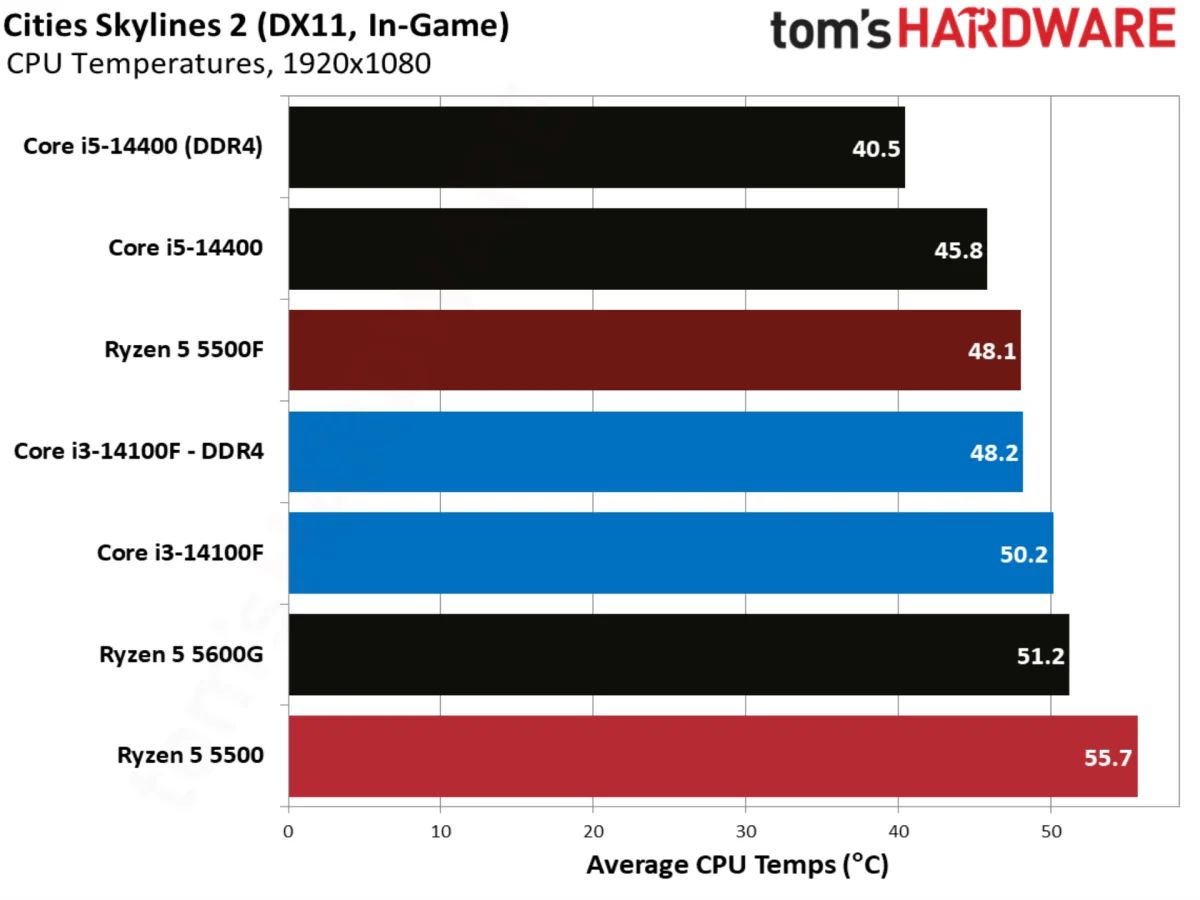
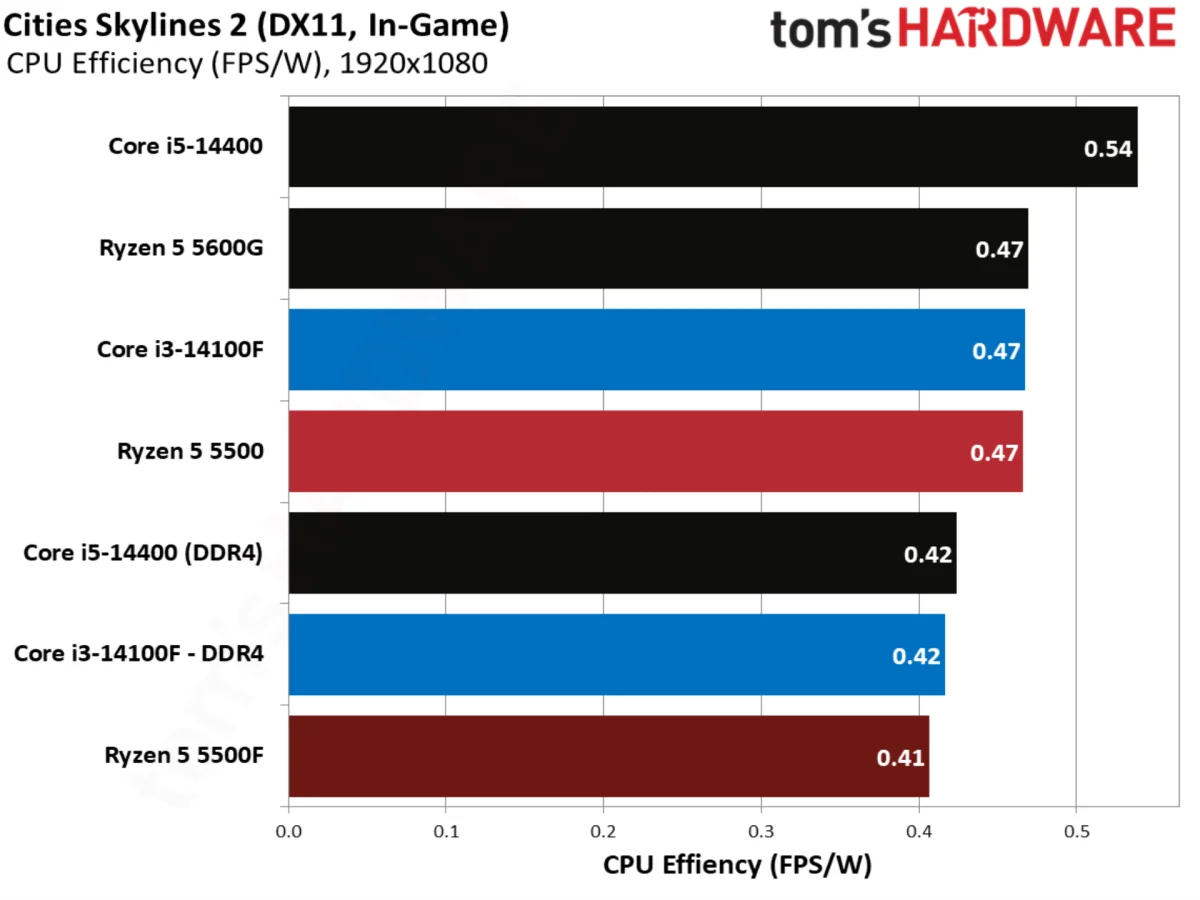
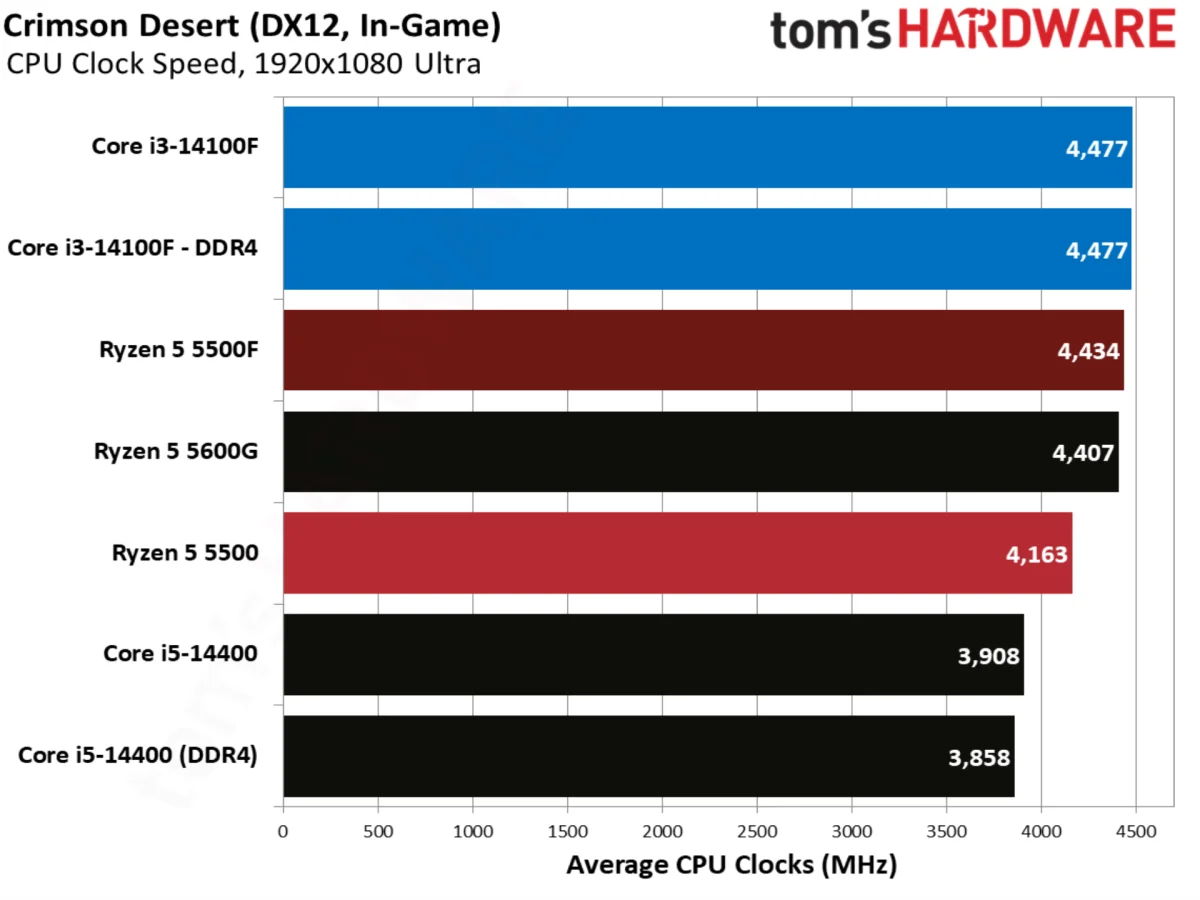
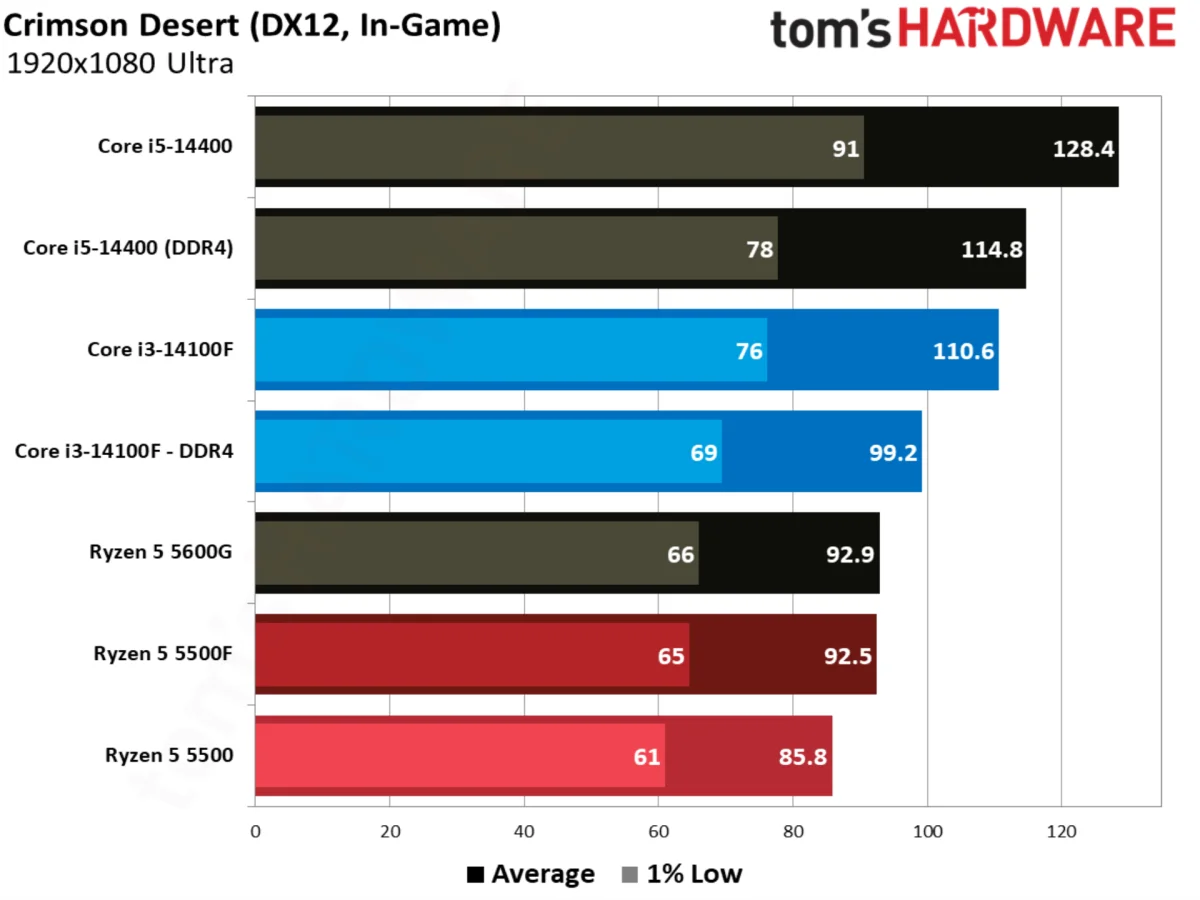
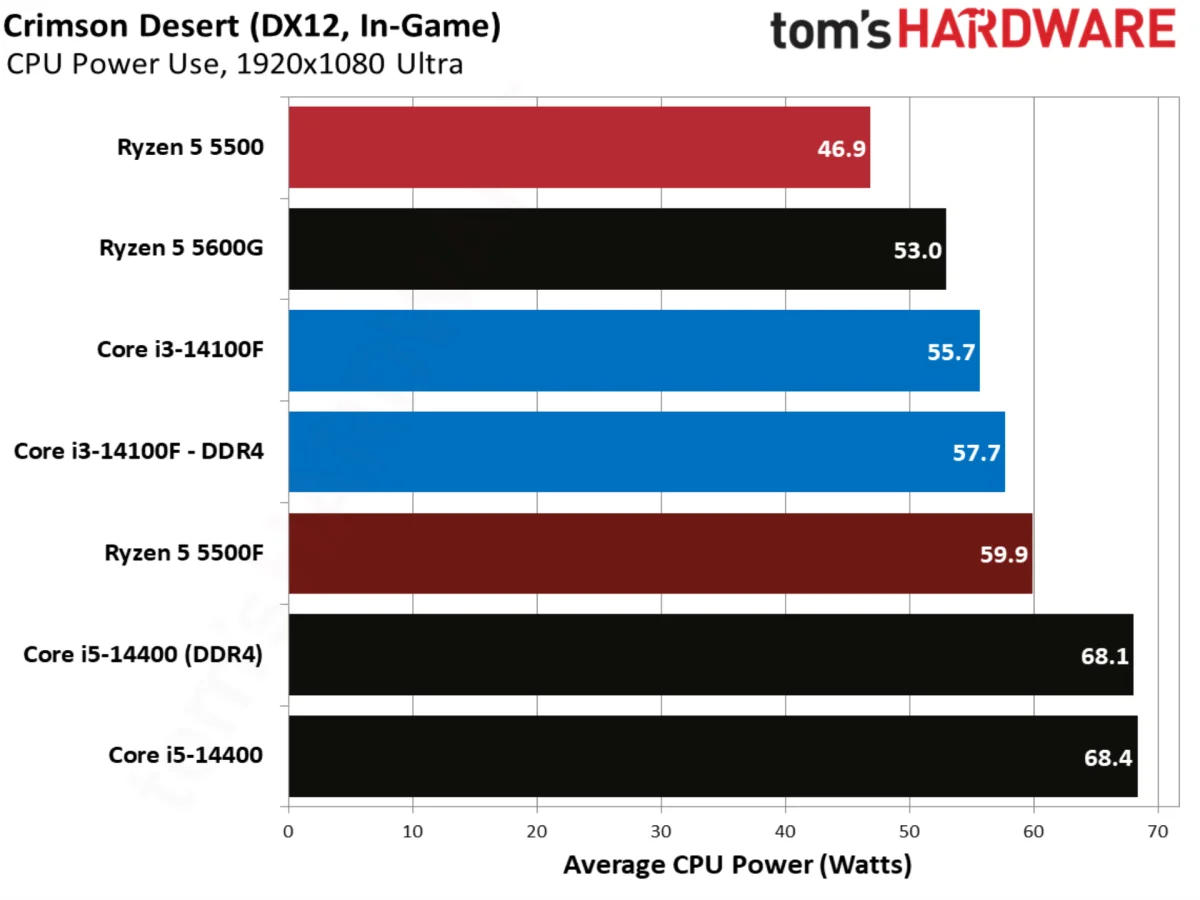
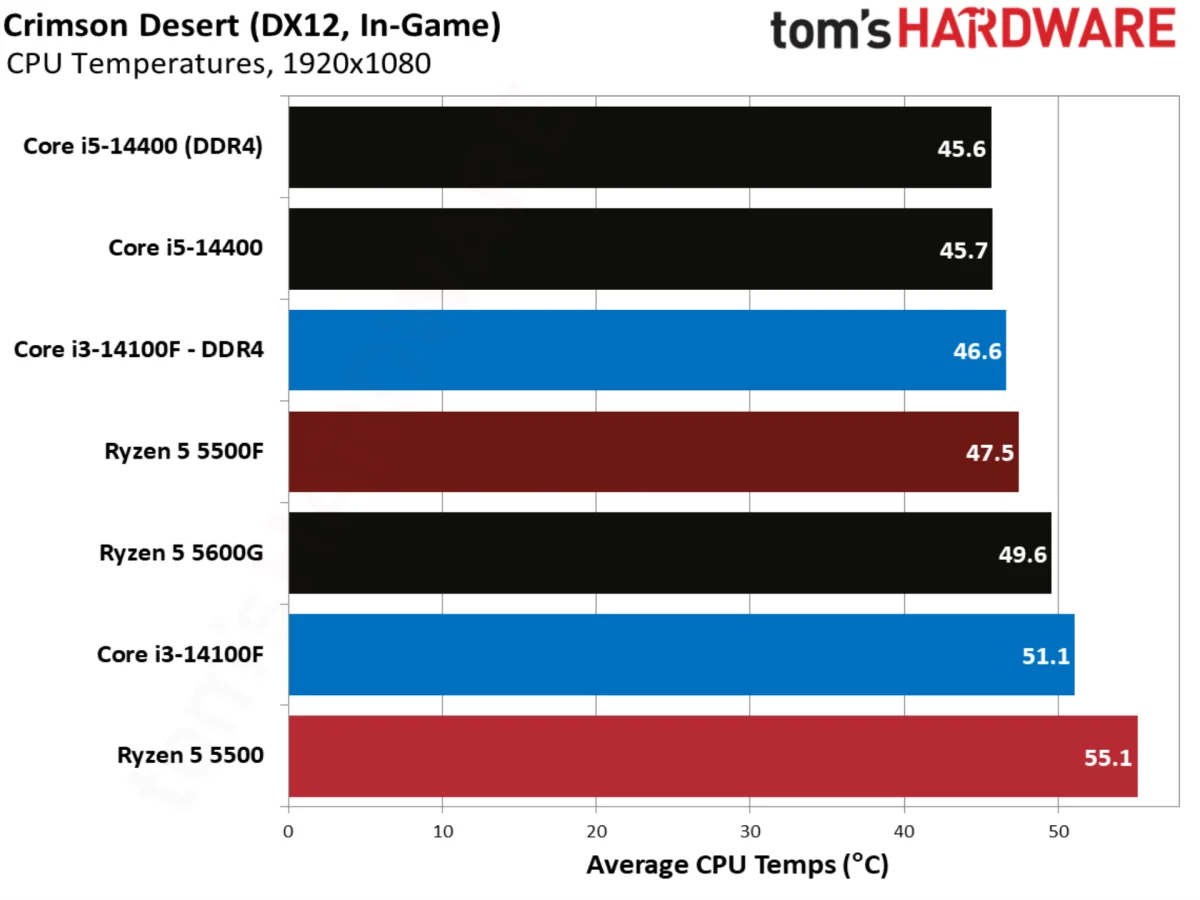
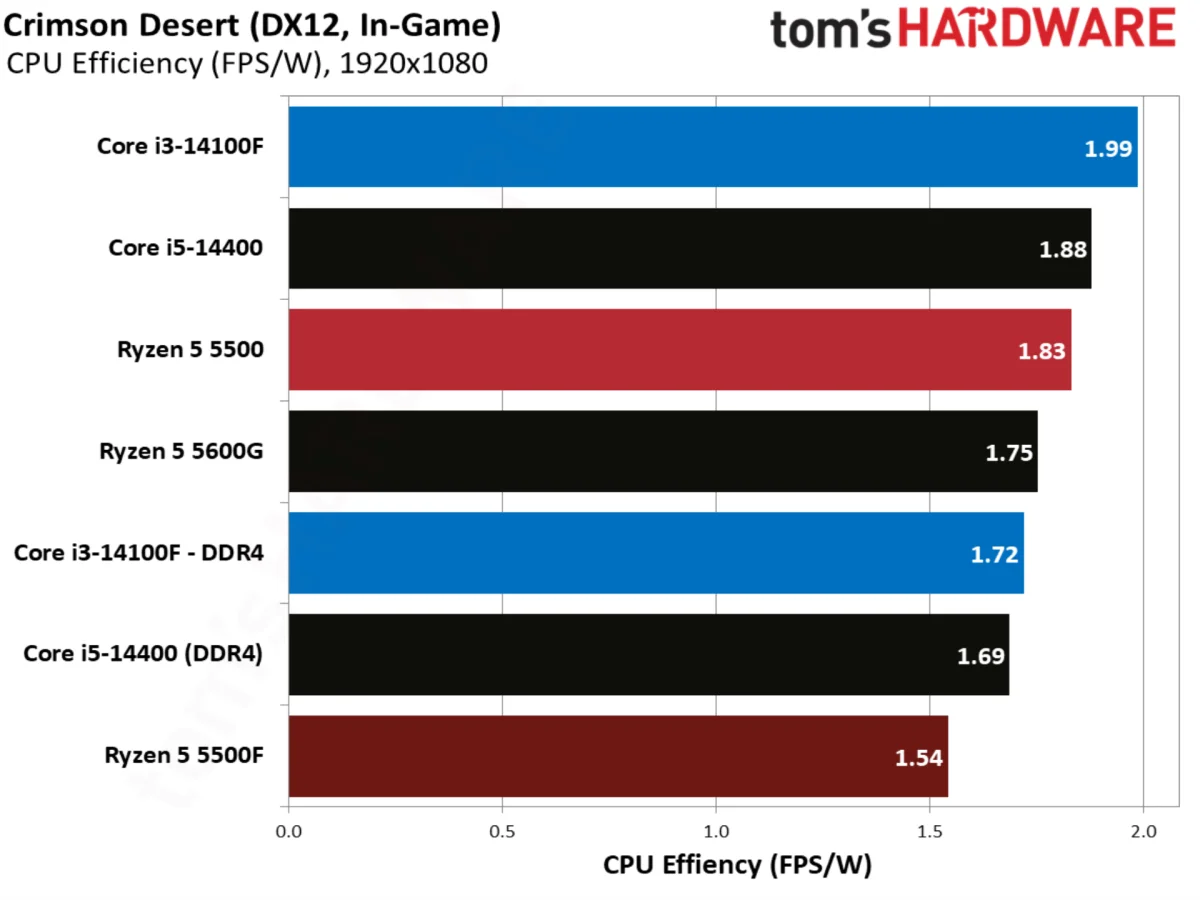
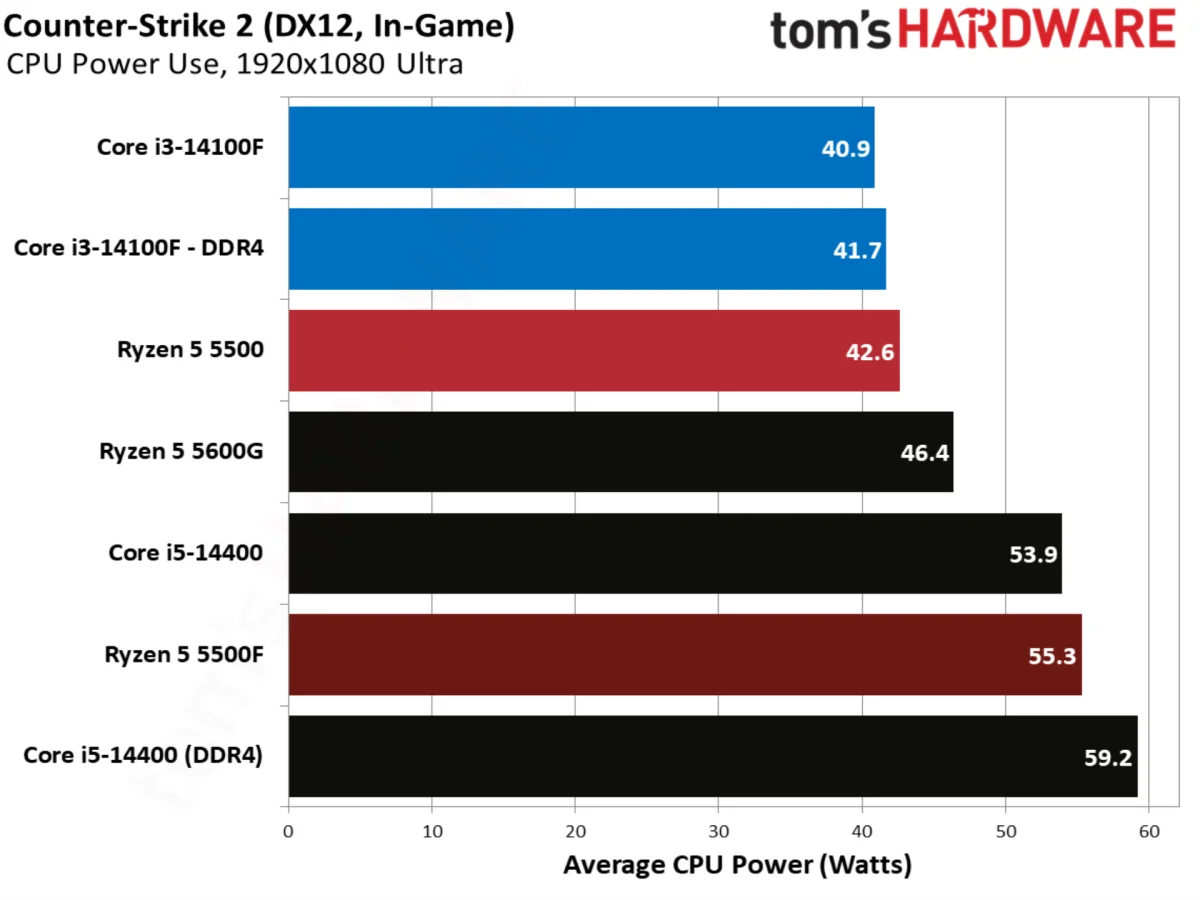
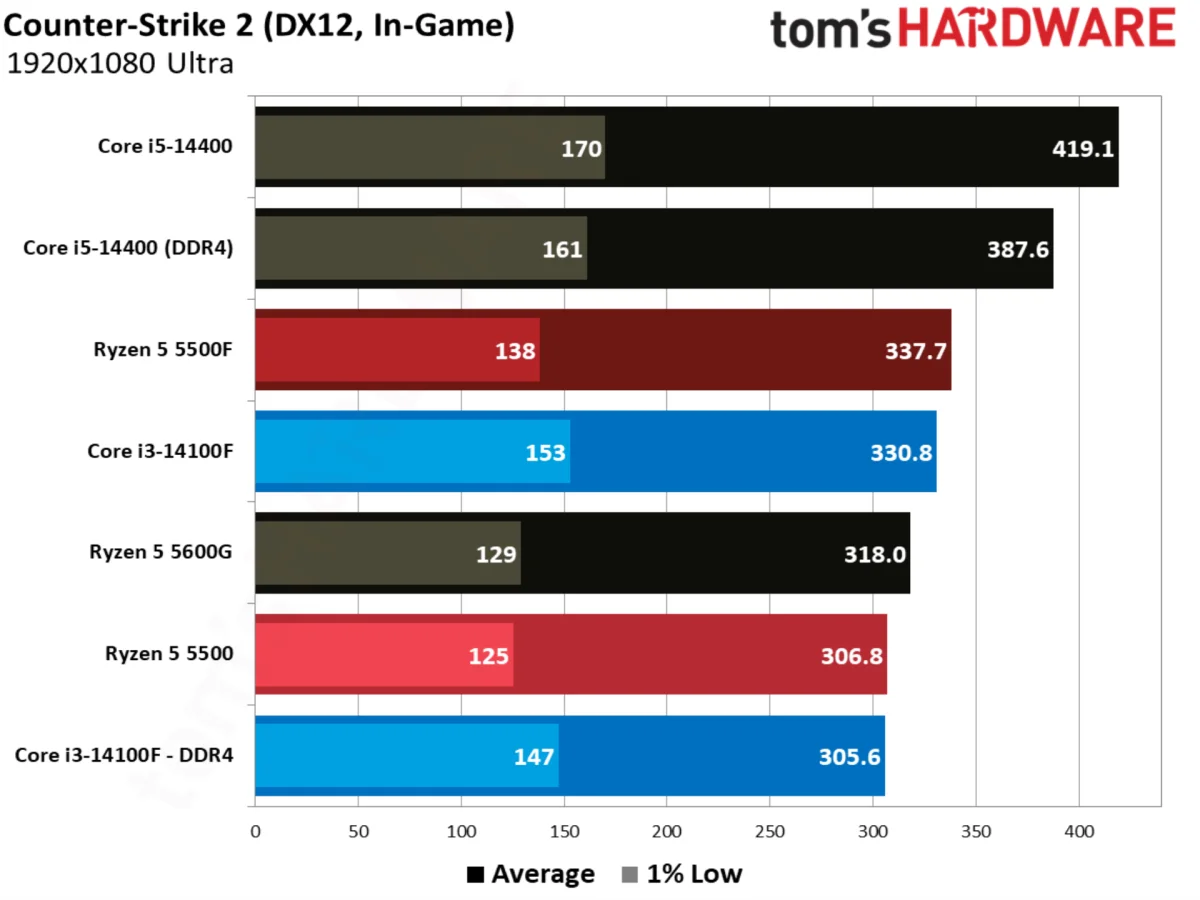
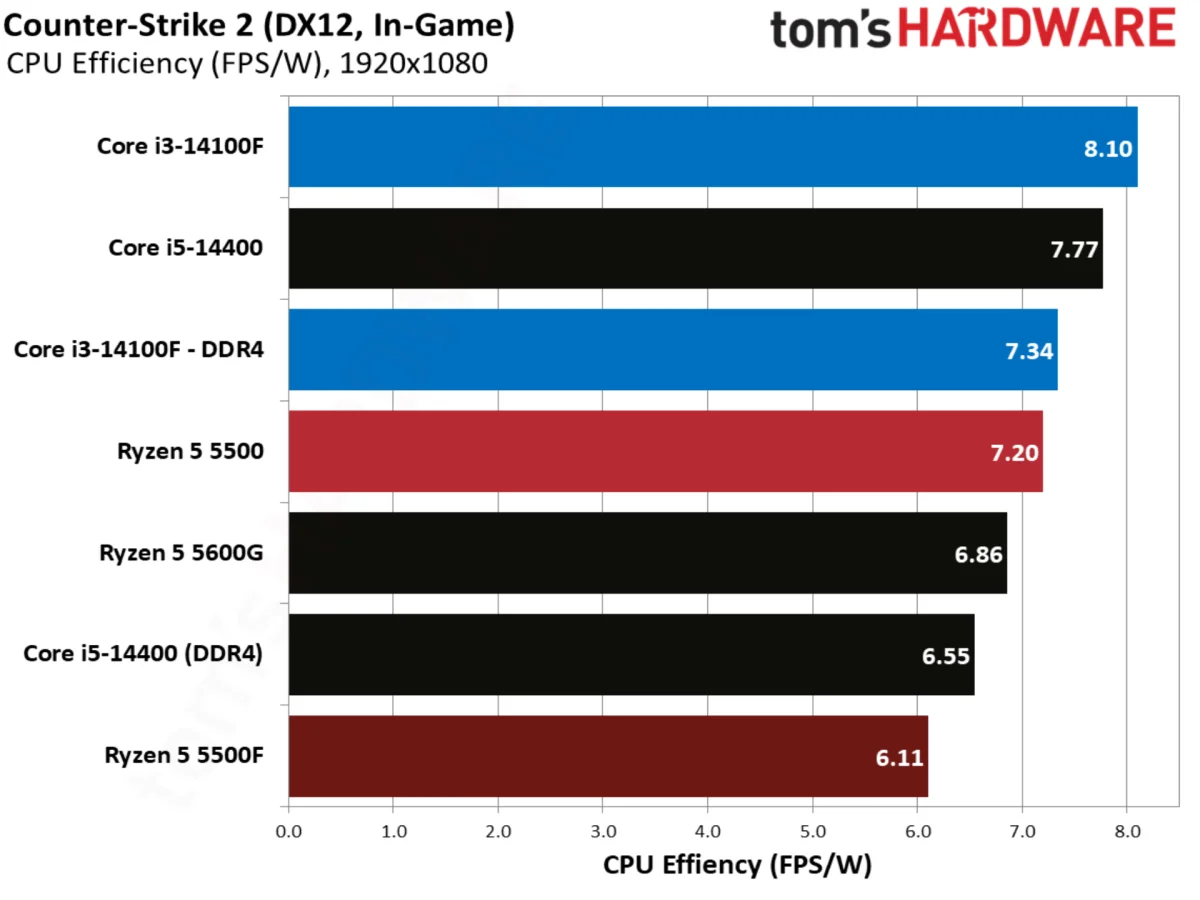
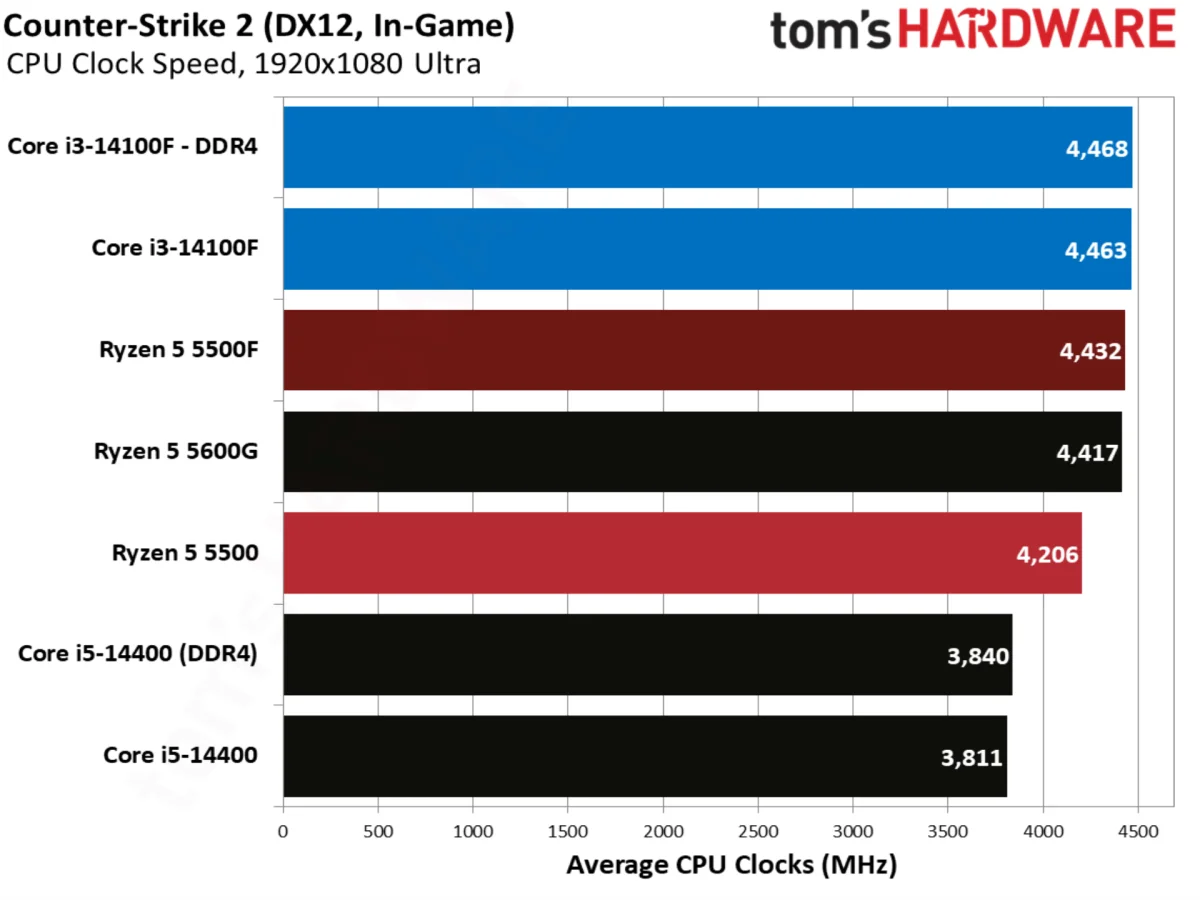
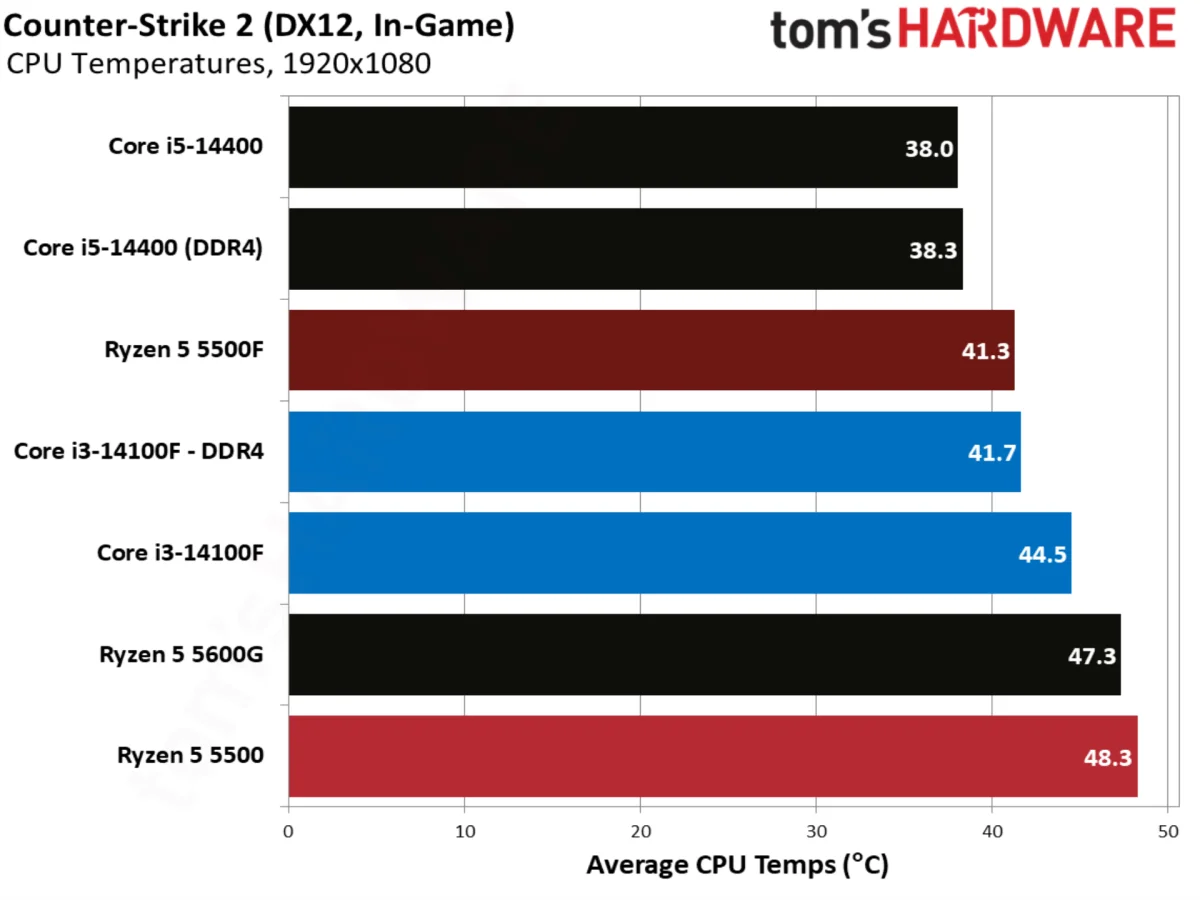
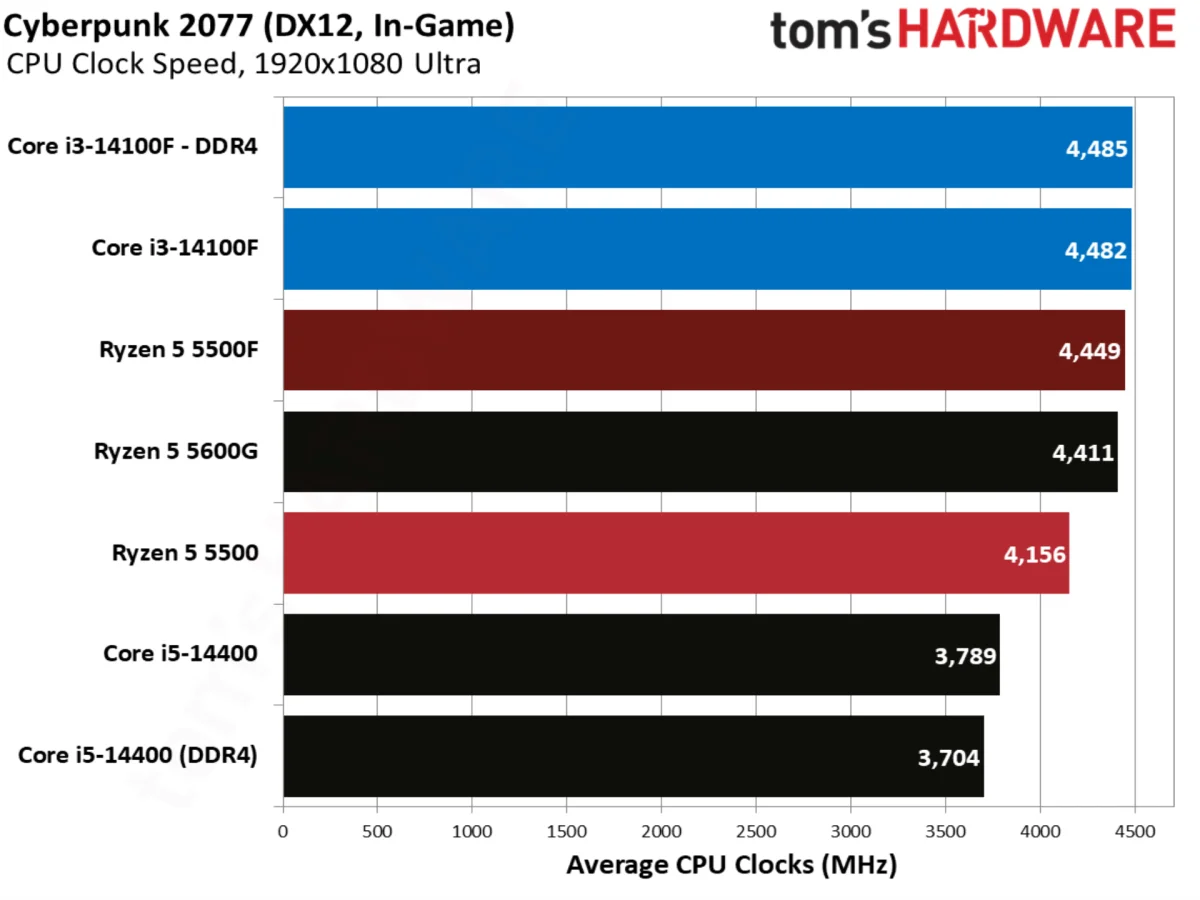
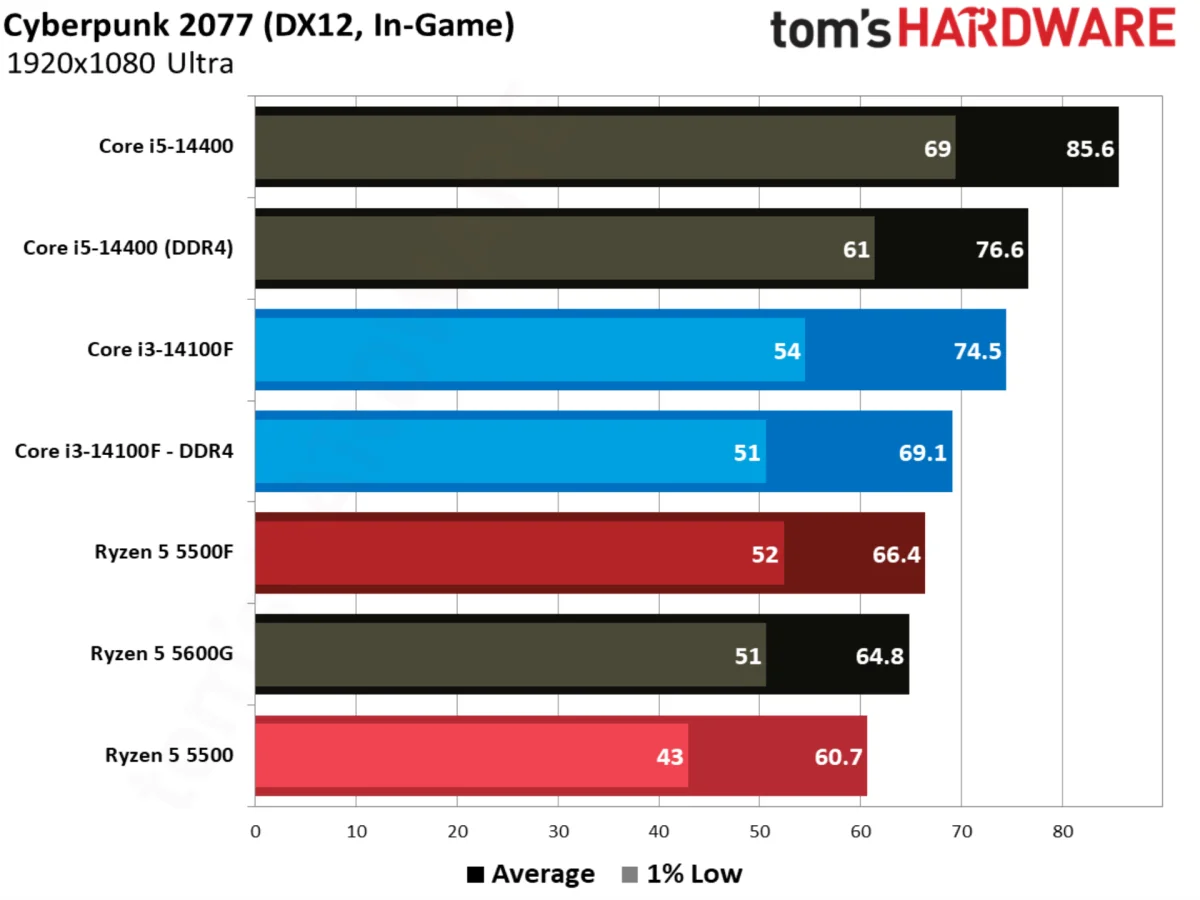
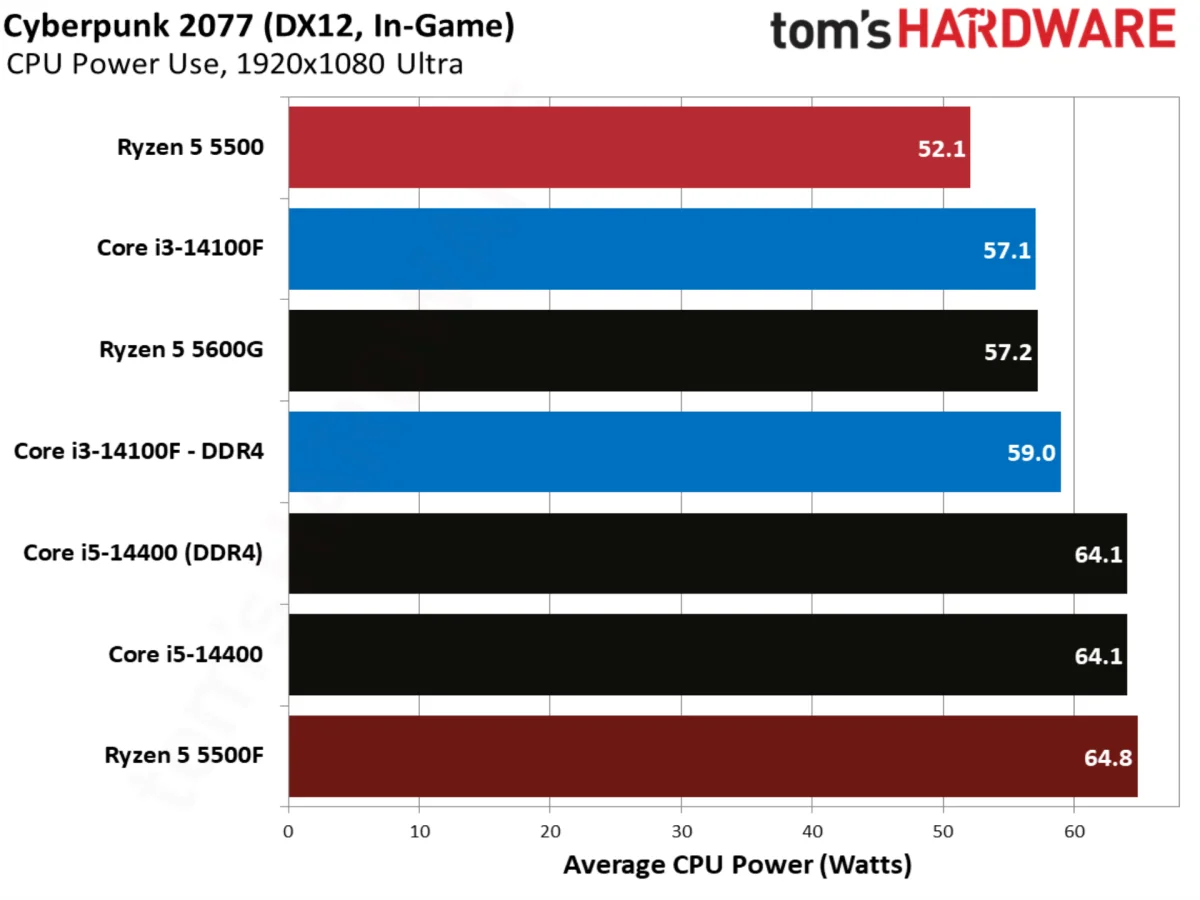
The overall average hides some sharp variation. *007 First Light* is the clearest outlier: the 5500F barely moved ahead of the 5500 despite its higher power use. The other games give a better sense of where the update helps. *Baldur’s Gate 3* tracks closer to the aggregate, with the 5500F 7.2% ahead of the 5500. Intel’s Core i3-14100F still leads the 5500F by 5.9%, and the original 5500 by 13.6%. *Cities: Skylines 2* stresses the processor more directly. The test uses a completed city with a population above one million, putting pressure on core count, clock speed, and memory. The Core i5-14400 with DDR5 provides context for how those system resources affect performance. In *Crimson Desert*, the game’s proprietary engine runs well enough that every tested CPU maintains playable frame rates at Ultra settings. The 5500F is 7.8% faster than the 5500, though the Core i3-14100F remains ahead even with DDR4. *Counter-Strike 2* produces the first major upset: the 5500F beats the other CPUs in focus, including the Core i3-14100F with DDR5. But its 1% lows are weaker; even the 14100F with DDR4 delivers better low-frame performance. In *Cyberpunk 2077*, the 5500F improves on the 5500 by 9.2%. The Core i3-14100F keeps a narrower lead of 4.1% over the 5500F, though it’s 13.8% faster than the original 5500.007 First Light benchmarks
    Baldur’s Gate 3 benchmarks
   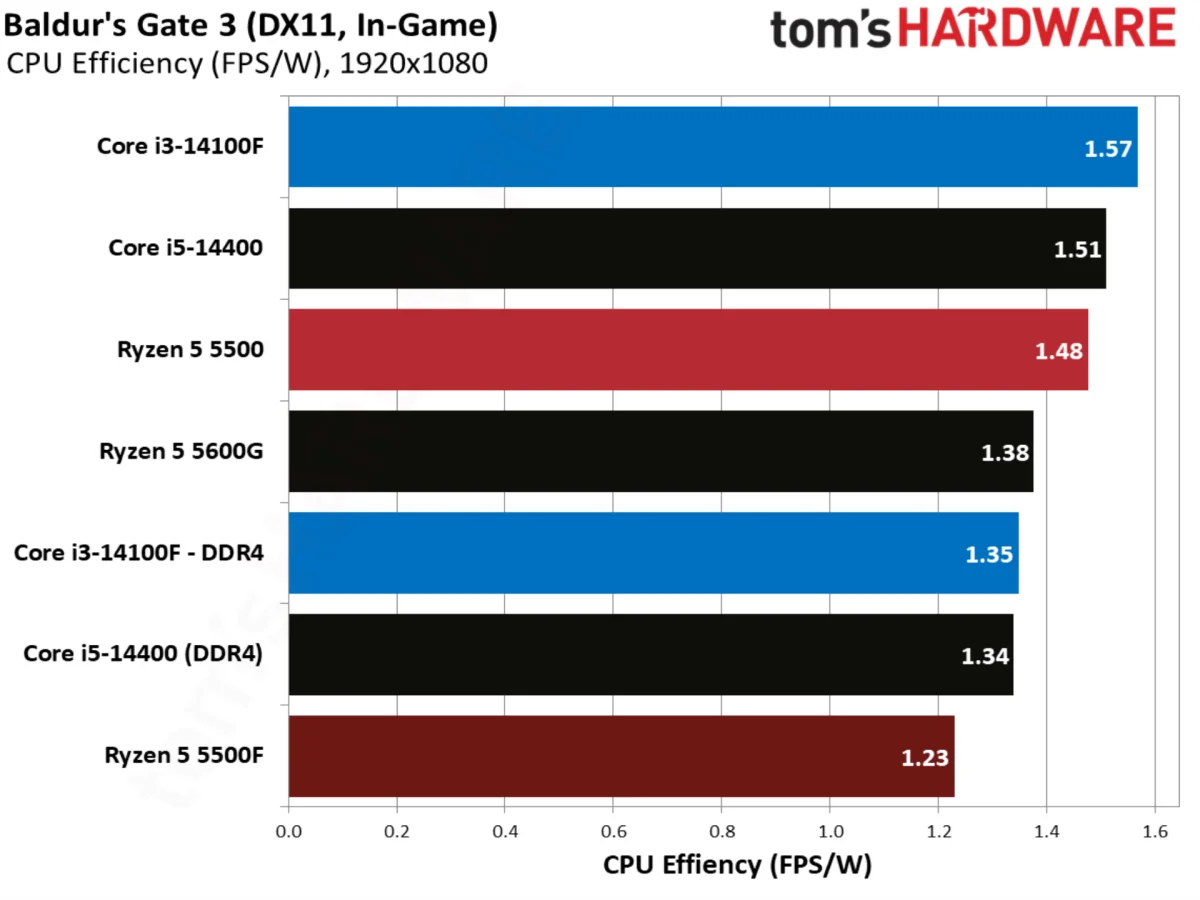 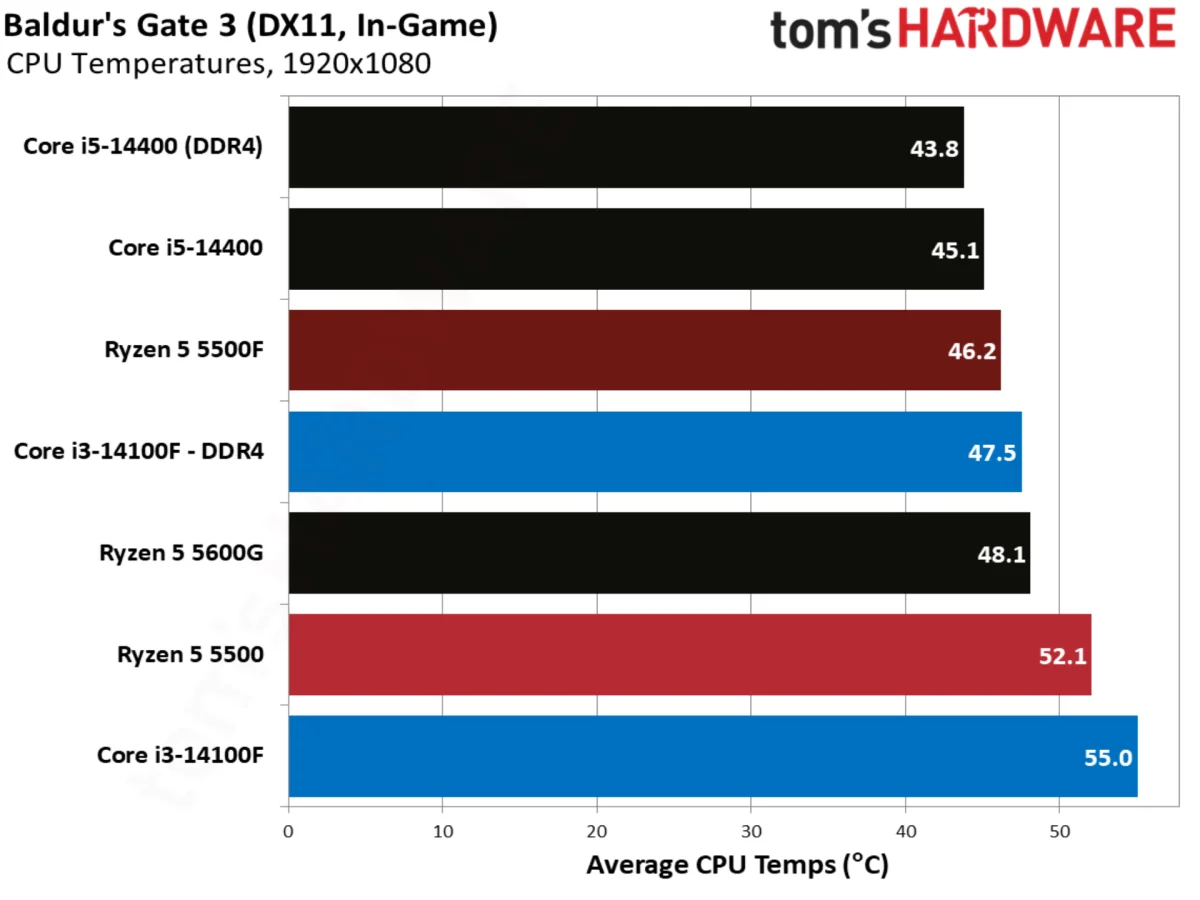Cities Skylines 2 benchmarks
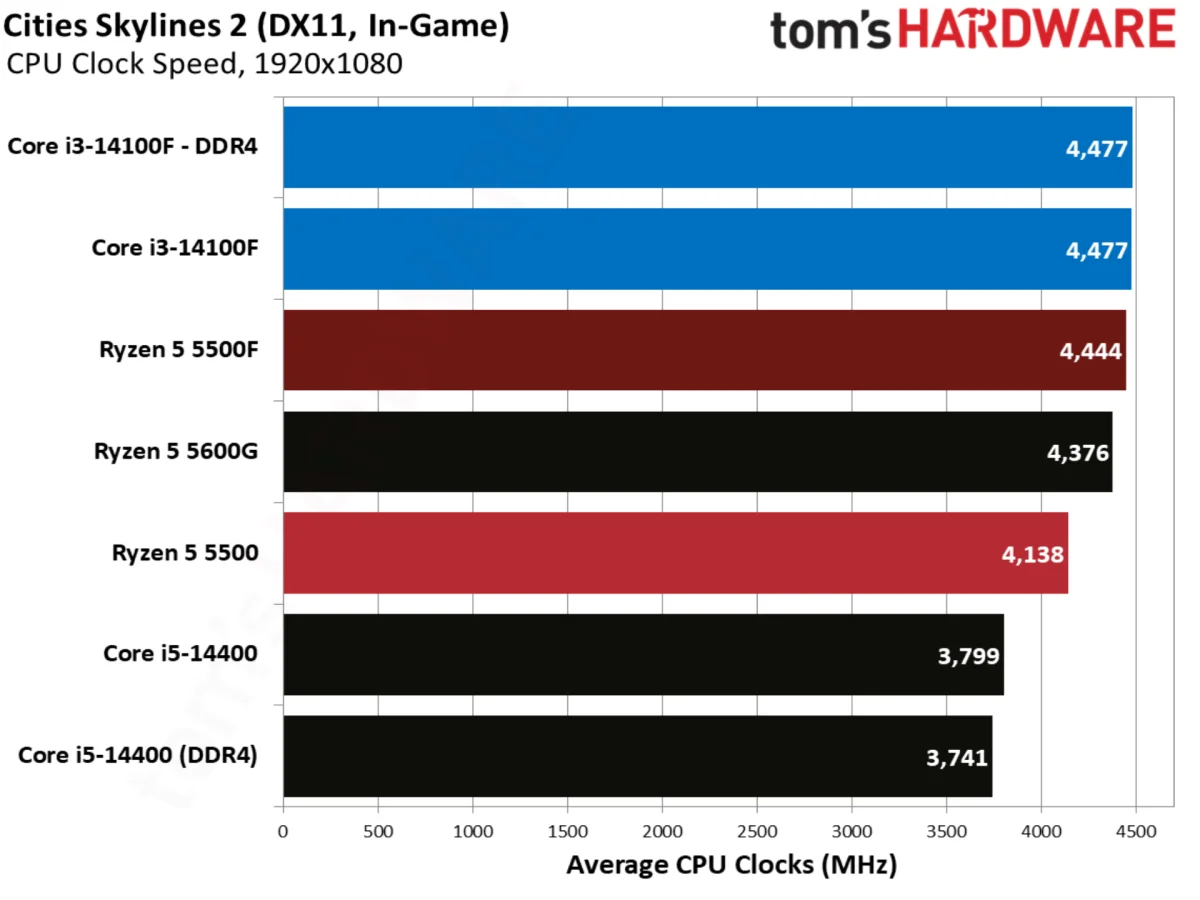 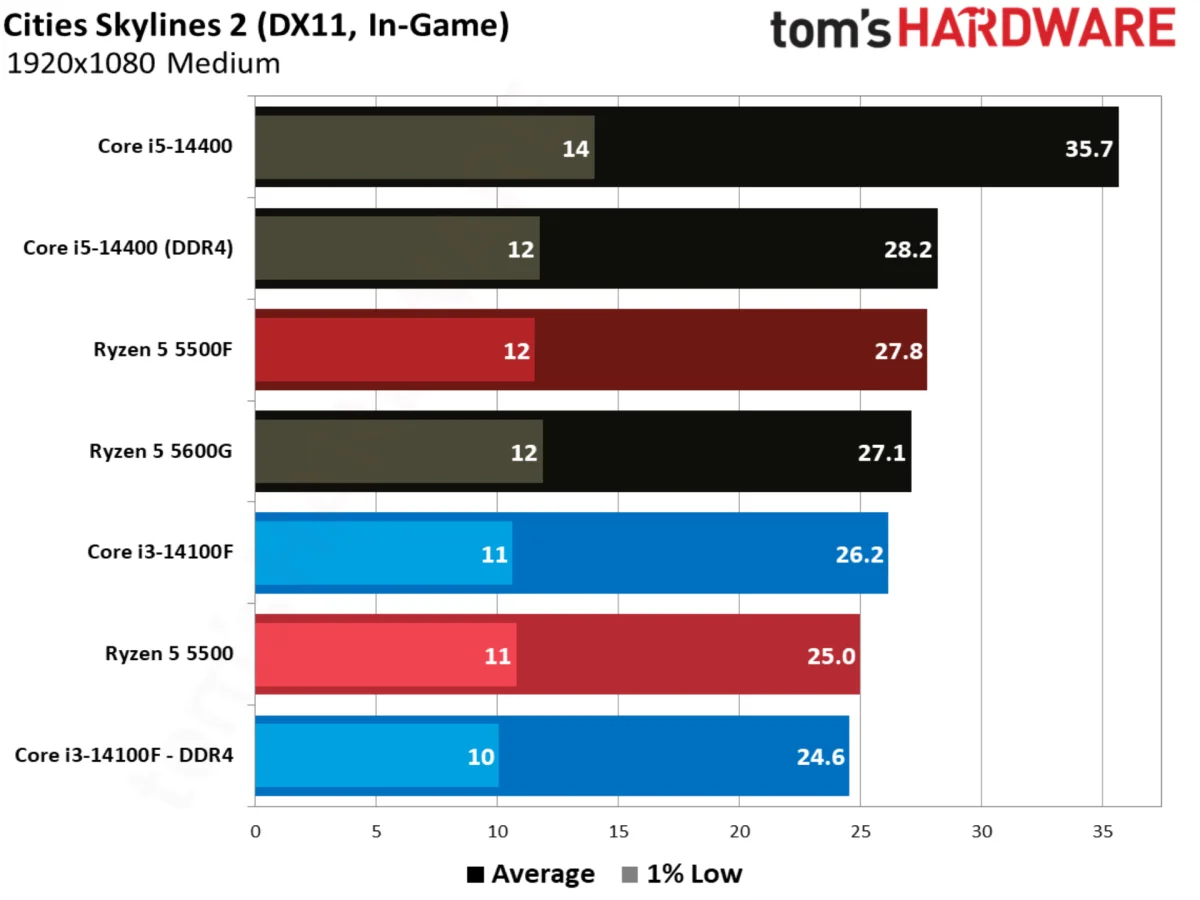   Crimson Desert benchmarks
    Counter-Strike 2 benchmarks
    Cyberpunk 2077 benchmarks
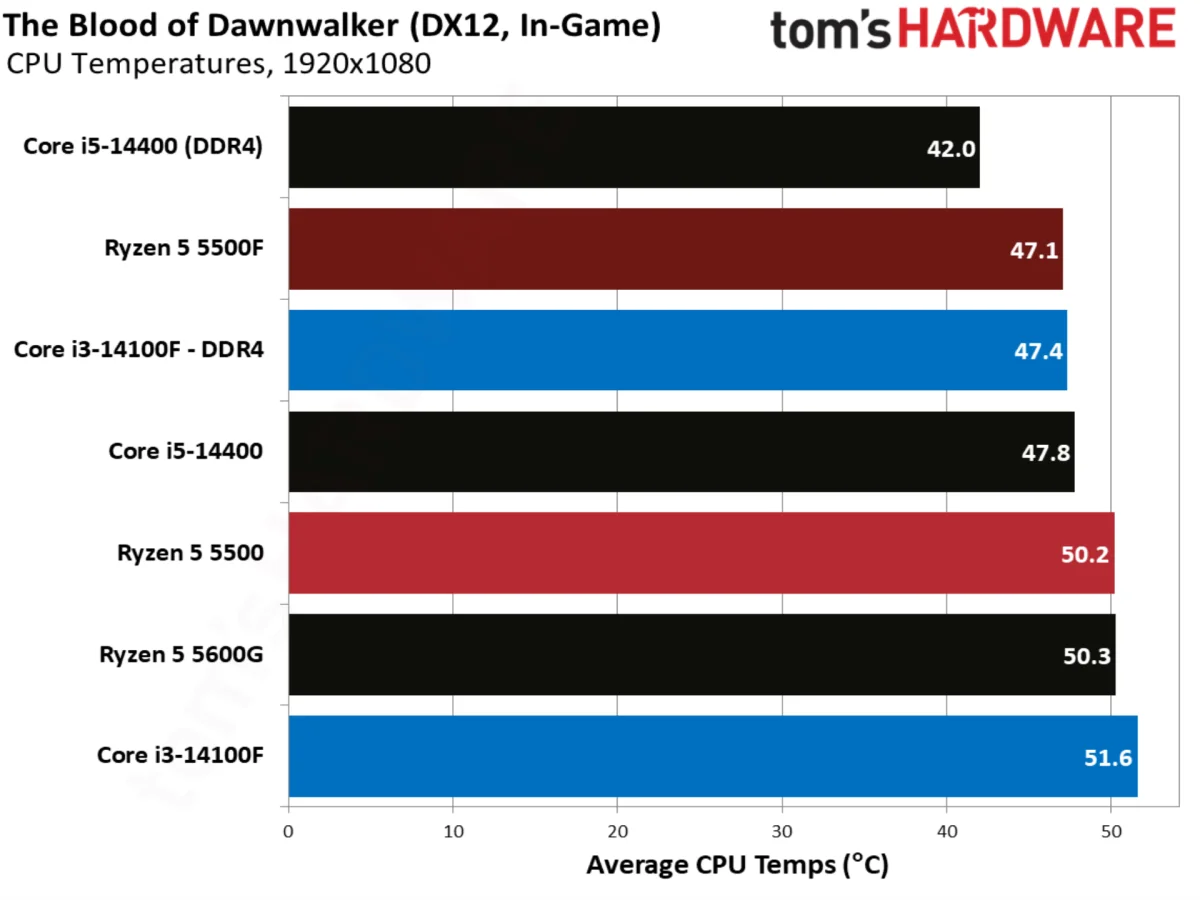
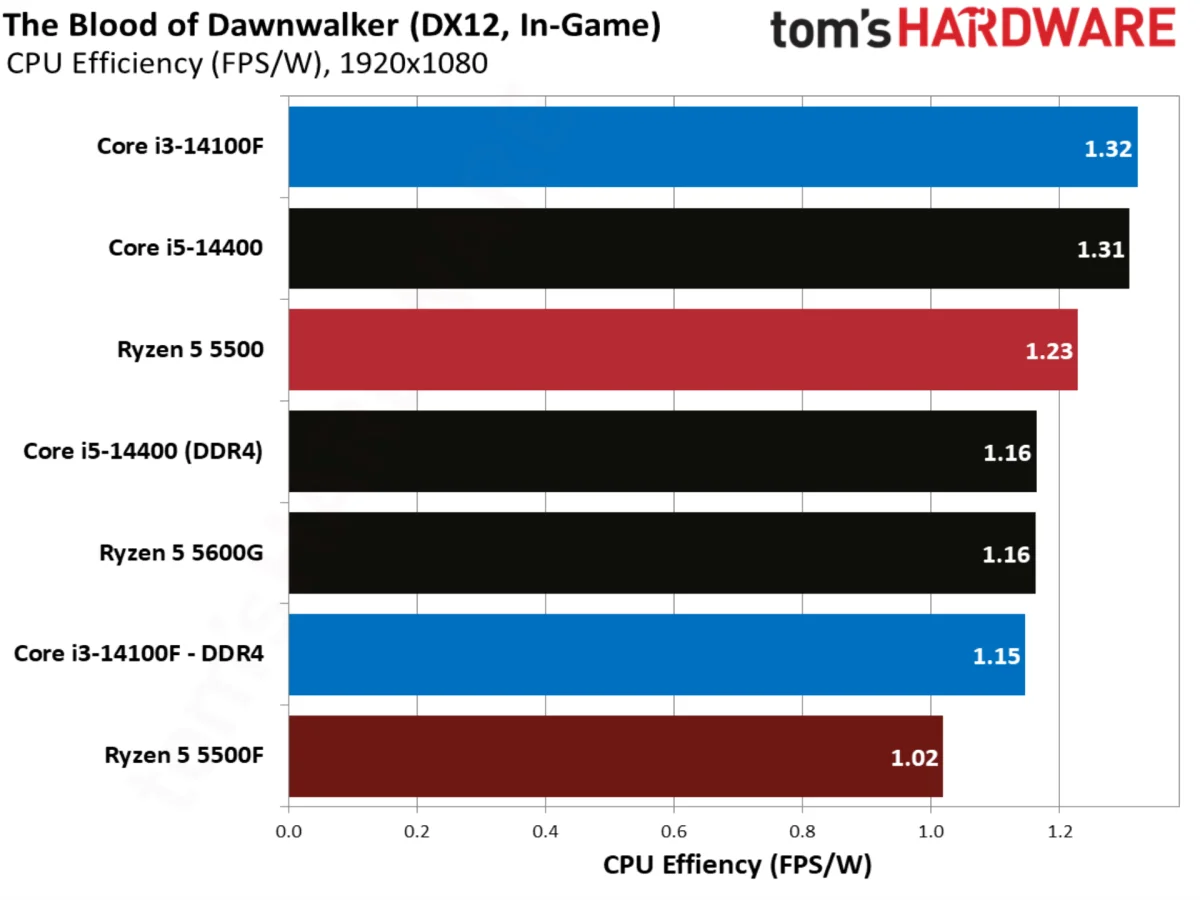
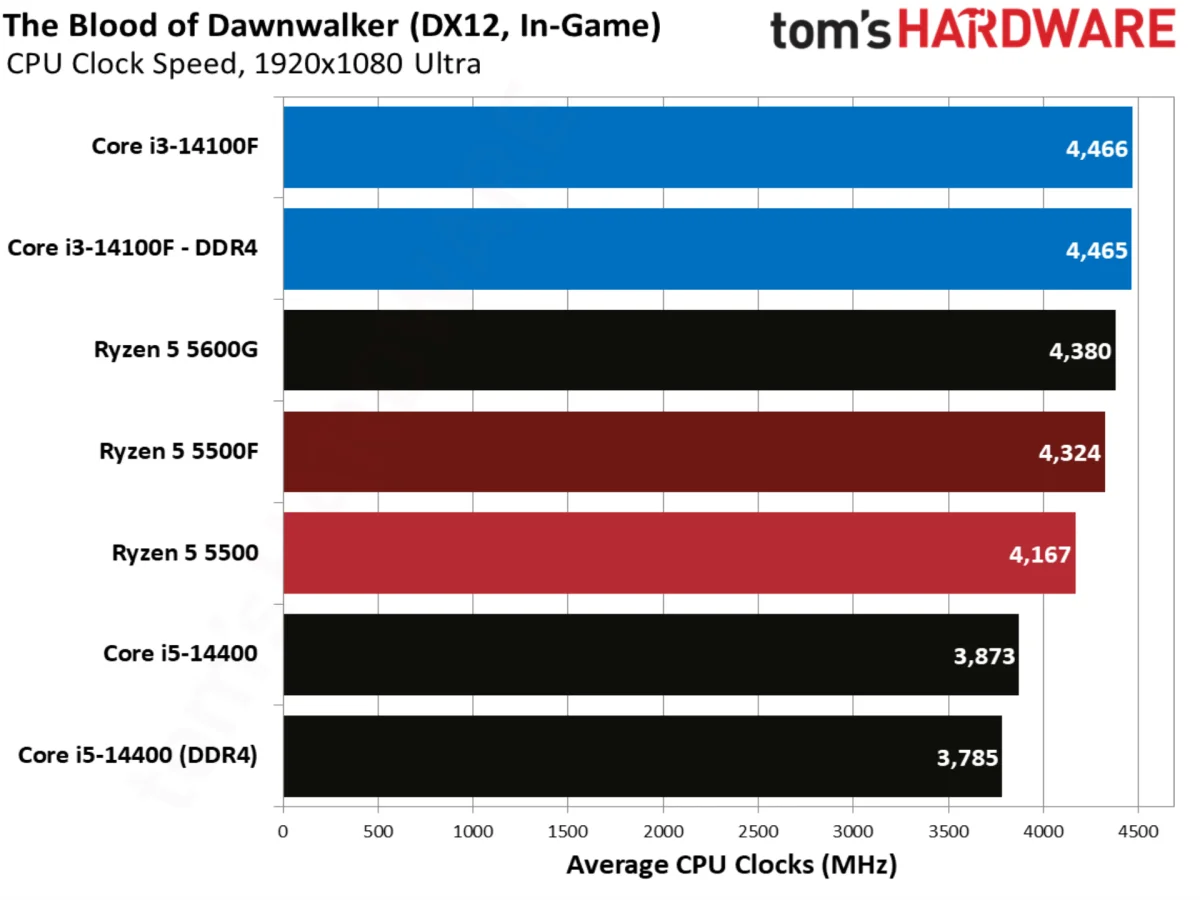
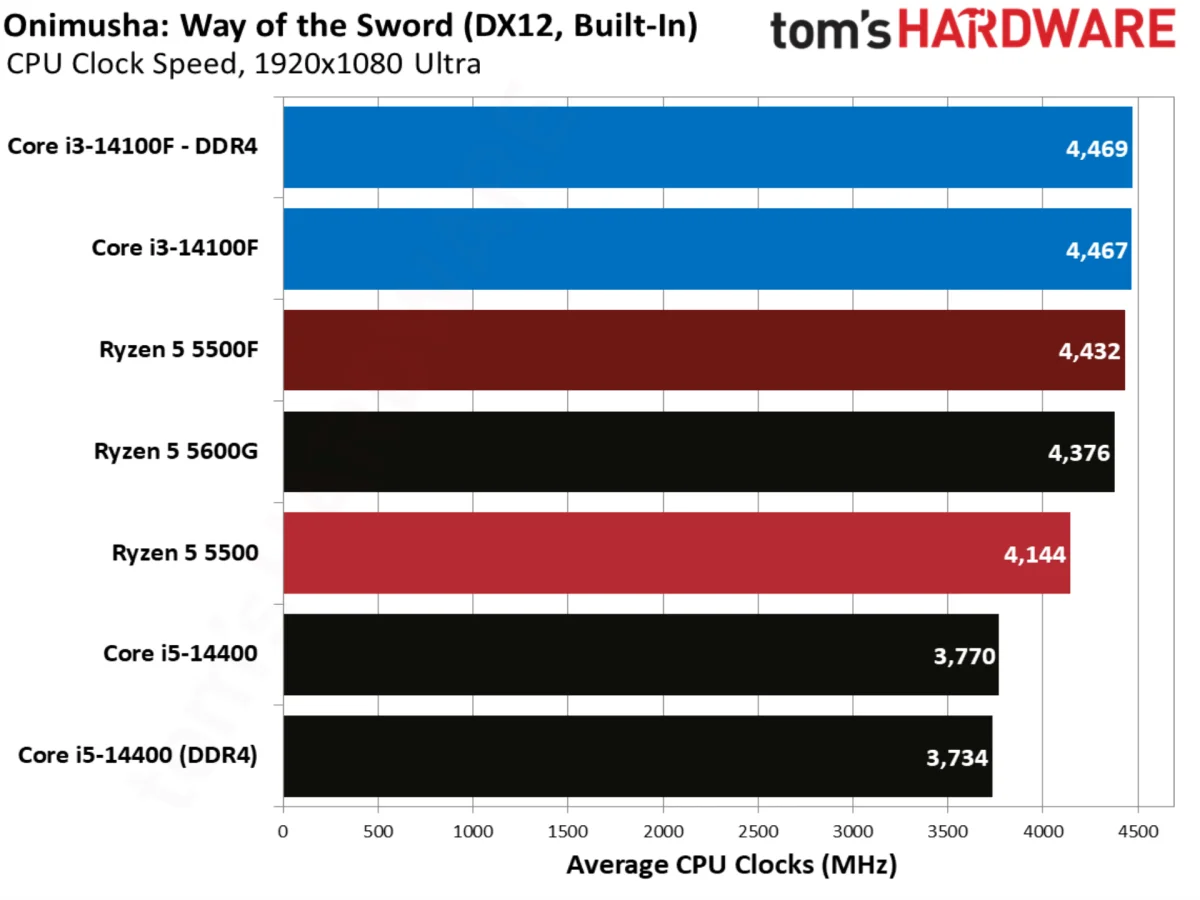
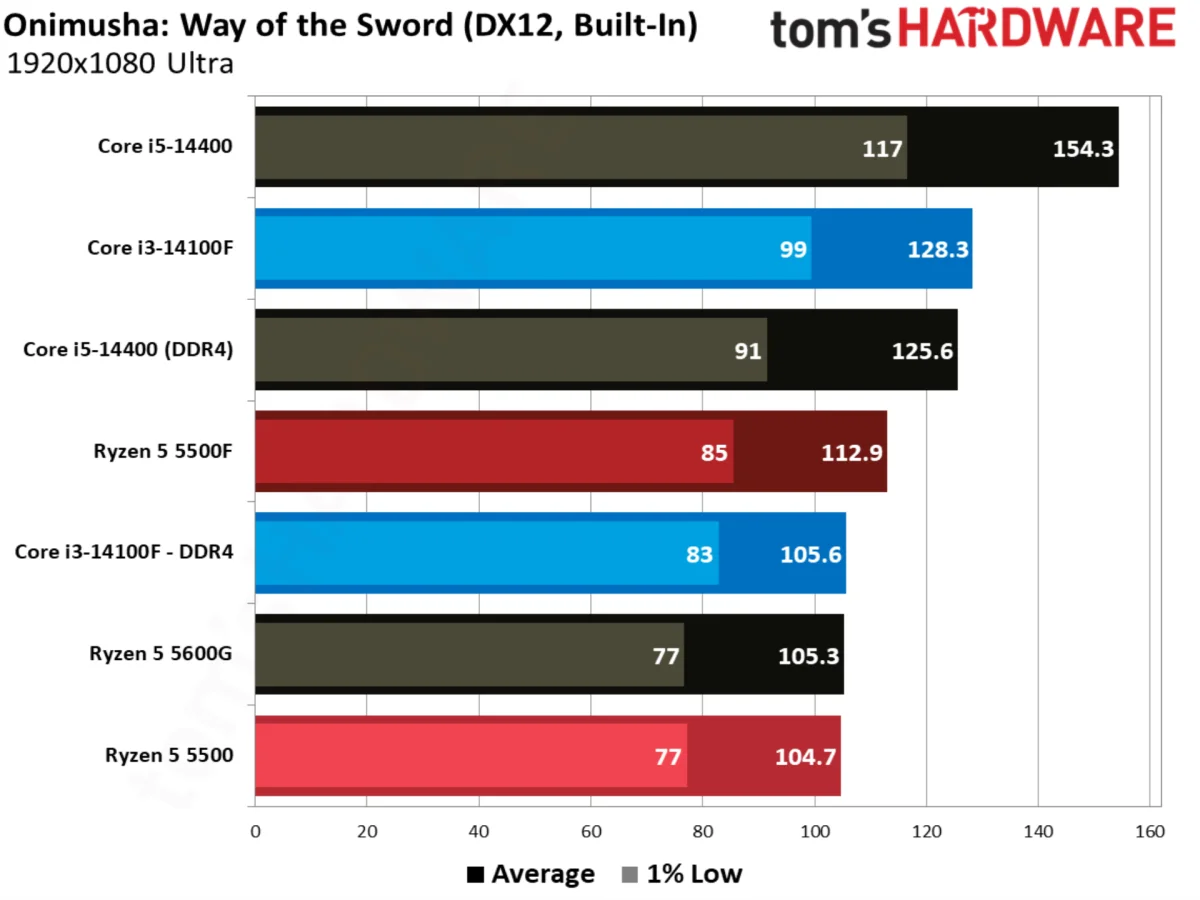
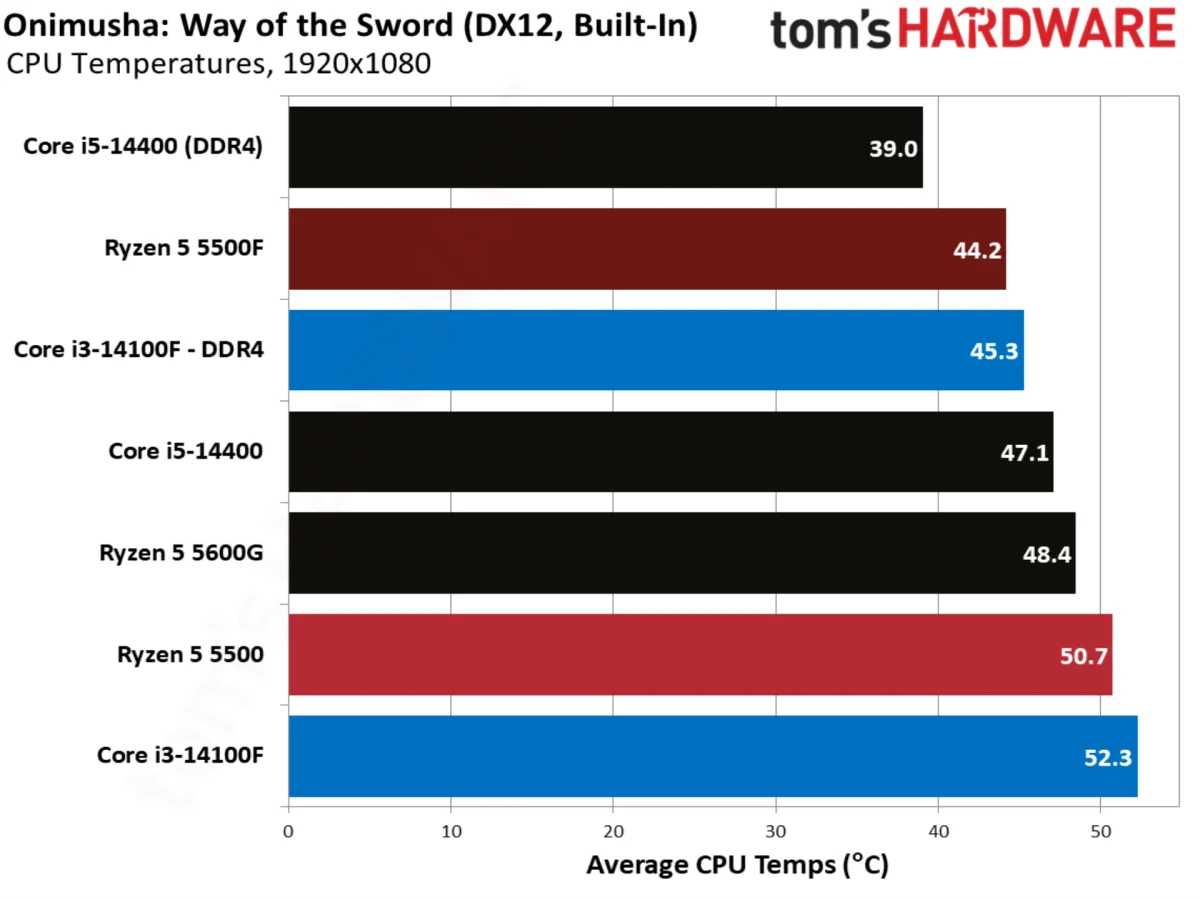
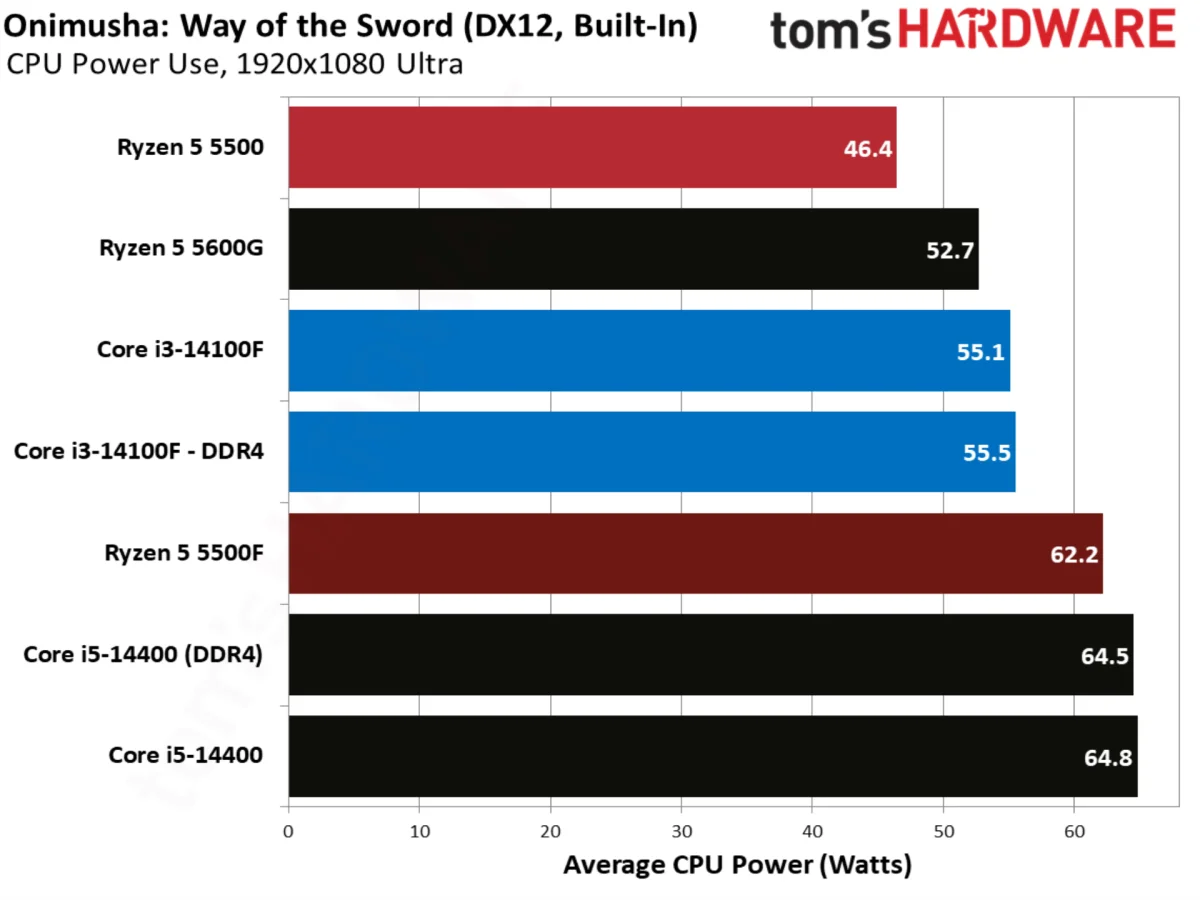
   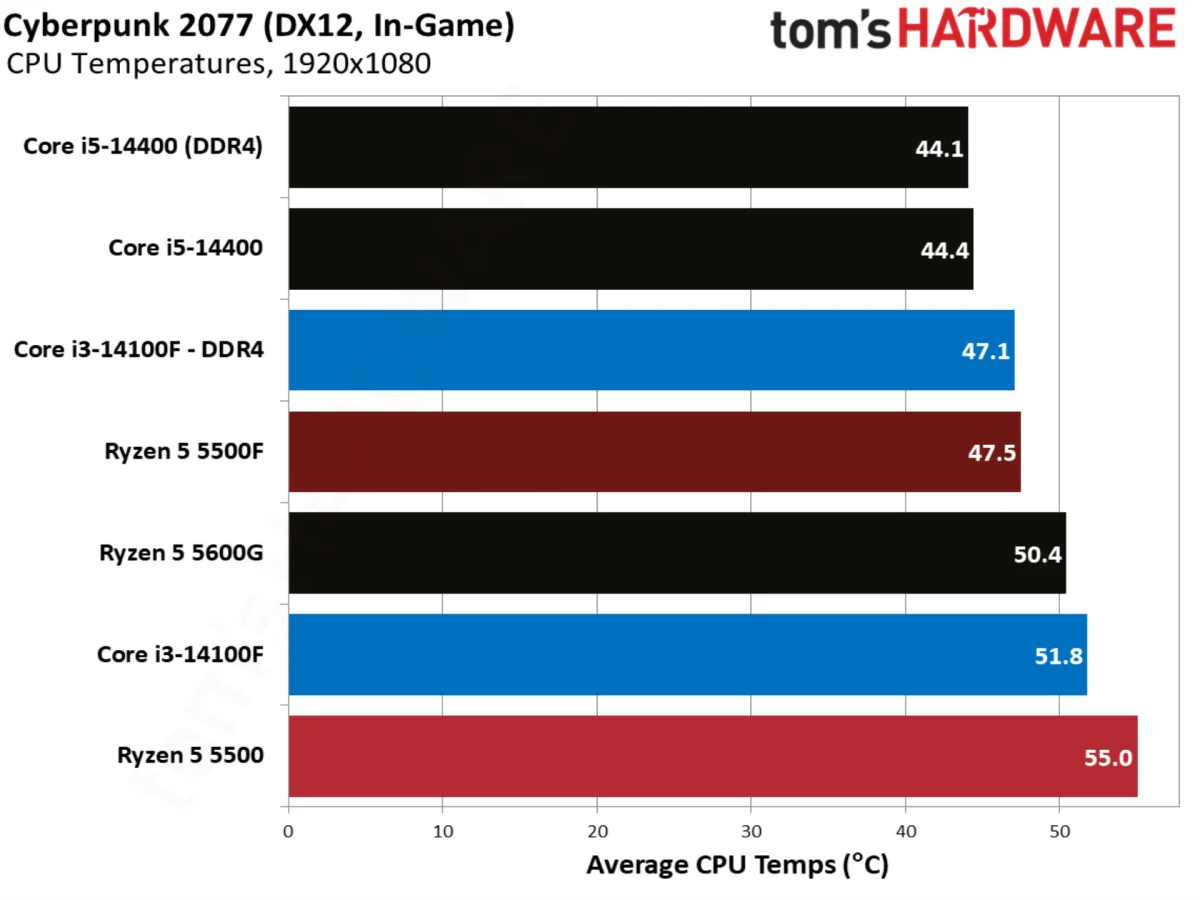 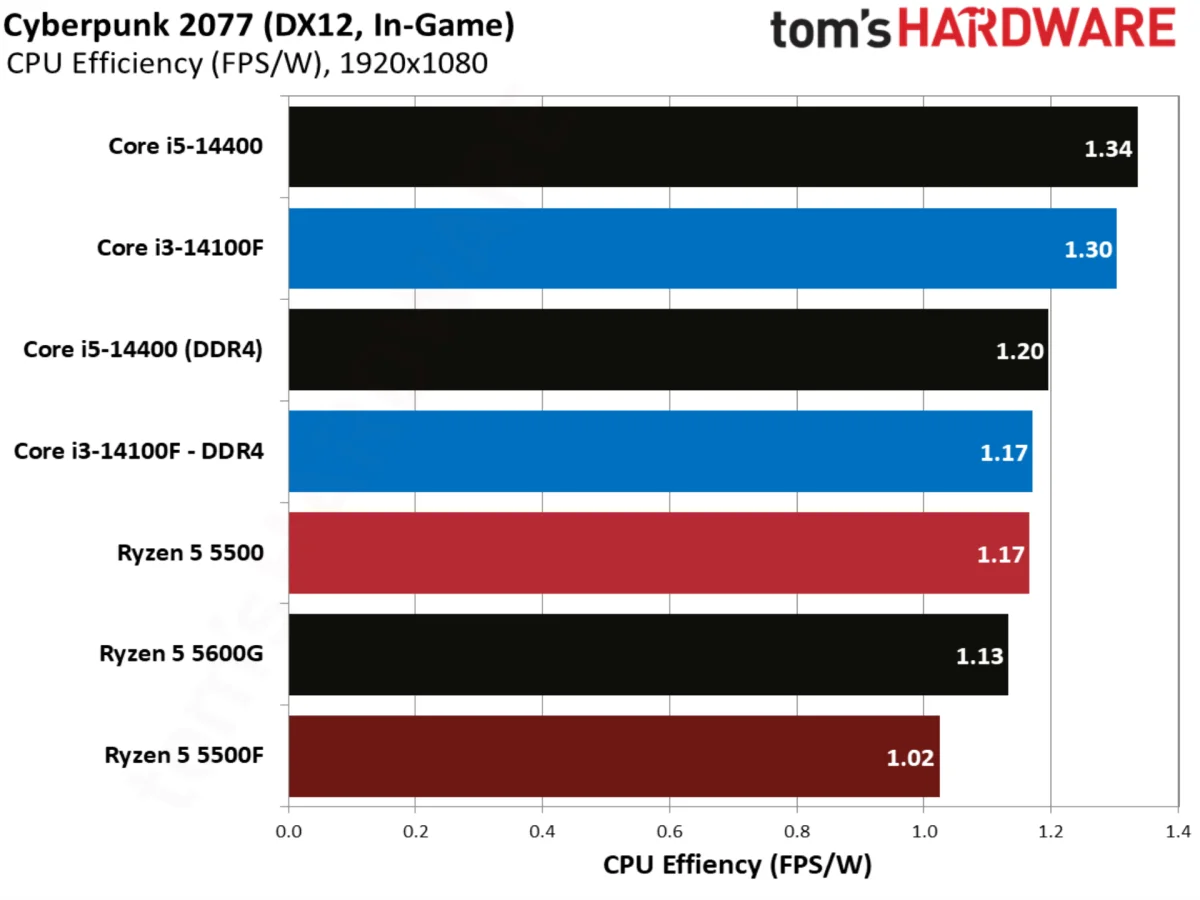The Blood of Dawnwalker benchmarks
Gaming performance: a mixed result for the Ryzen 5 5500F
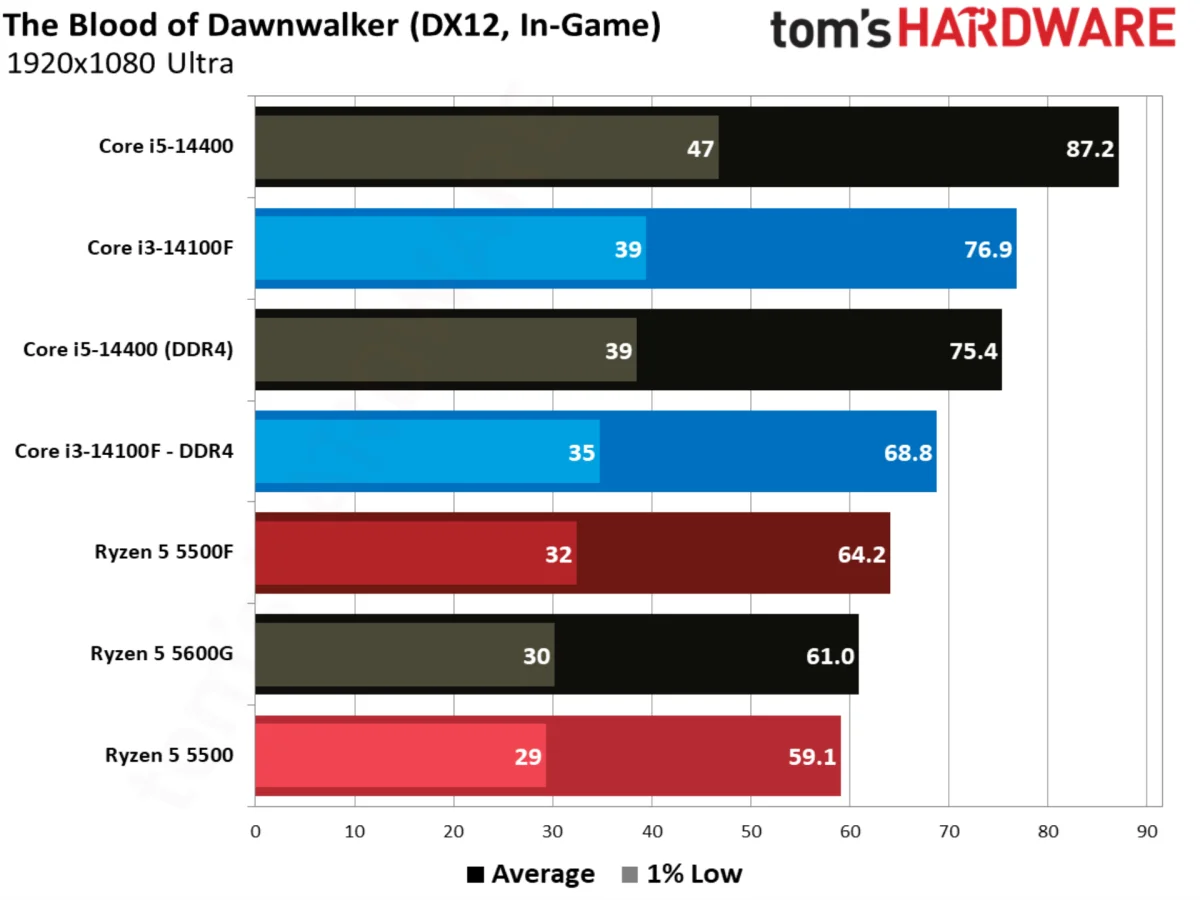
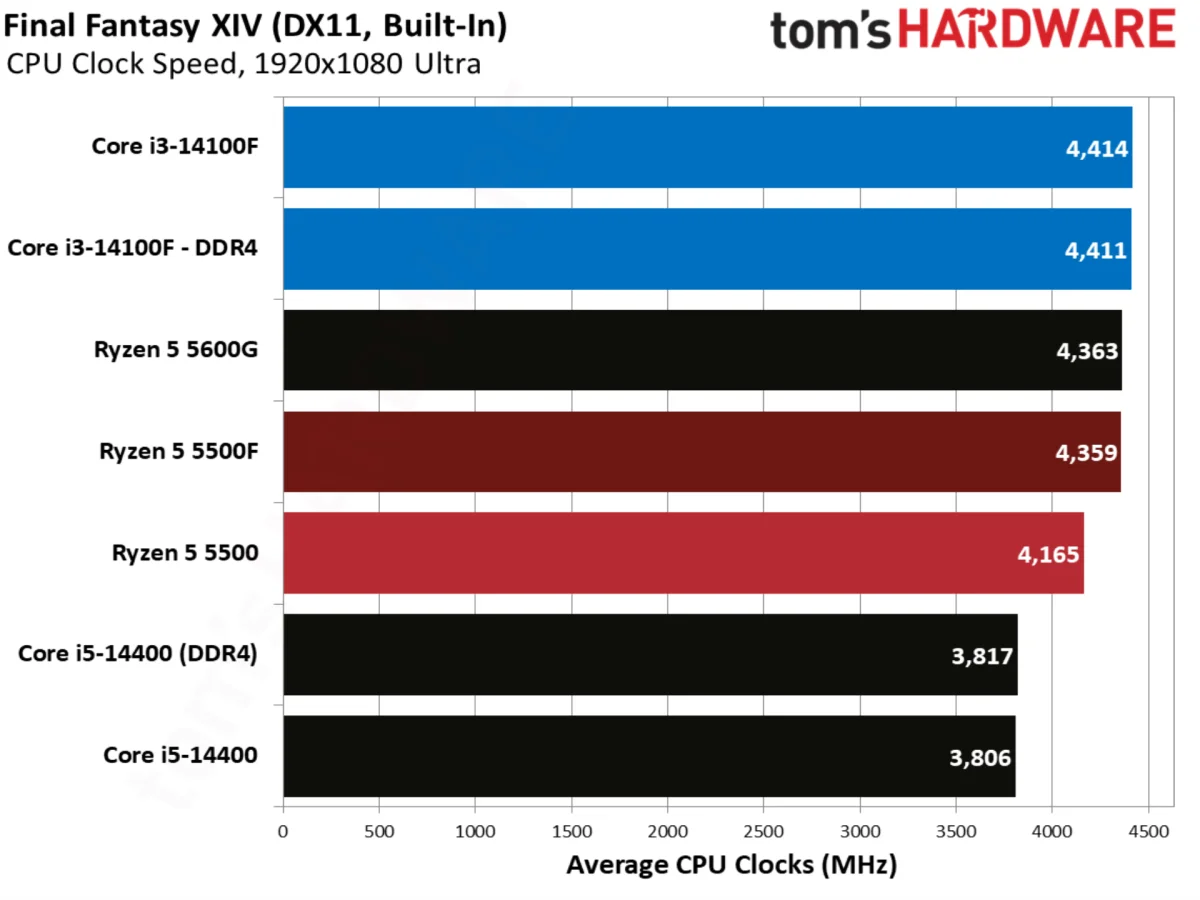
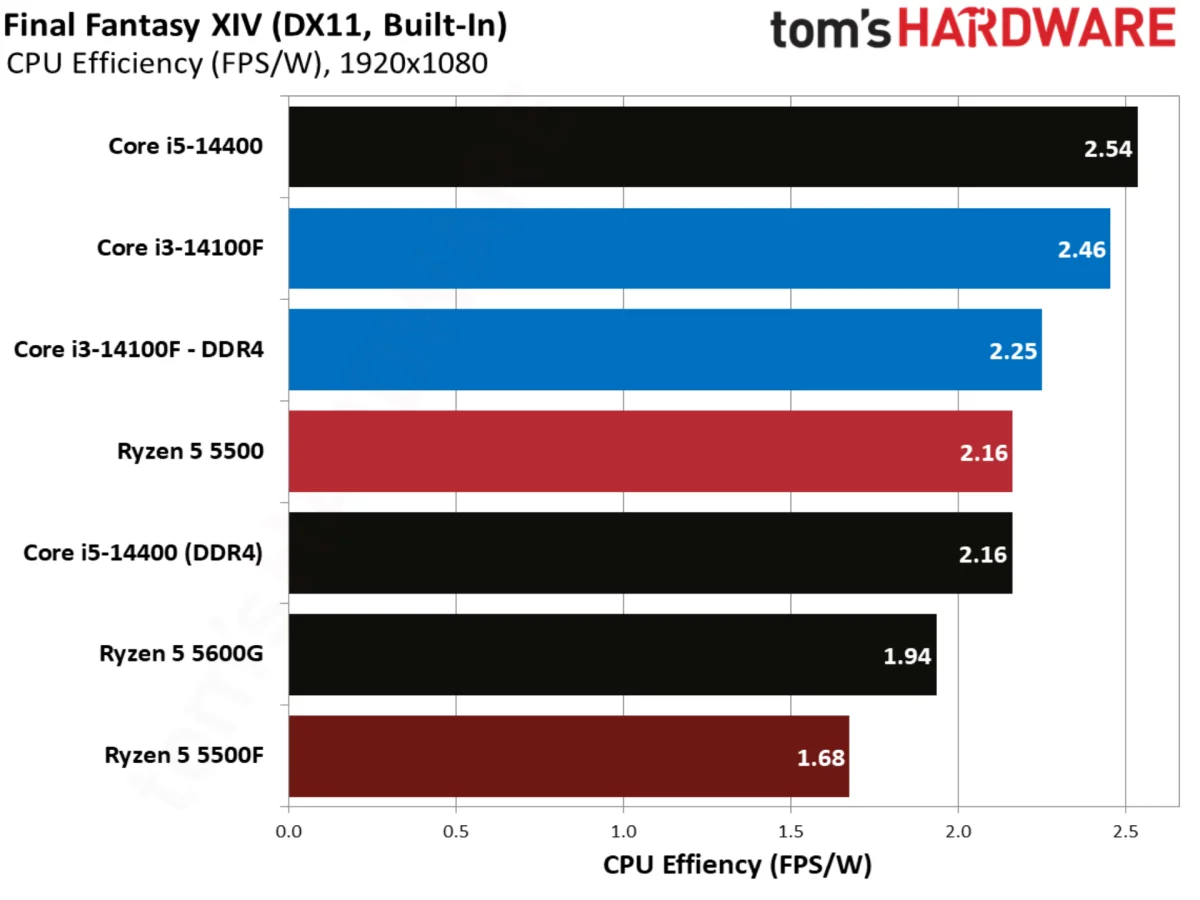
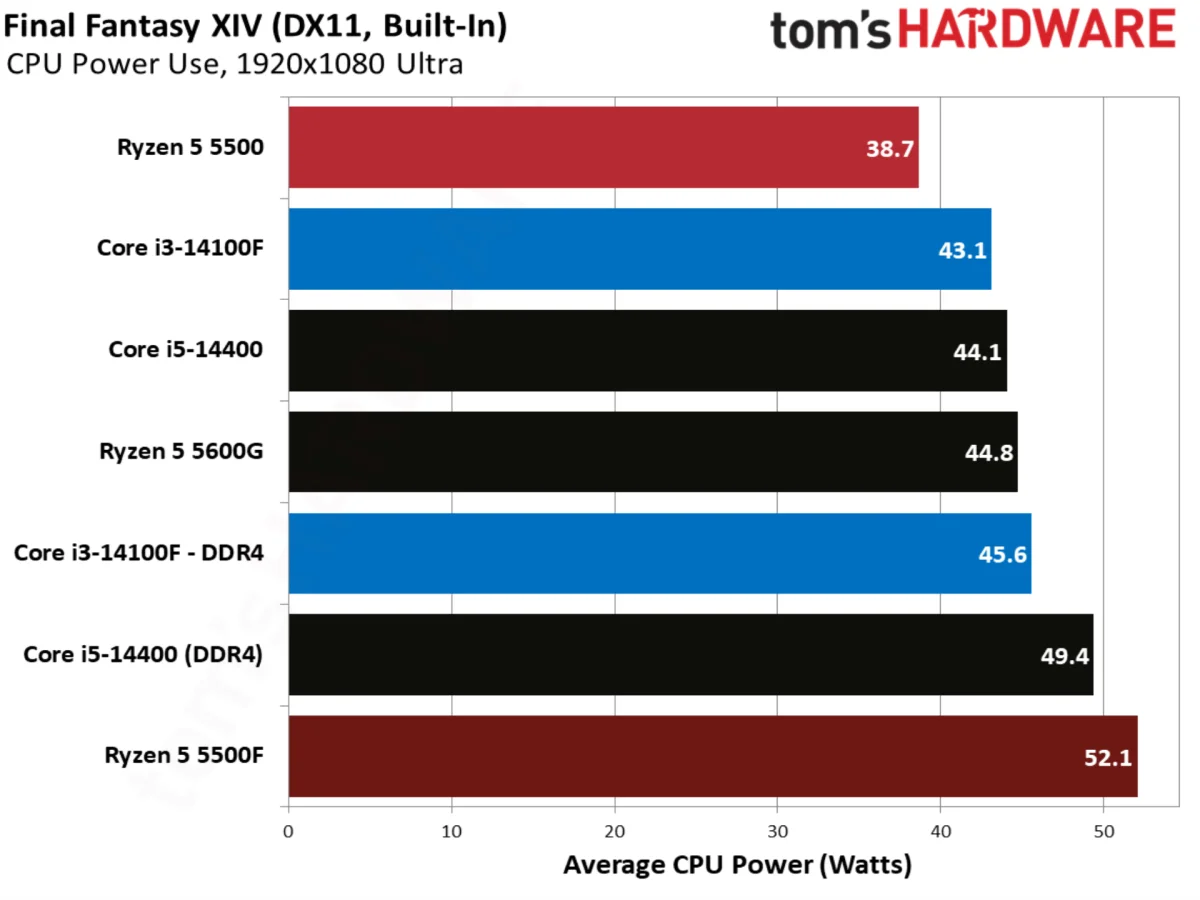
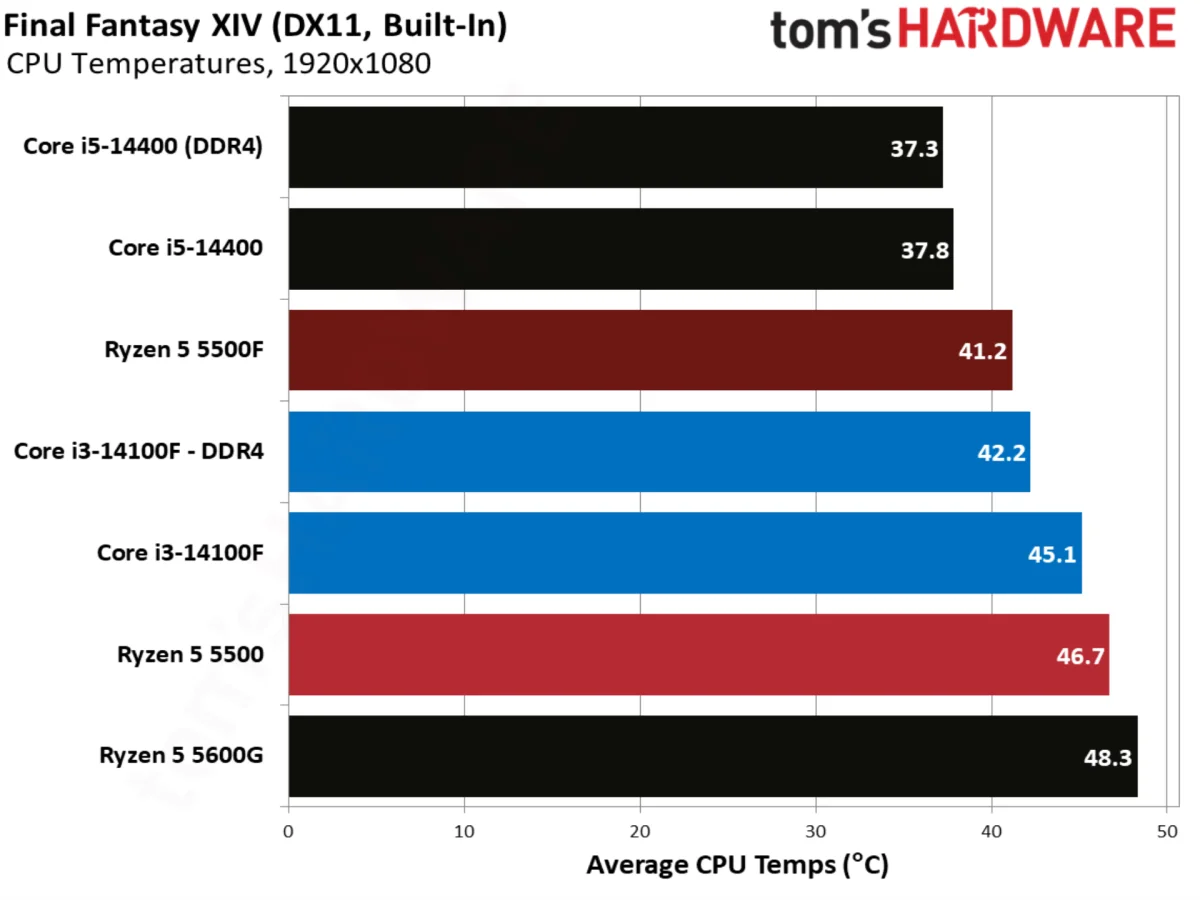
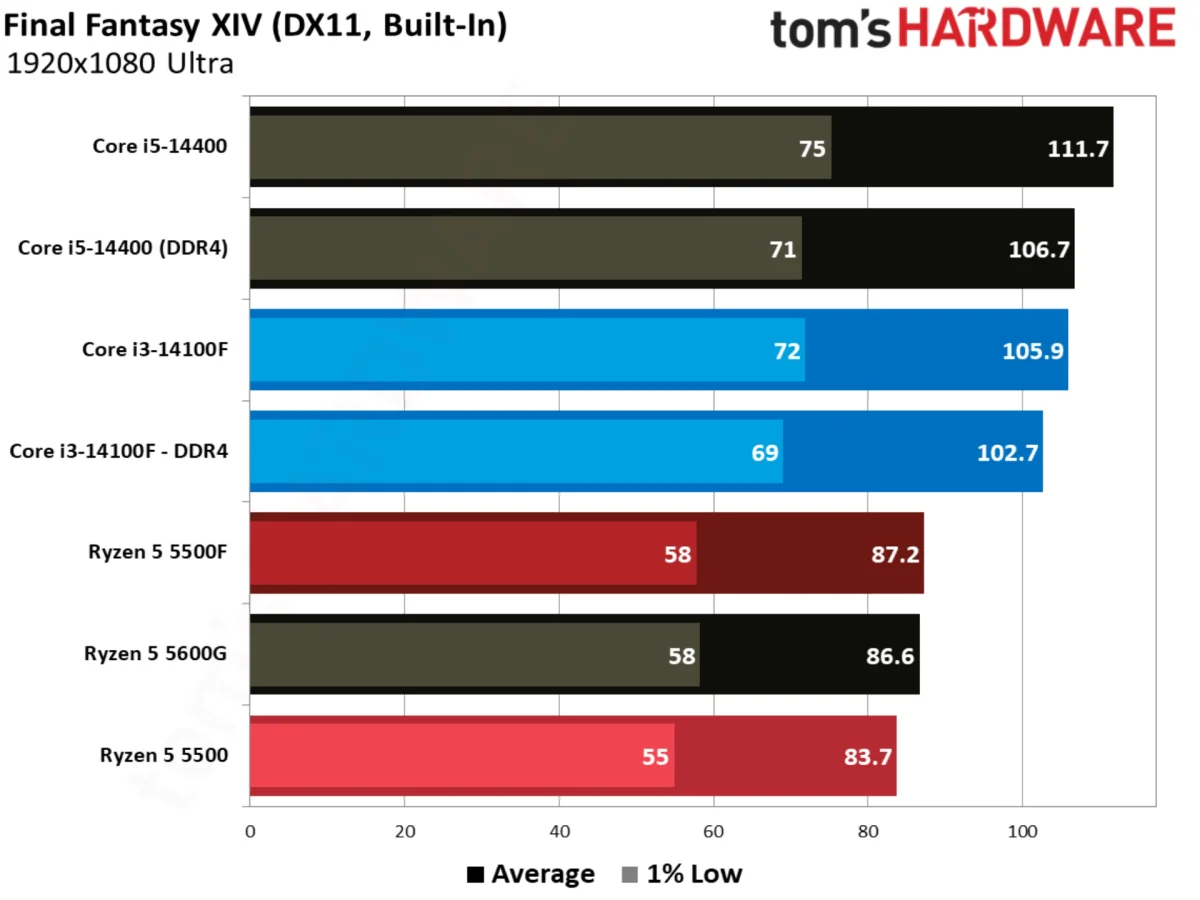
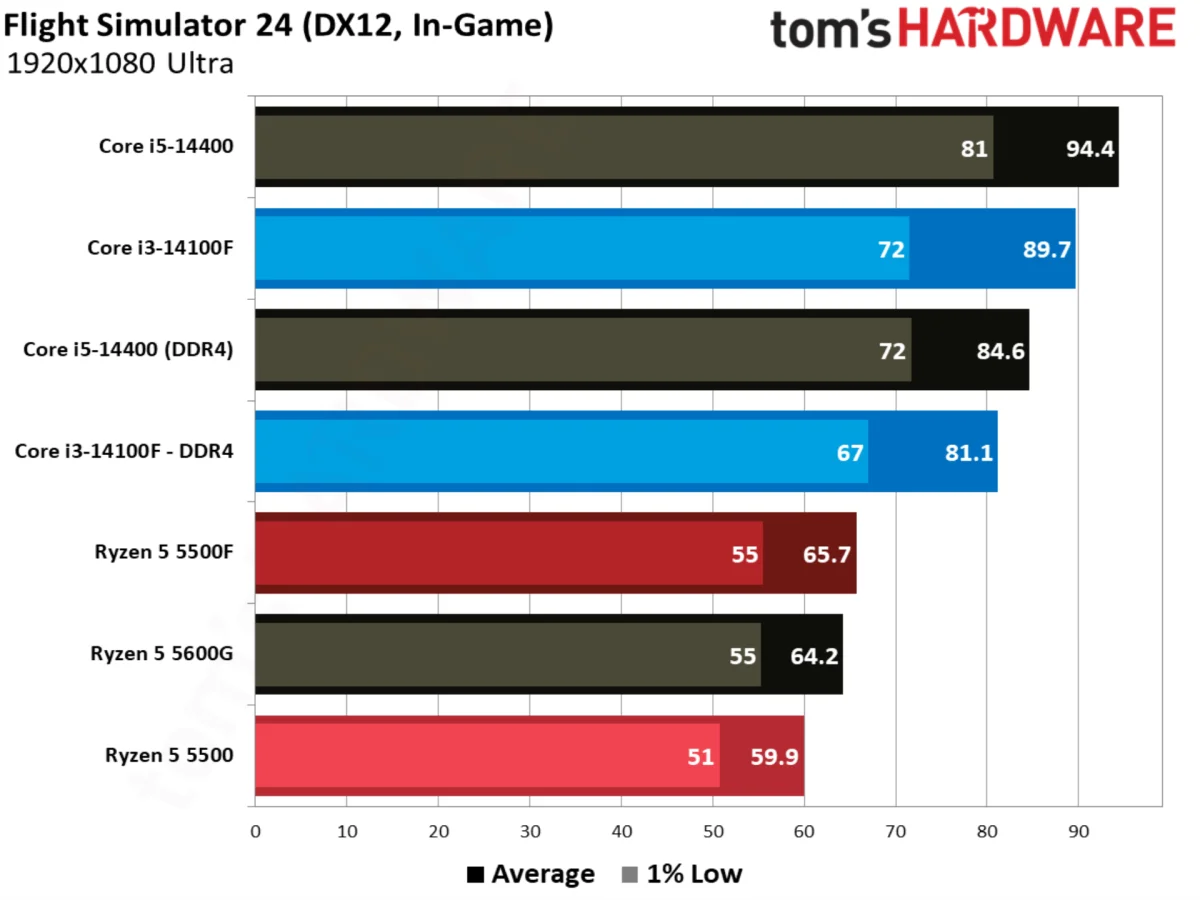
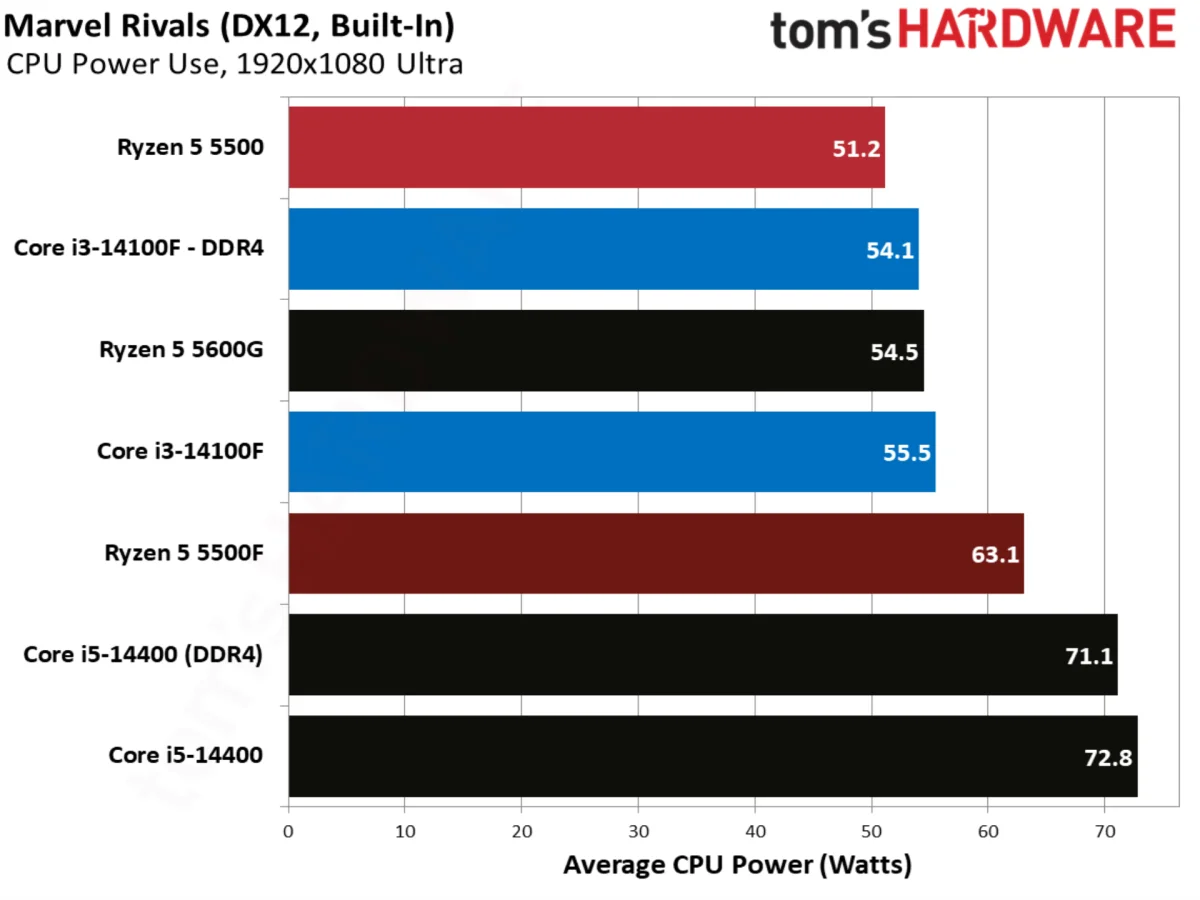
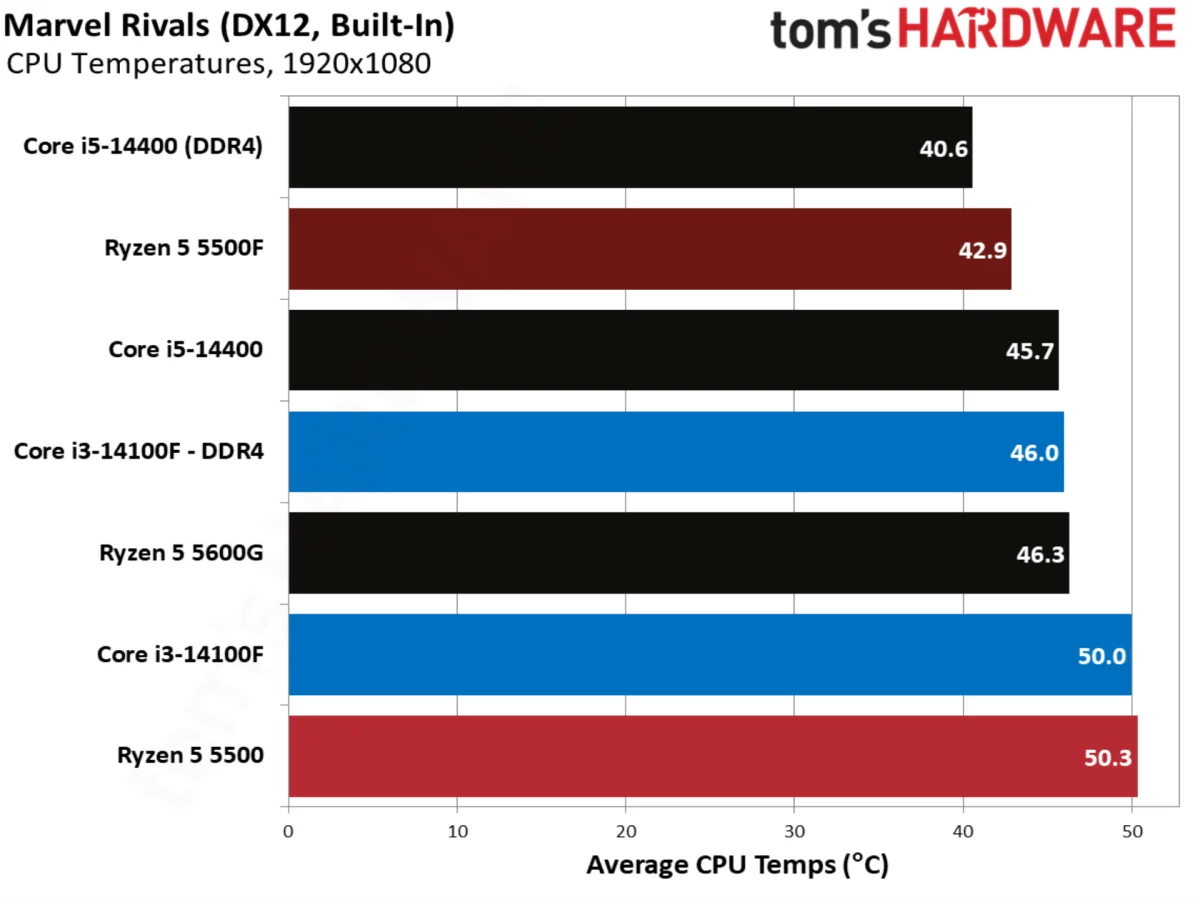
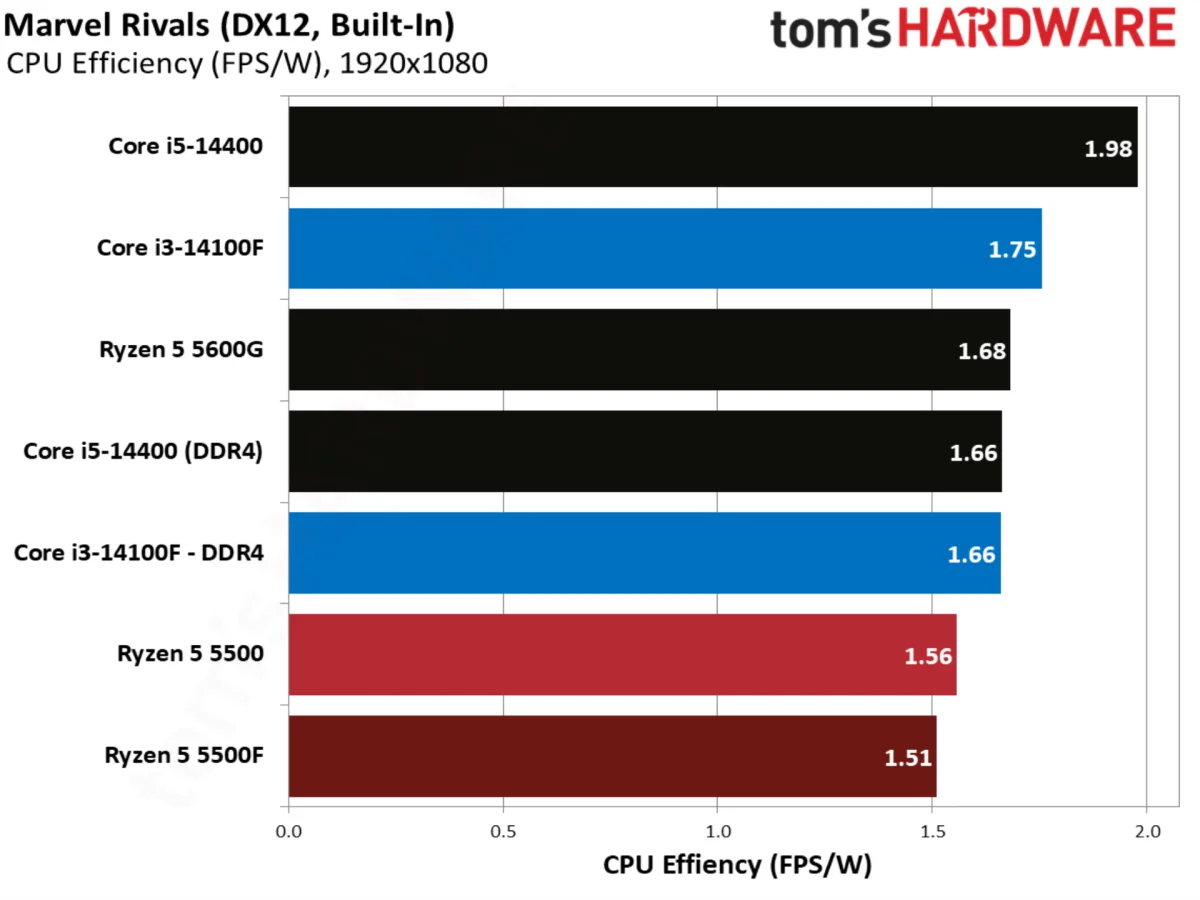
The 5500F’s gains matter most in games where AMD’s older Ryzen 5 5500 struggled against Intel’s Core i3-14100F. Across this set, the newer chip sometimes flips that matchup, but it doesn’t do so consistently. That’s a more useful read than any single win: the 5500F narrows the gap in several titles and takes the lead in others, while Intel remains clearly faster in some CPU heavy workloads. The test suite’s newest addition is The Blood of Dawnwalker, built on Unreal Engine 5. The benchmark follows a route through a dense city in the middle of the map, where CPU demand rises and stuttering can appear. The Ryzen 5 5500F scores more than 8% ahead of the 5500, though the Core i3-14100F still leads.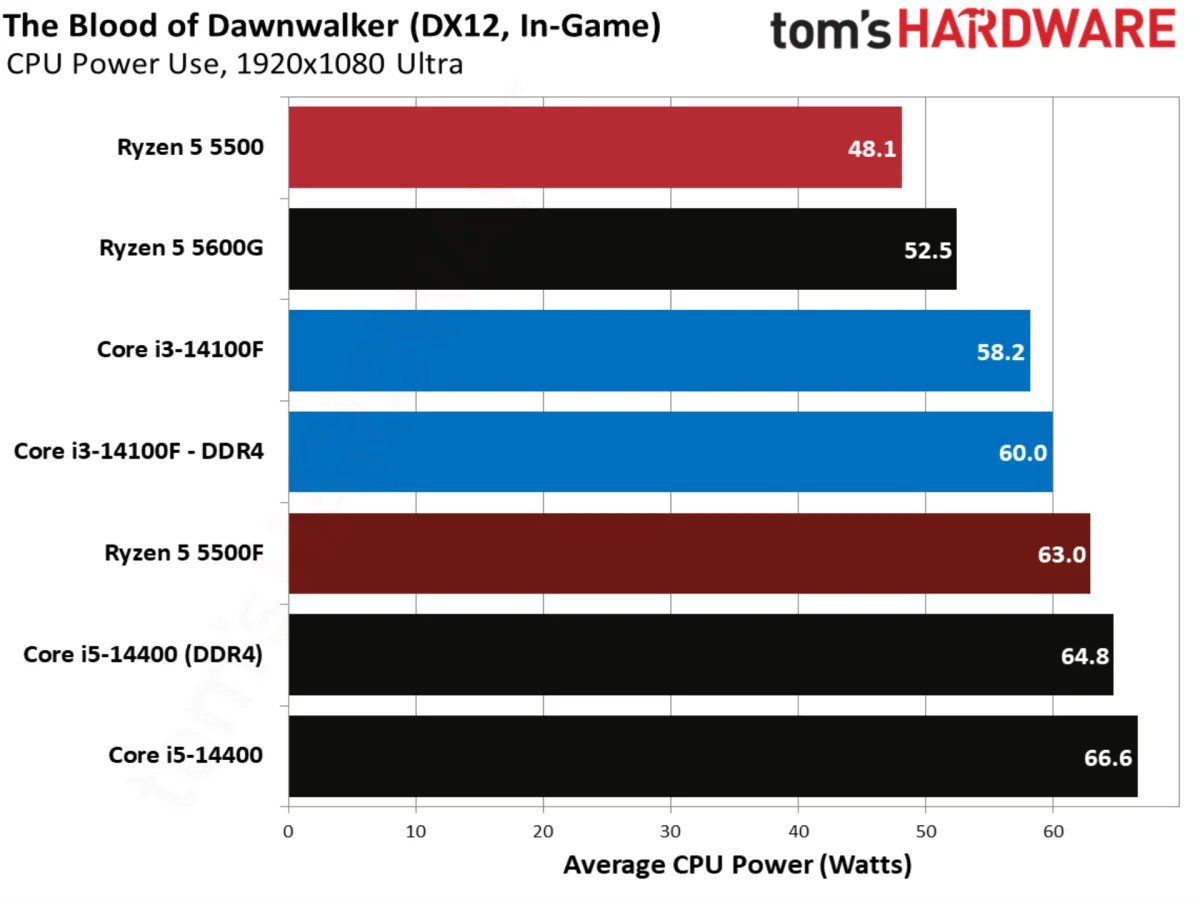
Where Intel keeps its edge
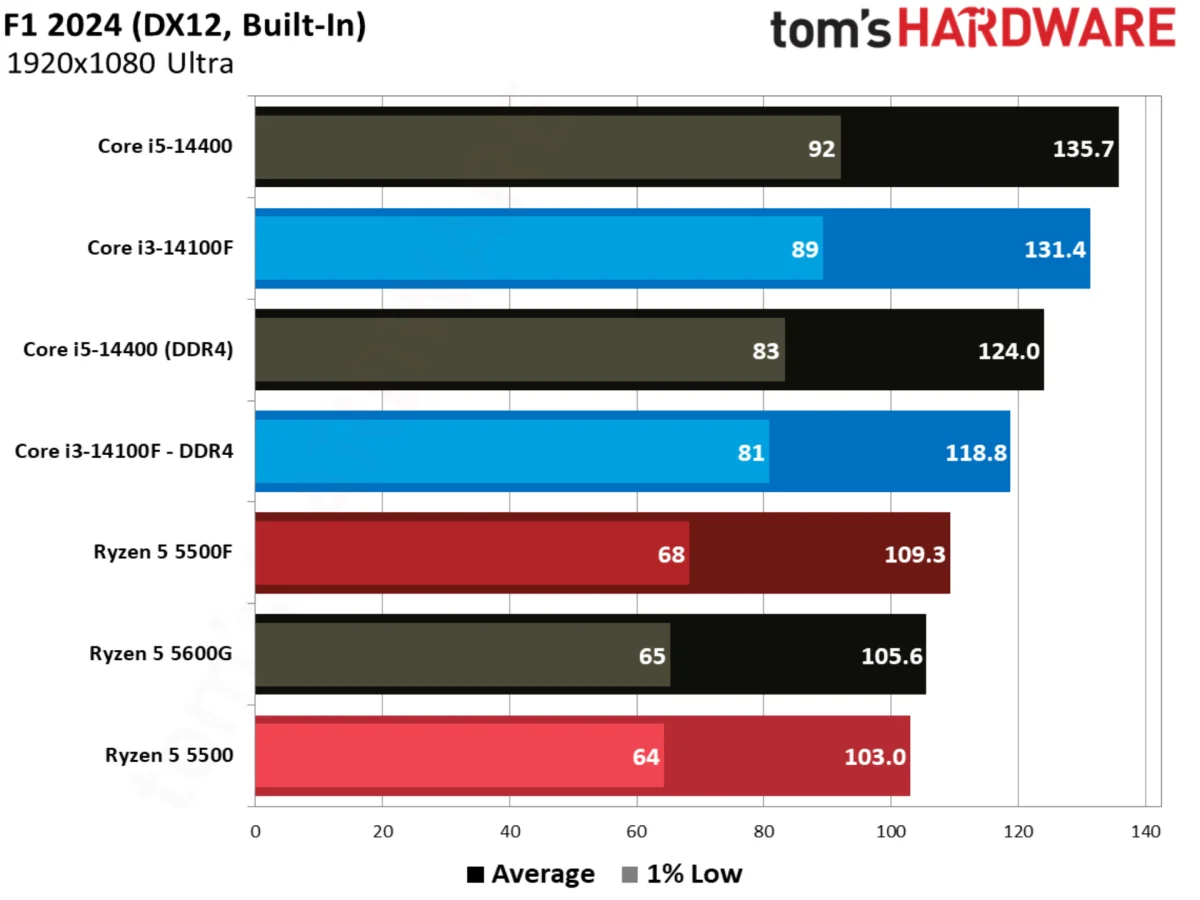
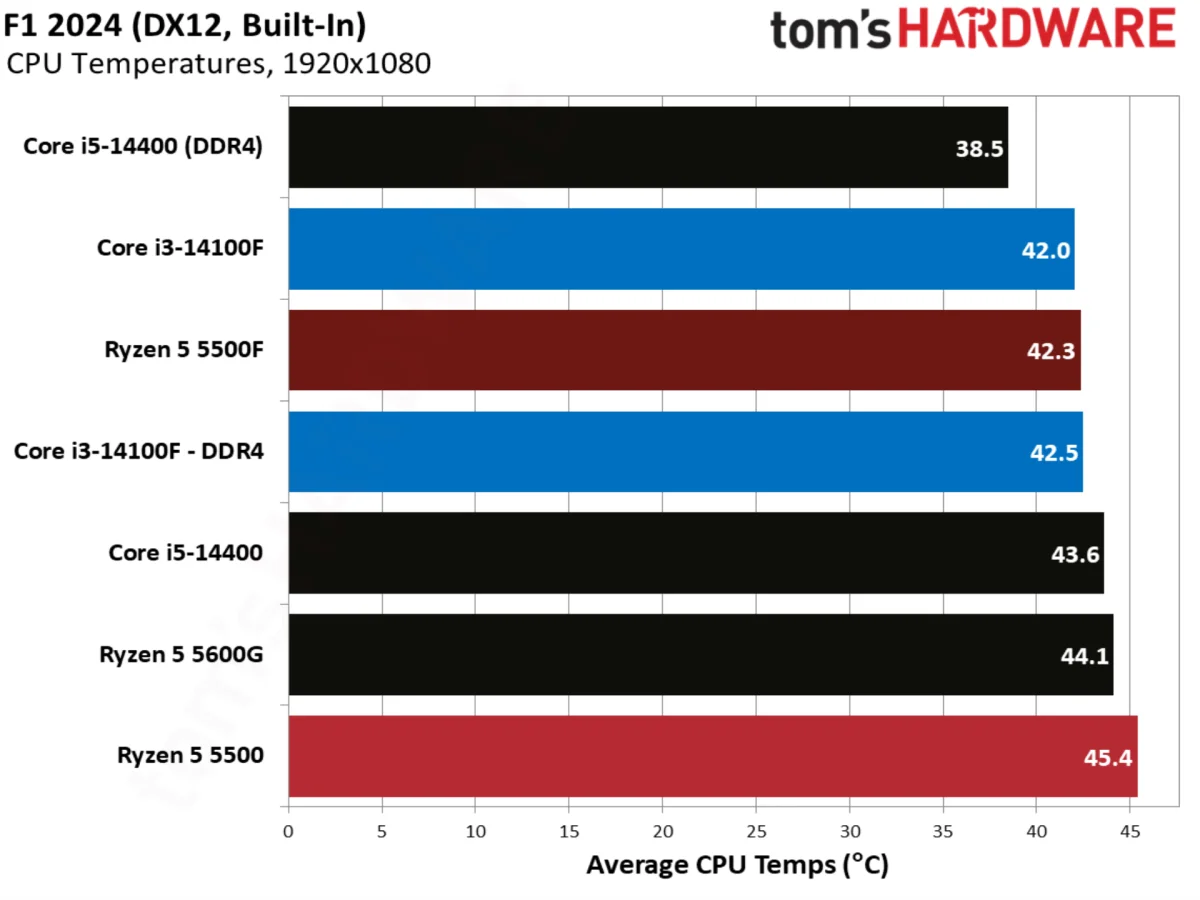
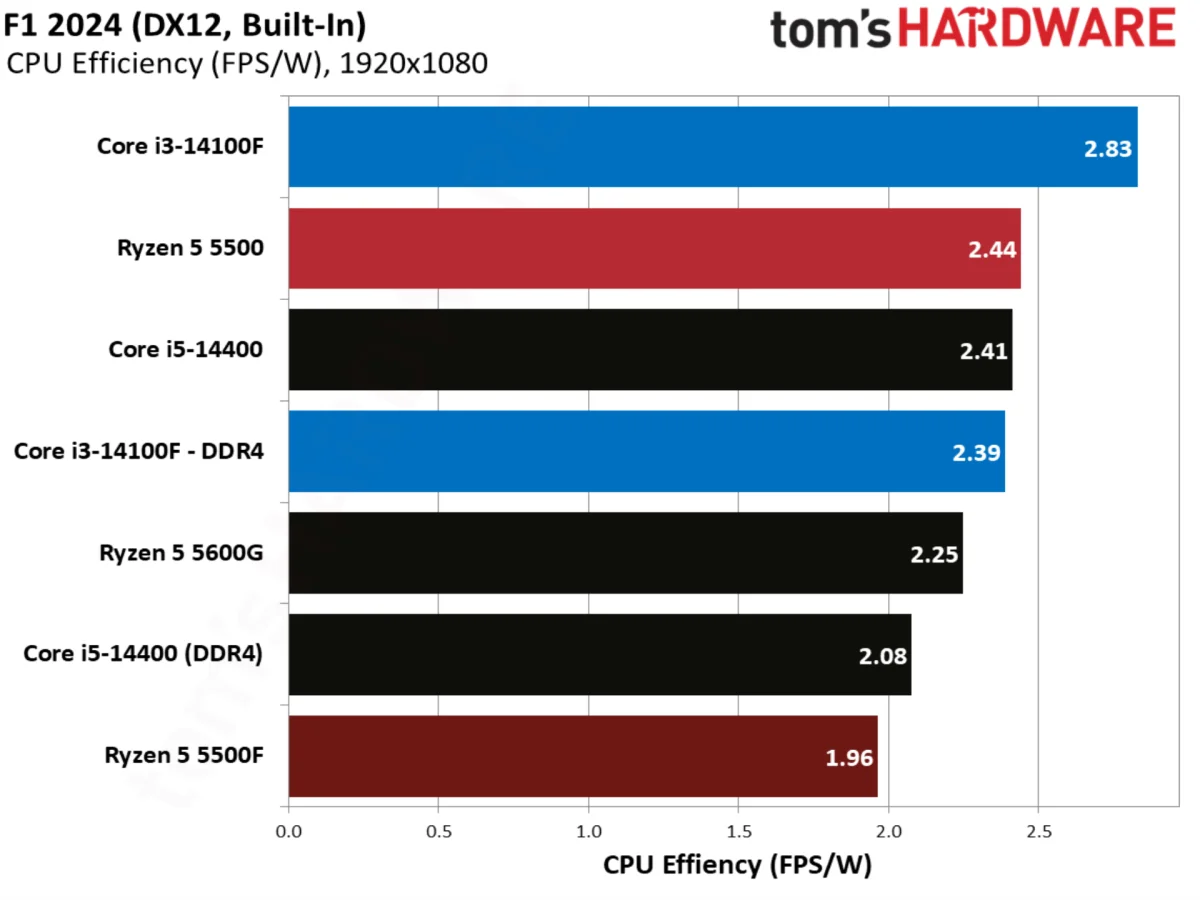
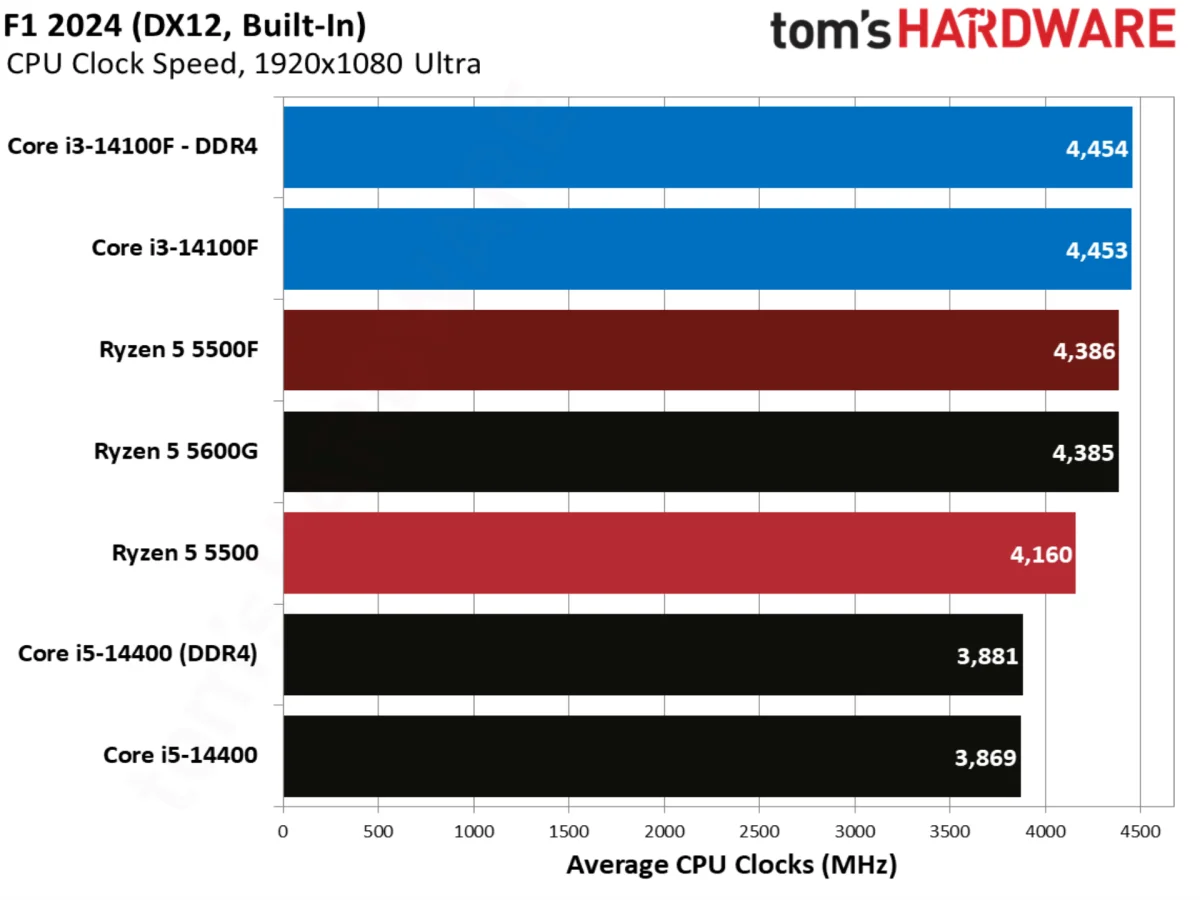
F1 2024 usually favors AMD when tested with newer processors, but this entry level matchup goes the other way. The 5500F improves on the 5500, yet the Core i3-14100F remains in front.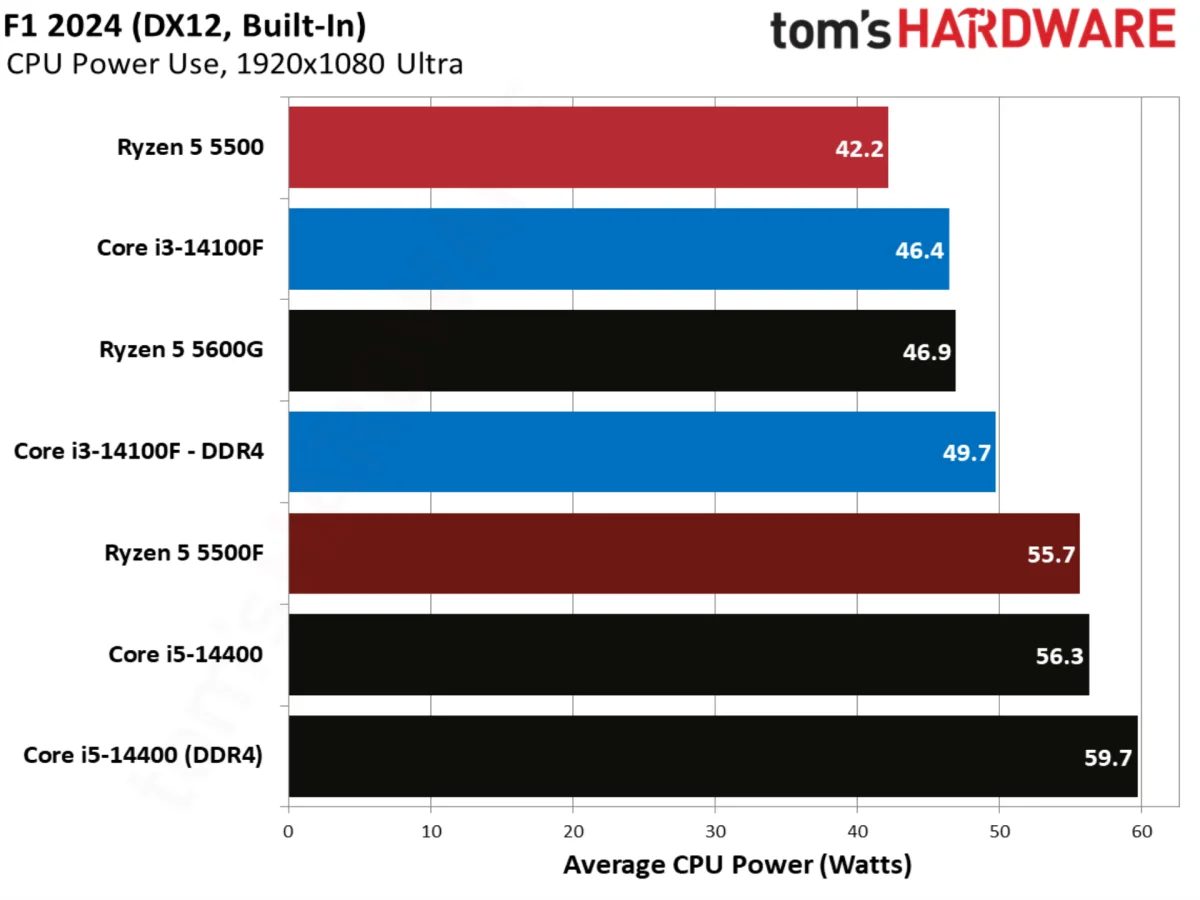
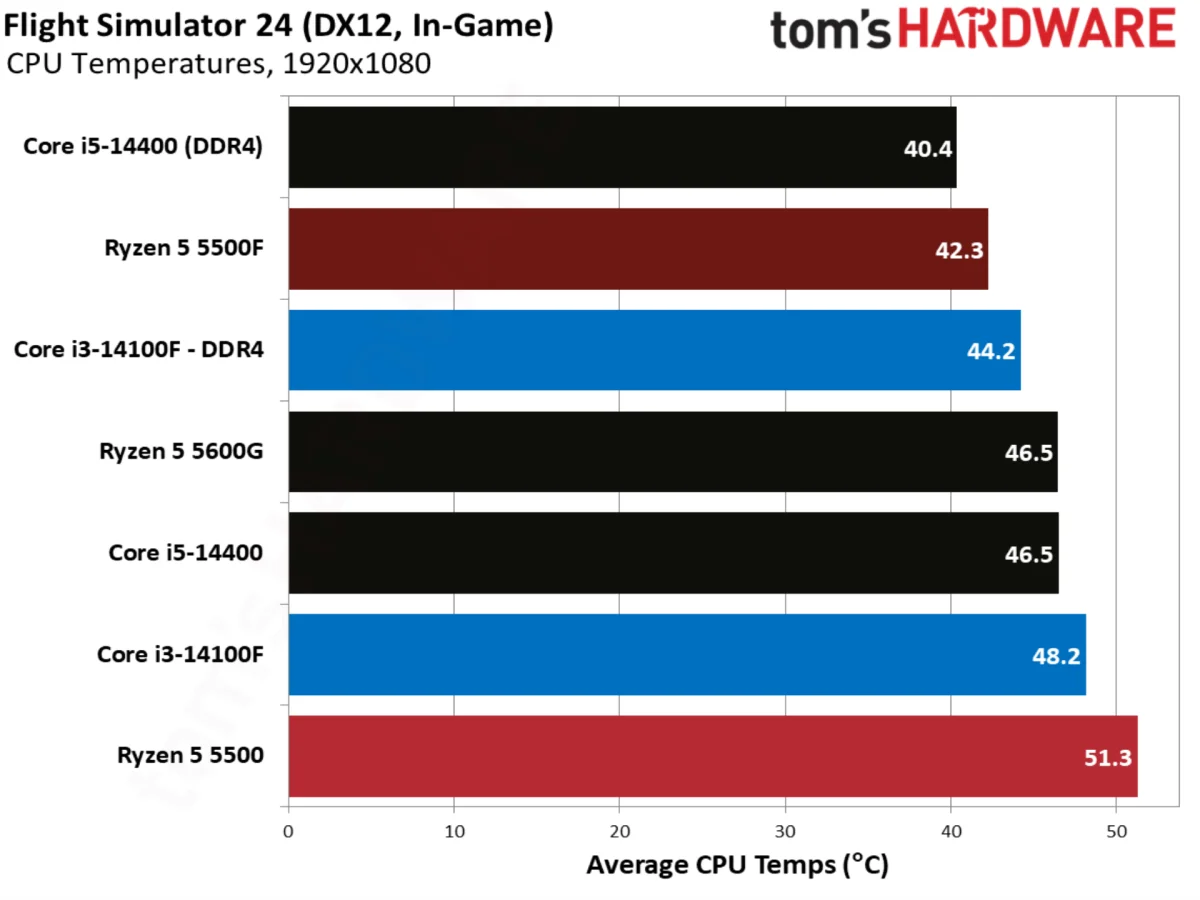
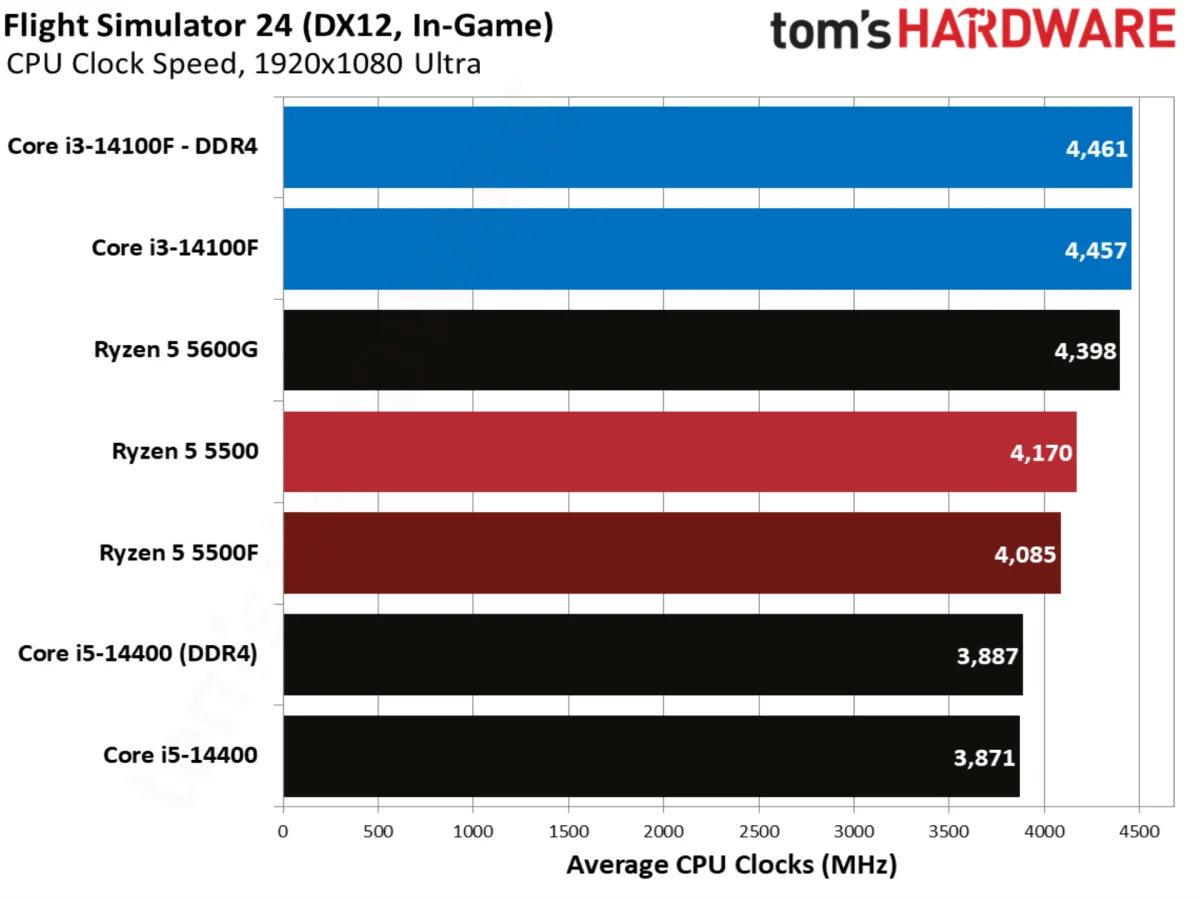
Games where the 5500F turns the tables
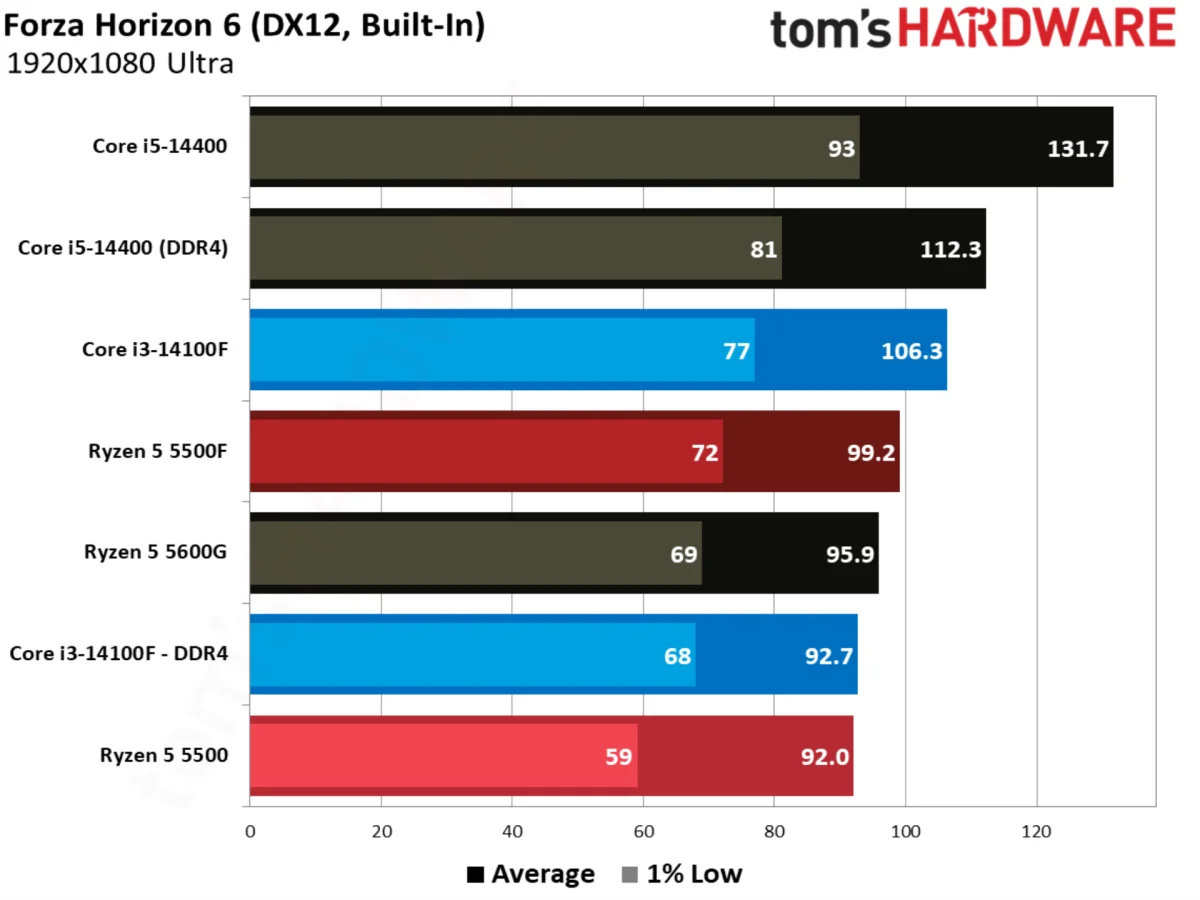
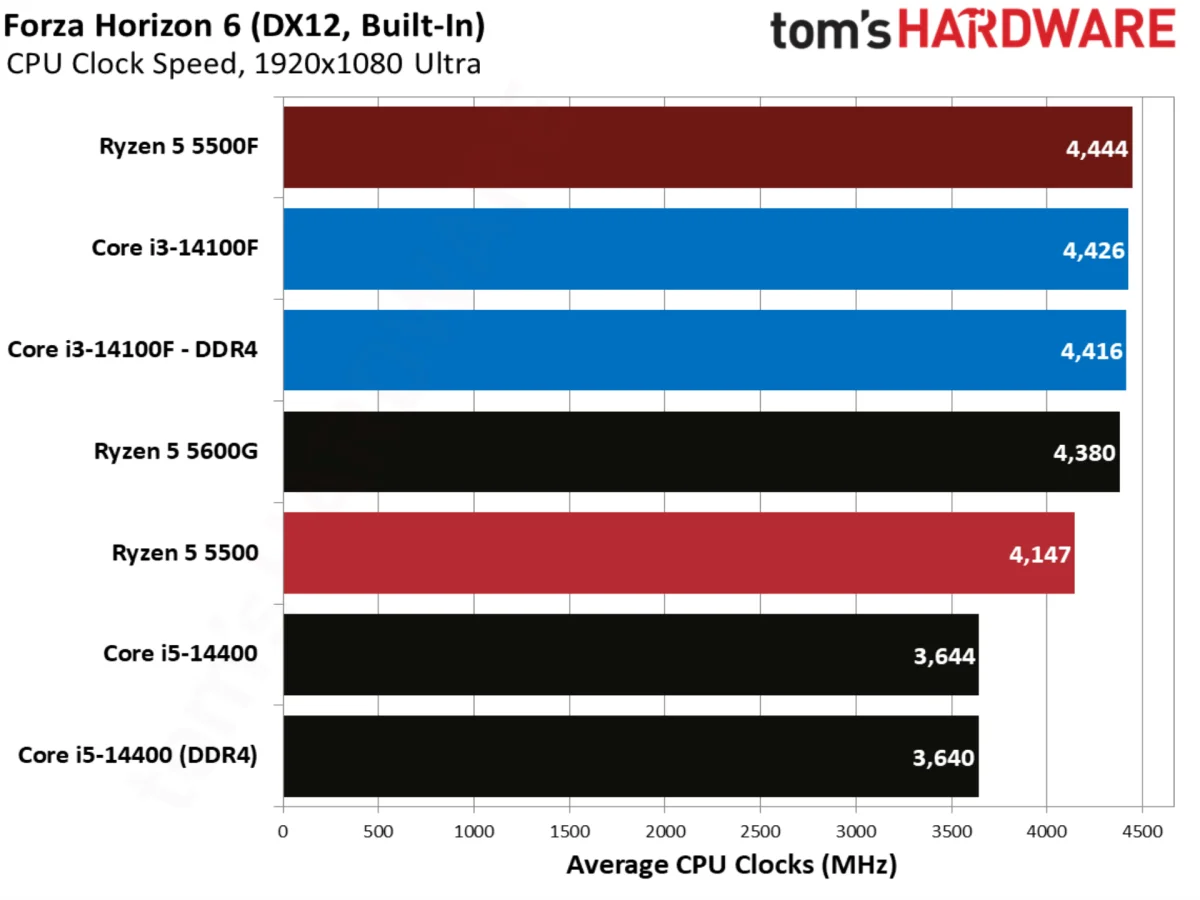
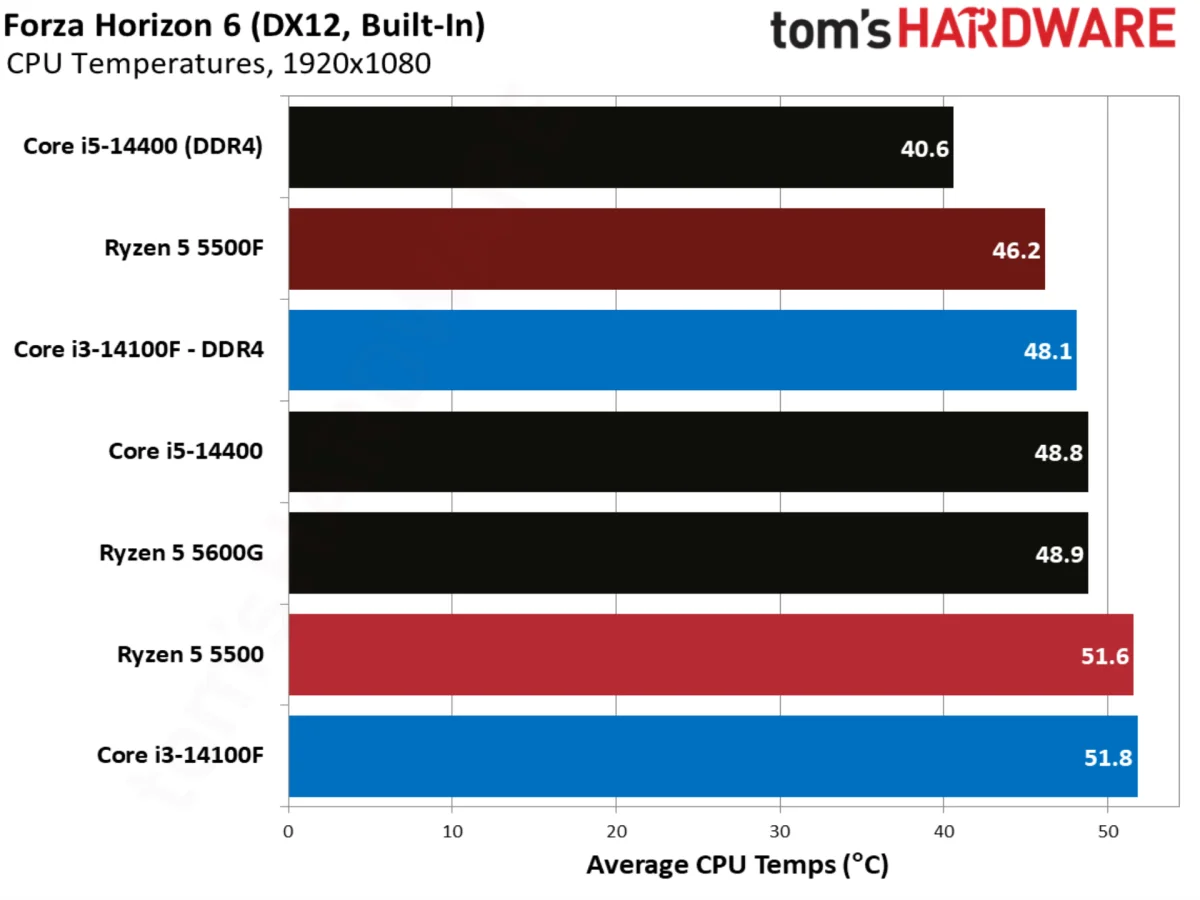
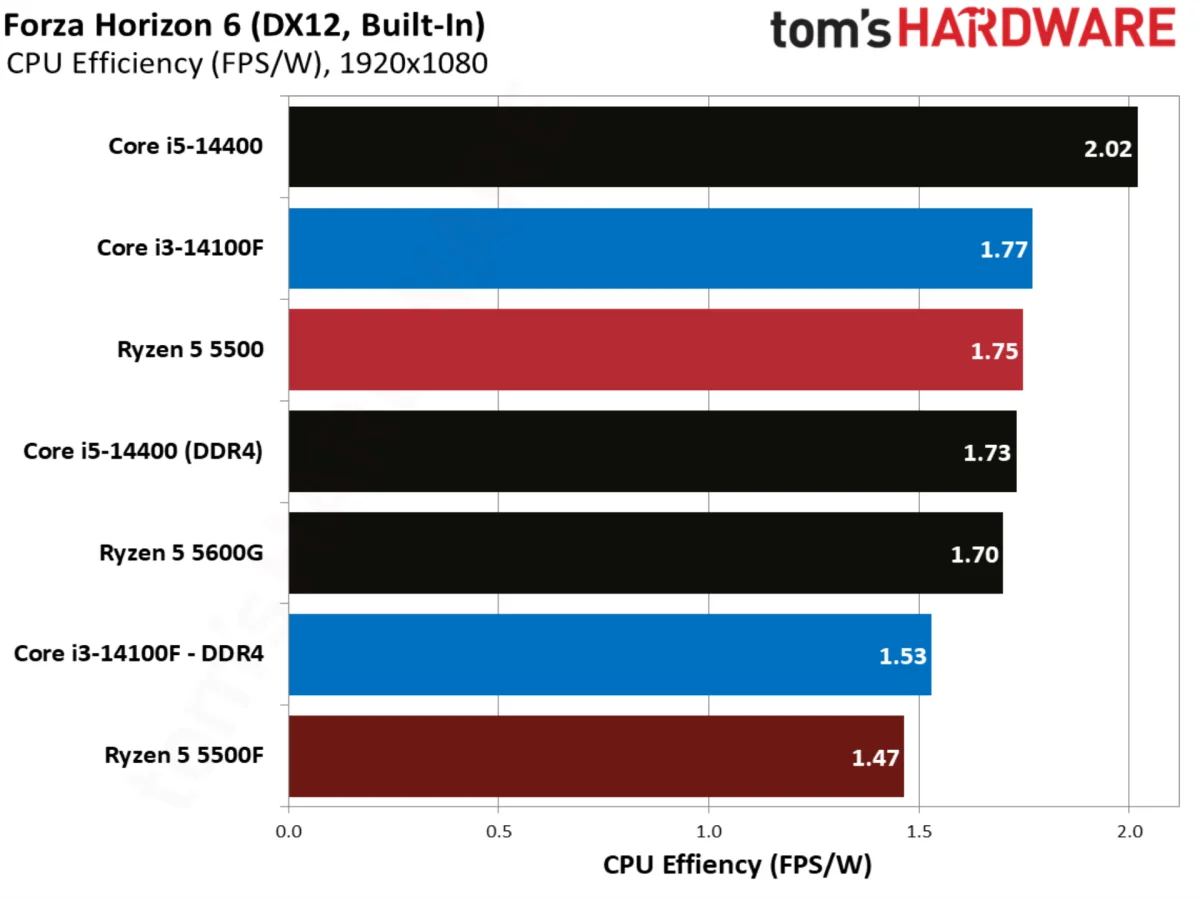
Forza Horizon 6 is a clearer win. The Ryzen 5 5500 already matched the Core i3-14100F, and the 5500F stretches that into a 7.8% advantage. Intel’s Core i3-14100F paired with DDR5 still comes out ahead, but this is a notable result for AMD’s chip.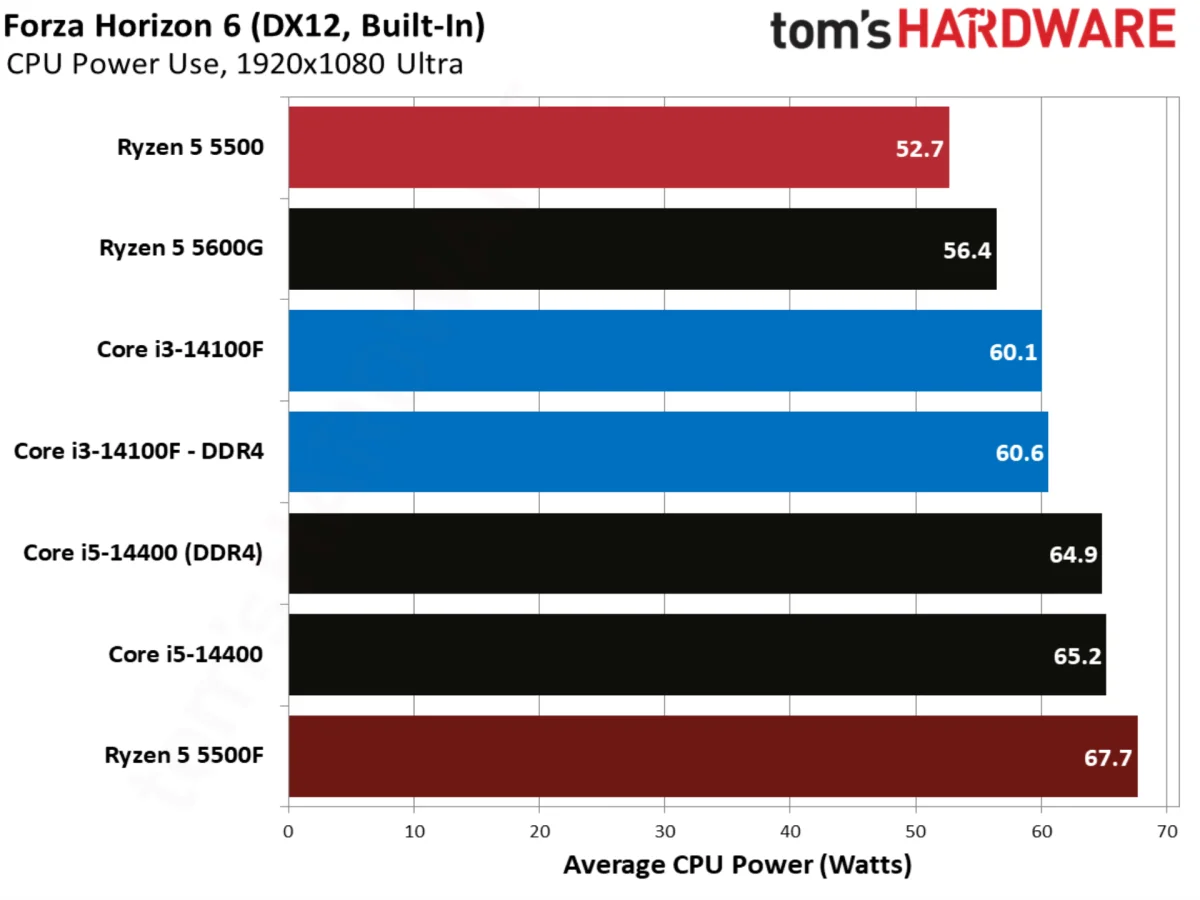
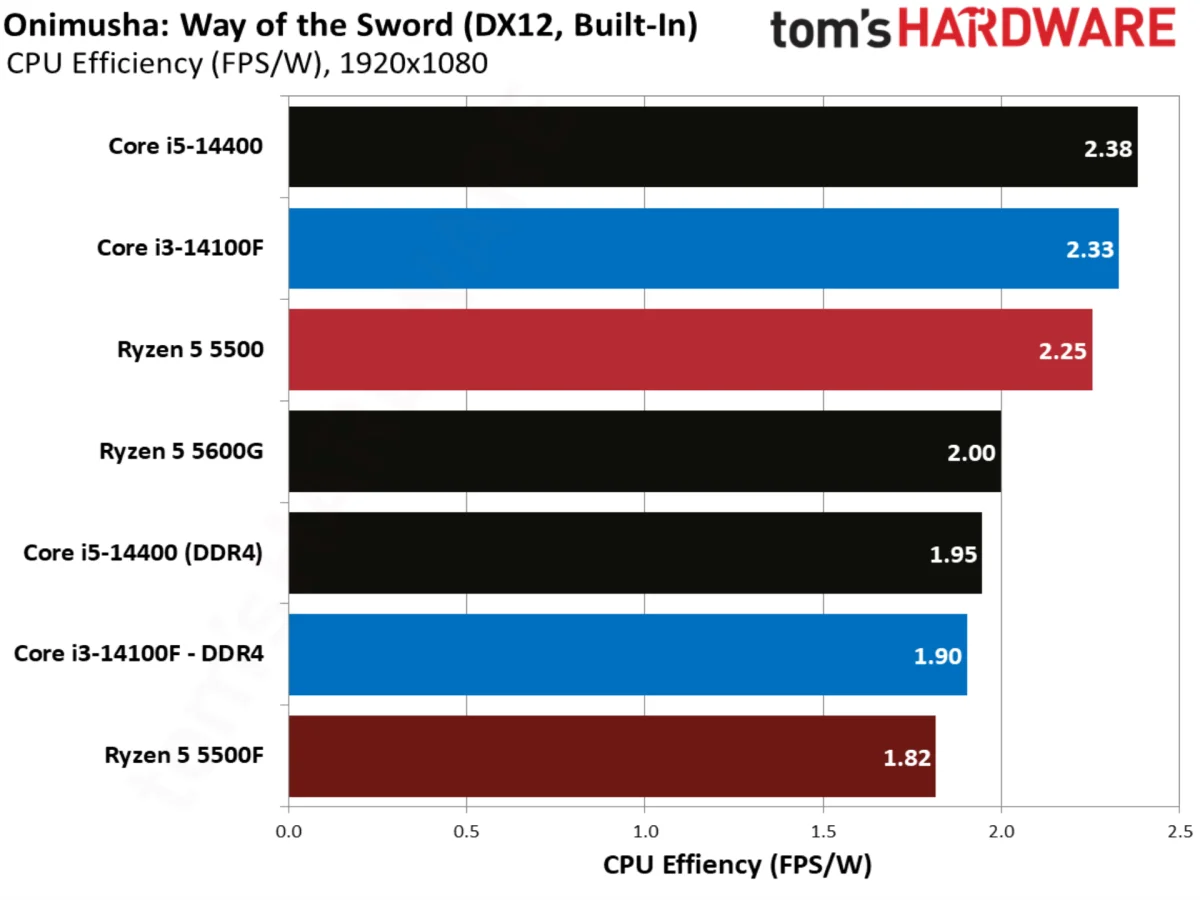
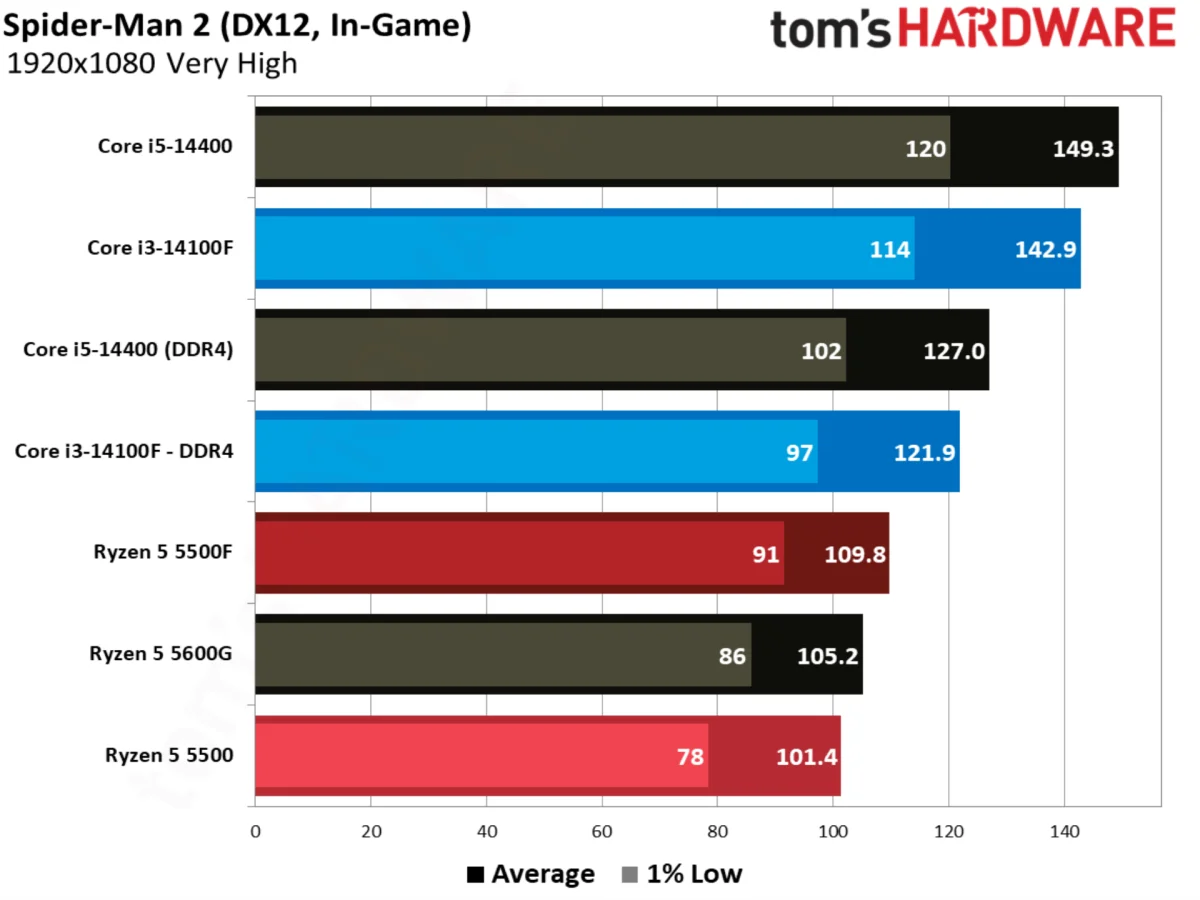
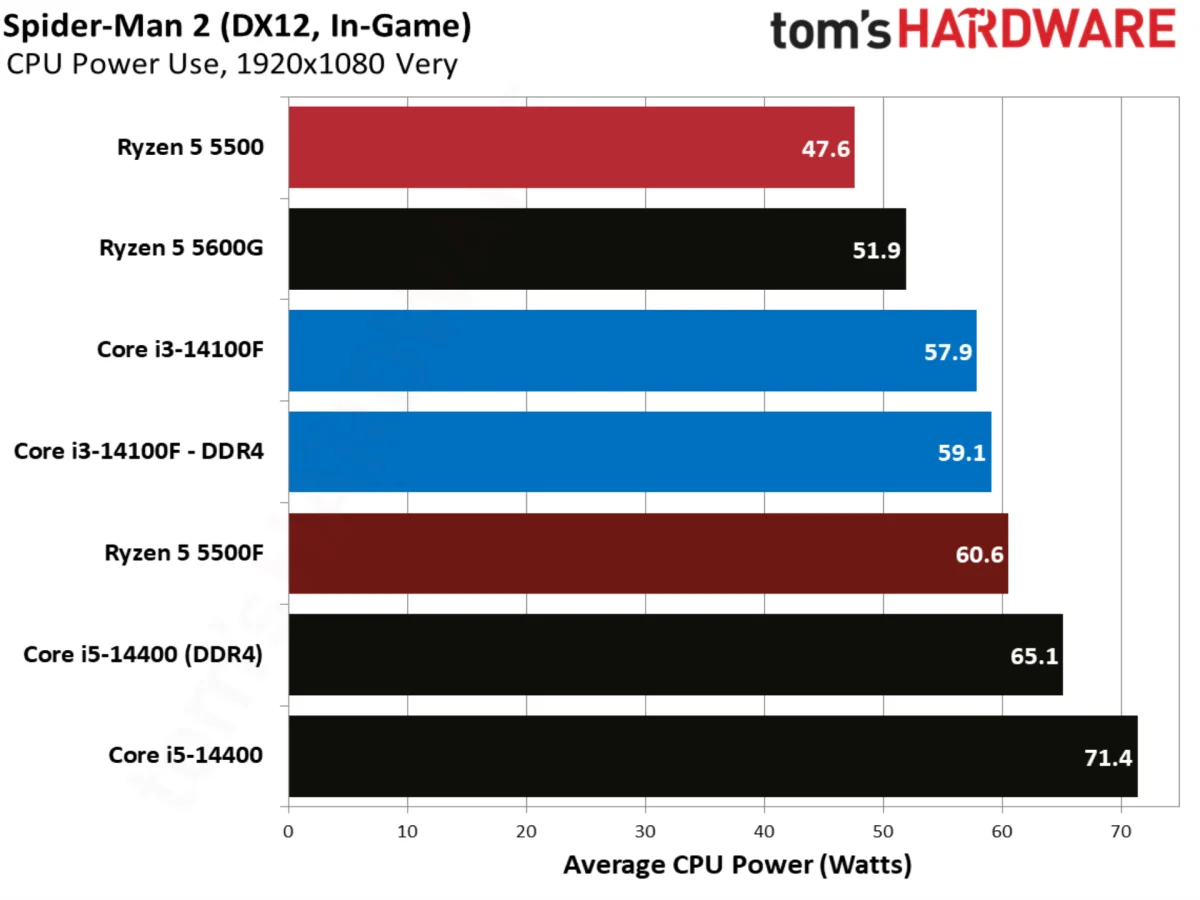
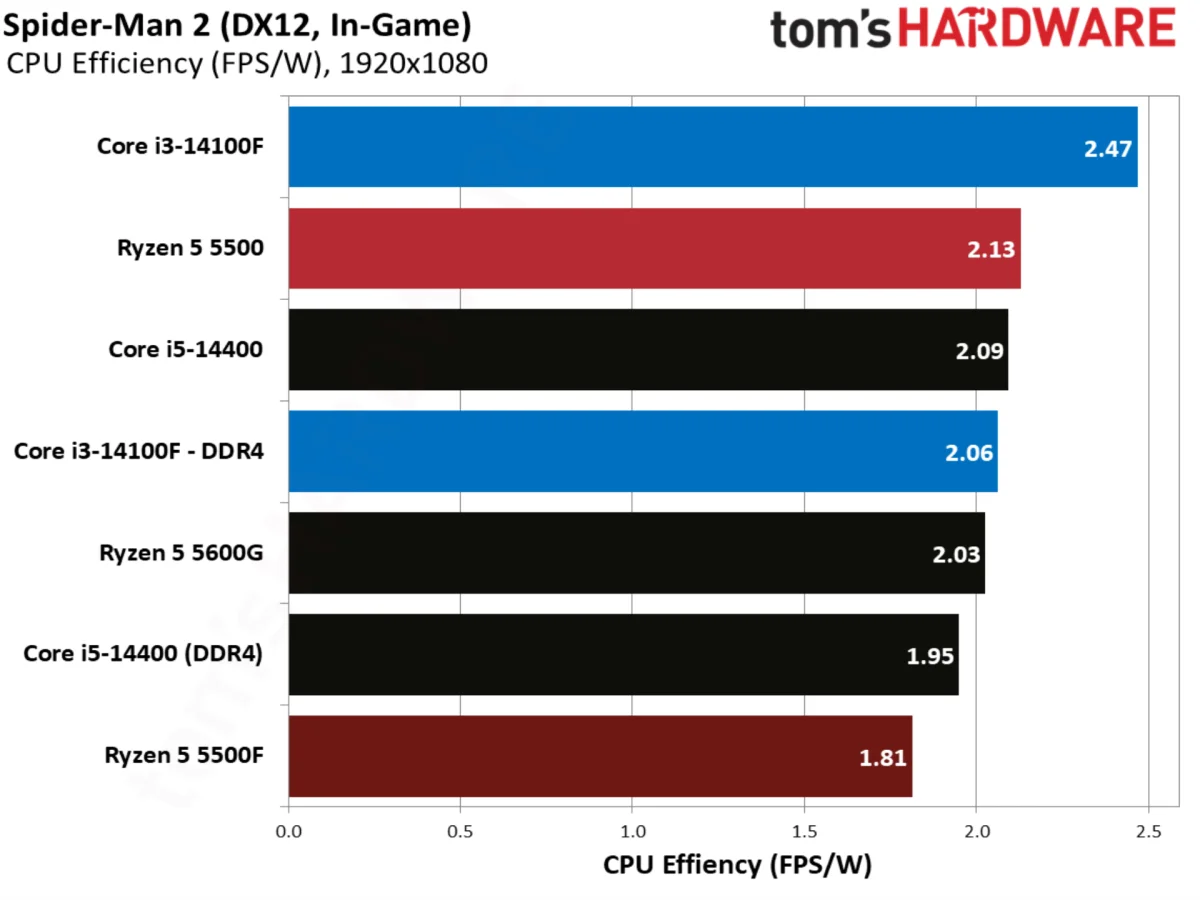
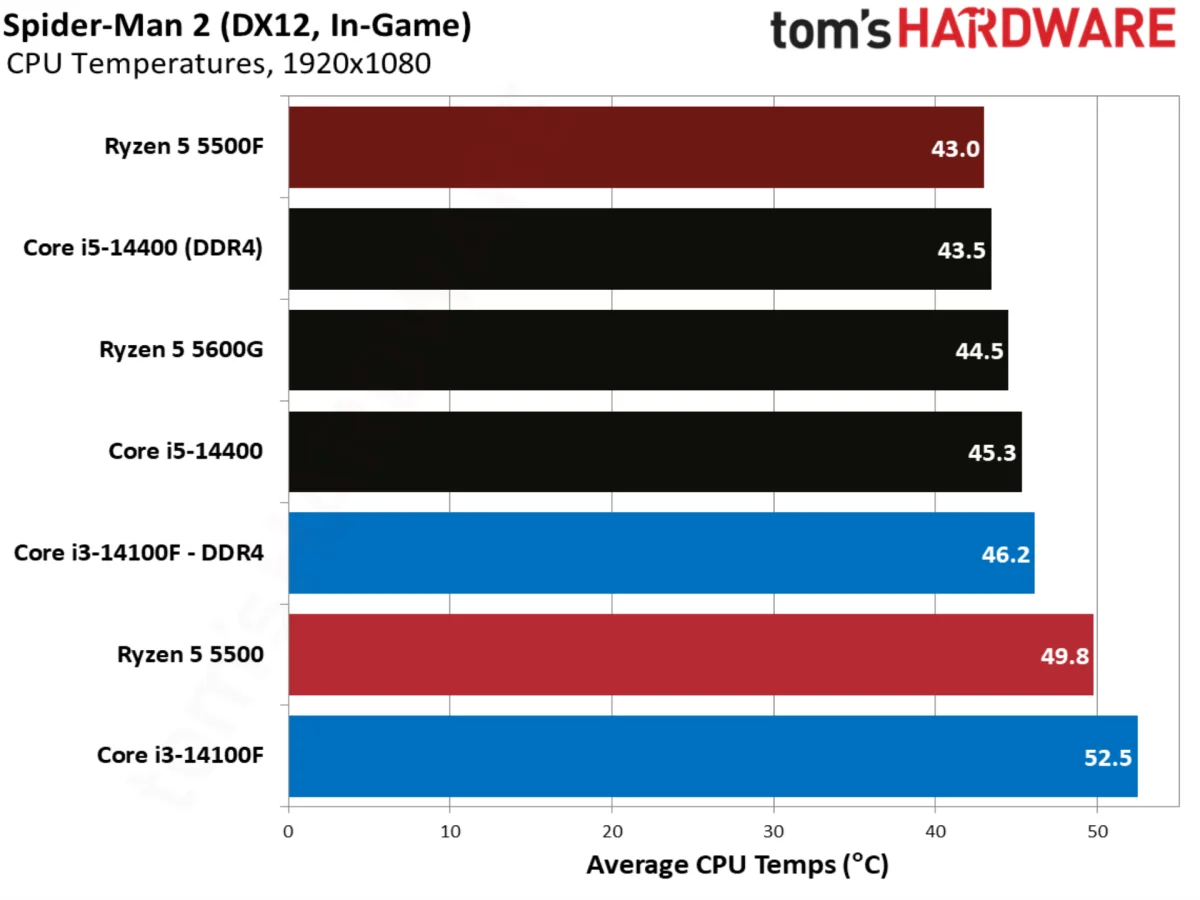
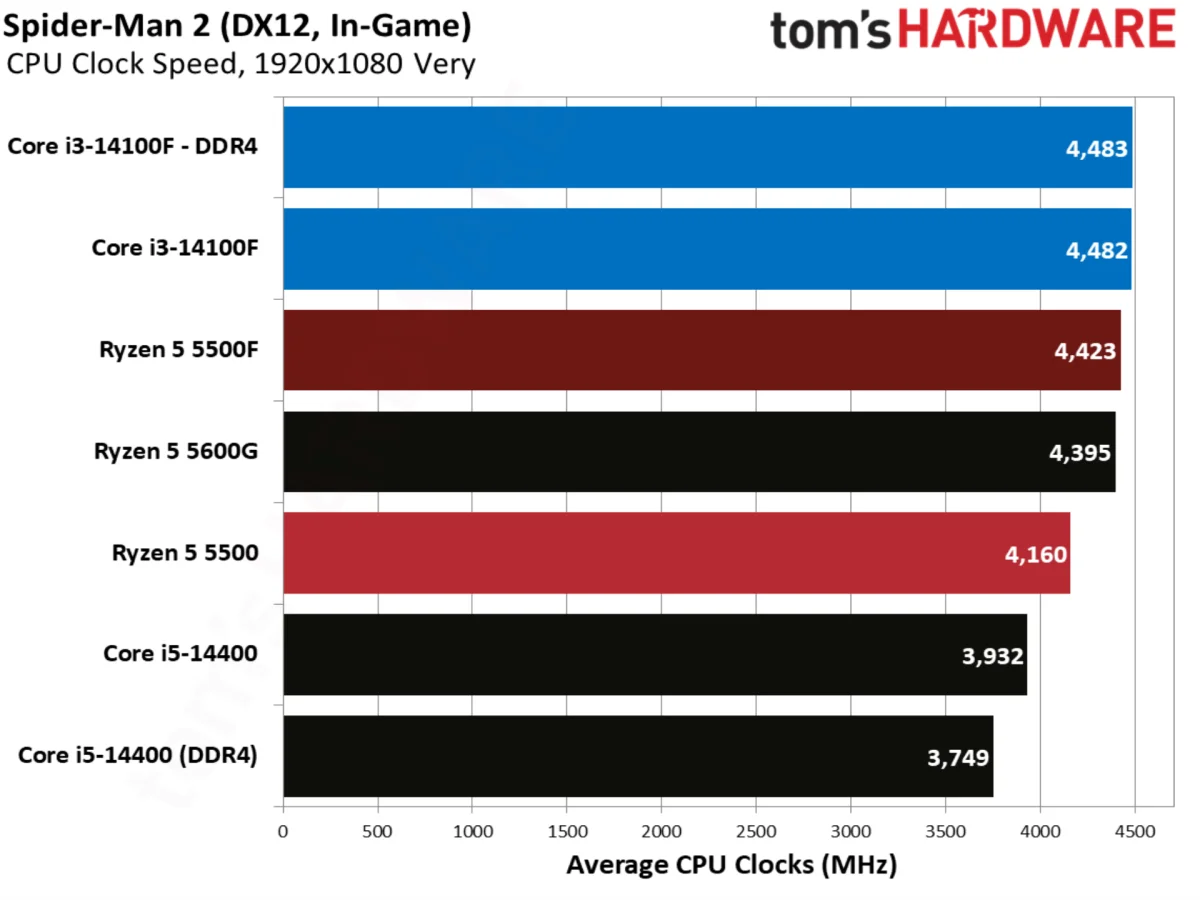
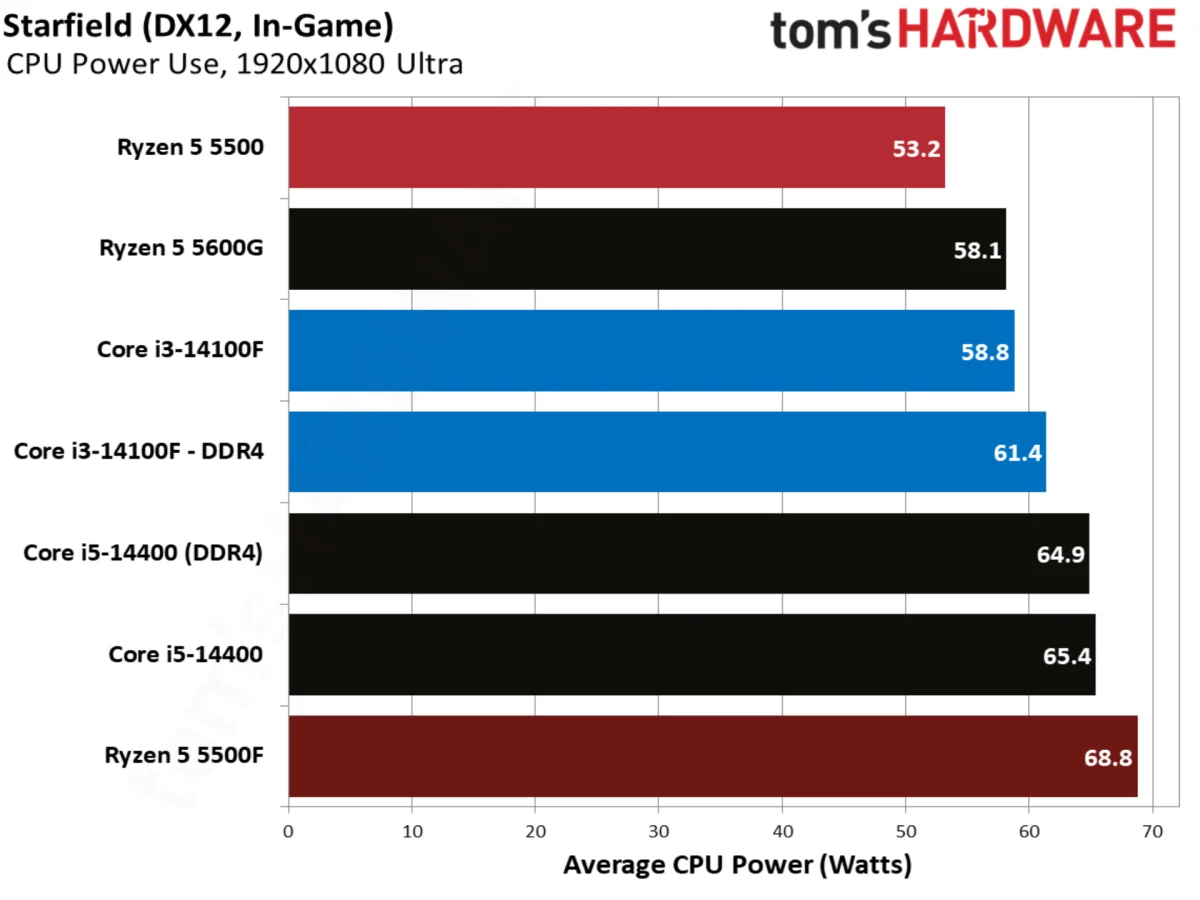
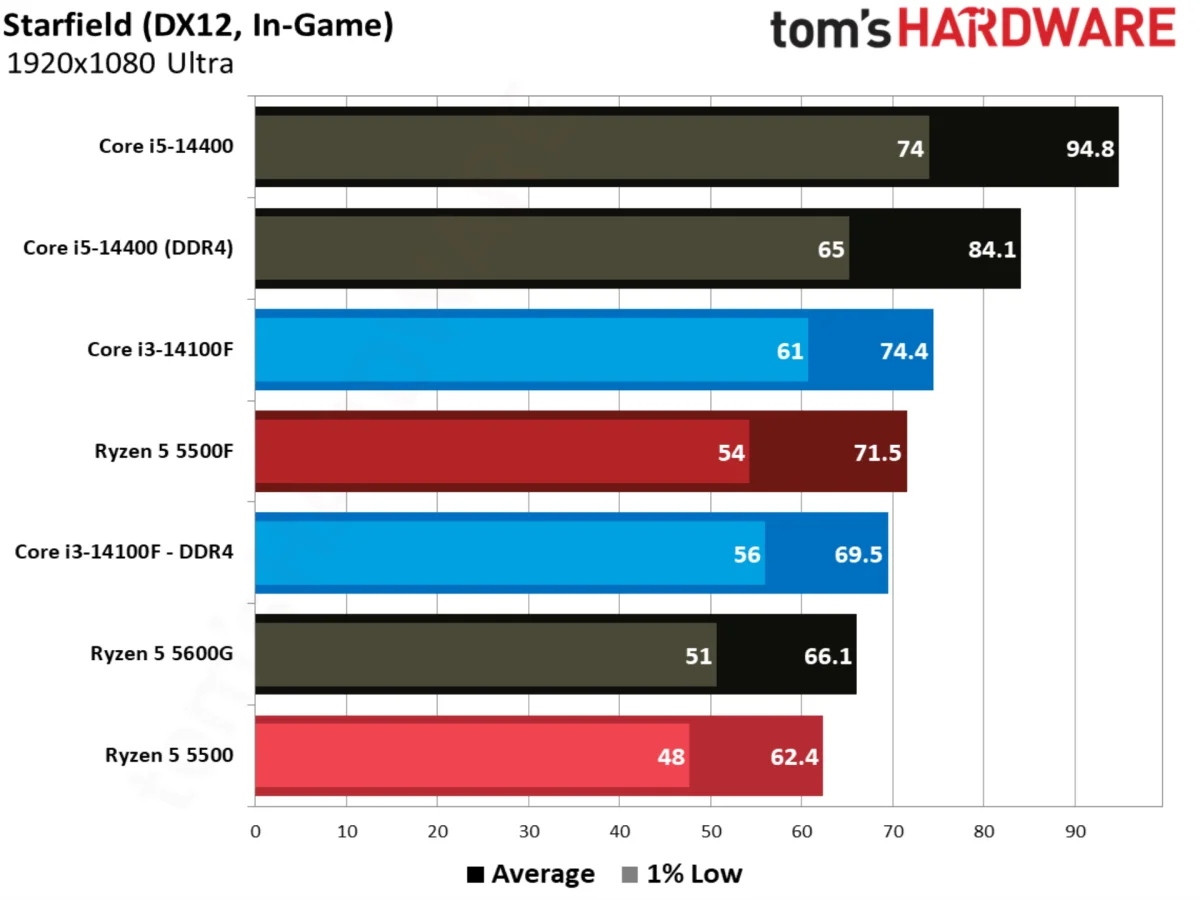
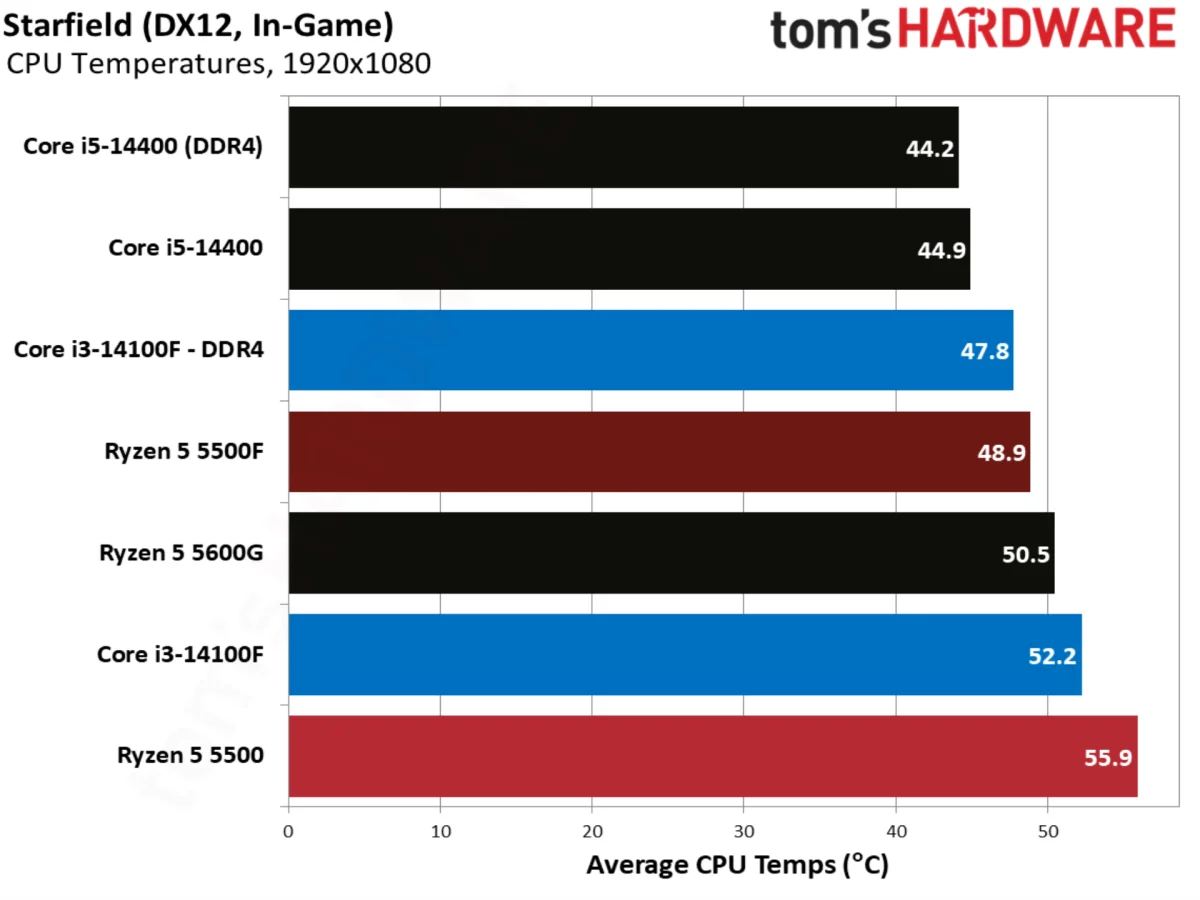
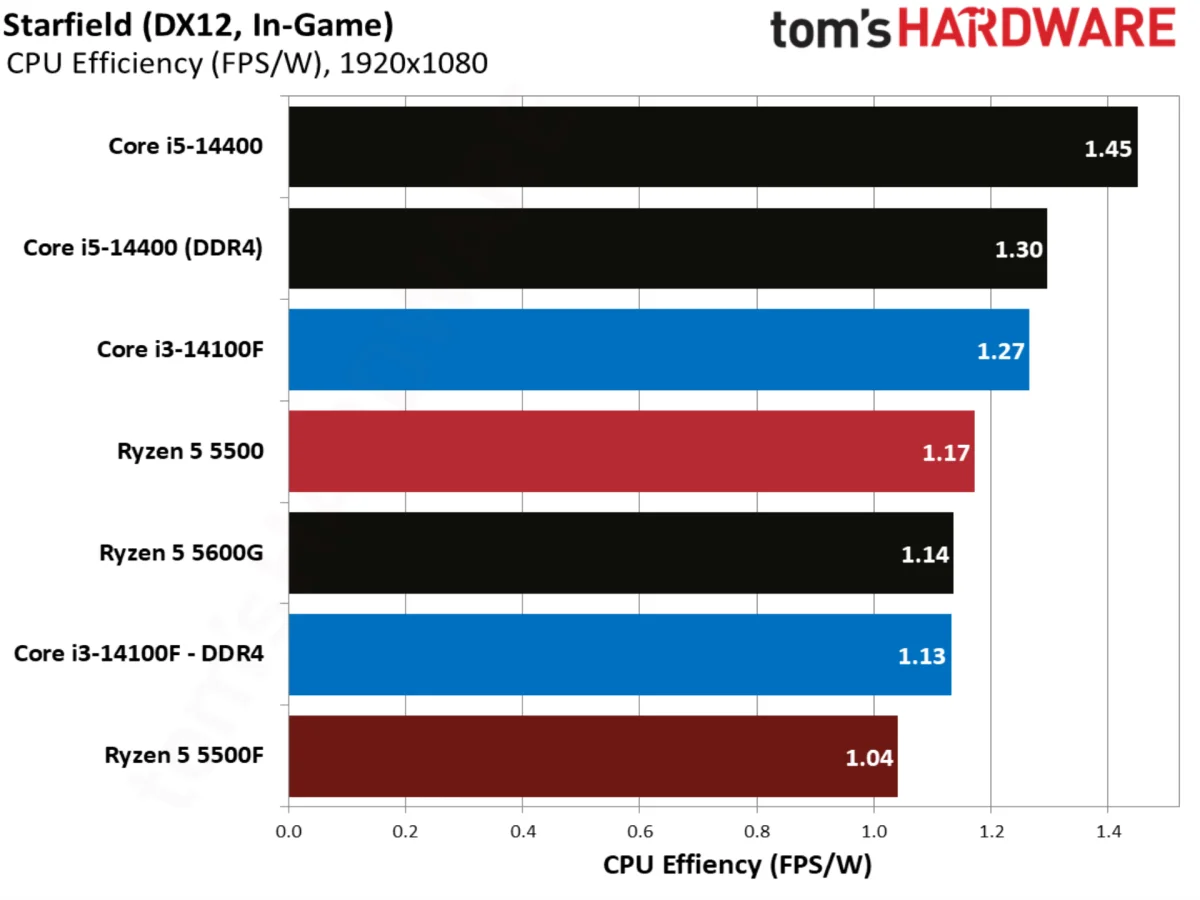
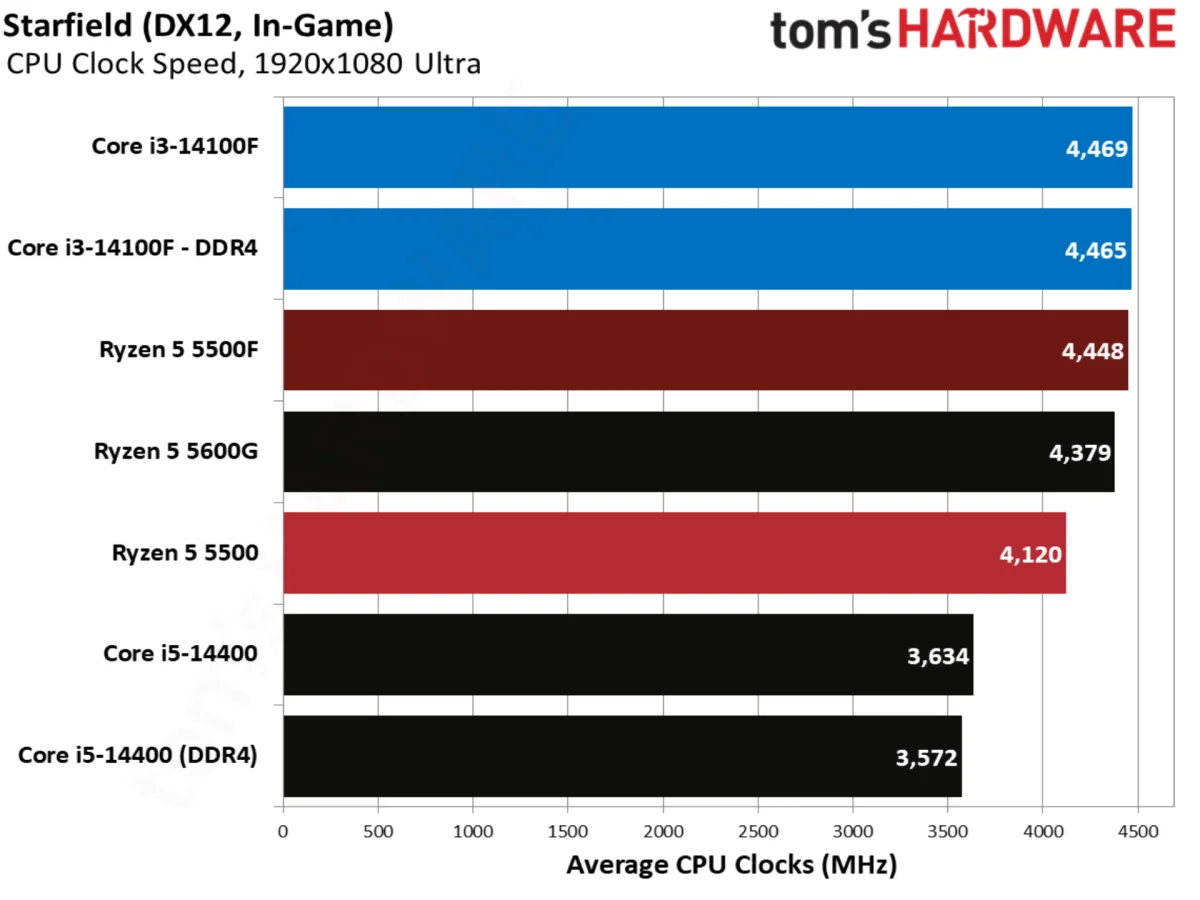
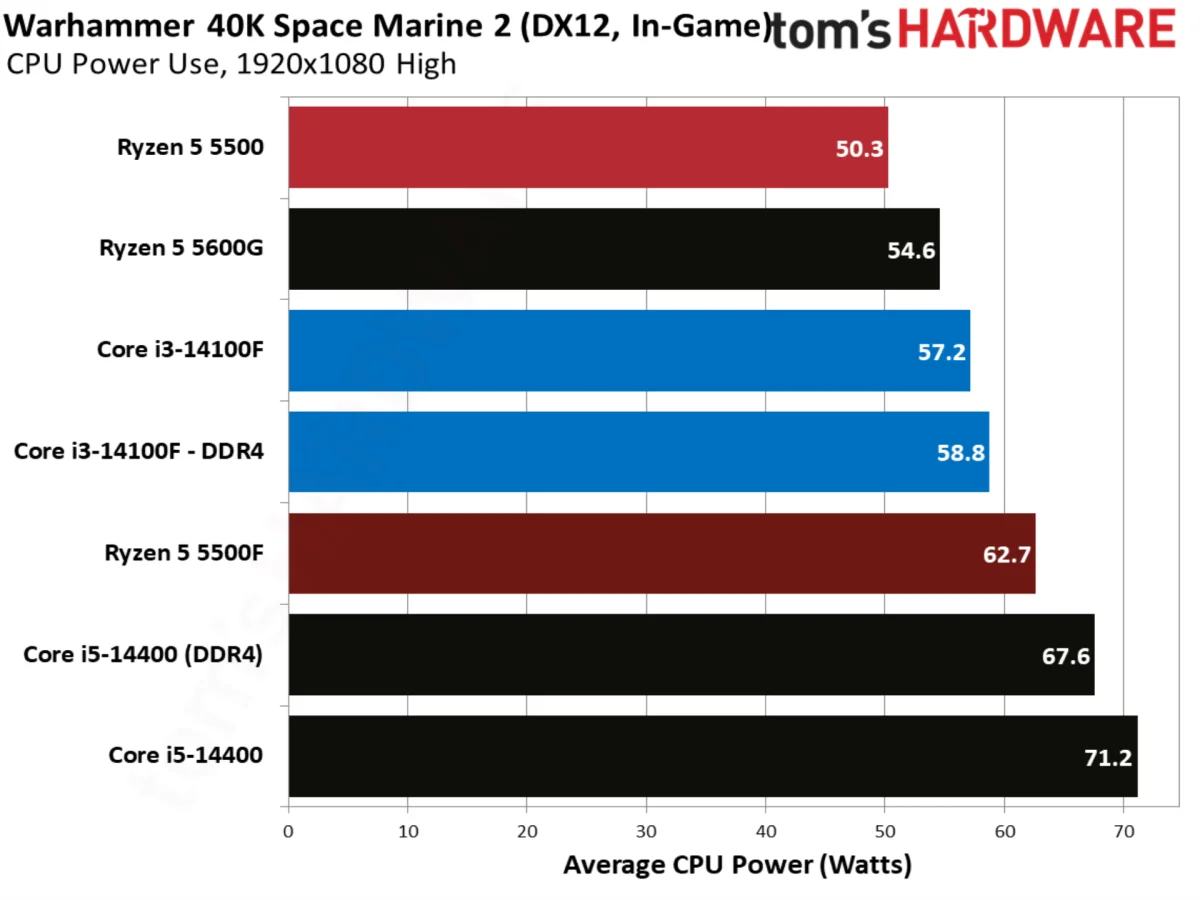
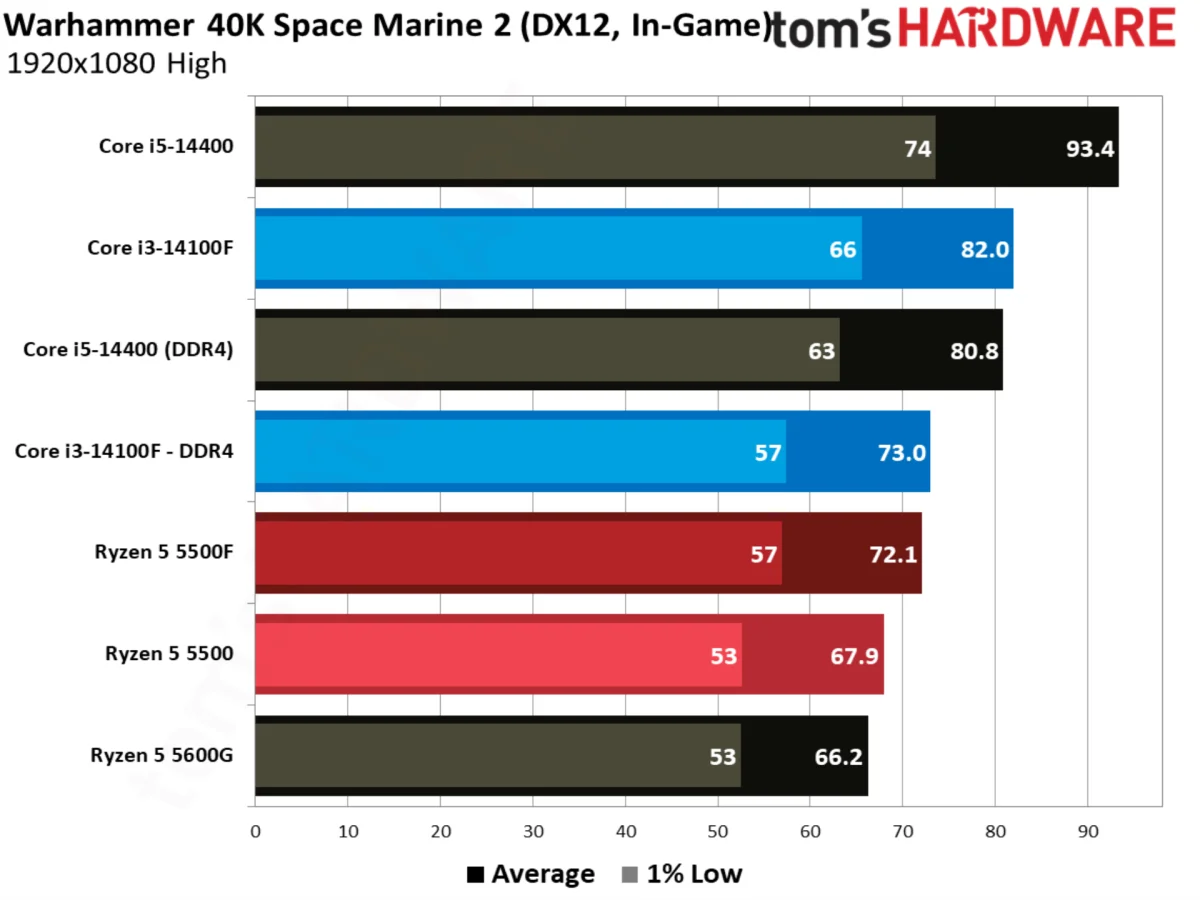
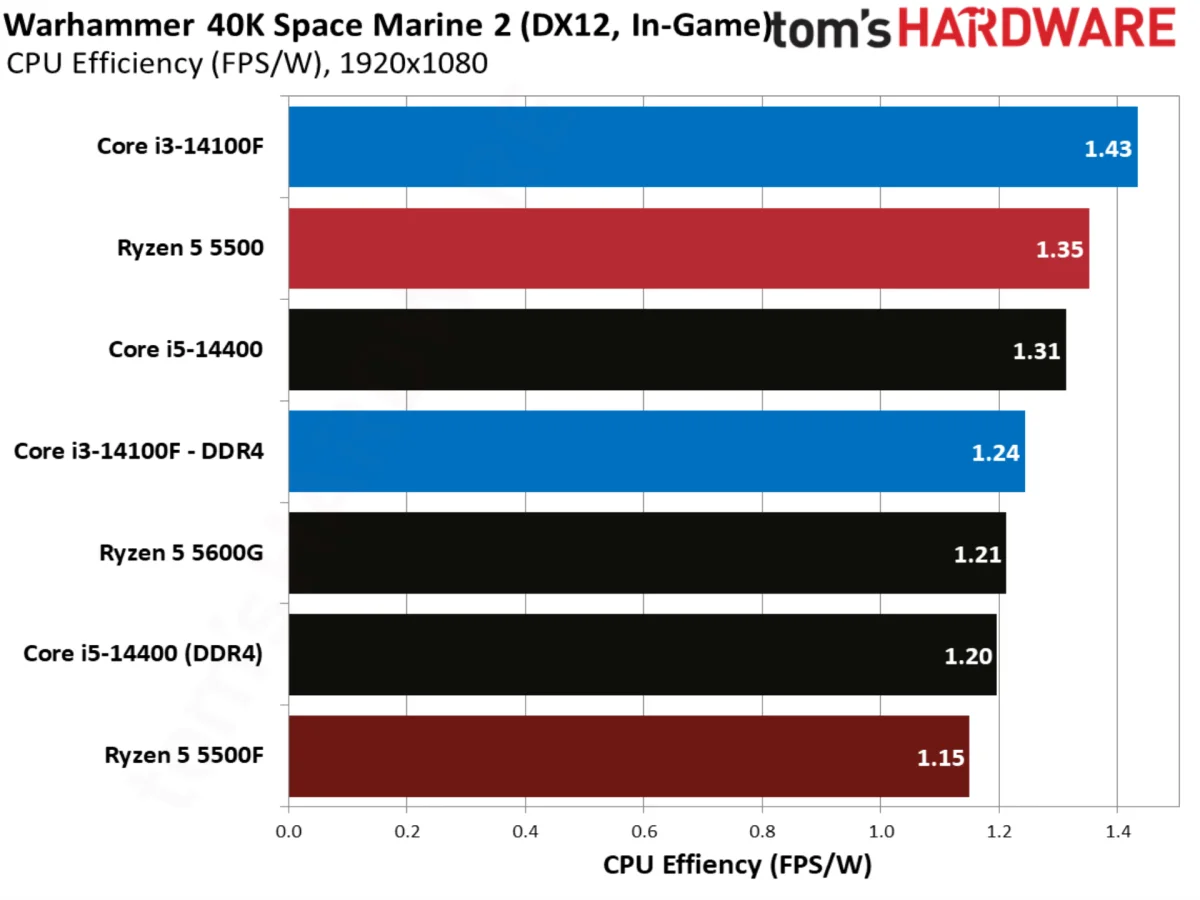
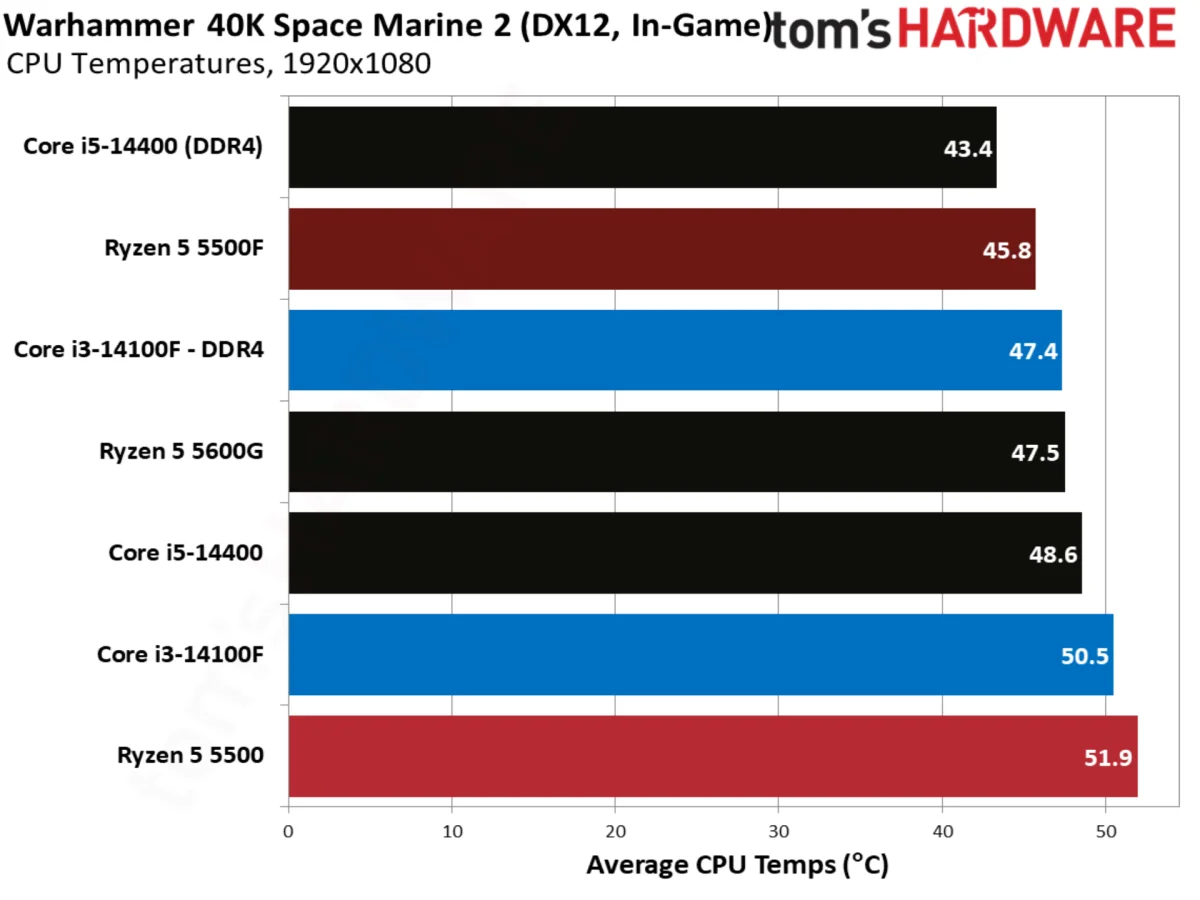
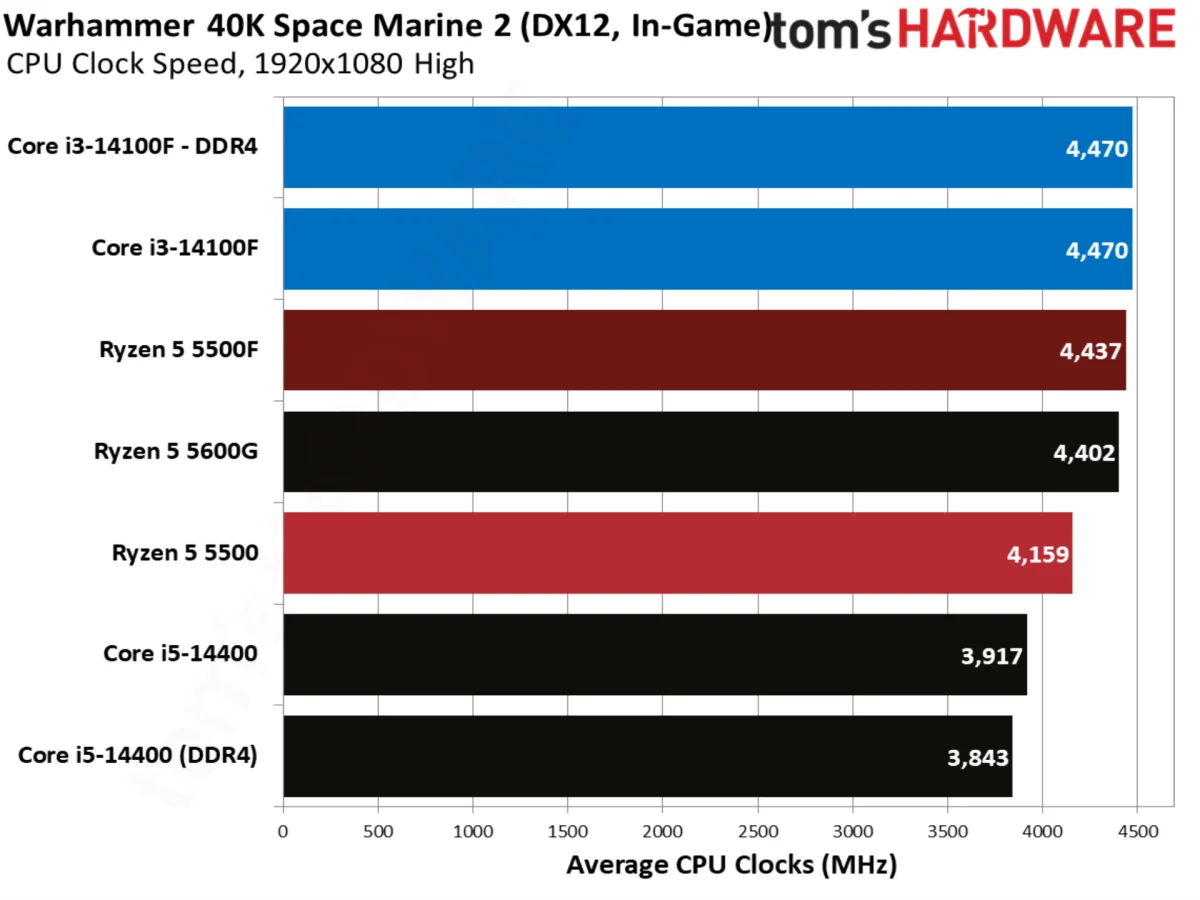
Why the 5500F gains ground
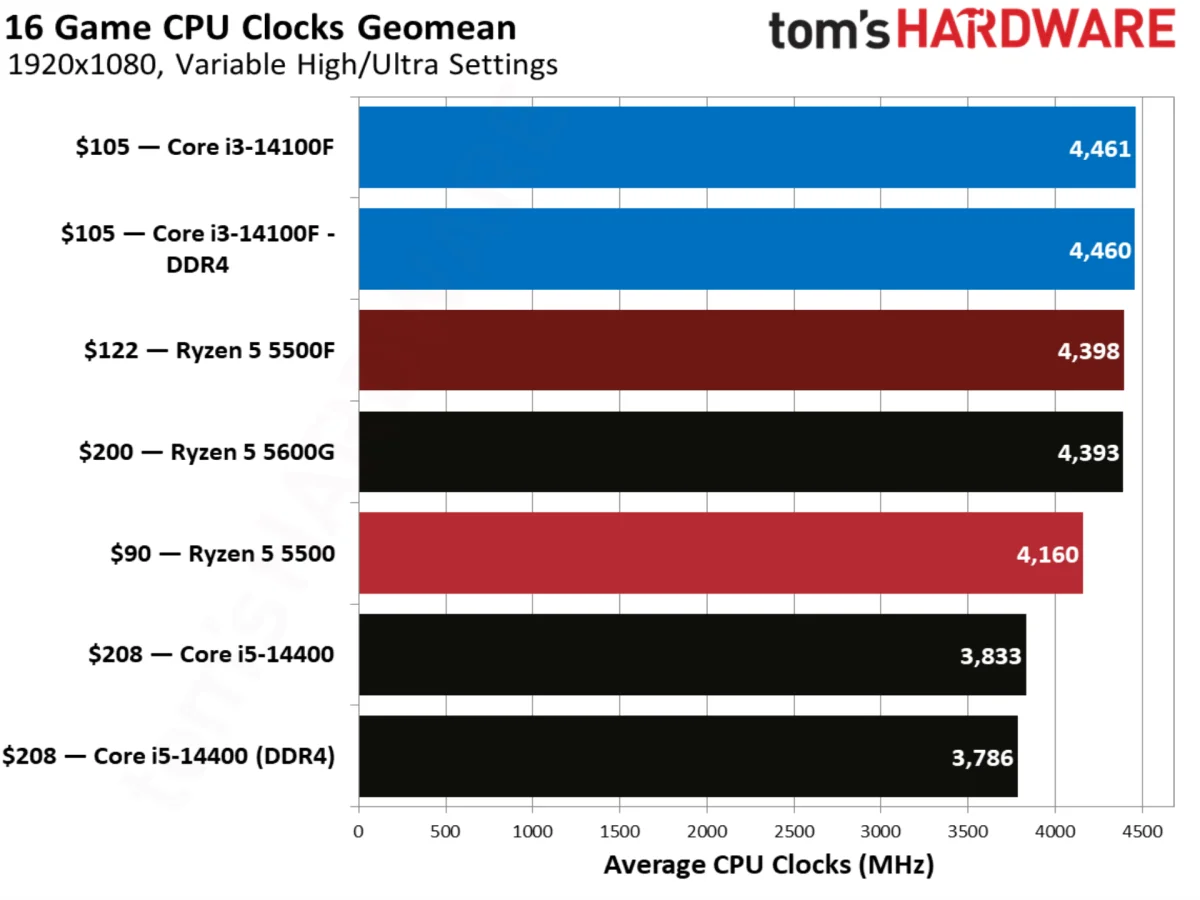
The Ryzen 5 5500F is a gaming focused six core Zen 3 processor with a boost clock of 4.4 GHz. AMD’s six core baseline gives it a core count advantage over the Core i3-14100F’s four core design; Intel has used hybrid core designs in several recent desktop generations, but the 14100F is a straightforward quad core chip.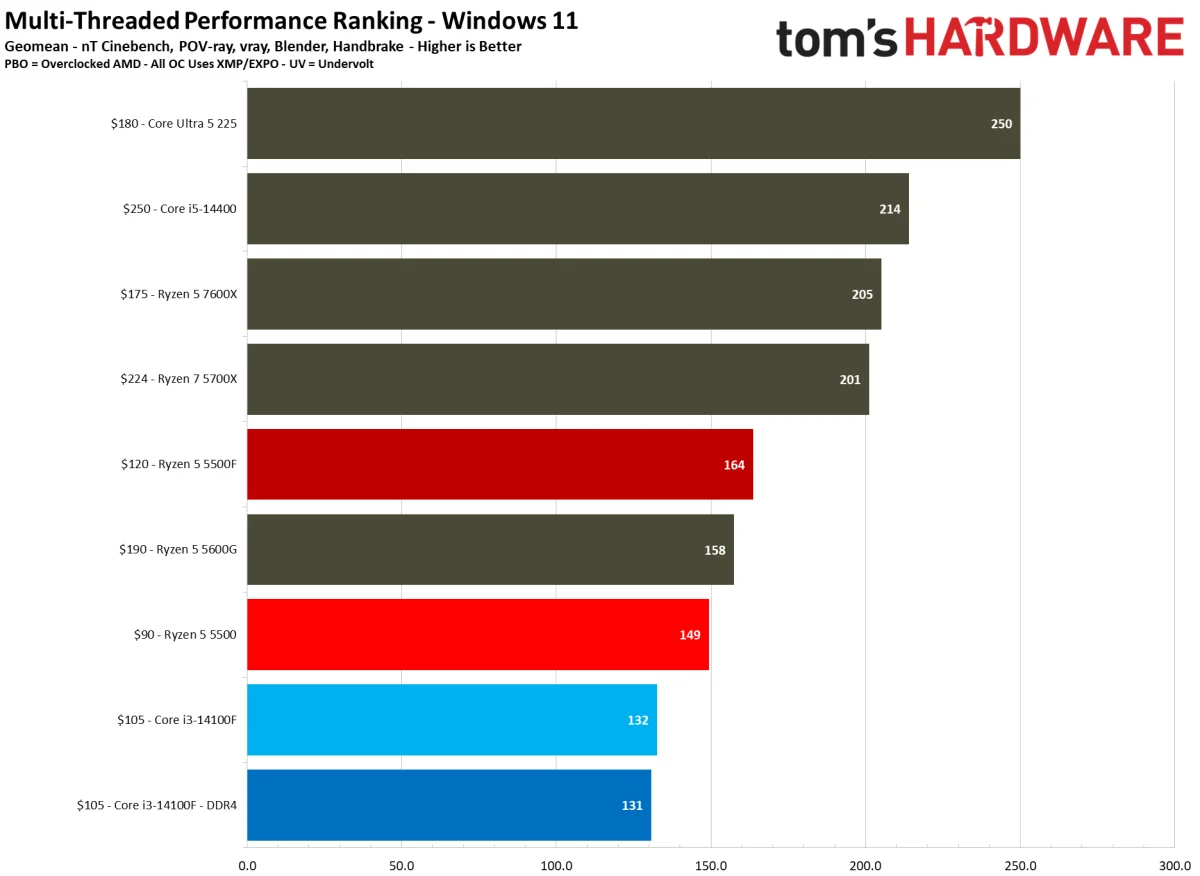
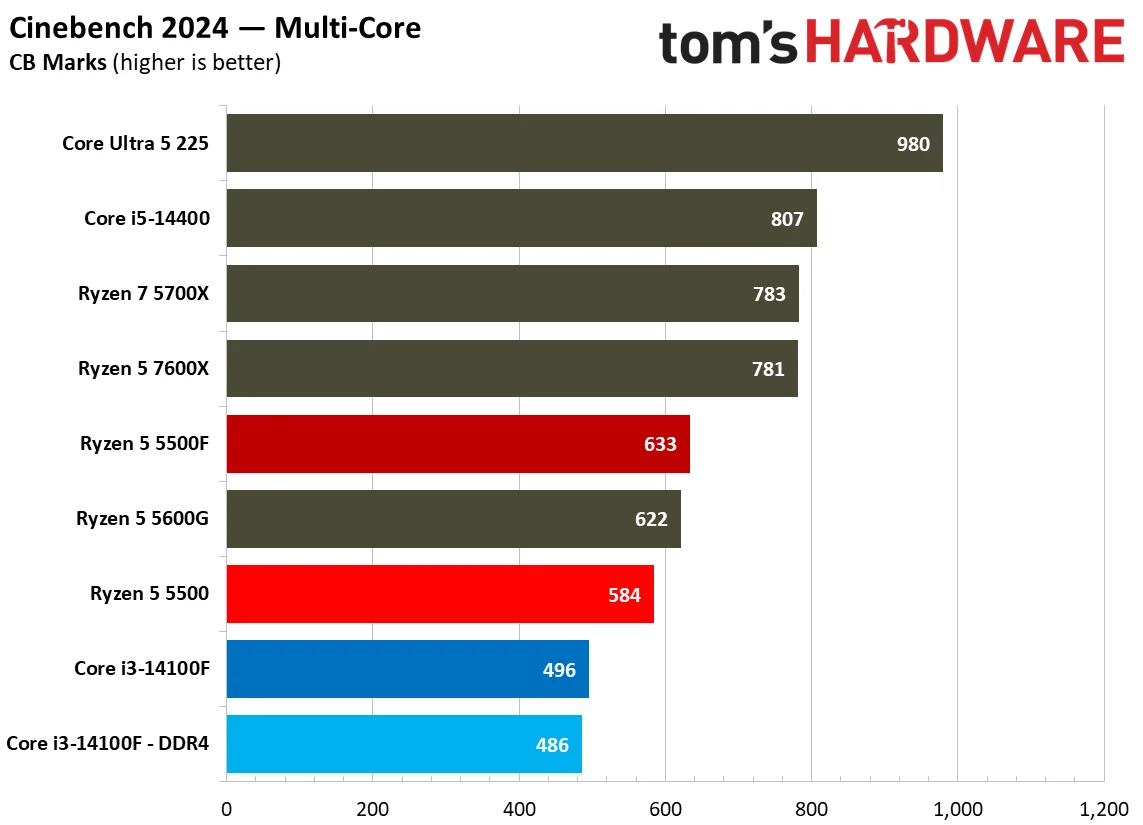
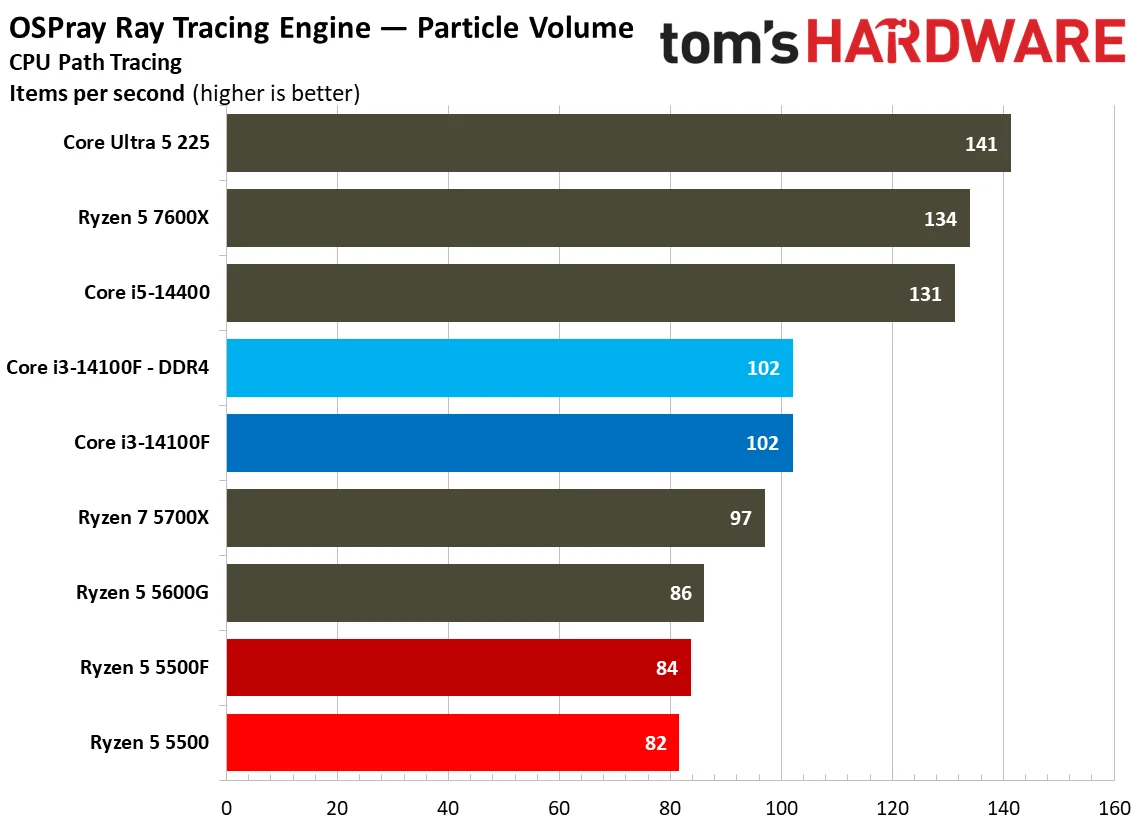
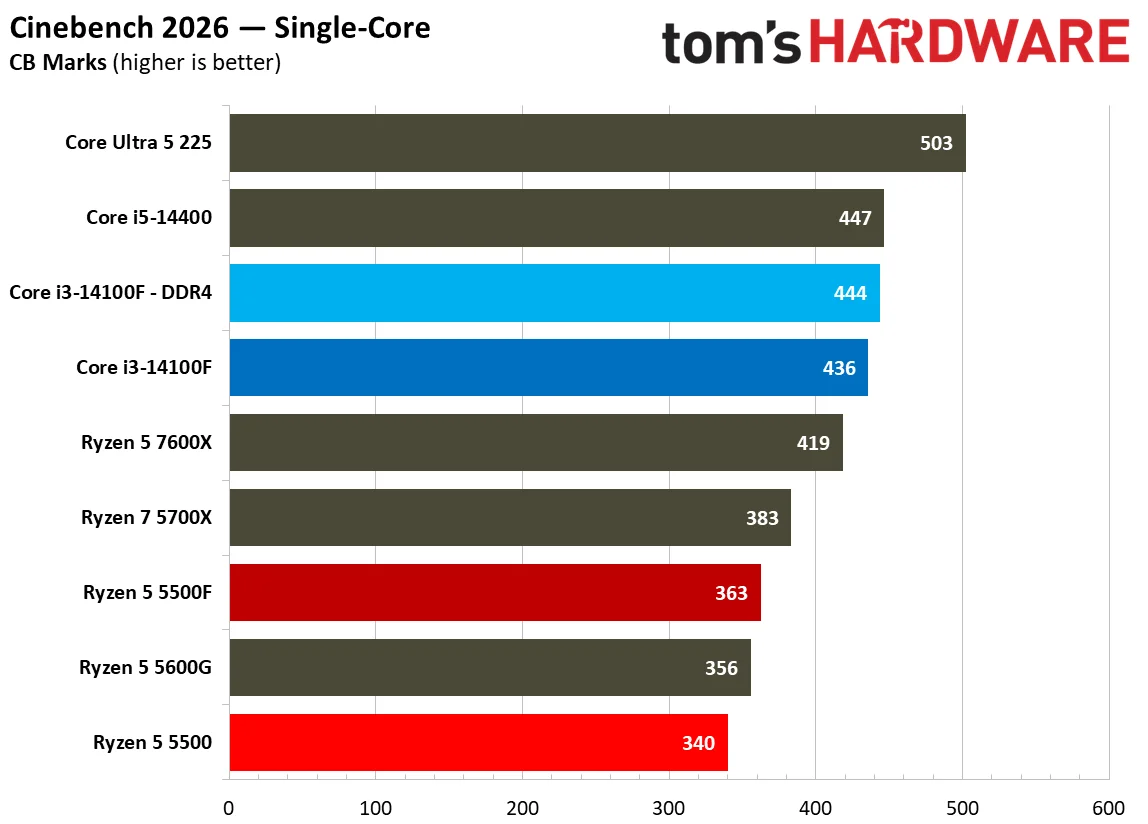
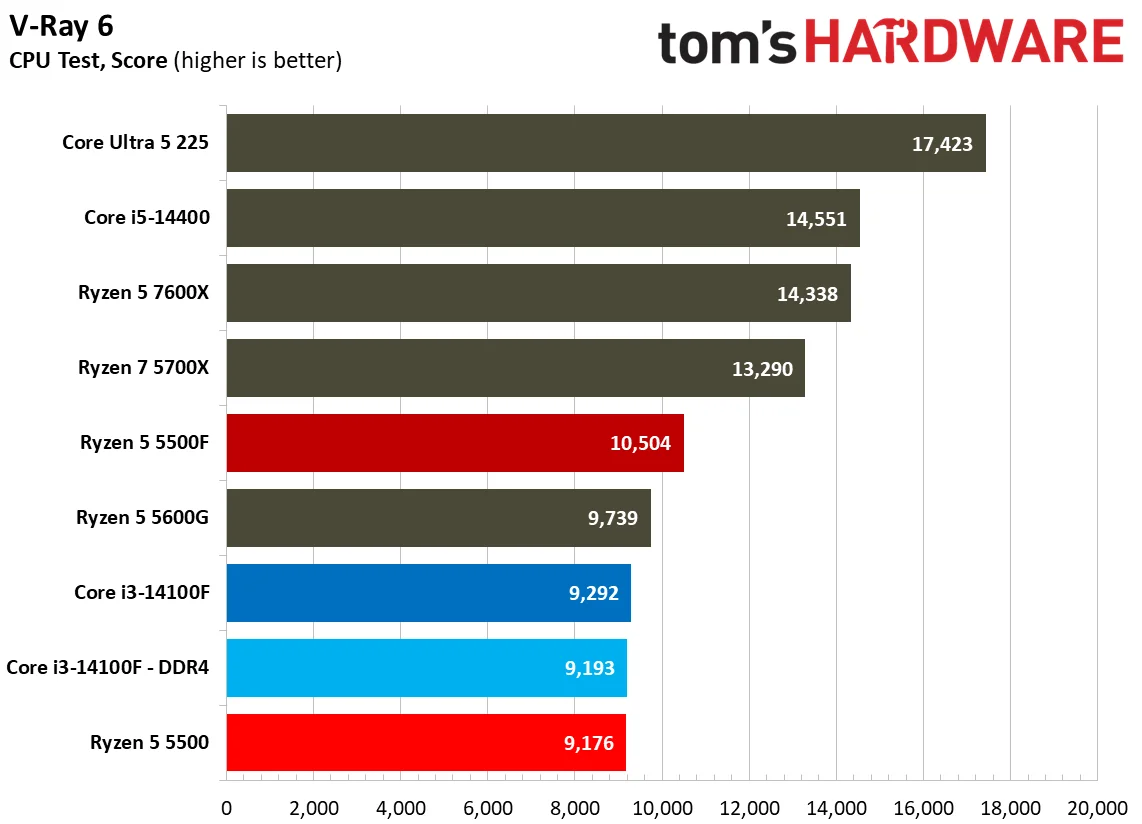
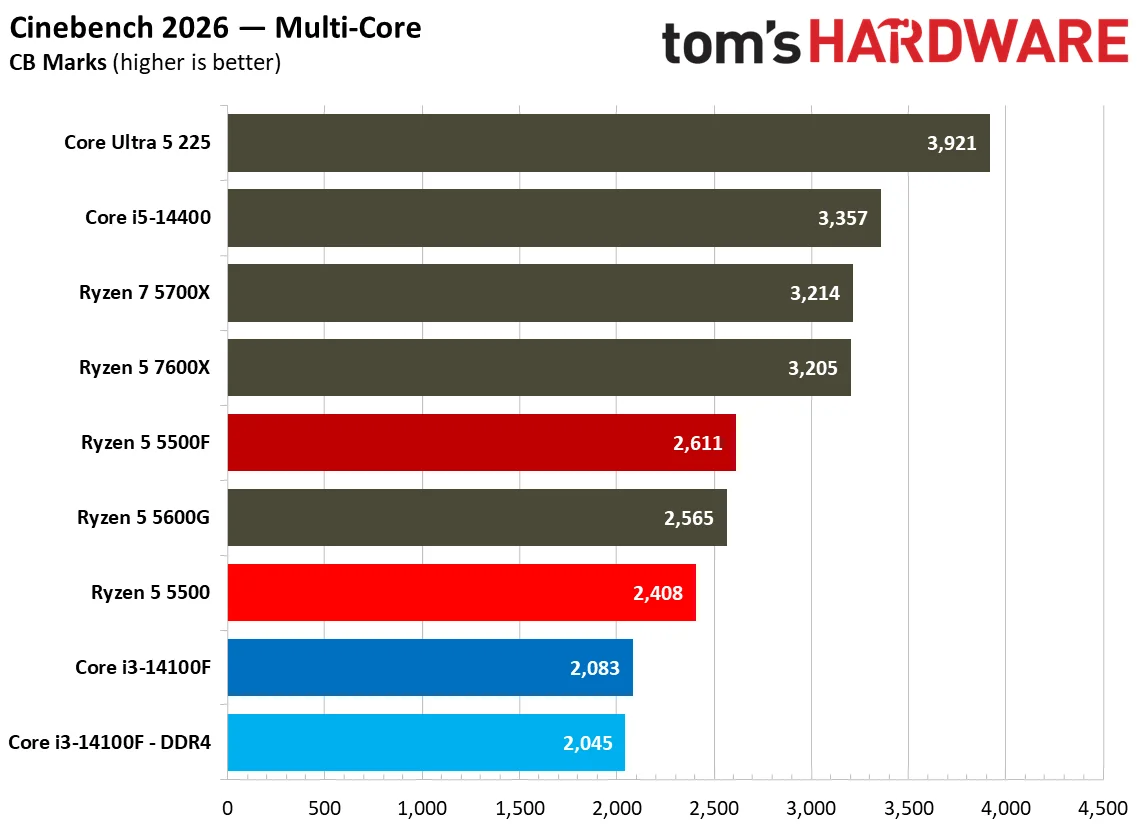
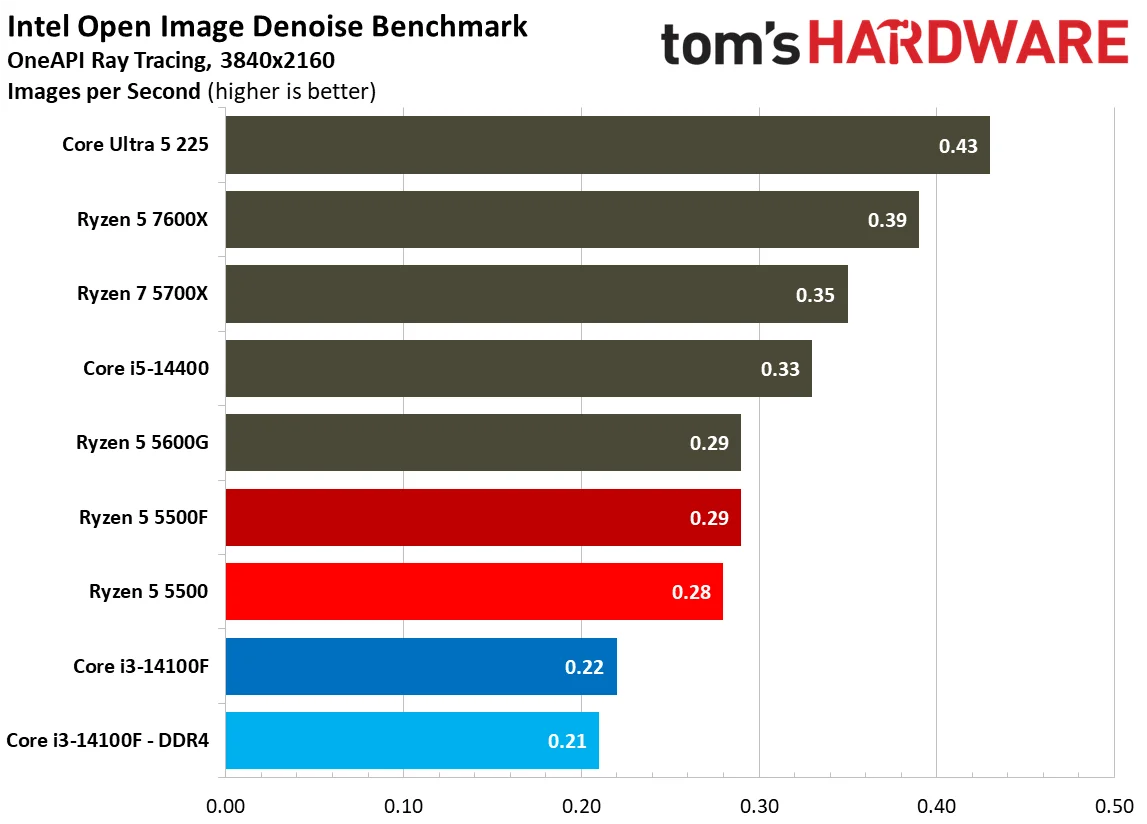
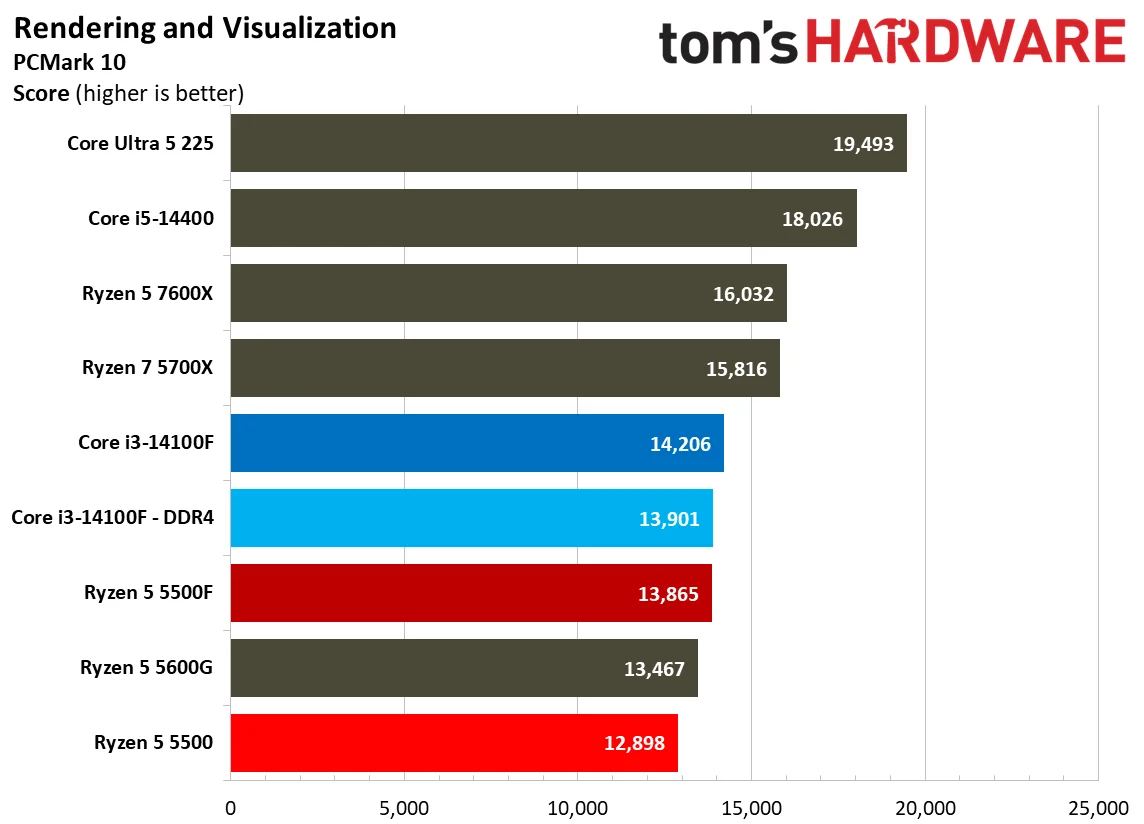
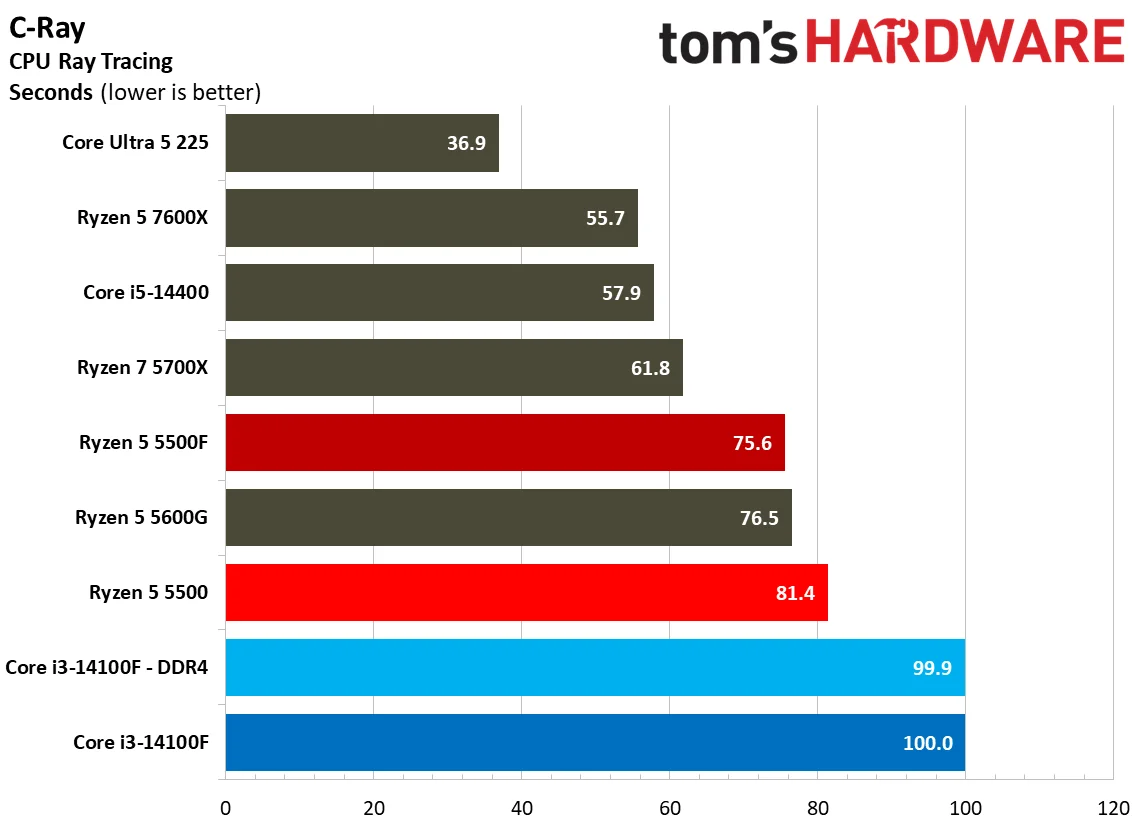
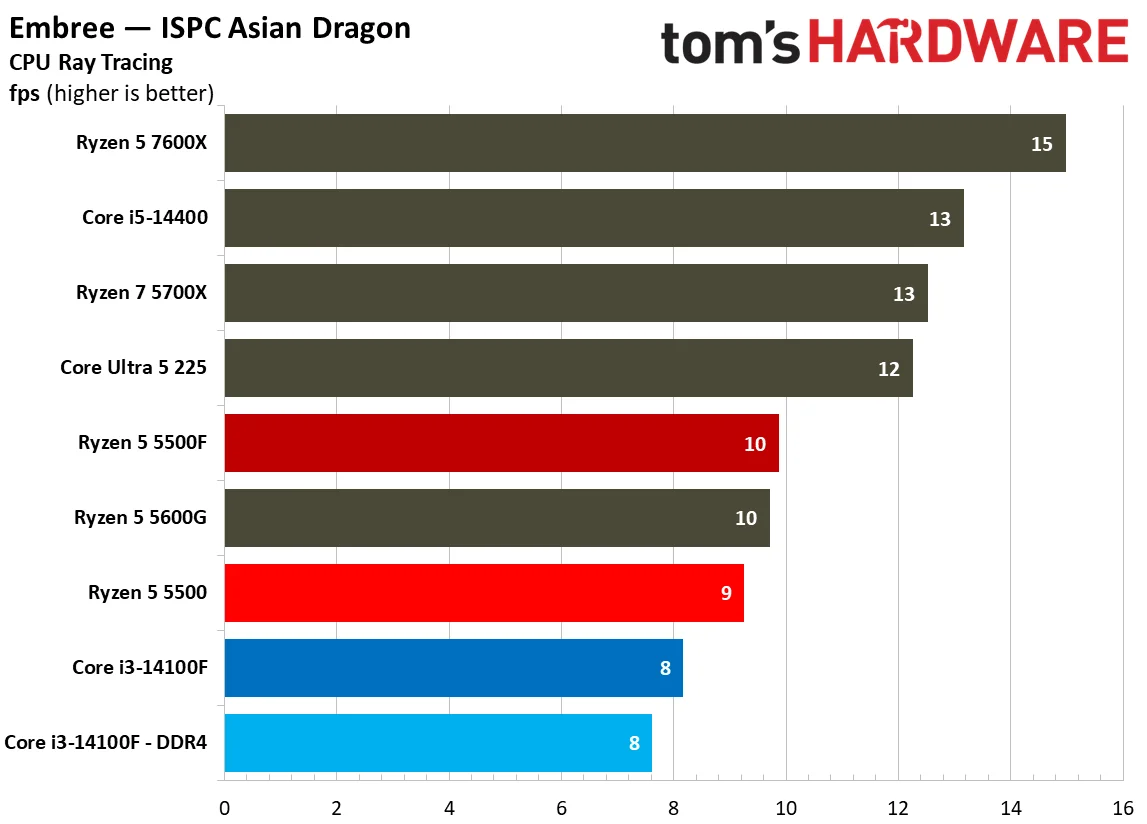
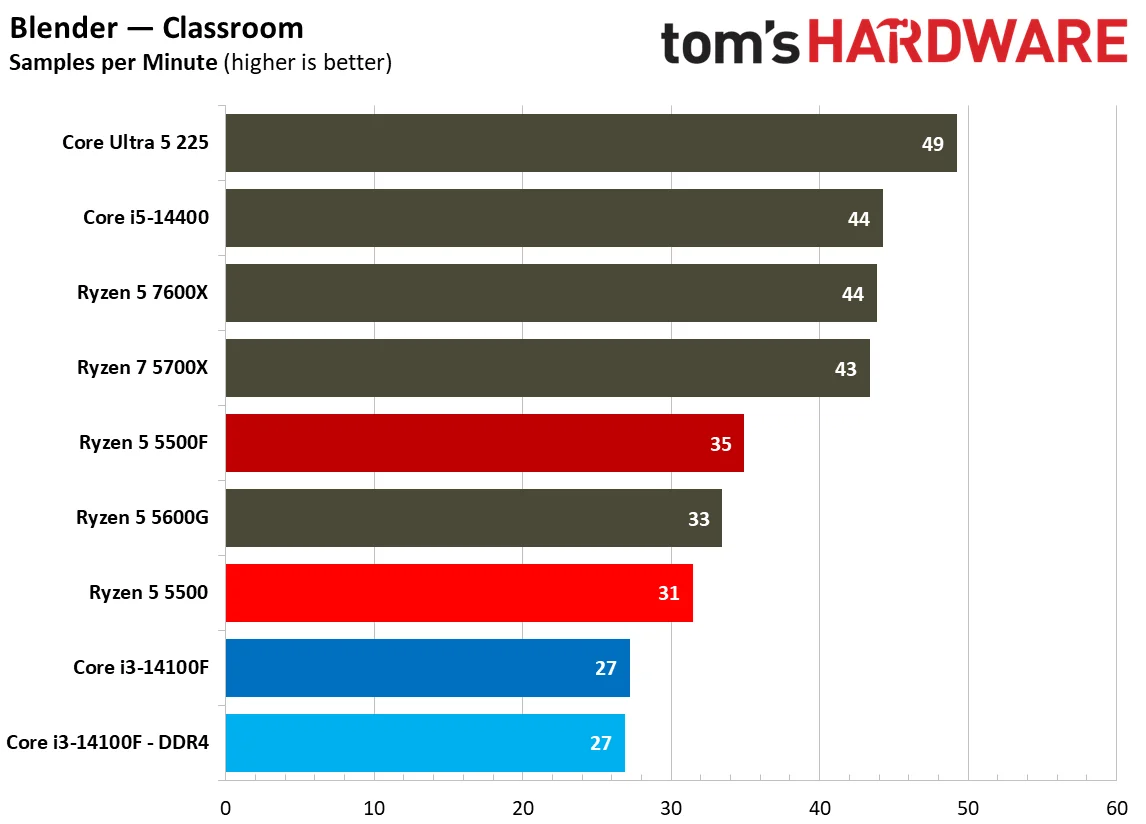
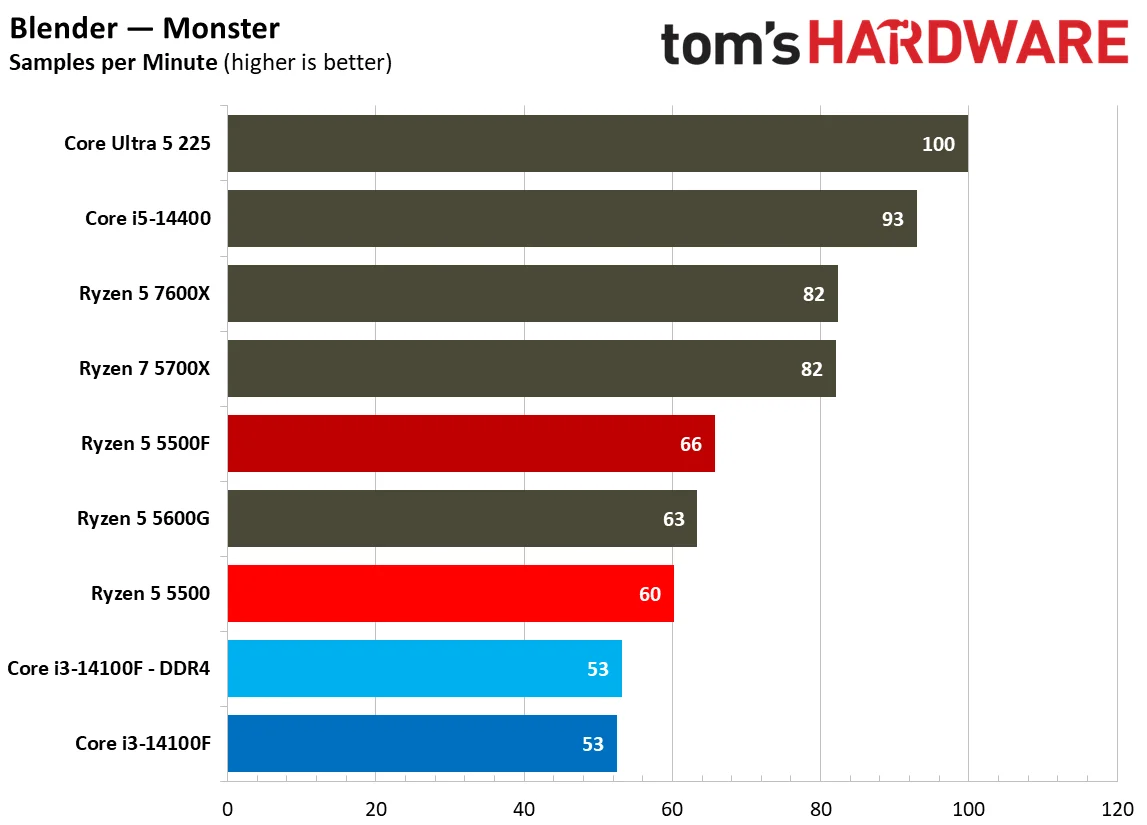
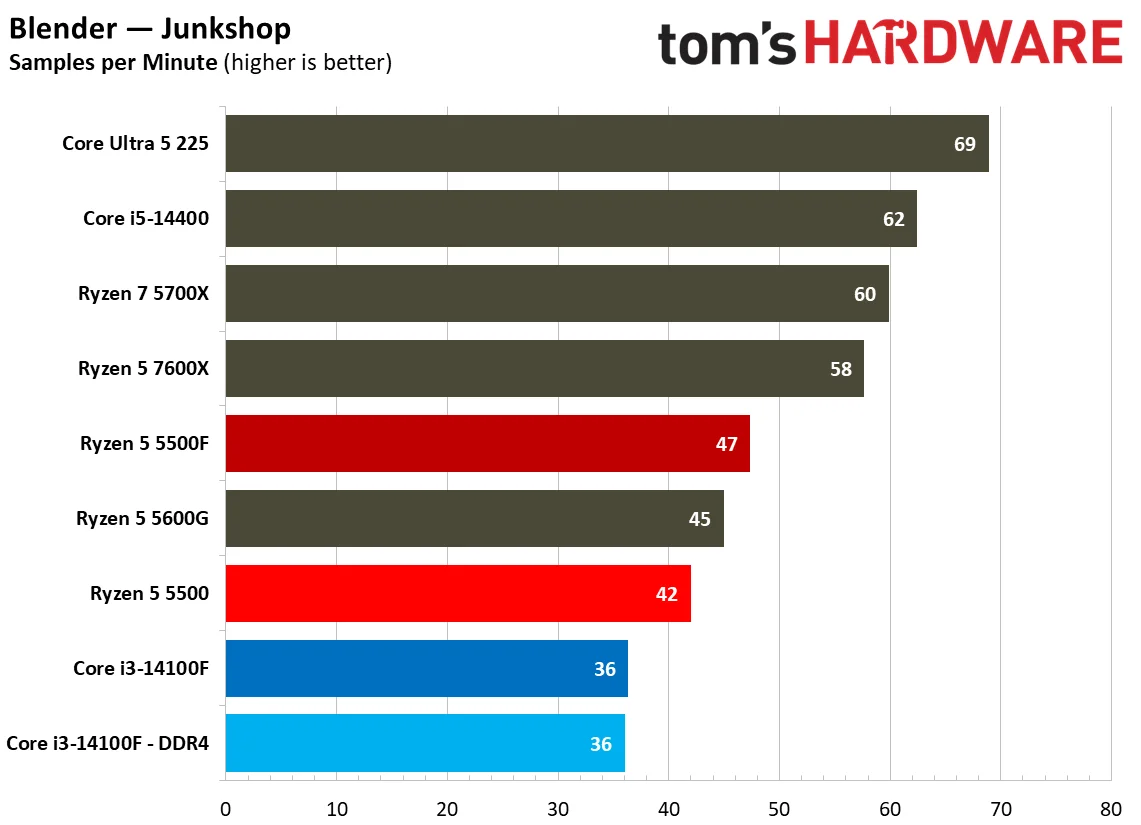
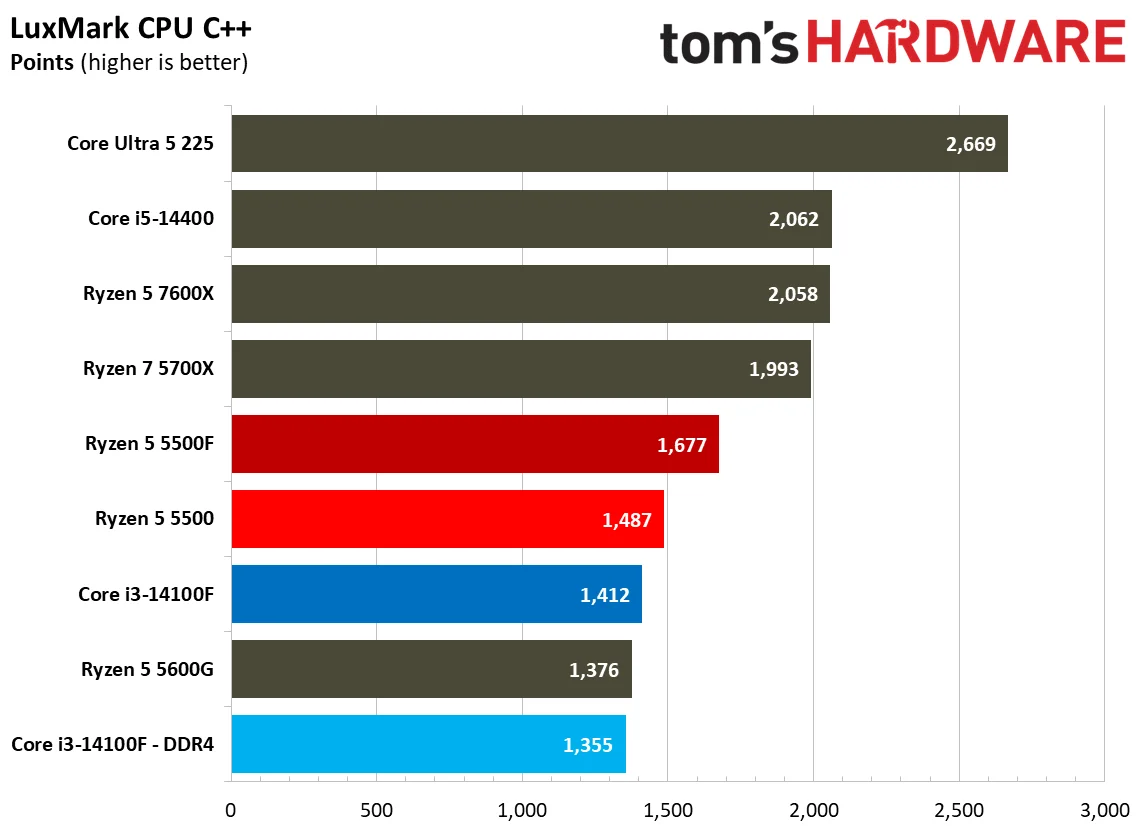
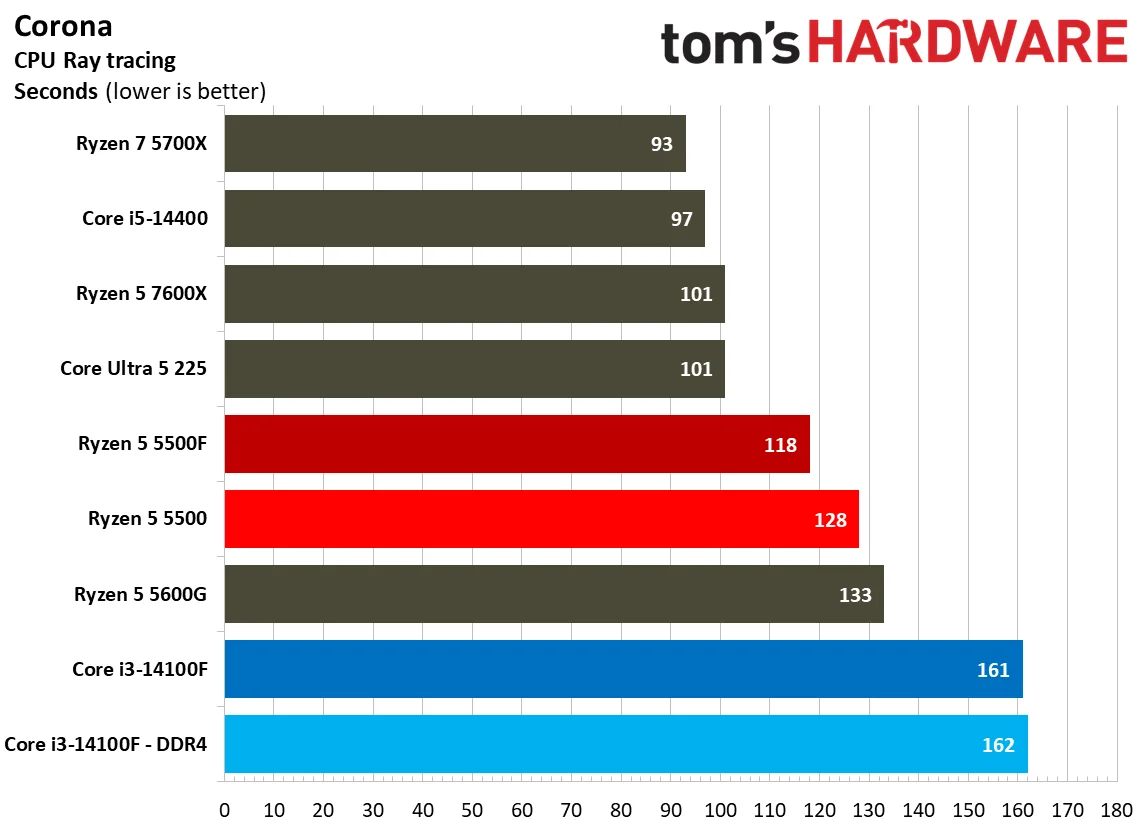
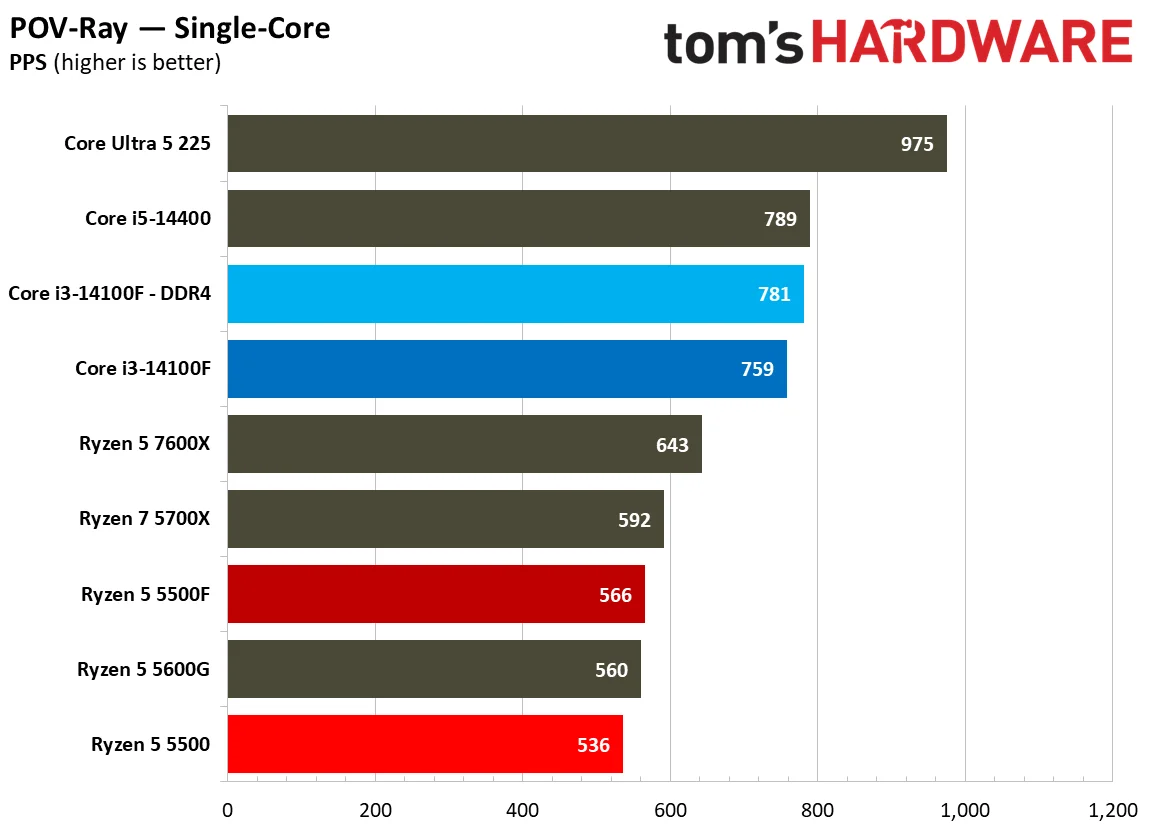
Rendering benchmarks
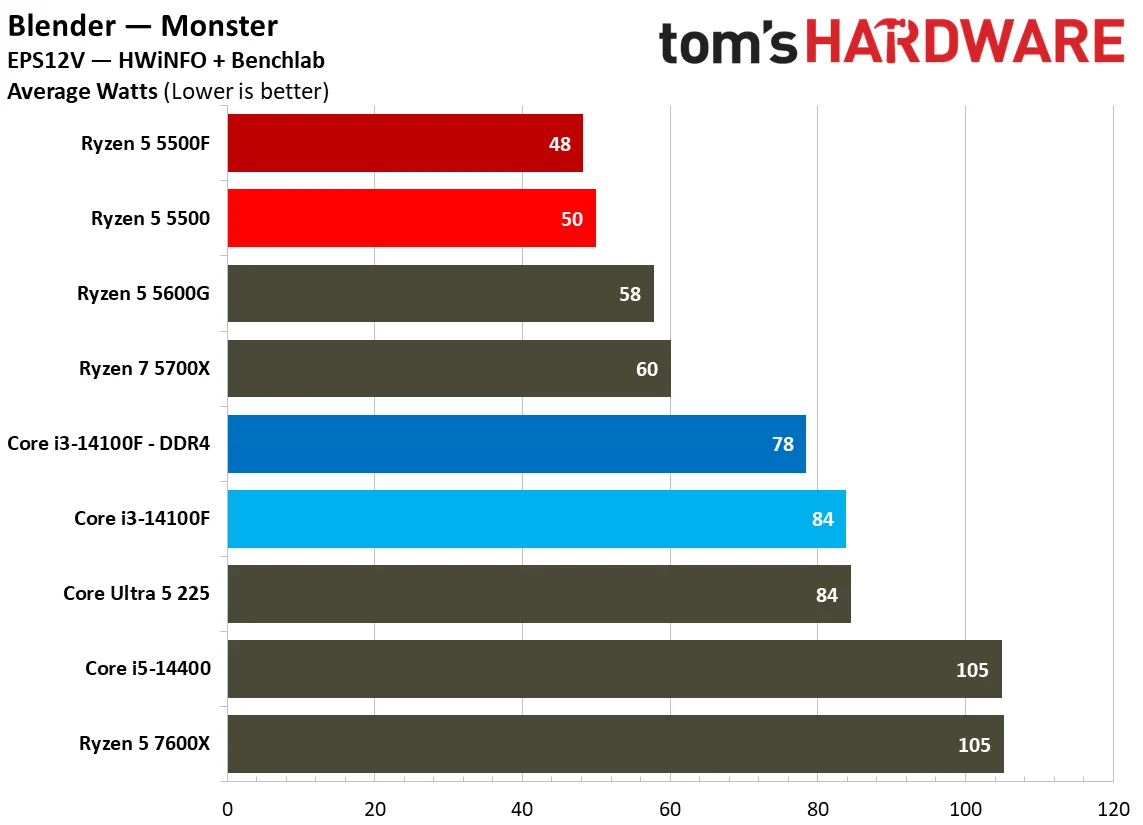
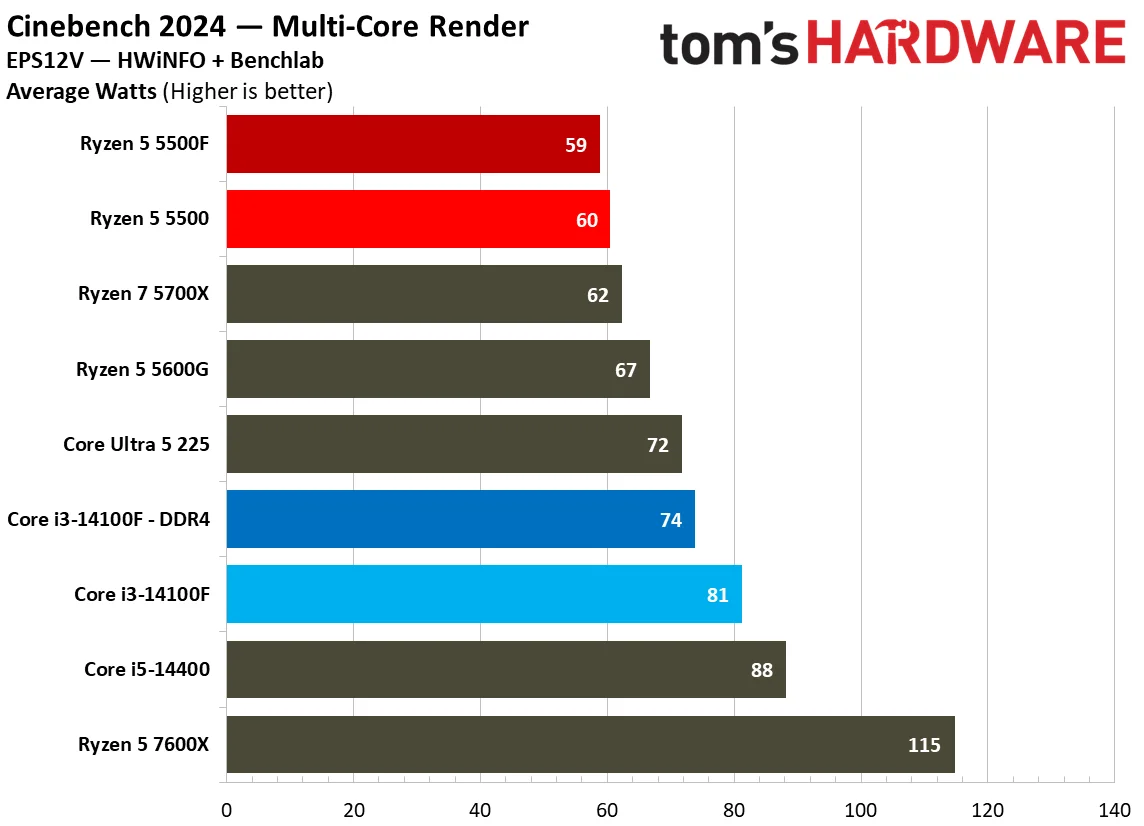
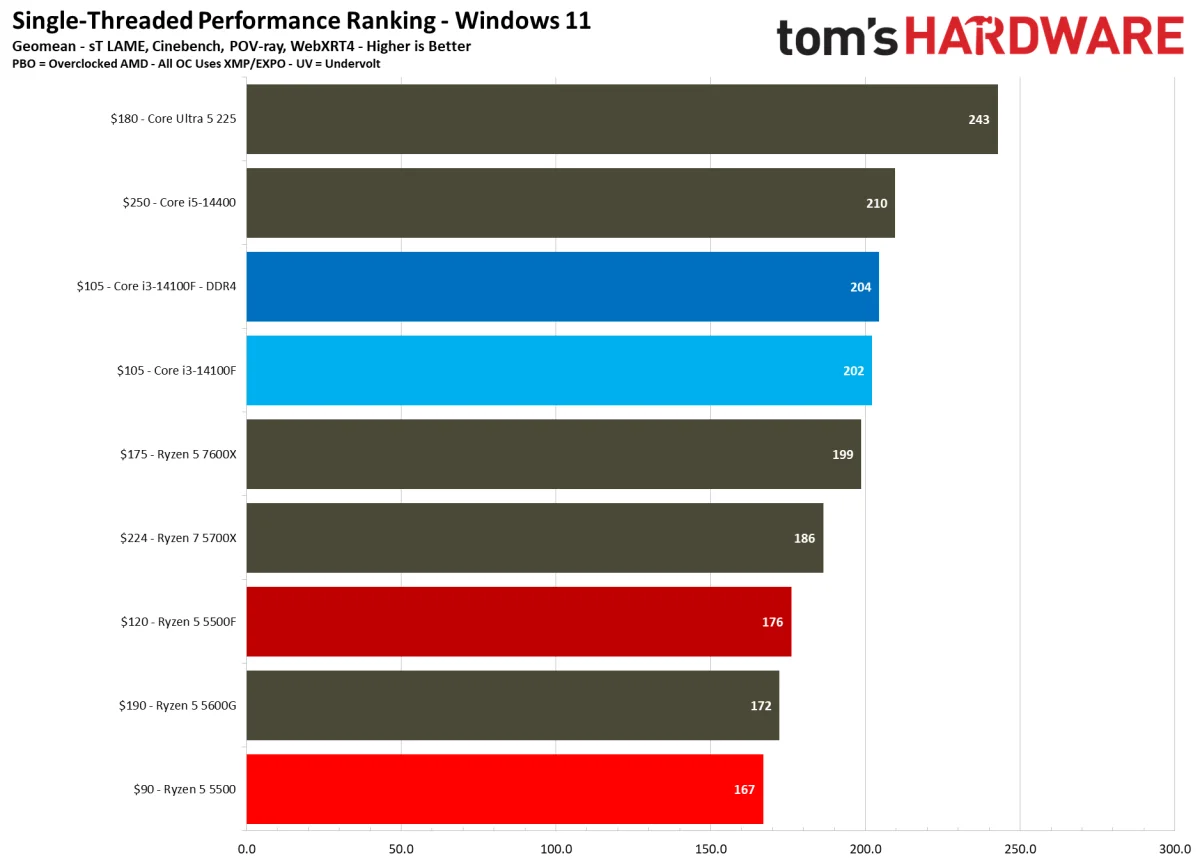
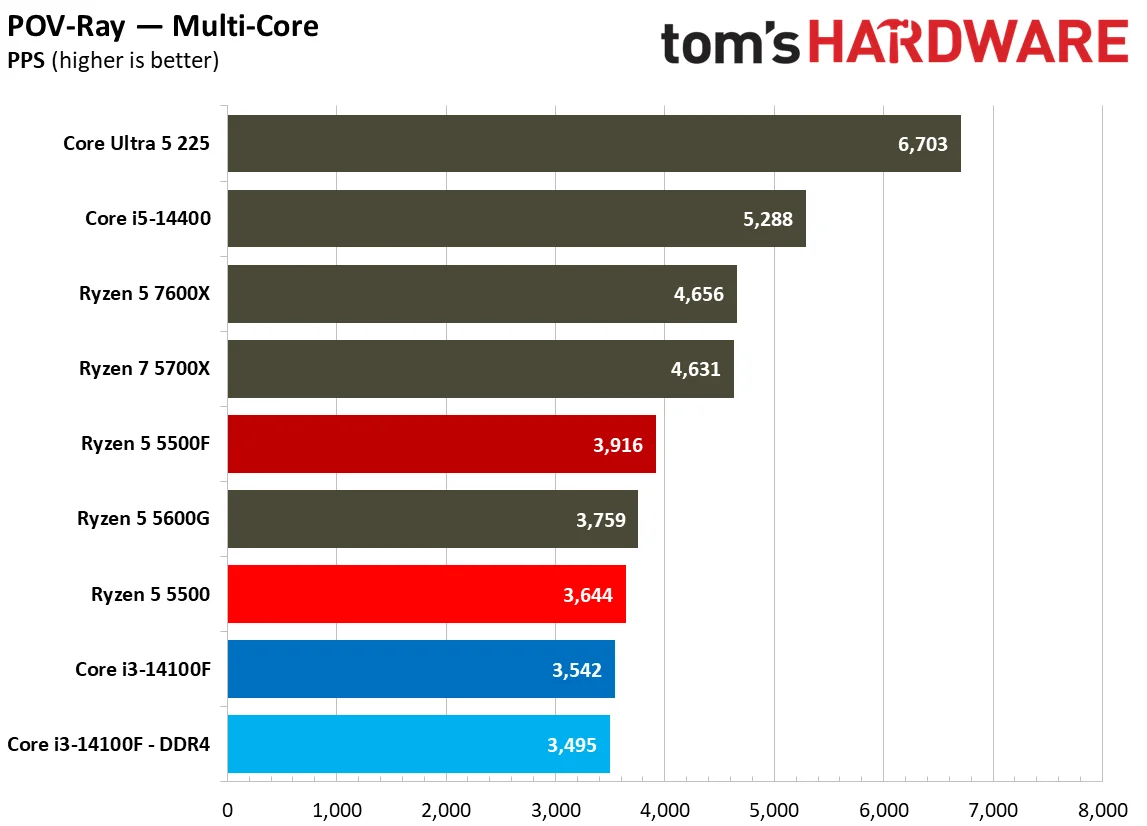
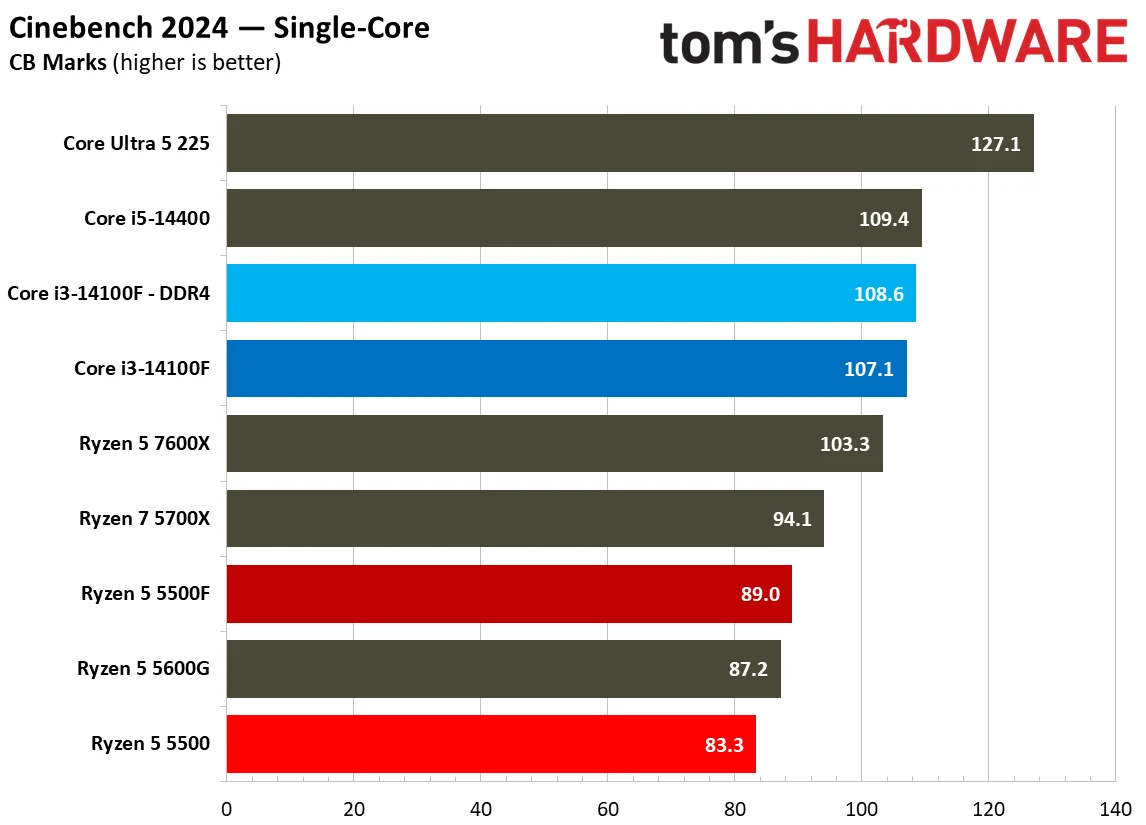
Rendering keeps CPUs under sustained load, either concentrating work on one core or spreading it across all available cores. That makes these tests useful for comparing both single and multithreaded performance, and explains why Cinebench is a standard point of reference.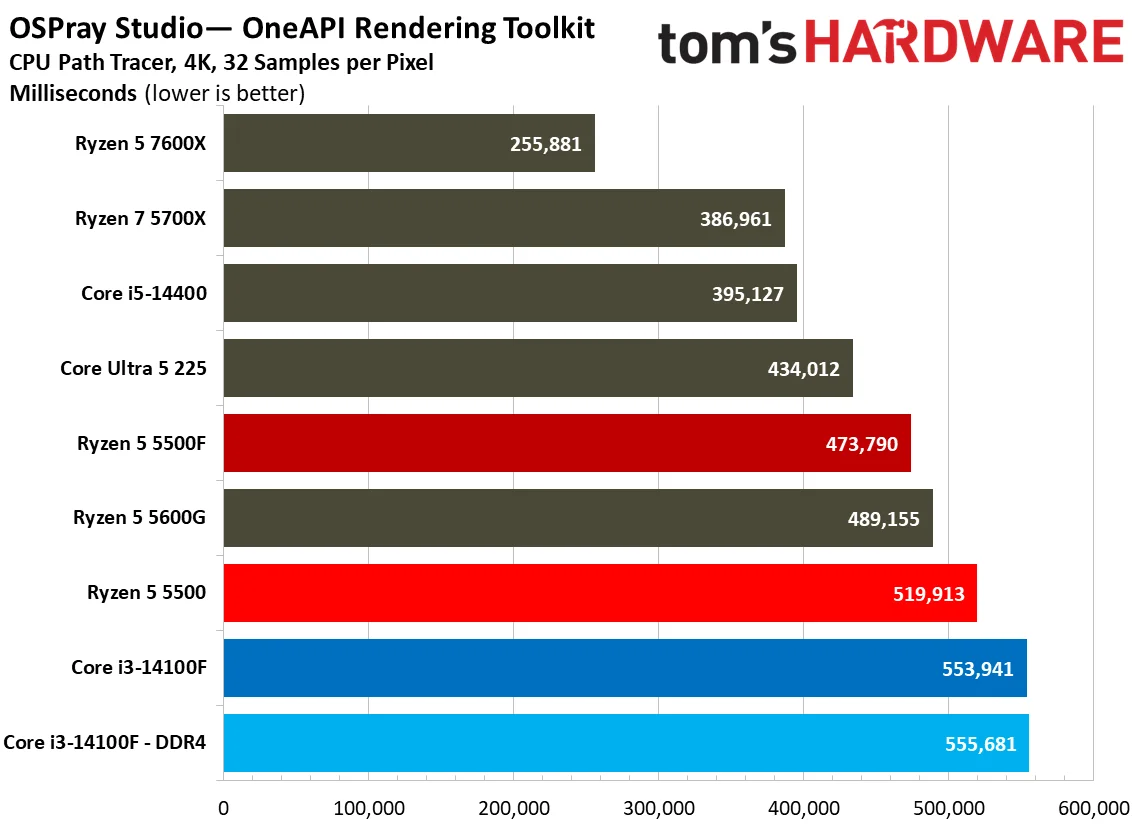
MORE: CPU Benchmark Hierarchy
MORE: AMD vs. Intel
MORE: Intel Core Ultra 7 270K Plus review
MORE: AMD Ryzen 7 9850X3D review
Encoding benchmarks
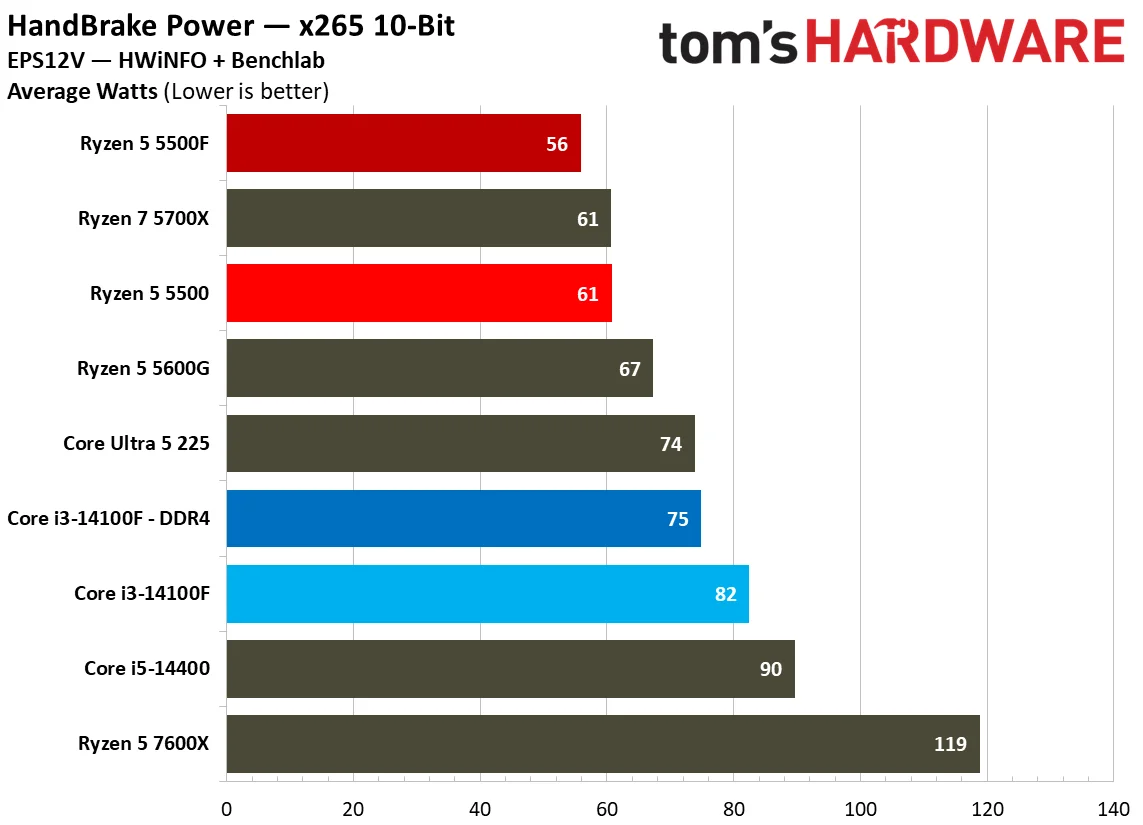
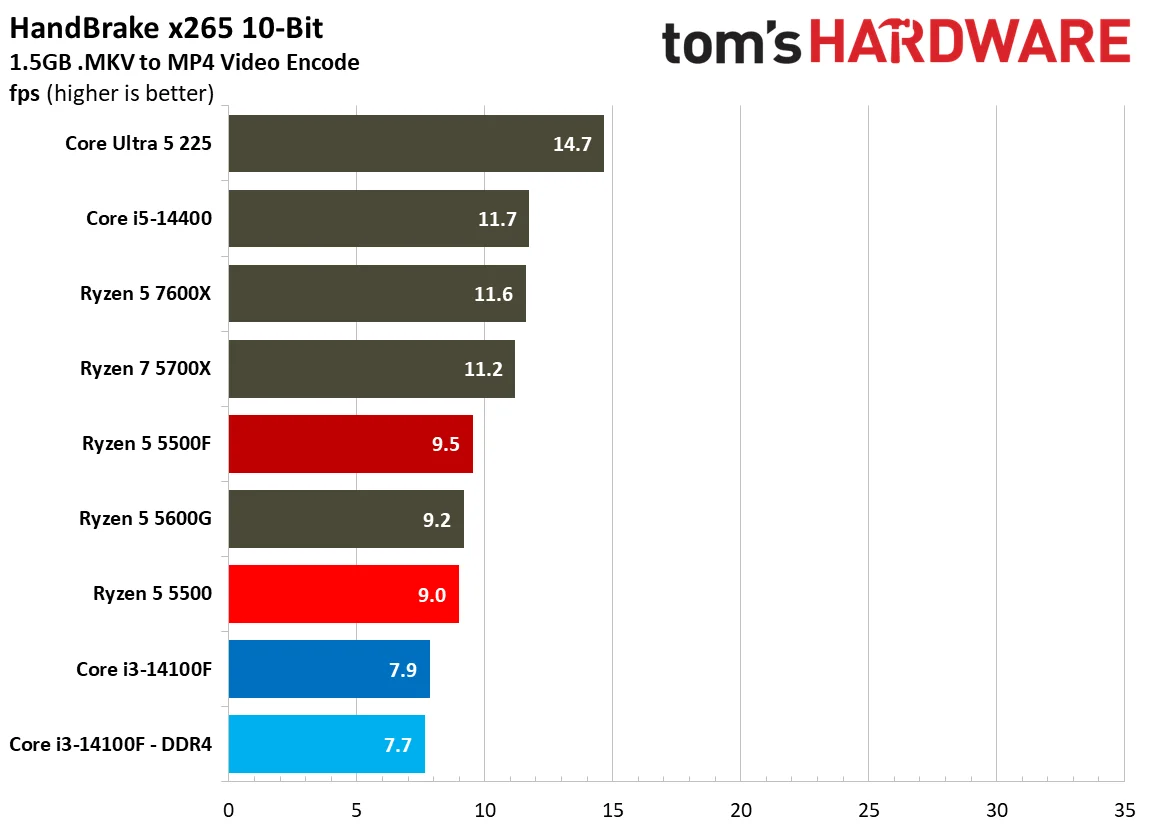
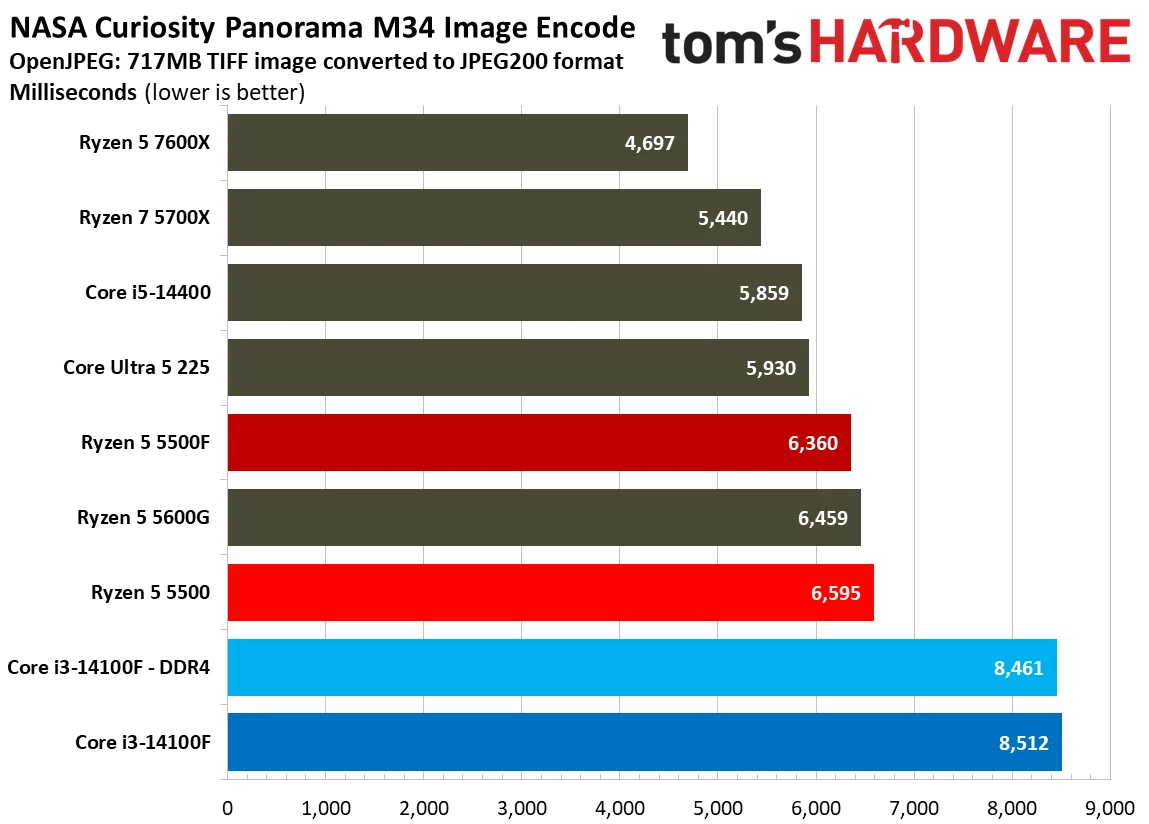
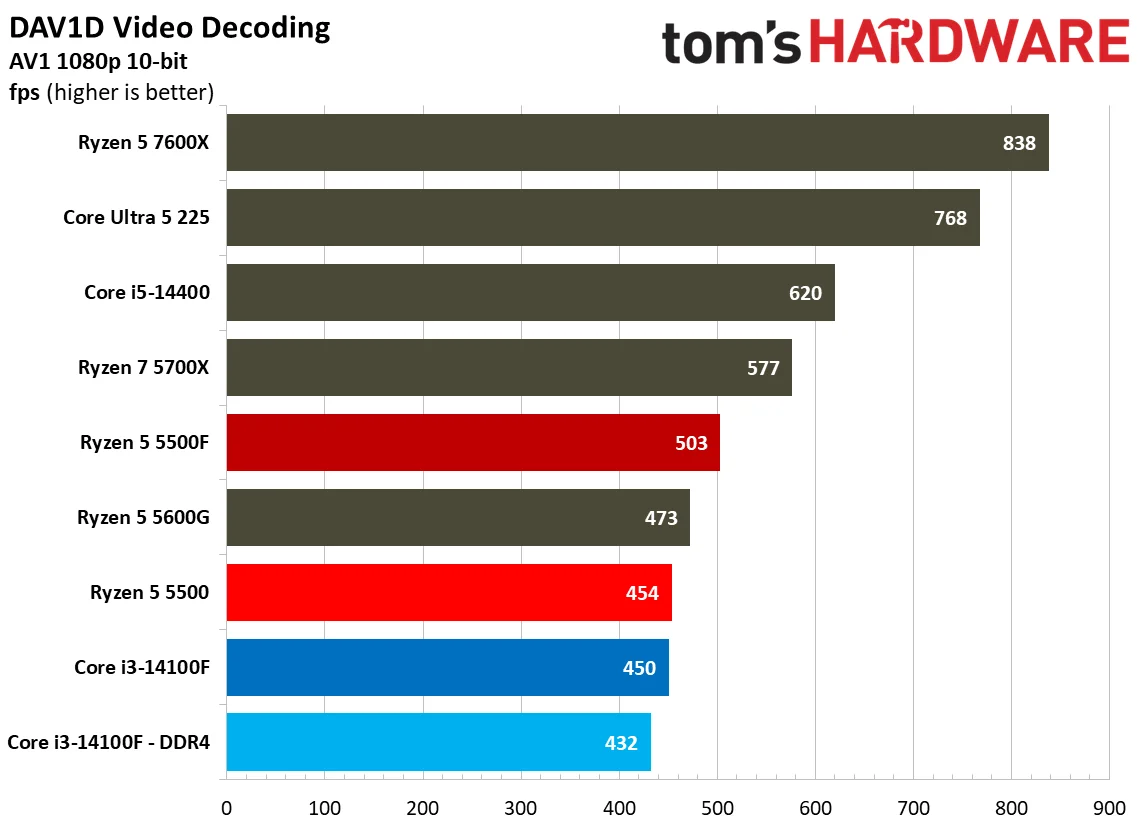
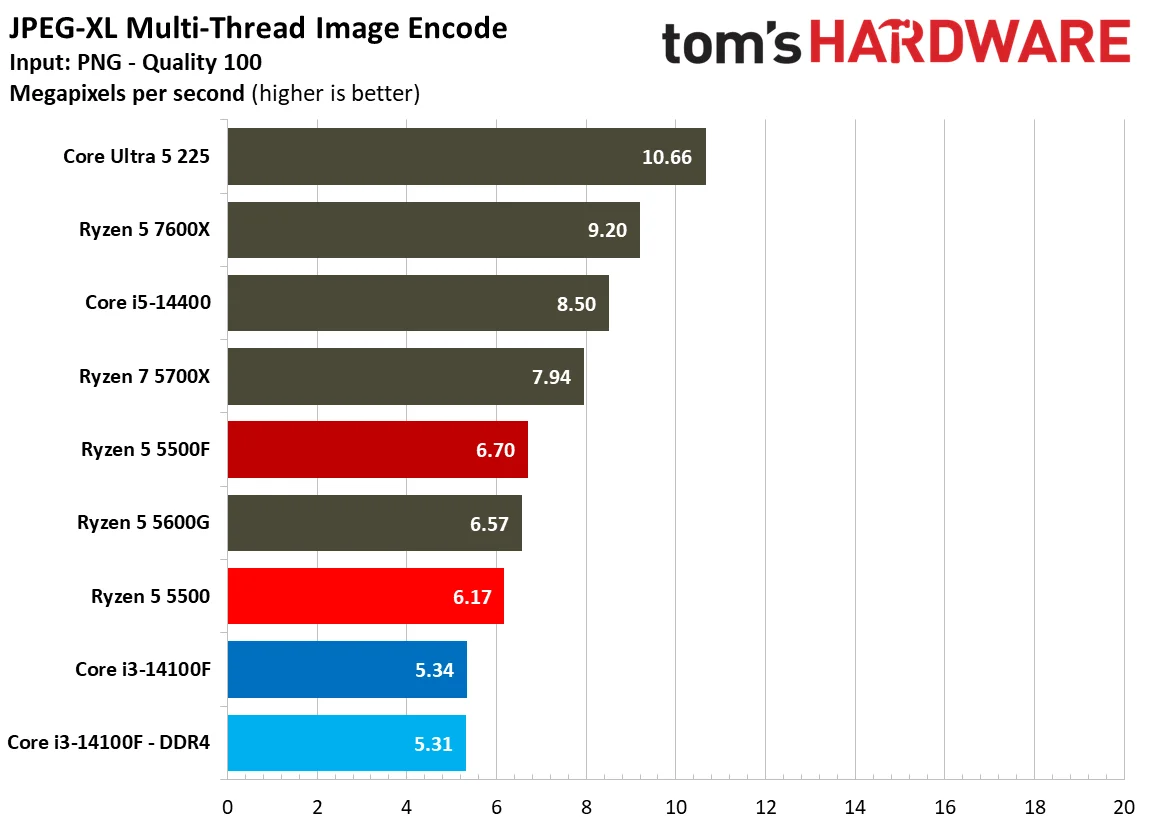
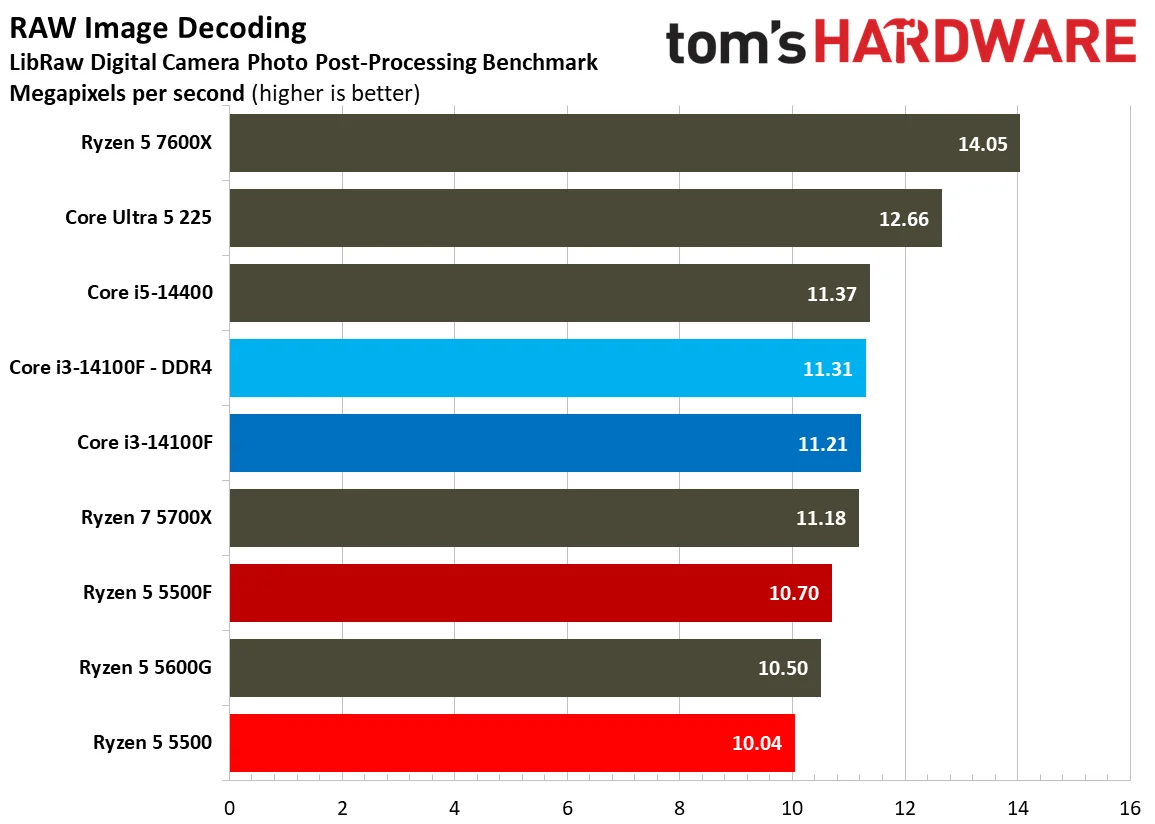
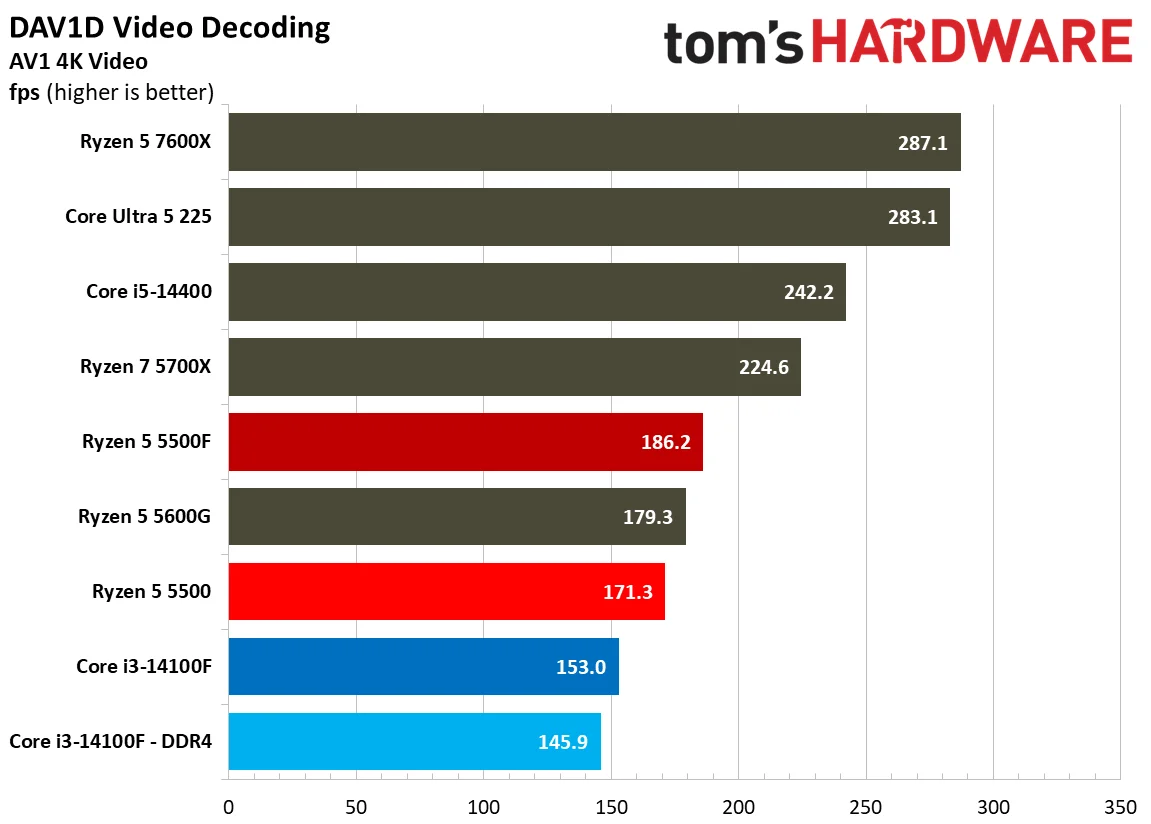
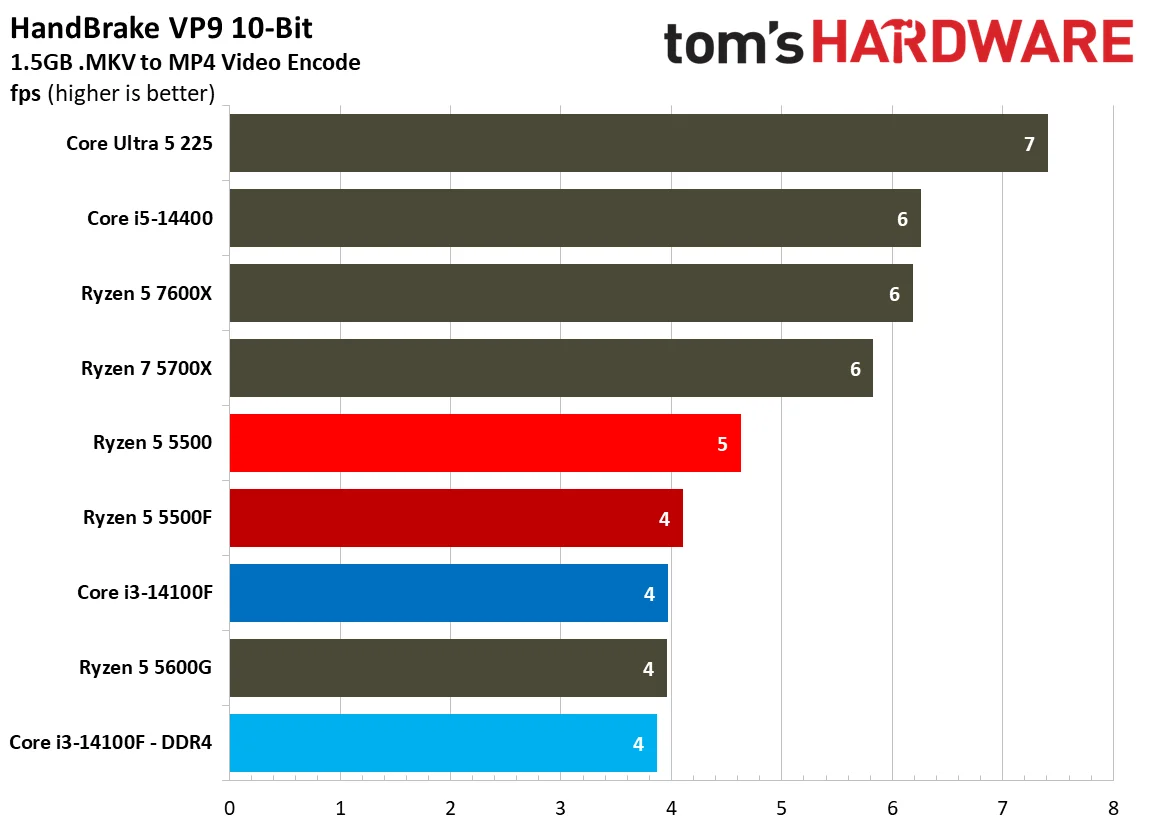
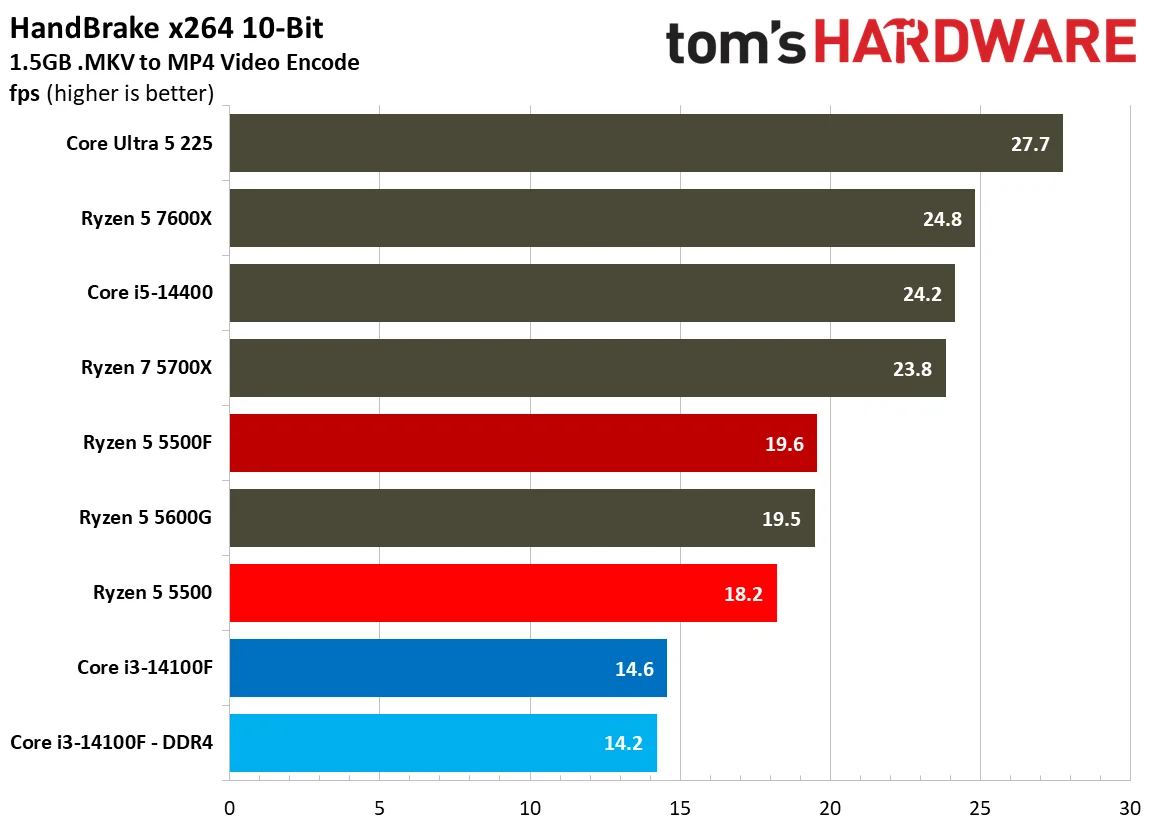
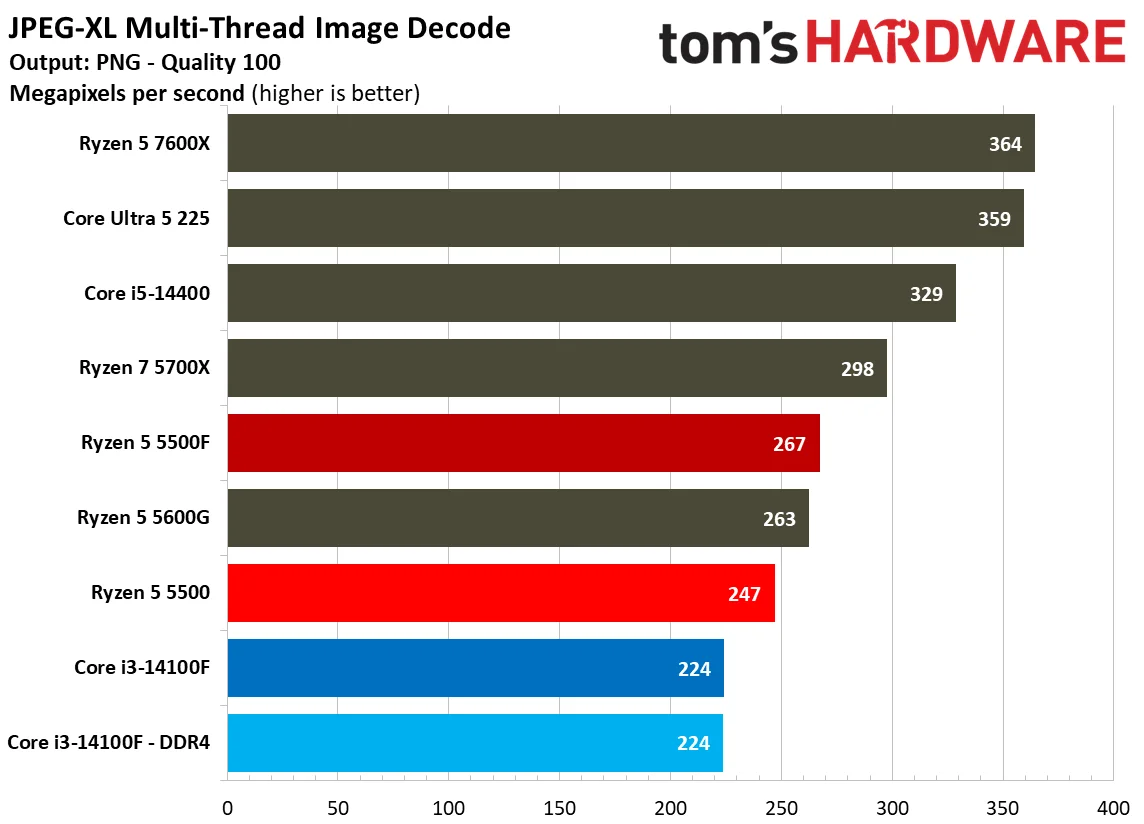
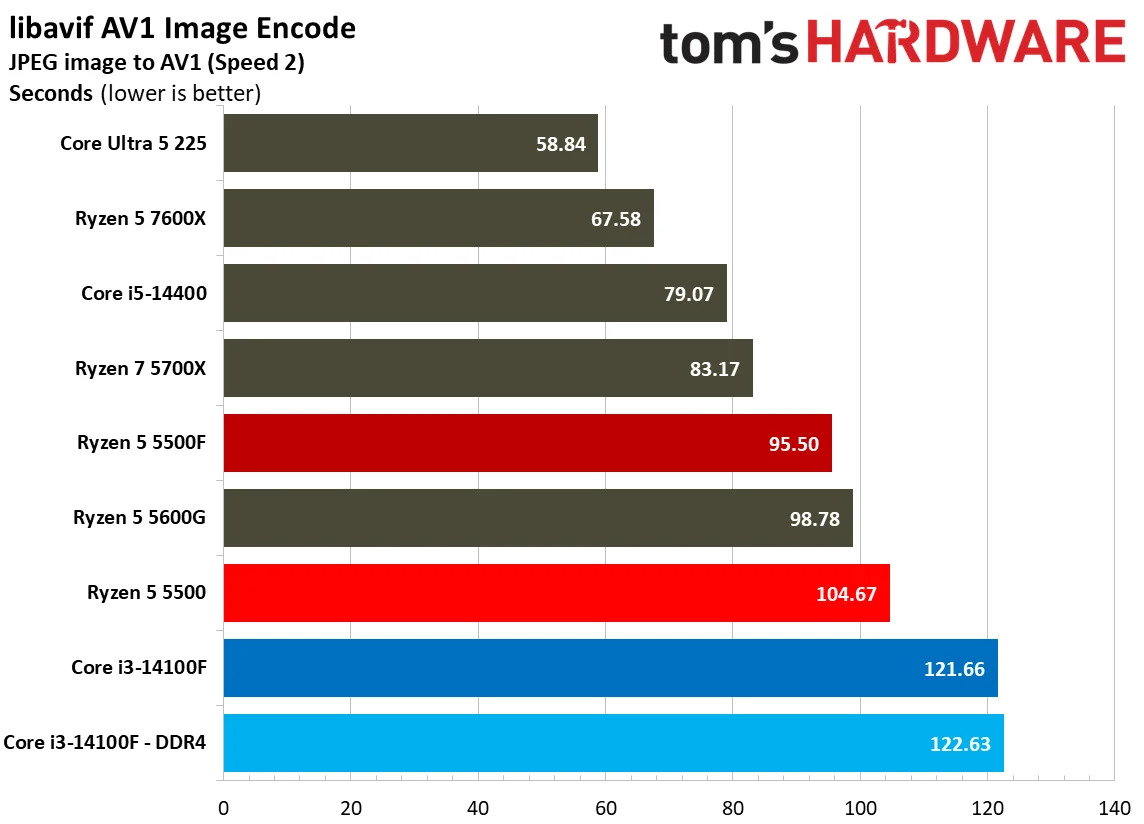
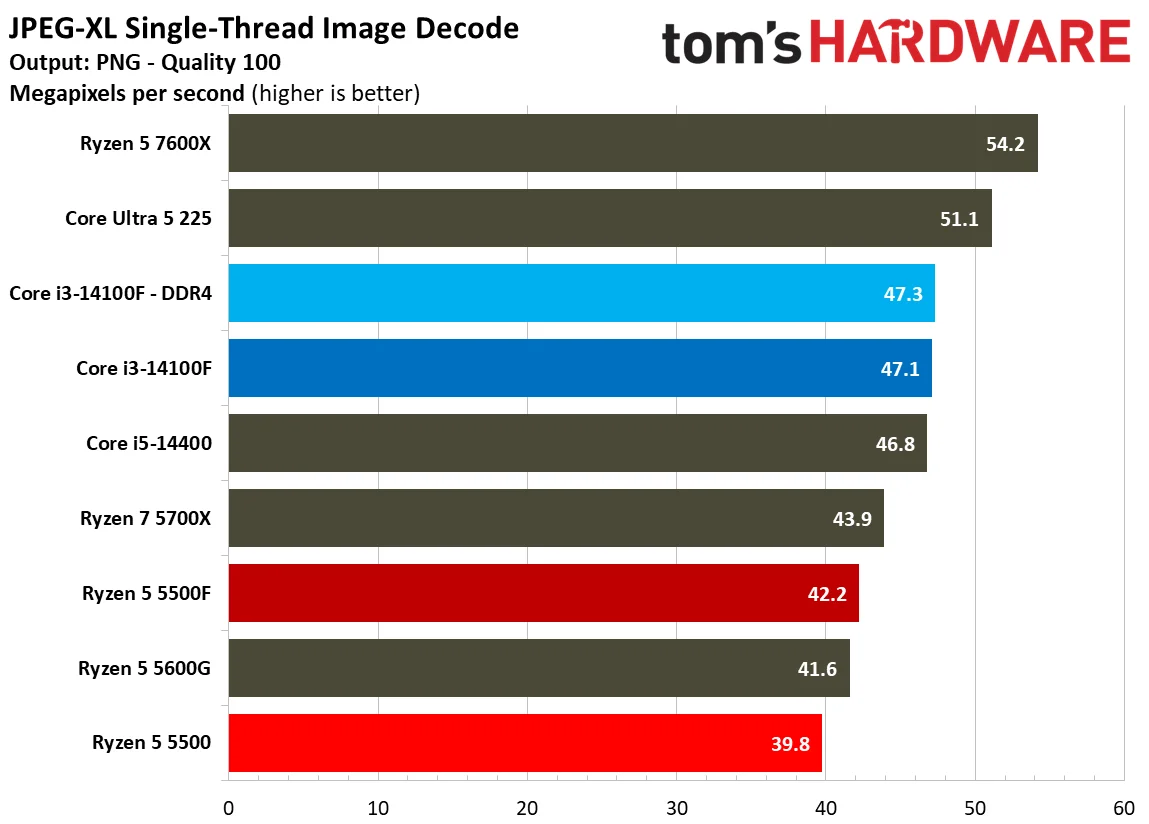
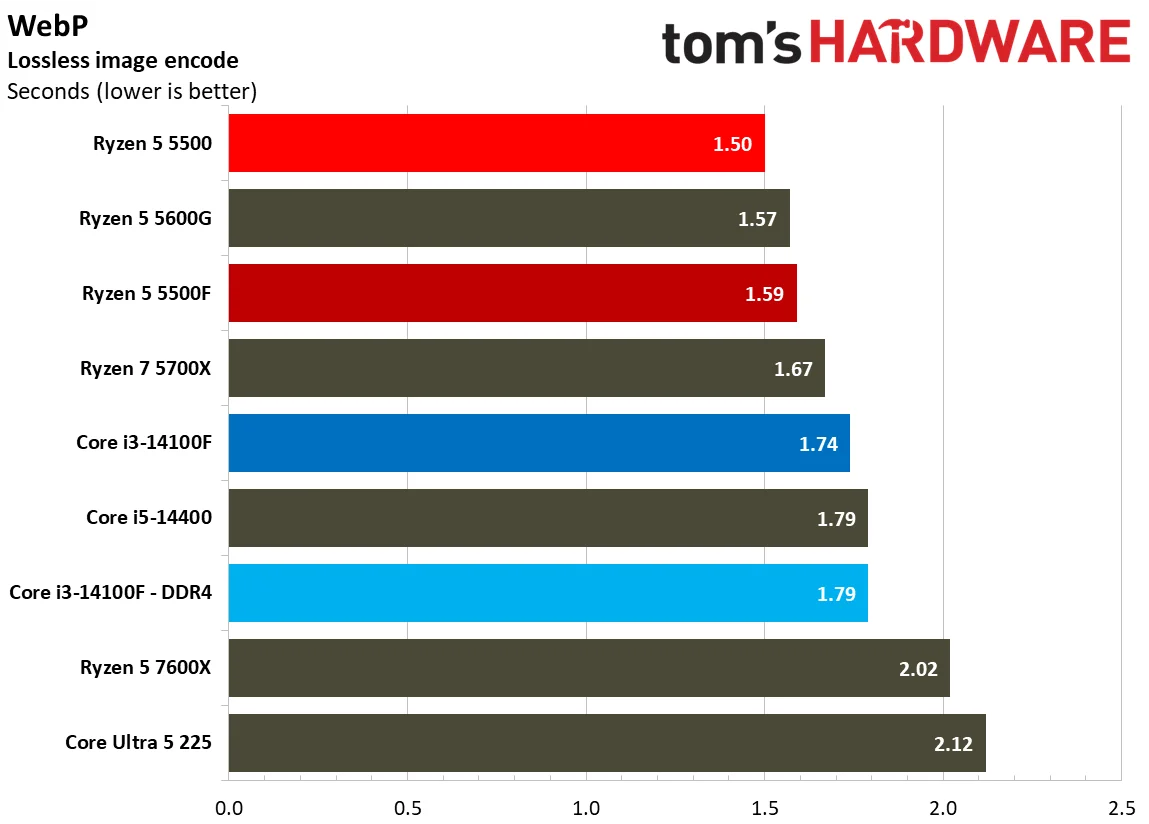
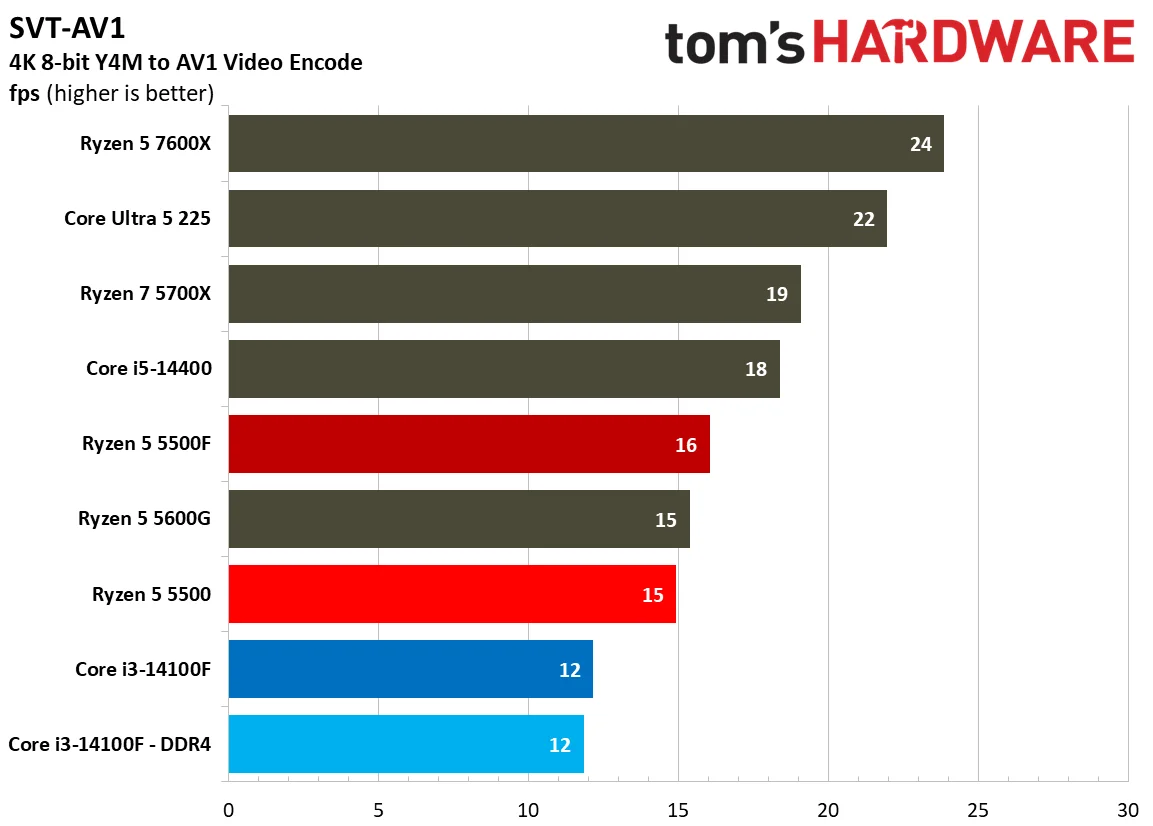
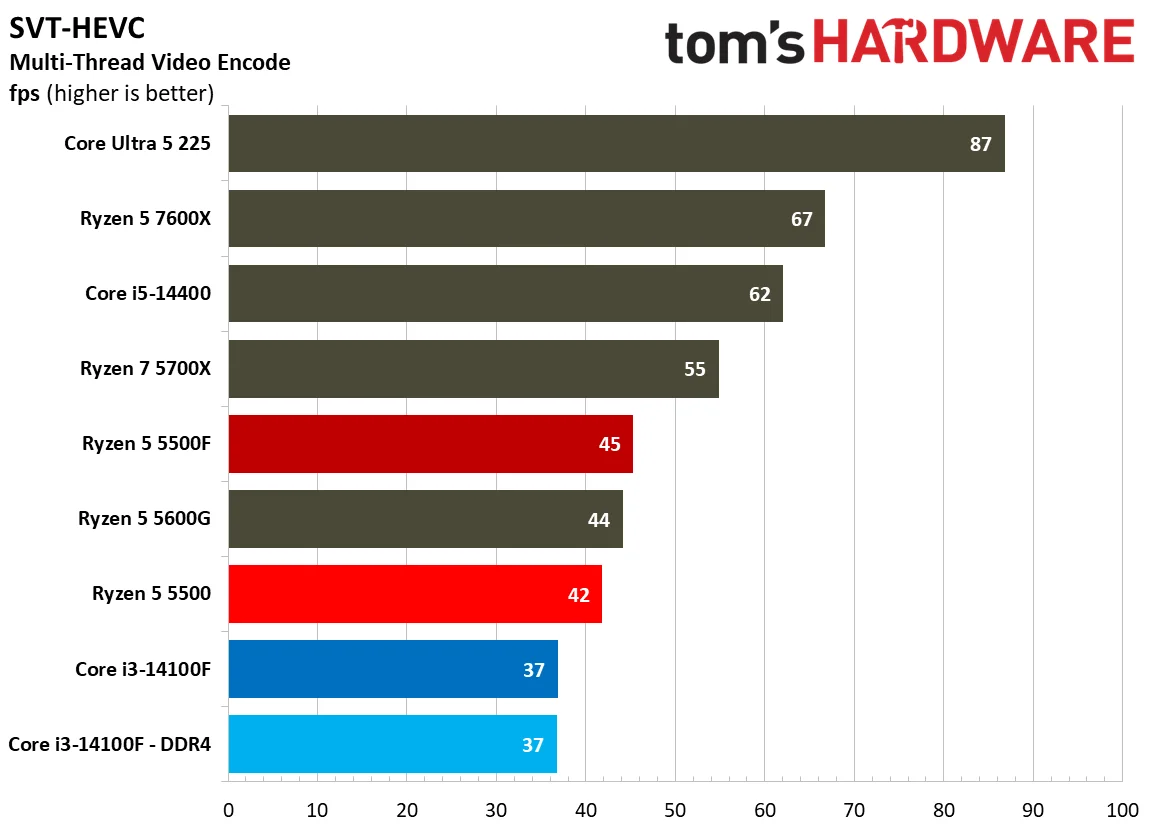
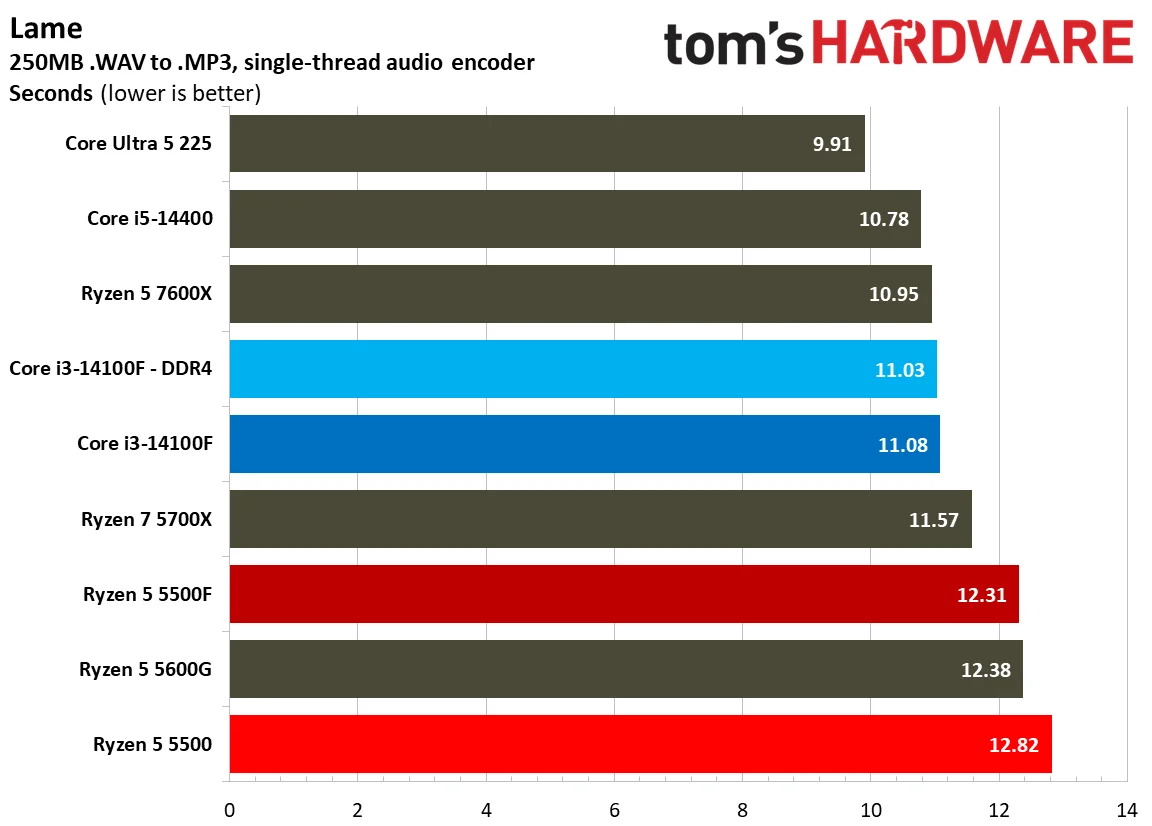
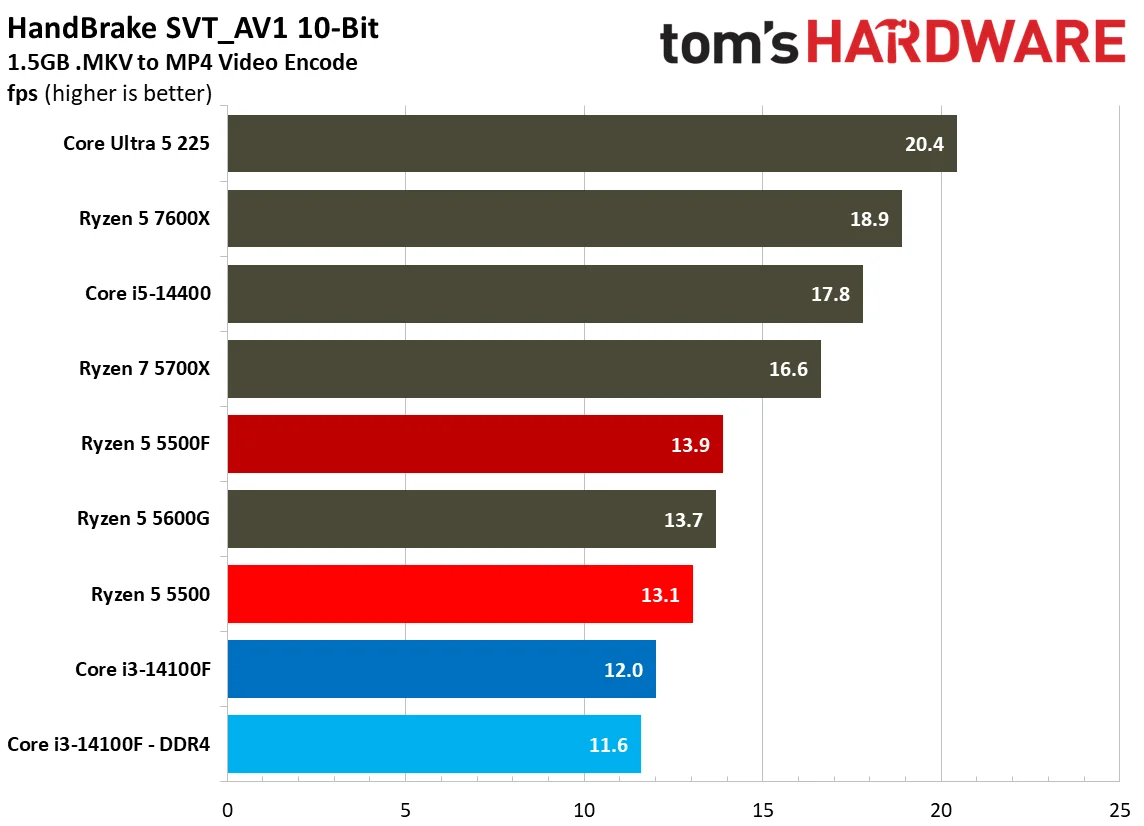
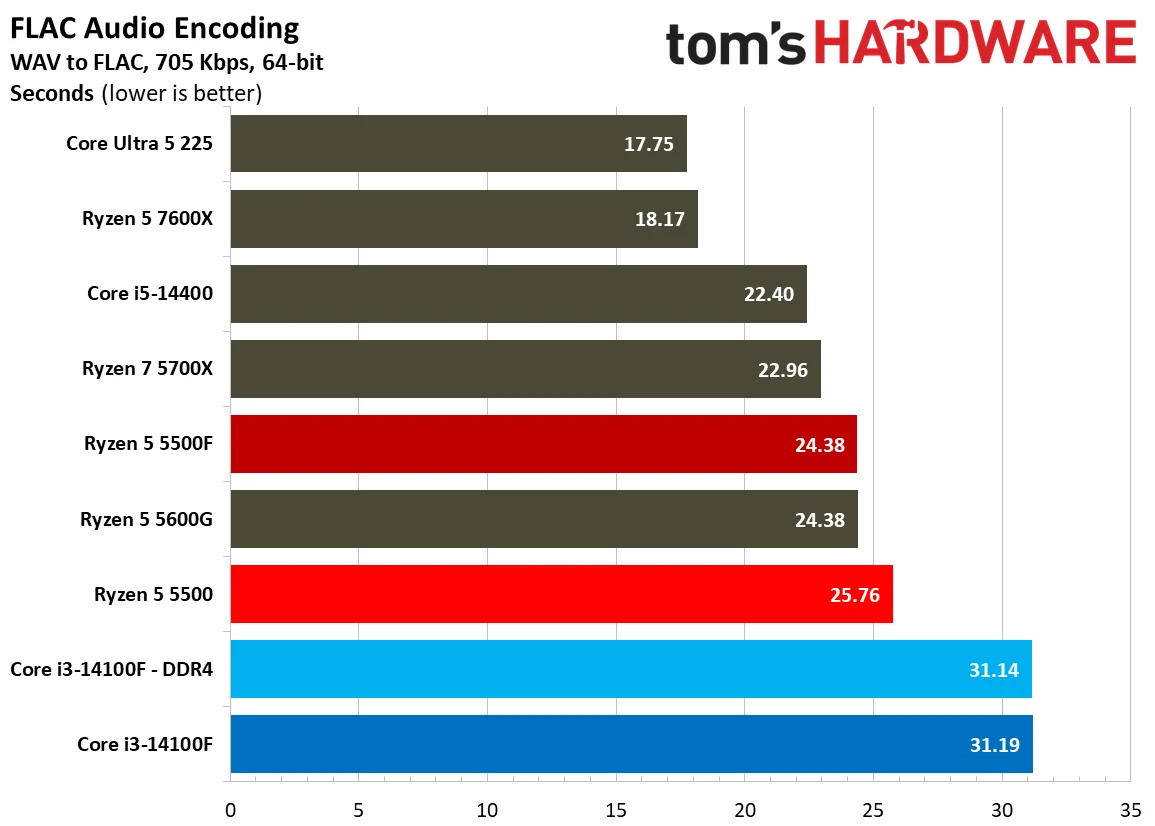
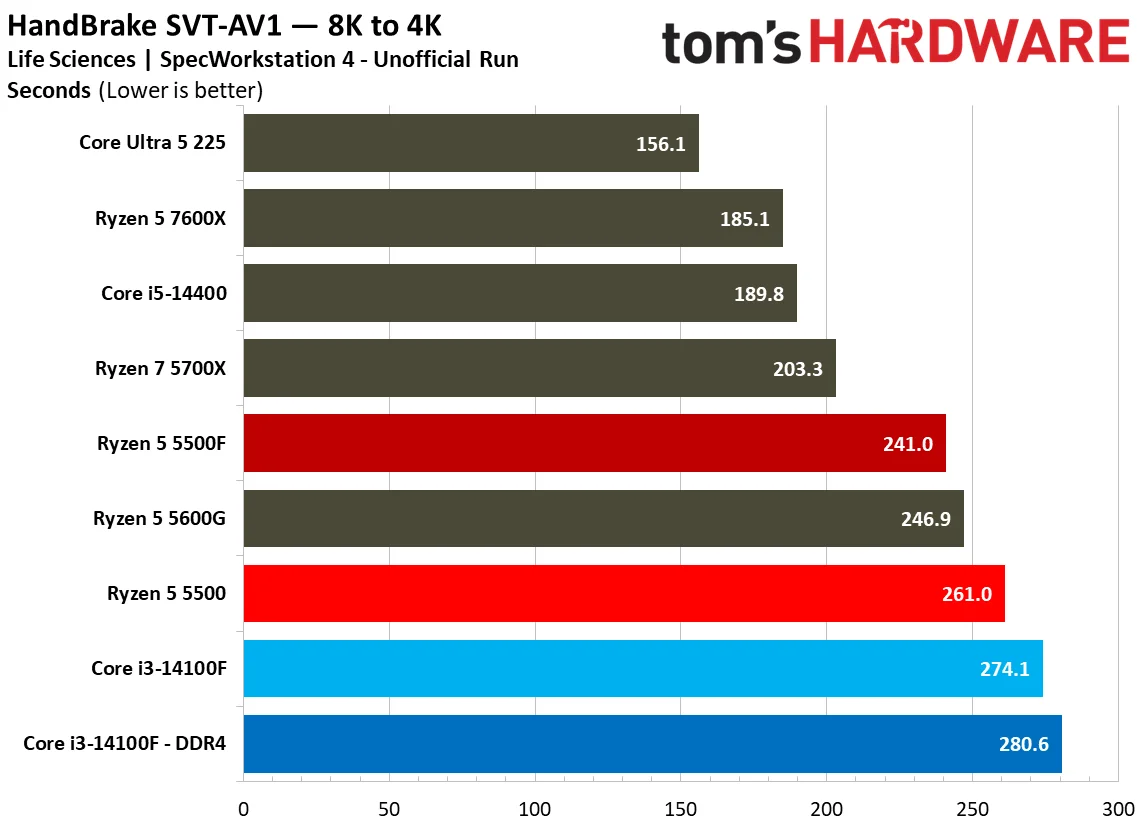
The encoding results show how little the Ryzen 5 5500F gains from its slightly higher clock speed when a workload needs sustained multi-core performance. In HandBrake’s heavier video encodes, it edges out the Ryzen 5 5500 by only a small margin; both struggle alongside the Core i3-14100 and the original 5500. Here, having six cores matters more than that modest frequency bump.
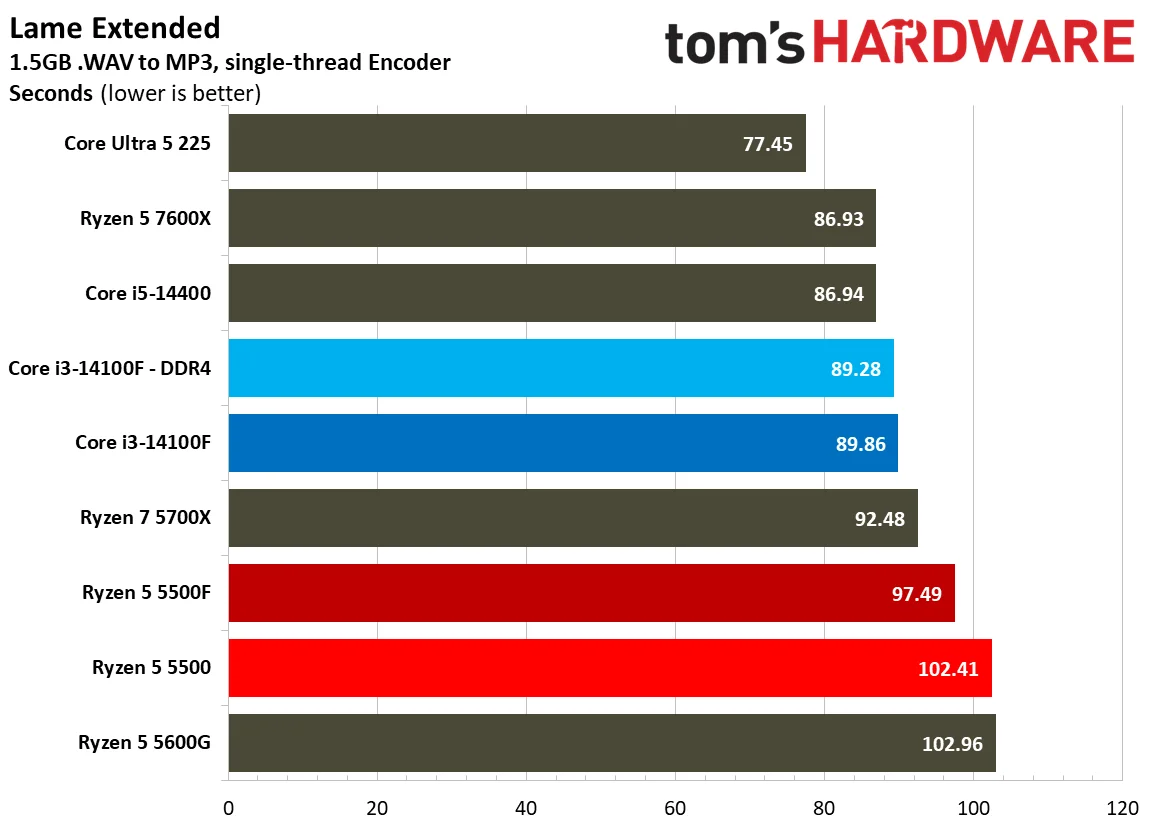
Intel leads in single-threaded LAME encoding, but multi-threaded results are more telling for these processors. The VP9 HandBrake test makes the limits plain: the 5500 finishes one frame per second ahead of the 5500F, while both manage only about 4 FPS. That one-FPS reversal is small, but the low overall throughput is the bigger story.
Creator App Benchmarks
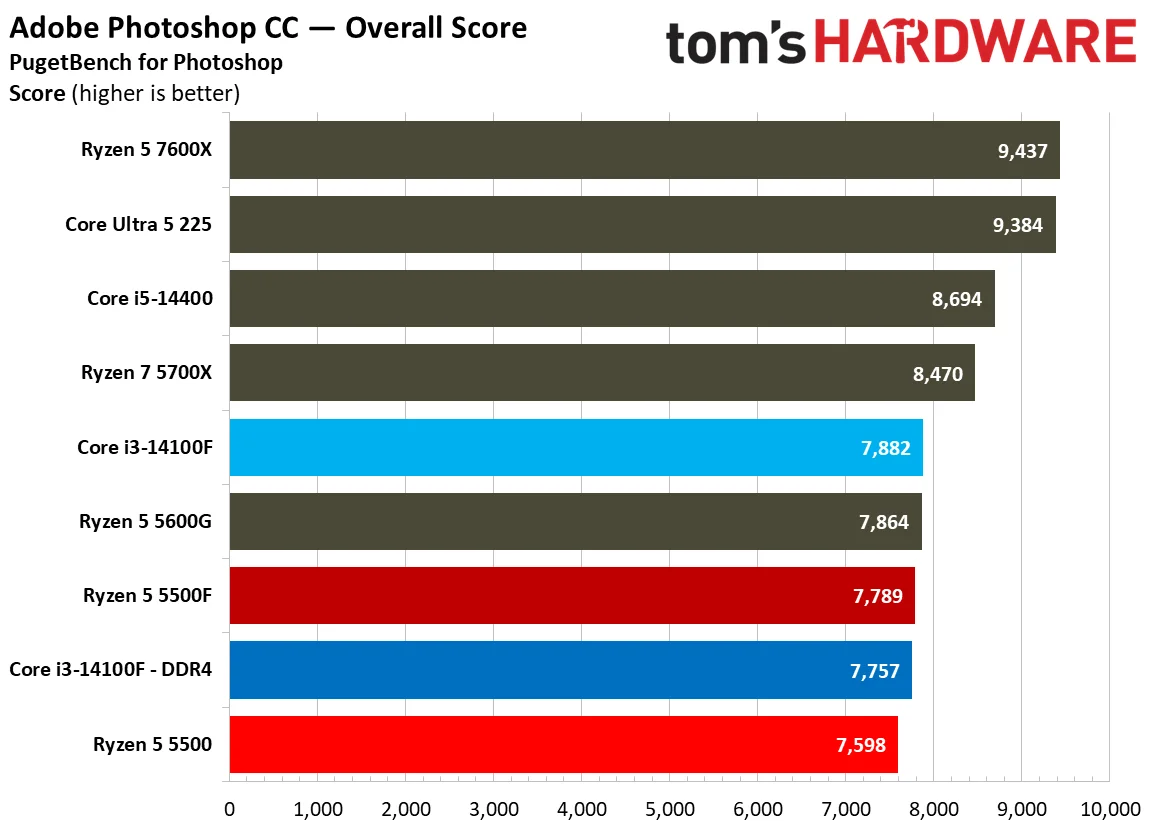
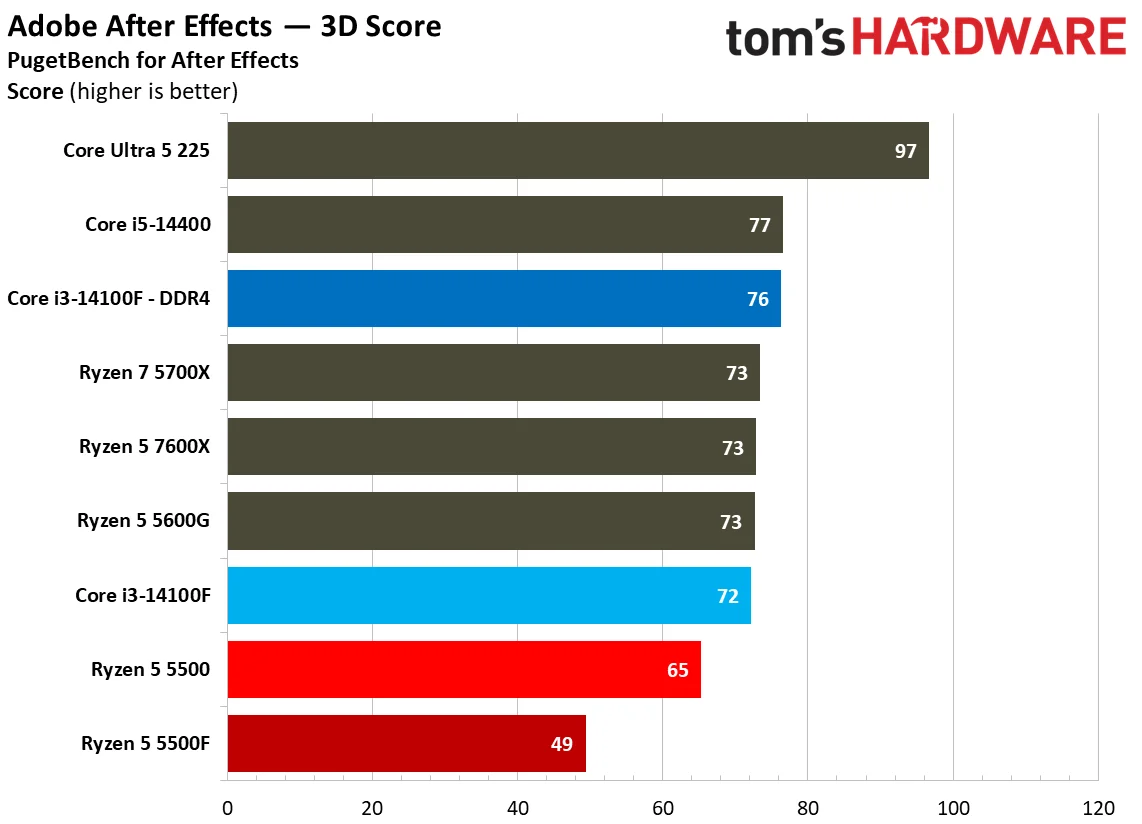
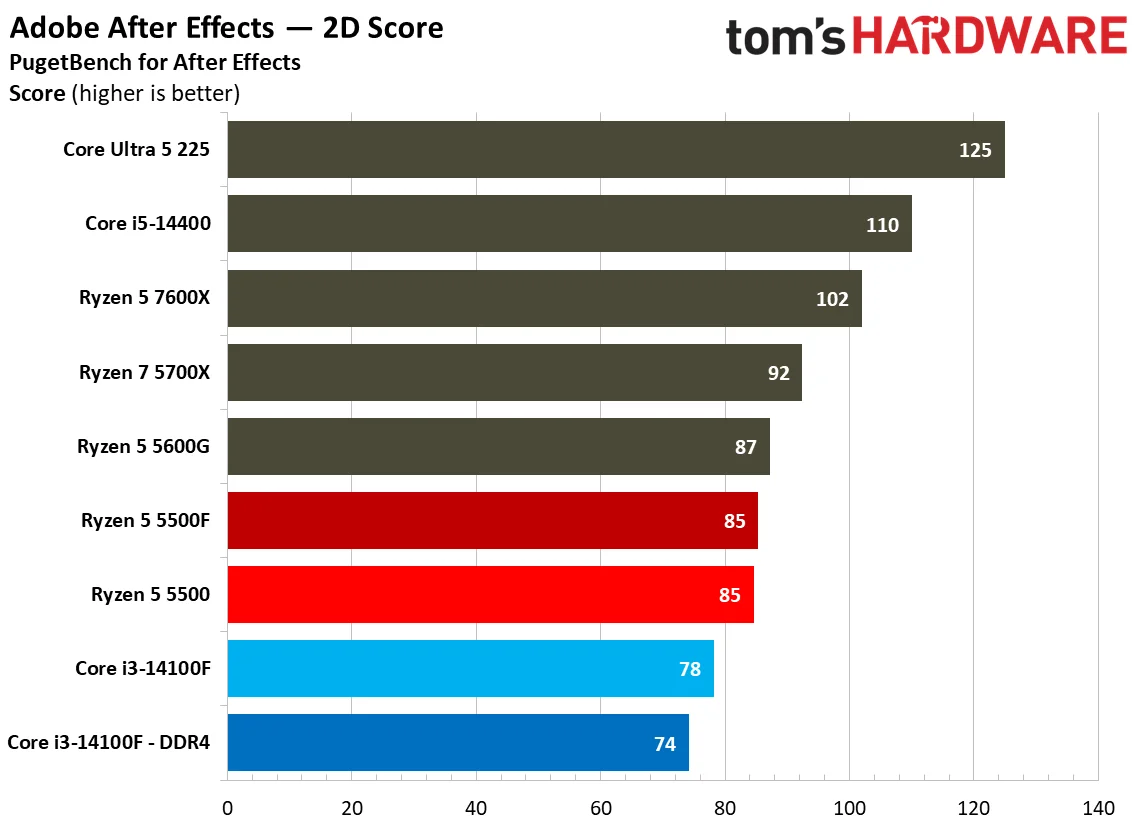
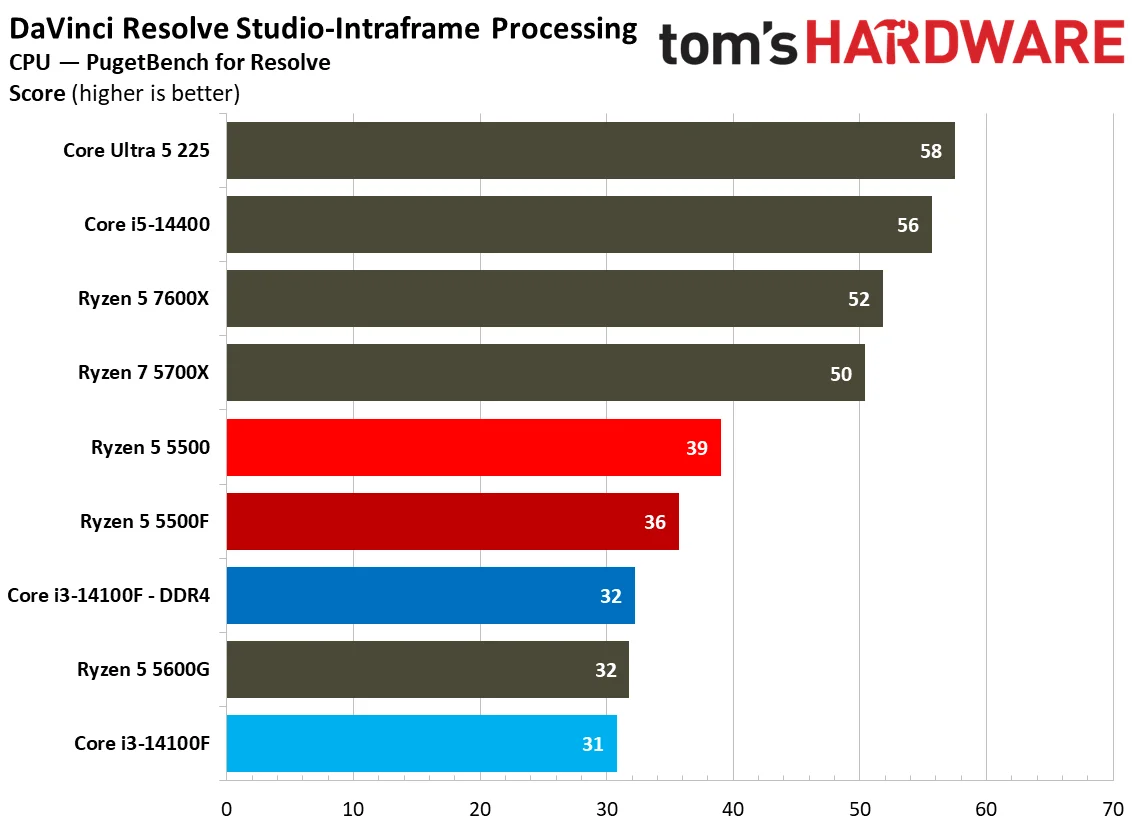
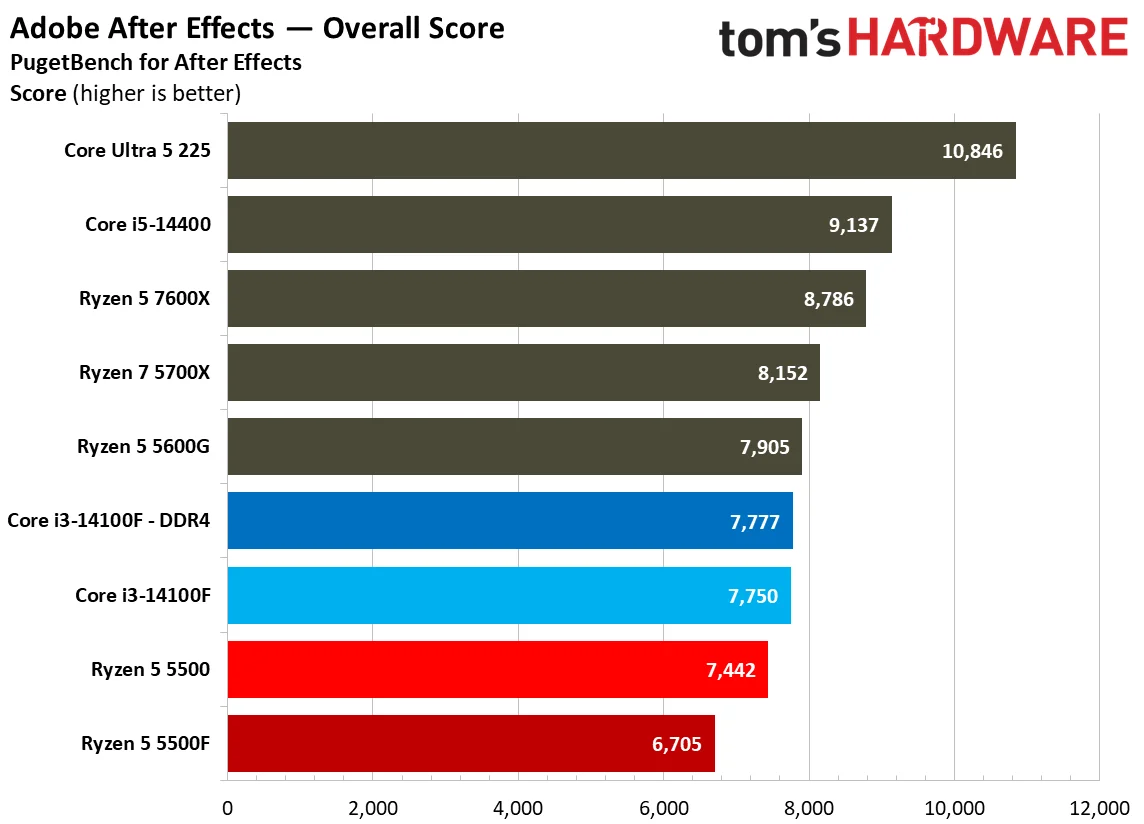
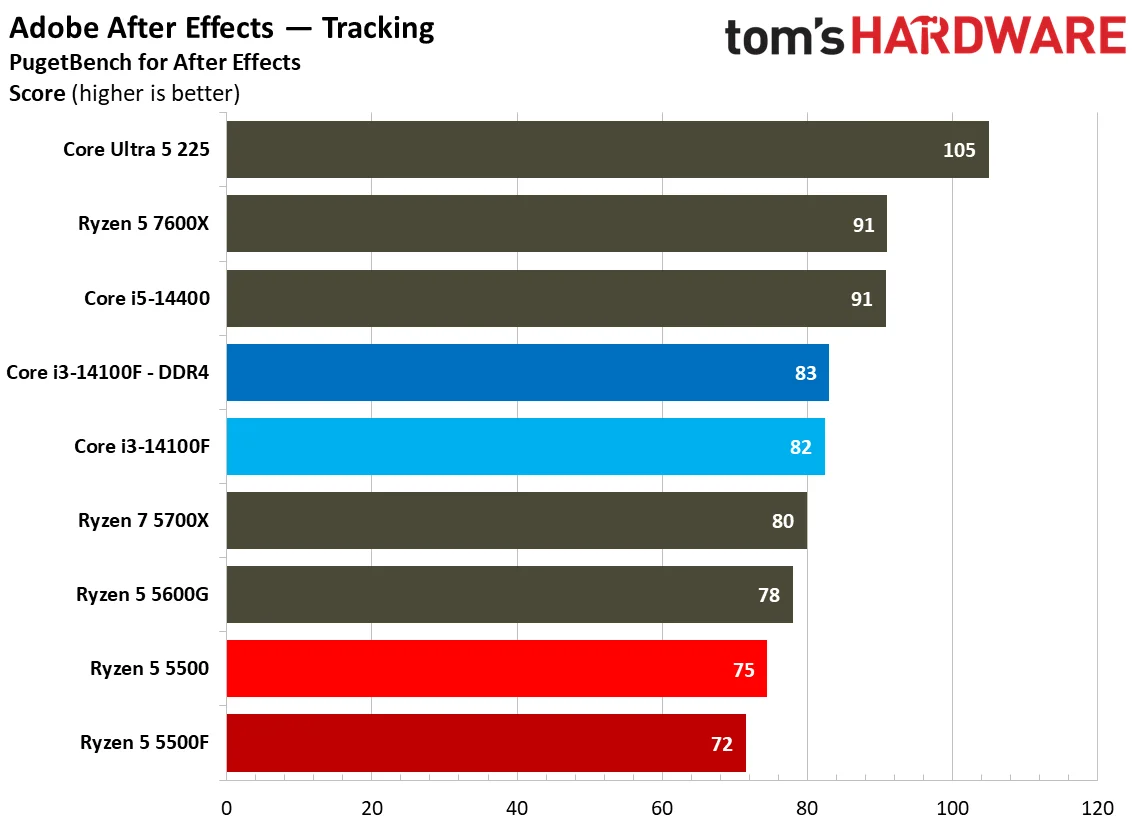
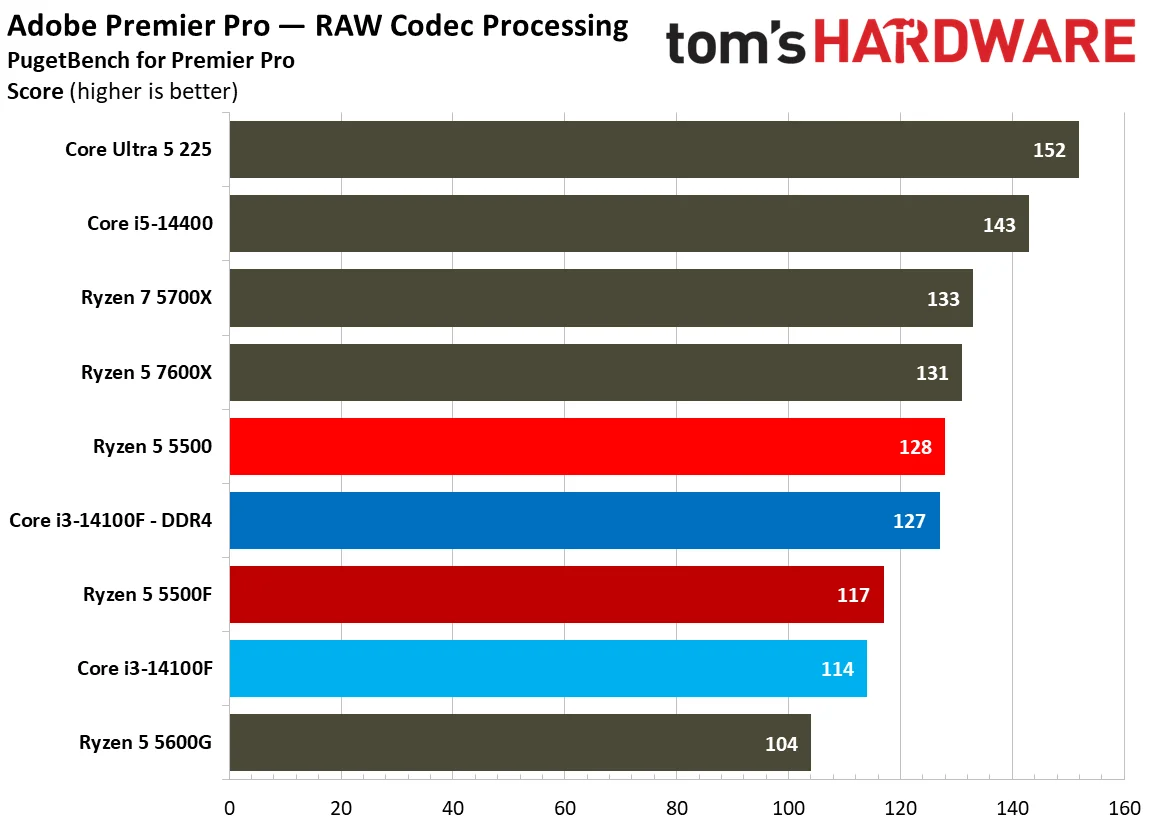
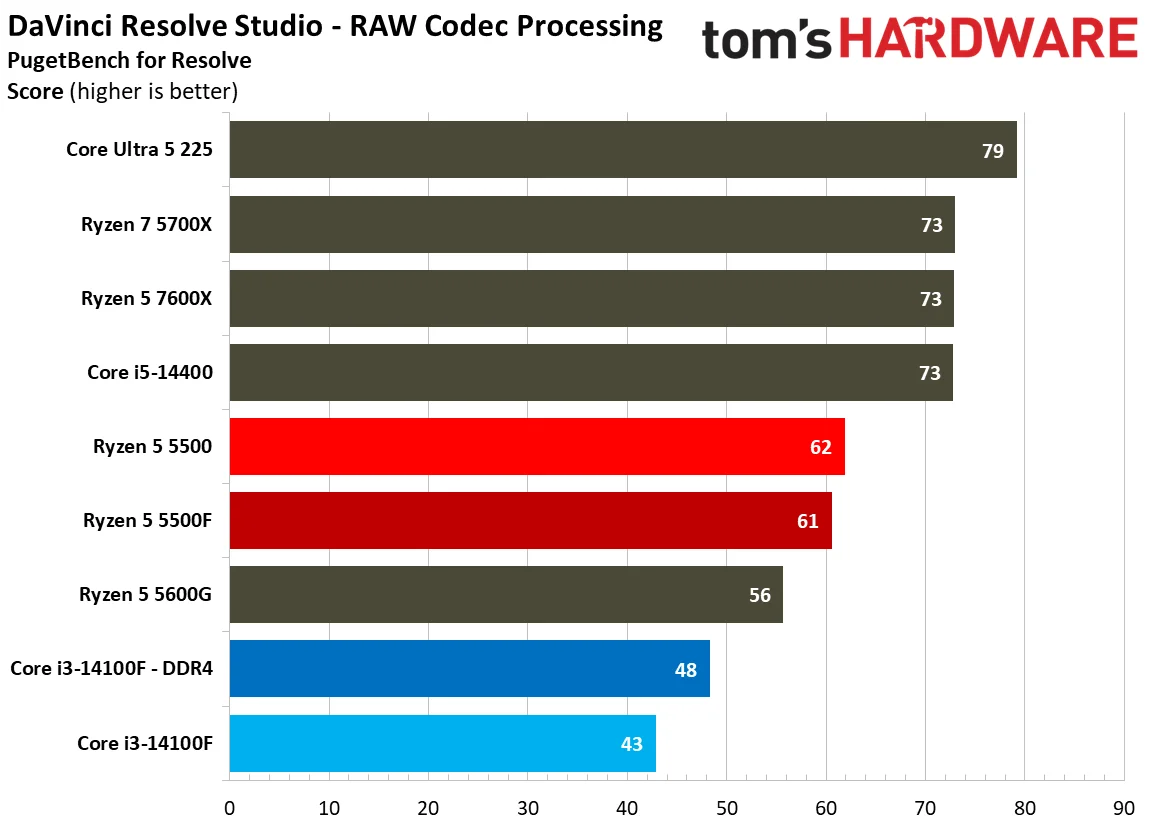
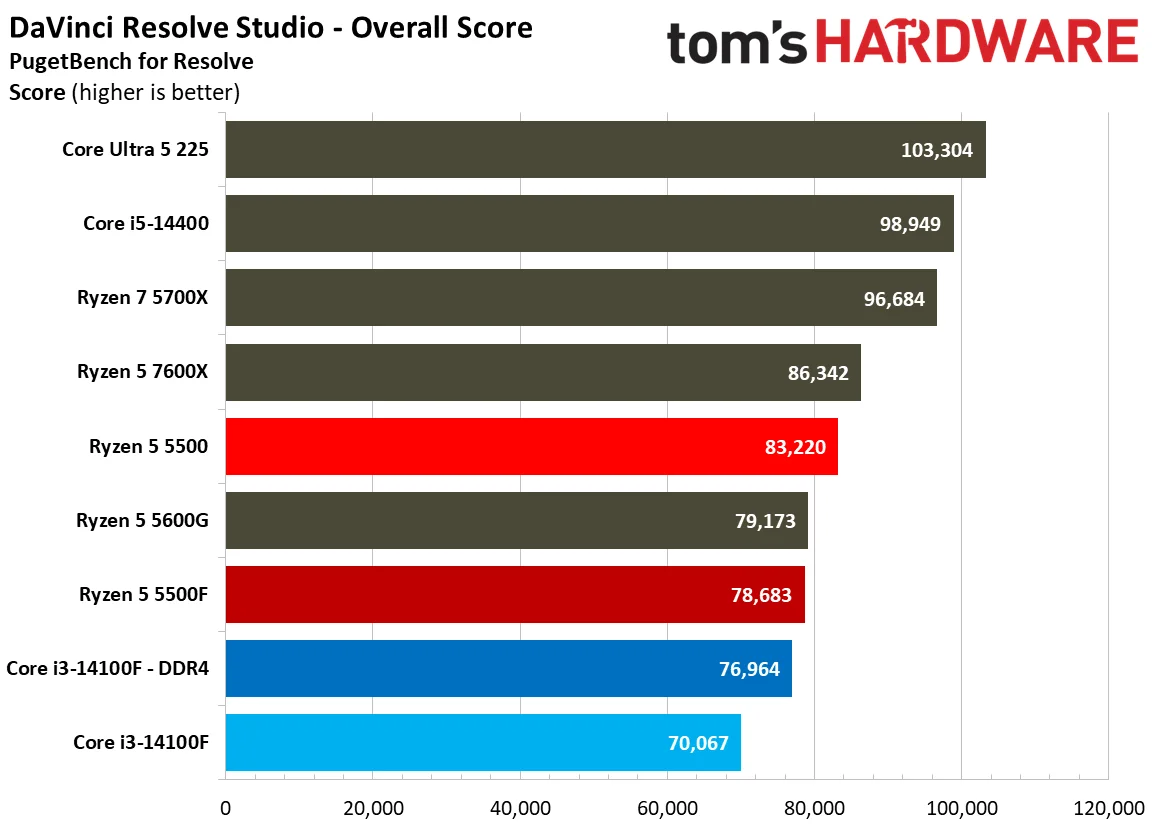
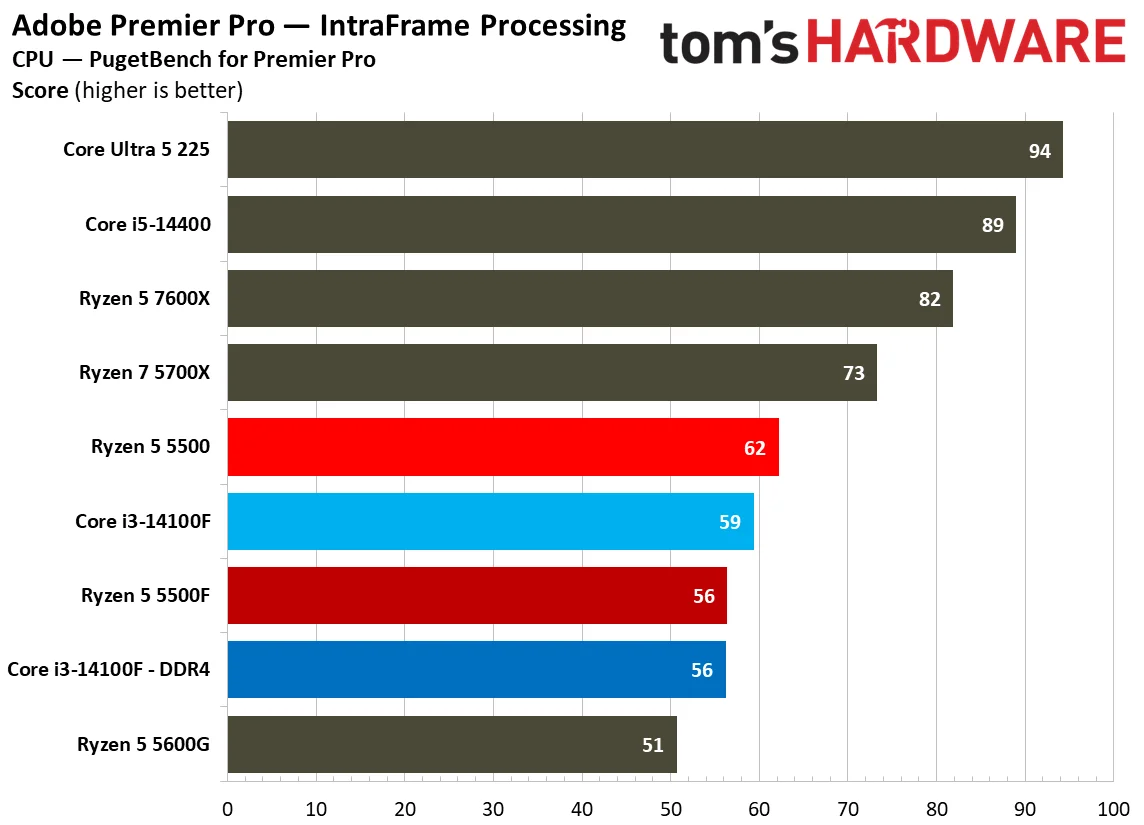
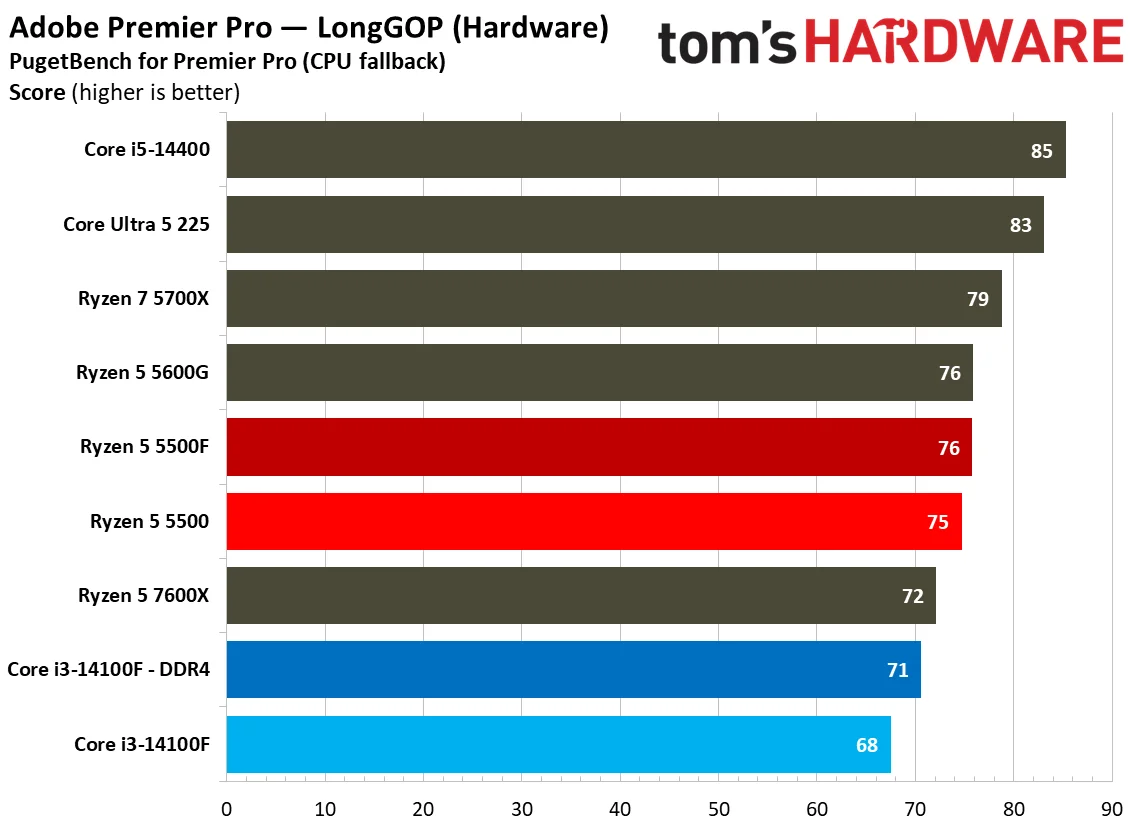
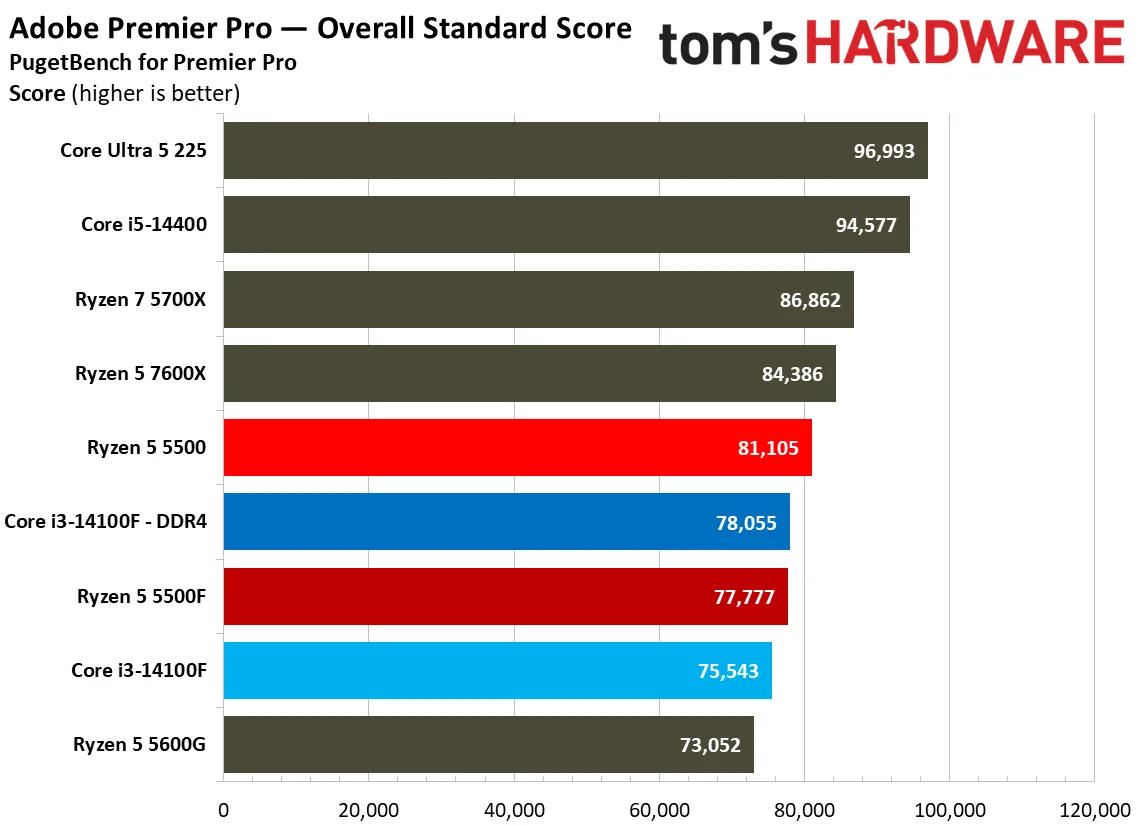
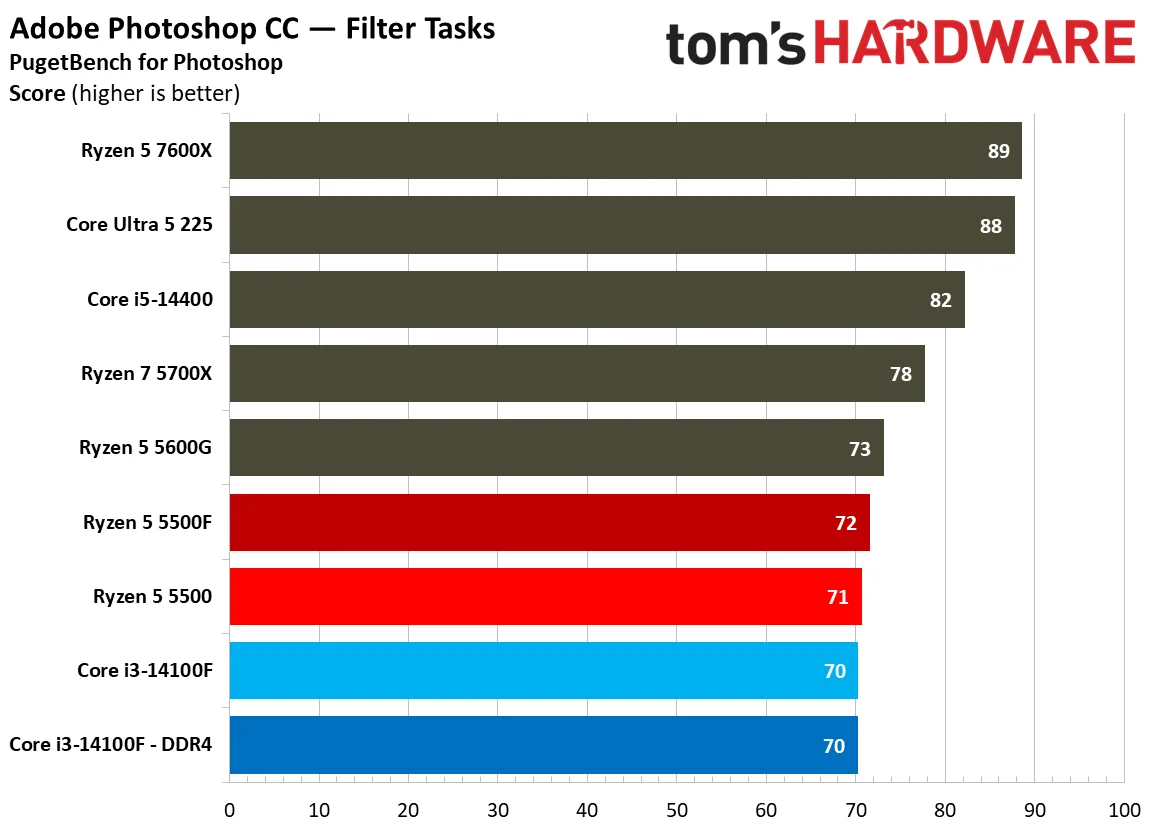
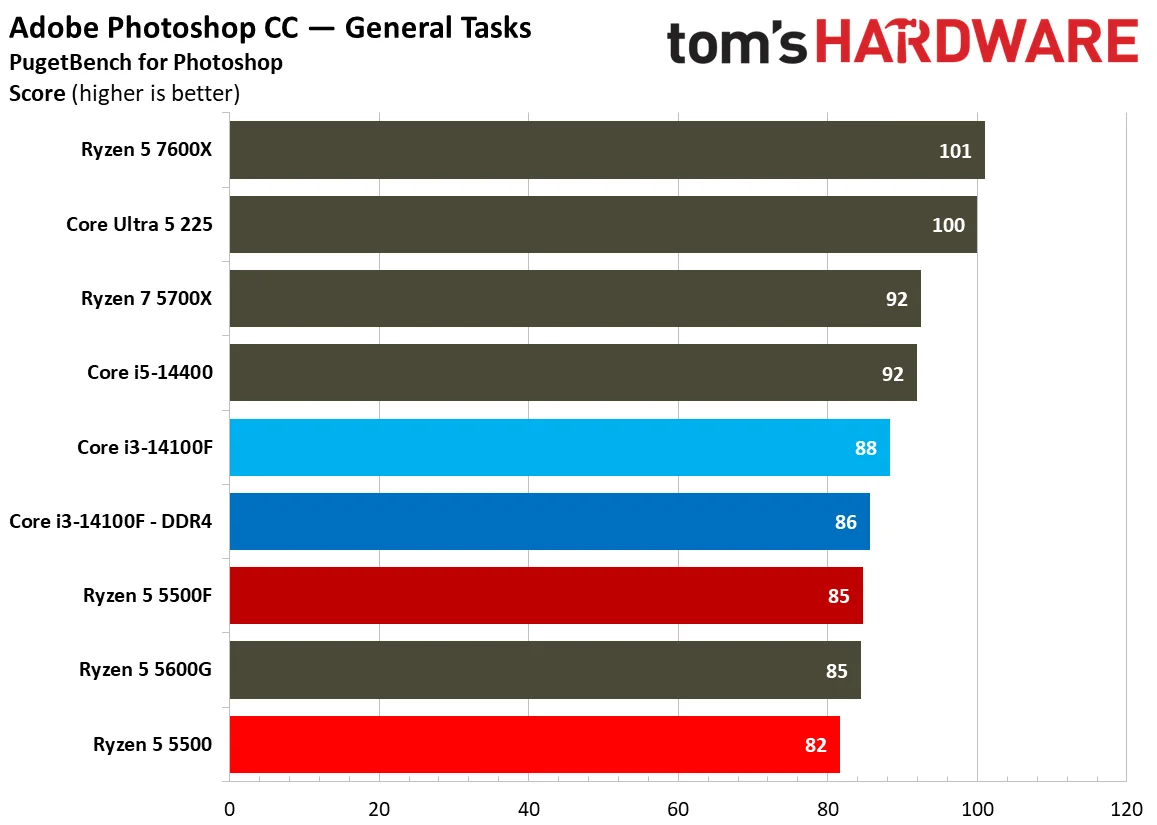
These roughly $100 processors hit clear limits in demanding creative work. The Ryzen 5 5500, 5500F, and Core i3-14100F aren’t strong picks for heavier projects in Resolve or Premiere, or visual effects work in After Effects. Photoshop also exposes a ceiling across all three chips. The DDR5 version of the 14100F runs into the same bottleneck as its DDR4 counterpart, though the test results don’t establish whether the cause is the same for each processor.
Web and Office Benchmarks
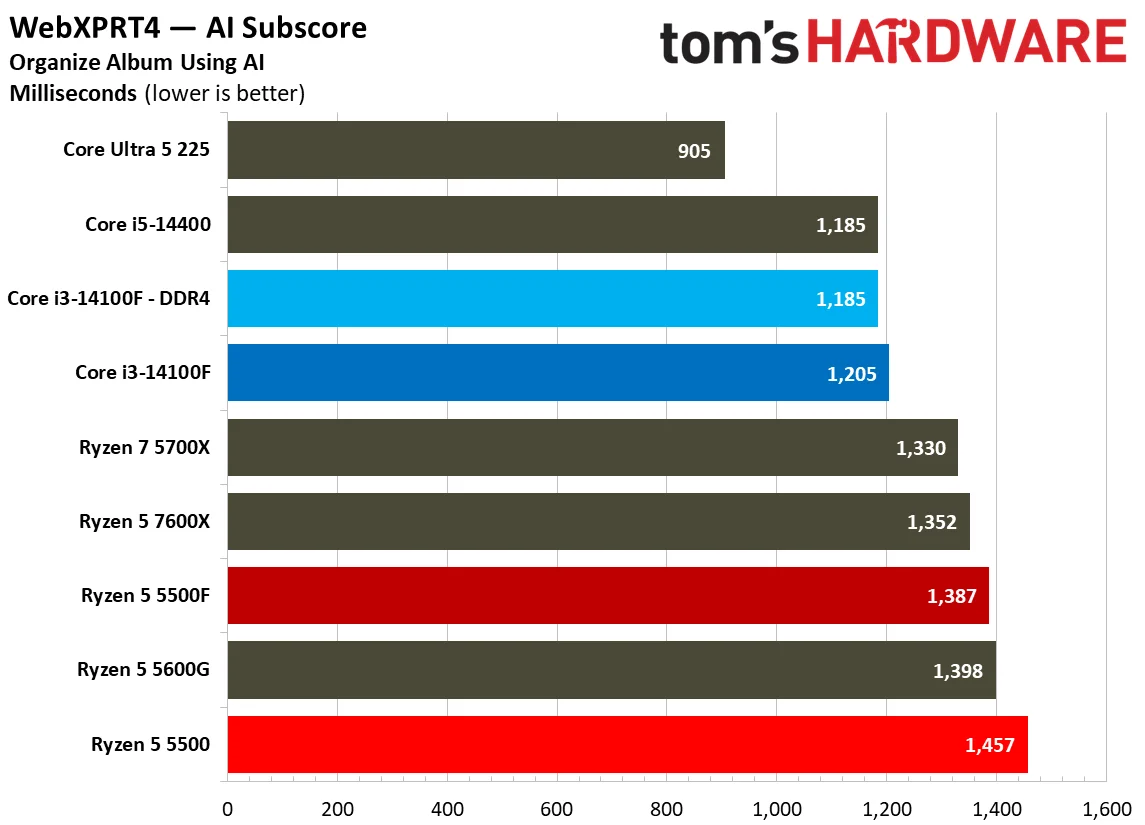
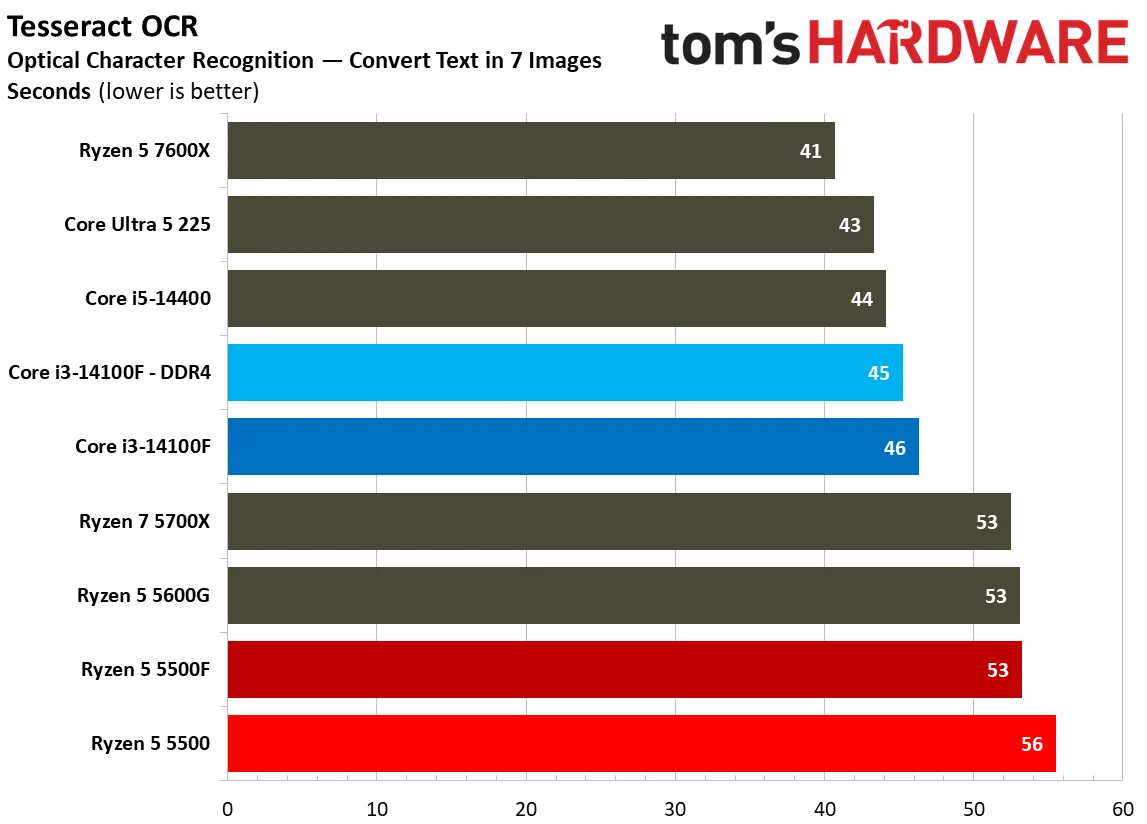
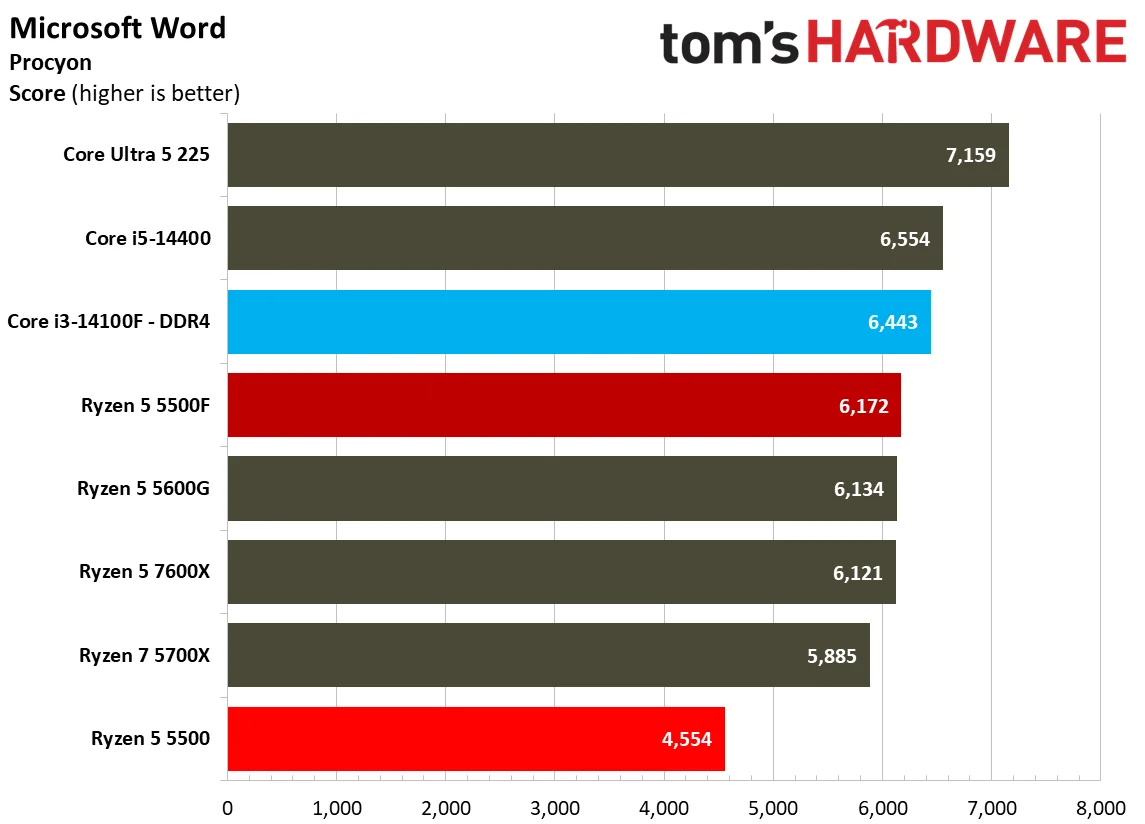
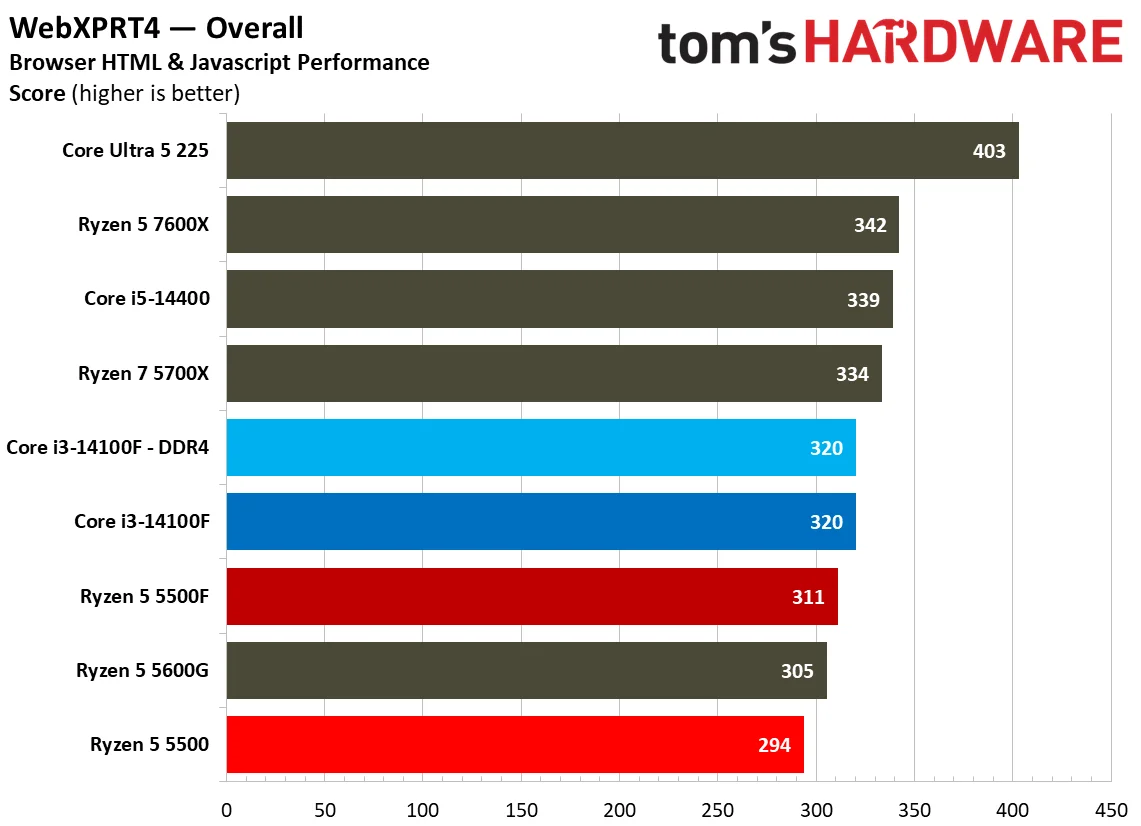
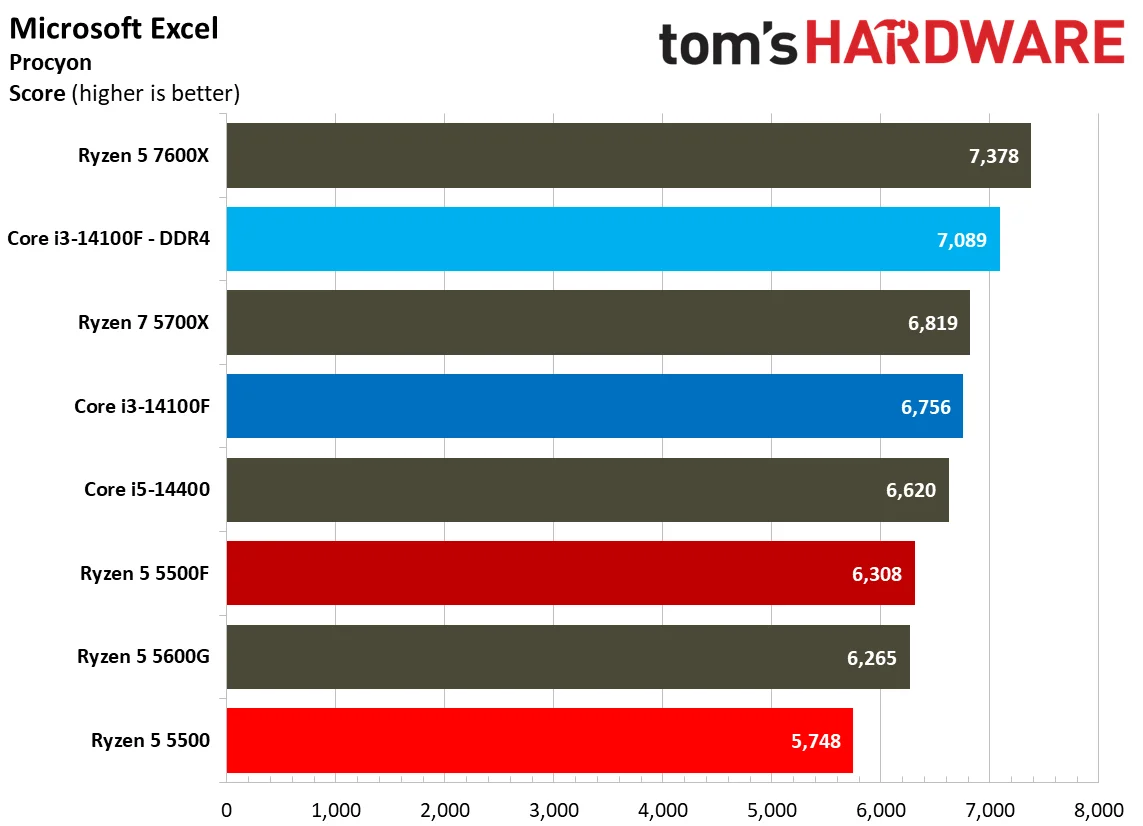
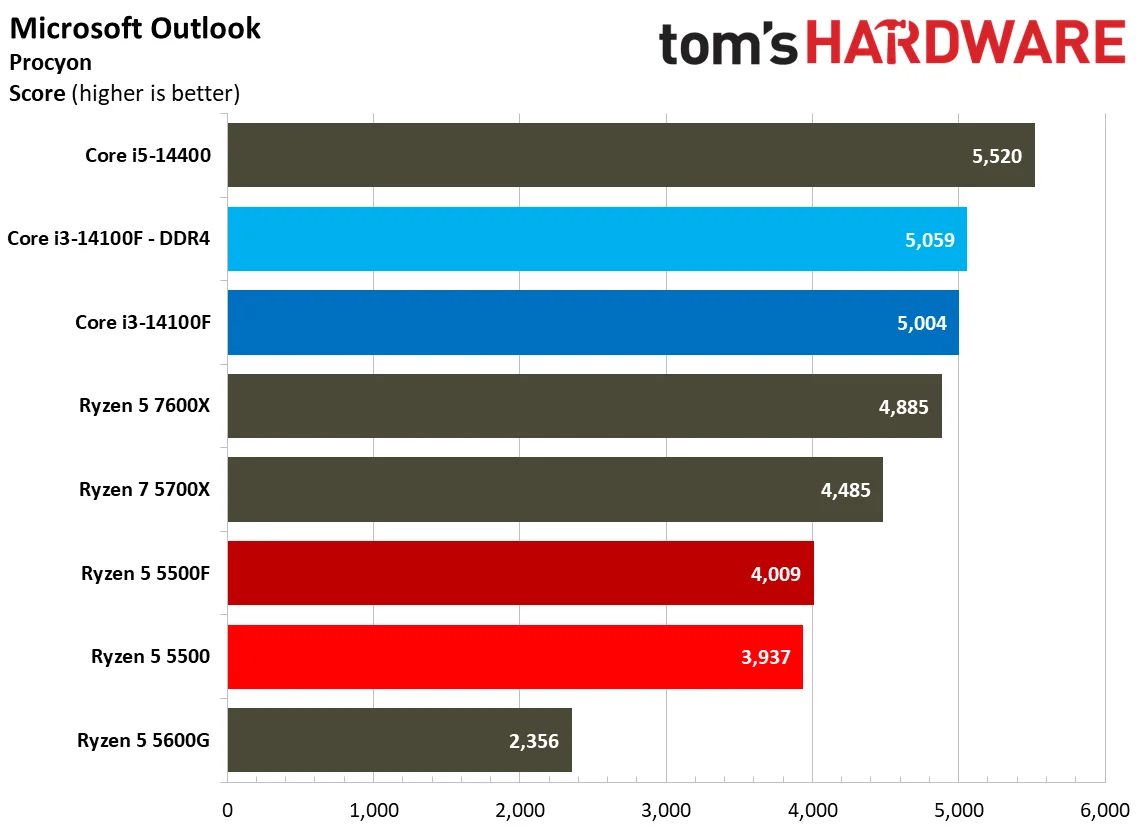
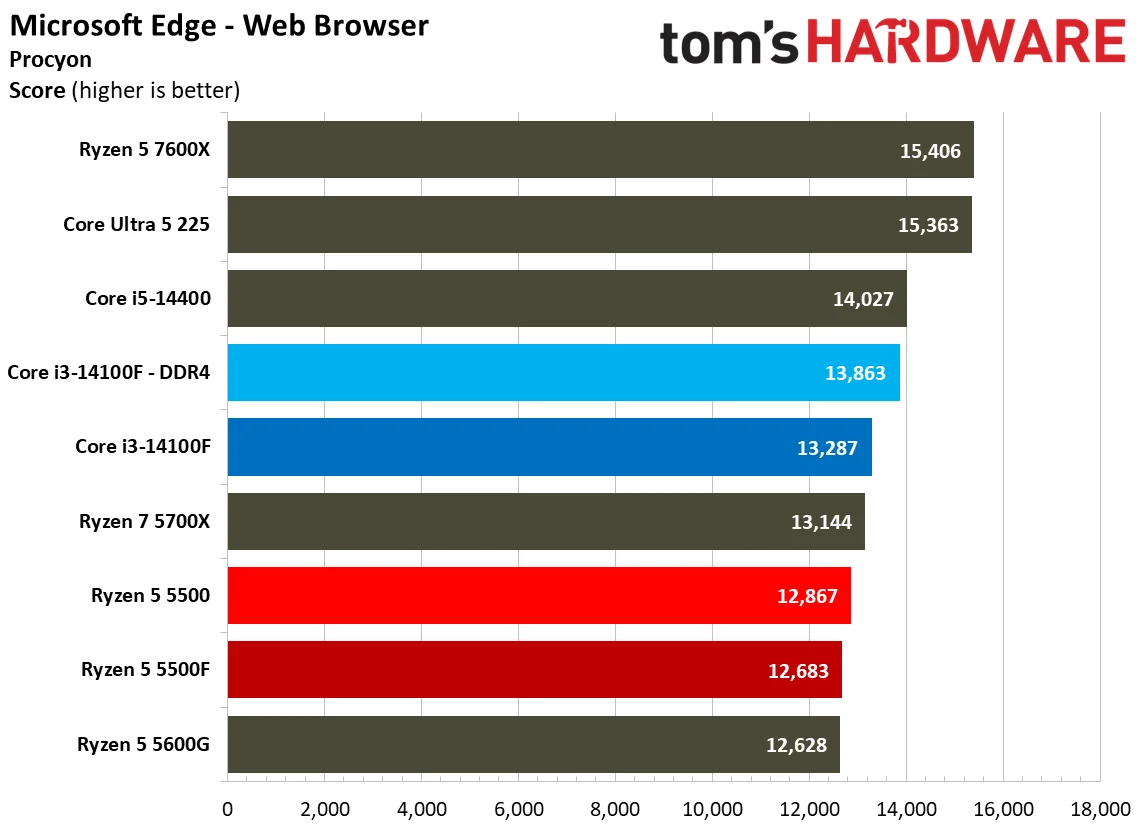
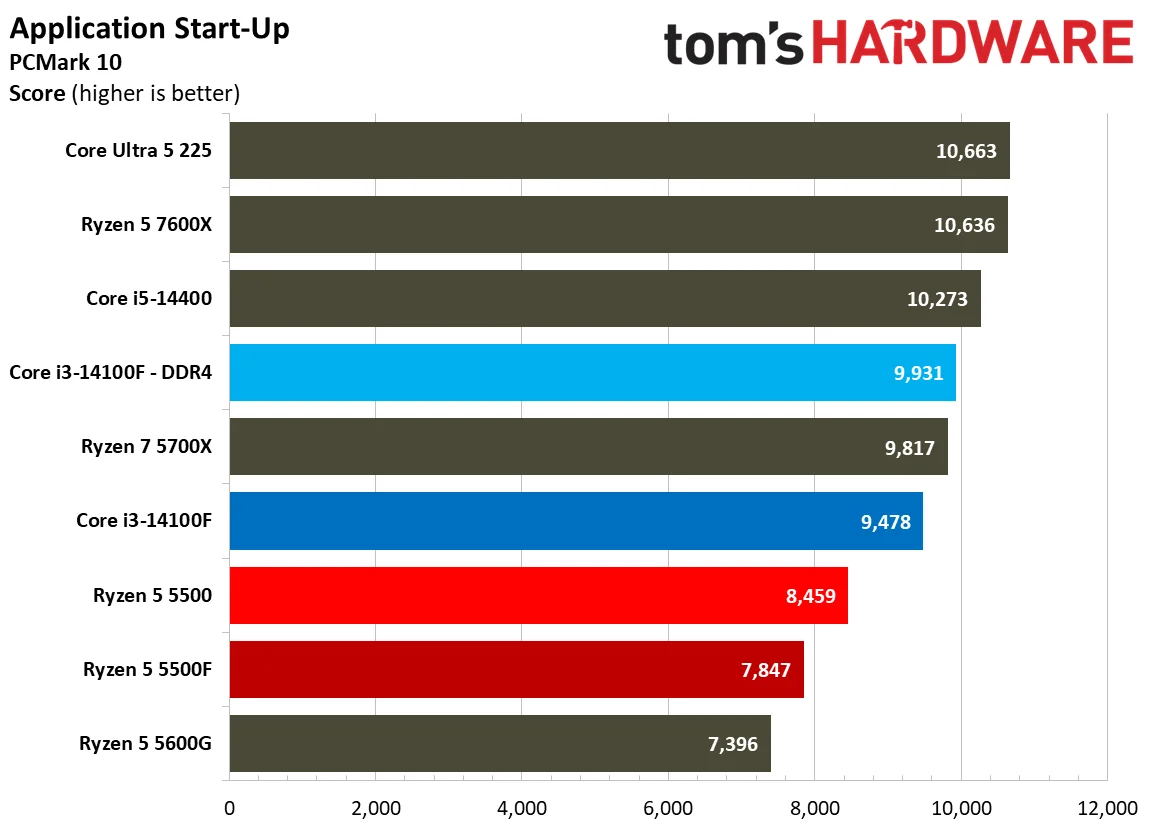
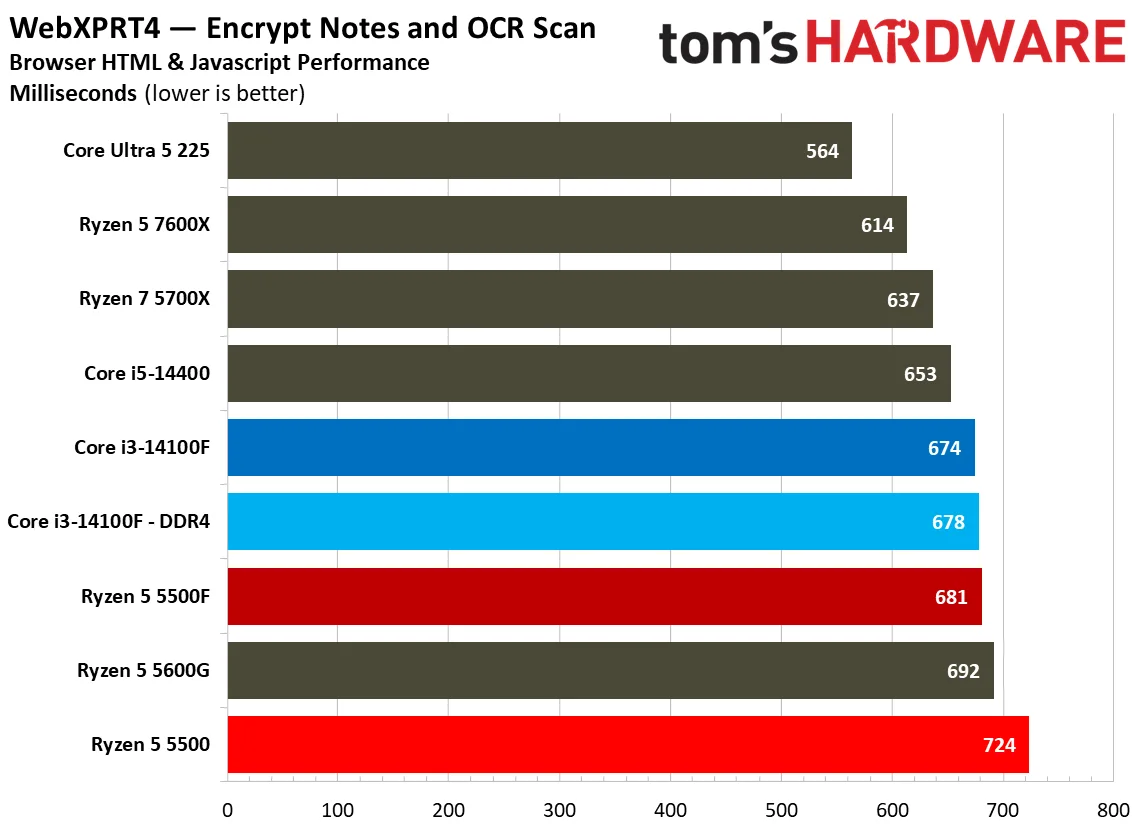
For everyday browser and office tasks, the 5500F narrows the gap with Intel, though Intel still leads overall in these tests. WebXPRT and Procyon show little separation among the processors discussed here. The more useful differences appear in specific Office apps.
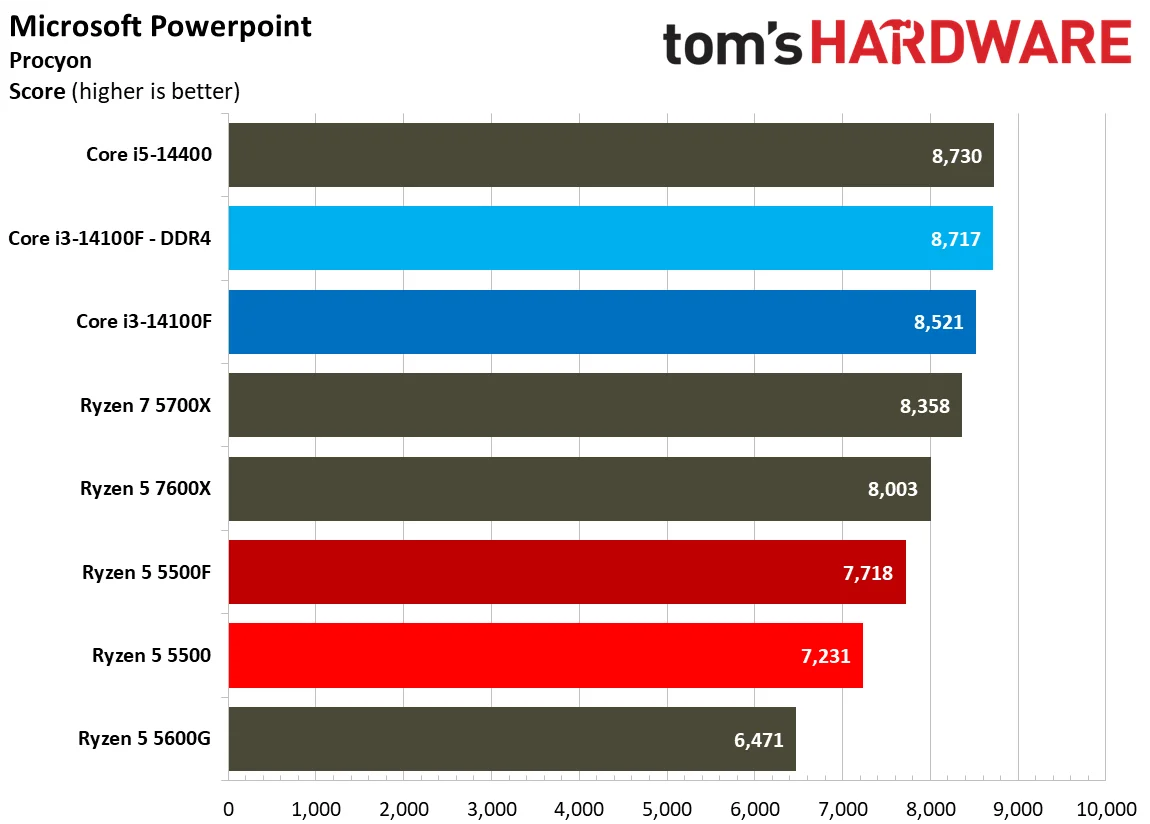
The 5500F beats the 5500 by 9.7% in Excel, 35% in Word, and 6.7% in PowerPoint. That Word result brings it close to the Core i3-14100F. The original Ryzen 5 5500 was weak in these applications even for a budget chip; the 5500F’s gains make AMD’s entry level option more competitive. If your work is mostly documents and spreadsheets, that’s a more relevant result than its showing in heavy creative software.
Chess Engines, Compilation, Compression, AVX, and Other Benchmarks
A few specialized tests tell a different story
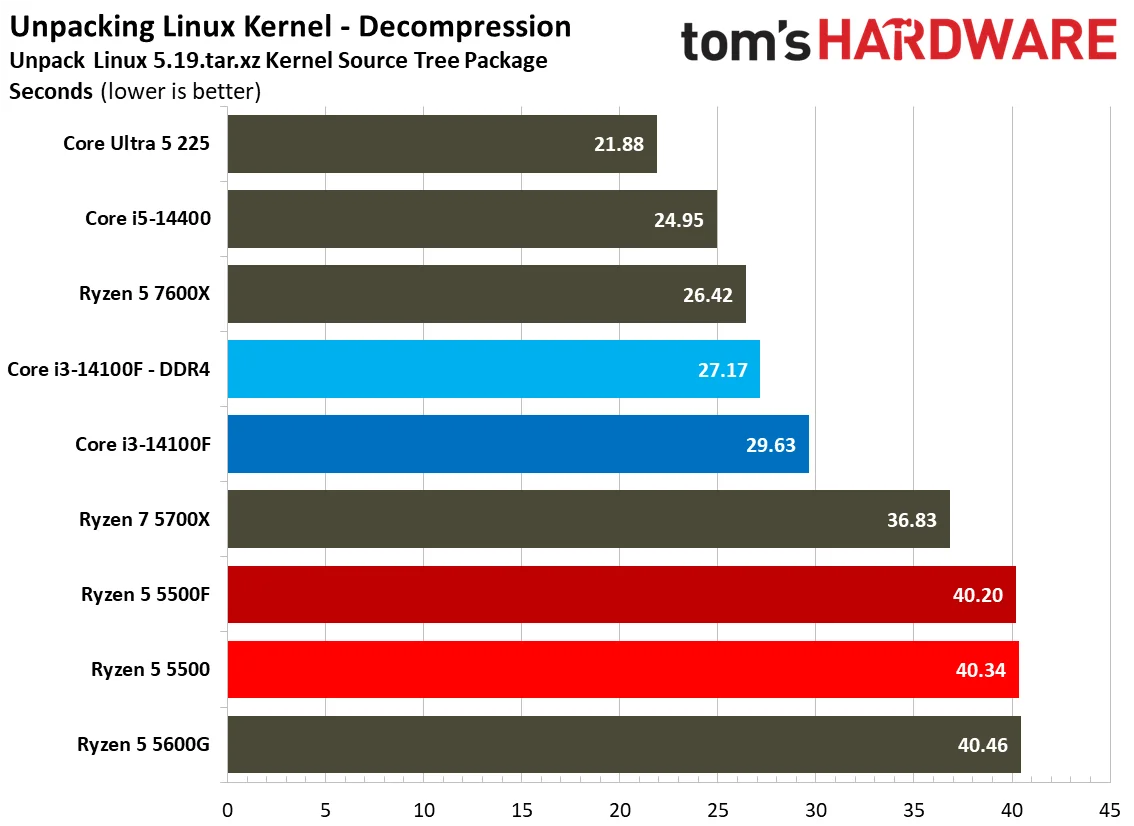
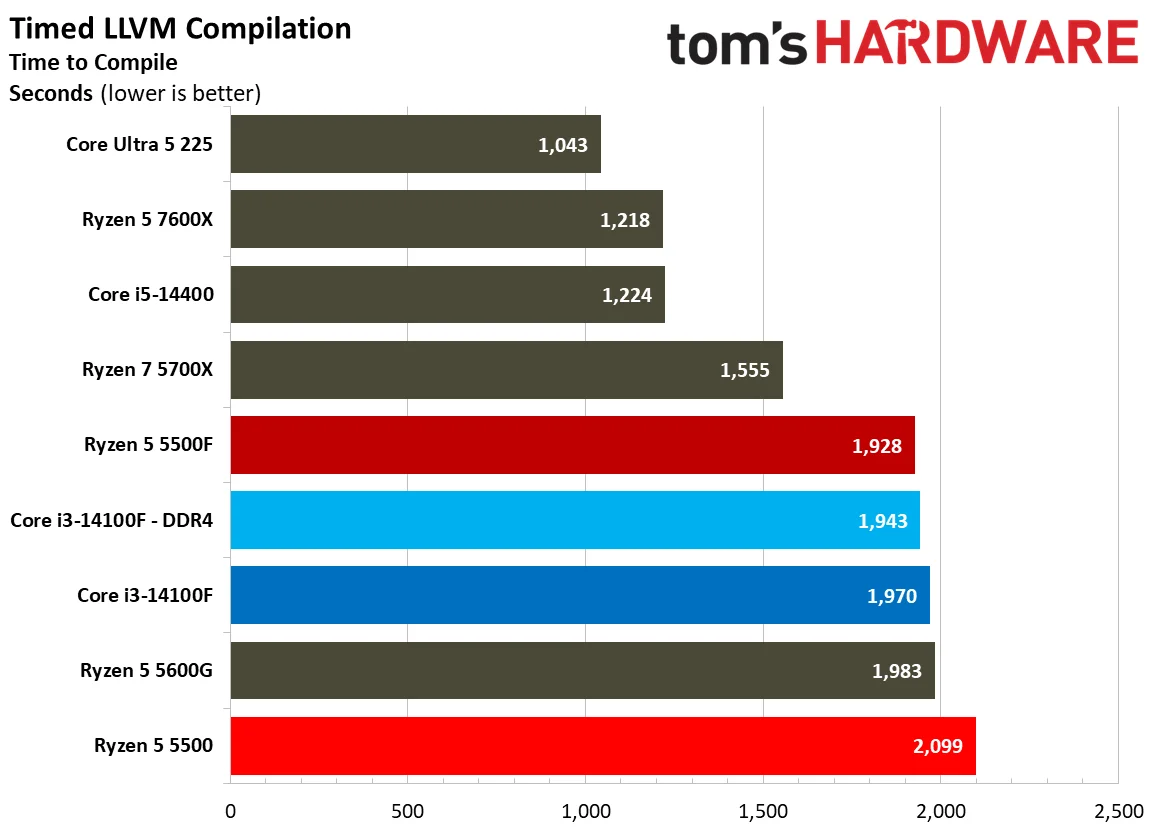
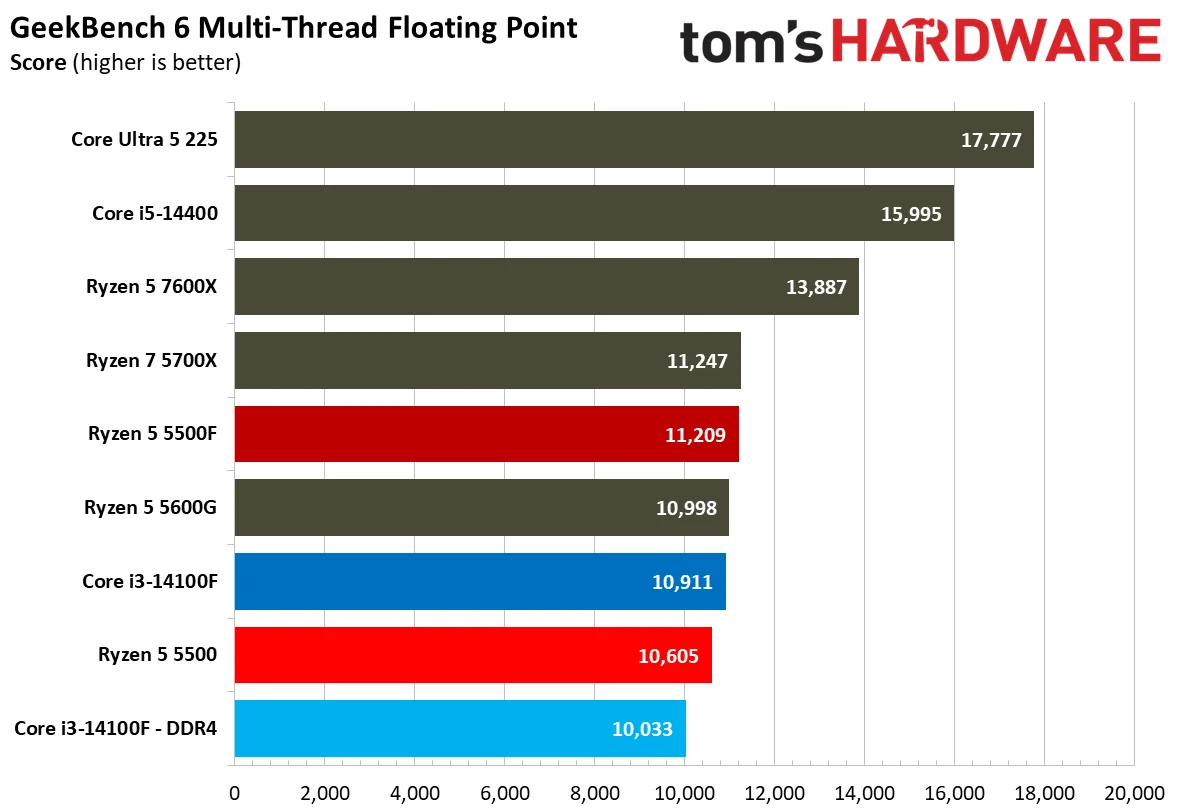
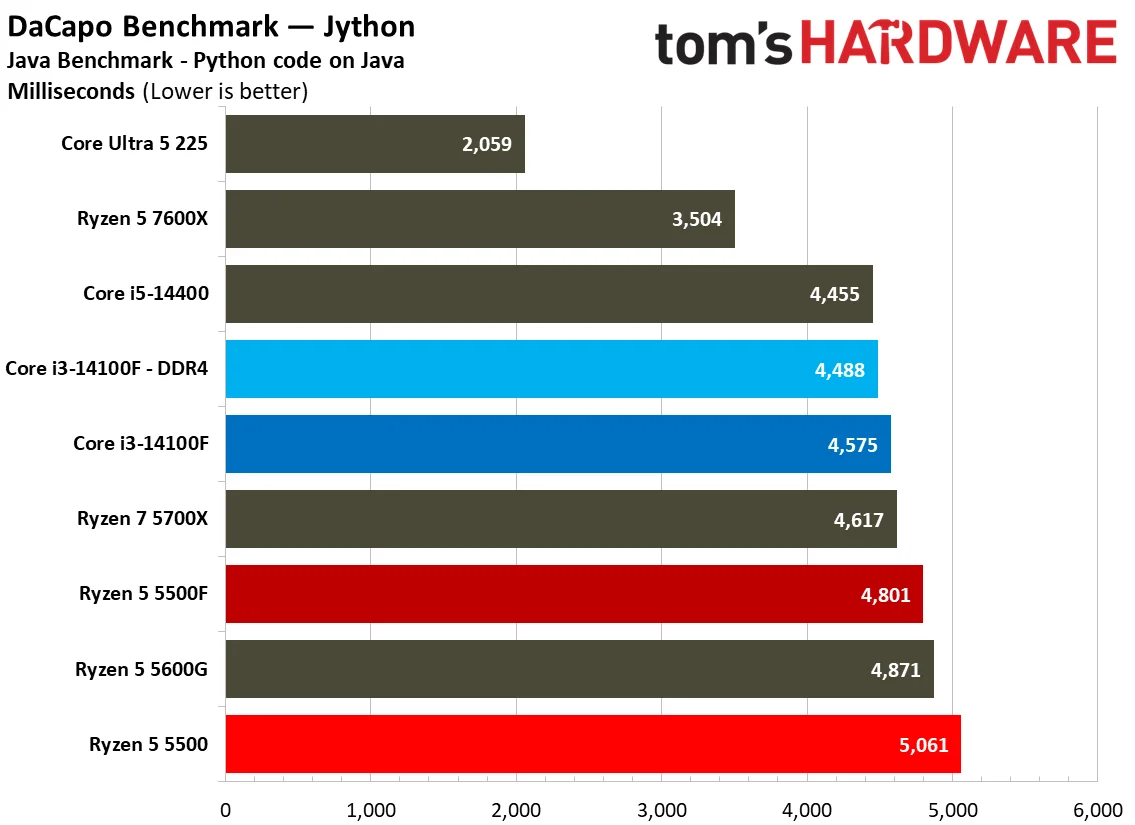
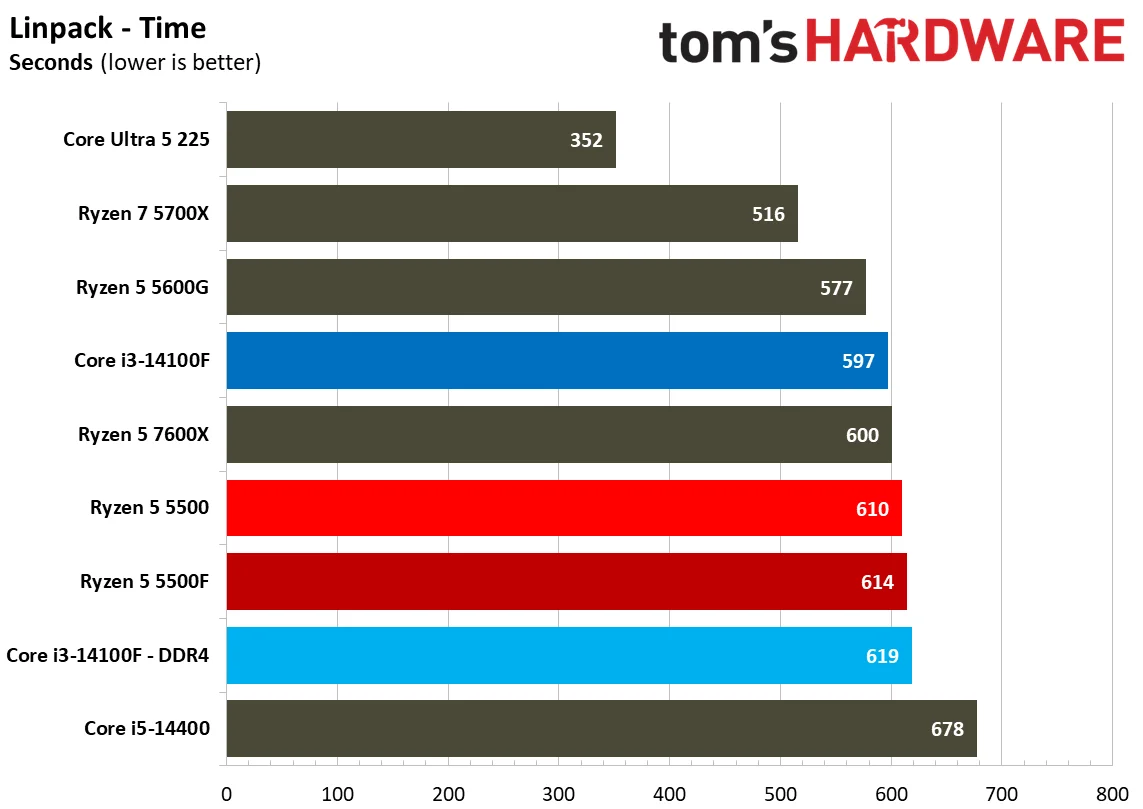
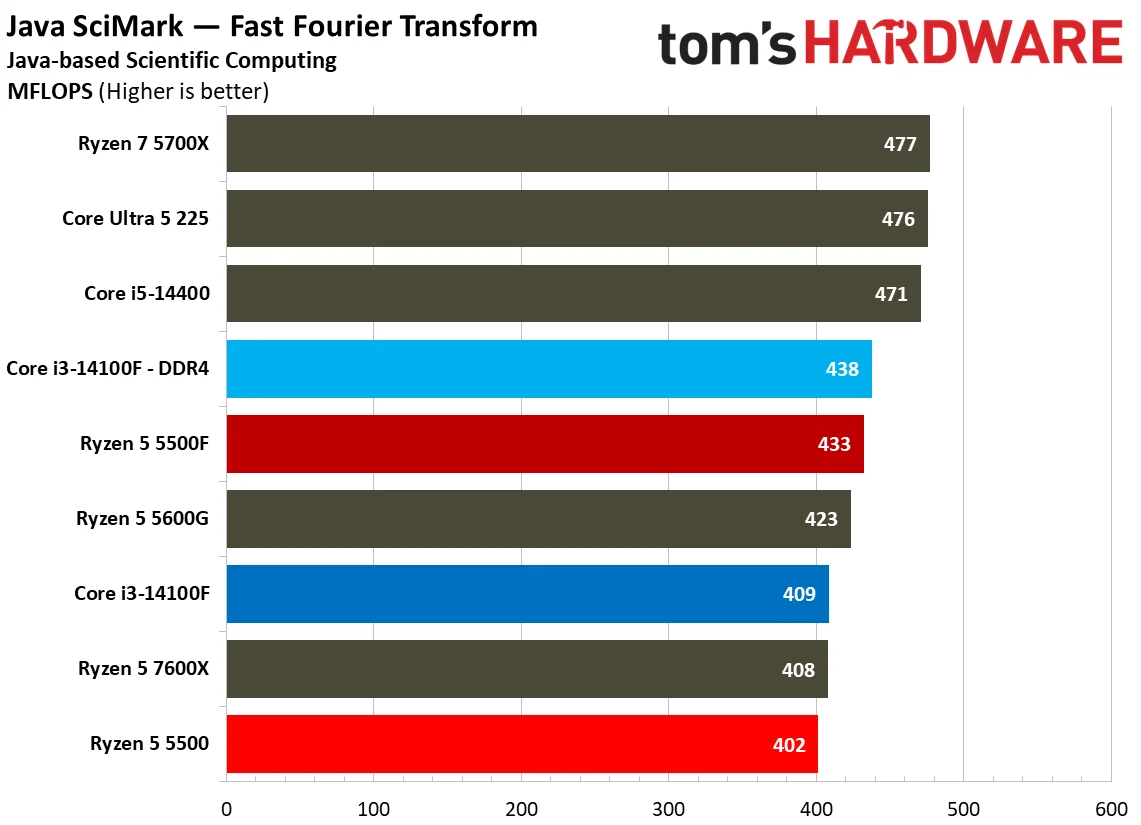
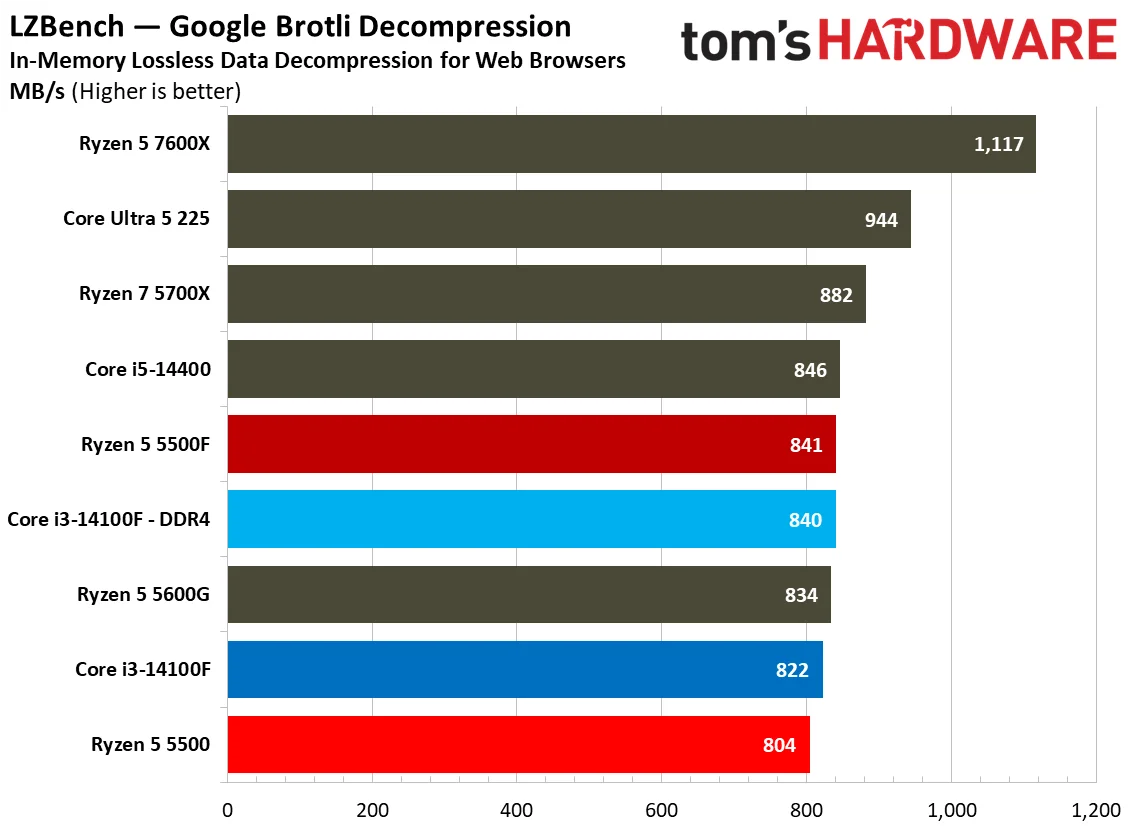
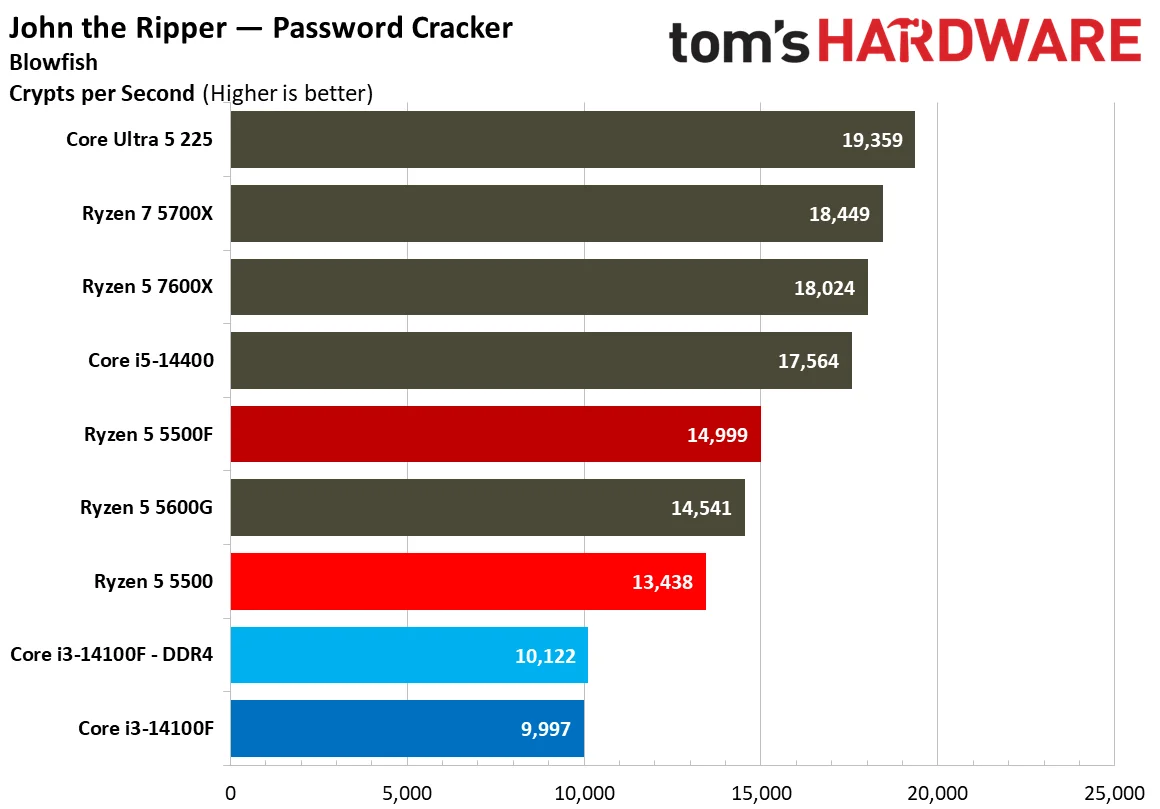
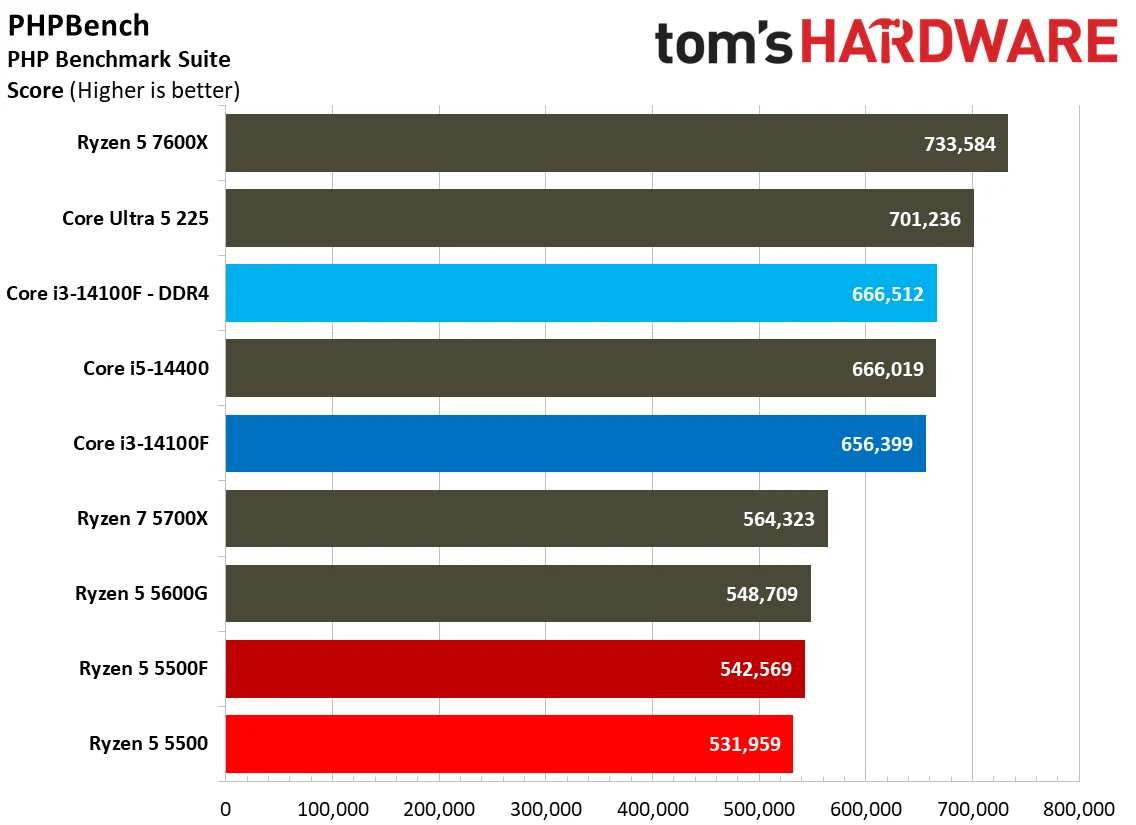
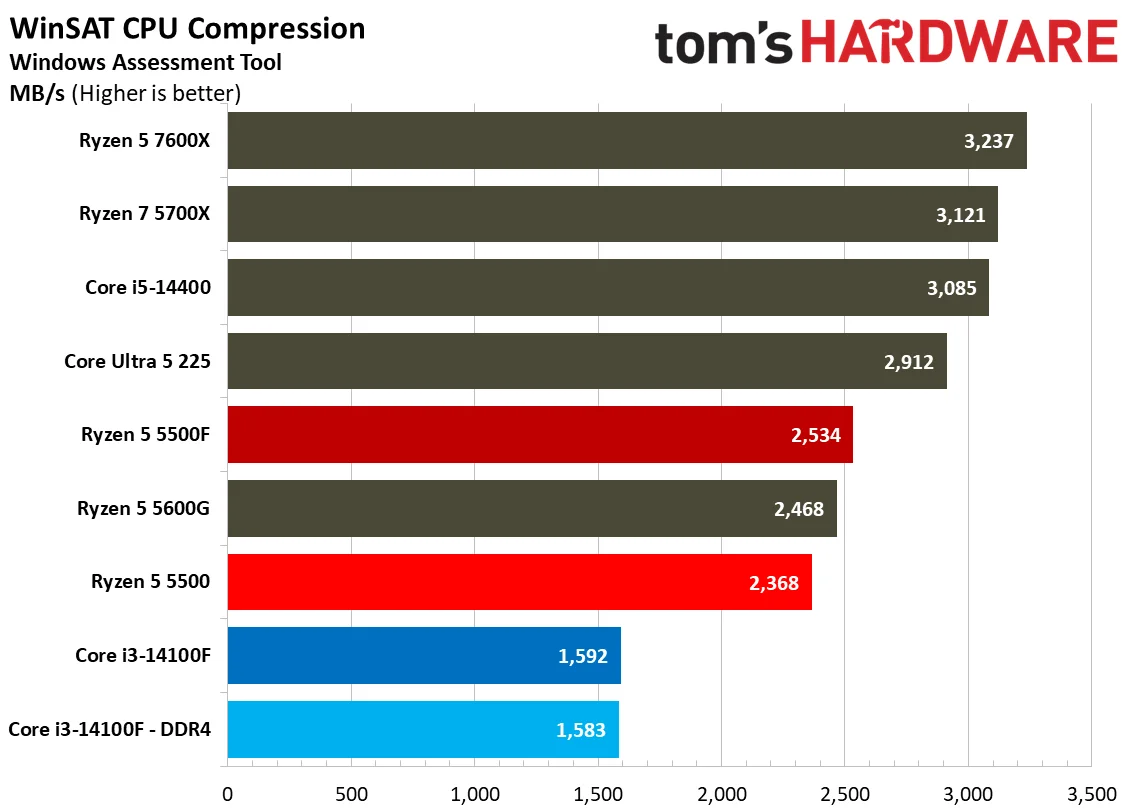
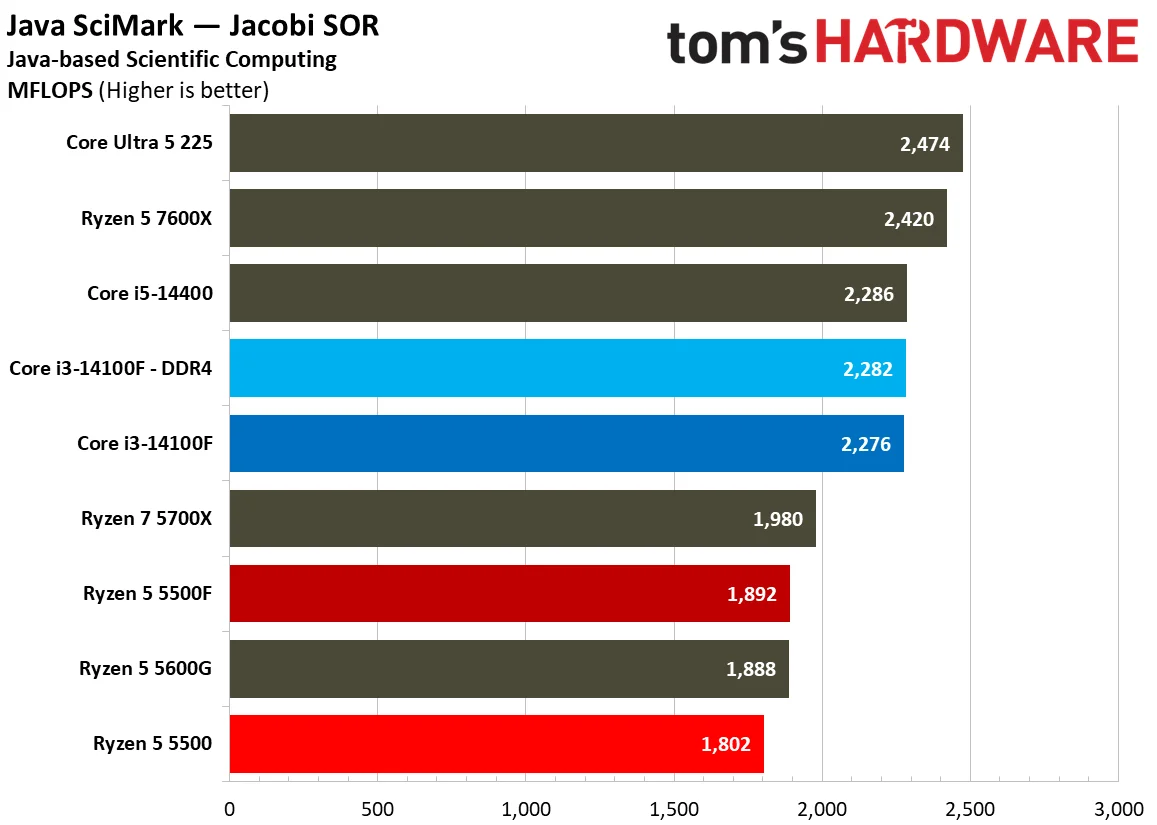
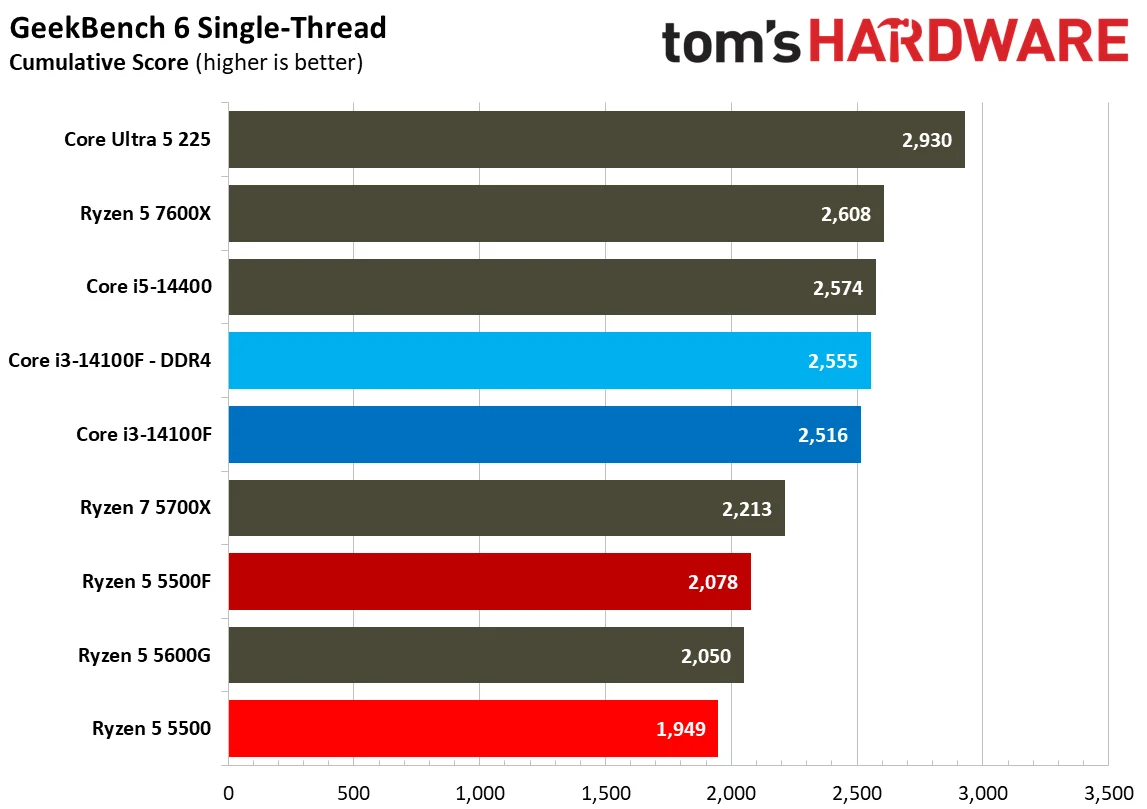
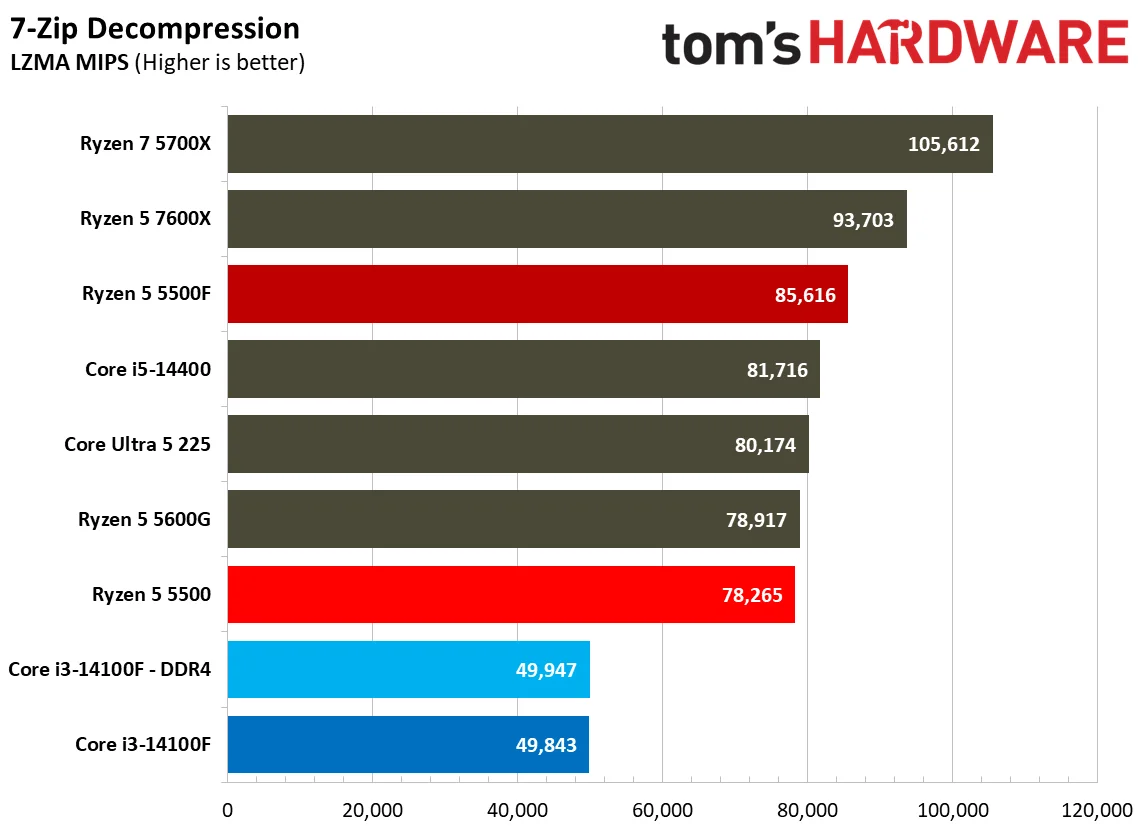
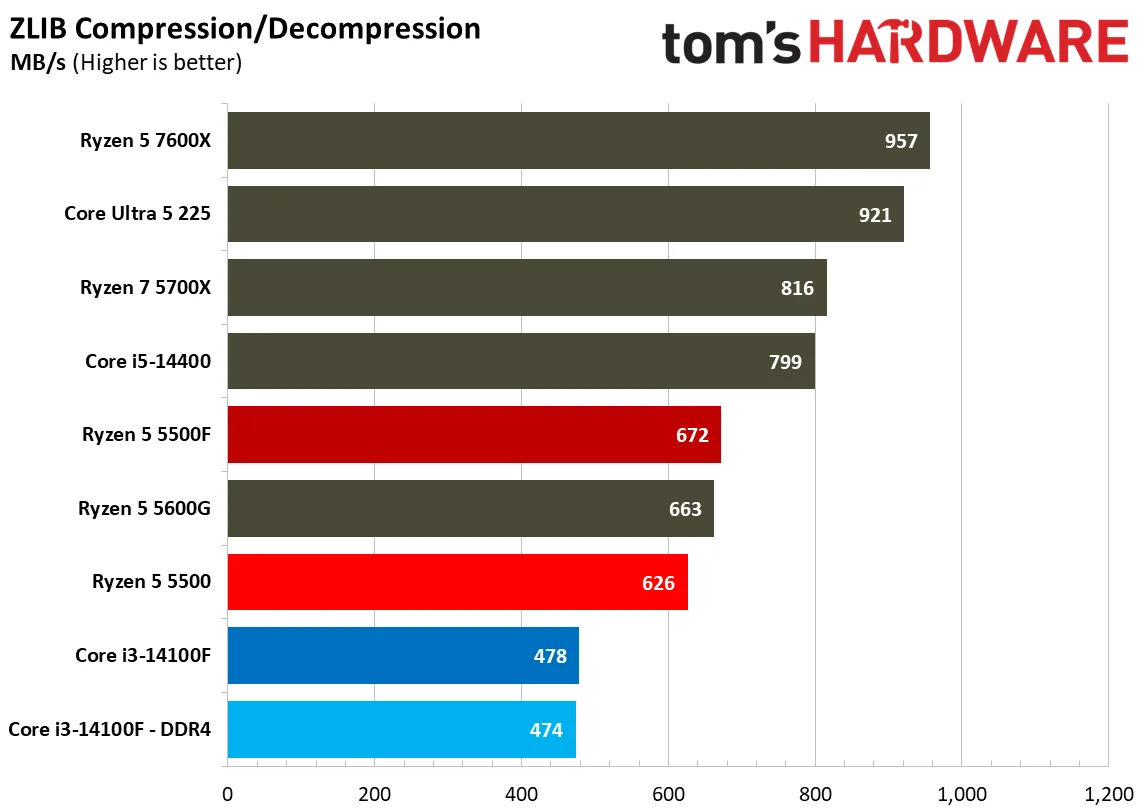
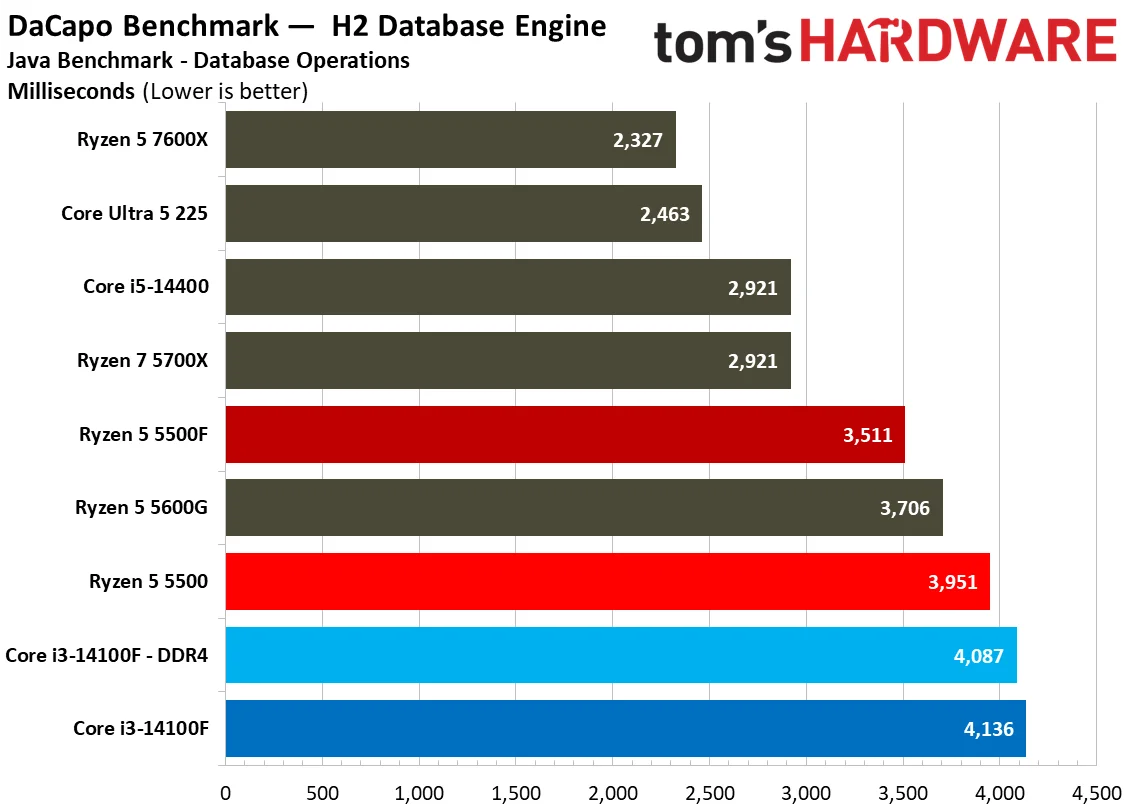
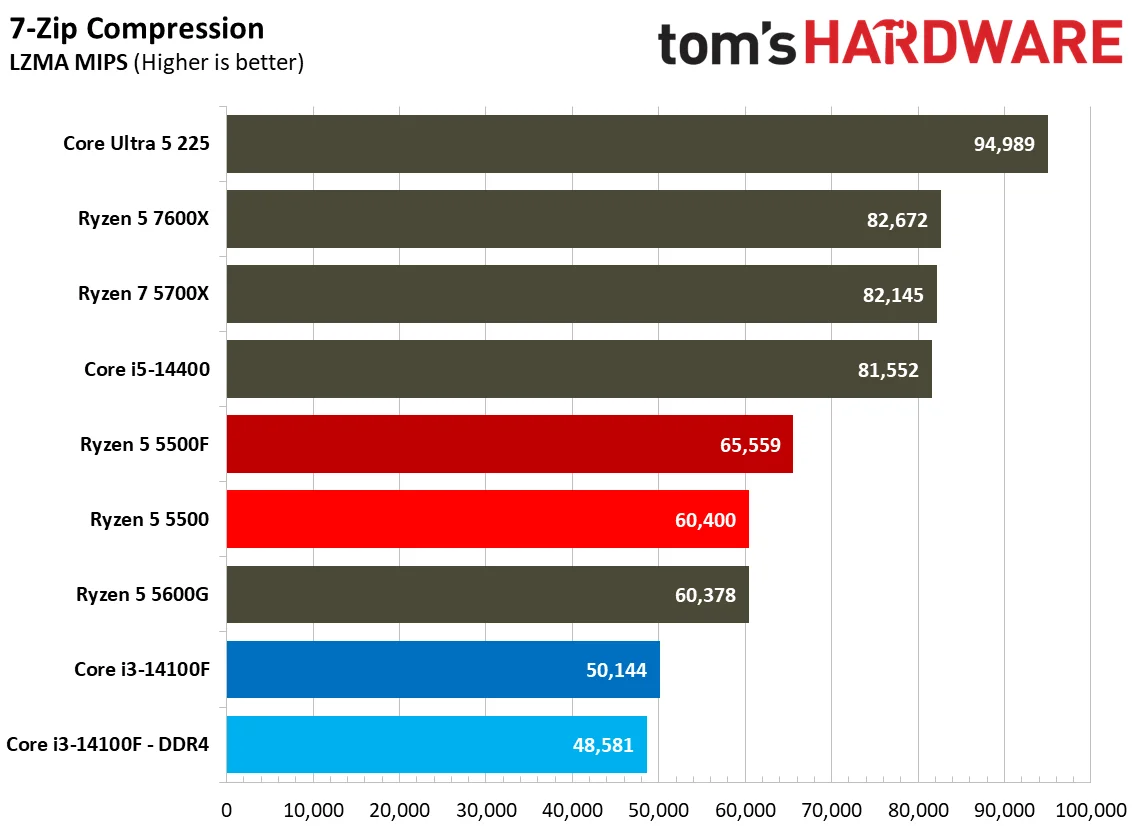
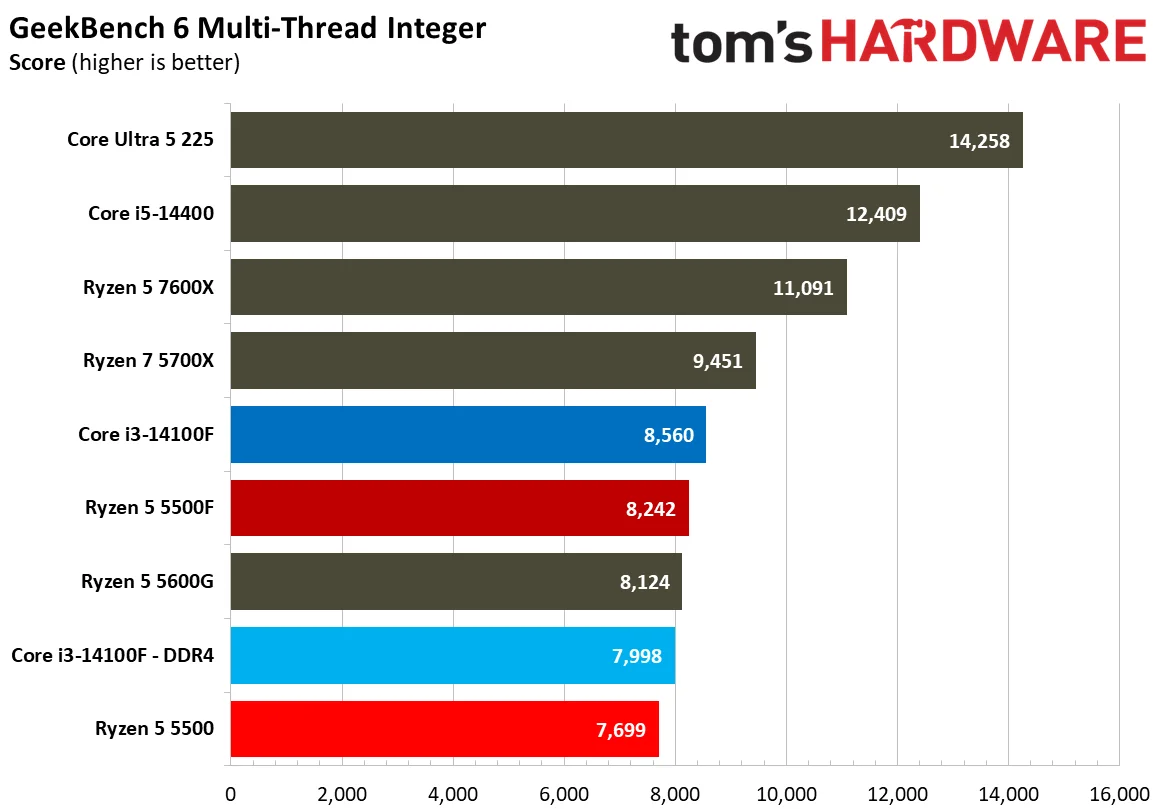
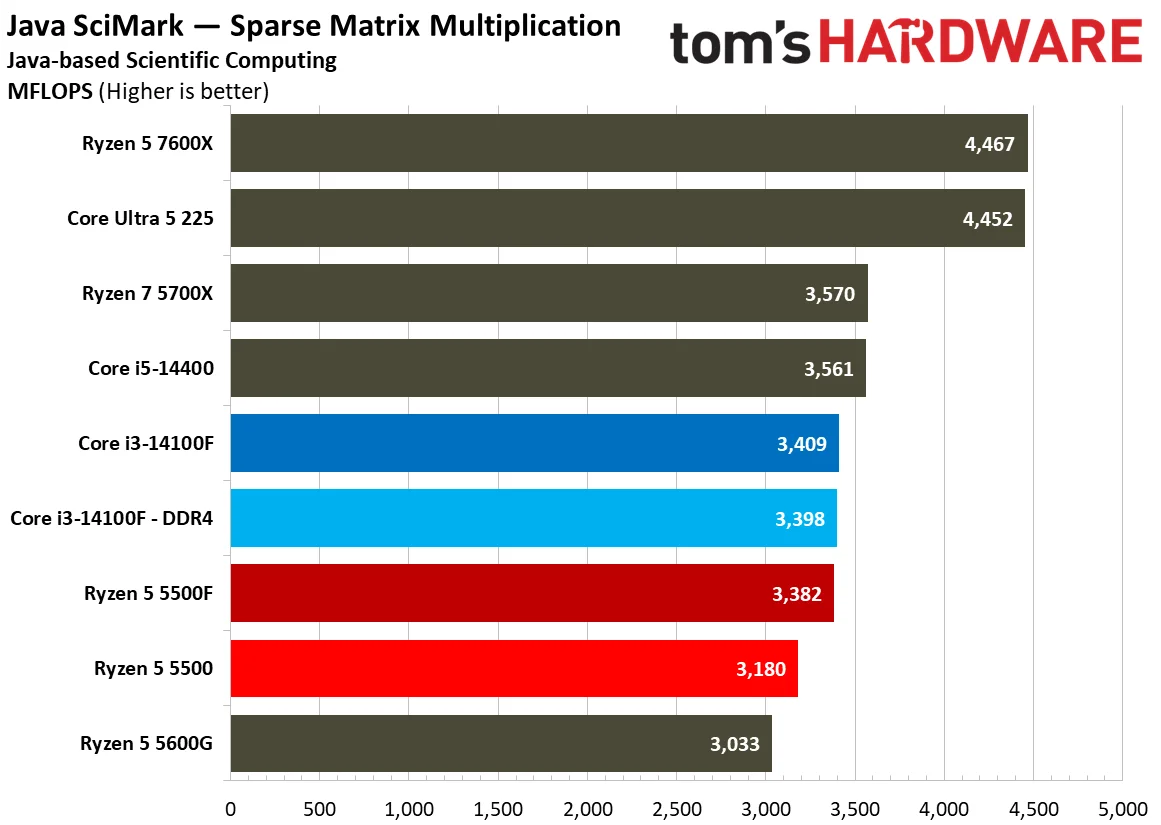
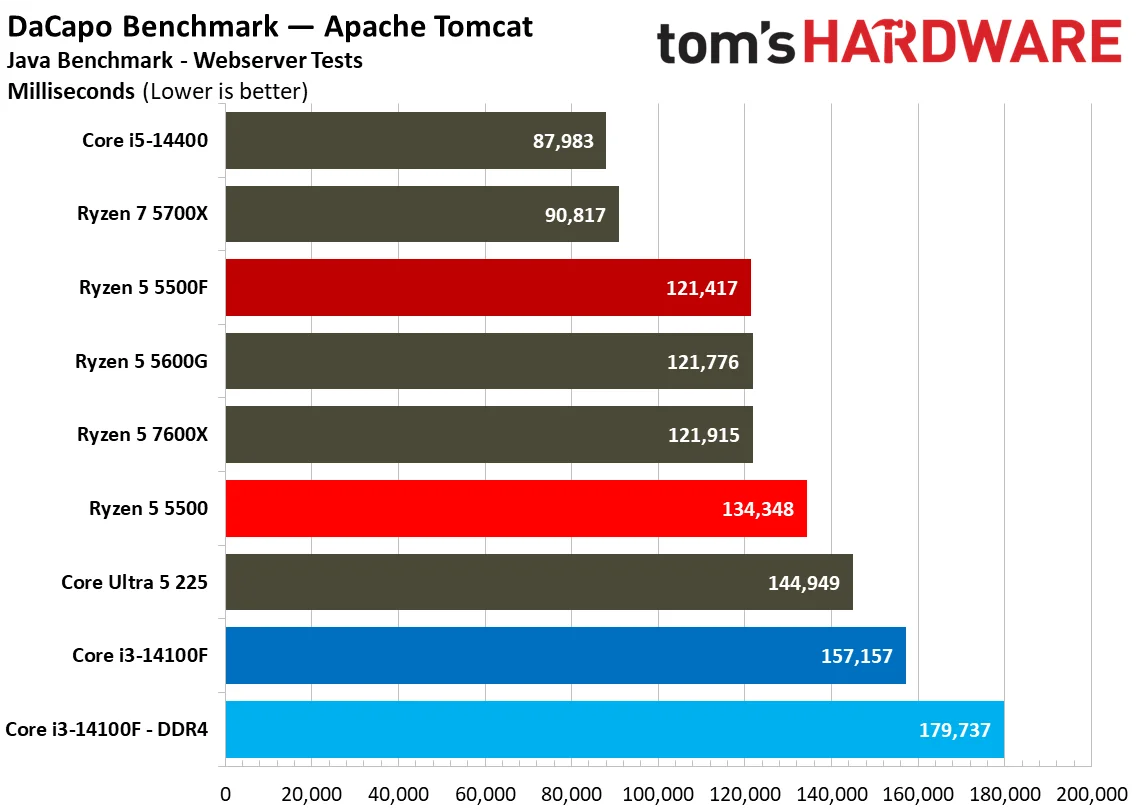
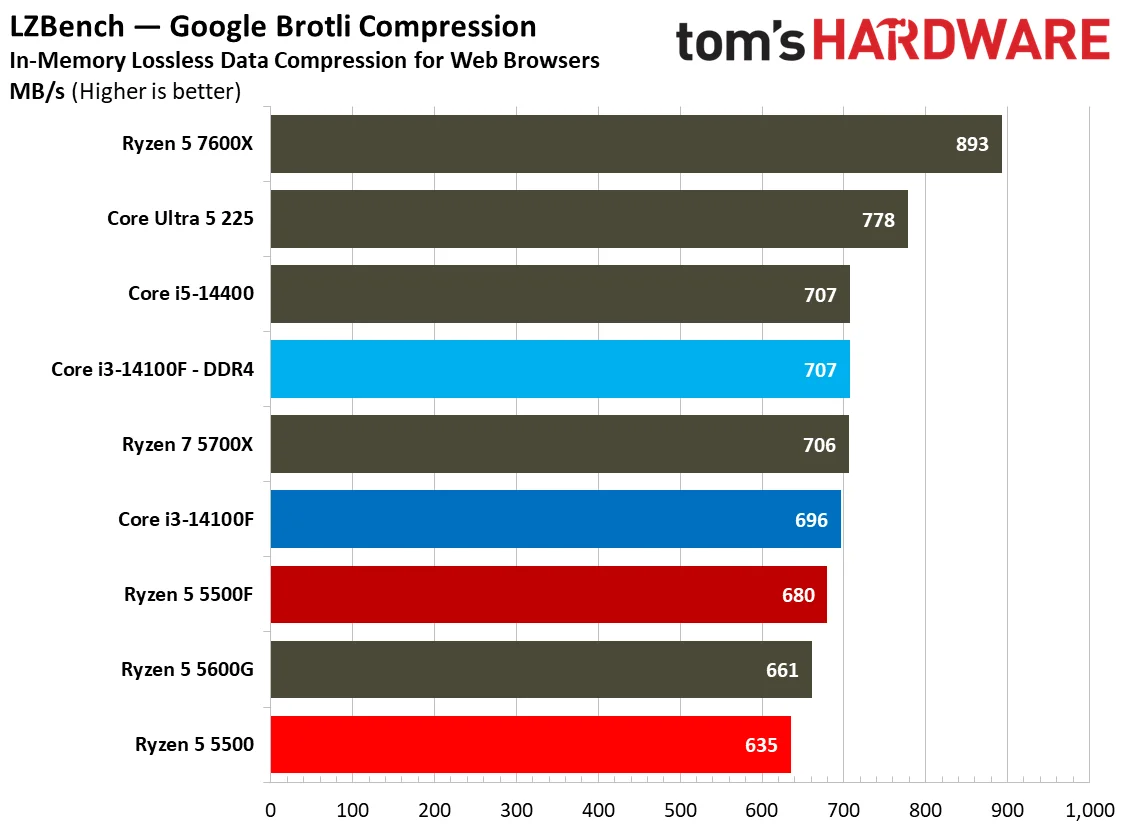
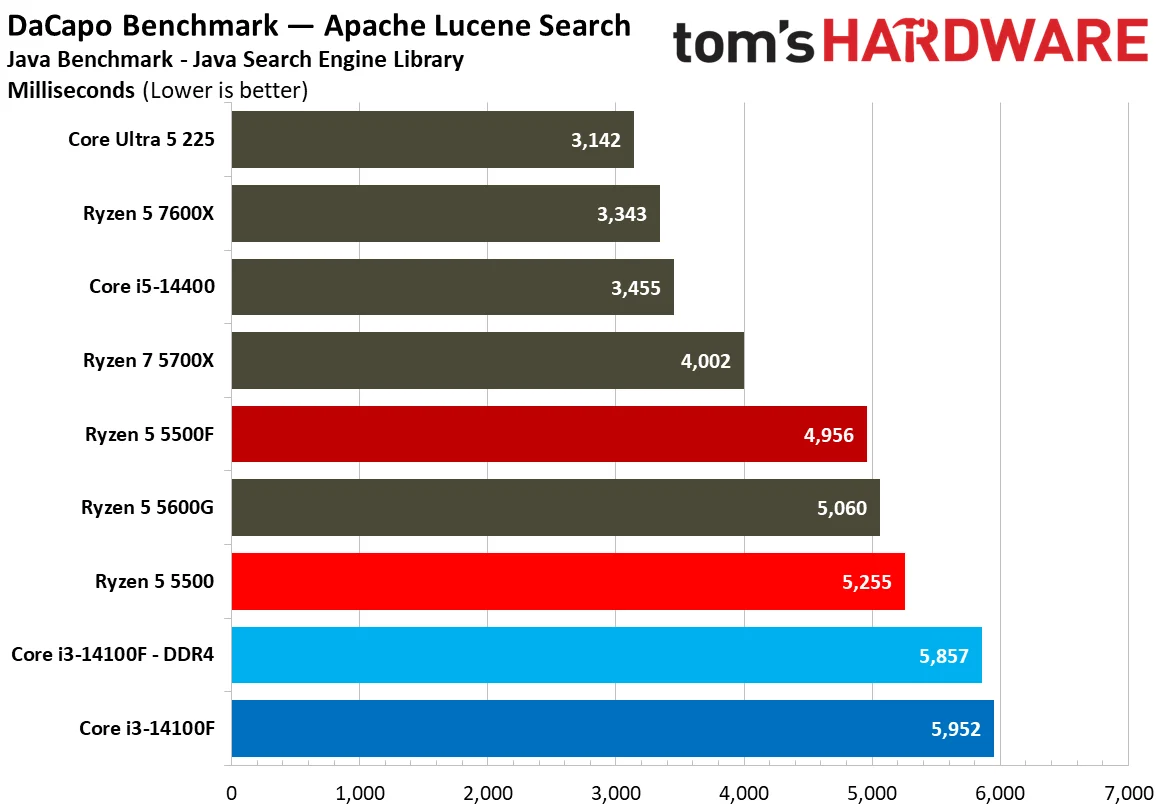
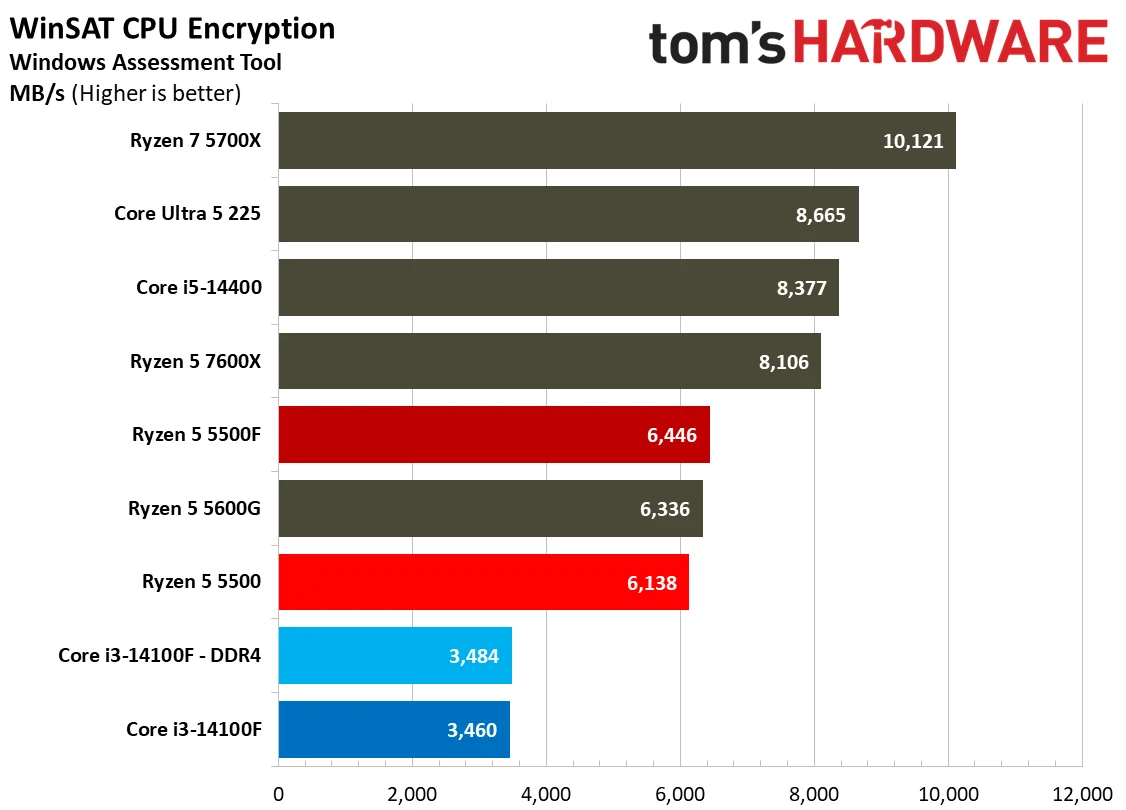
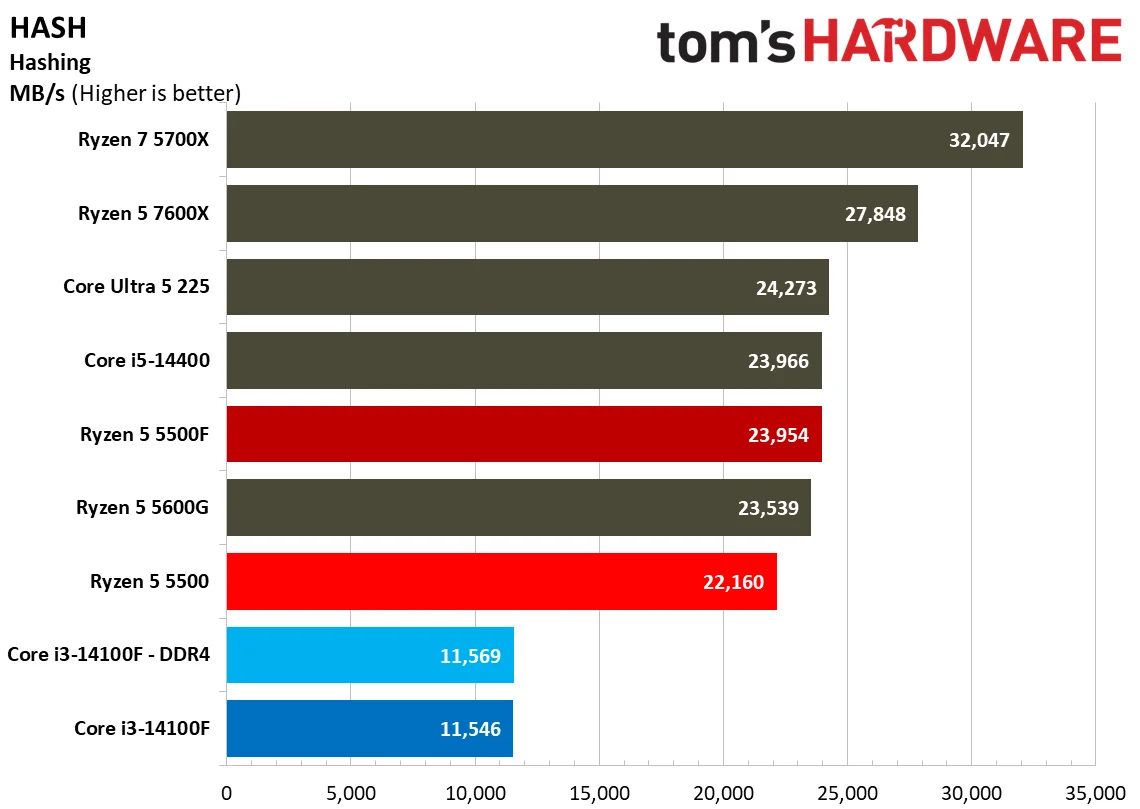
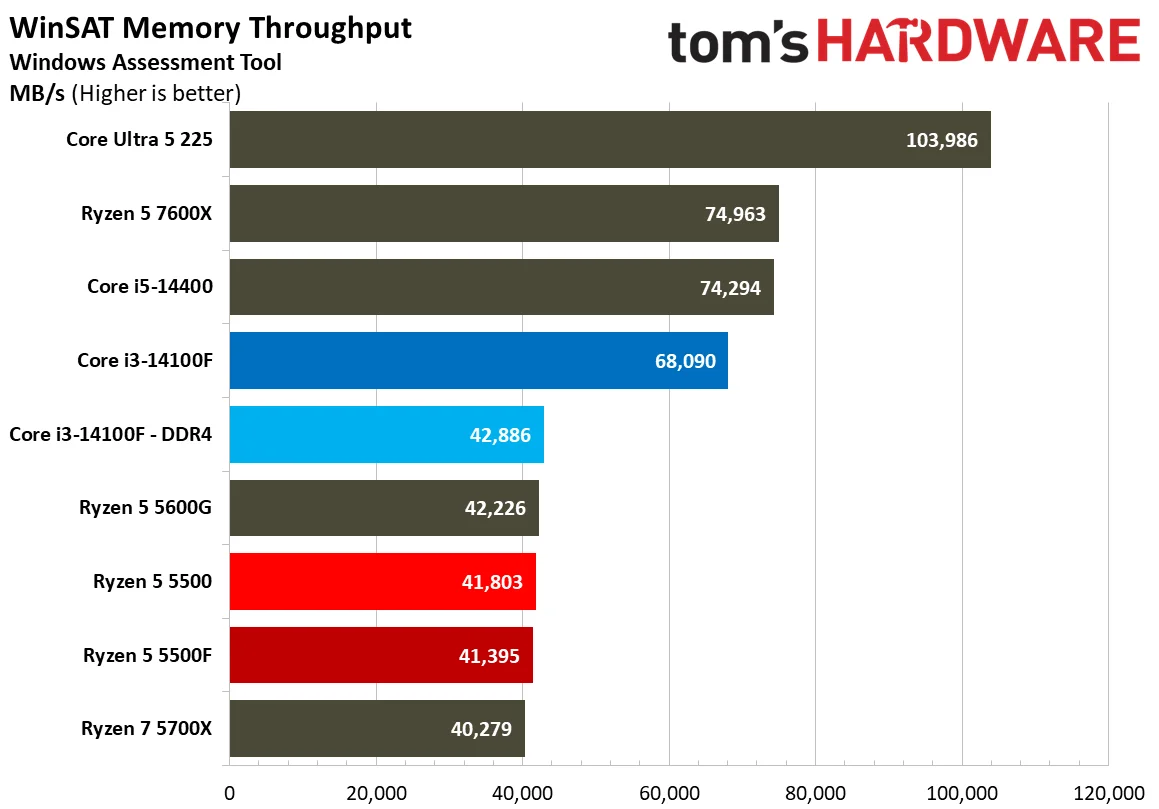
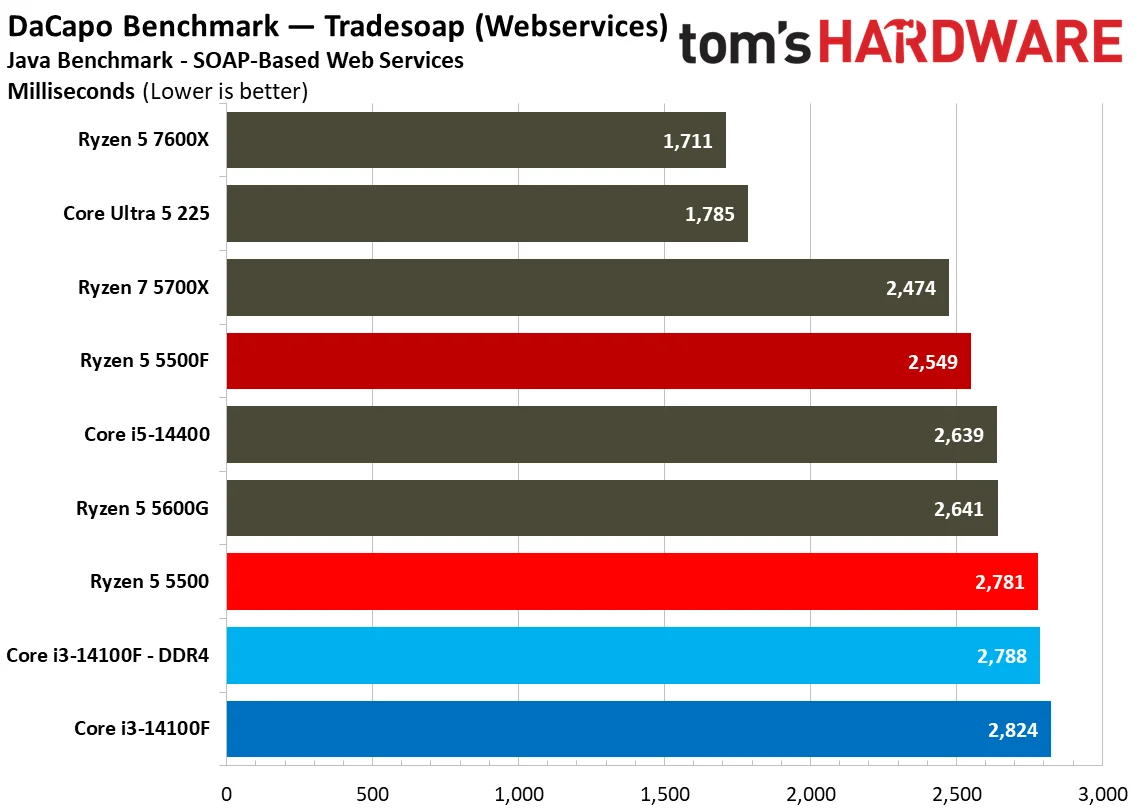
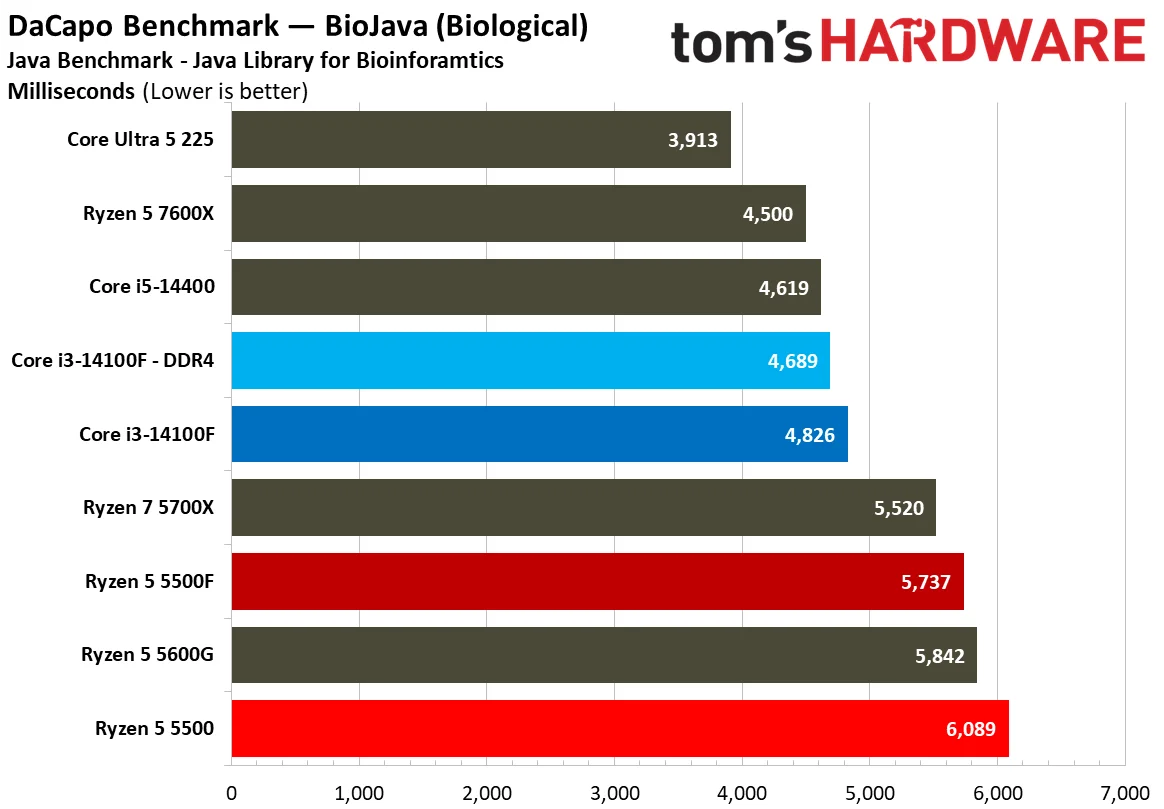
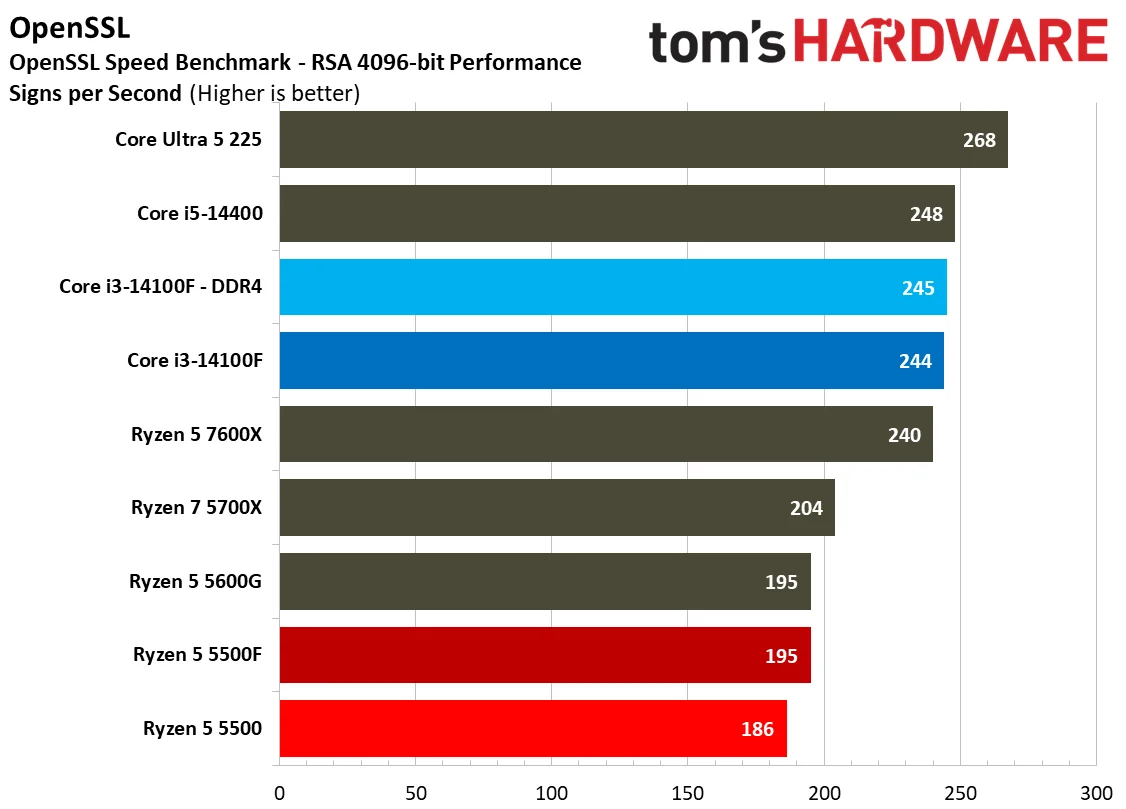
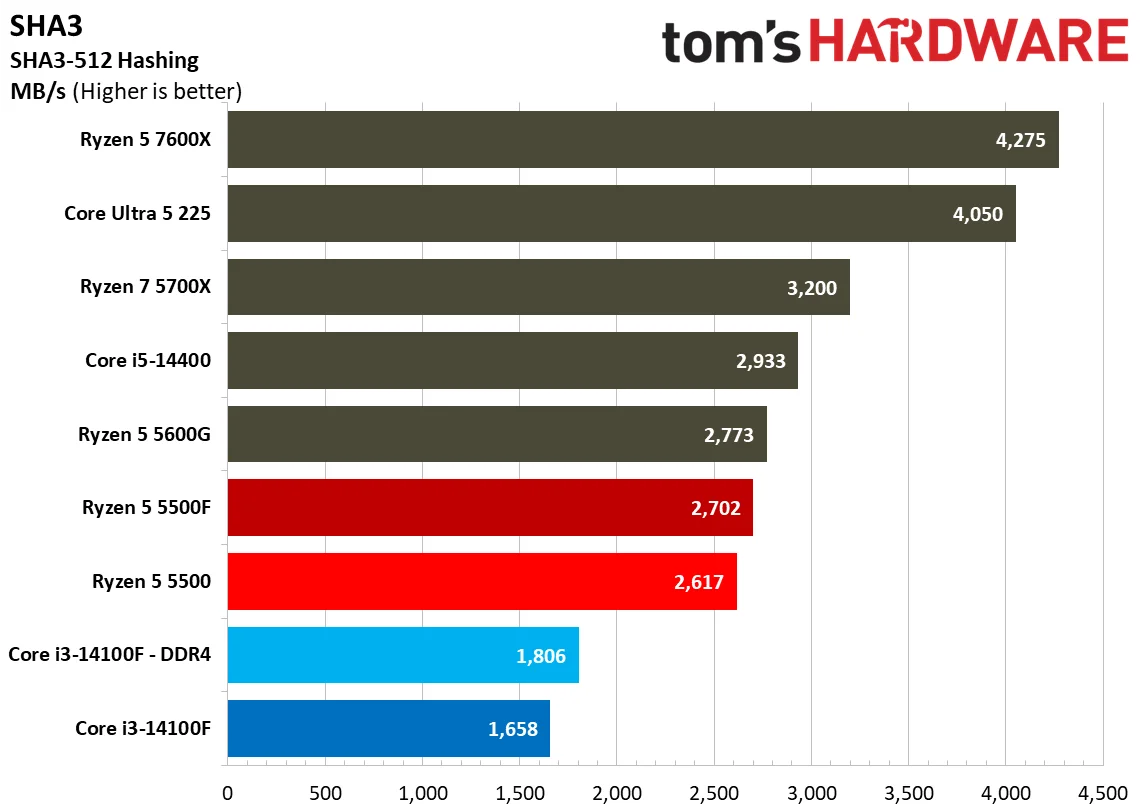
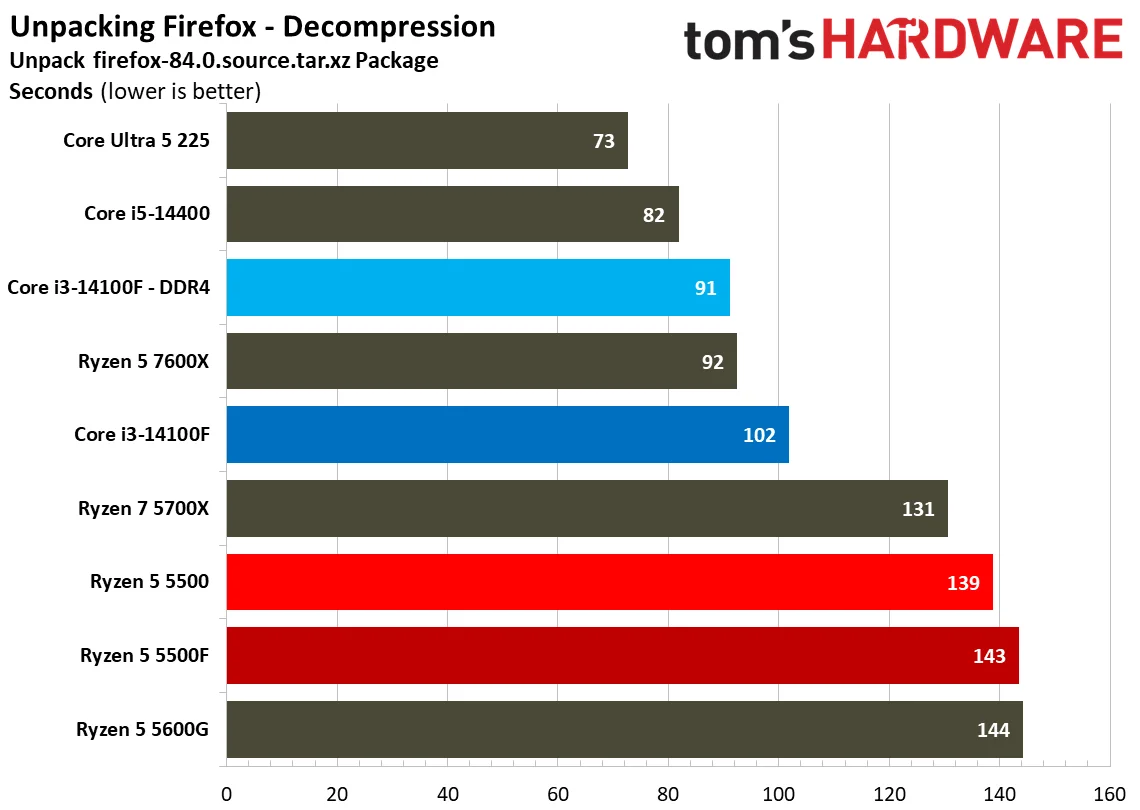
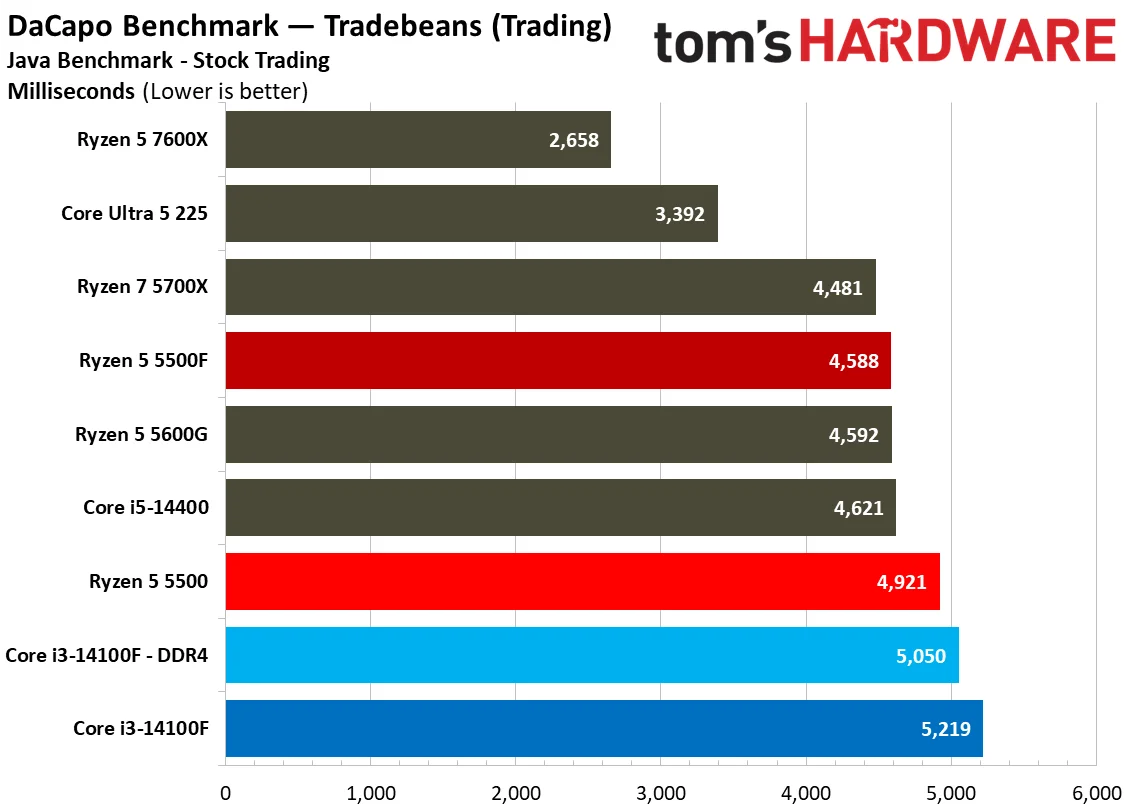
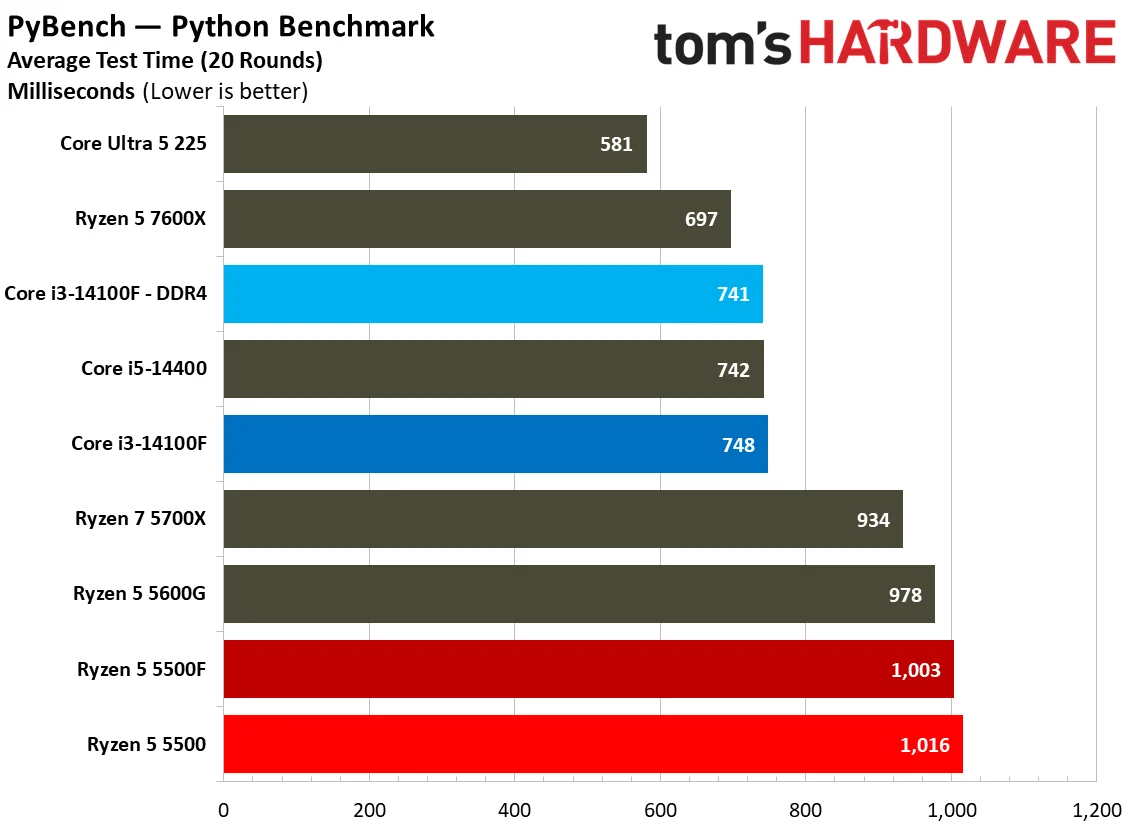
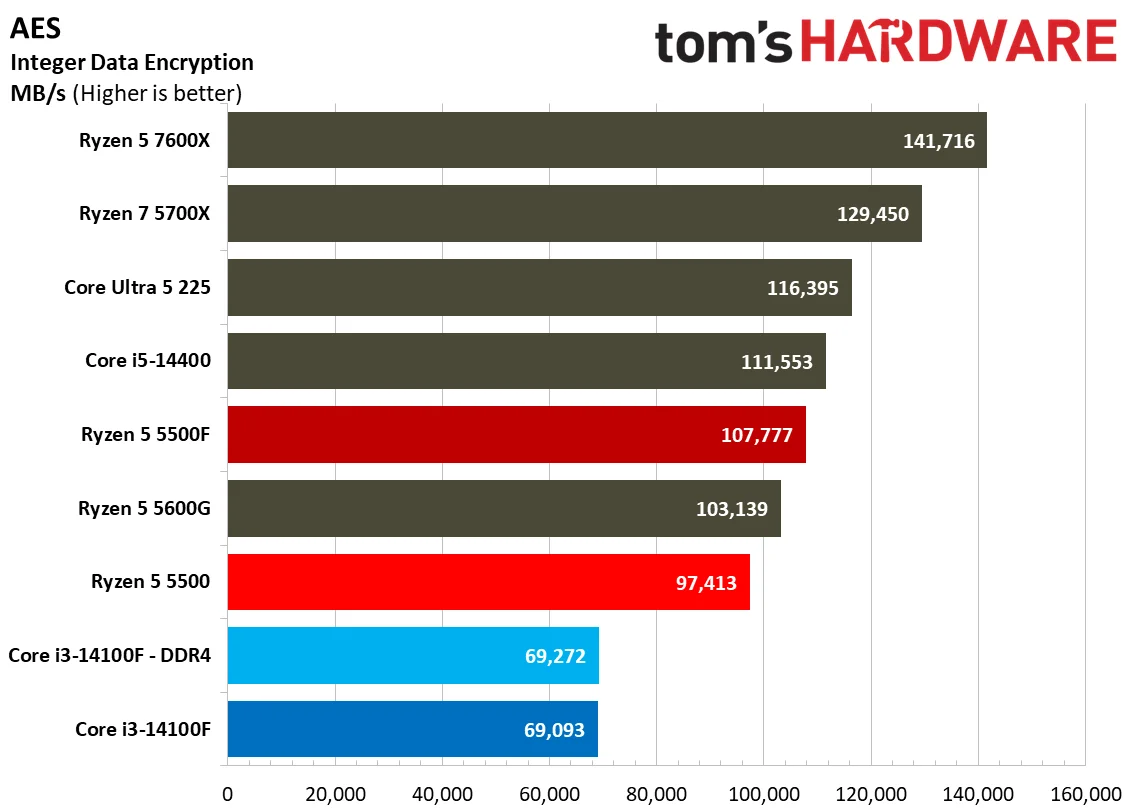
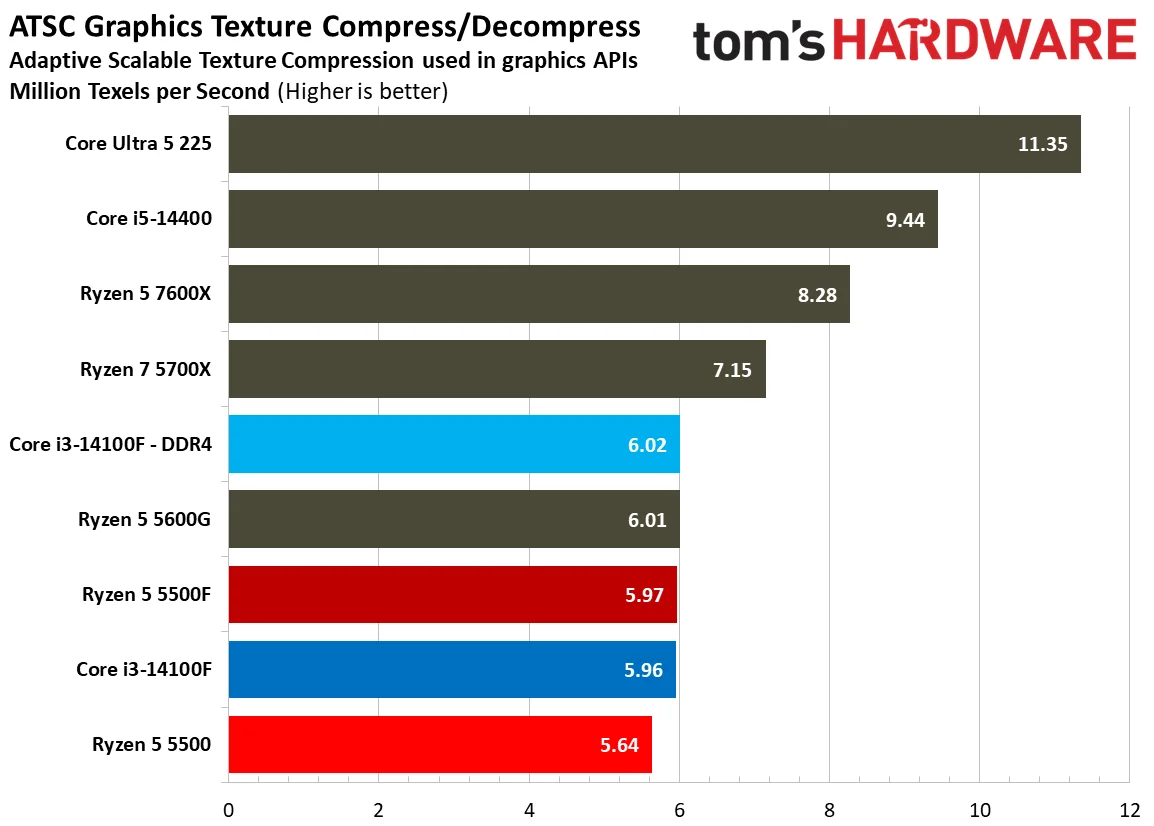
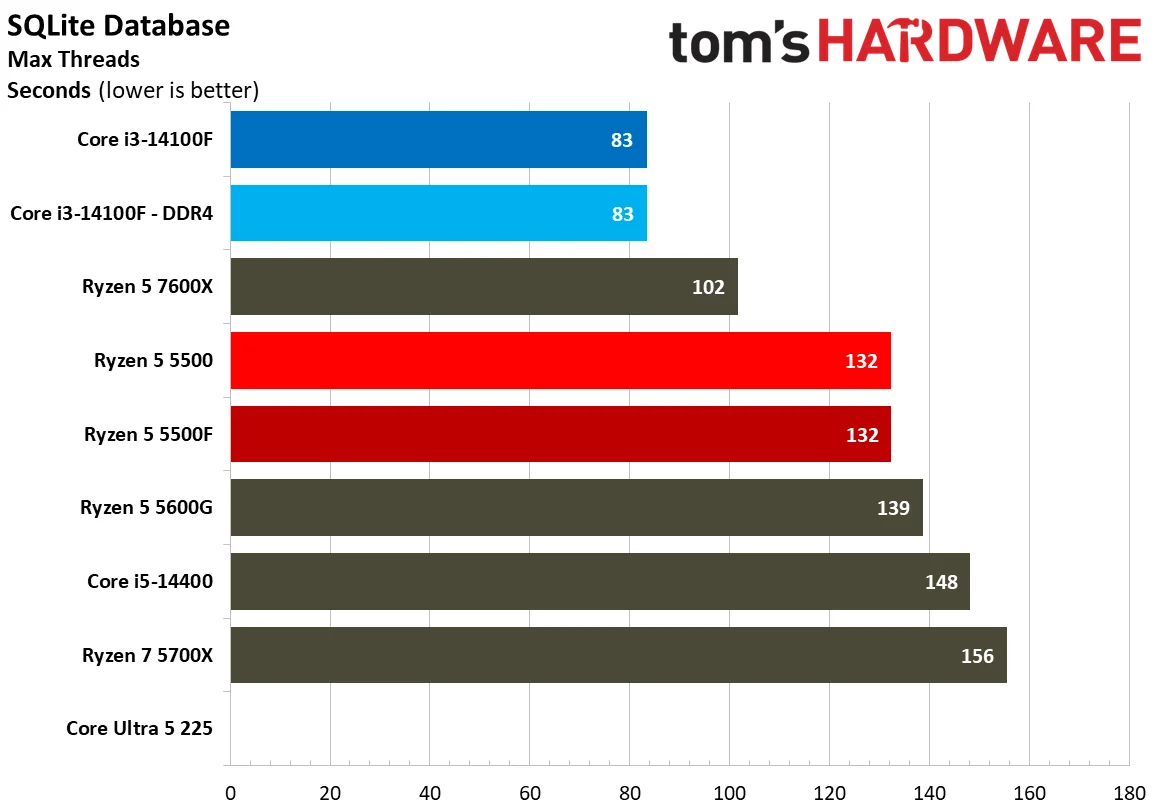
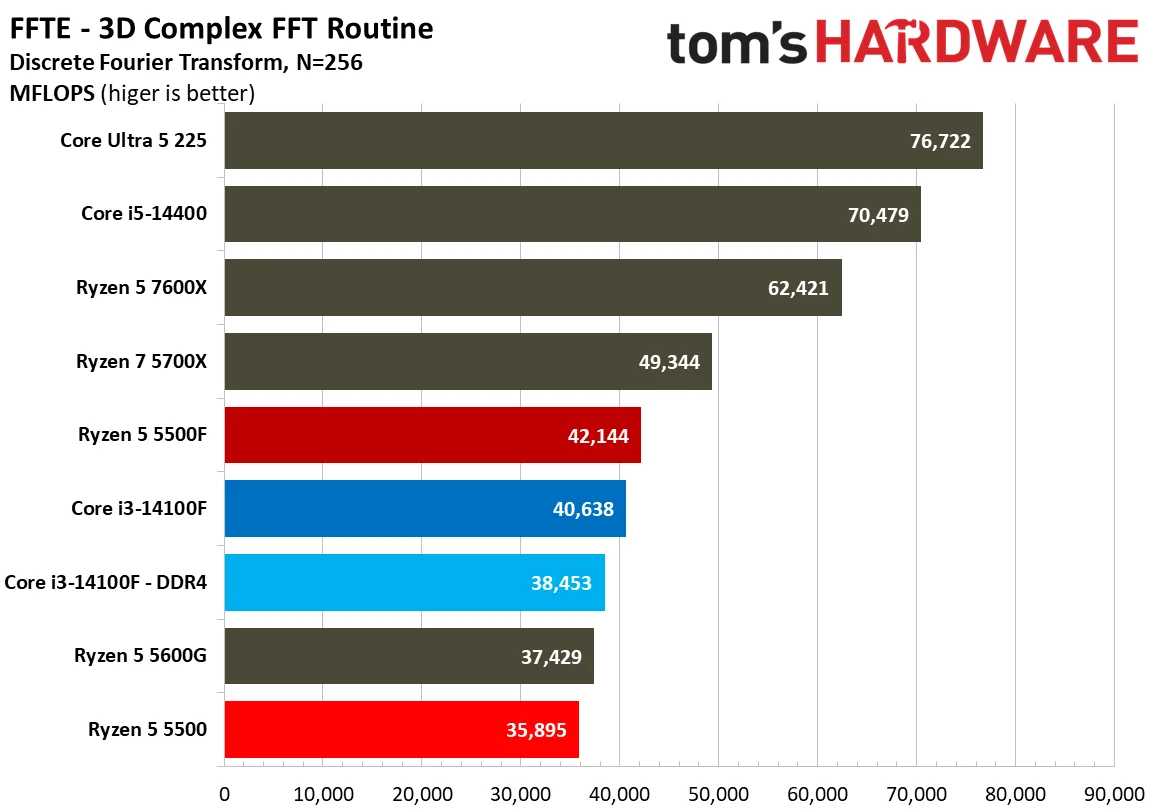
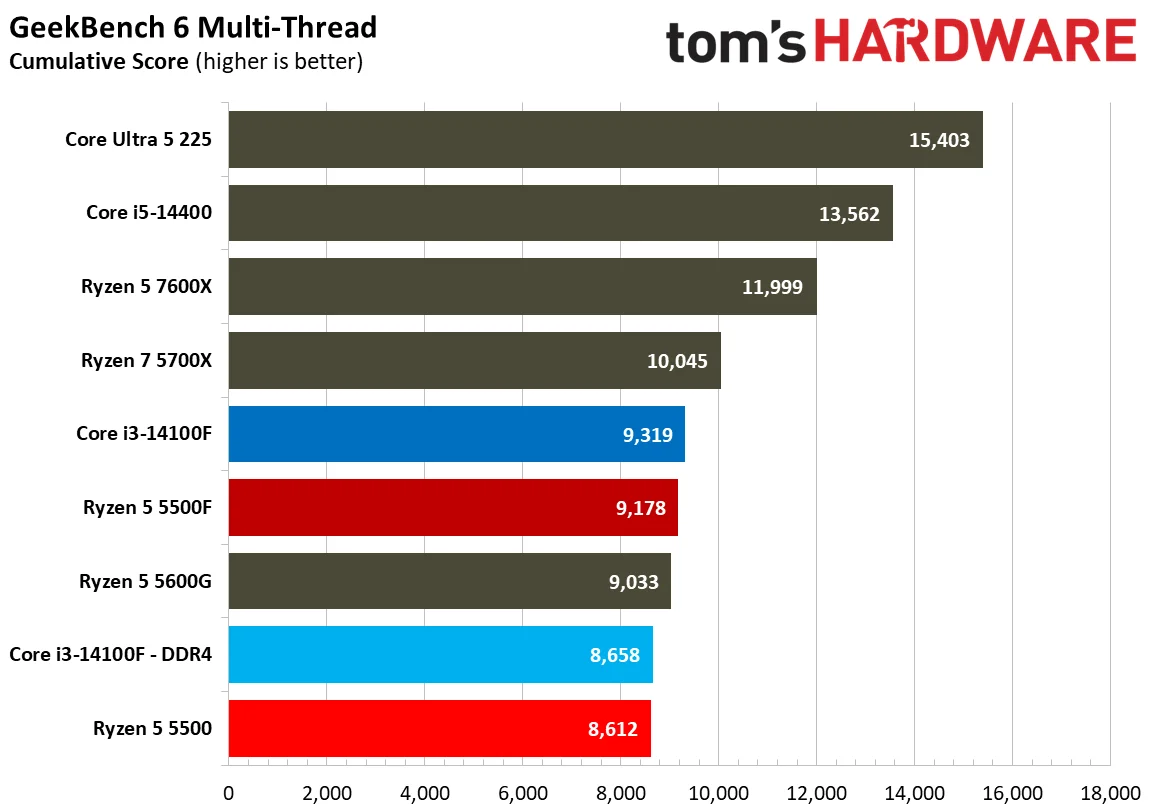
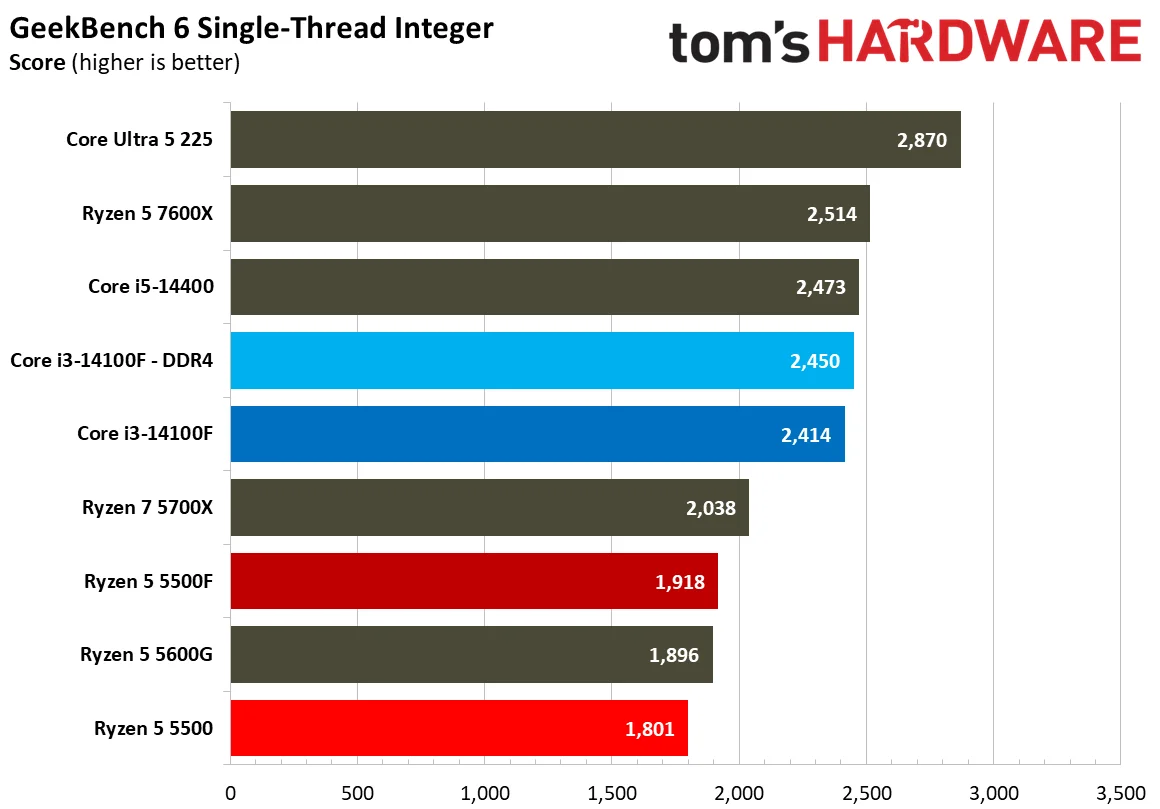
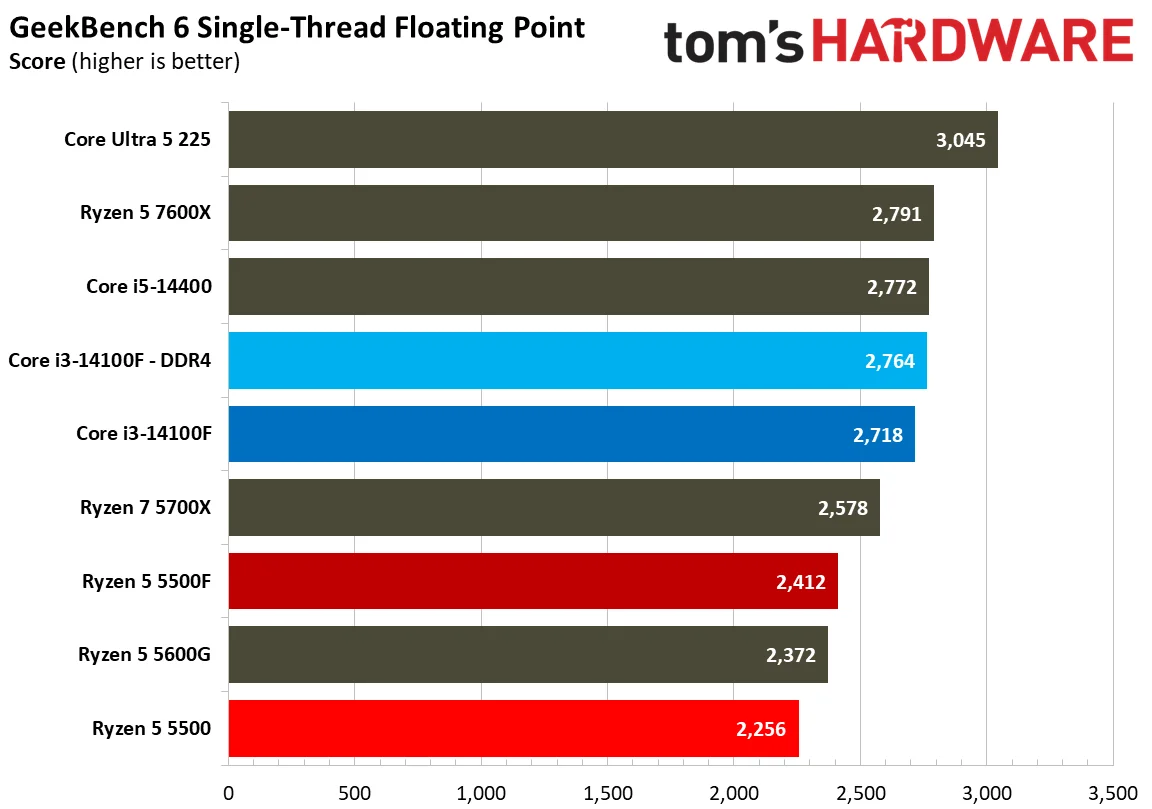
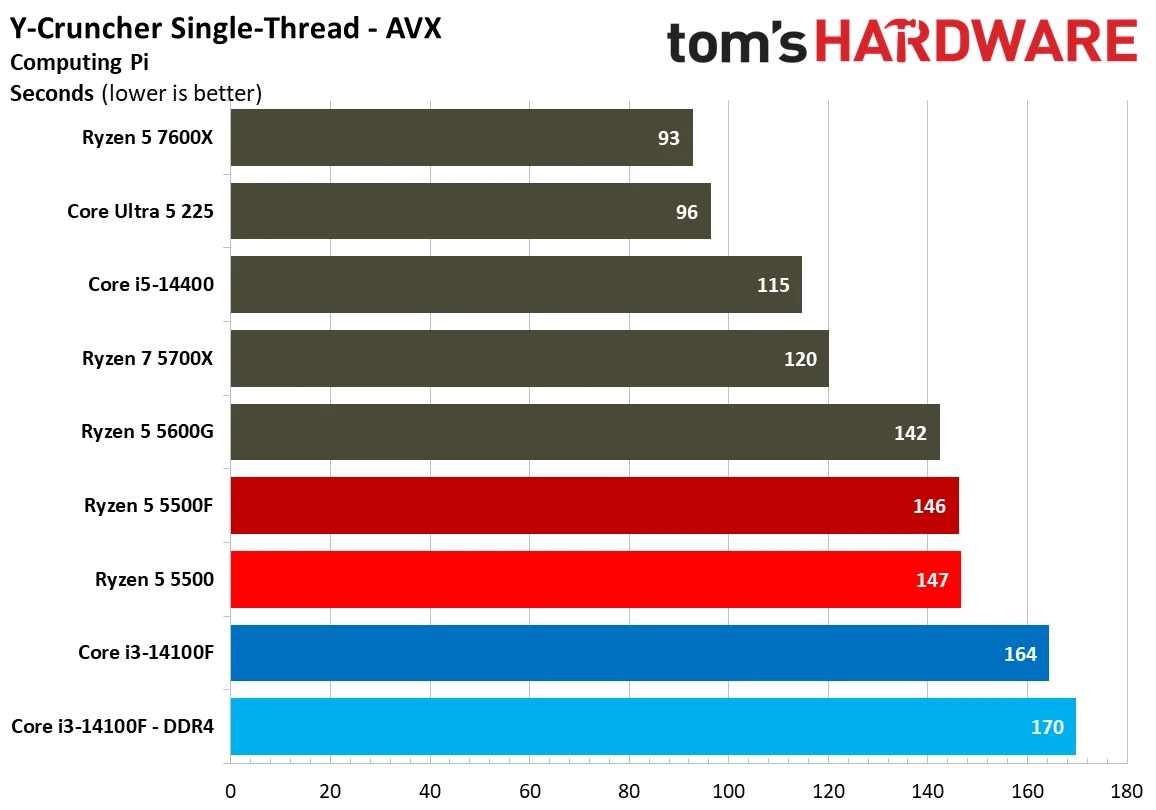
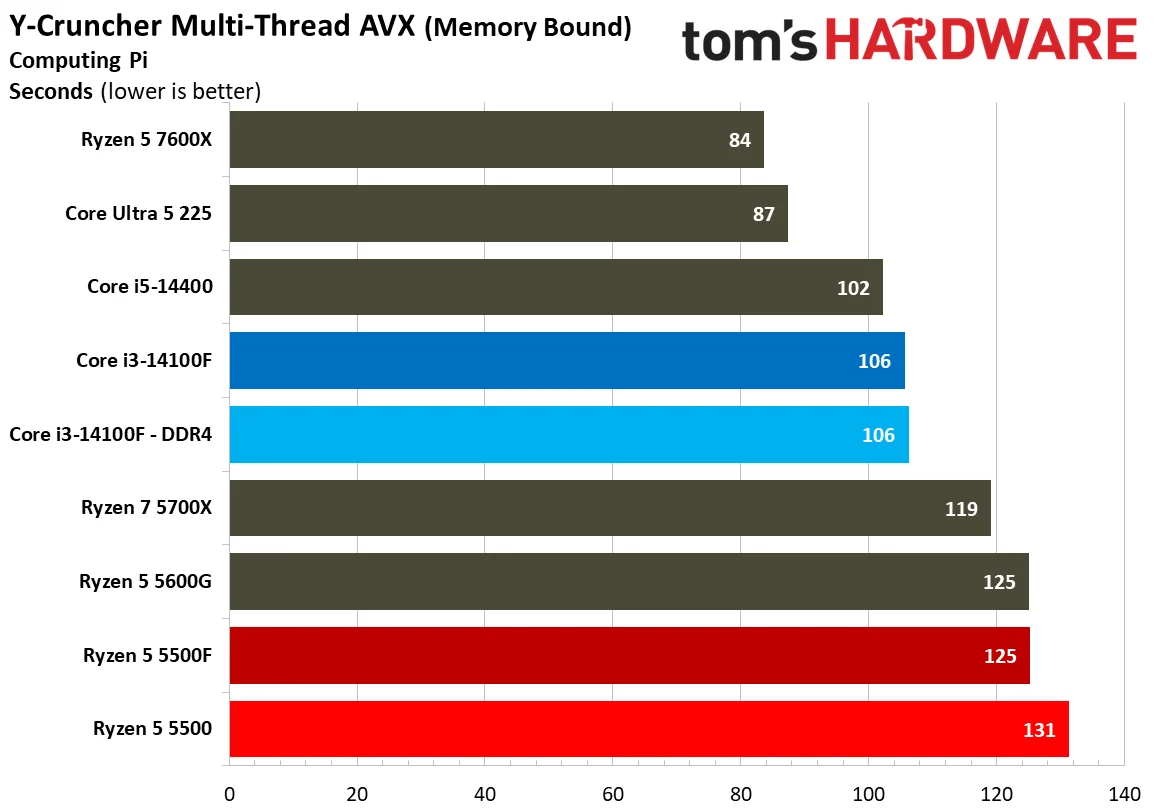
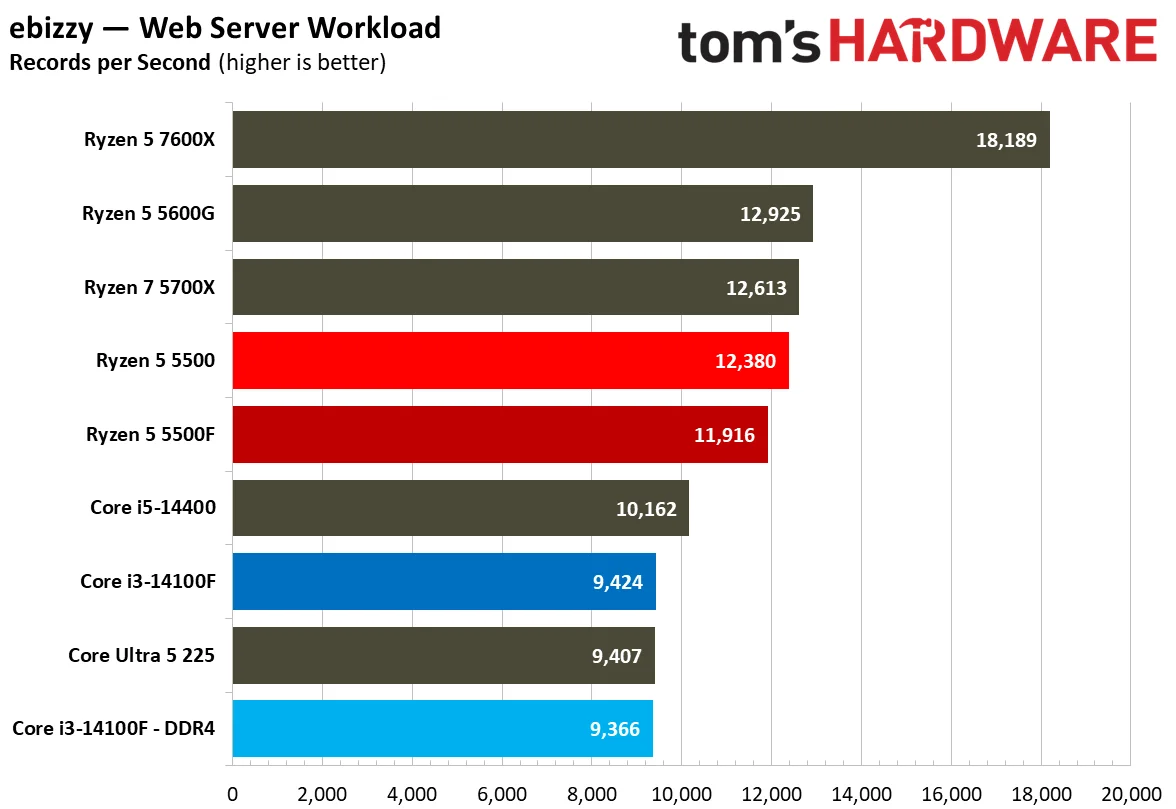
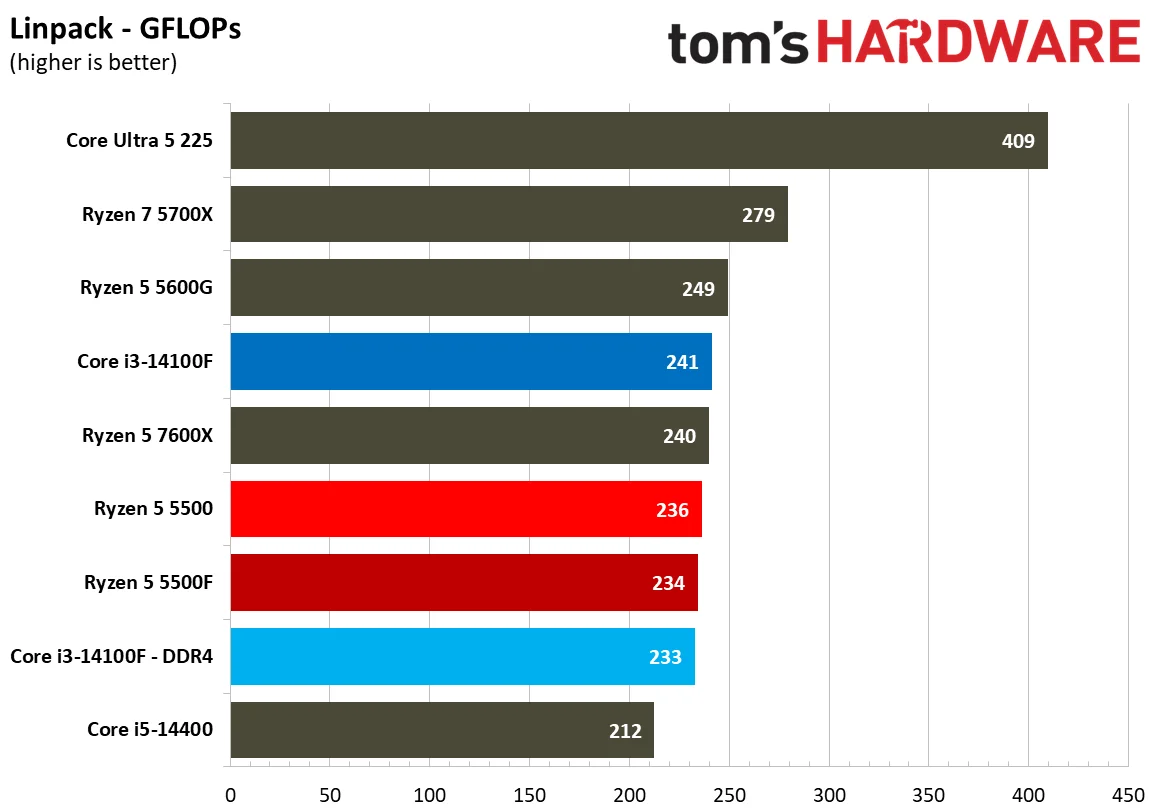
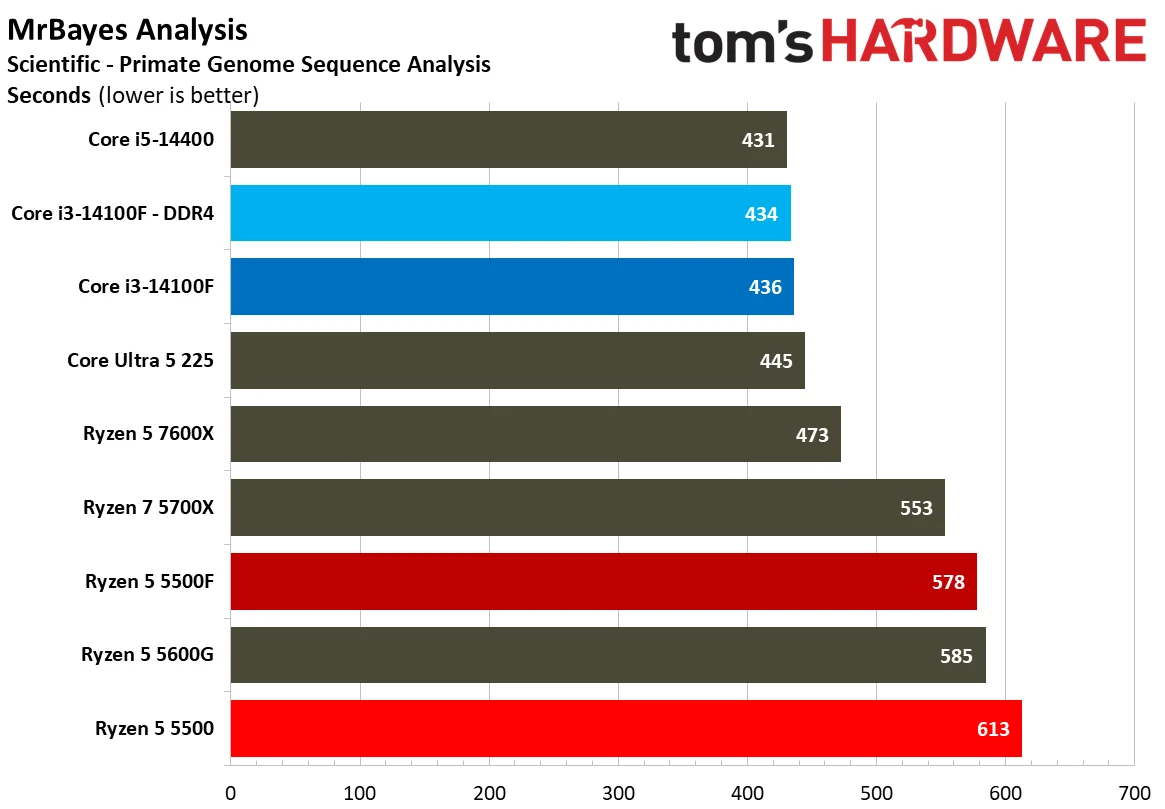
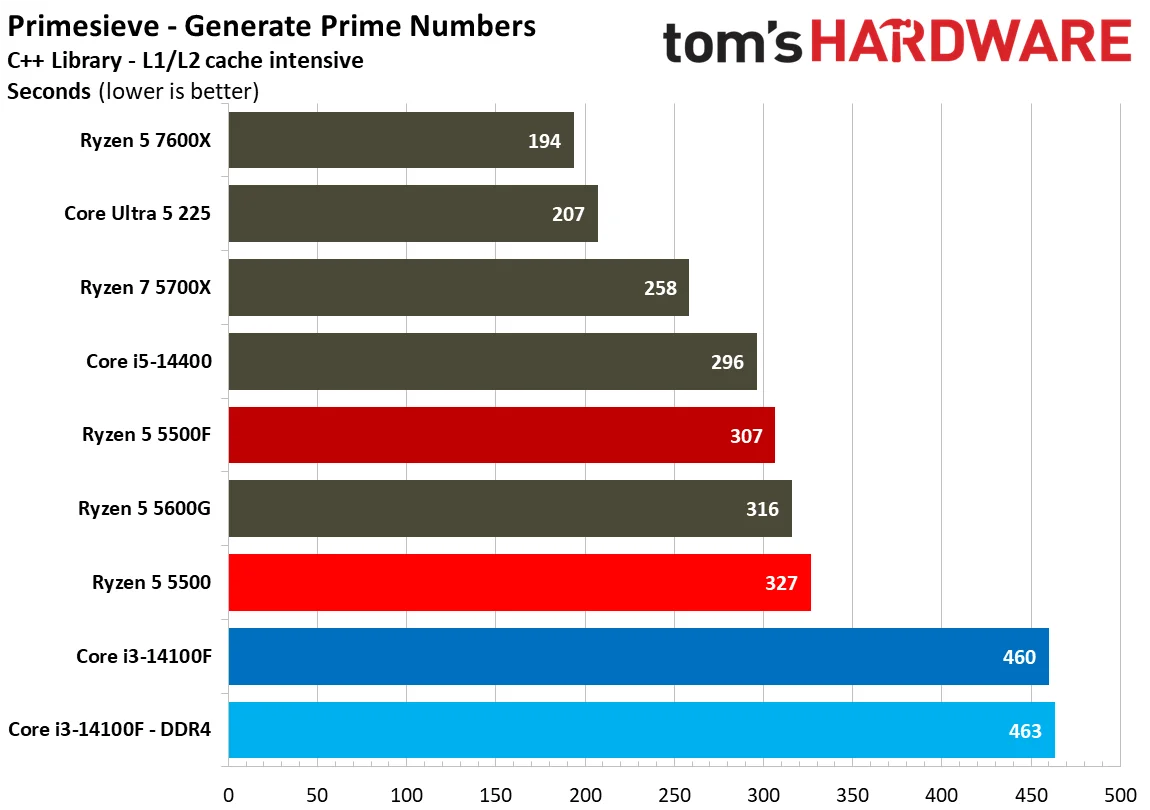
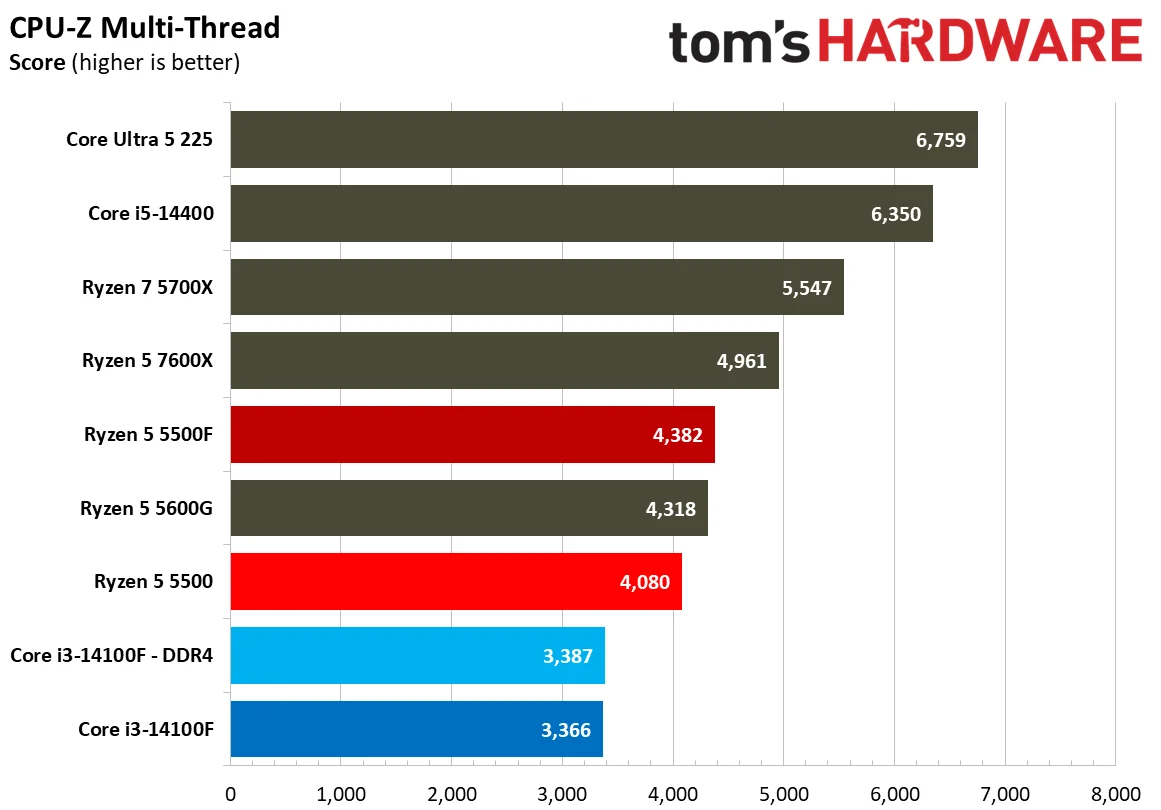
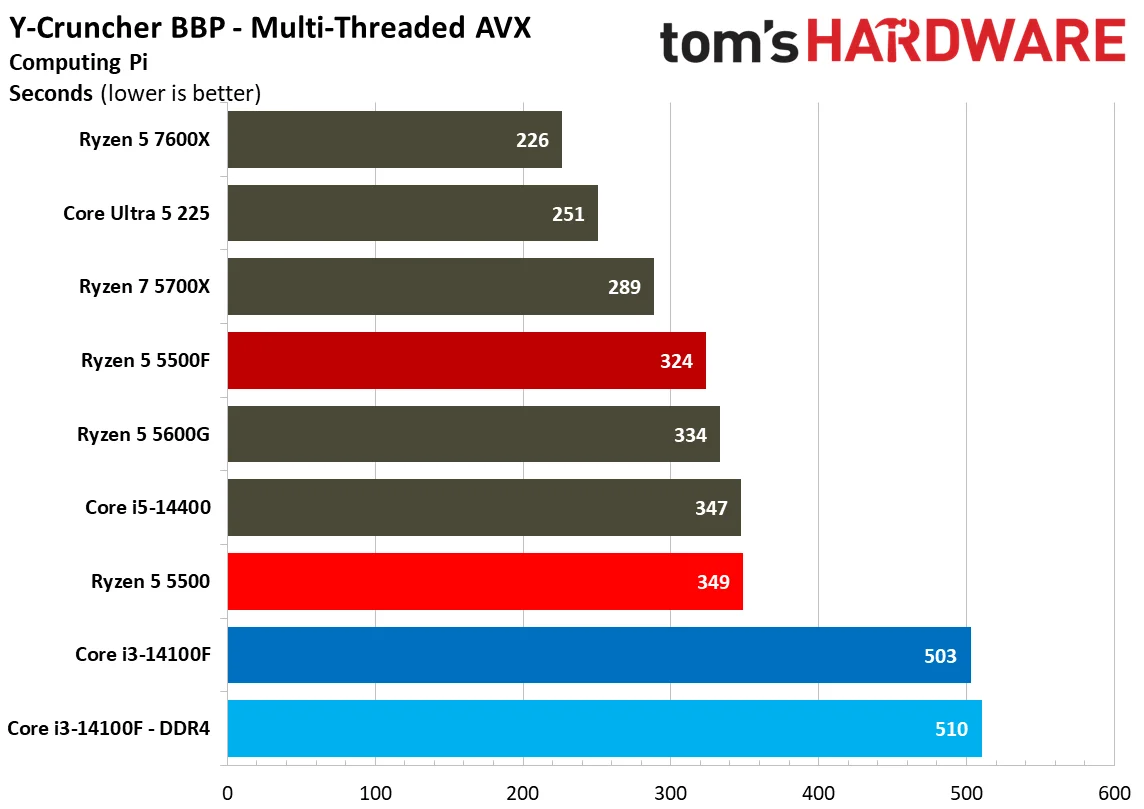
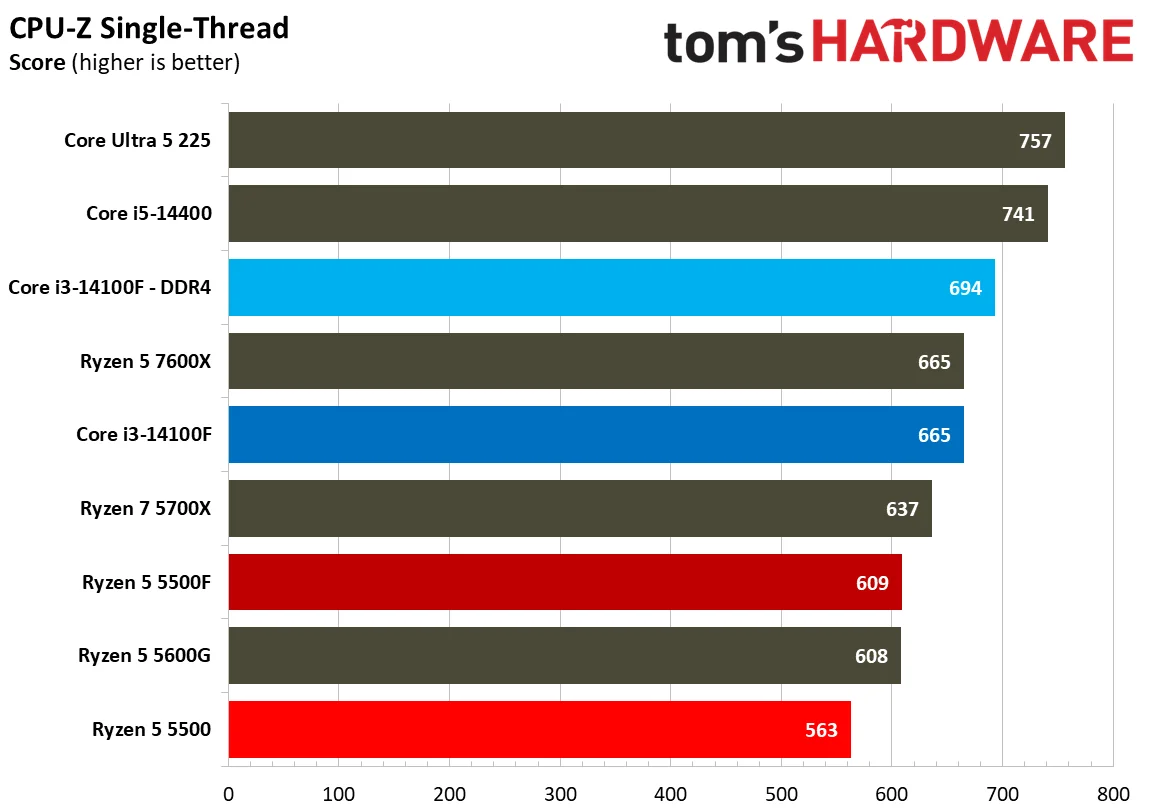
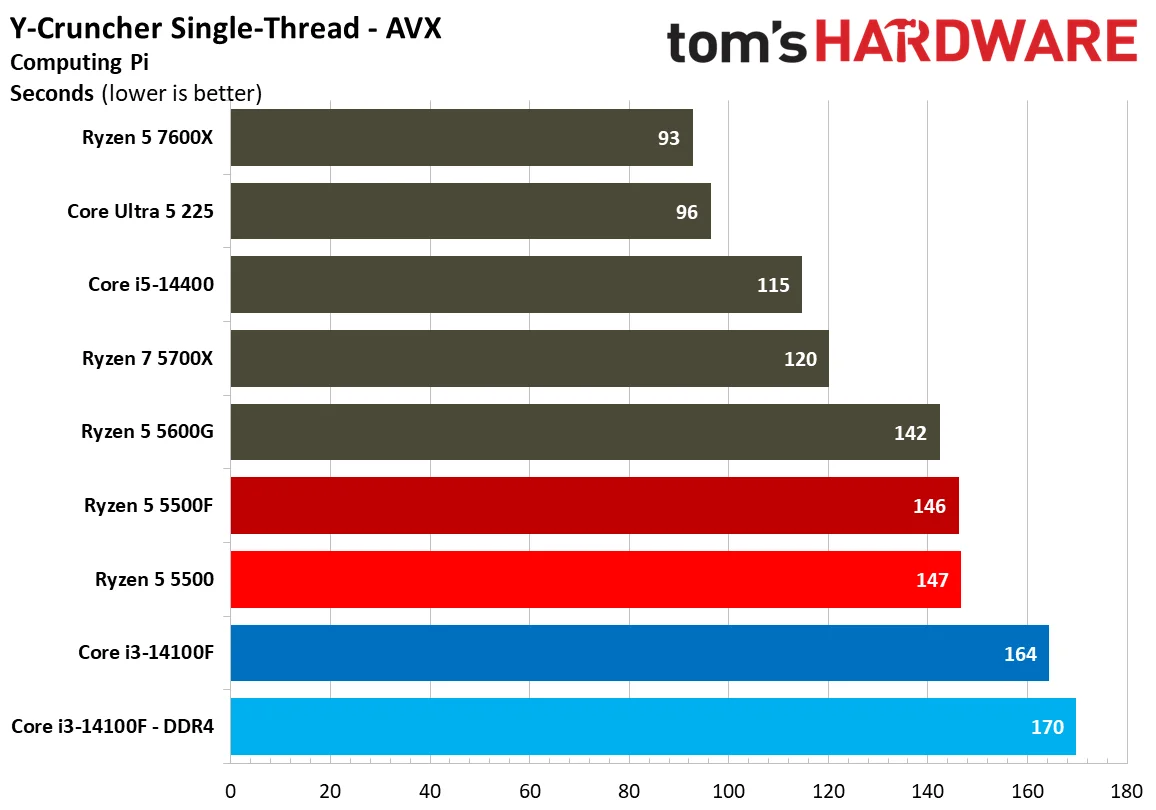
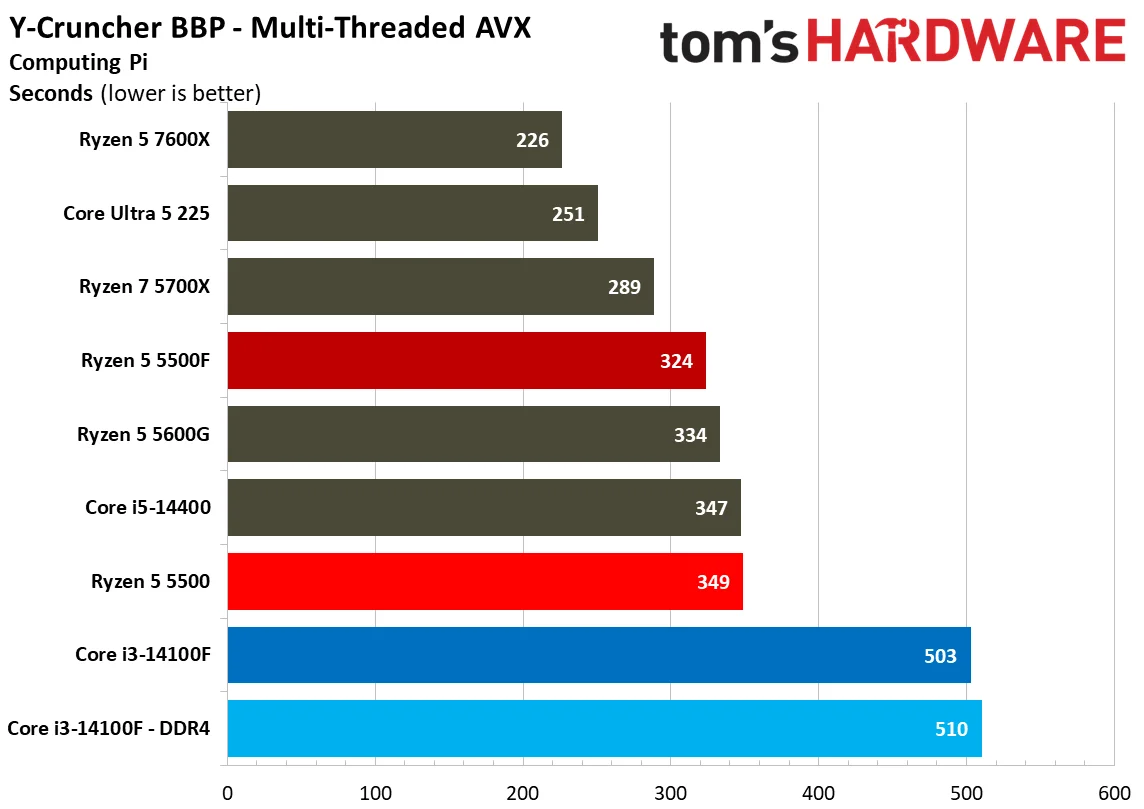
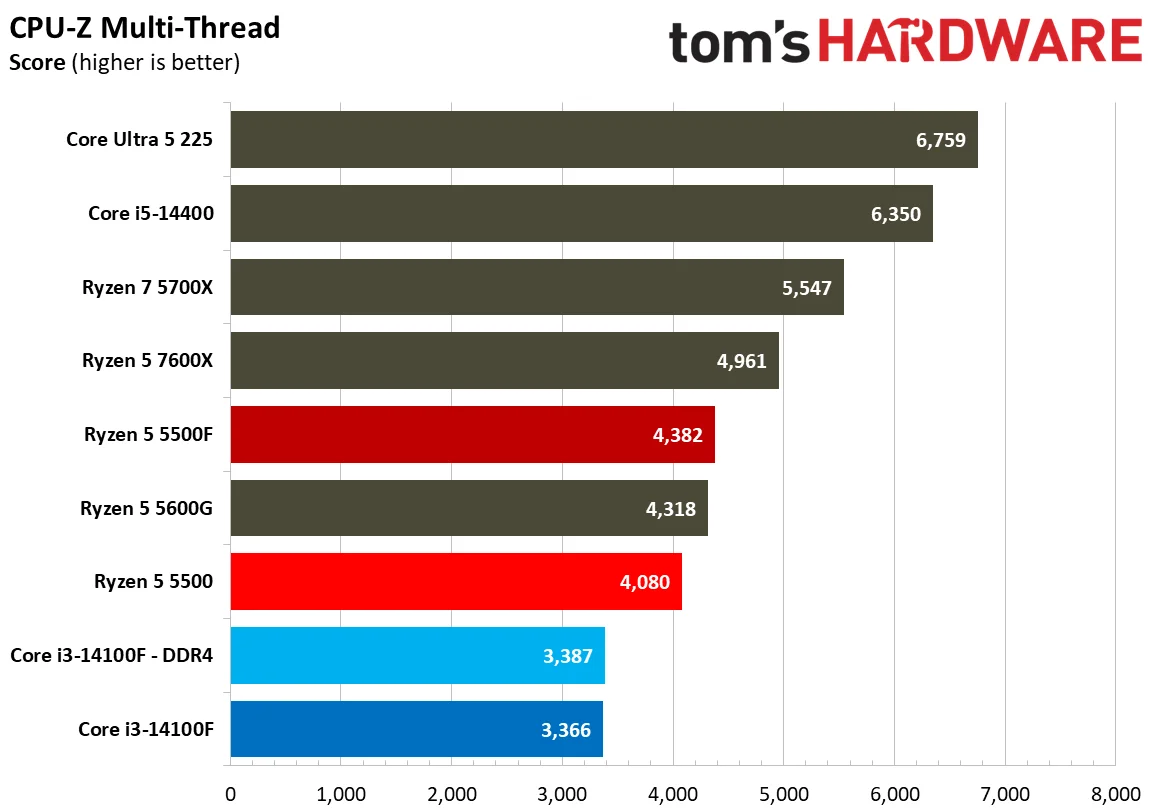
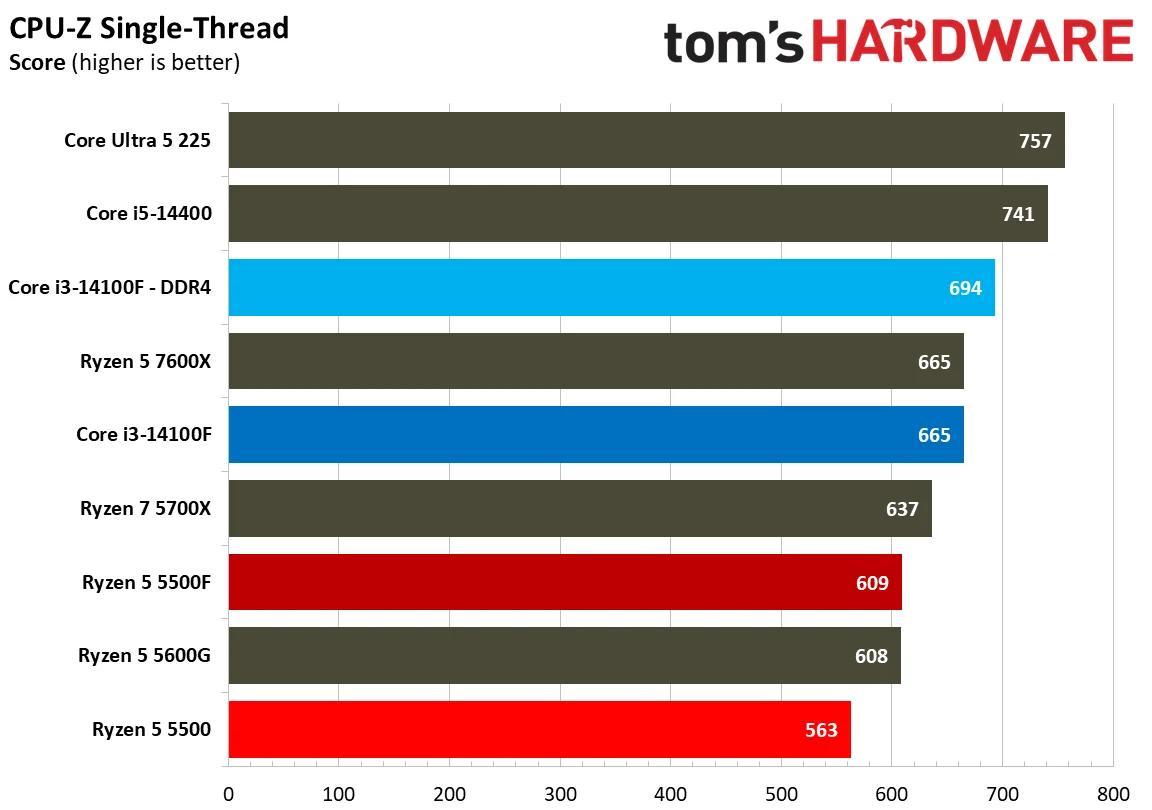
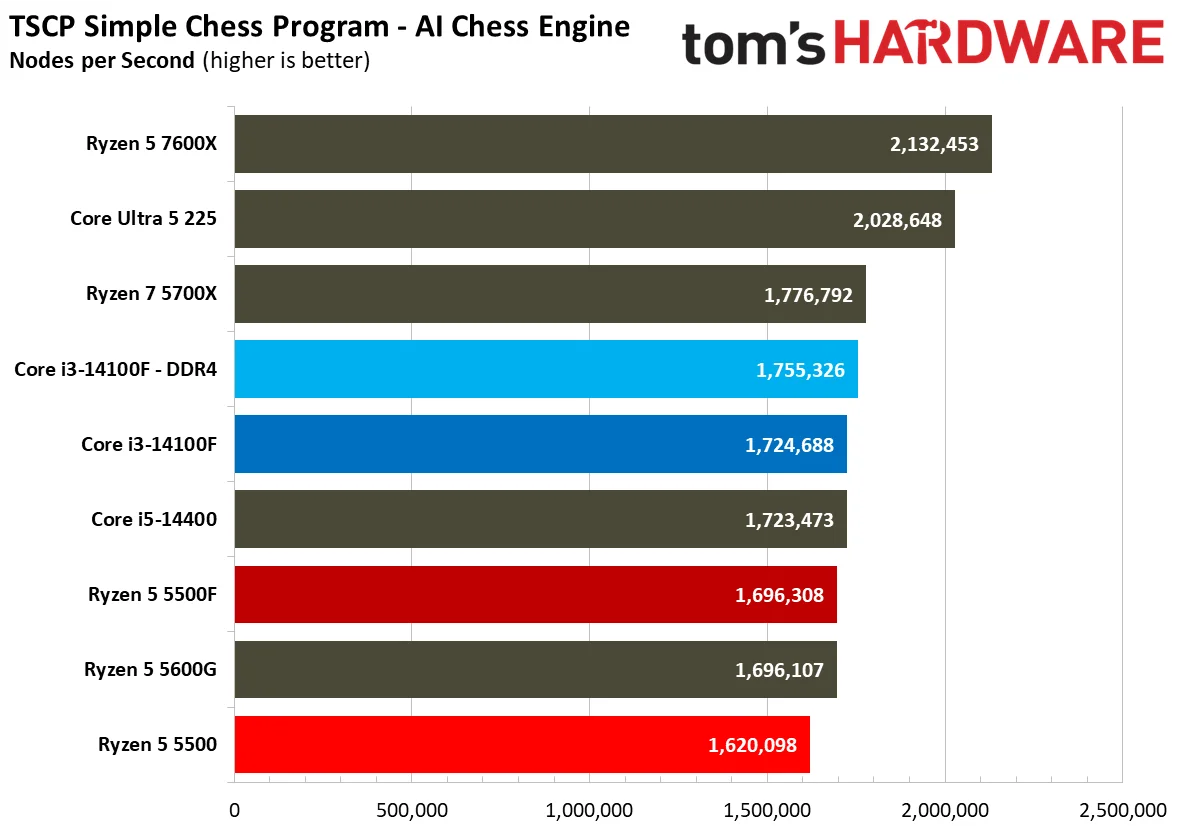
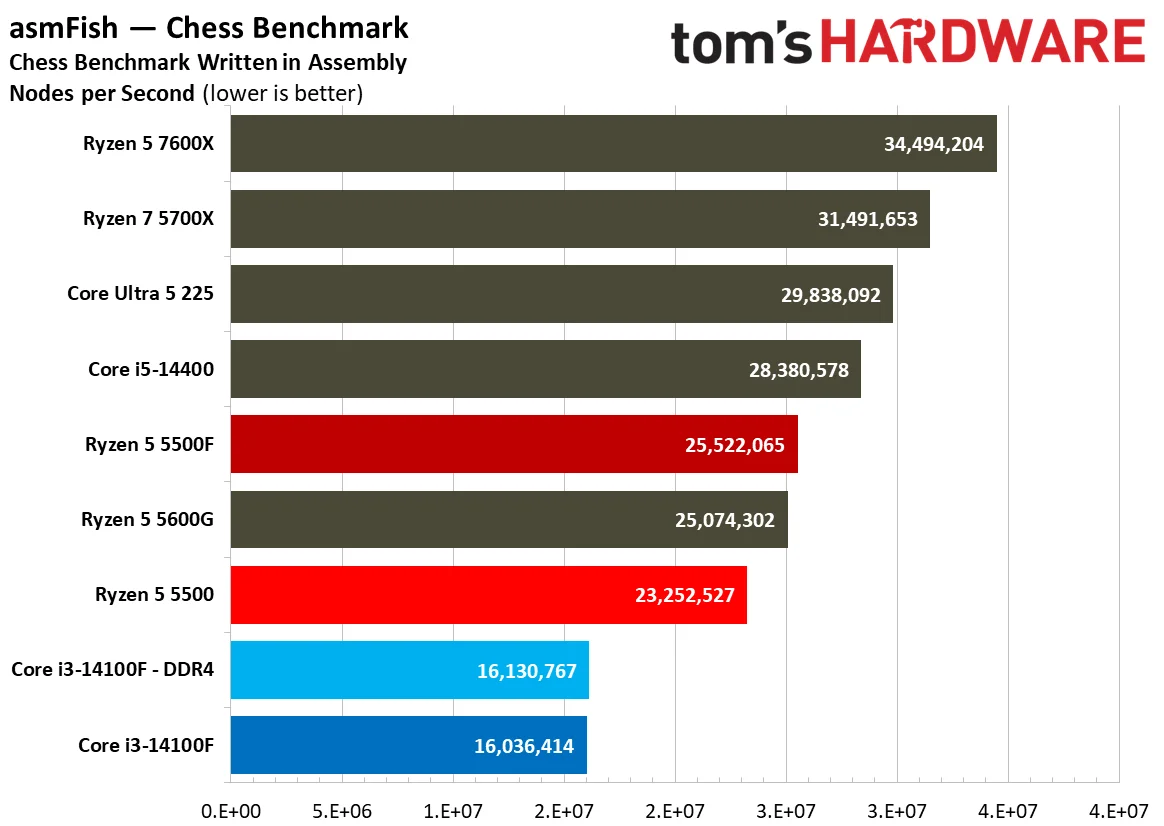
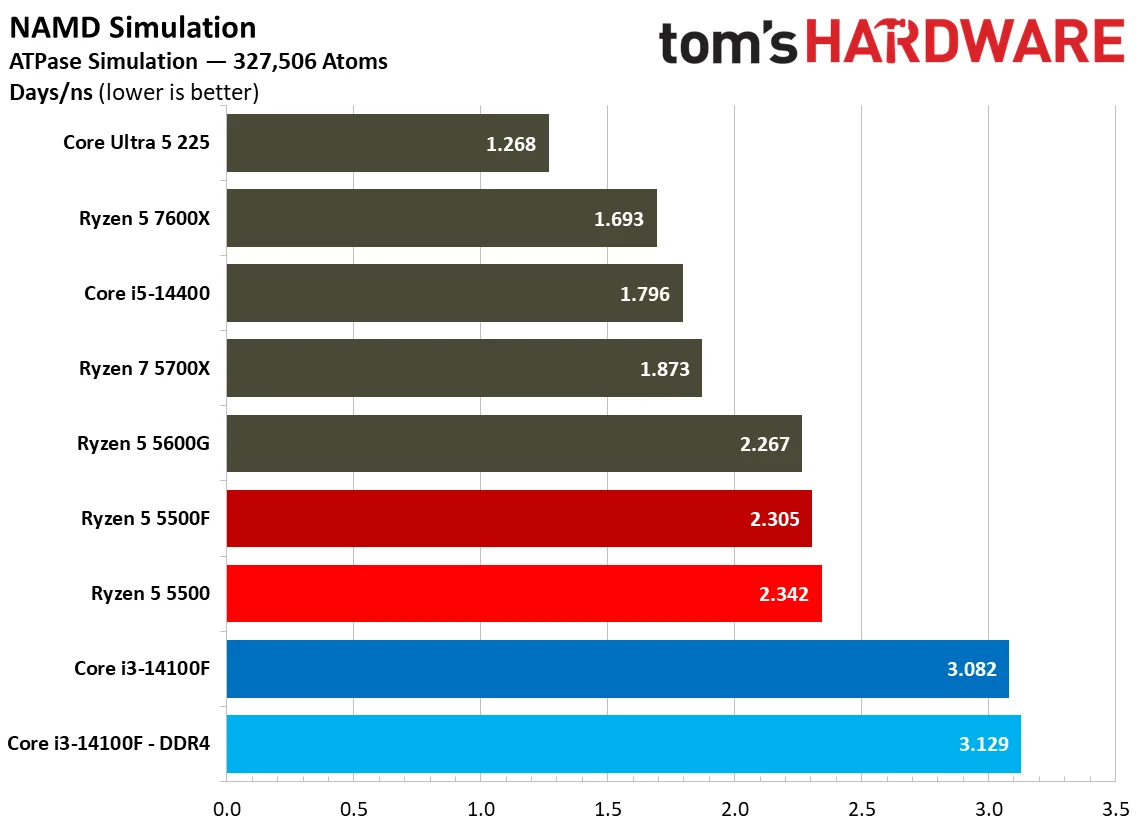
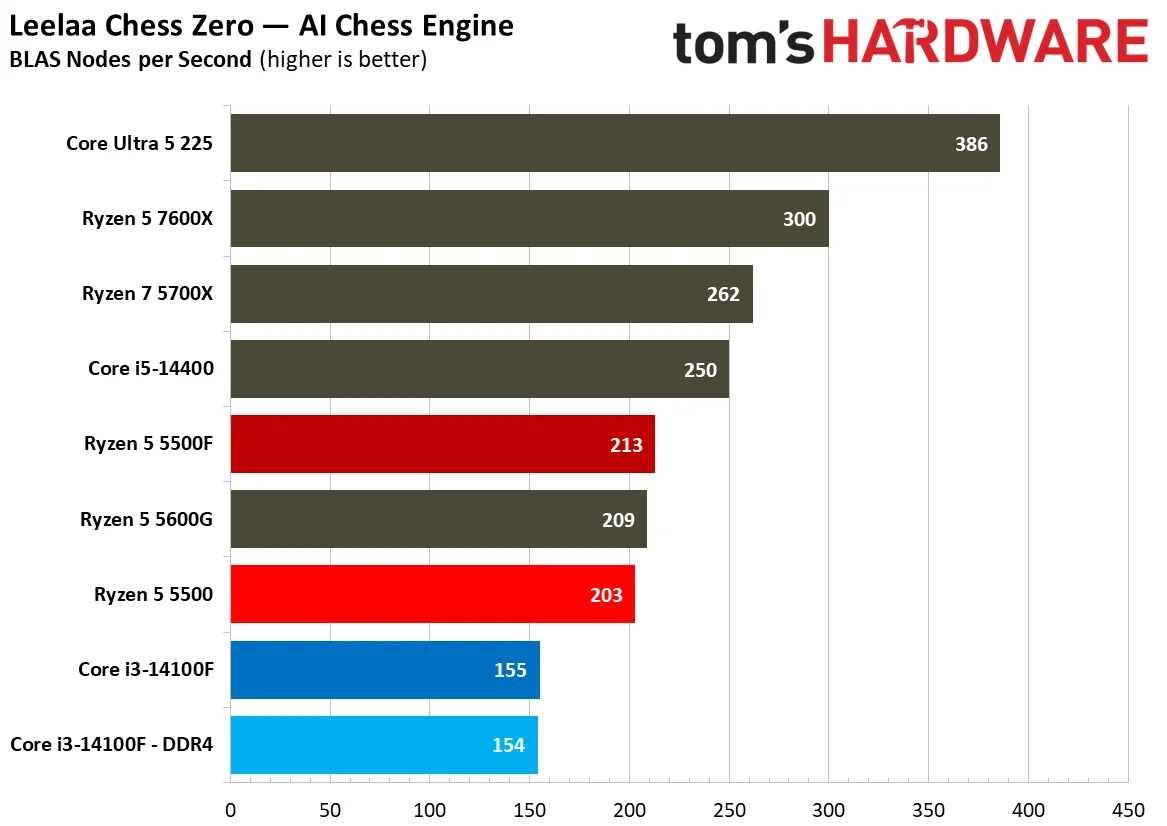
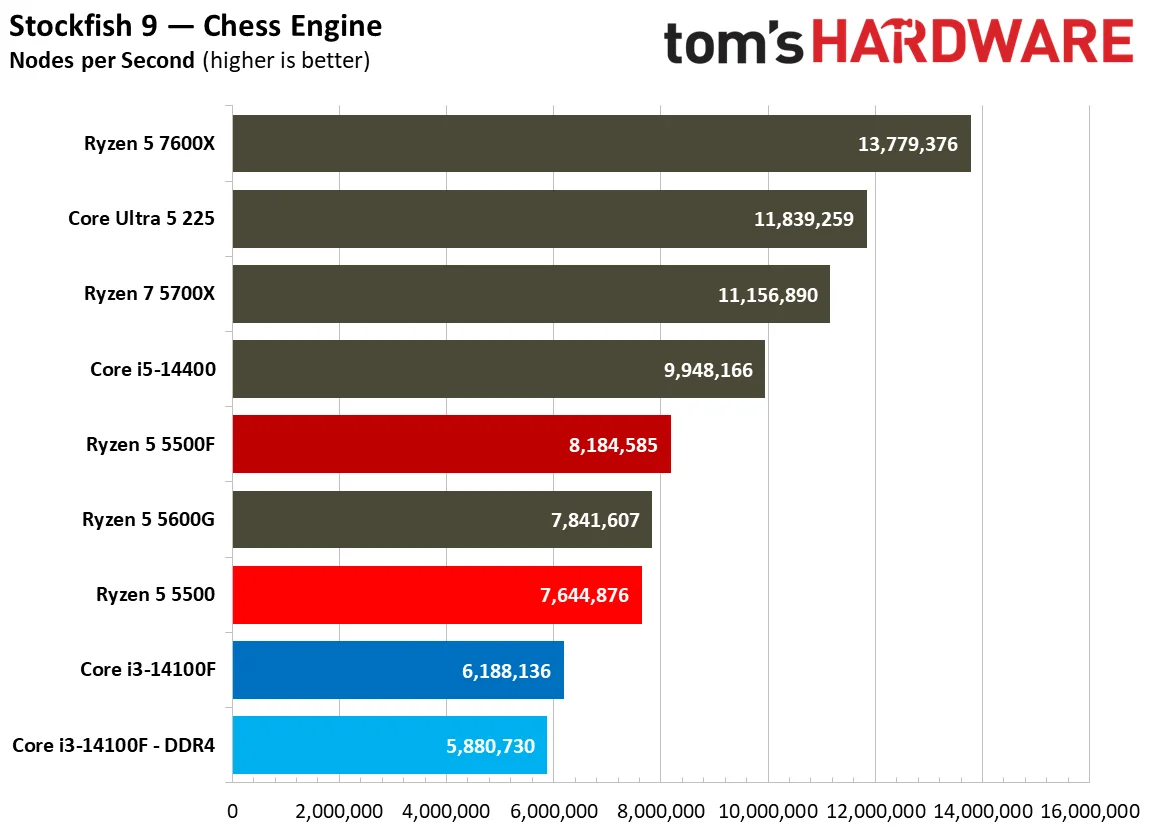
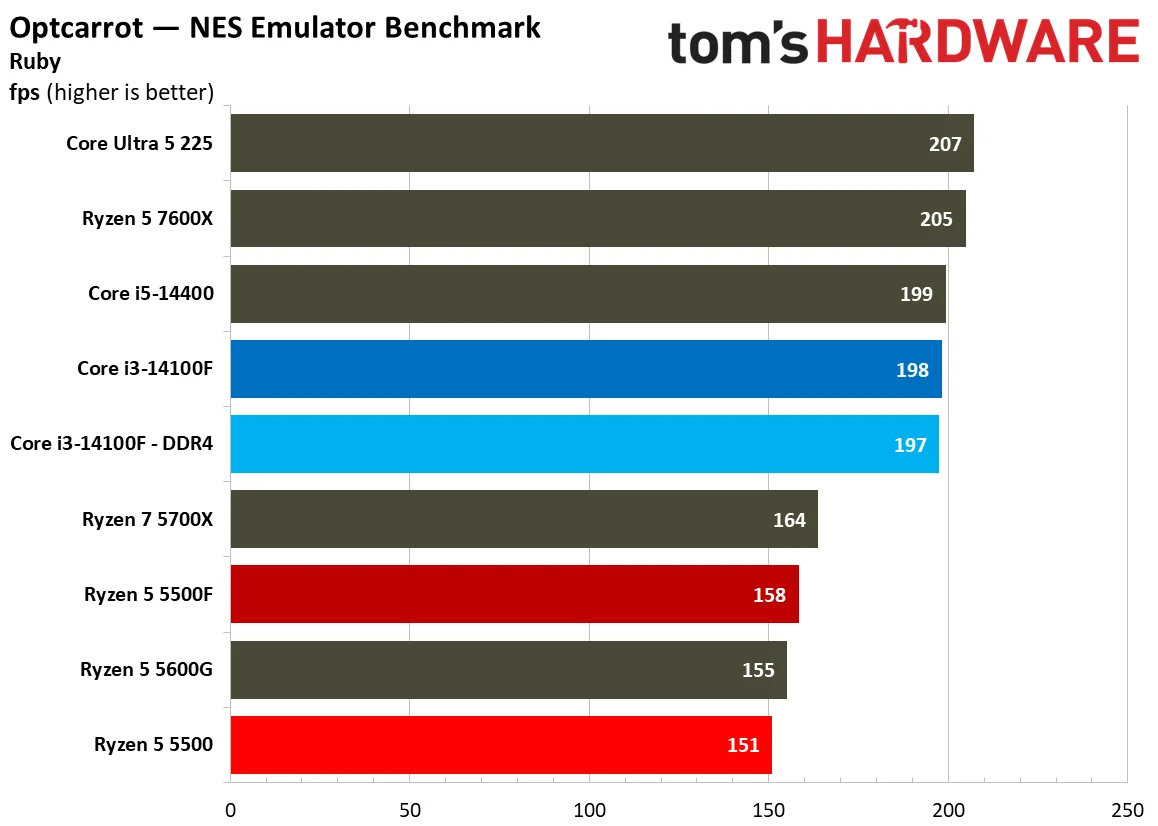
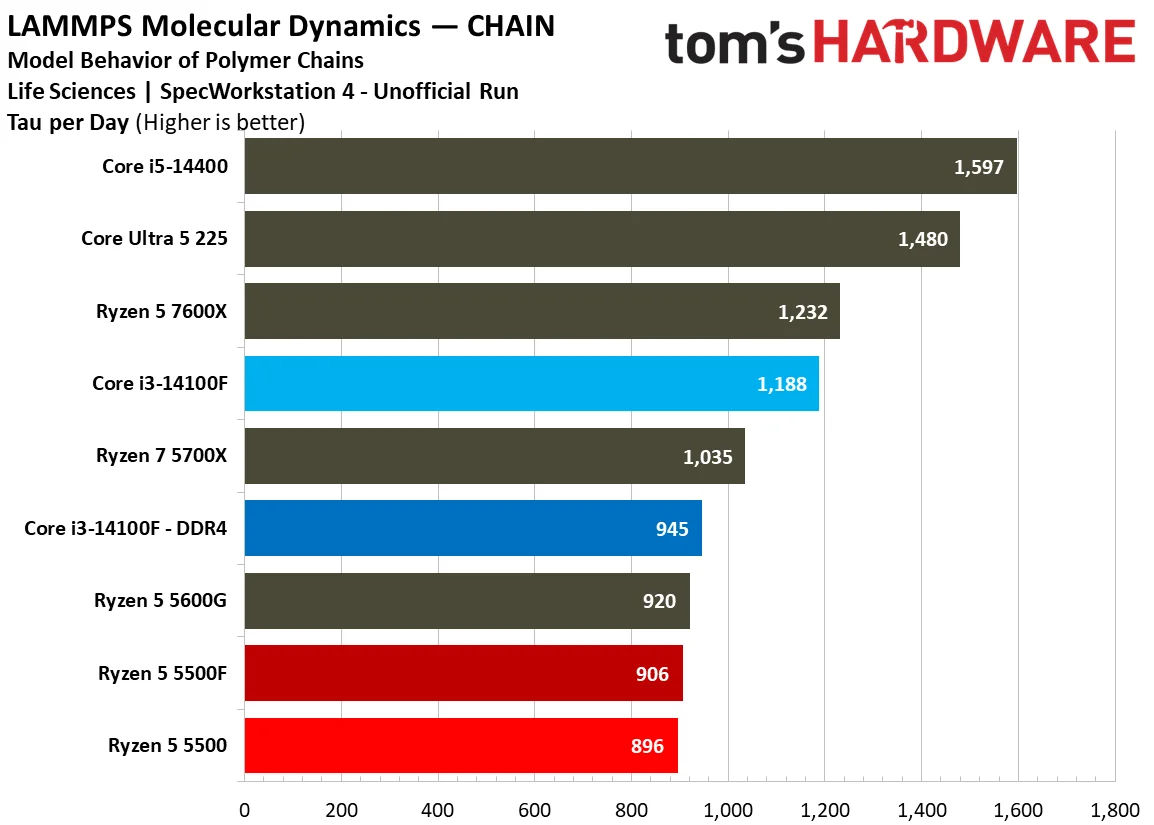
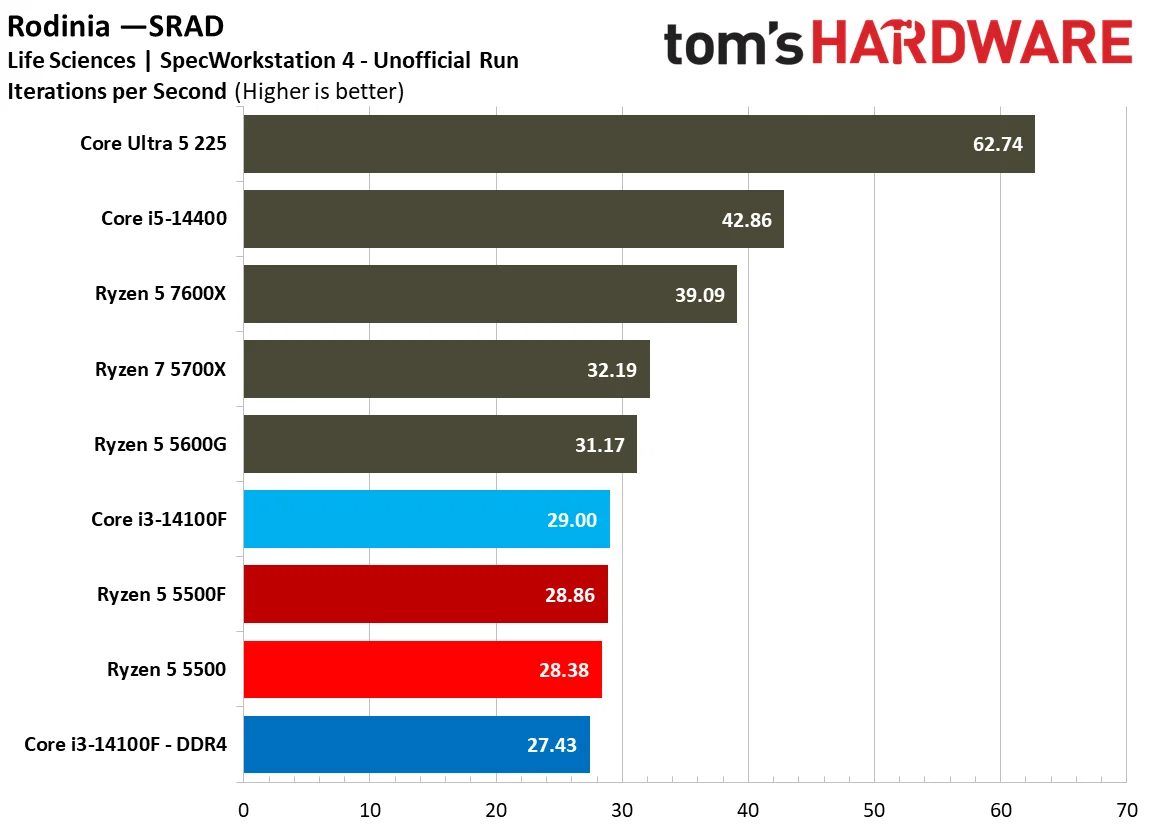
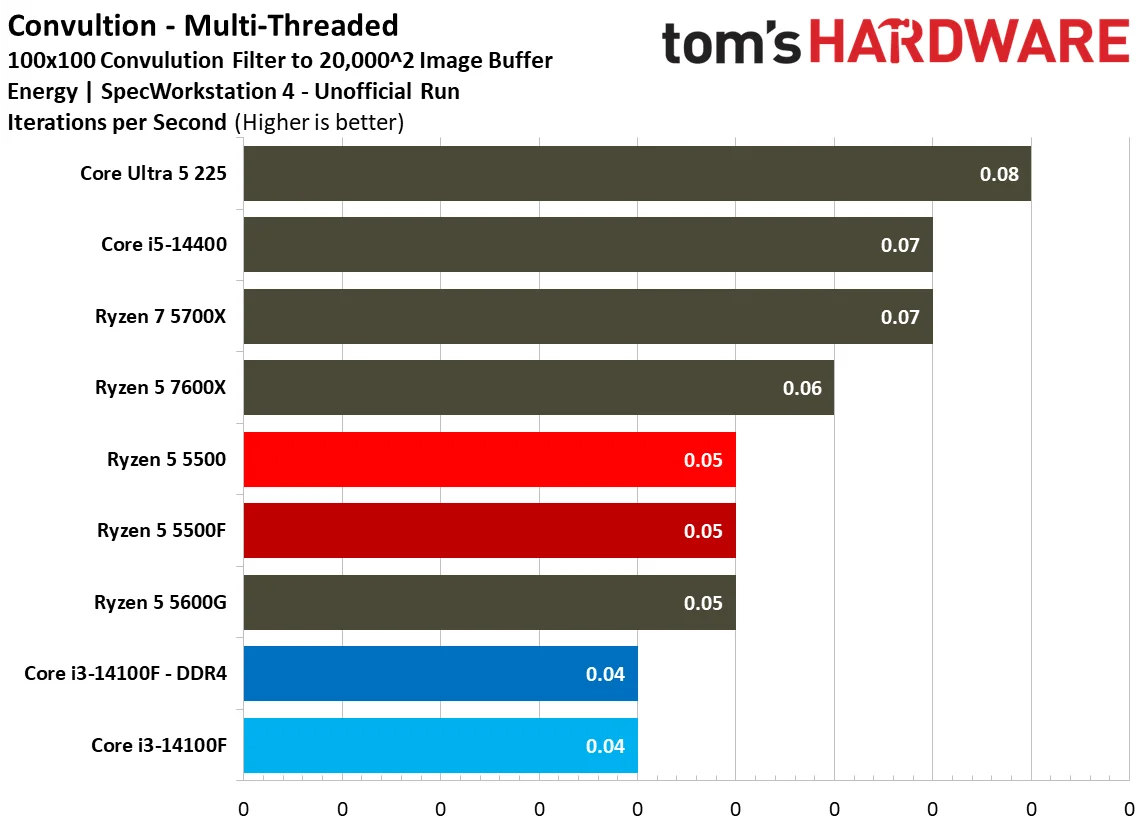
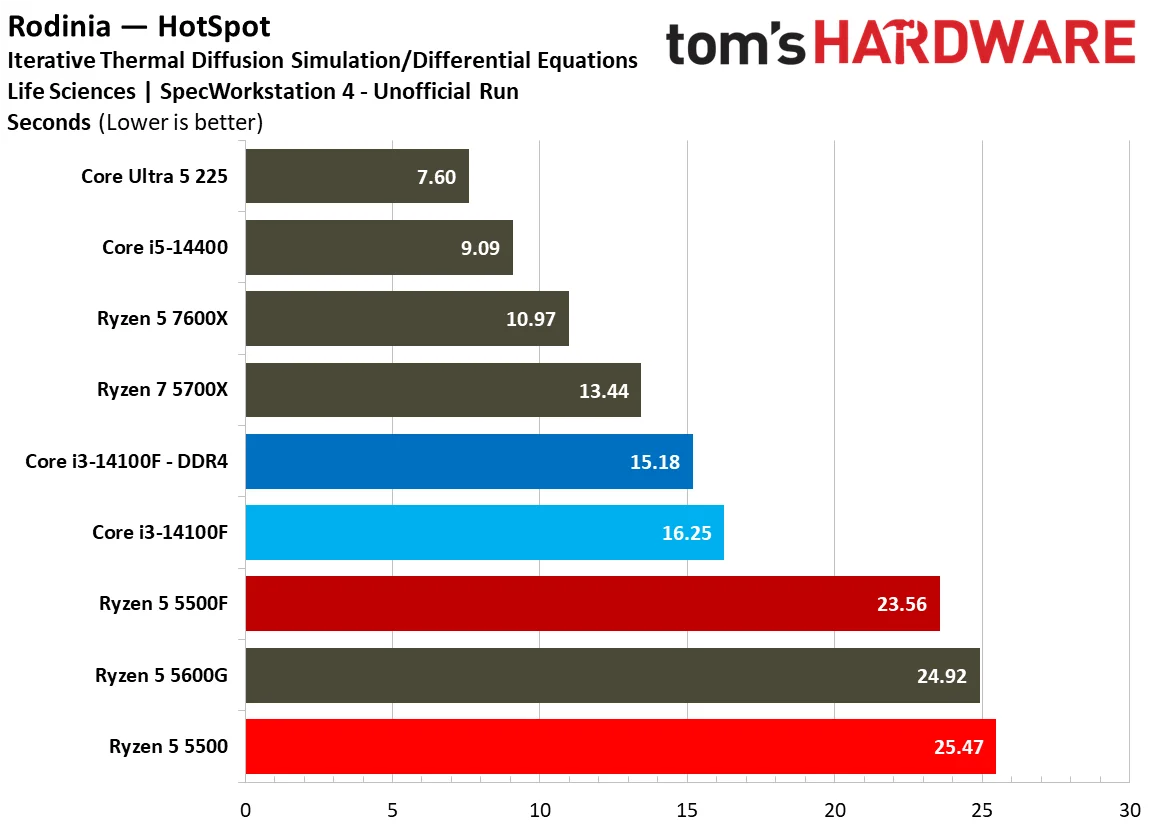
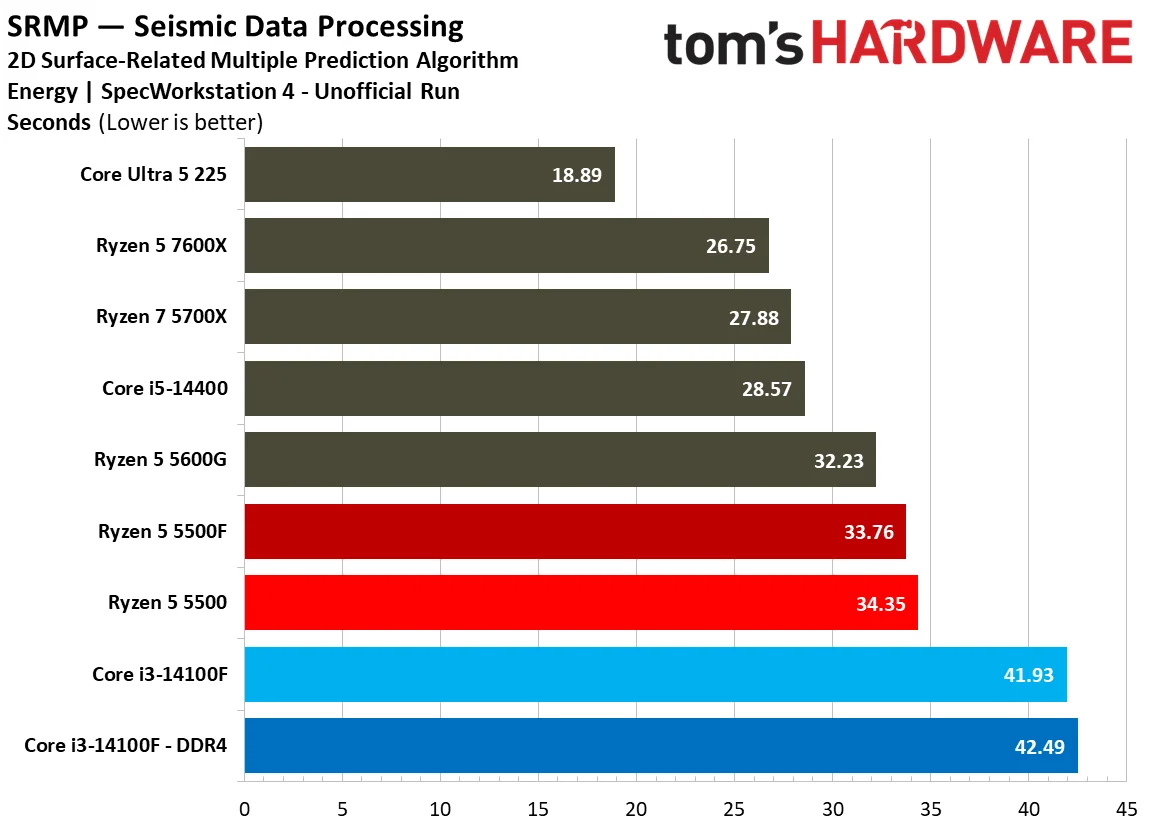
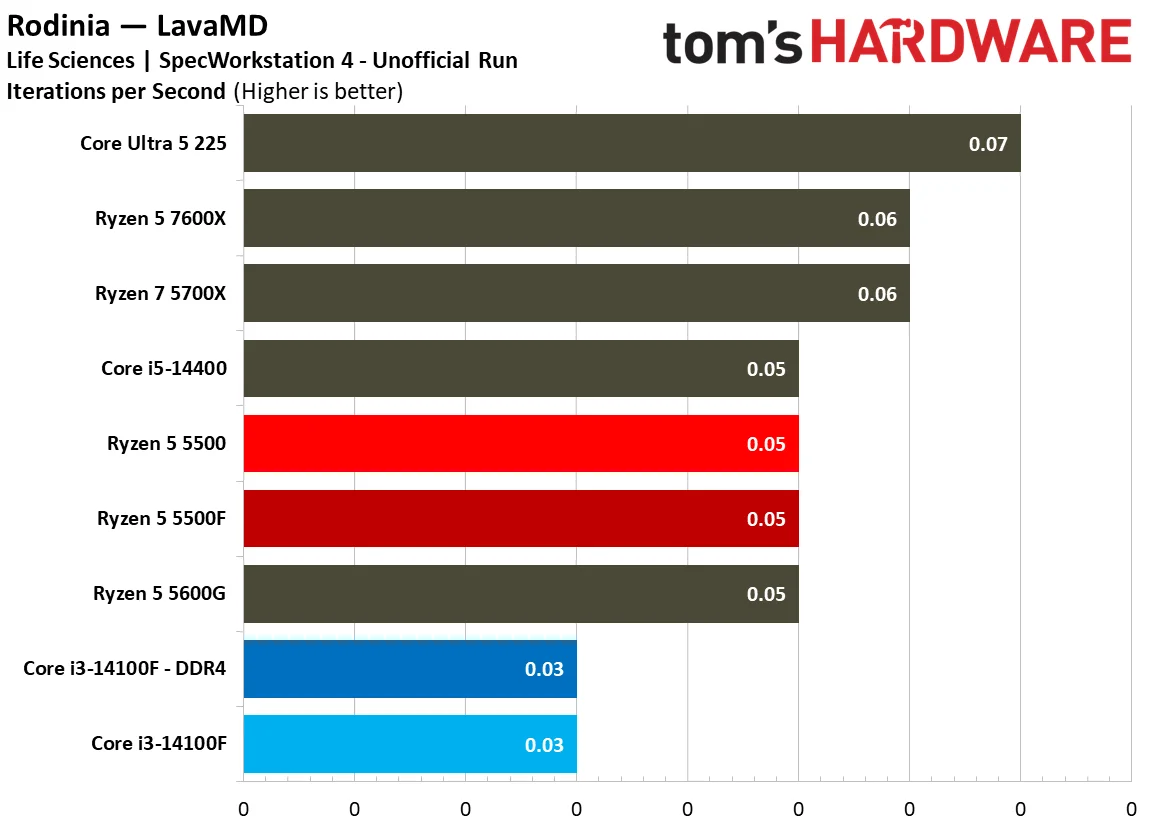
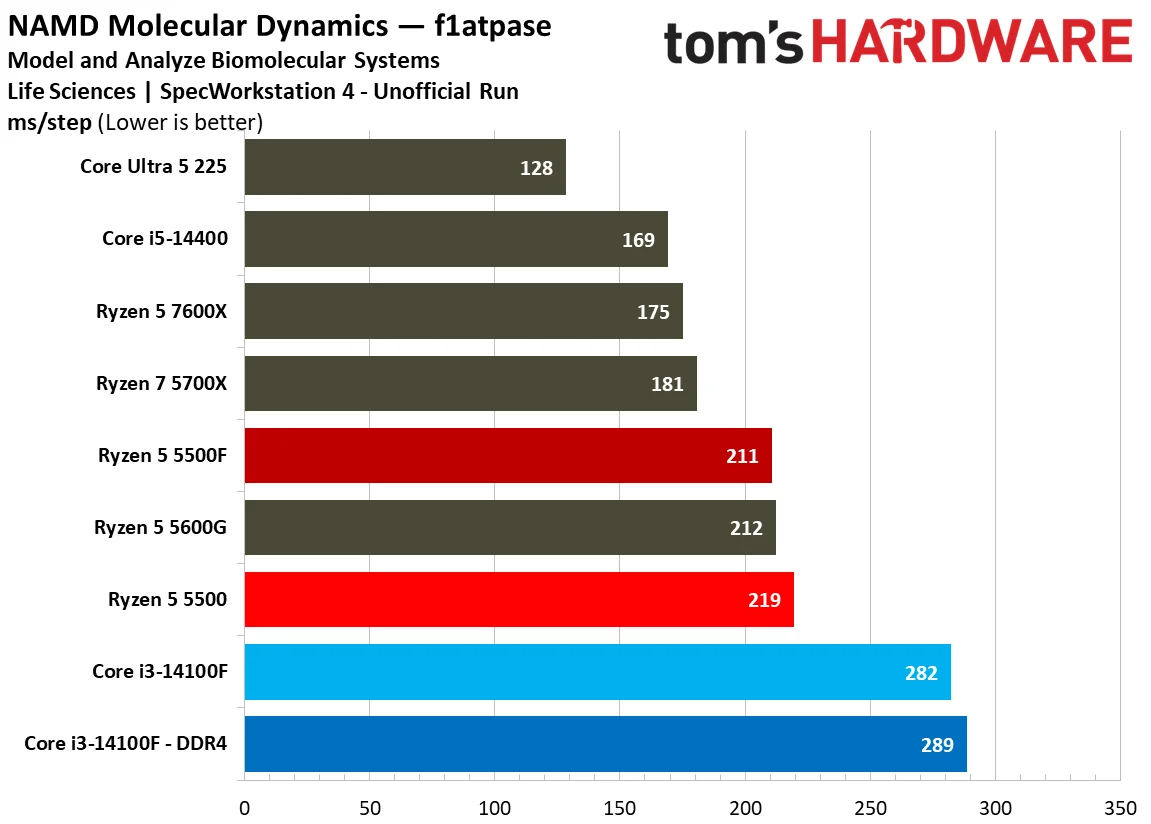
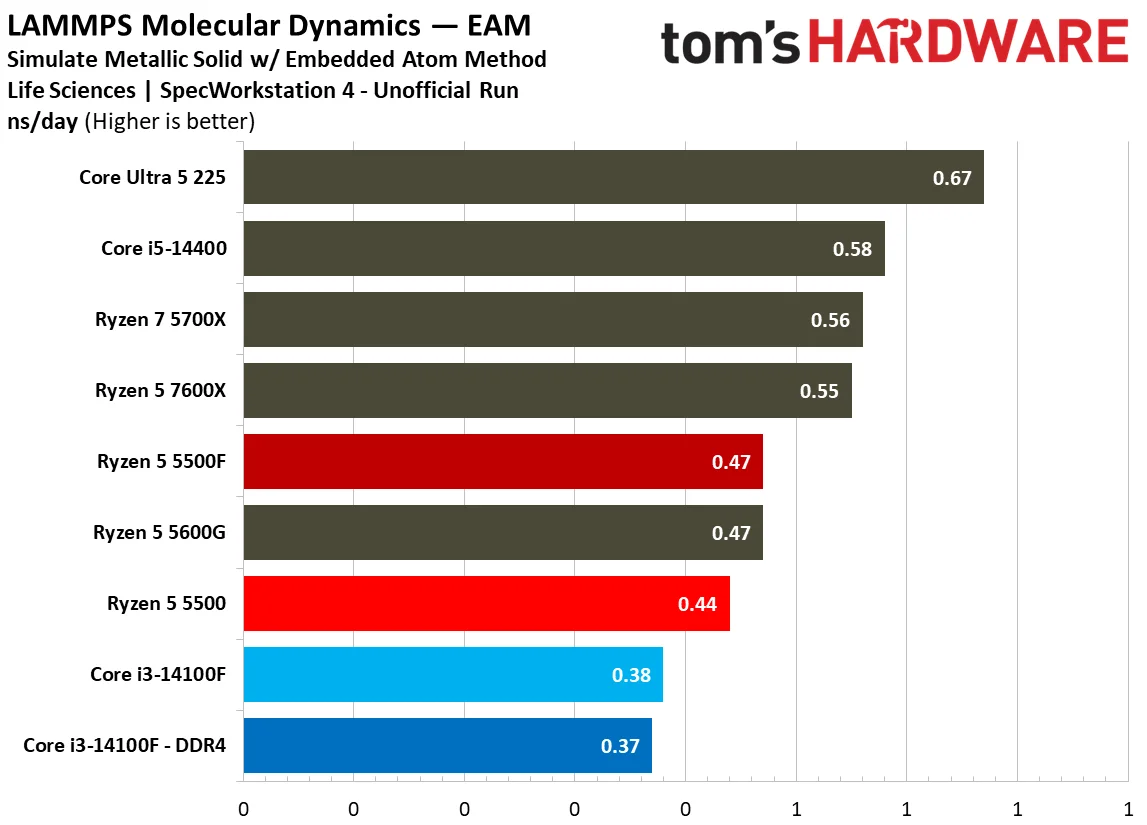
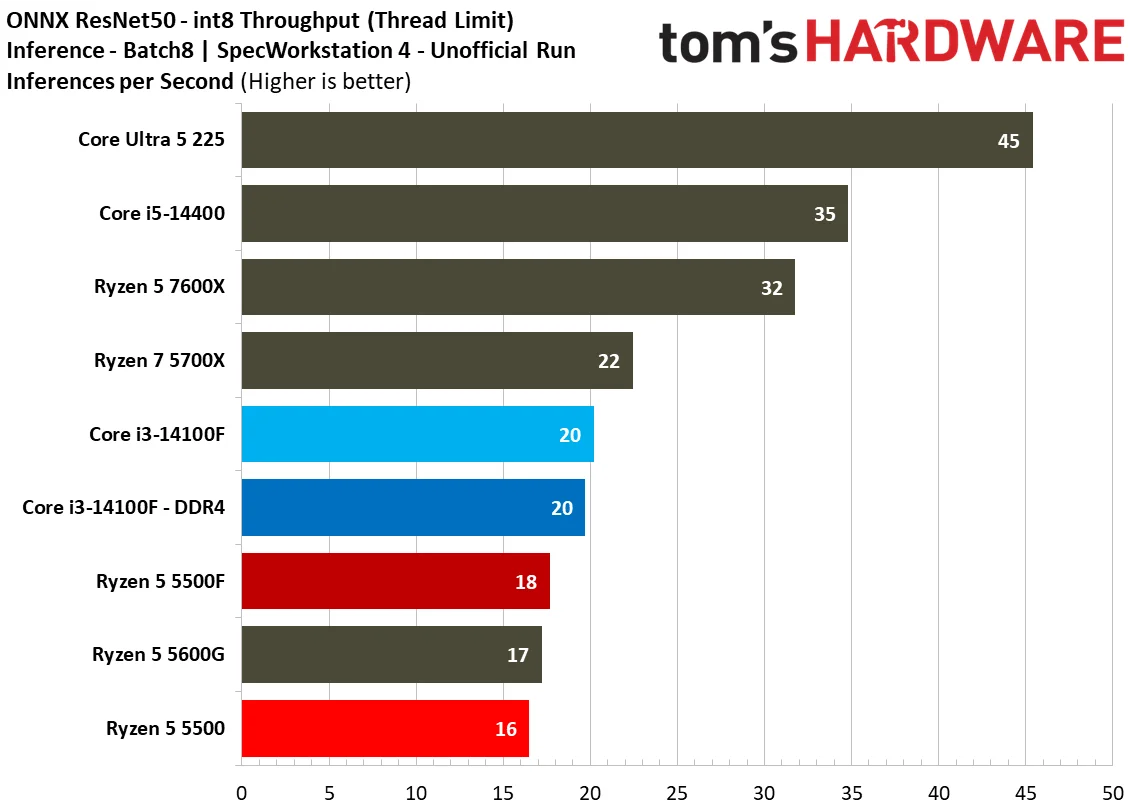
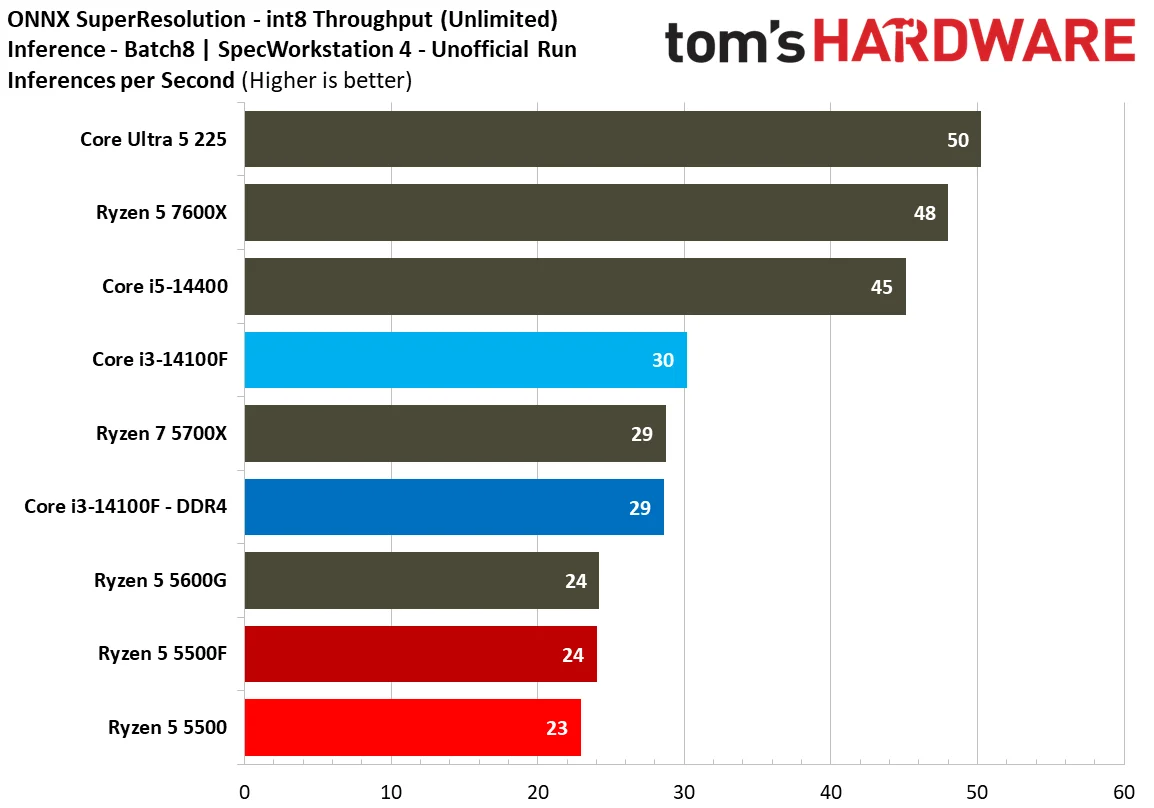
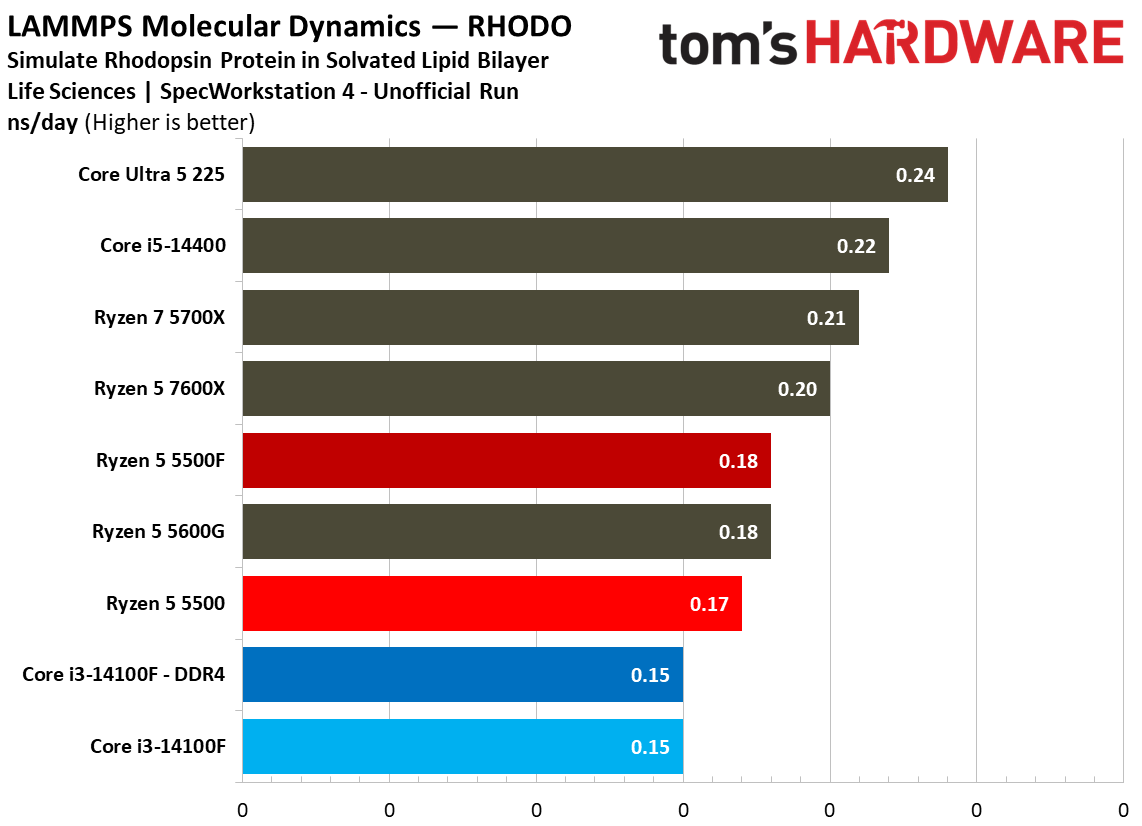
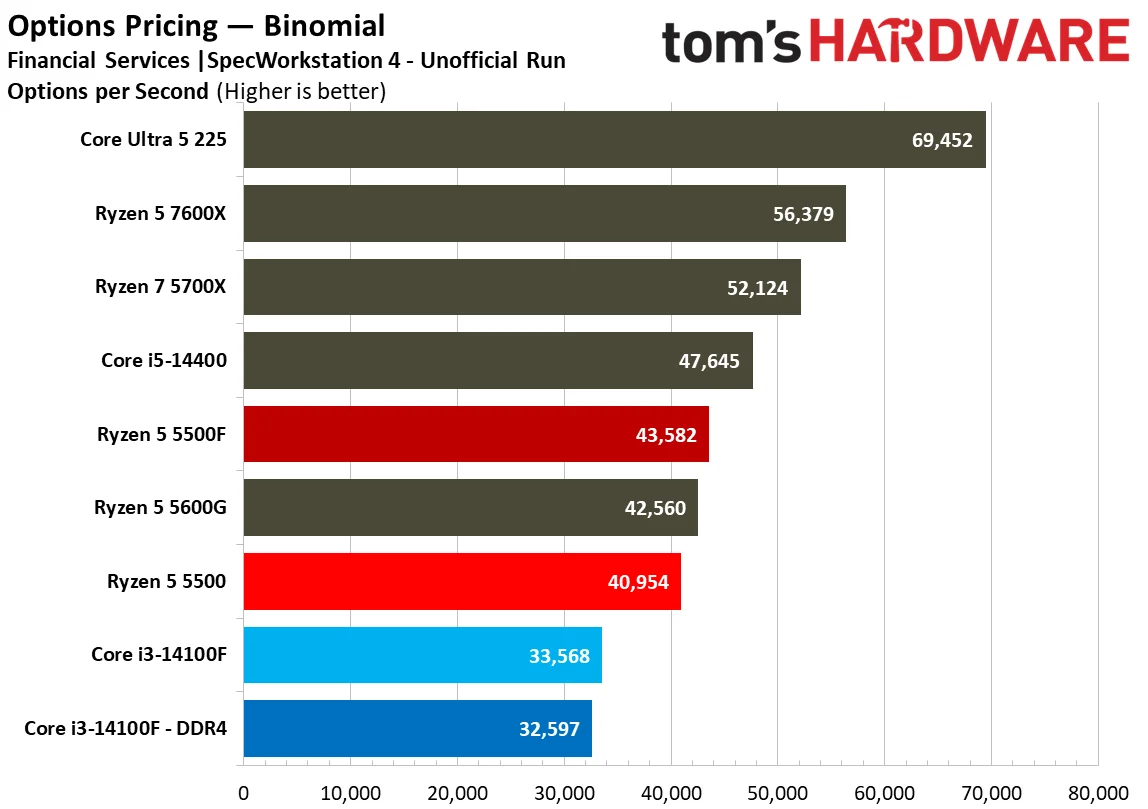
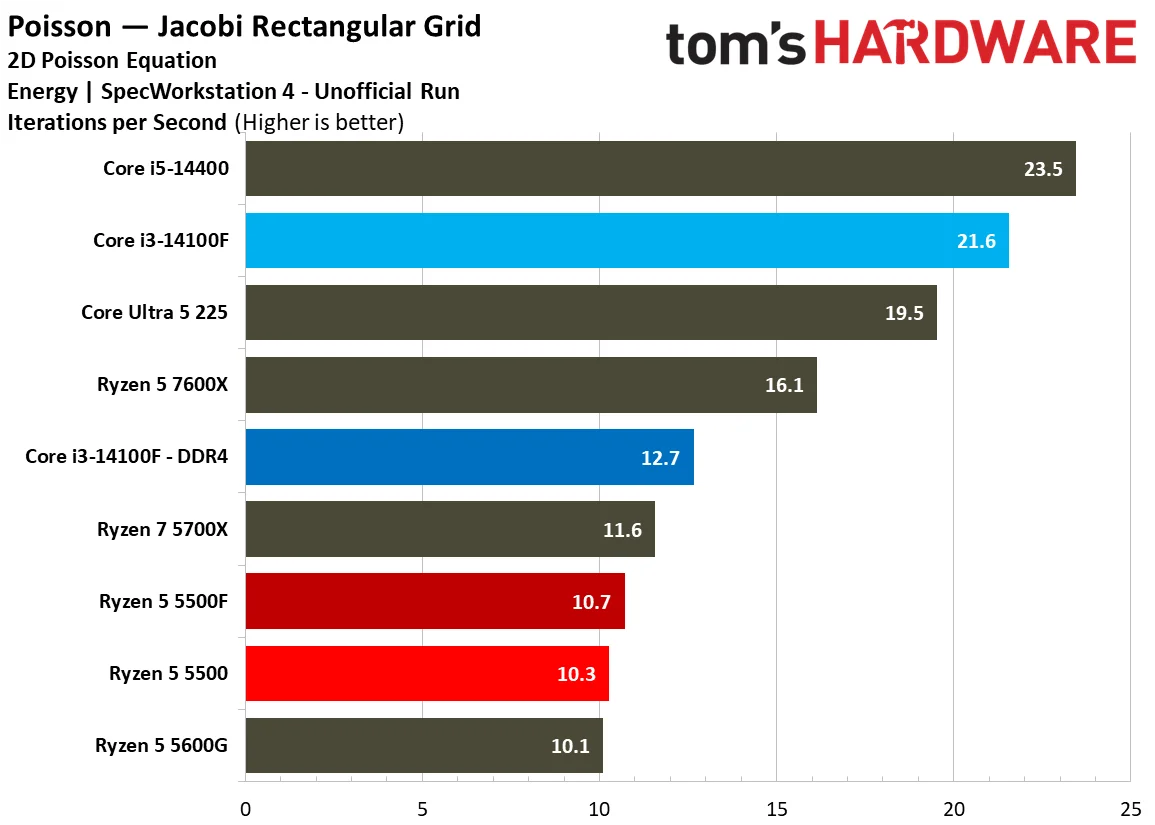
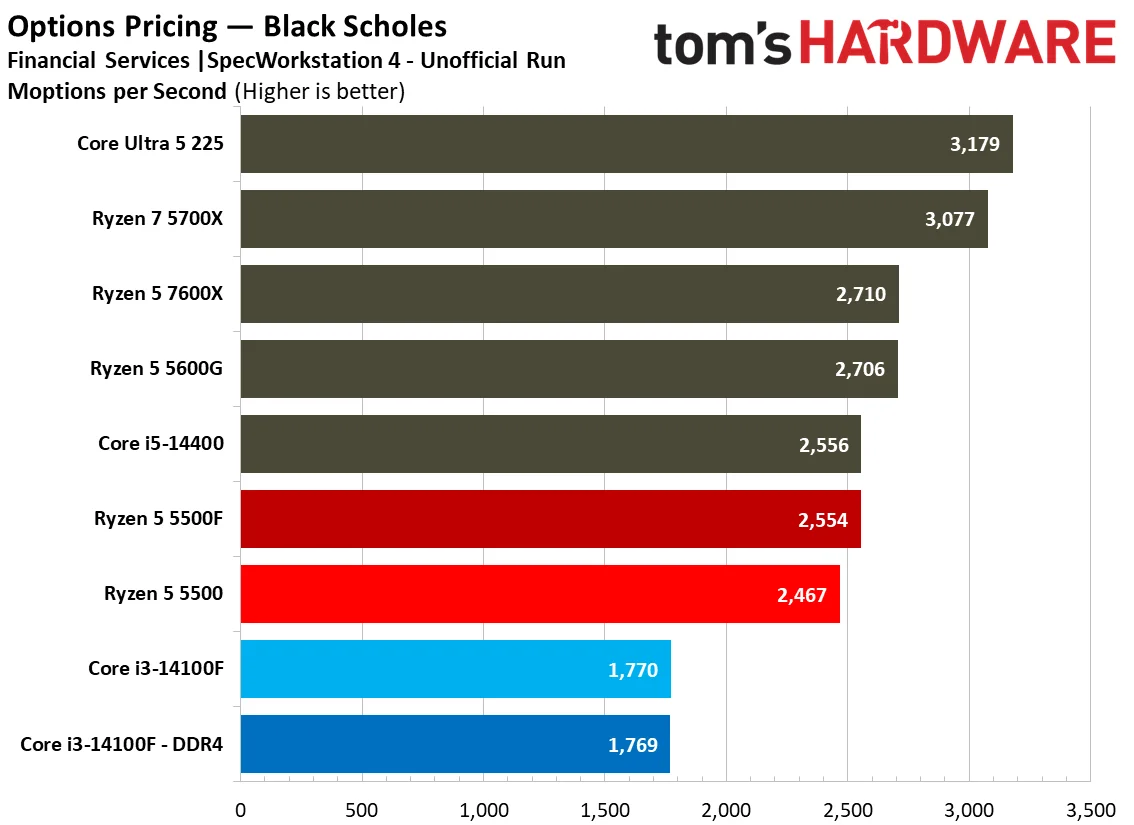
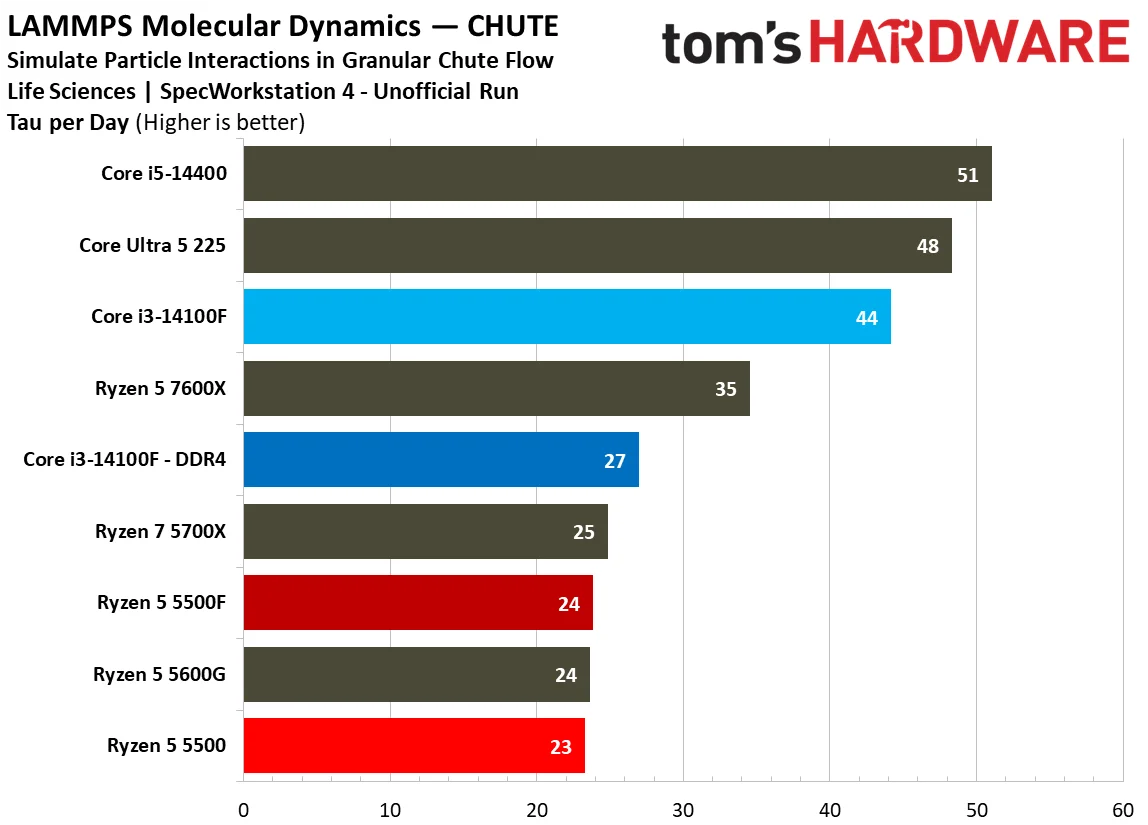
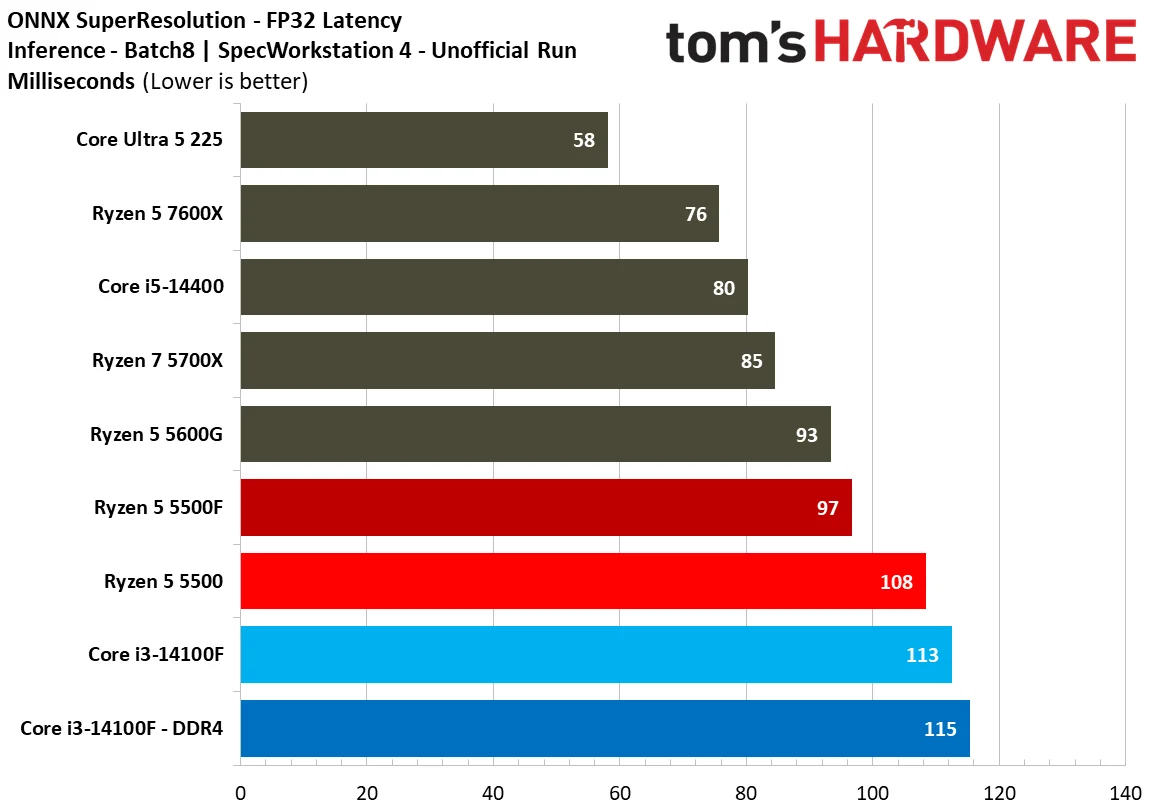
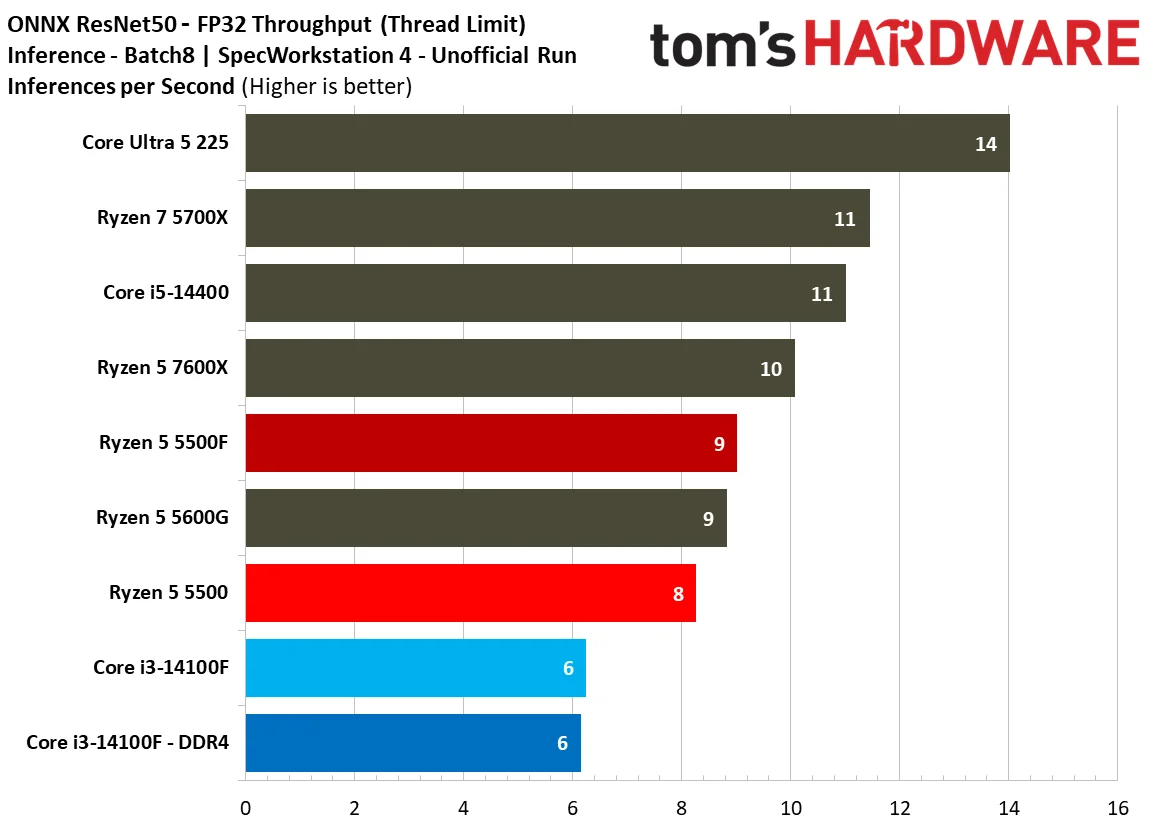
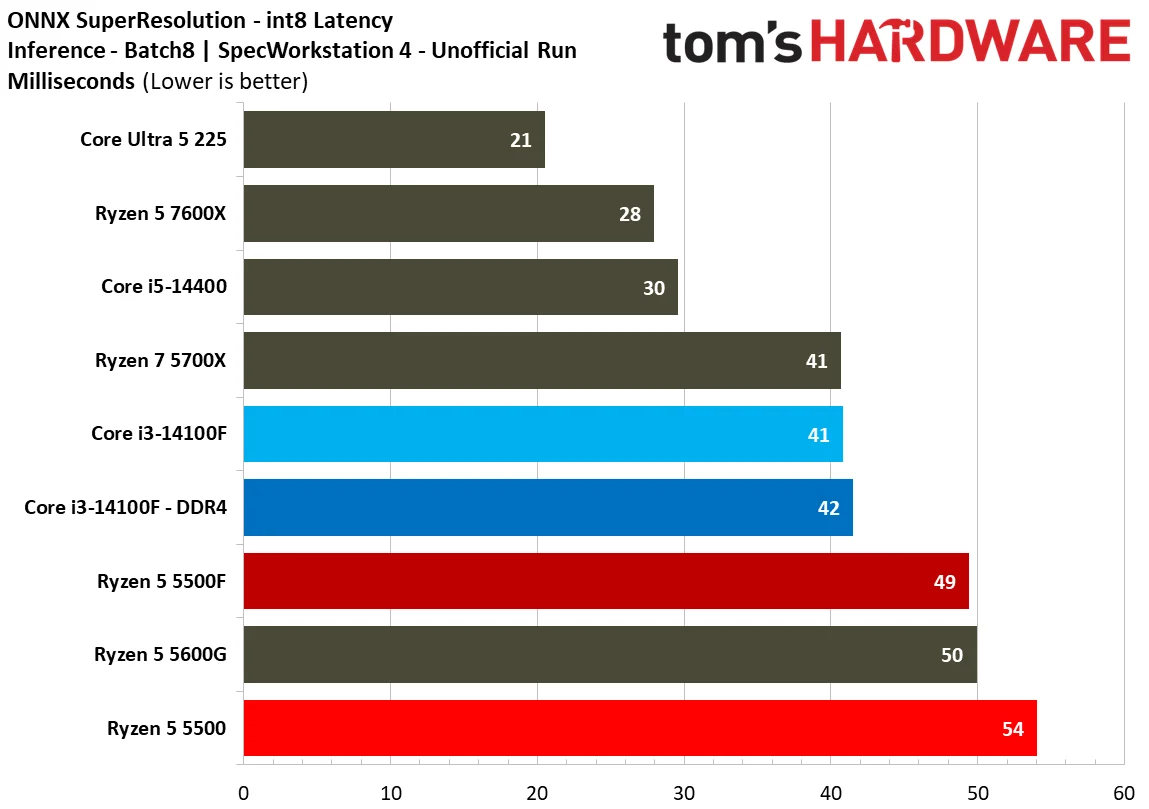
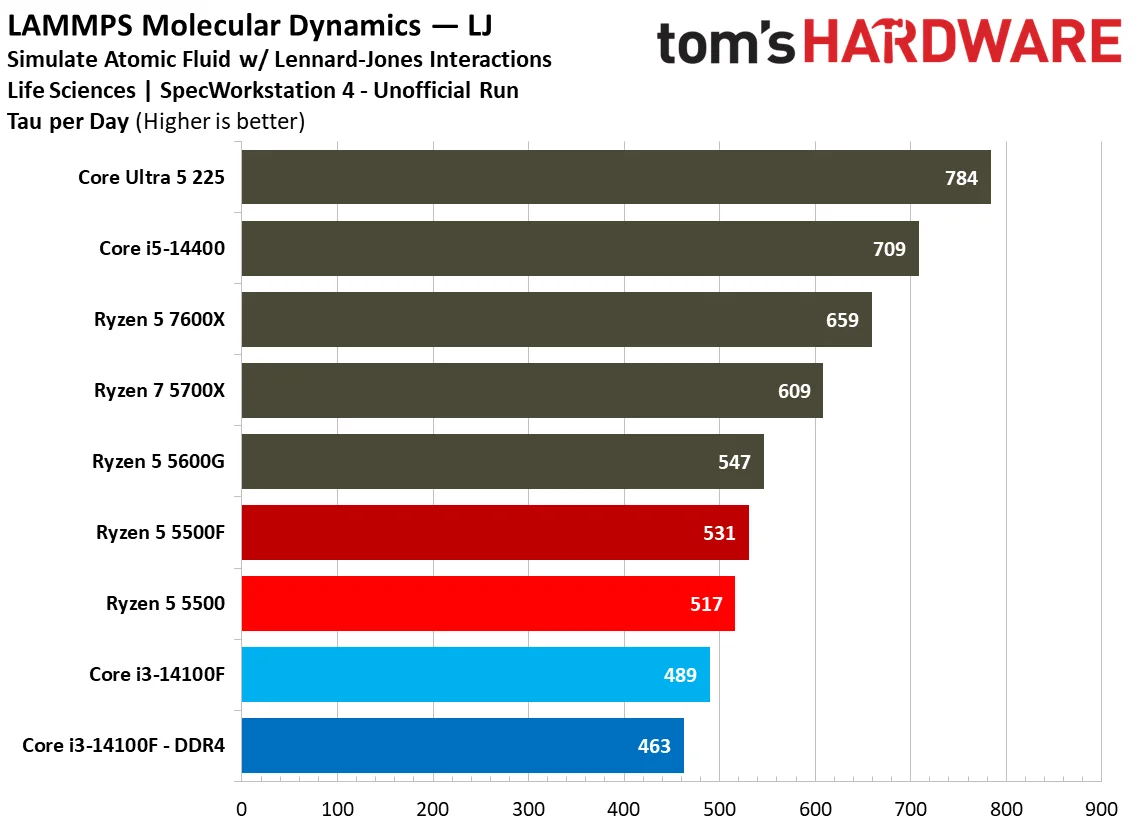
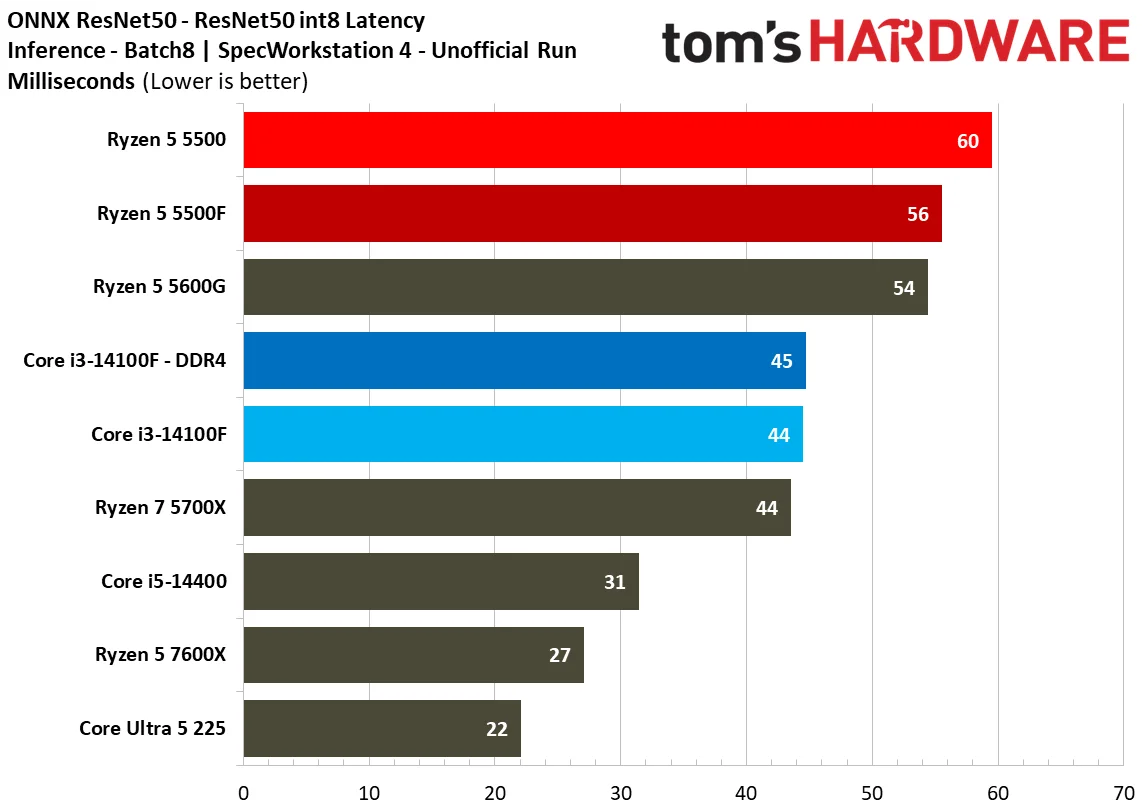
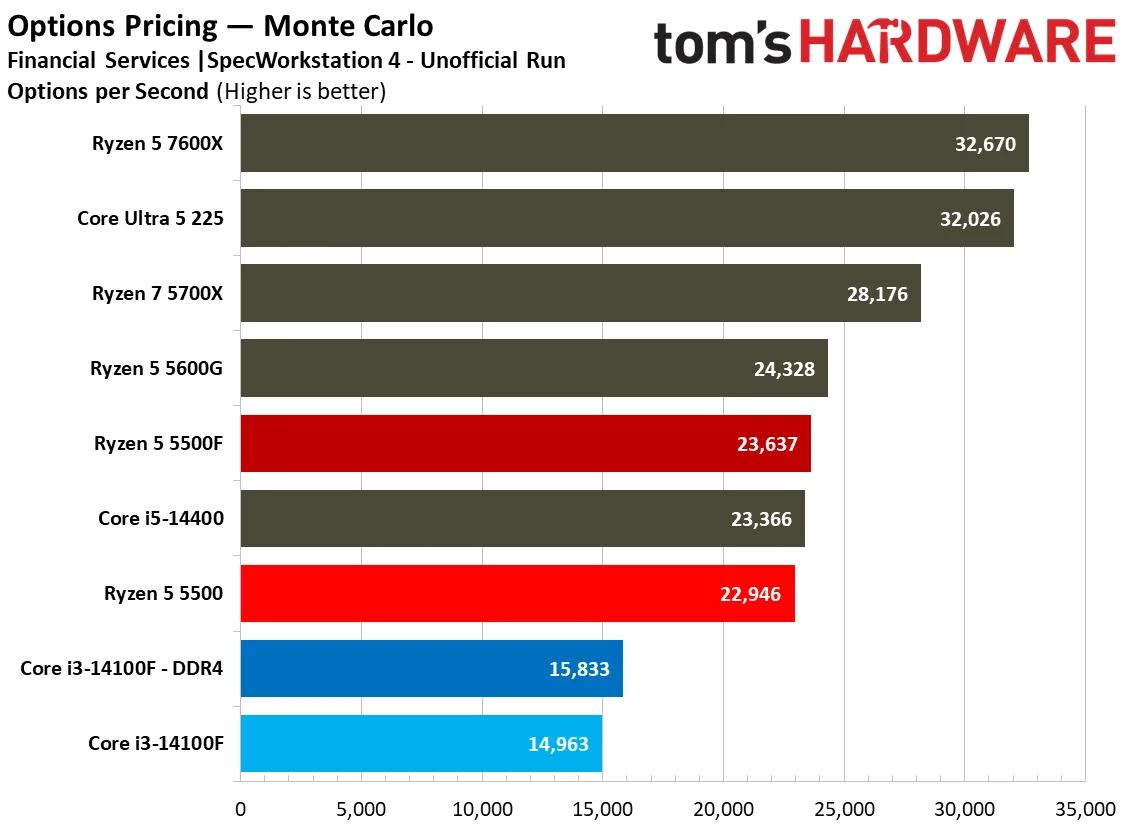
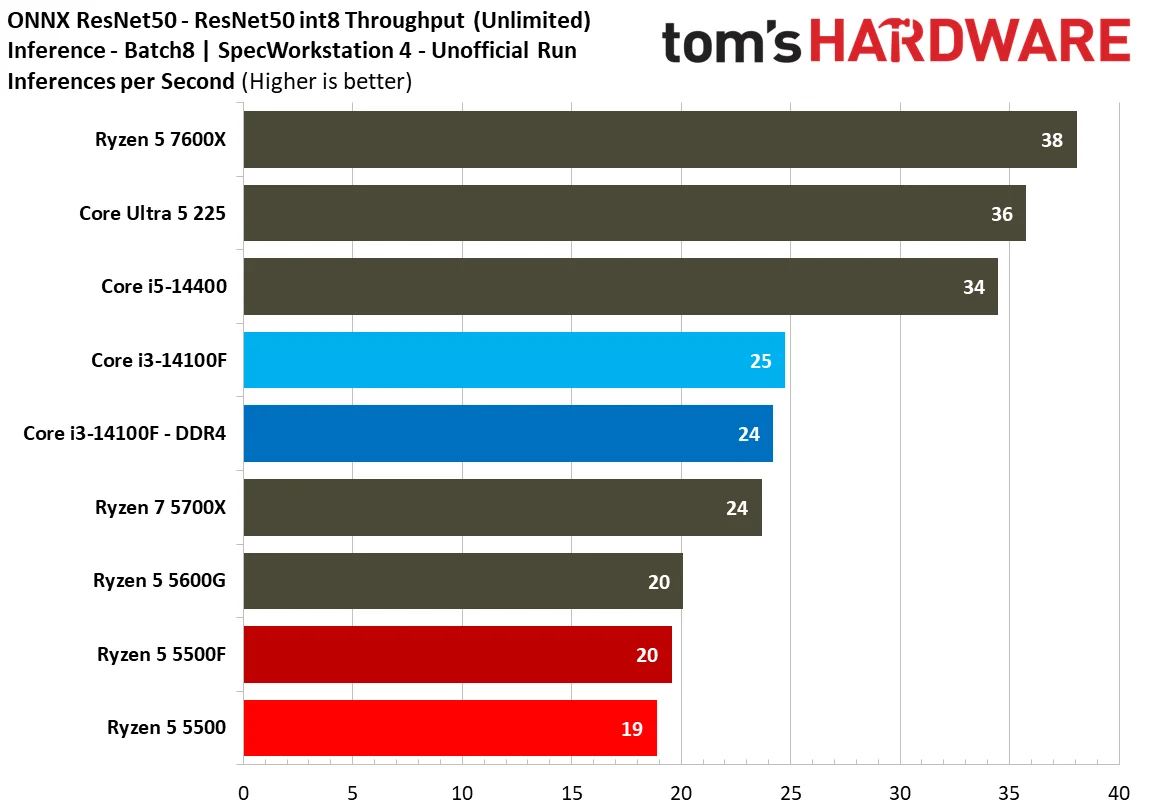
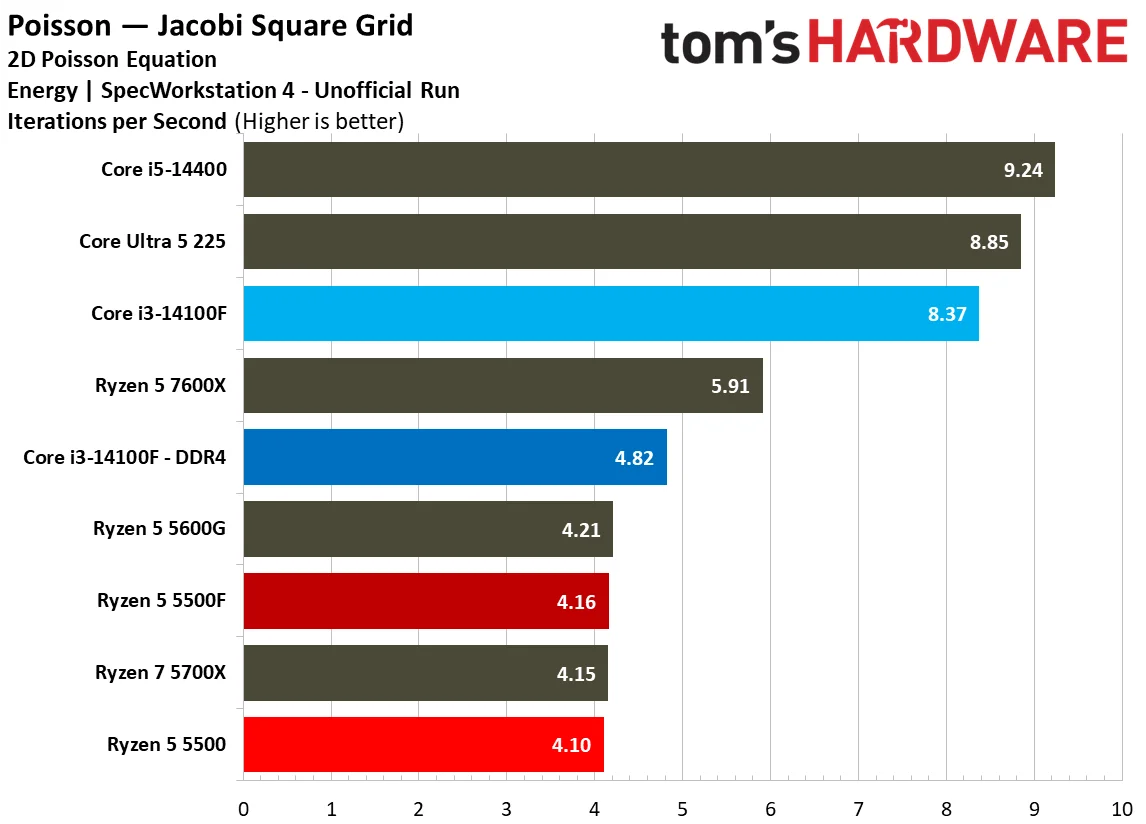
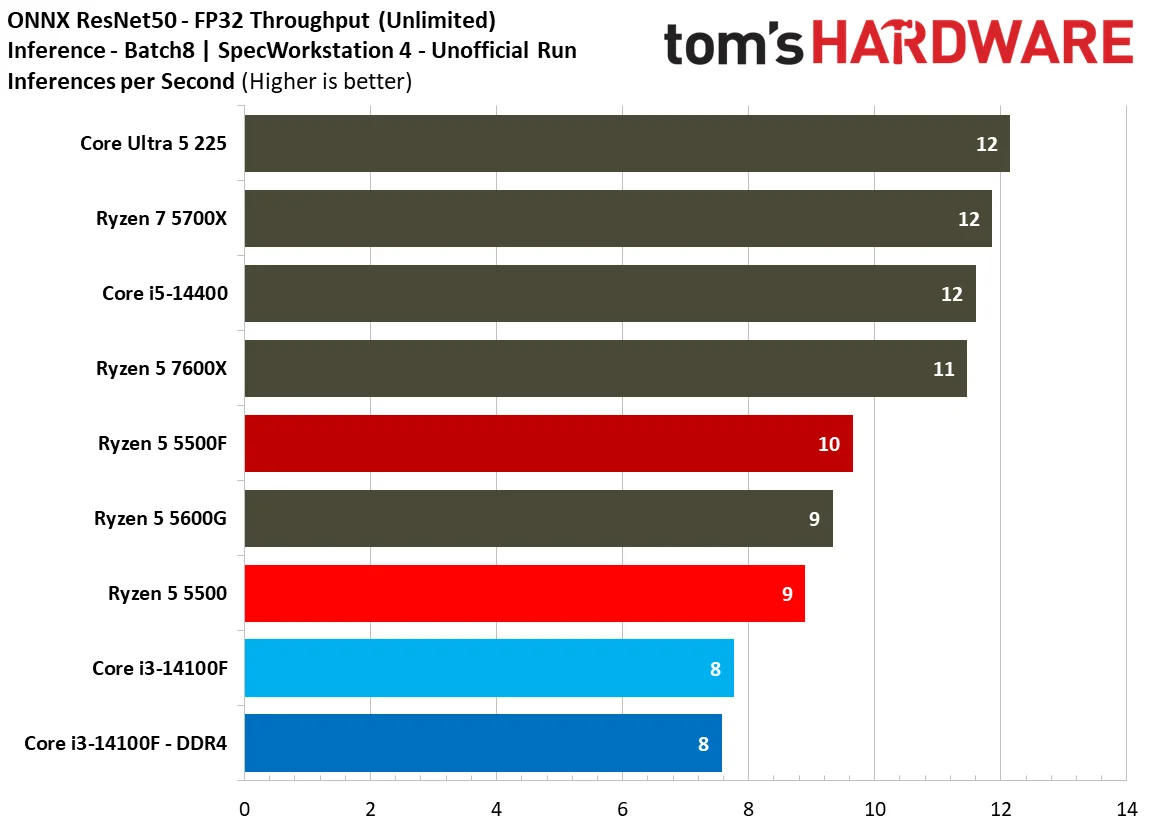
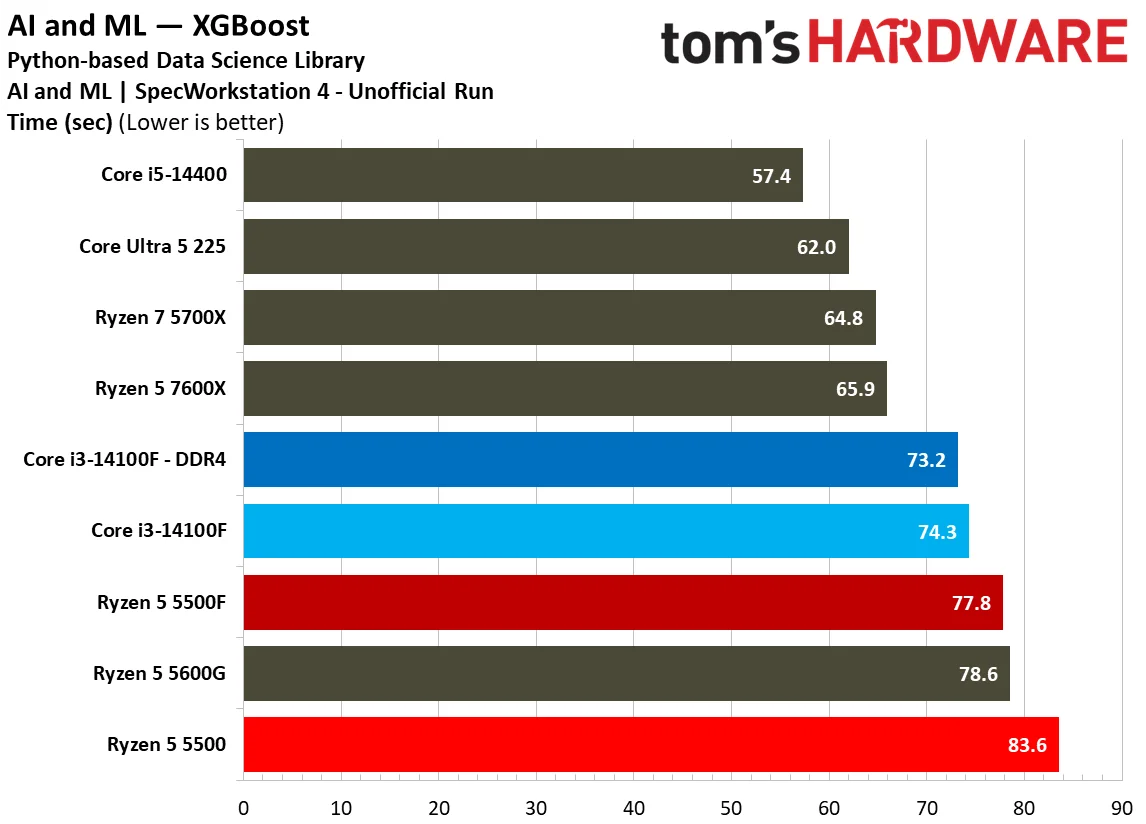
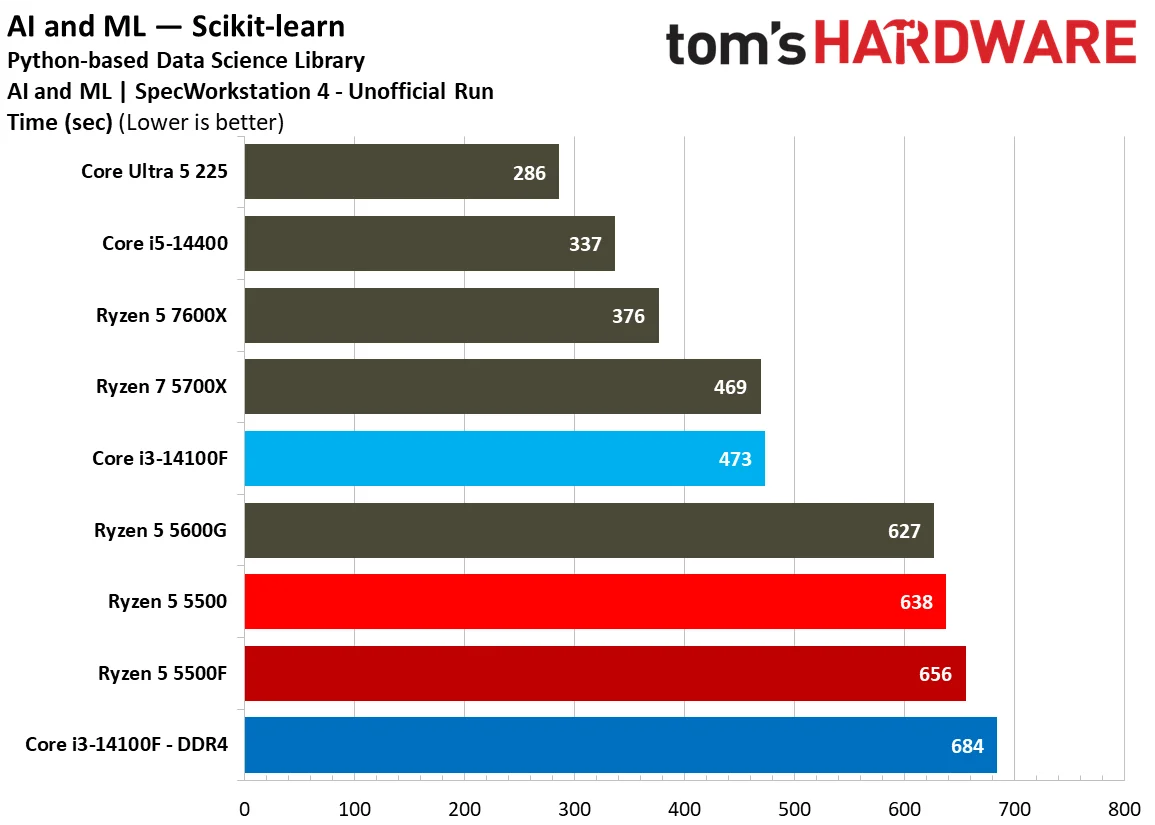
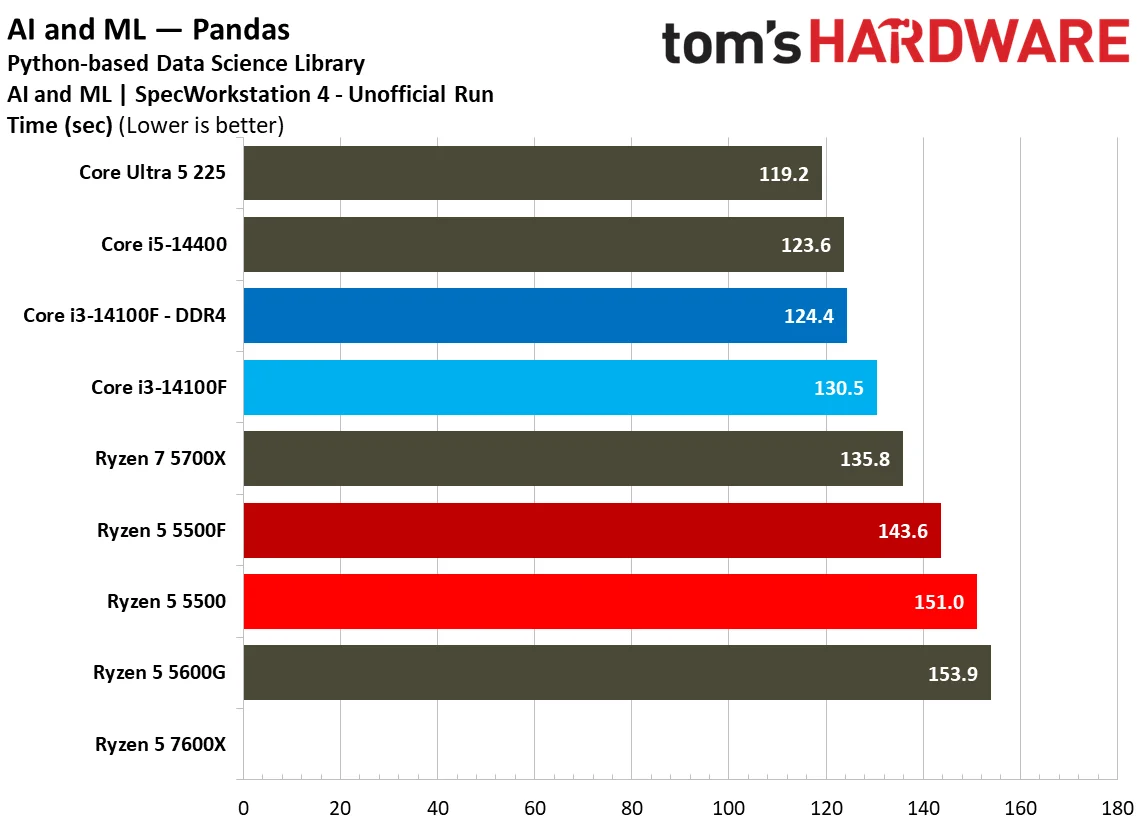
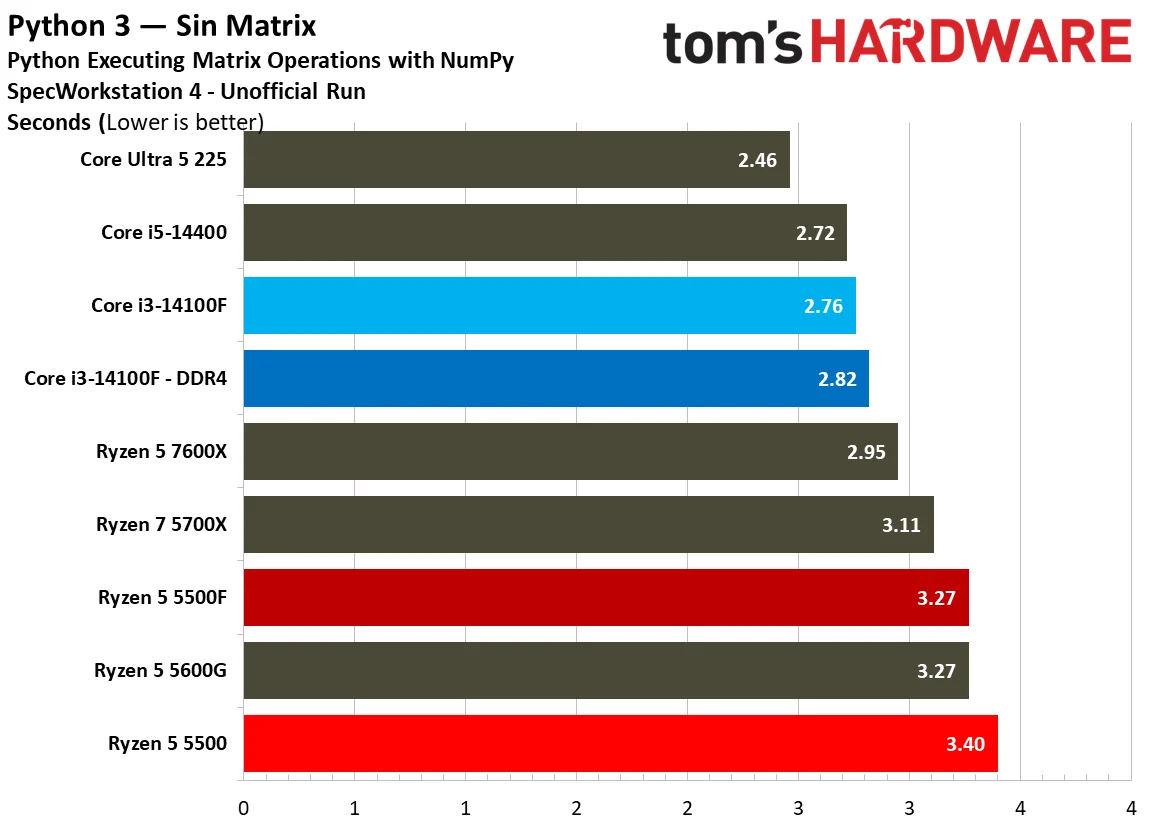
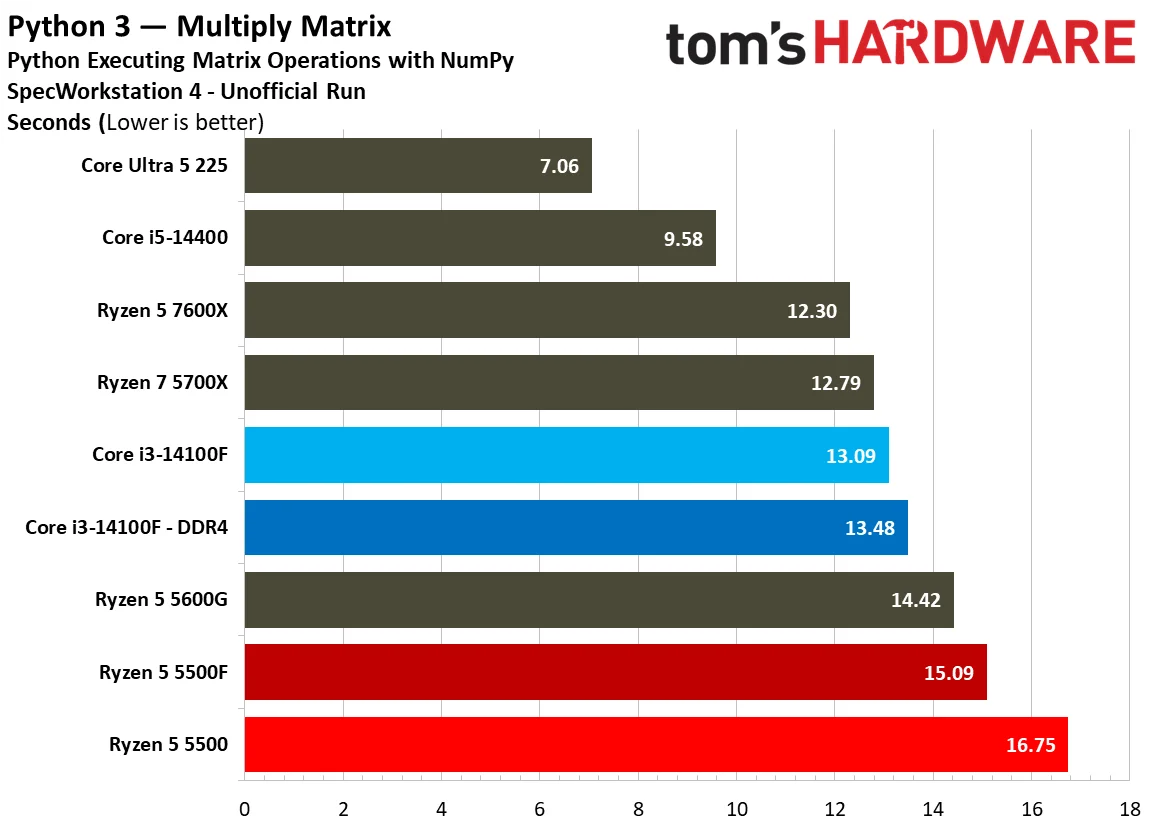
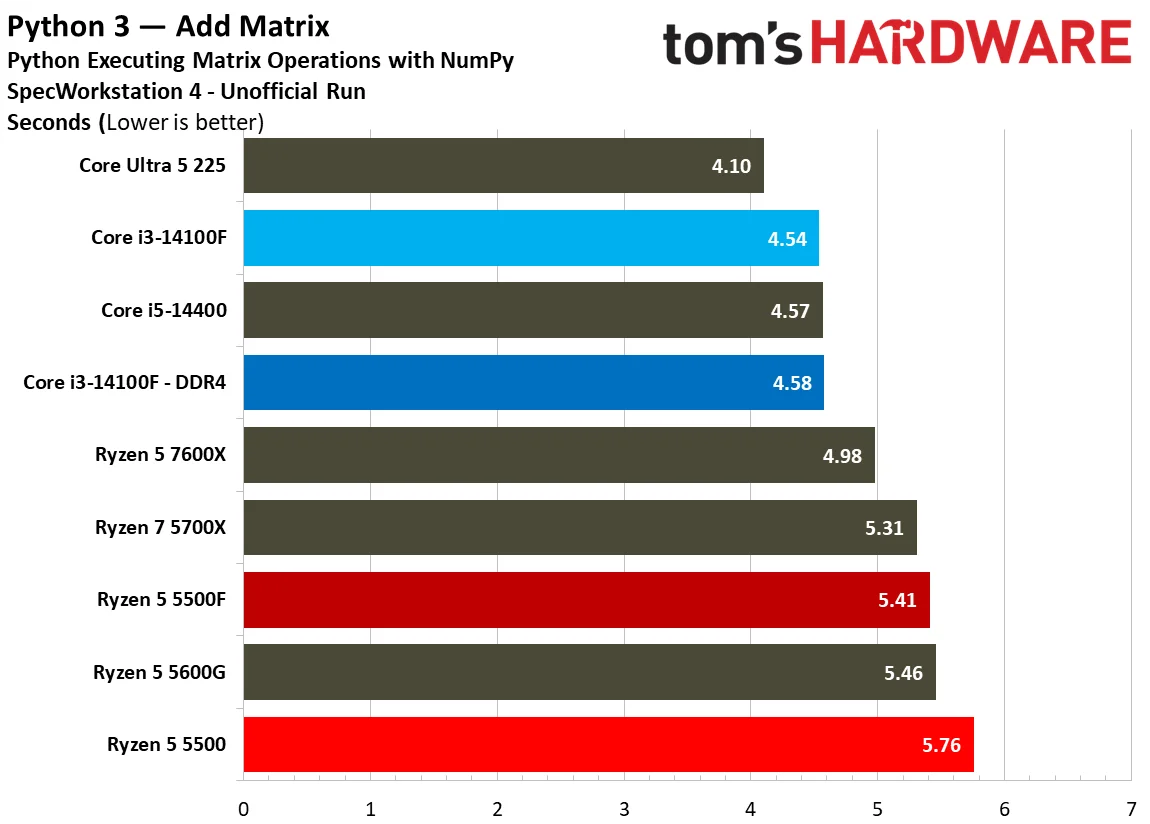
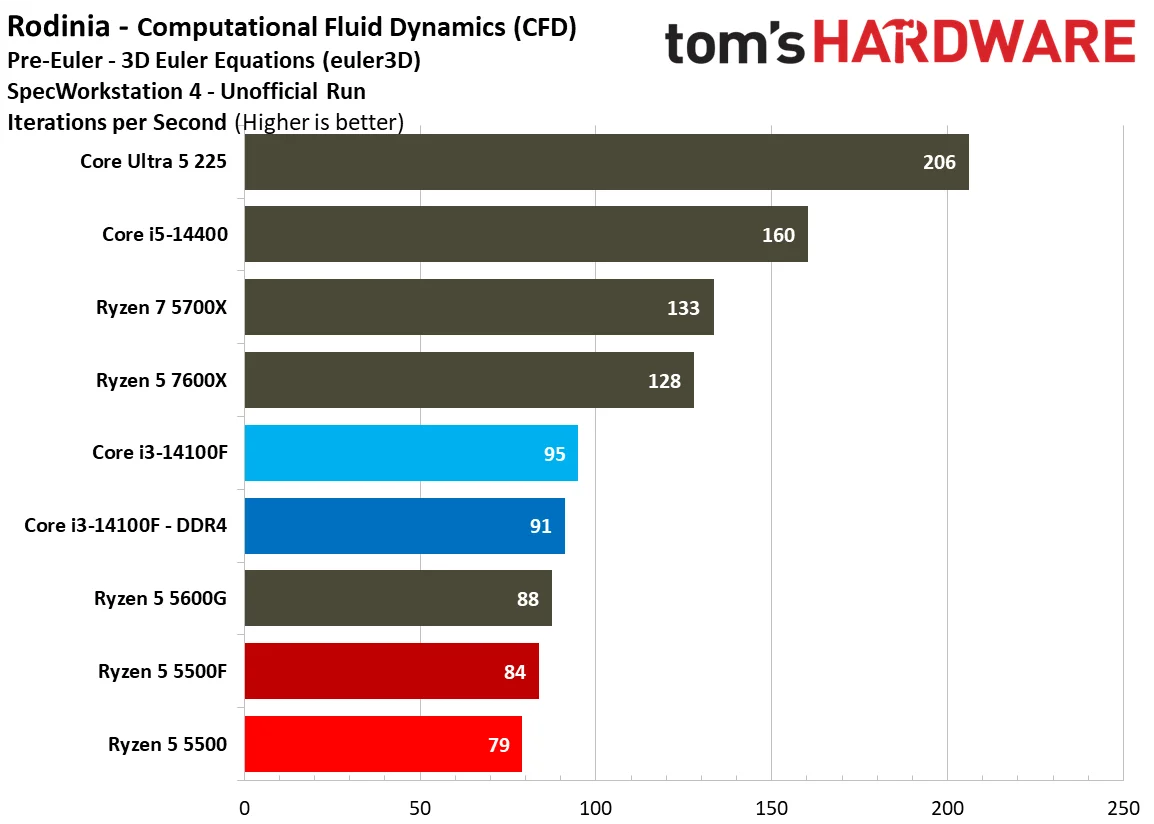
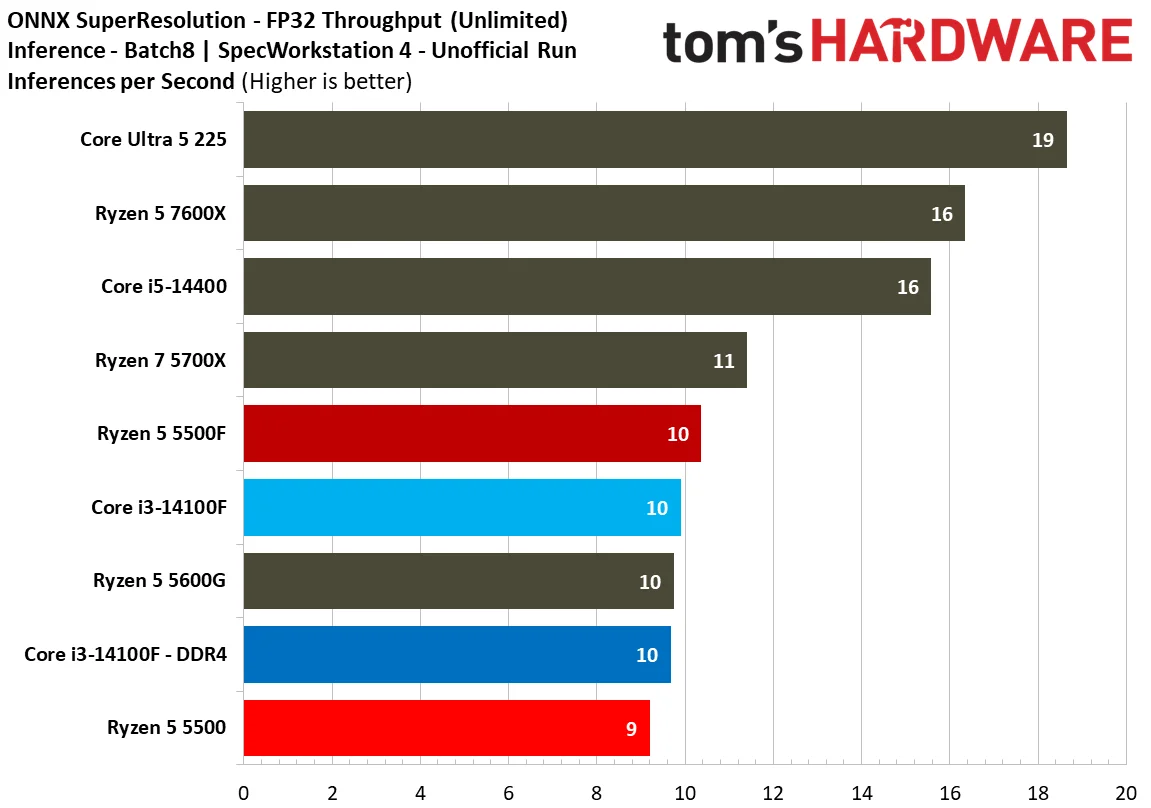
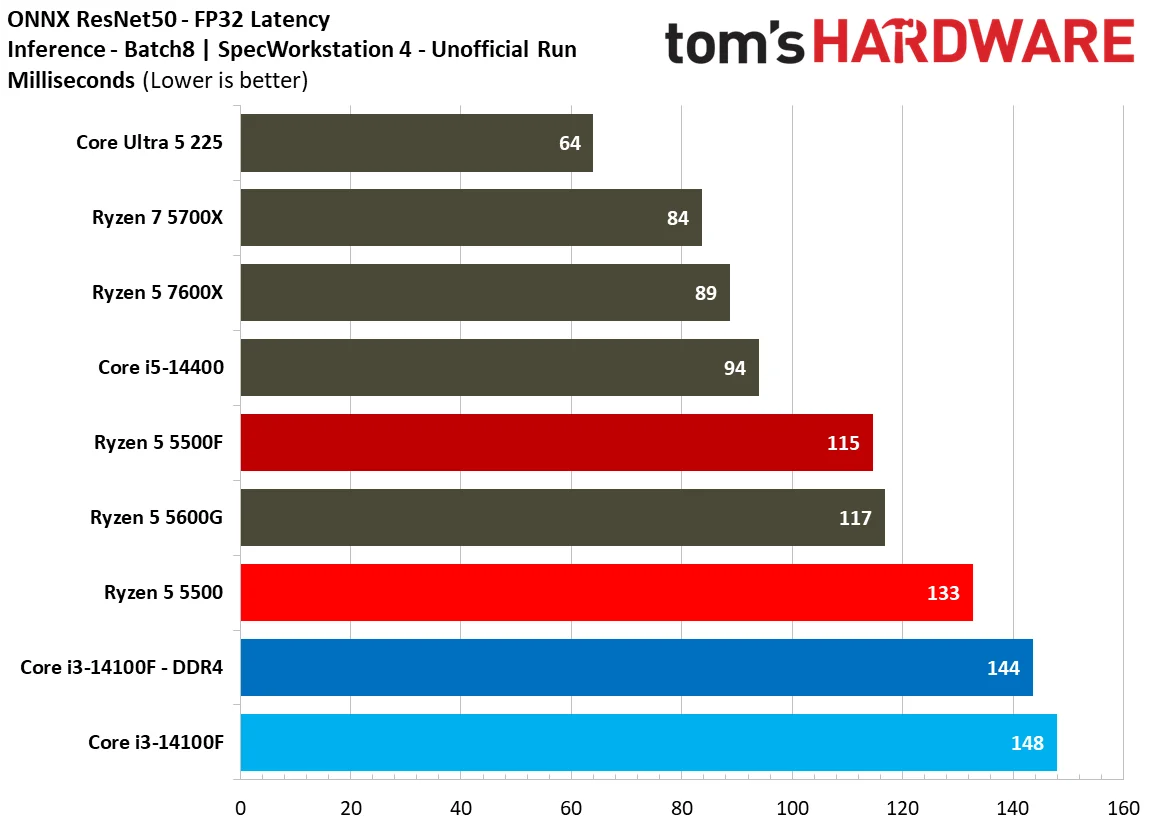
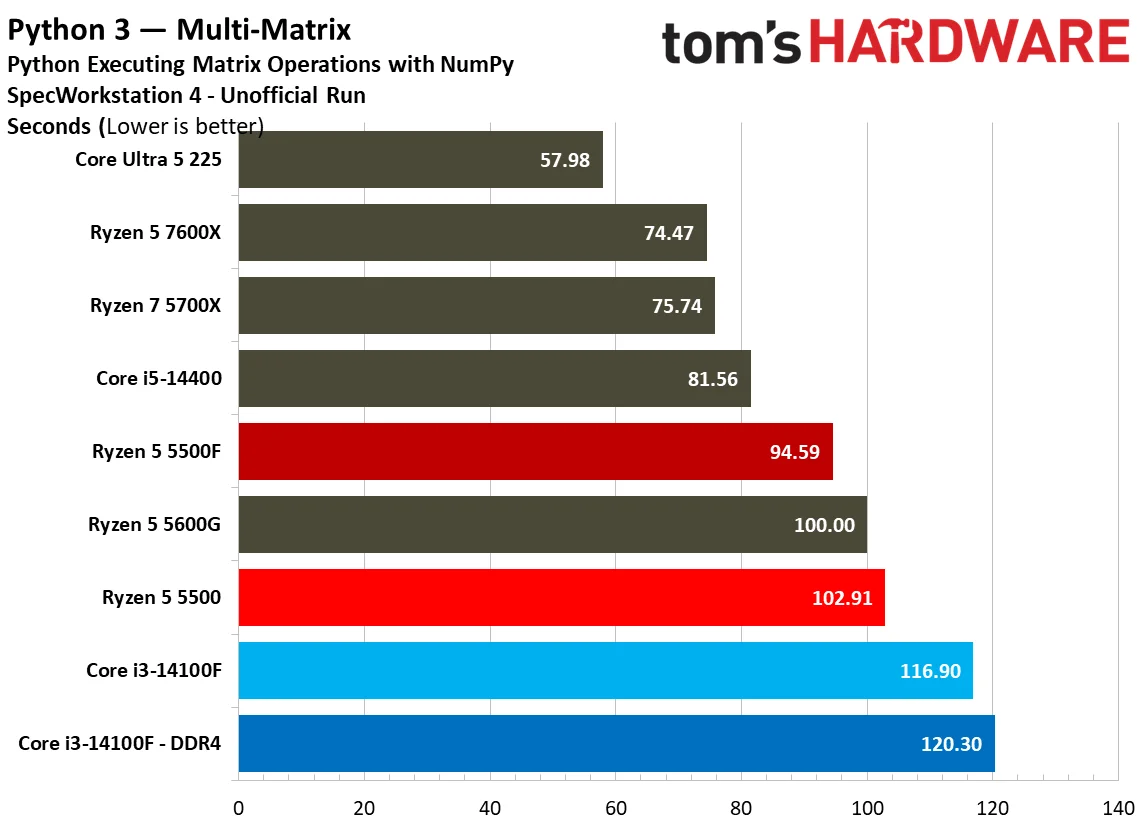
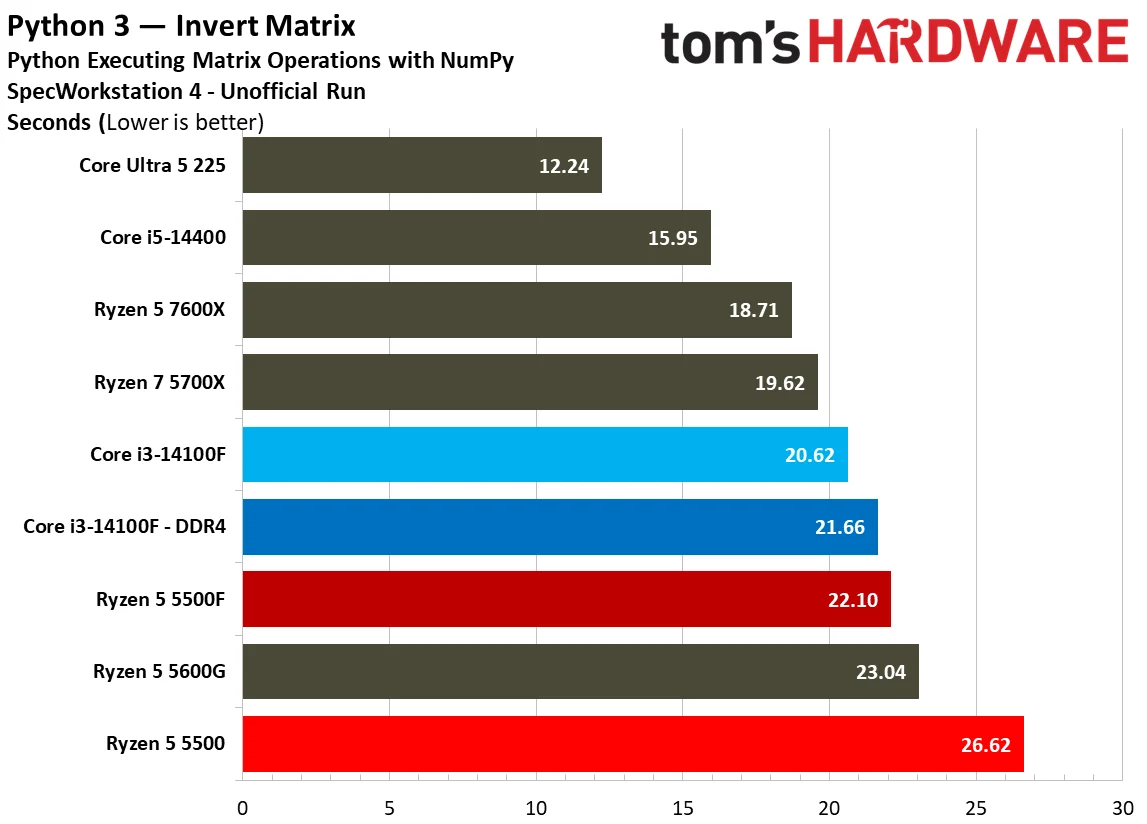
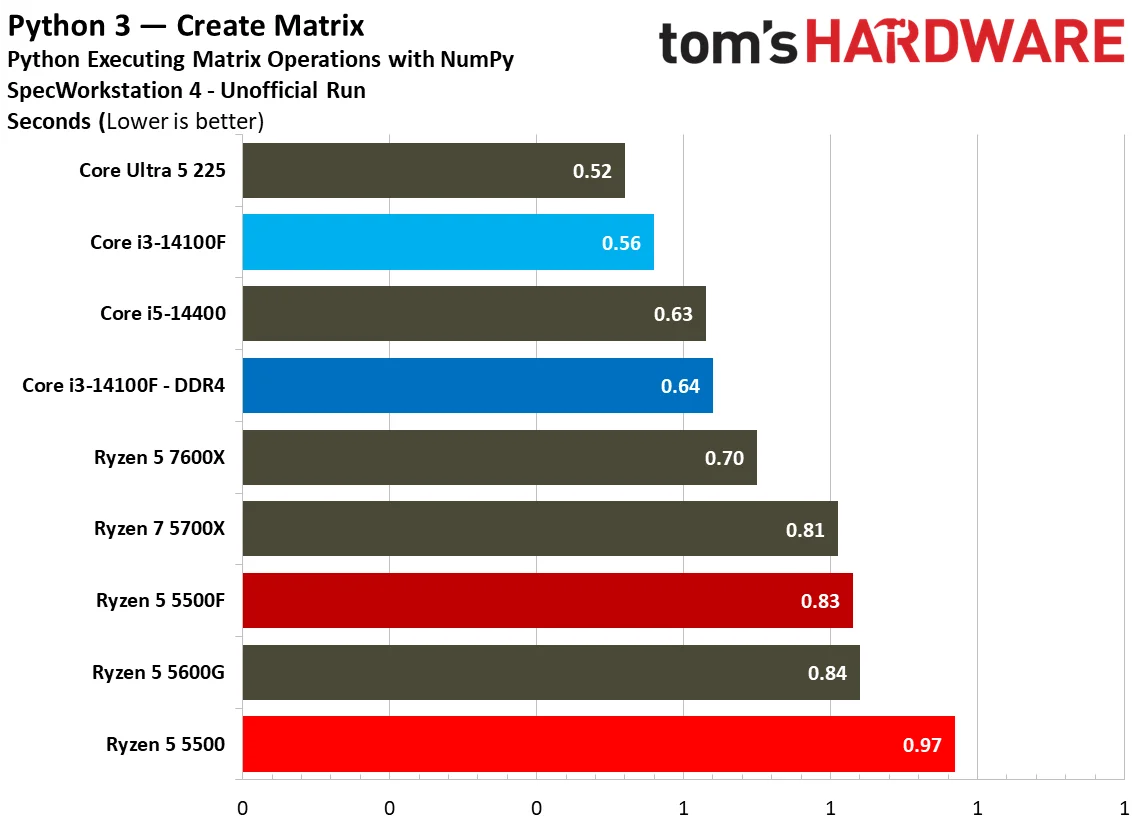
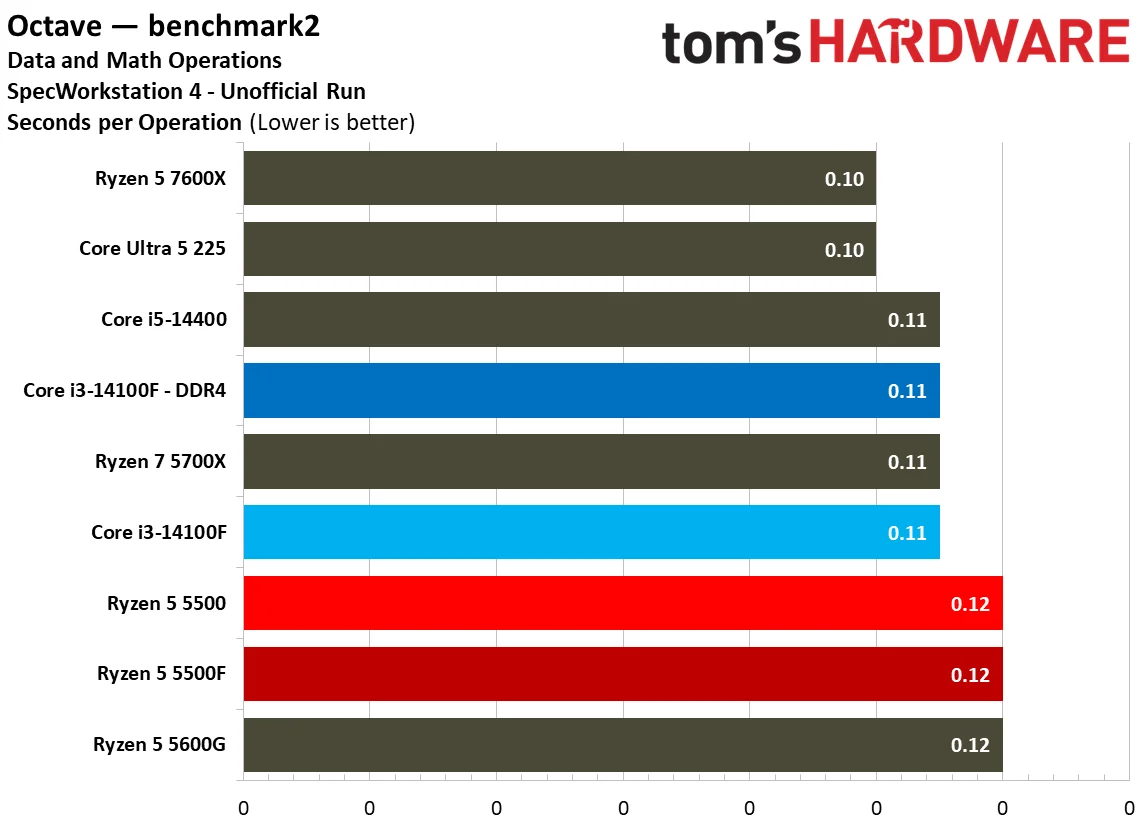
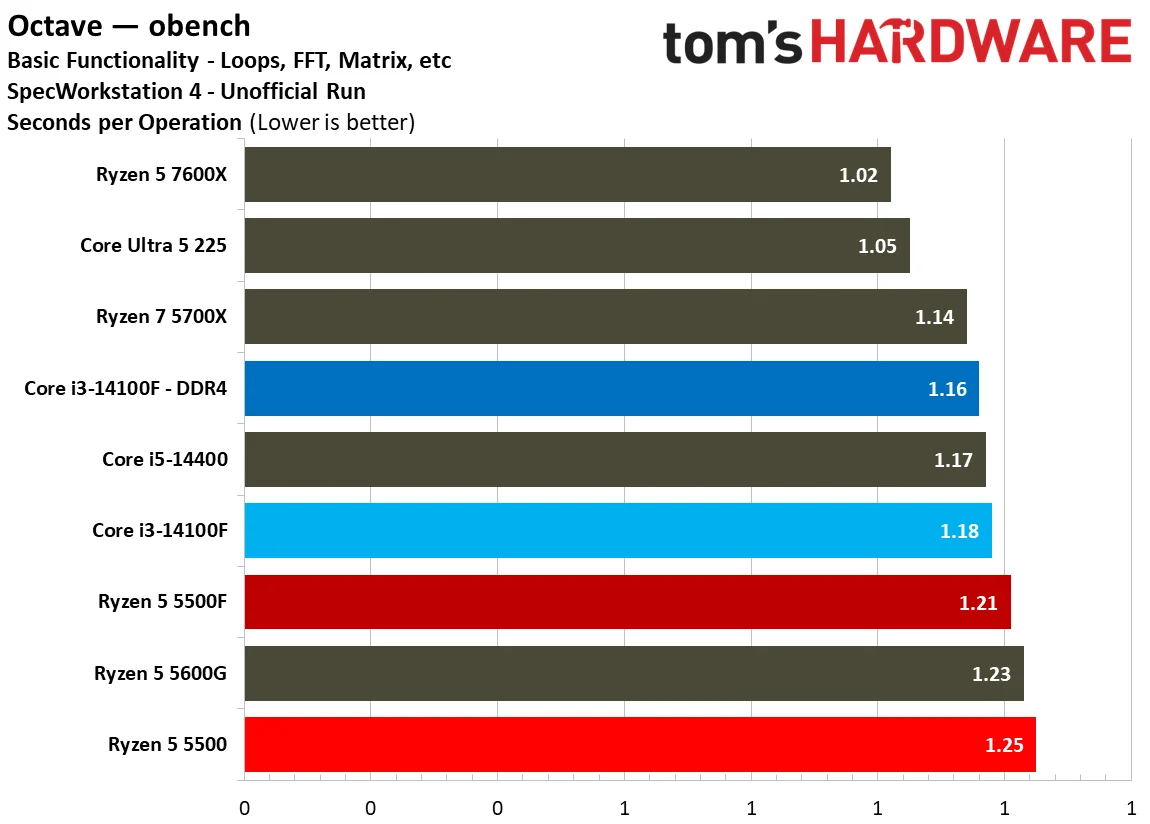
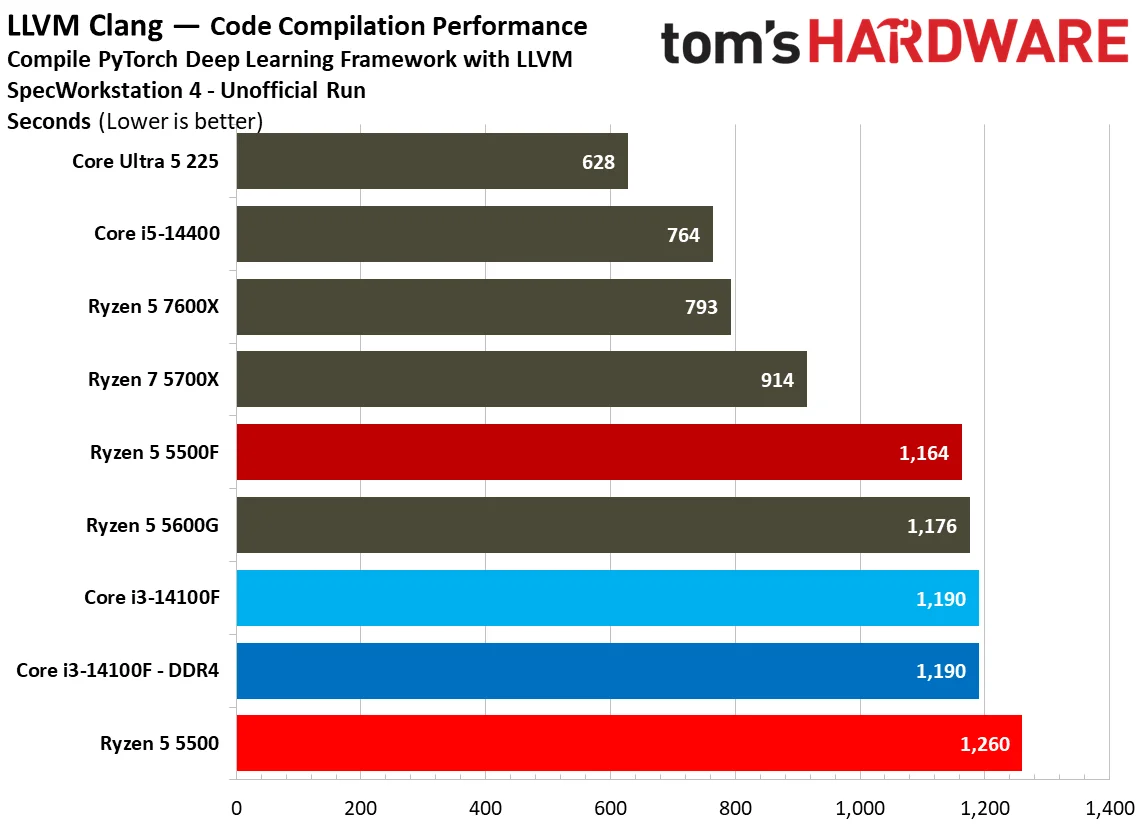
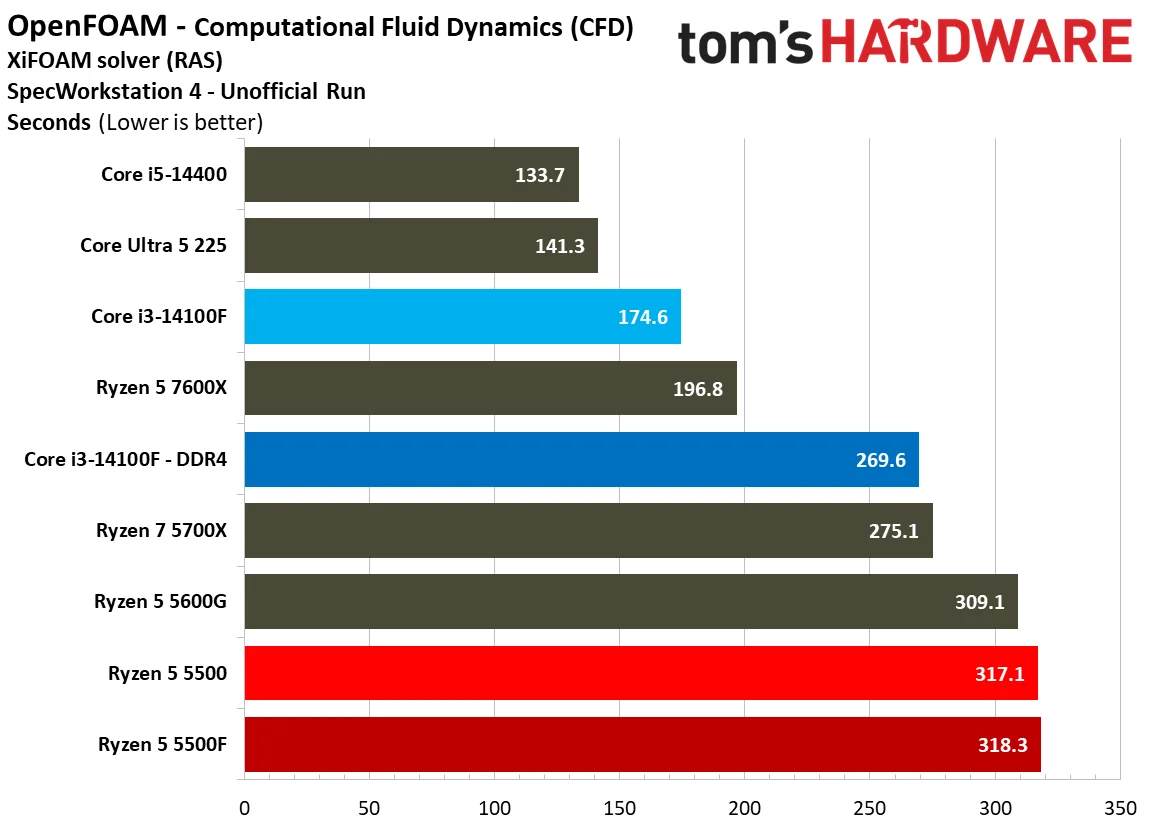
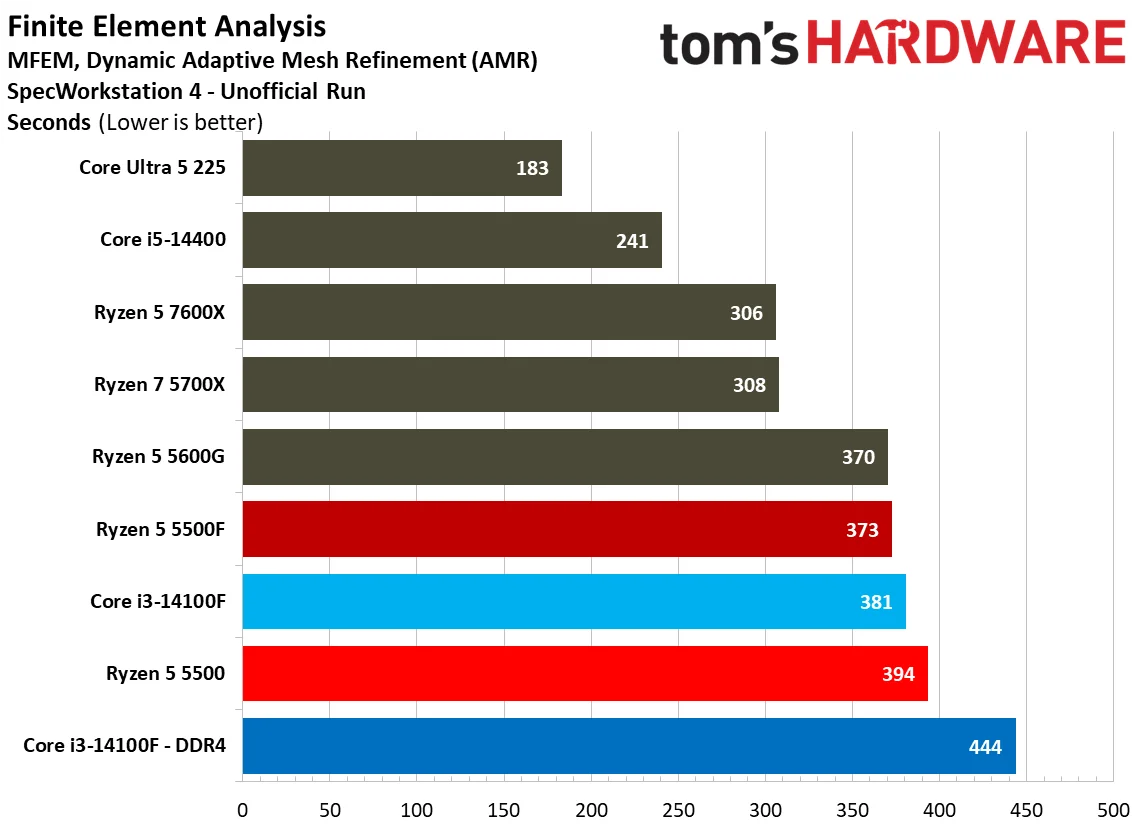
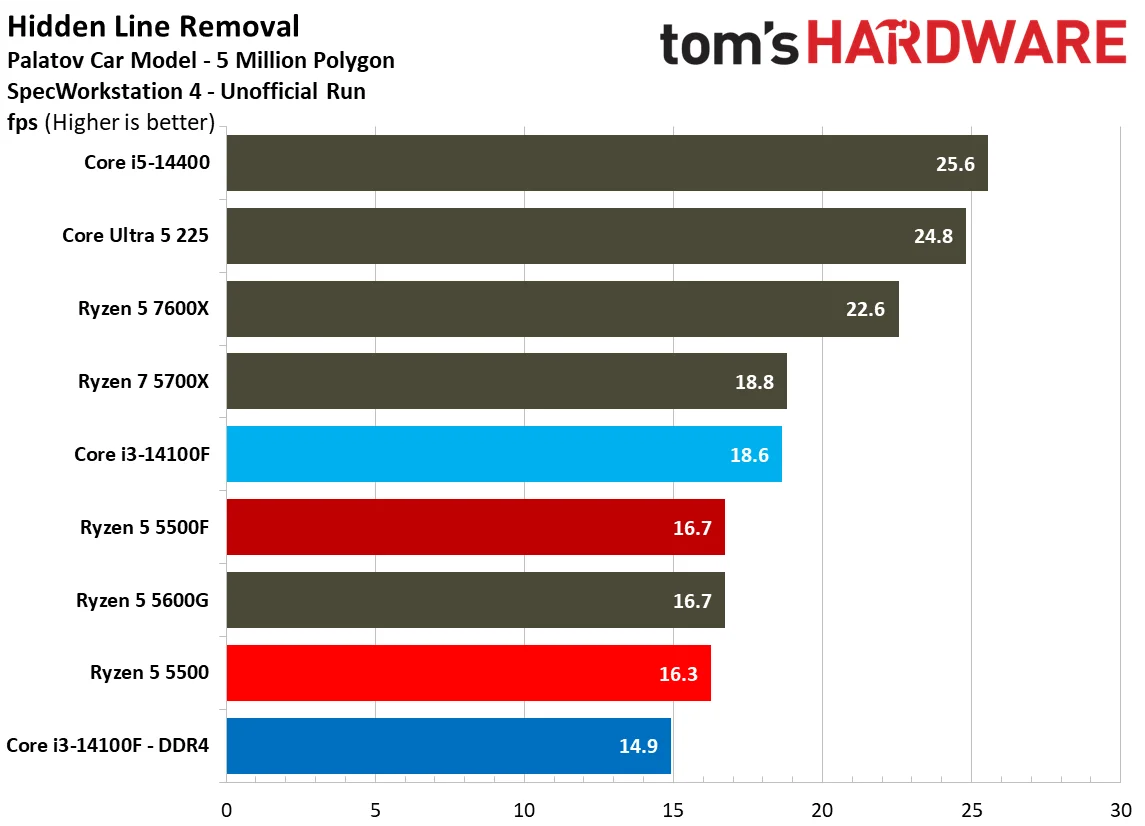
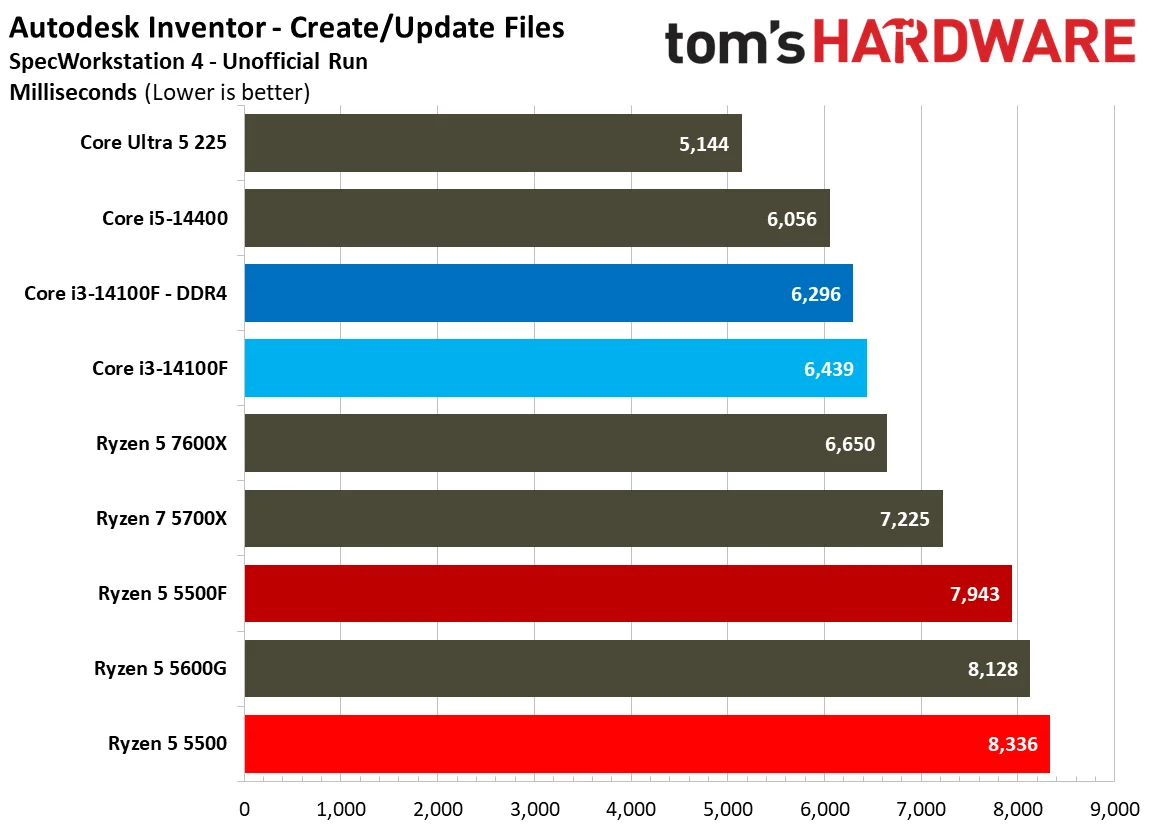
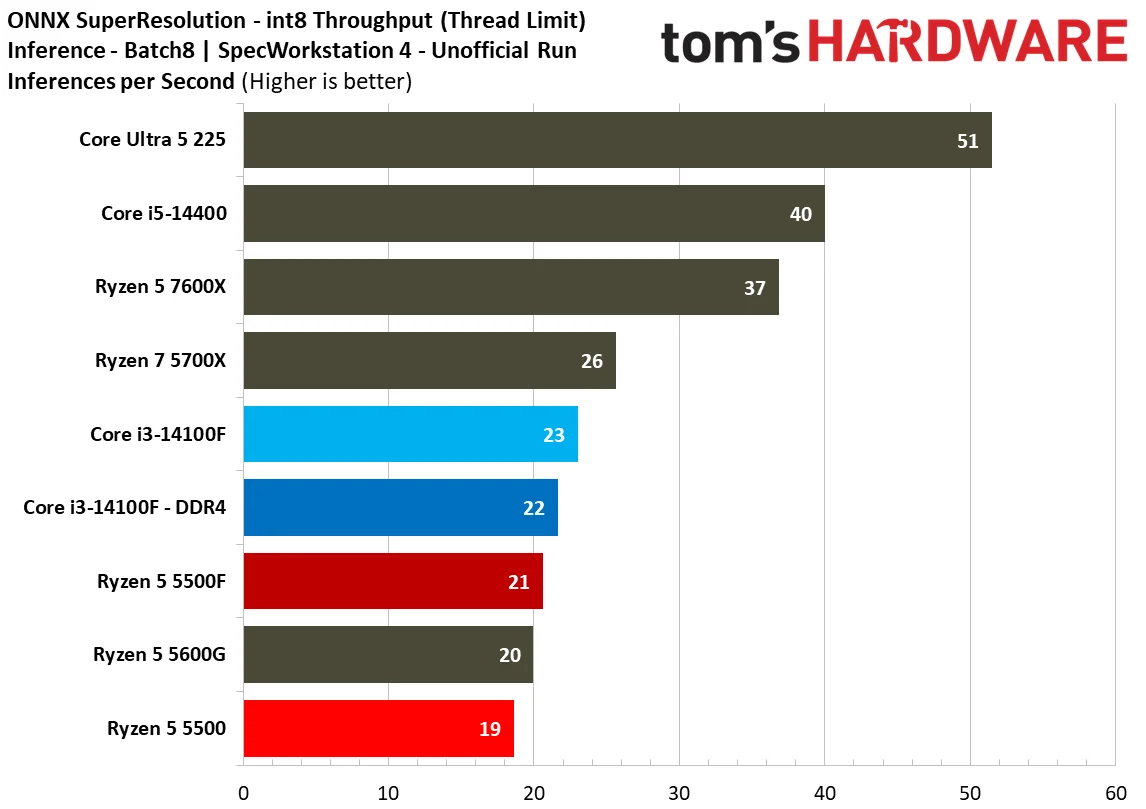
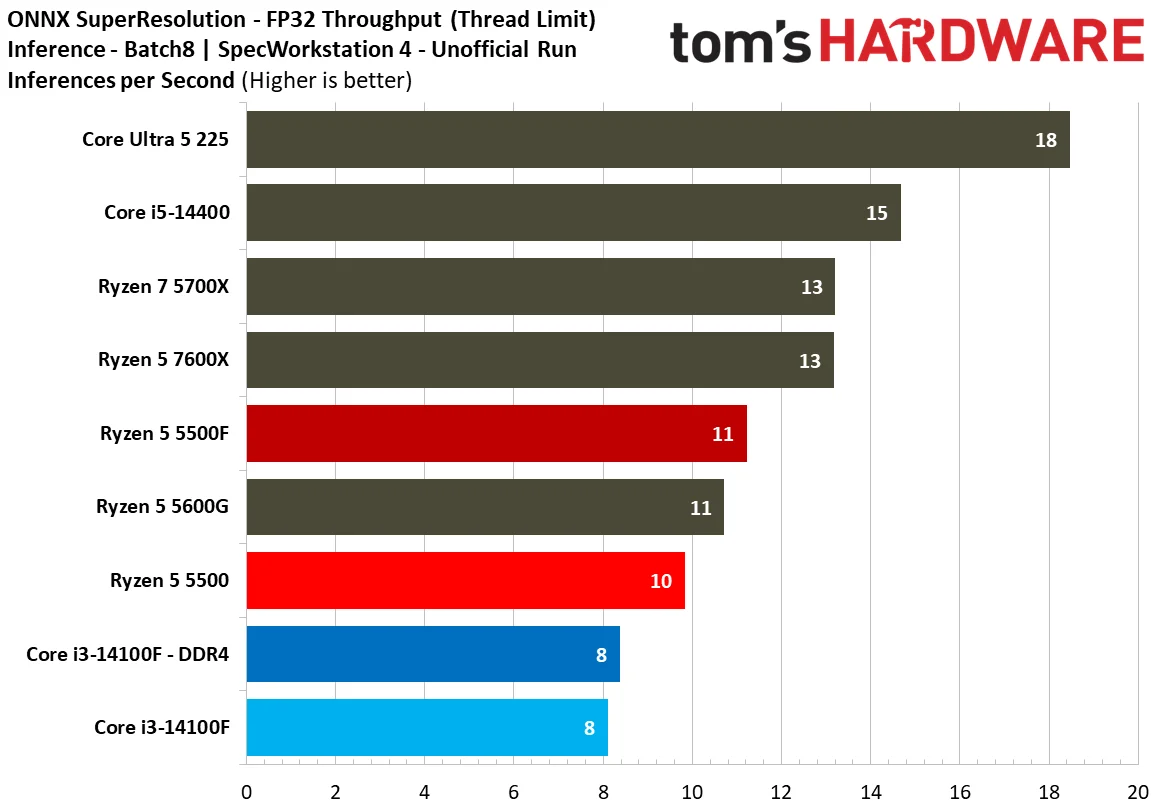
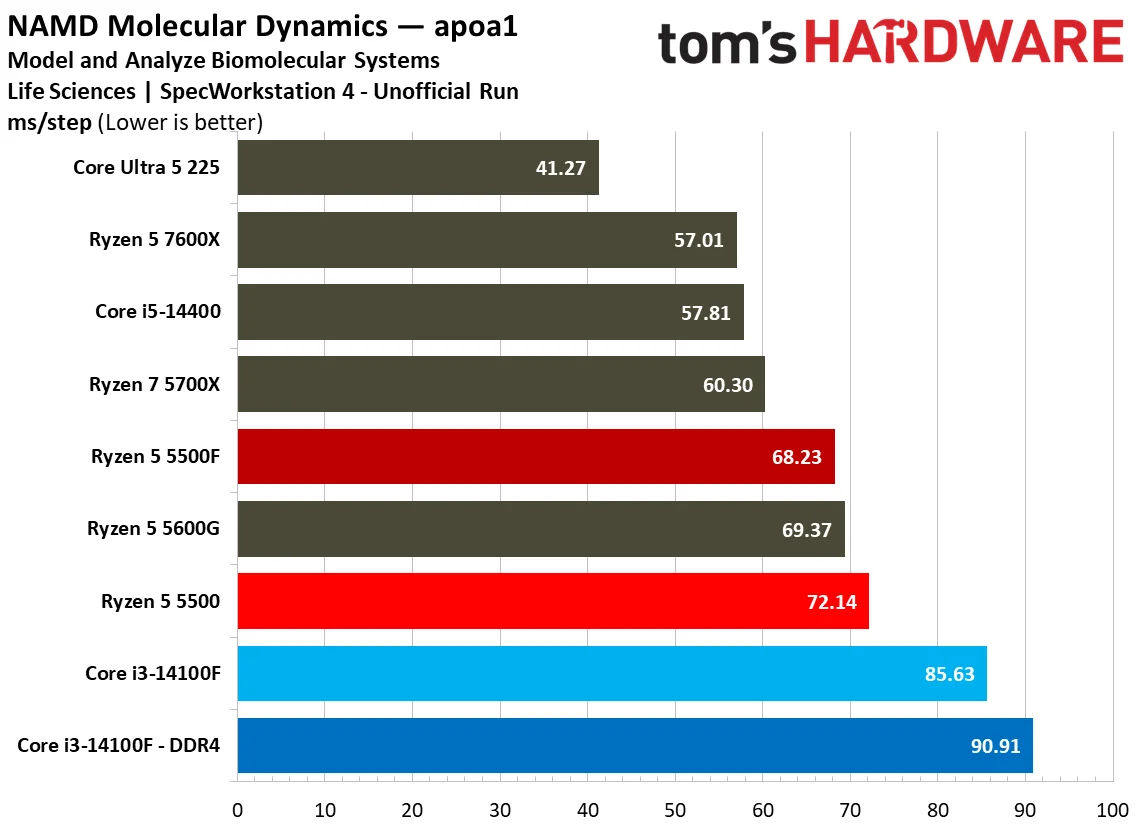
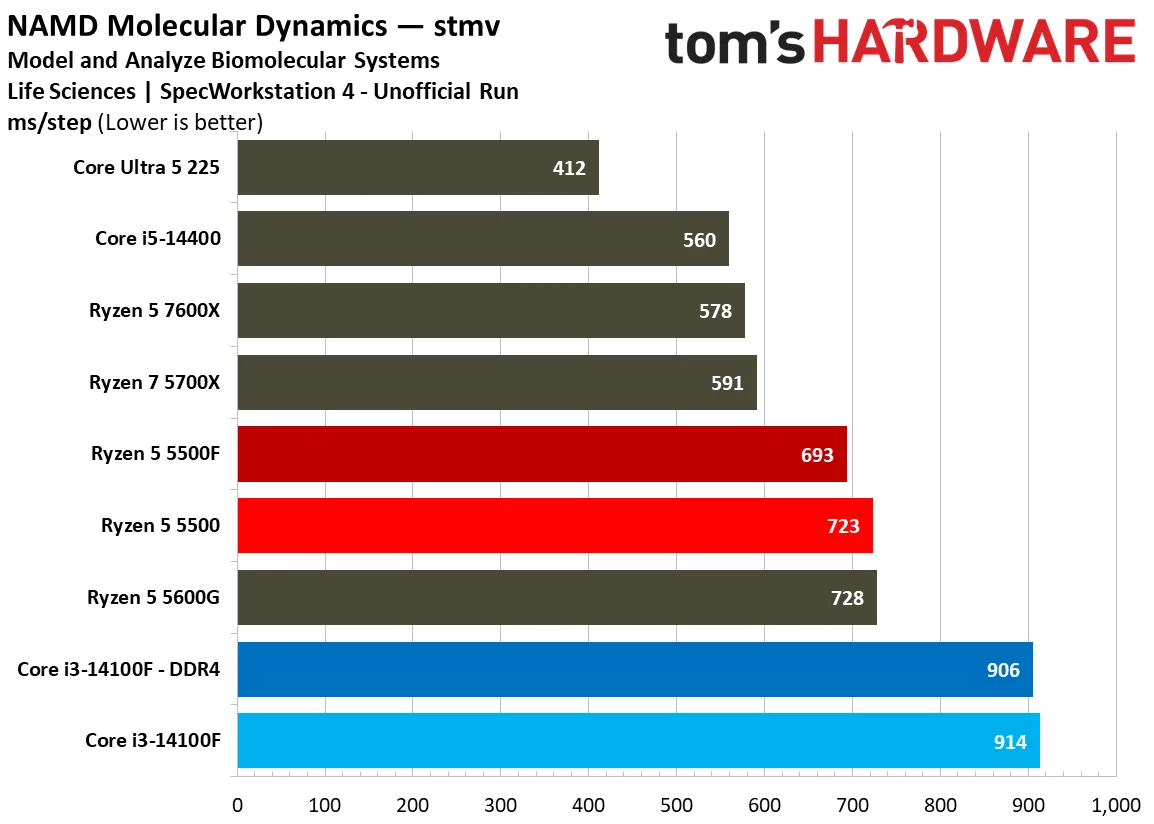
These results are useful as context, but they shouldn’t outweigh the broader benchmarks: the workloads here are varied, and many have little bearing on how these CPUs will perform in typical use. The charts cover compilation, compression, Java, chess engines, cryptography and other tasks; no single result captures the full picture. Geekbench offers a quick sweep across workloads. Its multi-core results put the DDR5-equipped Core i3-14100F at the top, suggesting memory type can affect performance in ways Cinebench doesn’t show. That’s a useful reminder that benchmark rankings depend on the work being measured. WinSAT makes the memory gap more explicit. The DDR5 systems deliver substantially more throughput, while the DDR4 chips hit a clear ceiling. The results point to a bandwidth limit in these late-generation DDR4 platforms, though they don’t tell us how much that limit matters in everyday tasks. There’s a broader split in the specialized tests, too: AMD leads in security and cryptography, while Intel does better in many scientific workloads. If you’re choosing between these CPUs, treat those wins as workload-specific clues. For a general comparison, the main benchmark sections carry more weight.SPEC workstation benchmarks