Ron Gutman on AI, Work, Healthcare and the Need for Compassionate Design
Stanford’s Ron Gutman sees AI reshaping work and care, while arguing that empathy, representative data and ethical design must guide its development.
AI’s effects may reach beyond faster software or automated tasks. Ron Gutman, an adjunct professor at Stanford University, sees it becoming woven into daily routines: taking on practical responsibilities, supporting healthcare and changing how people spend their attention. His optimism comes with a condition. Systems that gain more influence over human life need to be designed with care, and their training data must represent the people they serve.
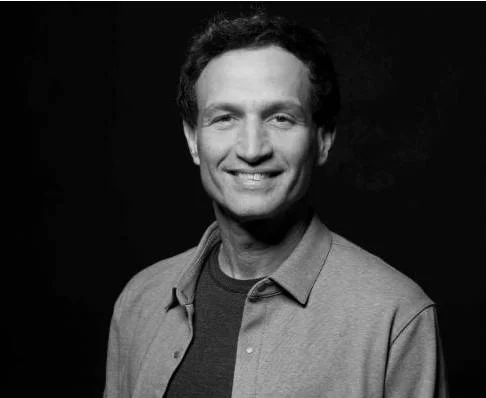
Gutman discussed that view in an interview with Techopedia, ranging from machine learning research to robotics, job displacement and medical care. He frames the relationship between people and AI as convergence: technology that extends human capabilities and becomes part of ordinary life. That idea is more expansive than the familiar picture of AI as a tool for writing or answering questions. It also raises harder questions about who benefits, who is displaced and how systems should behave when people depend on them.

His case for optimism rests partly on work already under way. Machine learning has helped researchers identify hundreds of thousands of viruses, while AI research has also examined so-called zombie cells. Such applications can help researchers investigate biological systems and develop new avenues of inquiry. They illustrate Gutman’s broader point: combining human expertise with machine computation can make some discoveries possible at a scale neither could achieve alone.

From software tool to everyday infrastructure
Gutman expects AI to advance at an accelerating pace rather than along a steady, linear path. He describes the current period as a learning stage before growth becomes more pronounced. Investment by OpenAI, Google, Microsoft, Nvidia and other companies is building infrastructure that developers can use to create applications across many fields. The opportunity, in his account, depends on this expanding foundation: more capable underlying systems can support a wider range of products and services.

Yet Gutman’s bigger claim concerns how people relate to those products. A hammer extends physical reach, and a fork makes a routine task easier. AI, he argues, is moving past that kind of external assistance as it becomes integrated into homes and everyday decisions. He calls this “convergence”: technology that is present enough to affect how people operate, not merely something they pick up for a discrete task.

He offers a home security system as a small example. If it can recognize when it should be active and respond when a problem occurs, a person may spend less attention worrying about the house. The system has taken on a responsibility and, in Gutman’s framing, freed mental capacity for other activities. The same logic could apply to managing groceries, driving or planning travel. As AI handles more routine work, its effect may be measured partly in time and attention returned to people.

That potential comes with a serious labor question. Gutman predicts that AI could take on work involving reasoning and decisions, including tasks associated with lawyers, accountants and company executives. He also expects the shift to extend beyond computer based work as robotics improves. These are predictions, not settled outcomes, but they capture the scope of his argument: automation could reach both cognitive and physical tasks.

Robots, care and the pace of job change
Automation has already affected cashier work, Gutman says, and he expects robotics to expand in factories and agriculture. Machines could take on work performed in harsh conditions, which may benefit workers exposed to those tasks. But even when automation reduces physical strain, it can also remove people’s livelihoods. The social impact depends on what happens to workers as the technology spreads.

Gutman describes job displacement as a process that unfolds in stages. First, machines take over existing roles. Some workers may adapt to new work; others may need help to do so. The transition, he argues, calls for support for people who cannot retrain quickly and fast access to training for roles that emerge around AI systems. Some future jobs may be predictable, while others will only become clear as the technology develops.

He also points to the possibility that AI driven medical advances could affect how long people live and how long they remain able to work. If health improves and lives lengthen, societies may need to reconsider how people contribute over time. Gutman’s suggested response is to use AI to help people remain productive alongside the systems, building on what those systems can do. He also notes that people will still be needed to create and improve AI, at least while the technology continues to develop.

For robotics, he sees logistics as an early practical area, with assistance for older people as a longer term application. A robot might move objects around the home, help organize daily tasks, or provide company through conversation and shared memories. Gutman imagines systems that could help someone contact family or get out of the house. Automated wheelchairs, he suggests, could help older people maintain independence for longer.

Those uses depend on engineering that works reliably in real settings. Gutman says the technologies already exist in some form but still need refinement. That distinction matters: a demonstration of a capability does not establish that a system can consistently support people in complex environments. For developers, the practical challenge is turning isolated functions into dependable assistance that fits into daily routines.

AI is also entering engineering itself. Gutman points to systems that can generate applications using data to shape user experiences. That creates an awkward feedback loop: engineers are developing tools that may eventually reduce demand for some of their own work. The nearer term question is how people adapt as software generation and other tasks become easier to automate.

Human–AI convergence depends on design choices
Gutman rejects the idea that human and machine capabilities must develop in opposition, with one side eventually dominating the other. He instead imagines a future in which they become increasingly connected. He compares the possible shift to changes within the human species over time, while stressing that people will not simply turn into machines and AI systems will not become people.

That account is speculative. Gutman acknowledges that people cannot yet picture what might be possible a decade from now. His practical emphasis is on the values built into AI as it develops. He argues that empathy should be part of system design, from the data used in training to the safeguards that shape how a model behaves. The point is not that a machine feels as a person does, but that its outputs and actions should reflect humane priorities.

For Gutman, this is linked to how people treat those who are most vulnerable. He sees care for weaker members of a community as a defining human strength and wants future AI systems to preserve that principle. If machines become more capable and people rely on them more heavily, their behavior toward people who need help will matter as much as their performance on technical tasks.

That argument does not remove risks. Gutman says AI can be misused, and that the systems and infrastructure around it need safeguards. He calls for developers to act responsibly and for broader coordination as AI capabilities expand. His comparison to earlier powerful technologies is a reminder that beneficial uses and harmful uses can coexist. The design question is how to reduce the chance that systems are turned toward harmful ends while allowing useful work to continue.
For practitioners, the message is that safety and care cannot be left until deployment. Choices about model training, product design and access shape how a system behaves in the world. Gutman’s view is that technical progress needs to be accompanied by ethical judgment, with safeguards considered as part of building the technology rather than as a later addition.
Healthcare offers a test of AI’s promise
Healthcare is one of Gutman’s clearest examples of where AI could help. Drug discovery can involve searching across many possible molecules and structures, a process that can take years. AI may help researchers explore that space more quickly. He also sees promise in diagnostics, where systems can examine medical images or measurements and compare findings across time or with relevant patient data.
Gutman describes advanced cardiac ultrasound systems that use AI to spot irregularities in a scan and track changes over time. Such tools could help a clinician assess a patient in an office without sending the image away for separate analysis. The intended benefit is practical: information could be available closer to the point of care, supporting a clinician’s assessment.
AI could also help people navigate care between appointments. A digital assistant available at any time might help someone understand a diagnosis, consider next steps, remember tasks or notice when a change in health calls for attention. Gutman argues that linking an AI assistant to a person’s health information could make guidance more continuous than occasional visits allow. In his vision, the system would help someone move through care, rather than simply return a search result.
That vision depends on whether the information is sound and the system’s guidance is appropriate. Always being available does not make an AI a clinician, and a person’s health data can only help if the system interprets it well. Gutman focuses on the opportunity for support, while the quality of the data and the limits of automated advice remain central practical questions for any team building such tools.
He also points to robotic surgery, including cyber knives, and sees room for AI to take on more procedures as systems advance. Further out, he expects AI to help make printed organs viable and compatible with the human body. He presents this as a longer term possibility, not an immediate capability. It illustrates how AI might connect research, engineering and care in ways that could expand treatment options.
Gutman’s enthusiasm for these applications is tied to his insistence that care should shape their design. A system that helps with diagnosis or guides someone through treatment affects people at vulnerable moments. Technical capability alone is not enough; the system’s behavior, availability and fit with clinical care also matter.
Representative data is part of ethical design
Healthcare makes the consequences of uneven training data particularly visible. If datasets fail to include people from different backgrounds, a model may work less well for groups that are underrepresented. Gutman says training data should reflect people’s varied origins and account for meaningful differences, while avoiding unjustified distinctions.
He expects AI to be especially consequential in places where people have fewer existing services. In some communities, AI tools may be among the first technologies available for particular needs. That creates a strong reason to build systems that perform well across populations from the outset. If representation is missing during development, people may encounter the effects after they have begun depending on the technology.
Gutman assigns responsibility to companies that train foundational AI systems, while also seeing a role for communities to make sure they are represented. He highlights education as another part of the response: computer science programs should teach ethics and help future developers understand diversity in the data and systems they build. His point is that responsible design requires more than a technical fix; it also depends on who takes part in development and what they learn to consider.
His outlook joins two claims that are easy to pull apart. AI could extend human abilities, improve healthcare and support greater independence. At the same time, it could displace workers, reproduce gaps in data and give harmful actors new capabilities. Gutman’s proposed answer is to treat compassion, representative data and safeguards as design requirements that keep pace with technical progress.
The measure of convergence, on this view, will be how well AI supports people in ordinary and high stakes situations. Systems will need to do more than perform tasks: they must work across different populations, fit into real care and work settings, and account for the people affected by automation. Those choices will shape whether greater capability translates into a better quality of life.


