Character.ai’s CAI-Image Models Keep Fandom Characters Consistent Across Styles and Comics
CAI-Image adapts open Qwen-Image models for consistent Characters, multi-Character scenes, camera control and comic pages inside Character.ai.
Keeping a Character recognizable across an illustration, a new setting and a full comic page is the central challenge behind Character.ai’s CAI-Image family. The models are post-trained versions of open-source Qwen-Image, adapted for the platform’s storytelling features and image generation across Imagine, Imagine Message and (c.ai) Comics.
The product problem is more specific than generating an attractive image. Character.ai’s users build stories around Characters they create and chat with; those Characters need to remain recognizable as the style, scene and format change. The company says its models are designed to handle those requirements in one generation, including prompts assembled by the app from a conversation.
That specialization reflects a practical tradeoff. General image models may create strong standalone pictures, but the company says they don’t reliably deliver the identity, style and composition its storytelling workflow needs together. Its approach is to post-train open models around those uses, with control over training data and serving as well as generation speed and cost. Character.ai describes the result as generation in seconds at a fraction of the cost of closed APIs, though it doesn’t publish a specific cost comparison or latency figure in the source.
Separating identity, style and scene
CAI-Image’s first focus is style. Users can request named aesthetics, ranging from ink wash to pixel art, while specifying color palettes separately from the subject and style. The goal is to let the same Character appear in different visual treatments without losing the features that identify them.
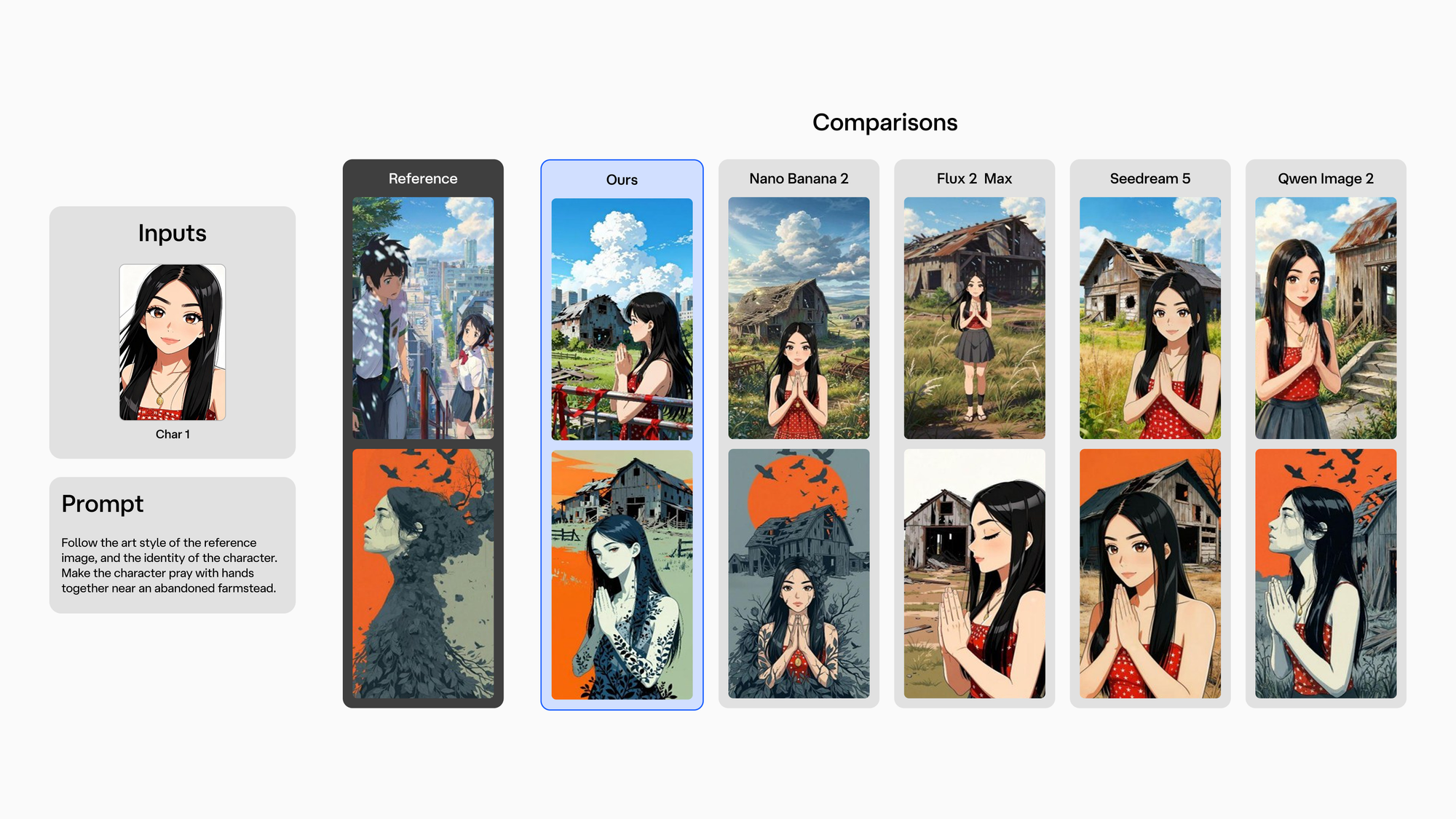
The model can also take visual references. One image can supply the desired style, while another supplies the Character’s appearance; a text prompt then describes the action and setting. Character.ai says this separation works even when the reference images have clashing aesthetics or depict entirely different subjects. That distinction matters for fan-created stories, where a Character’s identity and the look of a particular scene may come from separate sources.
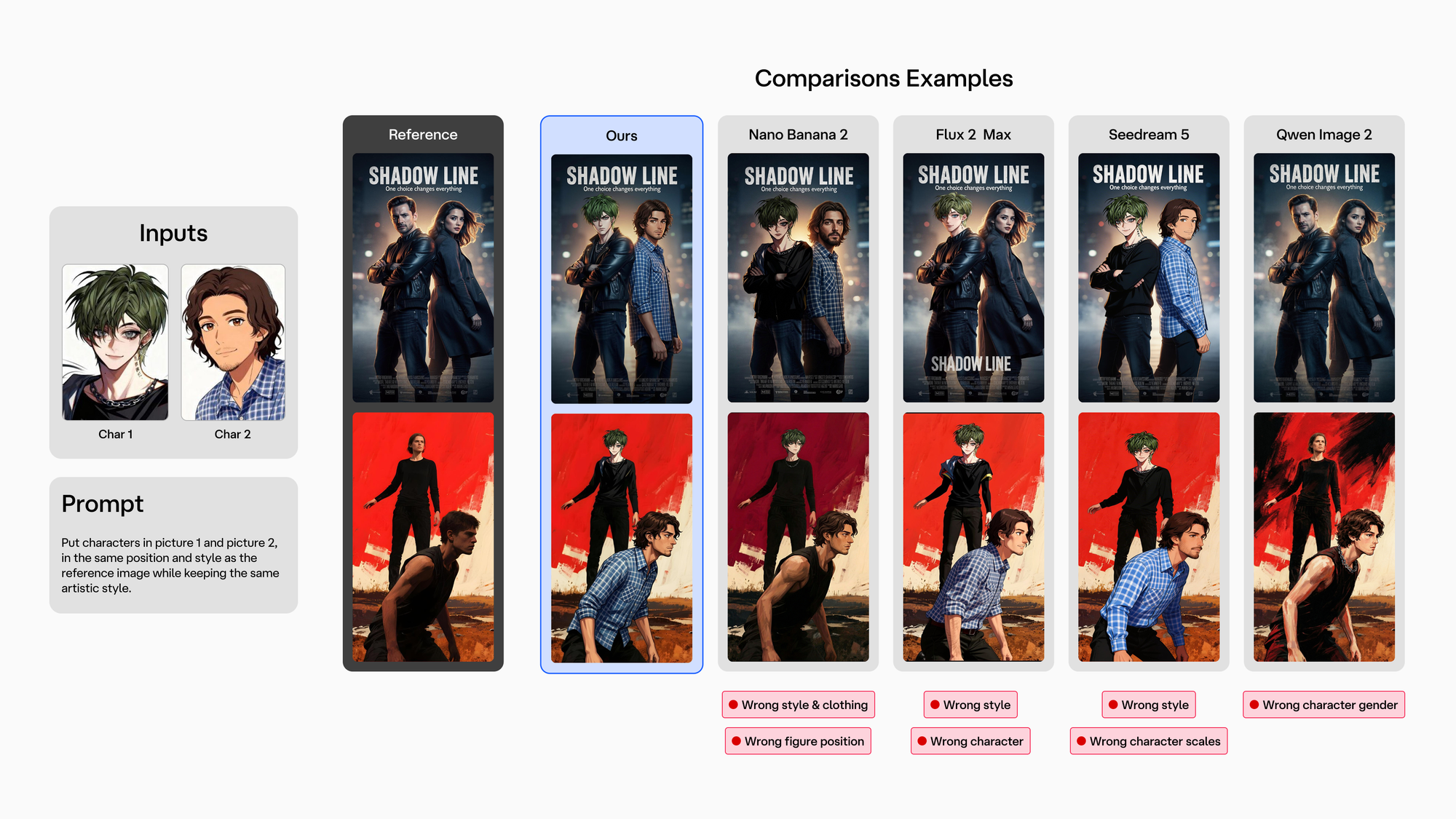
Multiple Characters create a related problem. A scene might combine figures with different visual styles or origins, yet the output needs to place them together in a coherent image. CAI-Image accepts multiple Character images alongside references for pose, style and location. The company says it can combine these inputs in one generation, following the user’s premise and rendering the figures in a shared style.
Camera direction and comic pages
For scene building, camera direction can change how a moment reads: a low viewpoint can make a Character appear imposing, while a close-up can foreground a reaction. Character.ai says the model recognizes 245 camera positions described in natural language, arranged across five distances, seven horizontal angles and seven vertical angles. It can also use a reference image to guide camera placement, composition and style while maintaining the Character’s identity.
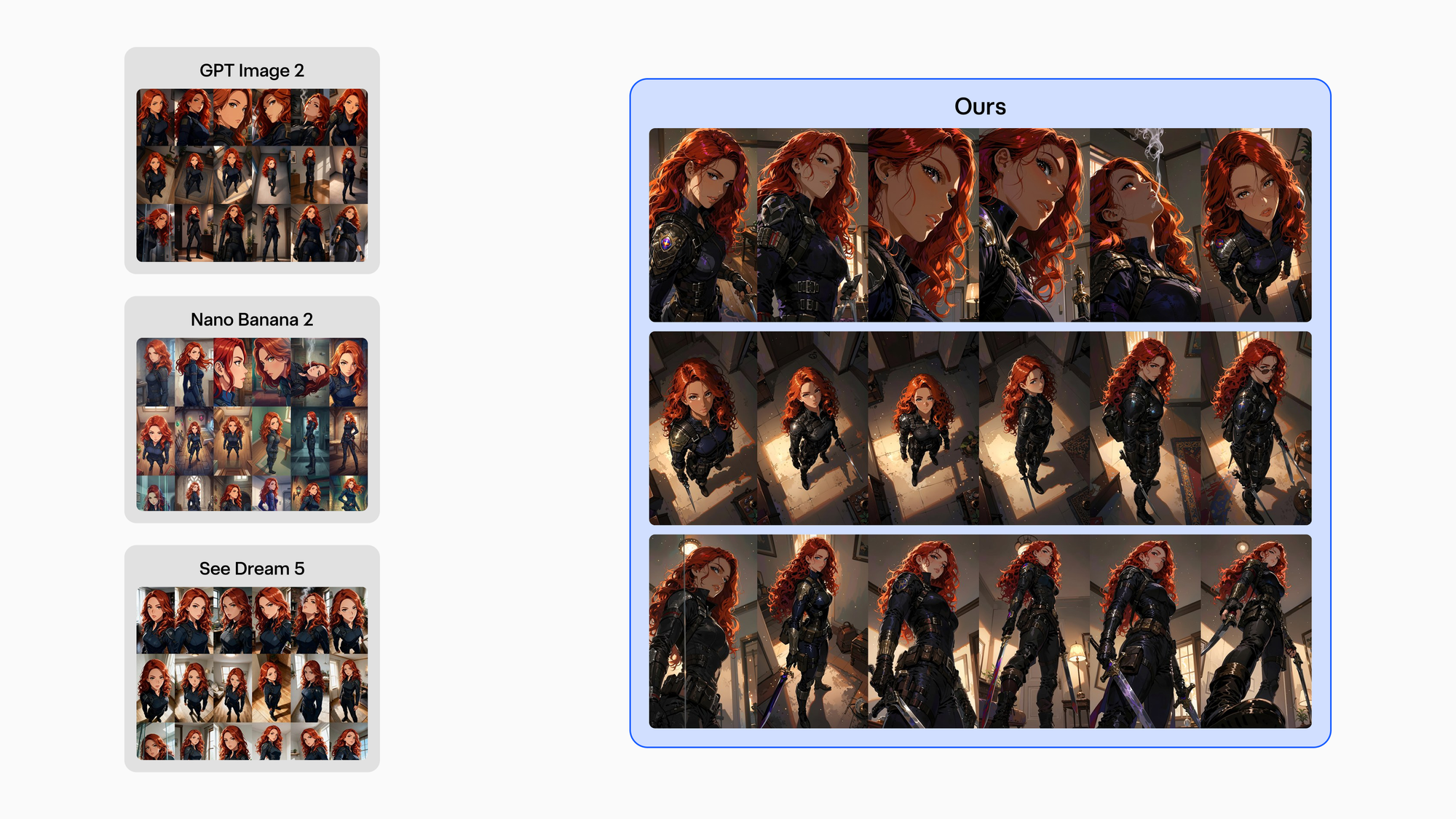
Comic generation puts these capabilities under greater pressure. A page has to coordinate panel layout, changing camera views, readable dialogue, emotion and continuity between frames. Character.ai built a dedicated manga model for pages, rather than treating comics as a sequence of unrelated illustrations.
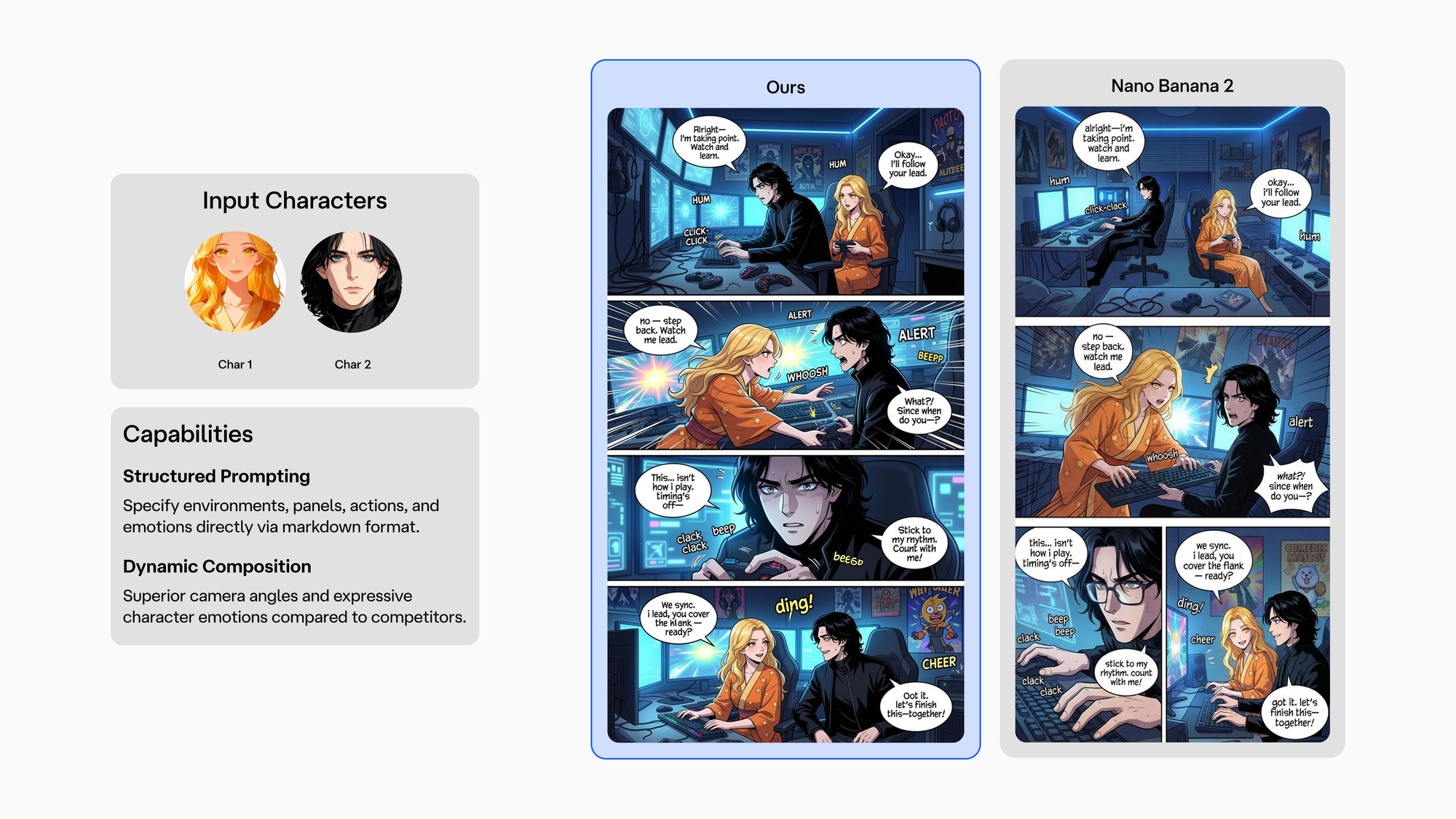
For a comic based on a Last Summer chat, the company says CAI-Image keeps the cast recognizable across panels and places dialogue accurately in speech bubbles. The app turns a chat or premise into a structured prompt describing environments, panels, actions and emotions. Users don’t have to assemble that prompt themselves. Character.ai says some community creators are already making stories longer than 100 pages; Pro Mode, which is on the way, is intended to offer more tools for designing Characters and scenes.
The company says it benchmarked each capability against leading open and closed models, but the source provides no scores or evaluation details. The examples and capability descriptions therefore show what Character.ai is targeting, while leaving the size of its performance gains difficult to assess independently.
Training and serving the models
The CAI-Image family runs on CAI-MM-Studio, Character.ai’s multimodal system for collecting and cleaning data, training across multiple nodes, automated evaluation with purpose-built scoring models, and model serving. The company credits control of this pipeline with shortening the time needed to add capabilities to weeks, and with keeping generation fast and cost-effective at its scale. It doesn’t share hardware requirements or serving costs, which would help teams judge how closely that setup could apply elsewhere.
Next steps for persistent story worlds
CAI-Image V2 is planned to put more emphasis on the world around a Character. Character.ai lists consistent environments as the camera moves, finer-grained emotion among Characters in the same frame, and improved comic layouts and text as its focus areas. Those goals point beyond matching a Character’s appearance in a single image: they require continuity across changing views and multiple stages of a story.
That continuity also matters for video, where a Character and setting have to hold together across many generated moments. Character.ai says it already makes Microdramas through (c.ai) series and is developing Animate Comics as a first step toward short, story-driven videos featuring the Characters users chat with and draw into comics. It is also working on agentic workflows to maintain Character and story consistency across the many generations a video requires.
CAI-Image is available in the app through (c.ai) Comics and Imagine features. The next test is whether the planned improvements can extend consistency from individual images and comic panels to environments and stories that persist through video.


