GM’s AI Assistant and Eyes-Off Driving Aim to Make Cars Handle More Daily Tasks
GM plans an AI assistant, faster vehicle development and wider eyes-off driving, while acknowledging that autonomous cars could add traffic and reshape cities.

General Motors wants a car to do more than carry its occupants. At its annual GM Forward event in New York City, the company outlined plans for an in-car AI assistant, quicker vehicle development and broader eyes-off driving. The proposals point toward a cabin where people can spend less time managing the car—and, eventually, send it to handle errands. The practical benefits depend on a difficult step: making it safe for drivers to turn their attention elsewhere.
The scale of the opportunity is clear in the time people already spend driving. Americans spent about 95 billion hours behind the wheel last year and traveled roughly 2.76 trillion miles. GM isn’t setting out to reduce those miles. Chief Product Officer Sterling Anderson told WIRED that the goal is to make time in the vehicle more productive, relaxing and engaging, and to make the car a more useful part of everyday life.
An assistant that starts with simple commands
GM says its new in-car assistant, OnStar AI, will begin arriving with 2027 Cadillac Lyriqs. The name draws on OnStar, the company’s roadside assistance and security service, which has 12 million subscribers. Paired with a new app, the assistant is expected to handle basic tasks through voice commands. A driver could ask it to turn on the air conditioning without searching through menus.
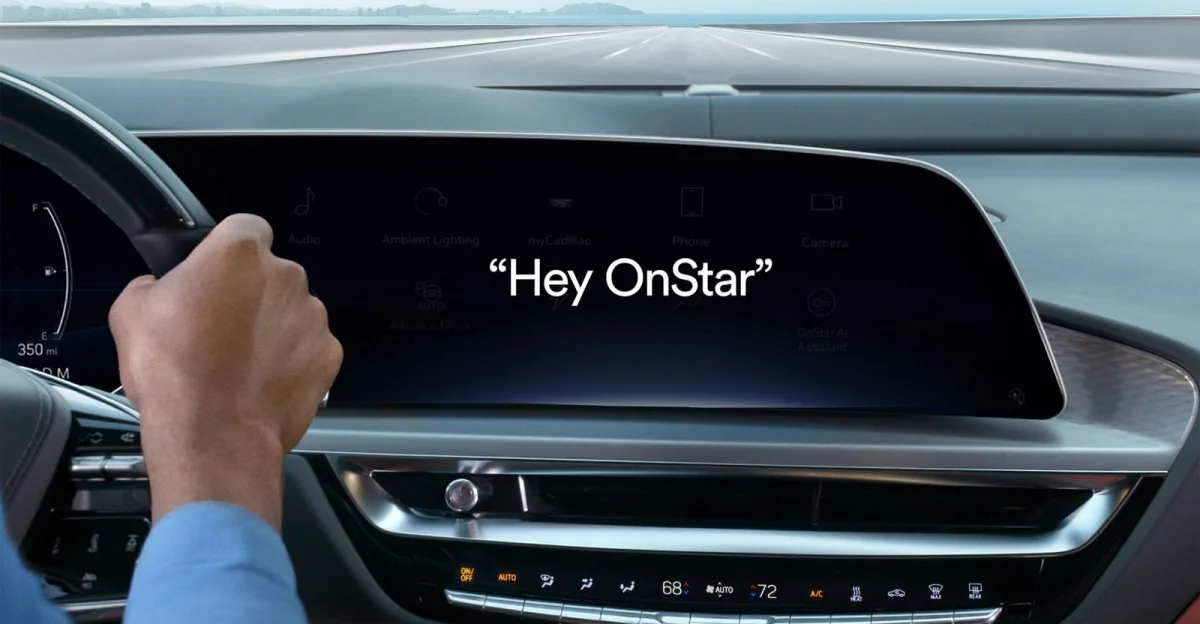
That kind of control is a modest starting point: it removes a few taps, but it doesn’t change what a car can do on its own. Anderson described a more ambitious possibility in which the system could coordinate school pickups and drop-offs based on which parent’s car is closer. That would require the assistant to work across vehicles, schedules and location information. GM hasn’t described when that capability might arrive or how the system would make those decisions.
The distinction matters. A voice interface can make existing features easier to reach; an assistant that coordinates family logistics would have to interpret requests and act across multiple steps. GM’s announcement sketches both ends of that progression, while leaving the timing and technical details of the more involved use cases open.
Development speed and the autonomy question
GM also says it plans to use AI to accelerate vehicle development. Its stated long-term target is to cut the current four-to-five-year development cycle in half, matching the pace at which Chinese carmakers create new vehicles today, as described by Automotive News. The company hasn’t specified which parts of development AI will speed up, how it will measure the reduction, or when it expects to reach that target. Those details will determine whether the goal means faster design work, shorter validation cycles or a shorter process from concept to production.
On the road, GM plans to extend its “eyes-off” highway driving technology to more of its popular vehicles. The company previously said the feature would come to the Cadillac Escalade IQ in 2028. Today, Super Cruise allows drivers to take their hands off the wheel on hundreds of thousands of miles of mapped highways. Eyes-off driving would go further by allowing the driver to look away under defined conditions.
GM has spent years talking about a personal self-driving car, but Anderson declined to give a timeline for true autonomy. “This industry is rife with promises that were not fulfilled. I am not keen on making them,” he told WIRED. That caution reflects a real gap between expanding assistance on mapped roads and a vehicle reliably handling a much wider range of driving situations. GM’s earlier ambition is described in WIRED’s coverage.
Anderson also drew a distinction between GM’s approach and Tesla’s Full Self-Driving (Supervised), a driver-assistance system that can navigate many highways and local roads while requiring the driver to remain alert and ready to take over. Anderson, who once led Tesla’s Autopilot program, argued that asking people to supervise a system while it handles much of the driving creates an impression of autonomy without letting them use that time freely. He said this approach can also affect vehicle safety and the people around it.
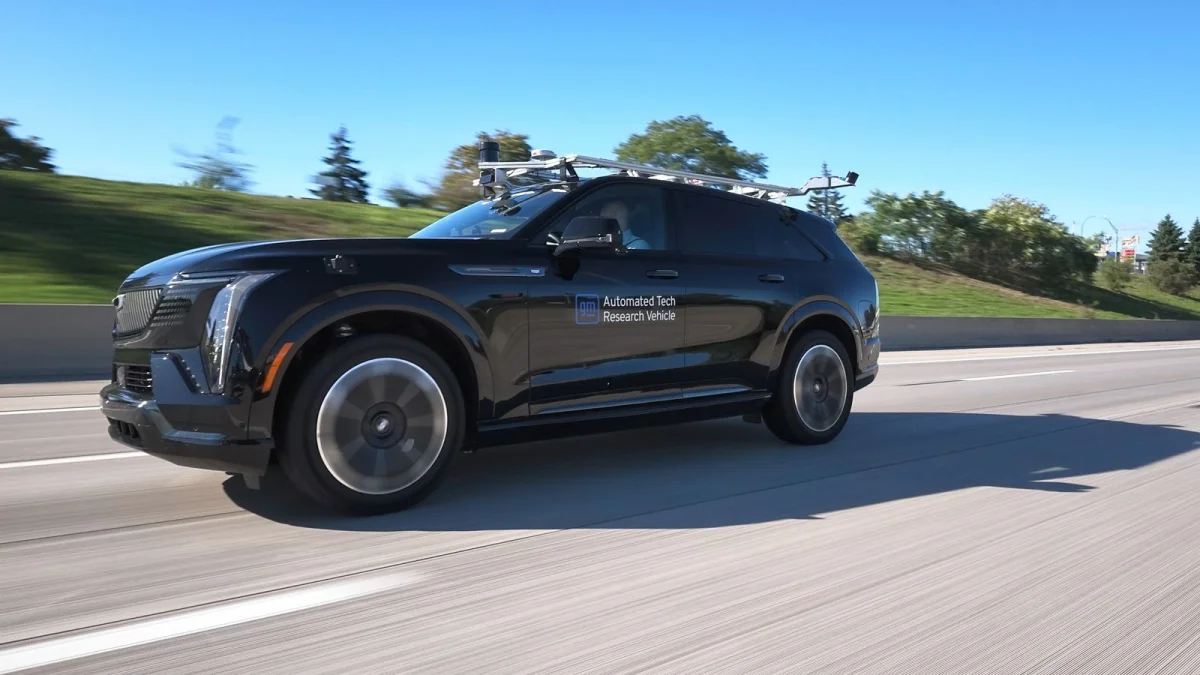
GM’s proposed path is gradual: expand eyes-off operation across more highways, then potentially to local roads. The sequence matters because each new setting brings different demands. A system’s ability to operate on mapped highways doesn’t establish that it can handle every road, and GM hasn’t said when or whether it expects to reach the broadest version of that vision. Its existing Super Cruise coverage is discussed in WIRED’s report.
Errands bring a larger traffic trade-off
If cars can drive without their owners, GM imagines them eventually picking up groceries, taking children to activities and finding parking. The company says a more capable vehicle could turn the cabin into a place to relax or work, then take on everyday errands. That future would depend on cars being able to complete trips without a person actively overseeing every moment of the drive.
It could also change how many trips people make. Urban planners and infrastructure specialists have raised a basic concern: if a trip costs less in time and attention, people may send cars out more often. Vehicles carrying no passengers could add traffic, while easier long-distance travel could encourage development farther from city centers.
Anderson acknowledged that possibility. If personal driving robots become cheap, he said, there will likely be more of them on roads, bringing societal and infrastructure questions. He doesn’t expect those changes to arrive immediately, pointing out that cities take time to spread out. But GM’s own vision makes the issue concrete: an assistant that controls cabin functions is a small convenience; a car that runs errands without its owner could reshape travel demand. For now, the key milestones to watch are the assistant’s actual capabilities, the deployment of eyes-off driving and evidence that AI shortens vehicle development in practice.


