NVIDIA Pledges Open Models, Training and Compute for European AI Science
NVIDIA’s commitments to Europe’s AI science effort span open resources, free courseware, startup compute access and a planned 35-supercomputer buildout.
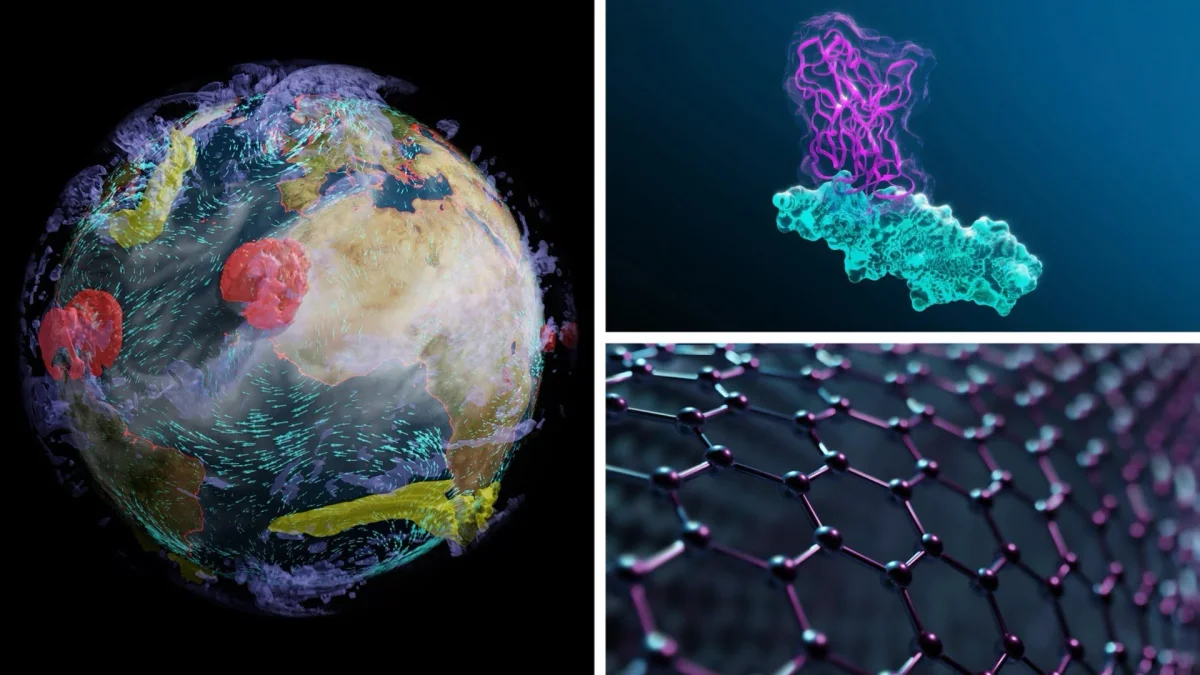
Access to research computing depends on more than hardware. Smaller labs, early-career researchers and science startups also need usable software, training and help finding compute. NVIDIA’s contribution to Europe’s AI in Science Enablers Initiative addresses those practical barriers through open models and datasets, course materials, startup support and access to computing infrastructure.
The initiative was launched at the AI in Science Summit in Dublin as part of RAISE, the Resource for AI Science in Europe. The European Commission’s framework is intended to connect private-sector resources with research needs. NVIDIA says it will contribute tools and platforms, compute and cloud resources, training and technical support, collaborative projects, and support for startups.
That package combines resources that researchers can use directly with programs that help them build skills or find infrastructure. Its impact will depend on access terms and the capacity available through participating centers, as well as how effectively the resources fit specific research workloads.
Open resources for scientific workloads
NVIDIA says it has released more than 250 open models, 250 open datasets and over 1,400 open-source software projects. The collection spans large language models, healthcare, robotics, climate science, physical AI, autonomous vehicles and scientific research. The models and datasets are available on Hugging Face and GitHub.
For researchers building systems that can reason across scientific tasks, NVIDIA points to its Nemotron family. It includes architectures, open weights, open-source models, training data and recipes. The company also lists software aimed at particular domains: BioNeMo Agent Toolkit for biology-related work, PhysicsNeMo libraries for physical modeling, Earth-2 models for weather and climate, and ALCHEMI NIM microservices for molecular design.
Together, these resources cover biology, chemistry, energy, engineering, physics and materials science. The breadth may help teams start experiments without building every component from scratch. But an open model or dataset is only one part of a research workflow: teams still need to assess whether a resource fits their task and data, and adapt it to their own requirements. The announcement does not specify performance benchmarks, compute allocations or licensing terms for each individual resource.
Course materials designed for reuse
The NVIDIA Deep Learning Institute has opened a courseware hub with hands-on materials covering accelerated computing and deep learning. The materials are freely downloadable and openly licensed, with no enrollment, fees or deadline, according to NVIDIA.
The courses are modular, so universities, supercomputing centers and developer communities can adapt them for curricula, bootcamps or events. This gives instructors a way to use the materials in different settings, while providing a route to NVIDIA’s broader training and certification programs. For research groups, reusable course materials can help spread practical skills across a team; the announcement does not describe how much instruction or equipment each course requires.
Startup access through European compute centers
NVIDIA says it is working with cloud infrastructure providers and European national AI factories, including centers in France, Spain and Sweden, to expand routes to European compute and related services for startups and small and medium-sized enterprises. Its Inception program offers startups access to compute resources and technical support.
In France, AI2F has worked with Inception for four months, which NVIDIA describes as producing strong results. In Spain, the BSC AI Factory ran a pilot and is now starting its first full accelerator program. The initiative is intended to help develop AI ventures in Spain and Europe, and other national AI factories have shown interest in adopting the model in 2027.
Sweden AI Factory, one of Europe’s 19 EuroHPC-funded AI factories, announced a collaboration to make its infrastructure and expertise available to Inception startups and SMEs. The named fields include life and materials sciences, autonomous systems and gaming. The announcement describes the participating centers and programs but does not state how much compute each startup can receive, or what selection criteria apply.
EuroHPC centers including CINECA and JSC also provide academia and startups with free access to NVIDIA GPU infrastructure and services for open research. NVIDIA says it will complement this access with office hours, bootcamps and hackathons, including support for tuning models on researchers’ own datasets. A European AI hackathon this month is being co-organized with Austrian Scientific Computing, the Leibniz Supercomputing Centre, the High-Performance Computing Center Stuttgart and The Cyprus Institute for Pharos-CY.
A larger infrastructure buildout
NVIDIA says 35 supercomputers are currently in development across Europe, calling this the largest single-year expansion of supercomputing capacity the continent has seen. The company says the systems will equip more than 3 million researchers with new infrastructure for work spanning climate science, drug development and materials research.
The planned systems set the scale of the infrastructure effort, while the courseware, open resources and center-level programs address what researchers can do with compute once they can access it. For labs and startups considering these resources, the practical questions are specific: which systems and services are available to them, what workloads they support, and how access is allocated. NVIDIA’s commitments describe a broad set of routes into AI research computing; the details of availability will determine how far those routes extend.
Researchers can explore NVIDIA technologies for science, the open-source courseware and training through the NVIDIA Deep Learning Institute. The initiative’s broader commitments are listed through the RAISE Pledging Initiative.


