AMD Gainsborough Benchmark Leak Shows Six-Core CPU and 24GB of LPDDR5
An AMD engineering sample pairs six CPU cores with 24GB of fast memory, but its benchmark results don’t reveal how a finished handheld would perform.
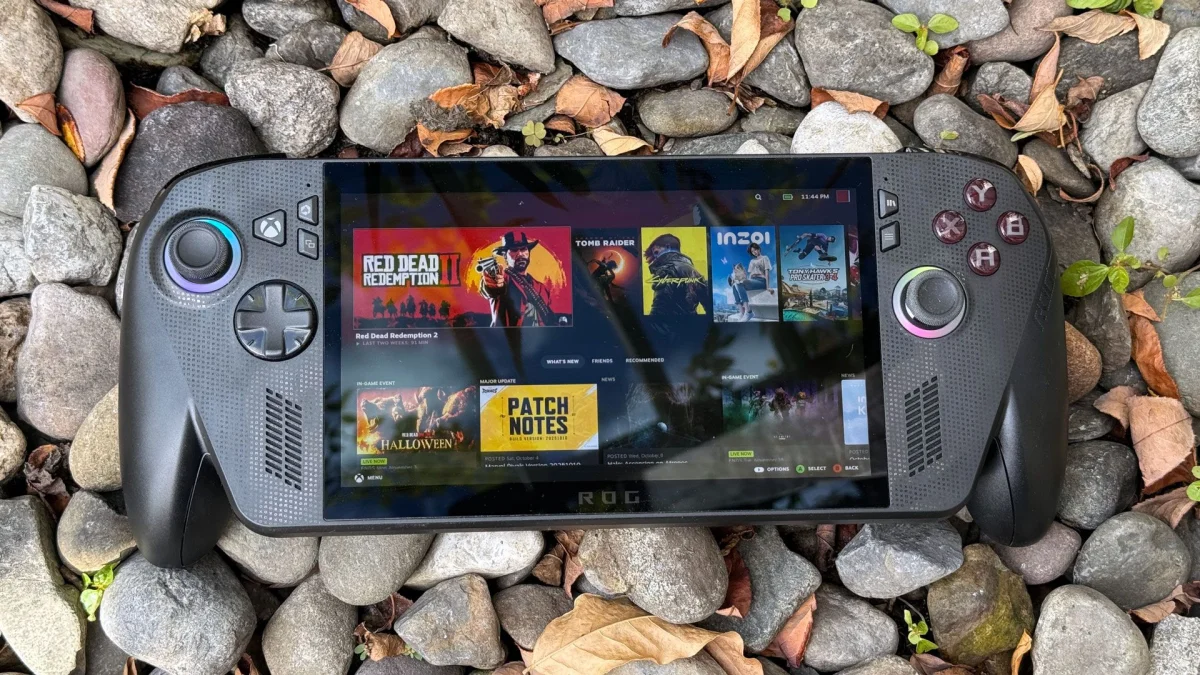
The most useful clue in a new AMD benchmark listing is the system configuration: a six-core, 12-thread processor paired with 24GB of LPDDR5 memory. That combination would mark a substantial change from the current Steam Deck’s four-core, eight-thread Zen 2 CPU and 16GB of memory. But the listing describes an engineering sample on a validation board, so it can’t establish whether the chip is destined for a handheld or how such a device would perform.
The sample appeared on OpenBenchmarking under part number 100-000001930-12_Y. A TechPowerUp report connects it to AMD’s rumored Gainsborough family and raises the possibility that it could be considered for a future Steam Deck. Neither AMD nor Valve has confirmed that connection.
What the hardware listing shows
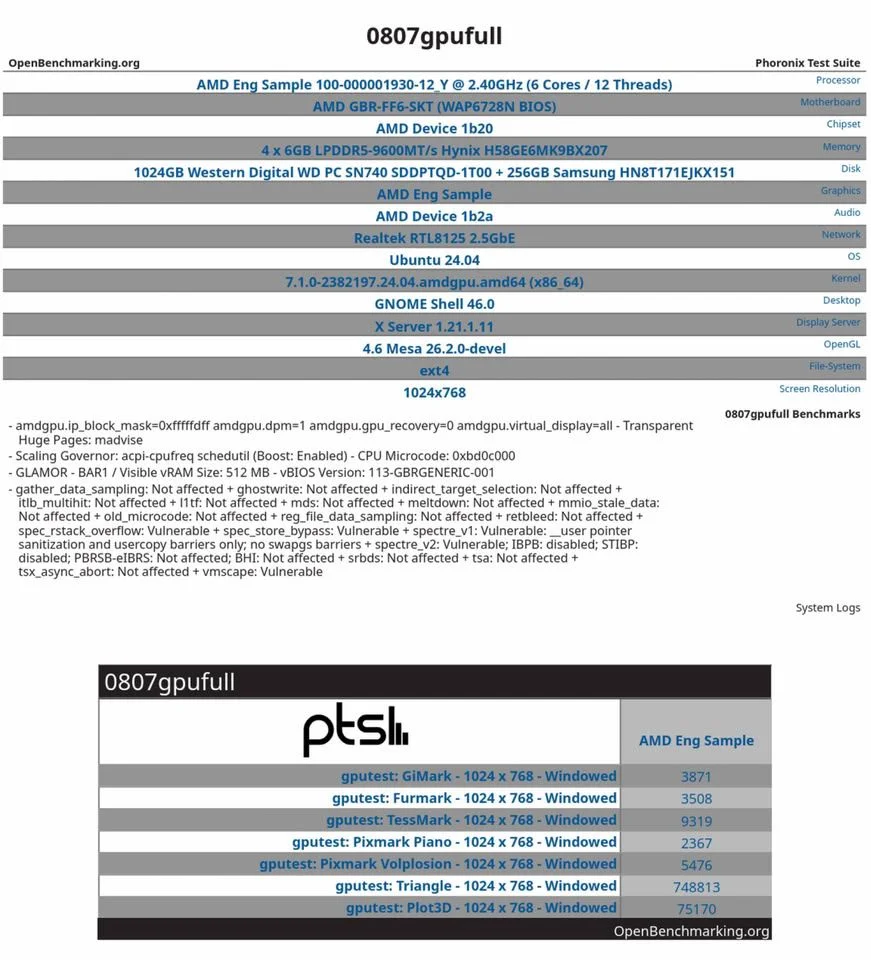
The test system used an AMD GBR-FF6-SKT validation board. Its CPU ran at 2.4 GHz, and four SK Hynix memory packages supplied 24GB of LPDDR5 running at 9,600 MT/s. The configuration differs from the current Steam Deck in both capacity and reported memory speed: the handheld has 16GB of LPDDR5 at 6,400 MT/s, alongside a four-core, eight-thread AMD Zen 2 processor.
Those figures describe the sample and test setup, not necessarily a shipping design. Engineering hardware can be used to check components and software while a product is still under development. Clock speeds, memory configuration, cooling and power limits can all change before a final system is ready. The listing therefore offers a snapshot of one platform rather than a complete specification for a future handheld.
Architecture remains uncertain
The benchmark record also points toward a possible CPU generation, though it stops short of identifying the core design. As Notebookcheck reports, the sample’s CPU microcode revision is associated with AMD Family 1Ah, model DCh. Linux kernel changes place that model within a range associated with newer Zen 6 processors. That makes Zen 6 a plausible explanation for the sample, but the listing alone doesn’t confirm the architecture.
It also doesn’t settle whether the chip would use standard Zen 6 cores or the denser Zen 6C variant. That distinction matters to interpreting a six-core processor: core count by itself says little about the balance among performance, power use and the space available for graphics hardware. The available details don’t establish the final CPU design or how its cores would behave under sustained handheld workloads.
GPU scores aren’t game results
The integrated GPU is listed at 2,400 MHz, but its architecture and compute unit count aren’t identified. The sample ran GpuTest on Ubuntu 24.04 at 1024 × 768 resolution, recording 3,871 in GiMark, 3,508 in FurMark and 9,319 in TessMark. The reported FurMark result is comparable to the original Steam Deck, but that comparison offers limited guidance about game performance.
These are results from specific graphics tests on development hardware, not a measure of how the chip would run a particular game. A handheld’s performance depends on the GPU configuration, the power available to the processor, cooling and driver maturity, among other factors. Resolution and test choice also shape what a benchmark score can tell us. Without those details—and without results from a finished device—the scores can’t show whether a future system would deliver higher frame rates or support more demanding settings.
A promising configuration, with a long way to go
If the listed memory and CPU configuration carried into a future Steam Deck, the extra cores and larger, faster memory pool would represent a meaningful change from the current hardware. More capacity could give games and system software additional room to work, while the increased CPU core count could help workloads that make effective use of parallel processing. Those are potential benefits of the configuration, not measured outcomes from this benchmark.
The practical question is what AMD and Valve would build around the chip. Memory capacity and transfer rate don’t determine the overall experience on their own; the GPU, system power limits and cooling would shape what the processor can sustain in a compact device. This listing provides a concrete look at an early platform and a possible direction for AMD’s hardware. Until a product or fuller specifications emerge, Gainsborough’s link to a future Steam Deck—and the gaming performance implied by these numbers—remains unconfirmed.


