AI in Music: Creative Tools, Live Shows and Rights Questions
Checked out by Maria Webb · 591 reads
AI can assist songwriting, recommendations and concert planning, but artists and executives are weighing those gains against consent, privacy and creative work.
AI is starting to affect music well beyond how tracks are made. It can help songwriters test ideas, shape recommendations and support concert planning; it may also alter how audiences experience performances. The industry’s central question is practical: where can these tools help without weakening artists’ control, the emotional character of music or the relationship between performers and fans?
Views from songwriters, platform and label executives, and people working in live music point to a field testing possibilities while sorting through unsettled questions. The benefits are concrete enough to explore, but so are the concerns over consent, personal data, creative jobs and who gets credit when generated music draws on an artist’s sound.
Where AI could change music work
For musicians, AI can act as an aid during early composition and production. It can process large collections of music and suggest possible melodies, harmonies or sounds. Backing tracks can also be produced with less manual effort, leaving performers more time to prepare for live work. These uses support creative decisions; they don’t establish that a machine can replace the human experience behind a song.
Songwriter Linden Jay described using a voice transformation tool to hear a draft in the style of a famous singer. The exercise helps him judge whether an idea is heading in a promising direction. His collaborator Aaron Horn likened AI to a rhyming dictionary: a resource that can assist the writing process without taking over authorship. That distinction matters. Used to explore an idea, a tool can widen the options available to a writer; used as a substitute for a writer’s judgment, it risks narrowing the creative process.
AI could also help music businesses make decisions about live events. By analyzing listening preferences and activity in different places, systems might help identify which artists or styles could draw an audience on a tour. Demand based ticket pricing could respond to interest in particular shows. Recommendations based on listening history may help fans find artists and concerts that suit them, though personalization also raises questions about the personal information used to produce it.
Live experiences could incorporate virtual reality and augmented reality. Fans might attend a performance virtually or interact with digital elements during a show, while artists could use virtual additions as part of a stage production. Tools for live captions, sign language and real time translation could also make performances easier to follow for deaf and hard of hearing audiences and fans who speak different languages.
Rights tracking is another proposed use: AI could help identify where music appears across services and support more accurate payment records. That promise sits alongside a difficult question about generated work: when a track imitates a recognizable performer, whose permission is needed and who should be paid? Better tracking could help with administration, but it can’t settle those questions on its own.
Songwriters draw a line around human expression
Interviews with songwriters at the 2023 BMI London Awards captured a range of attitudes. The writers, whose credits include work with Doja Cat, the Jonas Brothers and BTS, saw ways AI could help with experimentation, yet several stressed that music depends on emotional expression that a tool can’t supply.
“I’ve been using it a little bit in my writing just to help advance ideas. And, you know, I’m not the greatest singer in the world so sometimes I sing and I’ll turn it into a famous artist’s voice, just to get an idea of if something is headed in a good direction.”
That’s how Jay explained his use: a temporary way to hear a draft, rather than a claim that the famous artist took part. Horn’s comparison to a rhyming dictionary makes a similar point about assistance. Jessica Agombar, who has written for the Jonas Brothers, said AI can be inspiring while preferring the unpolished feel of traditional songwriting. Kamille, known for songs with Little Mix and Mabel, was more wary, arguing that the emotional core of writing should be protected.
“I definitely feel like the key of songwriting is getting the emotion out from you and your heart. I think that’s a really important part that we shouldn’t lose as much as technology advances.”
These views suggest a useful boundary for creative tools: they can help artists move past a block or hear a possibility, but they can’t provide the lived experiences that give a song its meaning. The writers also cautioned against new artists becoming too dependent on AI before developing their own approaches.
Executives focus on consent and workable systems
Spotify CEO Daniel Ek described AI music tools in three broad groups: tools that improve recordings, such as auto tune; tools that copy artists; and a middle category that helps musicians without directly imitating someone else. He expressed cautious optimism about the technology while drawing a clear line around copying a performer without permission.
“You can imagine someone uploading a song, claiming to be Madonna, even if they’re not. We’ve seen pretty much everything in the history of Spotify at this point with people trying to game our system.”
Ek’s example connects imitation to a platform’s ability to verify uploads and distinguish legitimate work from misleading claims. The middle category may be harder to define in practice: a system can assist a creator while still drawing on recognizable characteristics of another artist’s work. Clear consent and reliable ways to handle disputes will matter as these tools spread.
Warner Music CEO Robert Kyncl argued that the industry should engage with AI rather than expect it to disappear. At the 2023 Code Conference, he compared the challenge to the early period of user uploaded video, when platforms needed ways to manage rights at scale. YouTube’s Content ID system became part of that response. Kyncl’s point was that music needs systems suited to AI generated tracks, especially when they sound like existing performers.
“Look, you have to embrace the technology, because it’s not like you can put technology in a bottle…like the genie is not going back in.”
Kyncl called for platforms including YouTube, TikTok and Spotify to work together on how AI music should be handled. His view is that music may feel AI’s effects before television and film, making timely decisions about consent, ownership and payment more pressing. The comparison to earlier platform tools offers a direction, not a complete answer: systems for identifying music still need to address what counts as imitation and how artists can control use of their sound.
Live music exposes the tradeoffs
James McAulay, CEO of Encore Musicians, described AI as a tool for helping musicians compose, produce and experiment, while also changing how fans discover music and how event organizers plan shows. He emphasized that personalization and operational support shouldn’t come at the expense of authenticity or the emotional connection between a performer and an audience. His concerns include privacy and rights as well as preserving the character of live performance.
“As the UK’s largest musician bookings platform, we’re excited to be part of this evolution, supporting musicians in navigating these changes while celebrating the enduring magic of live performances. AI is an incredible tool, but it’s the human touch that truly makes live music an unforgettable experience. Together, we’ll continue to strike that harmonious balance.”
Music producer George Gretto likewise sees AI as an opening for experiments with sounds and production. He also raised the possibility that automation could displace some people involved in producing music. For Gretto, the live encounter remains the anchor: it gives musicians a direct, unfiltered experience with fans that digital tools can’t reproduce.
That tension will shape adoption. AI may add new layers to a show or help an organizer understand likely audience interest, but virtual attendance and automated recommendations can’t guarantee the same connection as being present with performers. Accessibility features offer a more direct benefit, while immersive additions will depend on whether audiences and artists find them worthwhile.
Adoption brings unresolved risks
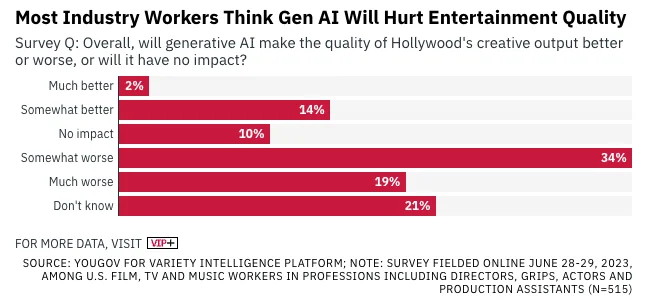
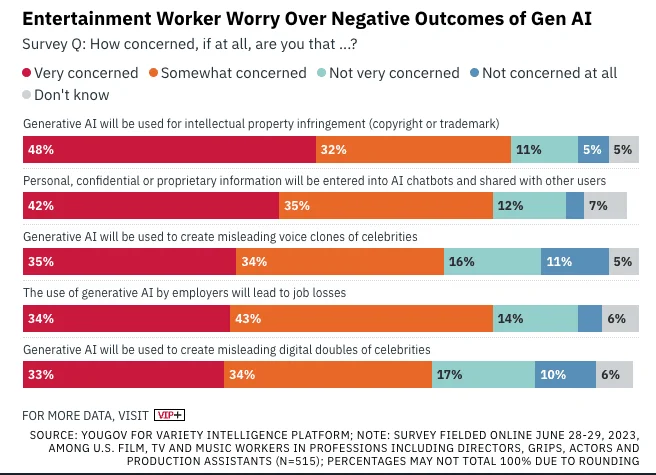
A Variety survey published in 2023 found that, as of July, 43% of entertainment industry workers believed generative AI would hurt the quality of creative output. The same survey found that 77% worried about personal, confidential or proprietary information being entered into AI chatbots and shared with other users. Those figures describe workers’ concerns, not measured changes in music quality or data exposure, but they point to issues companies will need to address as staff adopt these tools.
Employment is another concern: 36% of surveyed entertainment workers were very or somewhat concerned about AI’s effect on their own jobs. Automation in production could change the amount or type of work available to musicians and technicians. Separately, 80% believed generative AI would be used for intellectual property infringement involving copyright or trademarks. The figures reflect the survey’s respondents and should be read as reported perceptions rather than forecasts.
There are broader worries, too. If a small number of AI driven services shape recommendations and visibility, they could influence which artists reach listeners and which styles receive attention. Musicians might also come to rely on generated ideas at the expense of developing their own craft. These outcomes aren’t inevitable, but they show why implementation choices matter alongside the quality of the tools.
The article reports that nearly 30% of entertainment industry professionals said they, their team or their company were already using generative AI or planned to do so: 13% were using it, and 17% planned to. That level of reported interest makes the conversation about consent, data handling, attribution and job effects an immediate operational concern for the sector.
What to watch next
AI’s near term role in music looks less like a single transformation than a collection of uses: idea generation, production support, recommendations, event planning and interactive performance features. Each brings a different test. Creative tools must leave room for human judgment; personalization depends on responsible handling of listener data; and systems for identifying tracks need to support clear consent and payment.
The industry’s most useful distinction may be between tools that expand an artist’s choices and tools that reproduce a performer’s identity without authorization. Songwriters, executives and live music specialists all describe potential gains, yet their caution points to the same practical limit: efficiency and novelty don’t replace the human expression and presence that give music its value.