Gracy Chen on Women’s Representation and Entrepreneurship in Crypto
Bitget’s Gracy Chen discusses barriers facing women in crypto, the value of broader representation and how education and mentorship could widen participation.



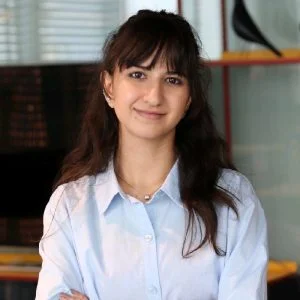
Women’s participation in crypto is rising, but representation across the industry remains uneven. Gracy Chen, managing director at Bitget, points to a familiar set of obstacles: few women in senior roles, limited access to mentors and the isolation of being the only woman in a room. Her account also highlights where change is already visible, from leadership teams to businesses built around blockchain and decentralized finance.

Data cited in the interview offers a snapshot of growing interest. eToro’s Retail Investor Beat survey found that the share of women adopting crypto rose from 29% in the third quarter of 2022 to 34% in the fourth quarter. That increase signals wider participation among women, though it doesn’t tell us whether they have equal access to jobs, investment networks or leadership opportunities.


Representation remains a barrier
Crypto’s gender gap reflects patterns seen in finance more broadly. A 2021 Deloitte report put women at 21% of board members at financial firms, 19% of C-suite executives and 5% of CEOs. In the United States, a Morning Consult report published in July 2022 found that women made up 28% of cryptocurrency owners in the second half of 2021.

Chen described crypto as a field where men remain the majority, particularly among founders and fund partners. She estimated that more than 95% of crypto founders and 90% of crypto fund partners are men. Those figures help explain why prospective entrants may struggle to picture a path into the industry, or to find people who can offer practical guidance.

For Chen, the shortage of women mentors was personal. She entered the field with only a small pool of potential female mentors to draw on. She also recalls being the only woman at professional discussions and events, an experience she says can feel intimidating. That combination—limited representation and few established support networks—can make it harder to navigate a sector whose professional connections often matter as much as technical knowledge.

Chen argues that education, peer support and more inclusive workplaces can help address these barriers. Her comments point to a practical challenge for crypto companies: recruiting women is only one part of the work. Retention and advancement also depend on whether people can find mentors, take part in key decisions and see a route into senior positions.

More women bring different experience to decisions
Chen sees expanding participation as a source of broader perspectives in investment and company leadership. She says women may approach investment with greater attention to long-term sustainability and risk management. That is her assessment, not a claim that all women invest alike; the broader point is that teams with varied experiences can draw on a wider range of questions and approaches.

More women are also taking roles outside investing, including blockchain development, research and entrepreneurship. This matters because the industry’s products and services are shaped by the people who build them. A wider mix of contributors may bring different needs into product design and help companies consider how to make blockchain tools more accessible.

Chen cited Bitget as an example of women holding senior positions within a crypto company. She said women make up 40% of its management team, including her role as managing director, as well as positions as chief product officer, Bitget Wallet chief operating officer and chief executives of both teams. The figure offers a concrete measure of representation at one firm, though it doesn’t by itself show how women are distributed across the wider sector.

For employers, a broader hiring pool can also expand the range of skills and working styles available to a team. Chen’s case is that diversity can support stronger problem-solving and more inventive work. Those benefits depend on companies giving employees real influence and opportunities to advance, rather than treating representation as a headcount target alone.
Entrepreneurship extends beyond exchanges
Blockchain and crypto have opened paths for new businesses in areas such as fundraising, decentralized finance and supply chain management. Chen says women entrepreneurs are building startups across these fields, using the technology to develop services and systems of their own.

World of Women, a women-led NFT collection and community, is one example in the source interview. Its stated aim is to support an inclusive Web3 community and empower women artists. Chen also points to women using decentralized finance tools to build services intended to make financial access wider and systems more efficient.

These projects illustrate an important distinction: participation in crypto doesn’t have to mean trading digital assets or working at an exchange. It can also mean building products, researching protocols, creating art communities or starting businesses. For women who encounter barriers in established companies, entrepreneurship can offer a different way to shape the sector—though any new venture still has to find users, funding and a sustainable business model.

Chen believes education and mentorship can help more women take that step. She calls for training, networking and guidance designed to meet the needs of women entering crypto. Sharing the experiences of women who have already built careers or companies can also make the available paths more visible to newcomers.
What could widen participation
Chen expects women’s involvement to grow as the industry matures, pointing to education, mentorship and stronger professional networks as ways to support that change. She also anticipates more opportunities in decentralized finance, where new tools and services may draw in people with a range of backgrounds and goals.
That outlook is hopeful, but the measures discussed in the interview show why progress needs to be tracked across several parts of the sector. Rising participation in crypto ownership doesn’t automatically translate into more founders, fund partners or executives. Companies and educational groups will need to connect entry-level access with mentoring, career development and meaningful responsibility.
For developers and company leaders, Chen’s account makes inclusion a question of how teams are formed and how people advance. More women in technical, research and leadership roles could bring a wider set of experiences to product decisions. Whether that translates into lasting change will depend on continued access to the skills, relationships and senior opportunities that let newcomers build careers.
Chen is Bitget’s managing director and was named a Global Shaper by the World Economic Forum. She describes herself as a former television host, crypto enthusiast and world traveler. The interview’s strongest takeaway is practical: visible role models can open doors, but sustained participation also needs mentorship, education and workplaces where women can grow into leadership.


