FinalSpark’s Brain Organoids Store a Biological Bit as Researchers Explore Computing
FinalSpark has stored one bit in a tiny human cell derived organoid. Its researchers are studying control methods, energy use and ethical questions.
FinalSpark’s work with living neurons is at an early stage: its team has stored one bit of information in a small brain organoid, but hasn’t yet shown a useful computing task. That gap is central to the project. The research asks whether biological tissue can be made to perform specific functions, and whether it could eventually do so with far less energy than digital computers.

Dr. Fred Jordan, co-founder of FinalSpark, describes the stored bit as a first step. He calls it a “Bibit,” or biological bit, and compares the achievement to early quantum computers storing a single qubit. The comparison marks a starting point rather than a claim of comparable performance: the organoid has stored one bit, and its practical capabilities remain under investigation.

Building and stimulating the organoid
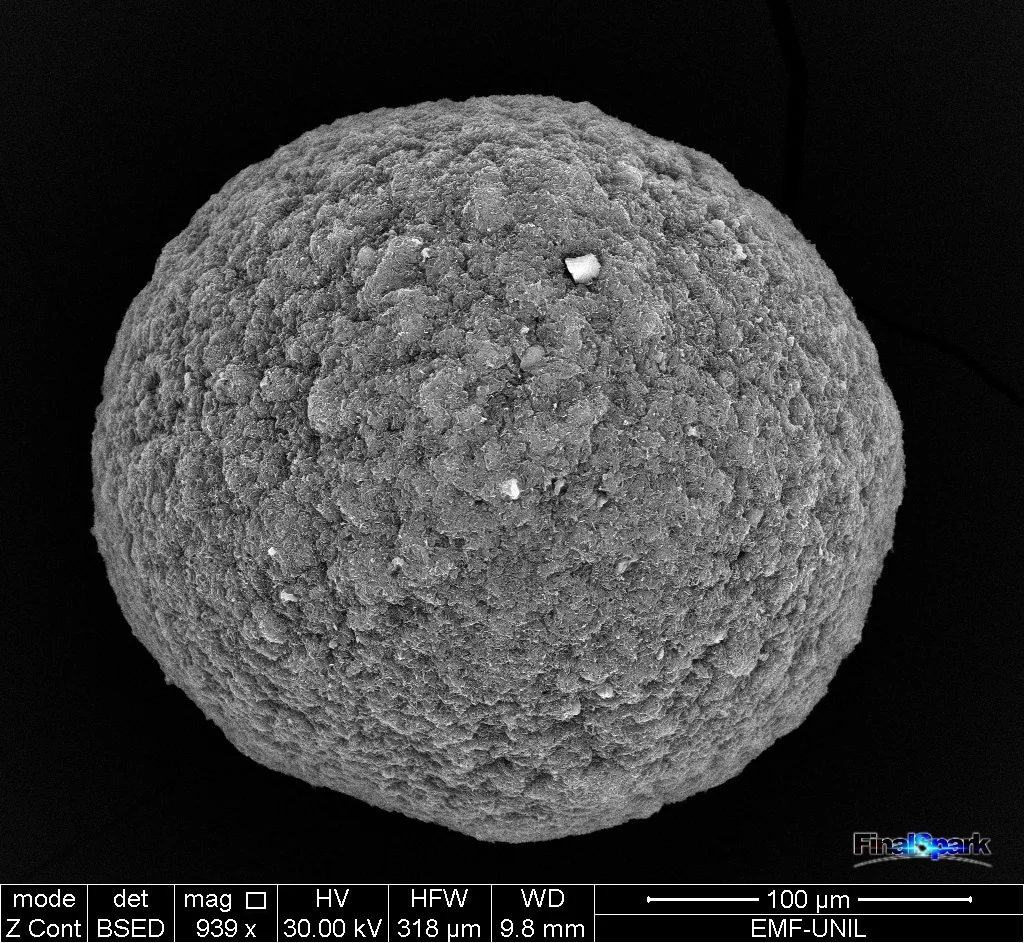
FinalSpark starts with induced pluripotent stem cells made from human skin cells. Researchers differentiate these cells into neurons and glial cells, then combine them to form an organoid about 500 microns across, or roughly half a millimeter. Neurons send signals; glial cells support them. The resulting tissue is small, but its biological activity gives the team a different material to study than the artificial units in conventional neural networks.

The team doesn’t yet have a complete method for programming the tissue. Its current approach uses electrodes attached to a computer, which let researchers deliver electrical stimulation at chosen times and with specific patterns. They’re investigating whether those signals can encourage the organoid to produce a desired response. Artificial neural networks can help decide when to stimulate an electrode and how much current to send.

FinalSpark is also testing chemical stimulation. One method uses dopamine, delivered through a process called uncaging. The researchers enclose the molecule in a chemical structure that keeps it from acting on the organoid until they expose it to particular light frequencies. The light opens that structure and releases the dopamine, providing a timed stimulus intended to act like a reward.

These methods are research tools, not evidence that the organoid can yet learn or complete a defined task. Jordan says the team is still working out how to connect living neurons with electronics and shape their activity. Getting reliable, measurable responses is part of the problem the research needs to solve.

Biological complexity and its limits
Jordan argues that biological neurons are more complex than the simplified units used in artificial neural networks. He estimates that a neuron in the human brain has about 10,000 connections. Neurons also communicate through spikes that can travel in many directions, while conventional AI models generally use more structured input and output operations.

That difference may give organoids properties that digital models don’t capture easily, but it doesn’t establish that organoids are more capable. Their activity is difficult to quantify, and the current demonstration is limited to storing one bit. Jordan views the possibility of organoid intelligence surpassing human capabilities as speculative; he says it’s hard to predict what these systems could eventually do.

For now, a more concrete research goal is to make the tissue perform a recognizable function. Jordan offers image recognition as an example: provide a picture and have the organoid respond in a way that distinguishes a cat from a dog. FinalSpark hasn’t demonstrated that capability. It illustrates the kind of task the company hopes to explore as it develops ways to stimulate and interpret the tissue.

Ethics and questions about consciousness
Using human cells raises ethical questions even when researchers don’t take tissue from a person’s brain. Jordan says induced pluripotent stem cells make it possible to produce many cells from a small sample and reuse them in experiments. He compares the use of living systems with other biotechnology applications, while acknowledging that human origin makes the ethical dimension more pronounced.

The question of consciousness is harder to address because the concept itself lacks a clear definition. Jordan says FinalSpark’s experiments are small in scale and that determining whether an organoid could become conscious is outside the team’s current scope. He considers it plausible that greater biological complexity might matter, while cautioning that the assumption could be wrong.

Even identifying a reaction would require careful interpretation. Researchers can observe neural activity and the rate of electrical spikes, and biomarkers might offer clues. But connecting those measurements to experiences such as discomfort would be speculative. Jordan suggests that communication would be needed to make such judgments, while noting that real time analysis of possible signals remains difficult.

This leaves a practical research question alongside the ethical one: what evidence would justify treating an organoid’s activity as a meaningful response? The source describes no agreed test for consciousness or communication in these systems. Any claim about inner experience would therefore go beyond what FinalSpark’s current experiments can establish.

Energy goals and remote research
FinalSpark’s stated near term focus is energy use. Jordan says neuron based systems could potentially consume millions to billions of times less energy than digital computers. That is a possibility the company is investigating, not a measured result reported for a working computing system. If researchers can validate the comparison and build useful functions, lower energy consumption could make cloud computing one area to examine.

The broader idea is to find tasks for biological neurons that justify the difficulty of keeping living tissue active, stimulating it reliably and reading its responses. Energy efficiency alone wouldn’t establish practical value; developers would also need a repeatable computing function and a way to connect it to existing systems. FinalSpark’s present milestone is much earlier in that chain.

The company’s lab operations have also changed. Limited lab access during the COVID-19 pandemic led the team to automate its work. After three years, Jordan says, the lab could be operated remotely. FinalSpark then opened access to outside research groups and received interest from 32 teams. It selected five projects; three were actively using the lab remotely at the time of the interview, based in France, England and the United States.

Remote access gives researchers outside the company a way to run experiments with its neurons and contribute results. It also makes lab automation part of the research infrastructure: teams need to control stimulation and gather observations without being physically present. The interview doesn’t detail the projects’ findings, so the current value of the arrangement is access and collaboration rather than a reported scientific result.
Who is behind FinalSpark
Jordan is a French physicist with a doctorate in signal processing and two decades of experience across digital technology, signal processing and research. He and business partner Martin Kutter founded AlpVision in 2000. Jordan serves as its CEO; the company develops technology that distinguishes authentic products from counterfeits using a smartphone app.
Jordan and Kutter later started FinalSpark as a research and development project. Jordan says they support it with money from AlpVision, reflecting the work’s experimental nature and the commitment it requires.
FinalSpark’s next meaningful test is whether its team can turn a biological bit into a repeatable function, then measure what that function costs in energy and effort. Until then, the organoid is best understood as a research platform with an intriguing first storage result and open questions about control, performance and ethical interpretation.


